Discovering my Personal Learning Environment (PLE)Mavic PinedaIT Dept-DLSUEmail: mavic.pineda@delasalle.phhttp://slideshare.net/mobilemartha
Outline some complementing theories to (PLE)Introduce the rhizome as a representation of one’s Personal Learning Network (PLN)Show some examplesShow how to draw the PLN using MindmeisterThe  collaboration invitation to the Science-Ed studentsMy Intention
Social learning theory (Albert and Bandura, 1963) – humans learn through observations  of other individuals.Self-efficacy (Bandura, 1997) – “people’s judgment of their capabilities to organize and execute courses of action required to attain designated types of performances”Vgotsky’s Social constructivism - It argues that students can, with help from adults or children who are more advanced, master concepts and ideas that they cannot understand on their own, referred as the zone of proximal development.Earlier learning models
Connectivism (Siemens, 2004)Premise:“Informal learning is a significant aspect of our learning experience.”“Learning is a continual process, lasting for a lifetime.”Many of the processes esp. cognitive processes are performed with the support of technology.Principles of Connectivism:Learning and knowledge rests in diversity of opinions. Learning is a process of connecting specialized nodes or information sources.
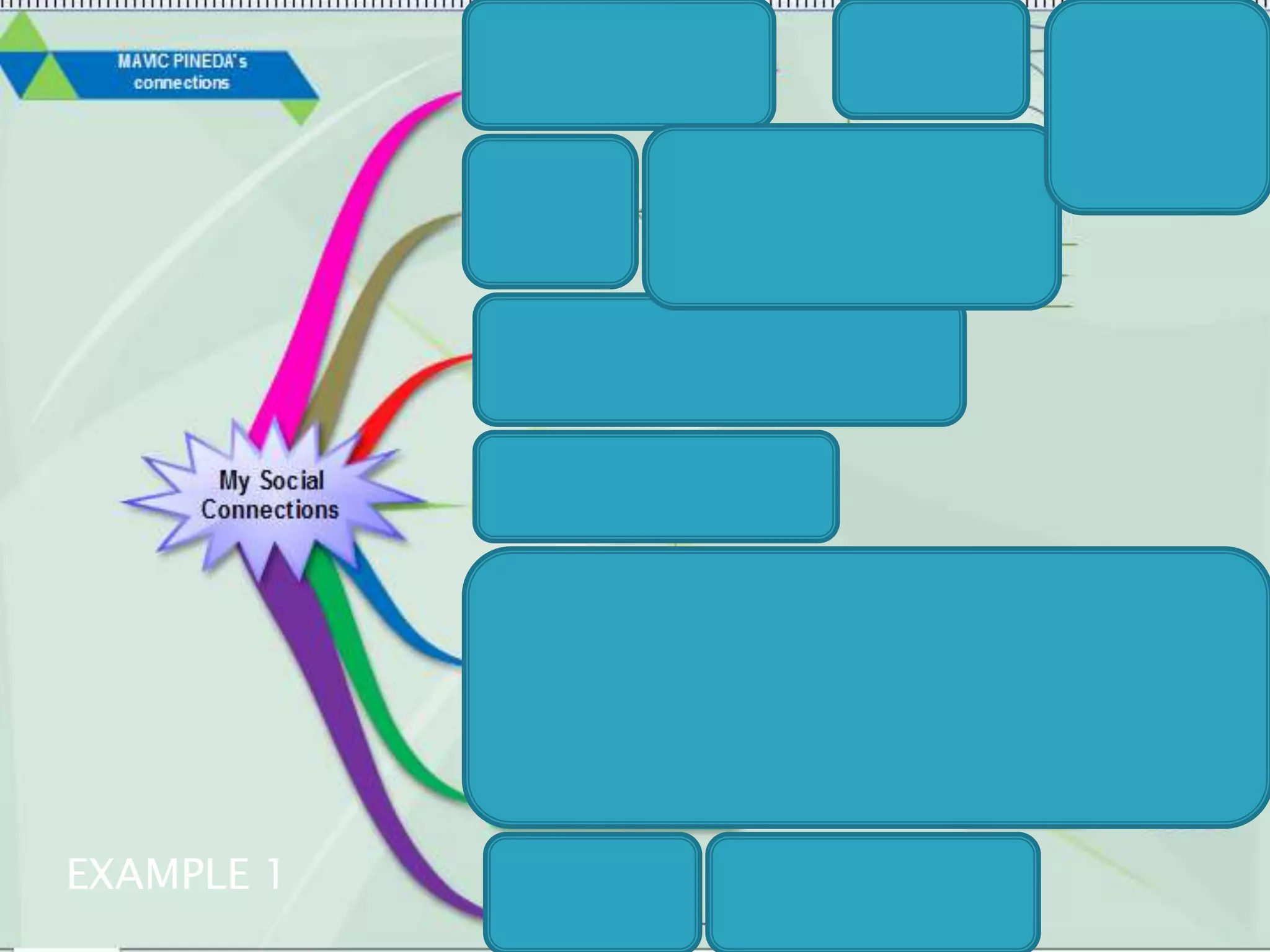
EXAMPLE 1
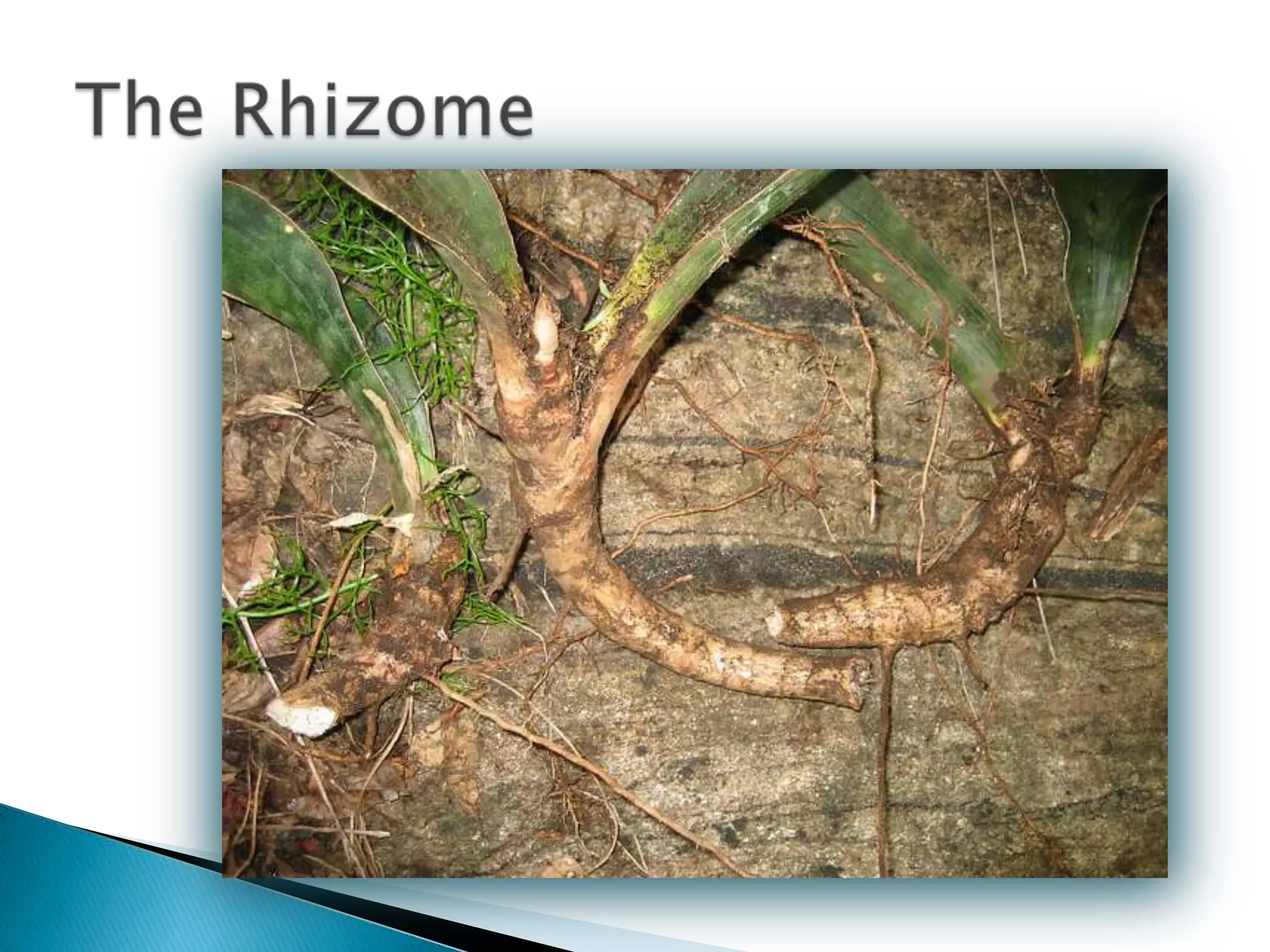
The Rhizome
“There is no beginning or end for the rhizome, it is process as cultural code, multiple and fractal in nature”. (Bussey, Bjurstrom, & and Sannum, 2010)There is a need to reexamine how knowledge is viewed, created or recreated. (Cormier, 2008)There are limitless ways of generating knowledge because of emerging technologies. (Attwell, 2006)
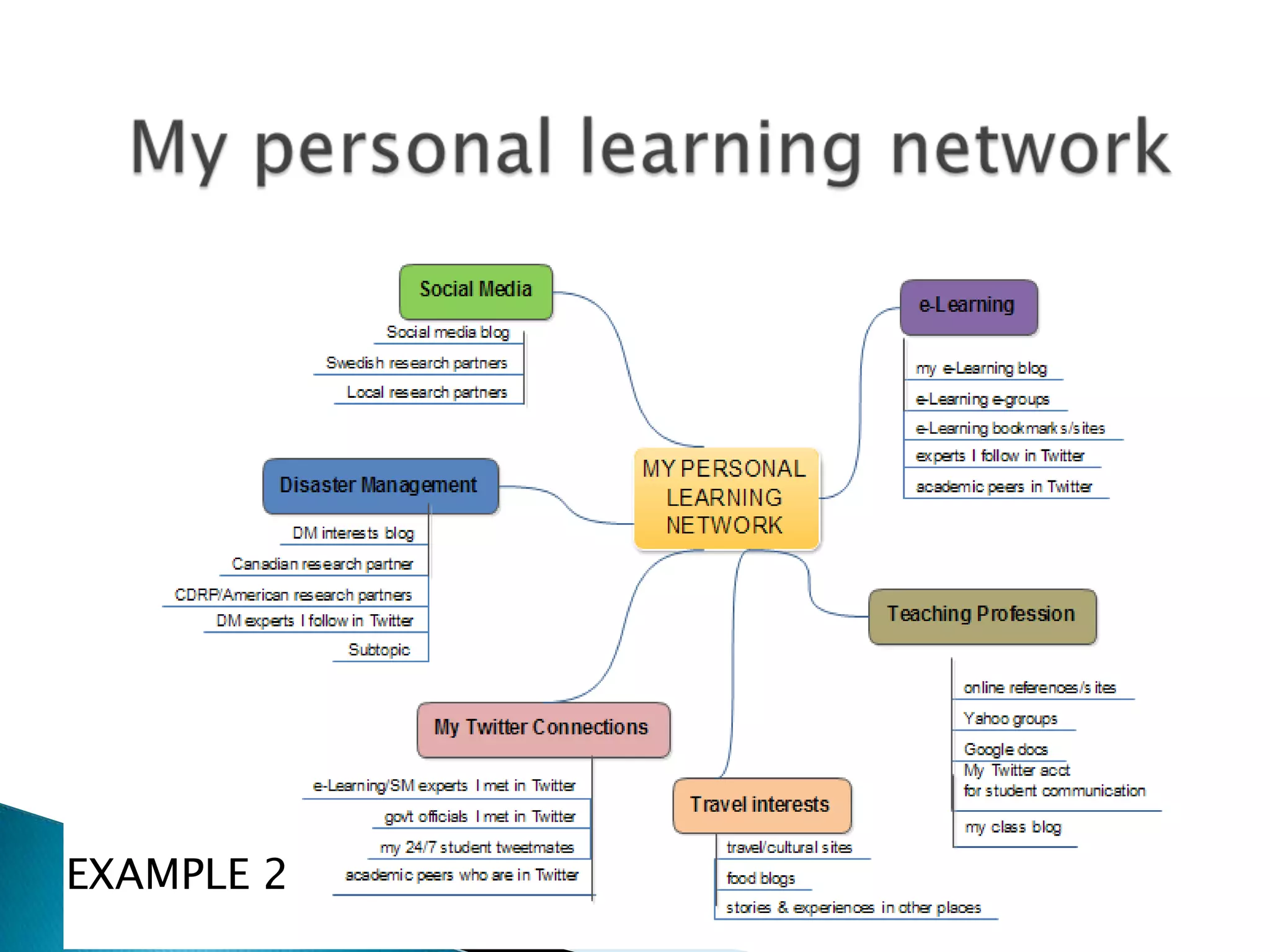
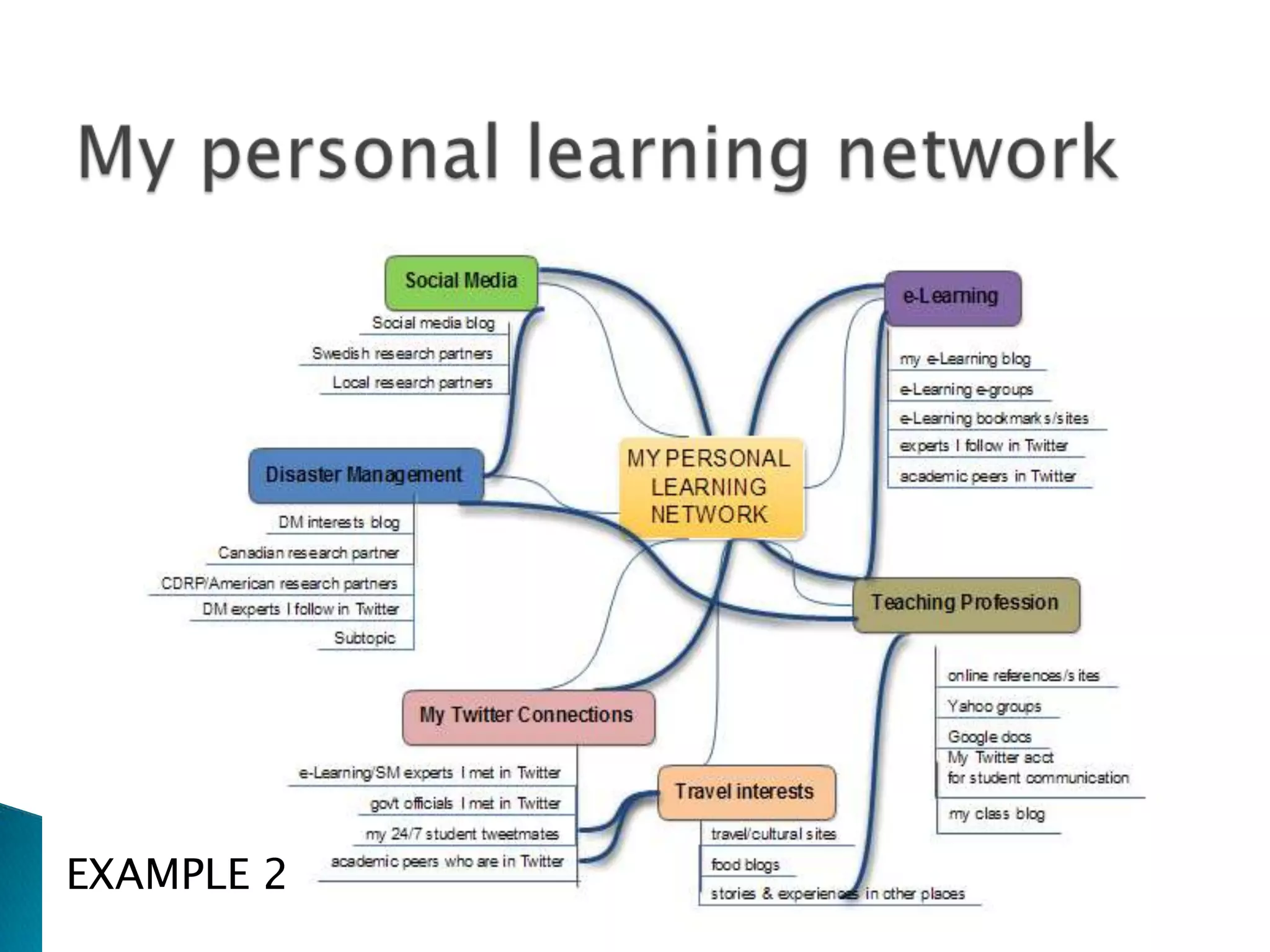
My personal learning networkEXAMPLE 2
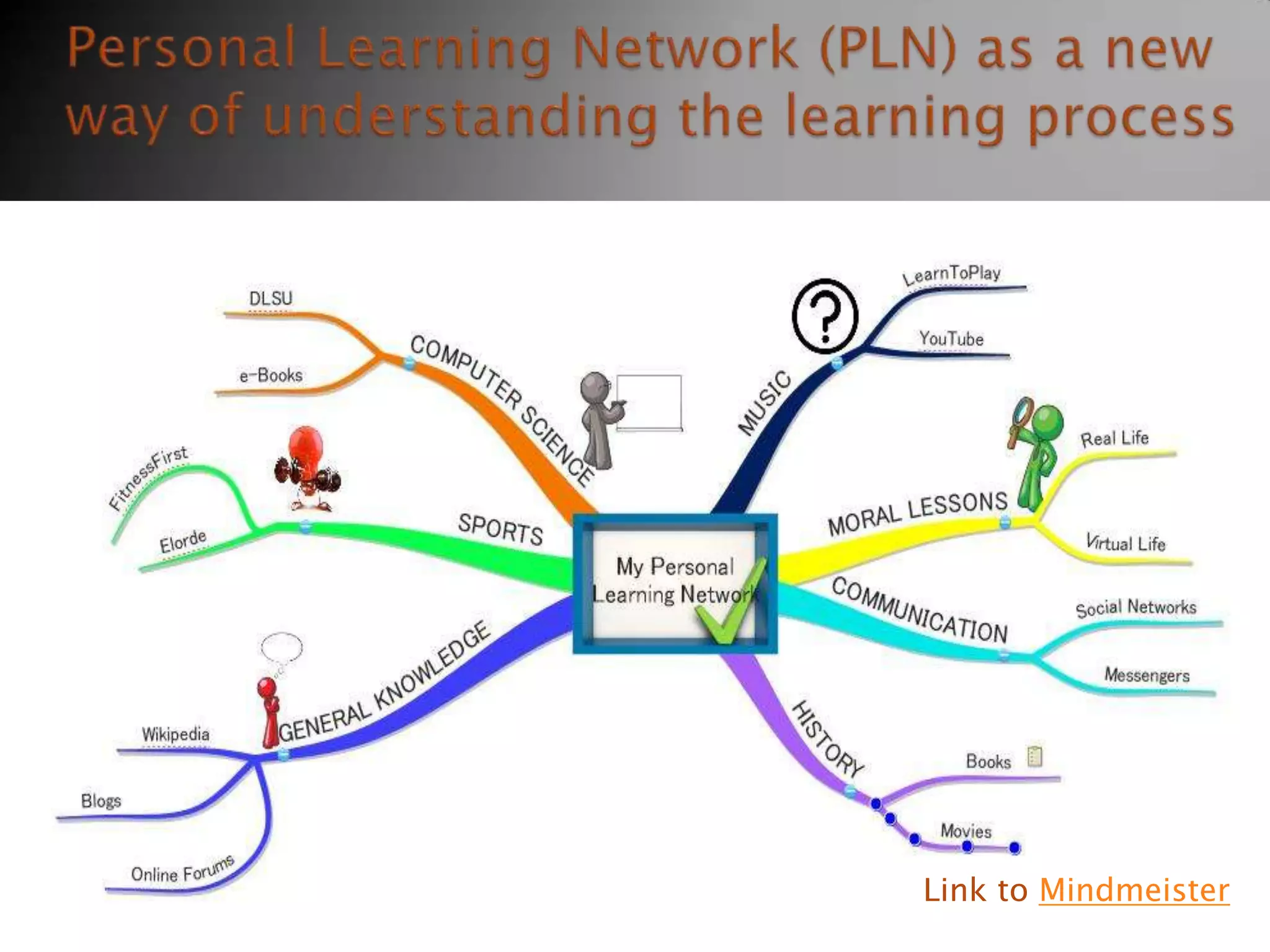
Personal Learning Network (PLN) as a new way of understanding the learning processLink to Mindmeister
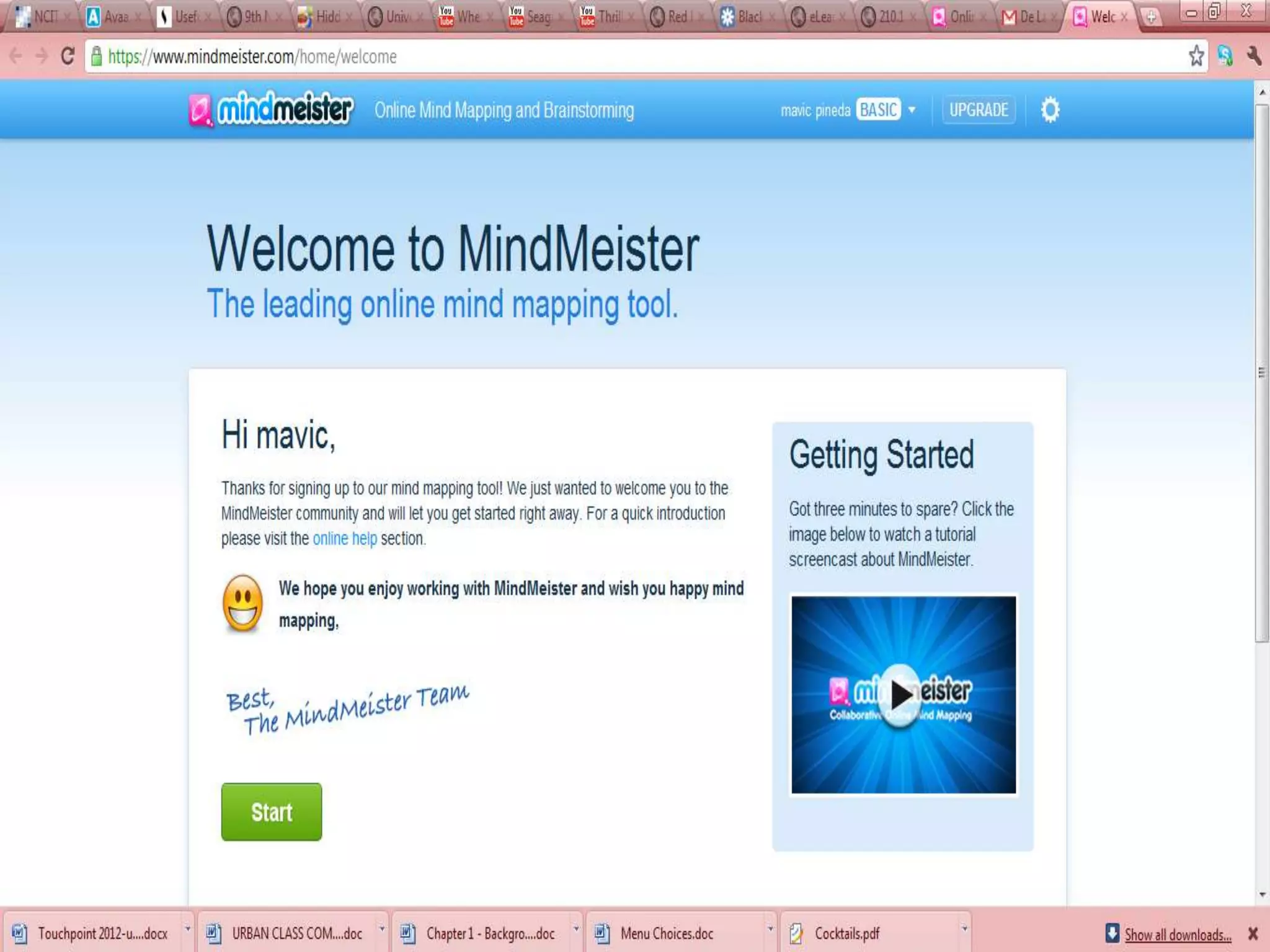
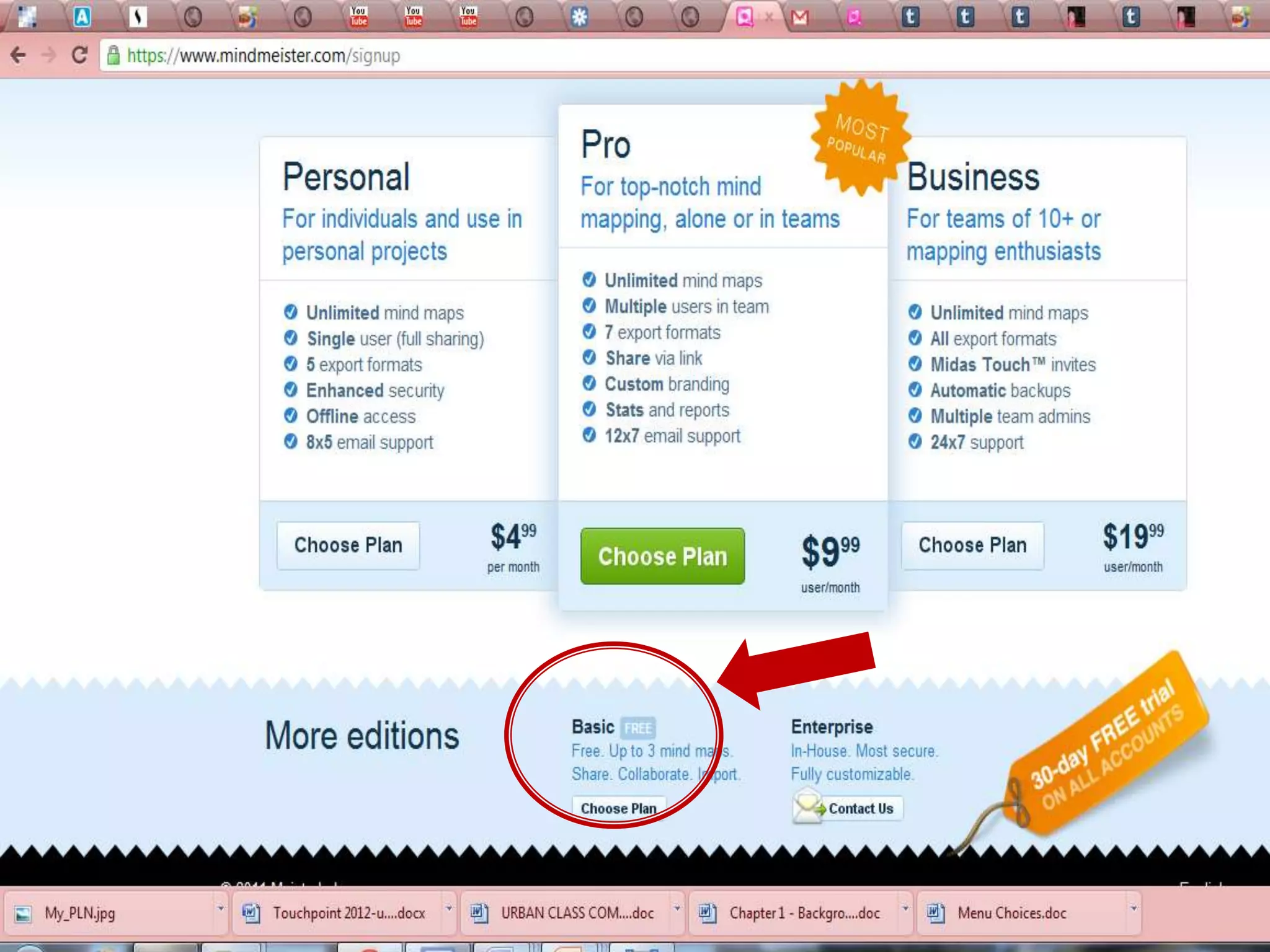
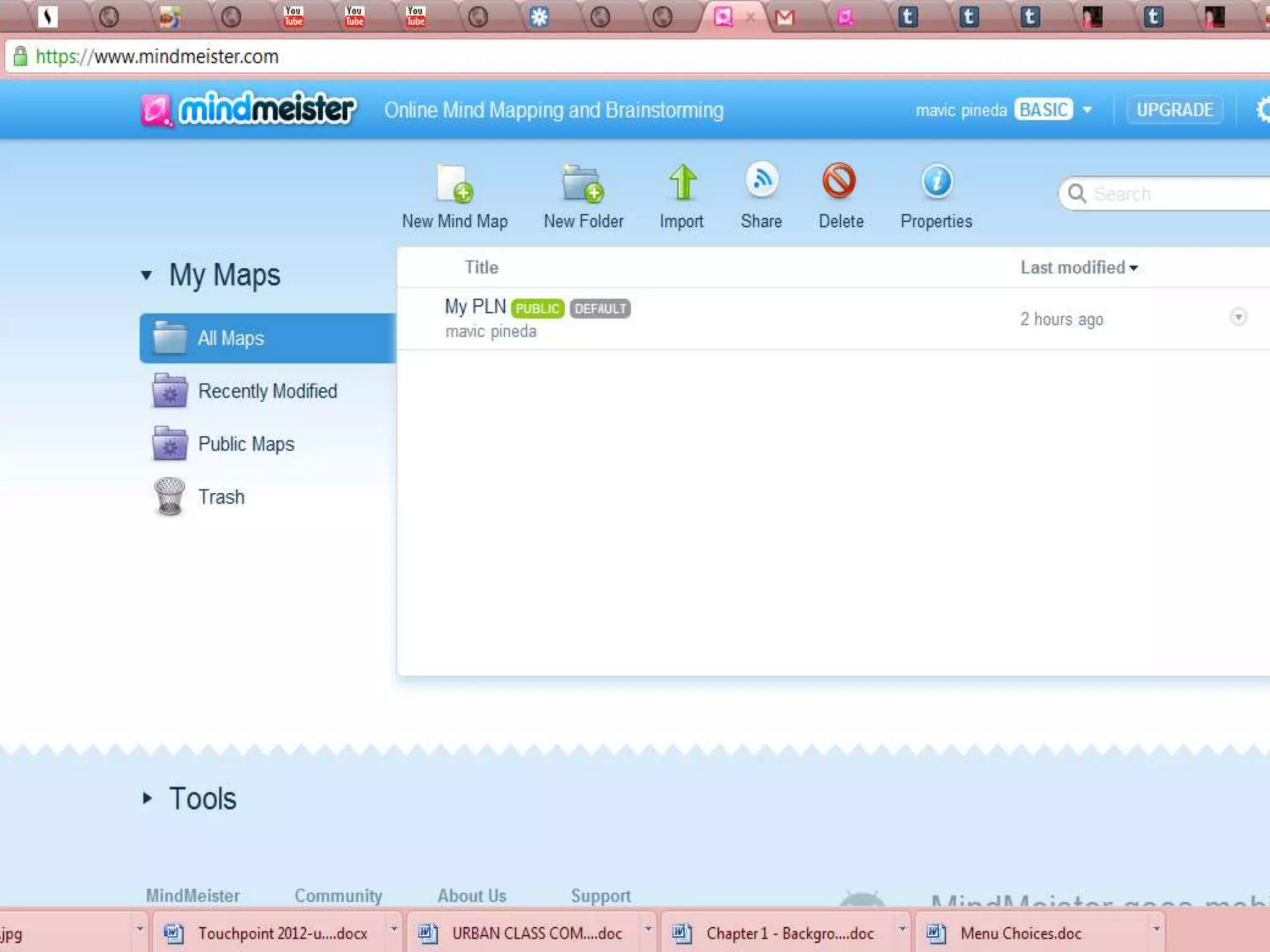
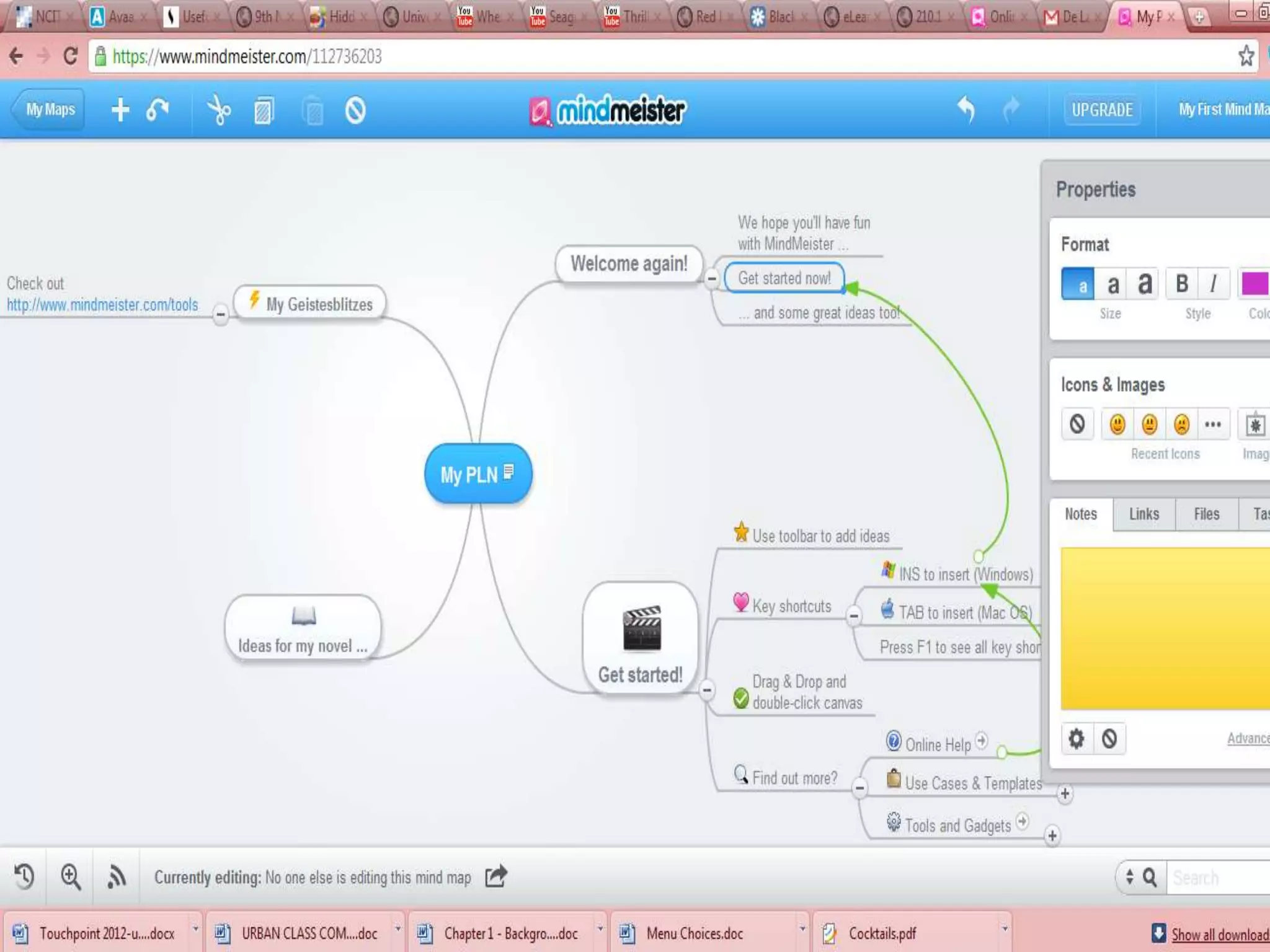
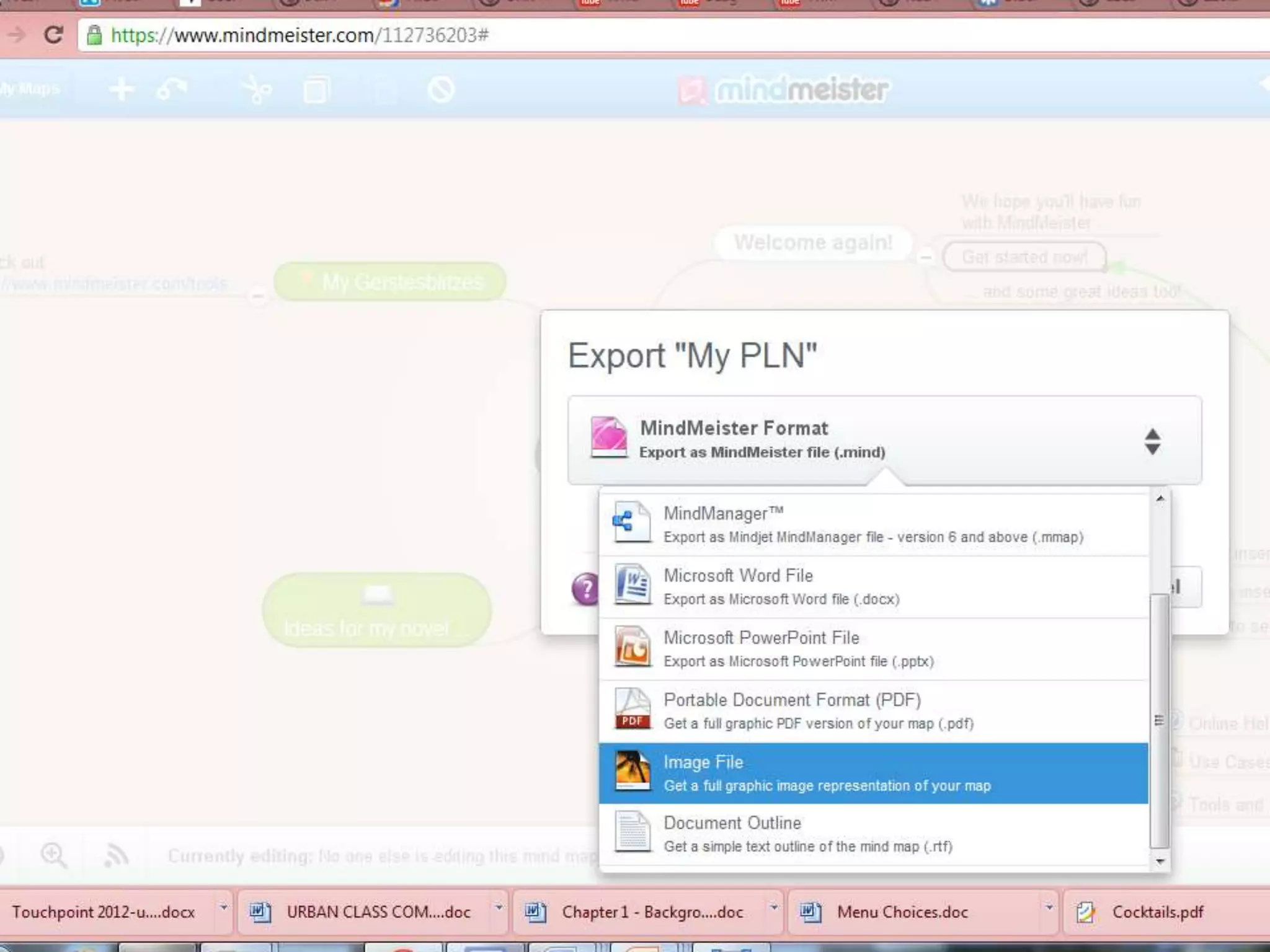
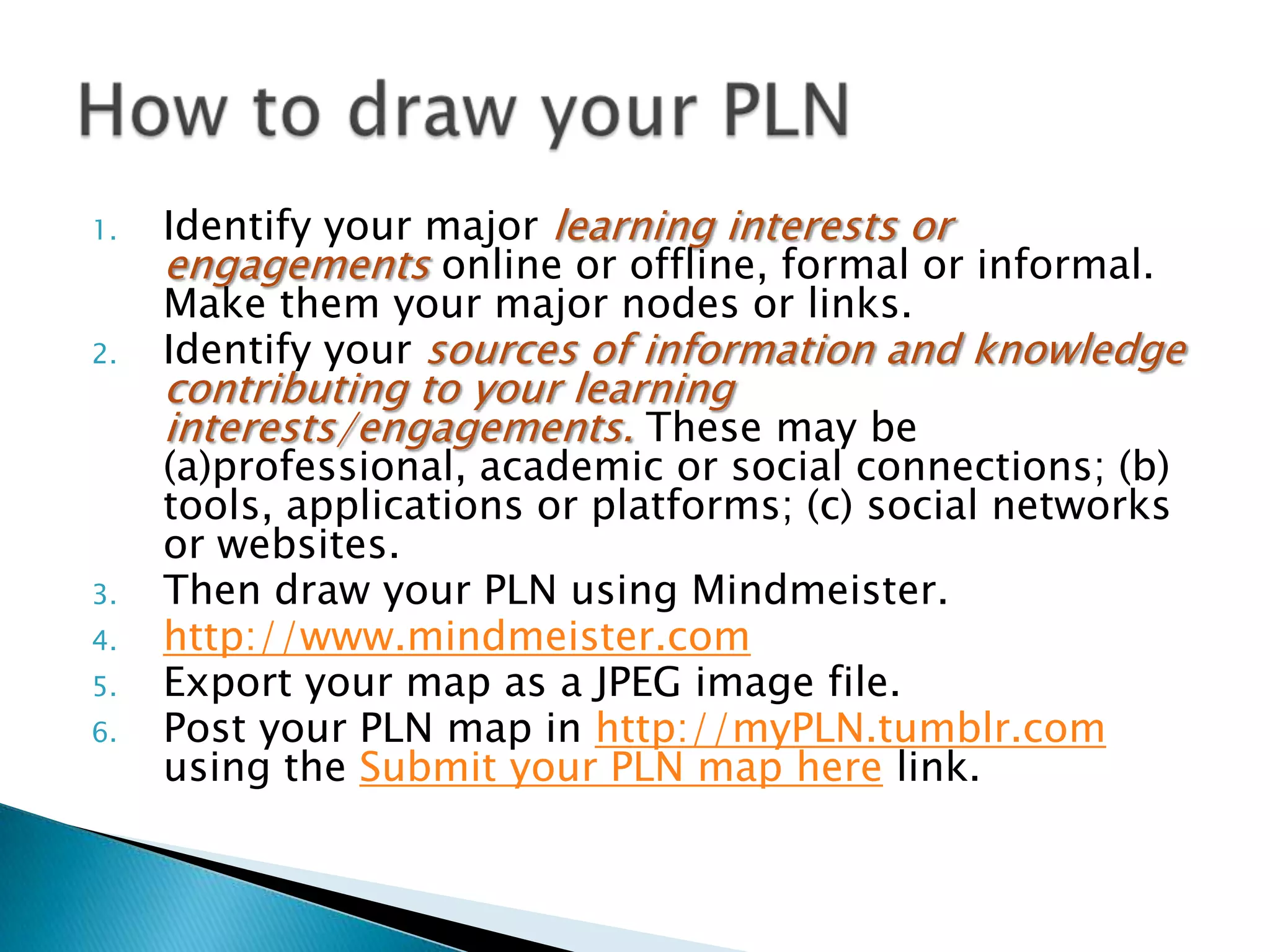
How to draw your PLNIdentify your major learning interests or engagements online or offline, formal or informal. Make them your major nodes or links.Identify your sources of information and knowledge contributing to your learning interests/engagements. These may be  (a)professional, academic or social connections; (b) tools, applications or platforms; (c) social networks or websites.Then draw your PLN using Mindmeister.http://www.mindmeister.comExport your map as a JPEG image file.Post your PLN map in http://myPLN.tumblr.com using the Submit your PLN map here link.
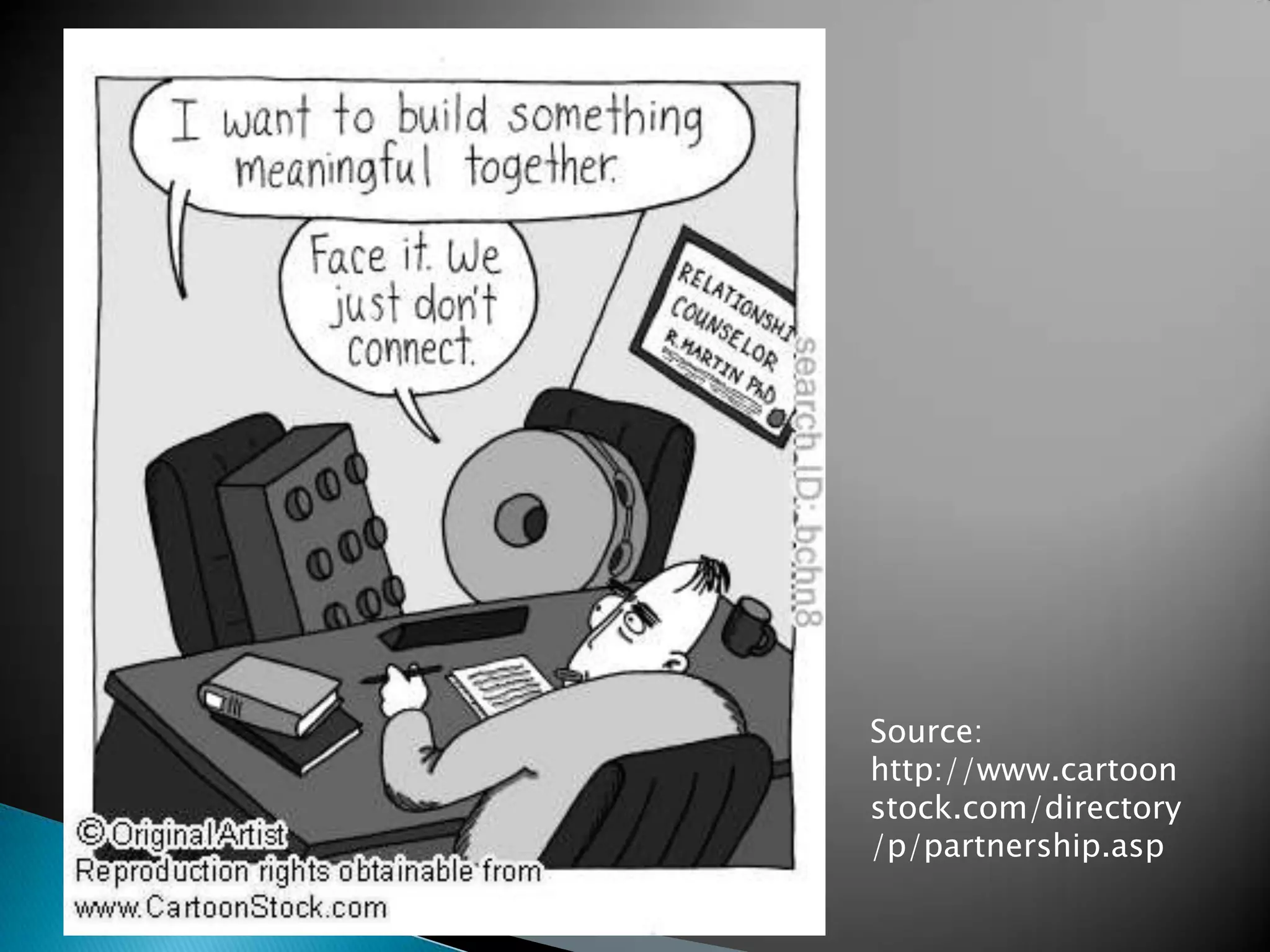
Source: http://www.cartoonstock.com/directory/p/partnership.asp
Mavic PinedaEmail: mavic.pineda@delasalle.phhttp://mypln.tumblr.comTwitter: mobilemarthaMaramingsalamat! 

Discovering my PLE

  • 1.
    Discovering my PersonalLearning Environment (PLE)Mavic PinedaIT Dept-DLSUEmail: mavic.pineda@delasalle.phhttp://slideshare.net/mobilemartha
  • 2.
    Outline some complementingtheories to (PLE)Introduce the rhizome as a representation of one’s Personal Learning Network (PLN)Show some examplesShow how to draw the PLN using MindmeisterThe collaboration invitation to the Science-Ed studentsMy Intention
  • 3.
    Social learning theory(Albert and Bandura, 1963) – humans learn through observations of other individuals.Self-efficacy (Bandura, 1997) – “people’s judgment of their capabilities to organize and execute courses of action required to attain designated types of performances”Vgotsky’s Social constructivism - It argues that students can, with help from adults or children who are more advanced, master concepts and ideas that they cannot understand on their own, referred as the zone of proximal development.Earlier learning models
  • 4.
    Connectivism (Siemens, 2004)Premise:“Informallearning is a significant aspect of our learning experience.”“Learning is a continual process, lasting for a lifetime.”Many of the processes esp. cognitive processes are performed with the support of technology.Principles of Connectivism:Learning and knowledge rests in diversity of opinions. Learning is a process of connecting specialized nodes or information sources.
  • 5.
  • 6.
  • 7.
    “There is nobeginning or end for the rhizome, it is process as cultural code, multiple and fractal in nature”. (Bussey, Bjurstrom, & and Sannum, 2010)There is a need to reexamine how knowledge is viewed, created or recreated. (Cormier, 2008)There are limitless ways of generating knowledge because of emerging technologies. (Attwell, 2006)
  • 8.
    My personal learningnetworkEXAMPLE 2
  • 9.
    My personal learningnetworkEXAMPLE 2
  • 10.
    Personal Learning Network(PLN) as a new way of understanding the learning processLink to Mindmeister
  • 16.
    How to drawyour PLNIdentify your major learning interests or engagements online or offline, formal or informal. Make them your major nodes or links.Identify your sources of information and knowledge contributing to your learning interests/engagements. These may be (a)professional, academic or social connections; (b) tools, applications or platforms; (c) social networks or websites.Then draw your PLN using Mindmeister.http://www.mindmeister.comExport your map as a JPEG image file.Post your PLN map in http://myPLN.tumblr.com using the Submit your PLN map here link.
  • 17.
  • 18.

Editor's Notes

  • #6 The first example will exhibit part of my present social connections. And it is easier to collaborate to or with people that is part of your social circle. I plan to emphasize on the red & brown bubbles where most of my connections are academics from other univ & countries that require a collaboration tool.
  • #9 With the advent of the net-generation people, PLE recognizes that learning as a continuous process needs support tools. And the PLE/PLN is constructed by the learner herself. She or he is responsible in organizing the things she wants to learn or she is learning.It also recognizes that there are several sources of learning, most of them are informal learning.
  • #10 Personal learning network or PLE is a new approach in learning. It is a philosophy, a pedagogy. It provides learners space under their own control. It provides a more holistic learning environment providing bringing together sources and context or even separately.
  • #18 I will use this illustration as opening to the idea of collaboration.Talk about lego block and mega block.If the intention and desire are strong, there should be no hurdles.Even within Trollhattan, your group may have individual differences and character, but it doesn’t mean you cannnot be independent or work together.It is more likely that you become creative when you have diverse opinions.OR have better productivity with diverse skills.Ask the students of any experience that they were stopped on the idea of working together bec of some pre-conceived notion abt the other person.