Personal Learning Networks
Professor Jodi Sandfort
University of Minnesota, School of Public
Affairs
sandf002@umn.edu
Except where otherwise noted, this work is licensed
under Attribution-ShareAlike 4.0 License:
http://creativecommons.org/licenses/by-sa/4.0/
Changing African Context
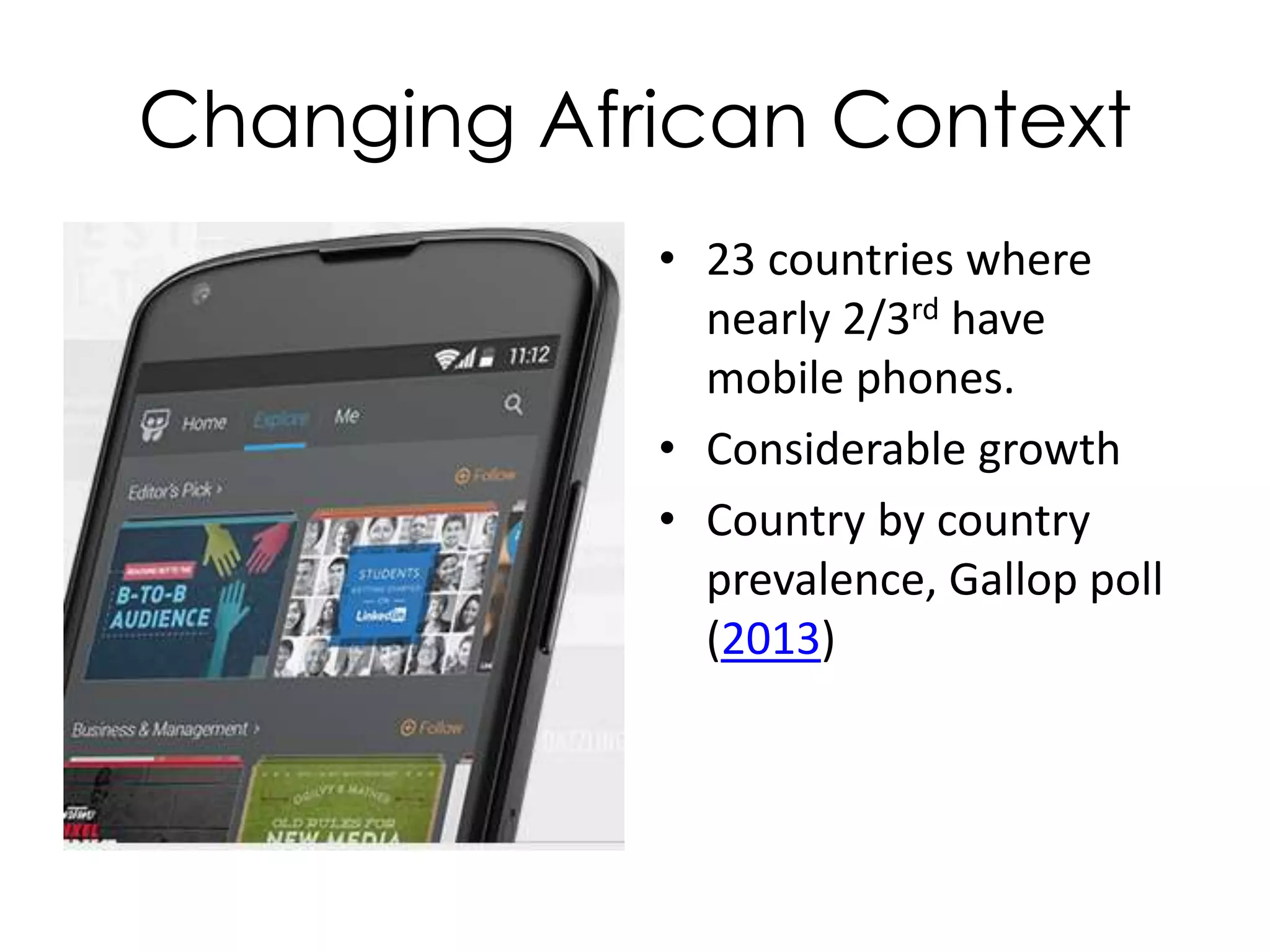
• 23 countries where
nearly 2/3rd have
mobile phones.
• Considerable growth
• Country by country
prevalence, Gallop poll
(2013)
Students….
iStockphoto: Dean Mitchell
Workshop Learning Objectives
• Explore how information environment can
support your own scholarship
– Teaching, Research & Engagement
• Assess your own personal learning network
• Consider easy ways to “fill in” the gaps
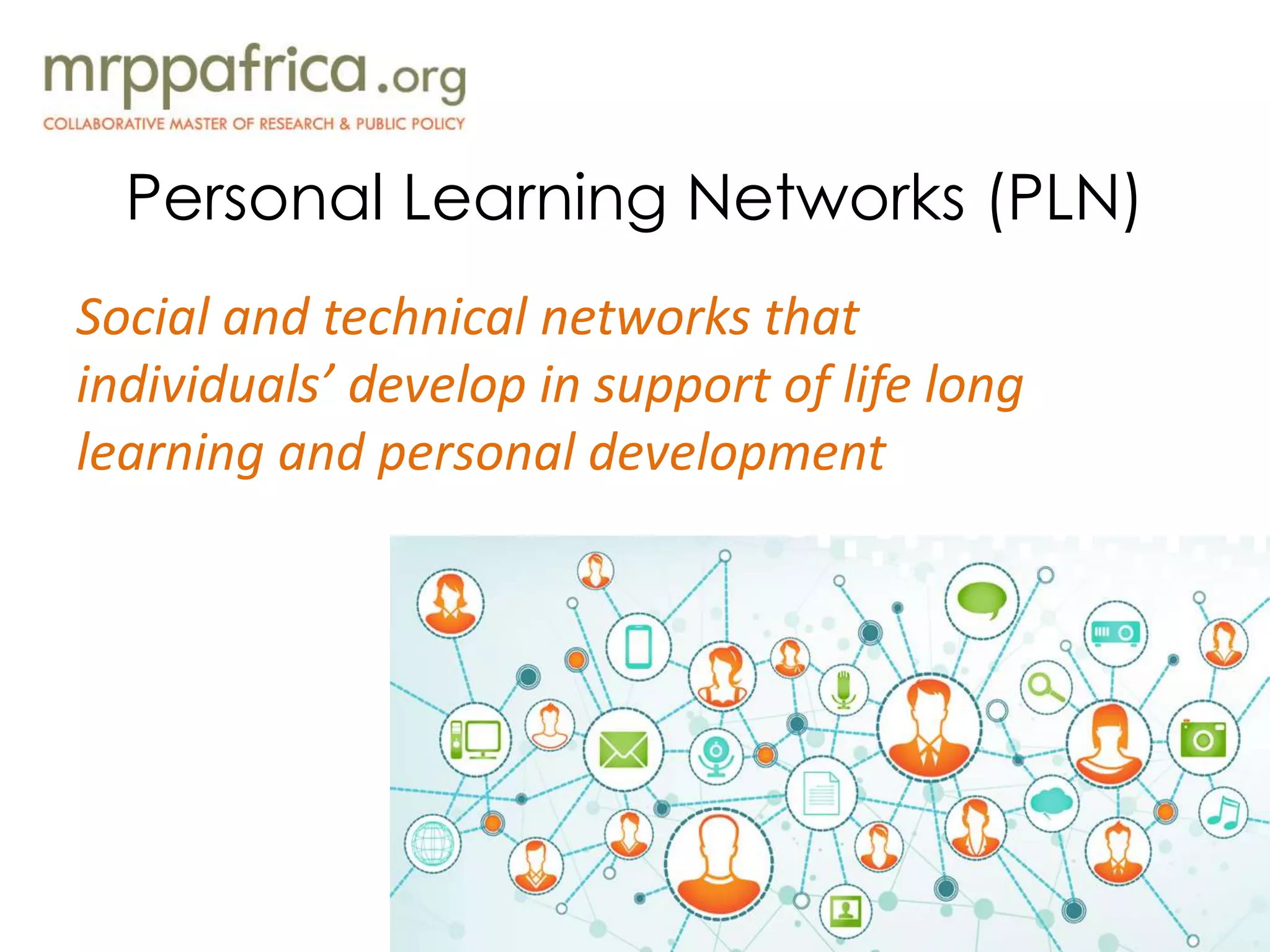
Personal Learning Networks (PLN)
Social and technical networks that
individuals’ develop in support of life long
learning and personal development
“Learning is a process that occurs within nebulous
environments of shifting core elements – not
entirely under the control of the
individual. Learning (defined as actionable
knowledge) can reside outside of ourselves (within
an organization or database), is focused on
connecting specialized information sets, and the
connections that enable us to learn more are more
important than our current state of knowing.”
George Siemens, (2005) “Connectivism: A Learning Theory for the
Digital Age.”
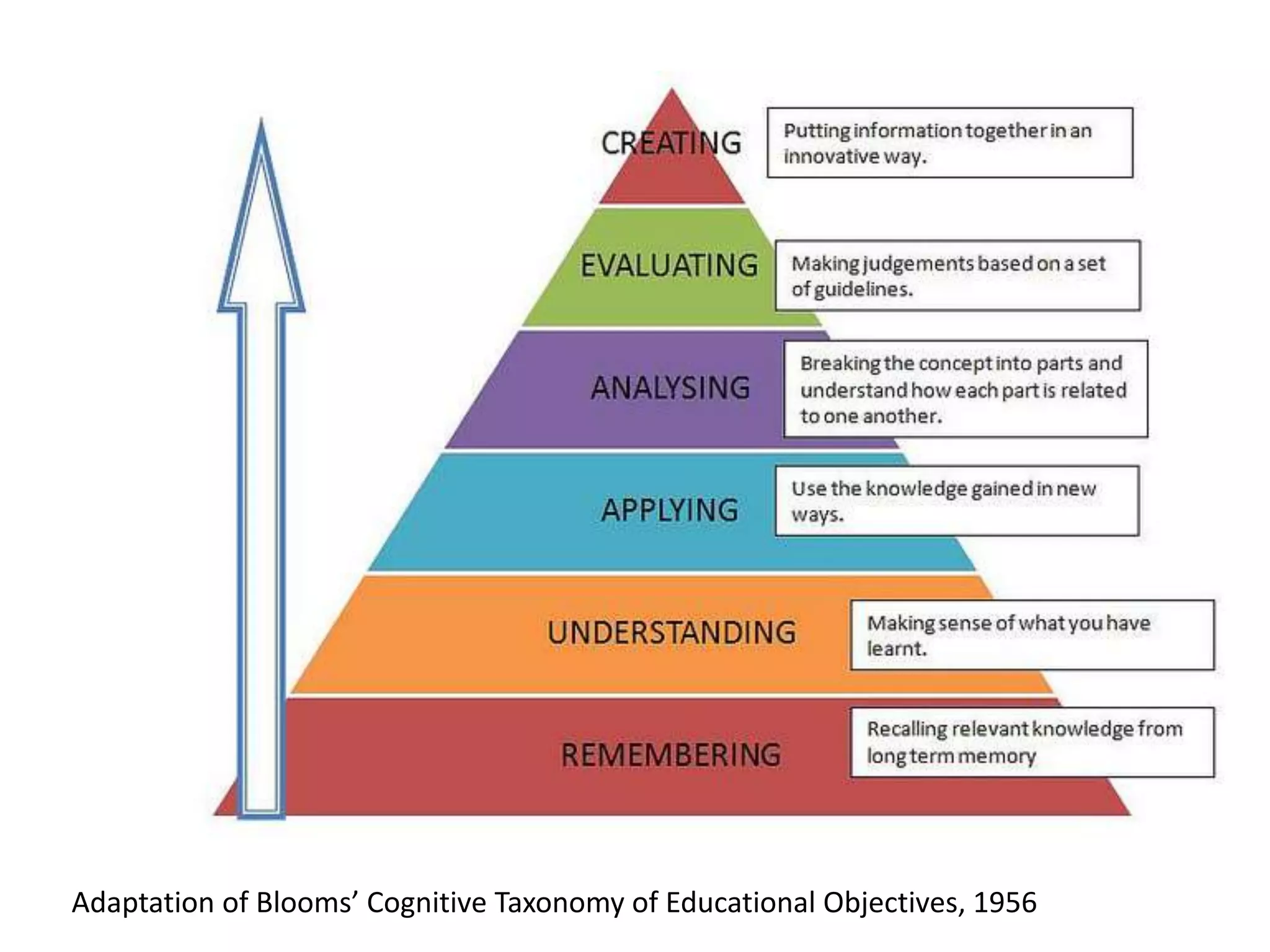
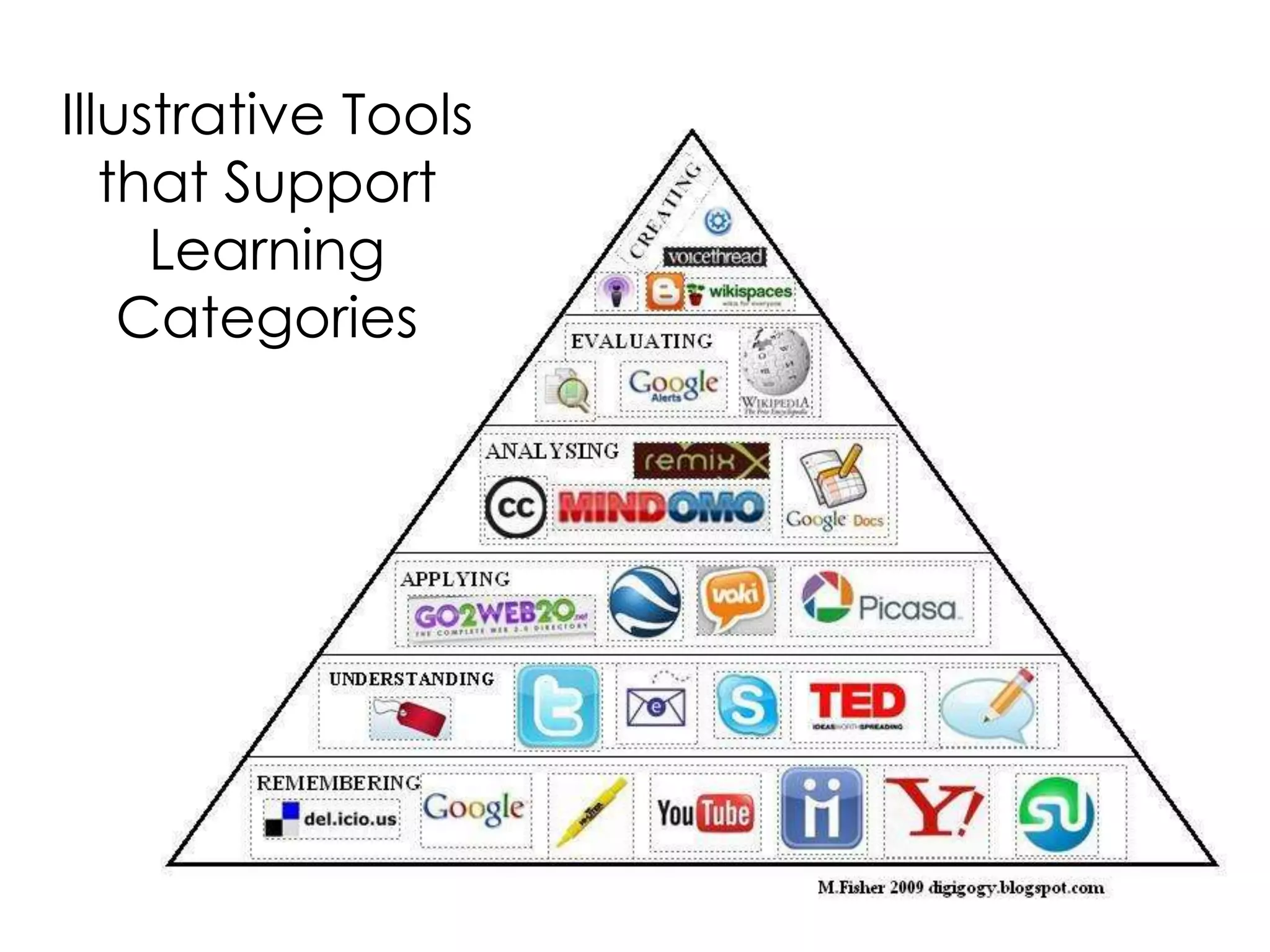
Adaptation of Blooms’ Cognitive Taxonomy of Educational Objectives, 1956
Assessing Your Learning Network
1) Think about three or four focus areas / topics of
your scholarship (your teaching, research &
engagement)
2) On paper, place yourself at the center
3) Use different colors, arrange the topics around
you
4) Document the people / resources you draw
upon to learn about these topics
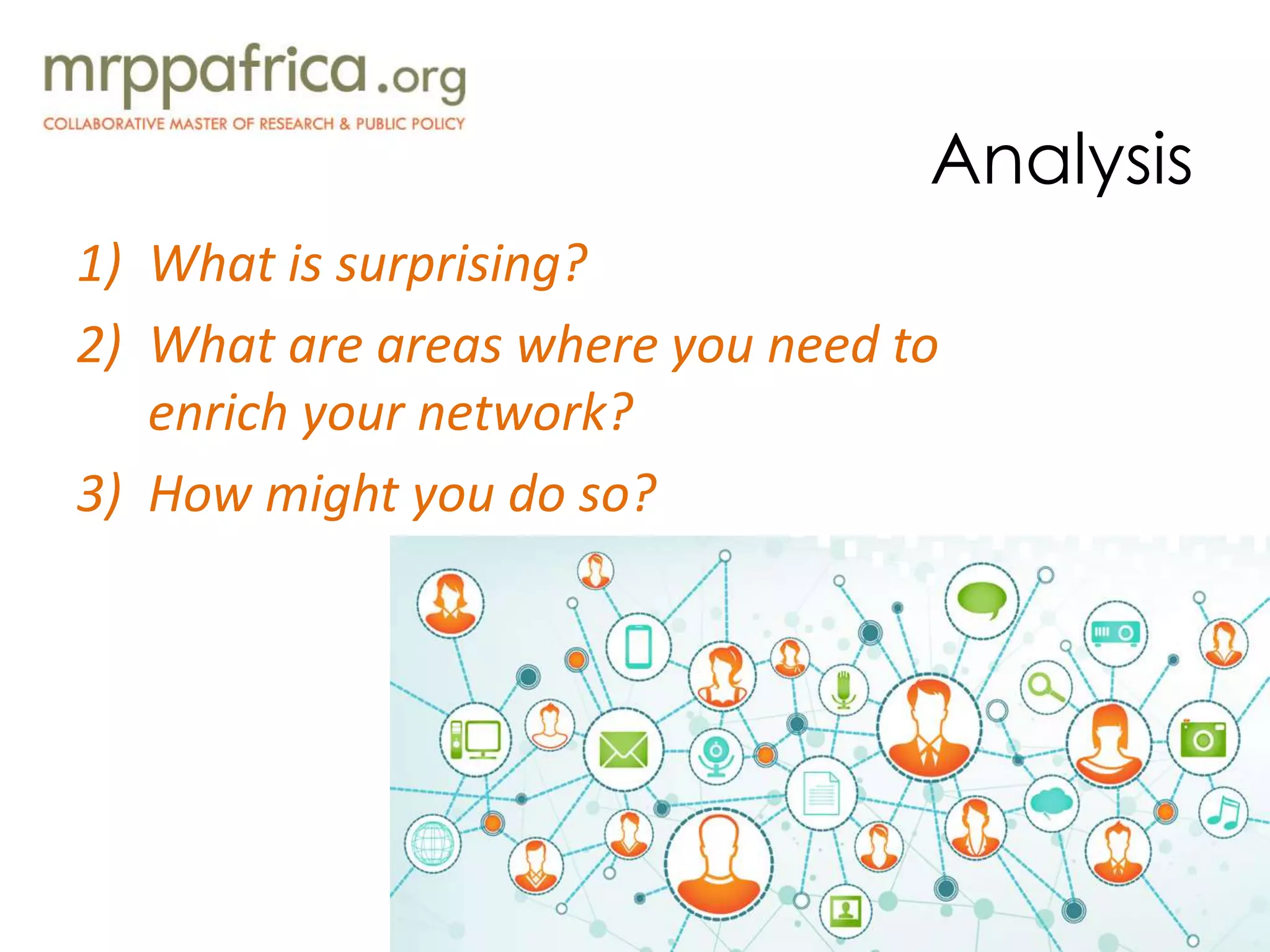
Analysis
1) What is surprising?
2) What are areas where you need to
enrich your network?
3) How might you do so?
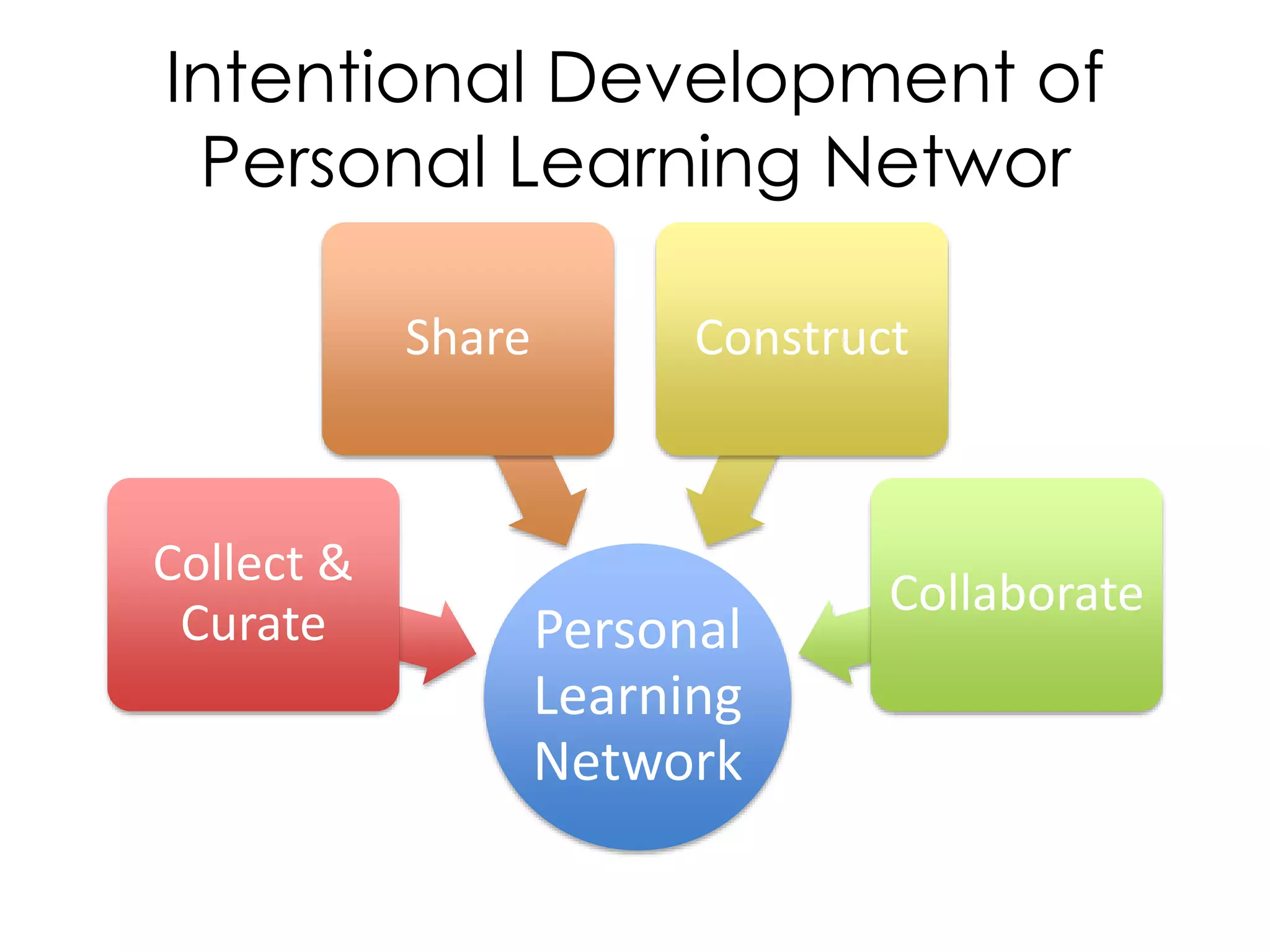
Intentional Development of
Personal Learning Networ
Personal
Learning
Network
Collect &
Curate
Share Construct
Collaborate
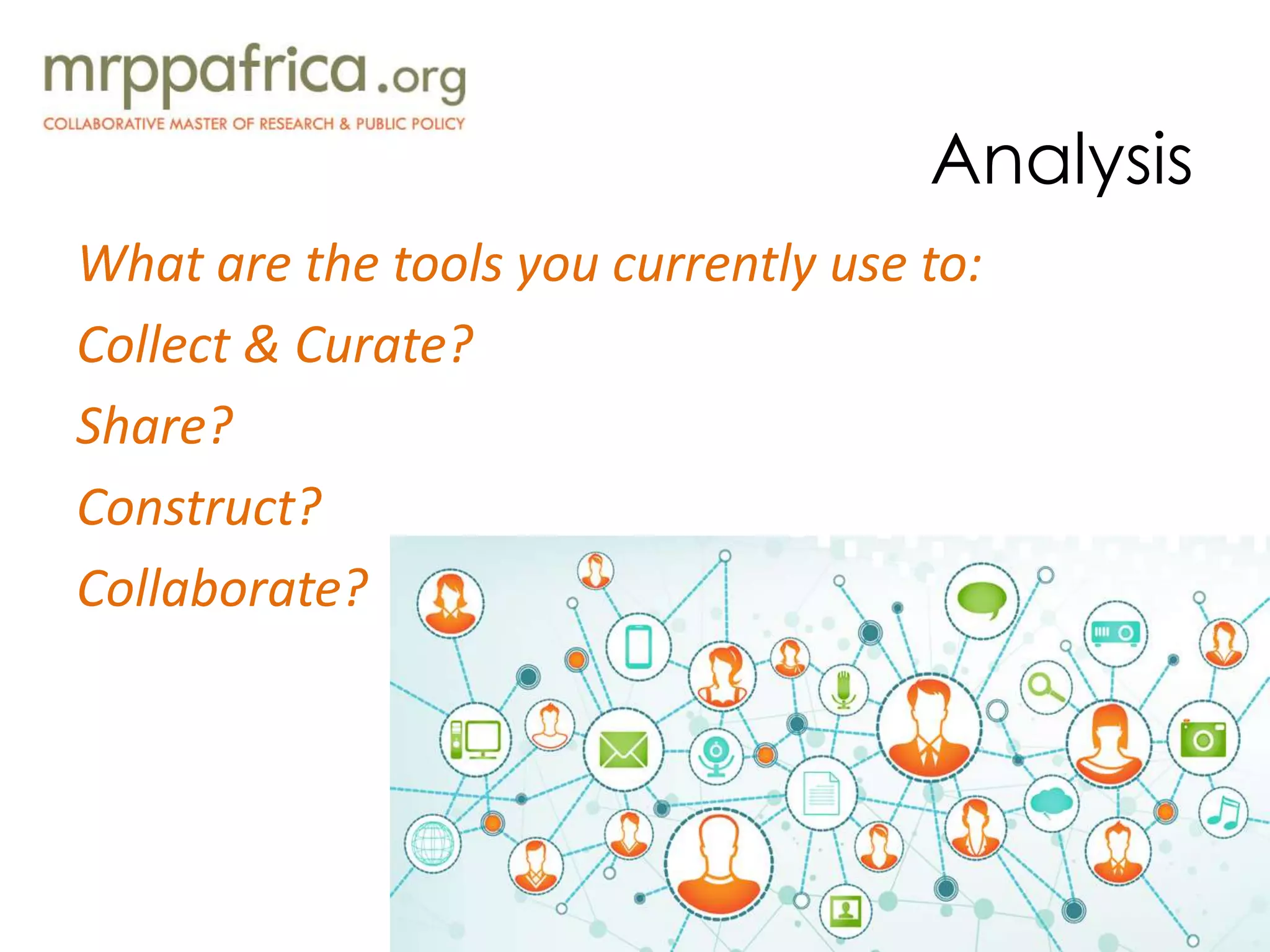
Analysis
What are the tools you currently use to:
Collect & Curate?
Share?
Construct?
Collaborate?
Illustrative Tools
that Support
Learning
Categories
Enriching your Own PLN
Learning Objects….
….”anything that is set up to constitute or
prompt the subject matter of an interactive
teaching session.” (Alford & Brock, 2014:2)
Collecting & Curating
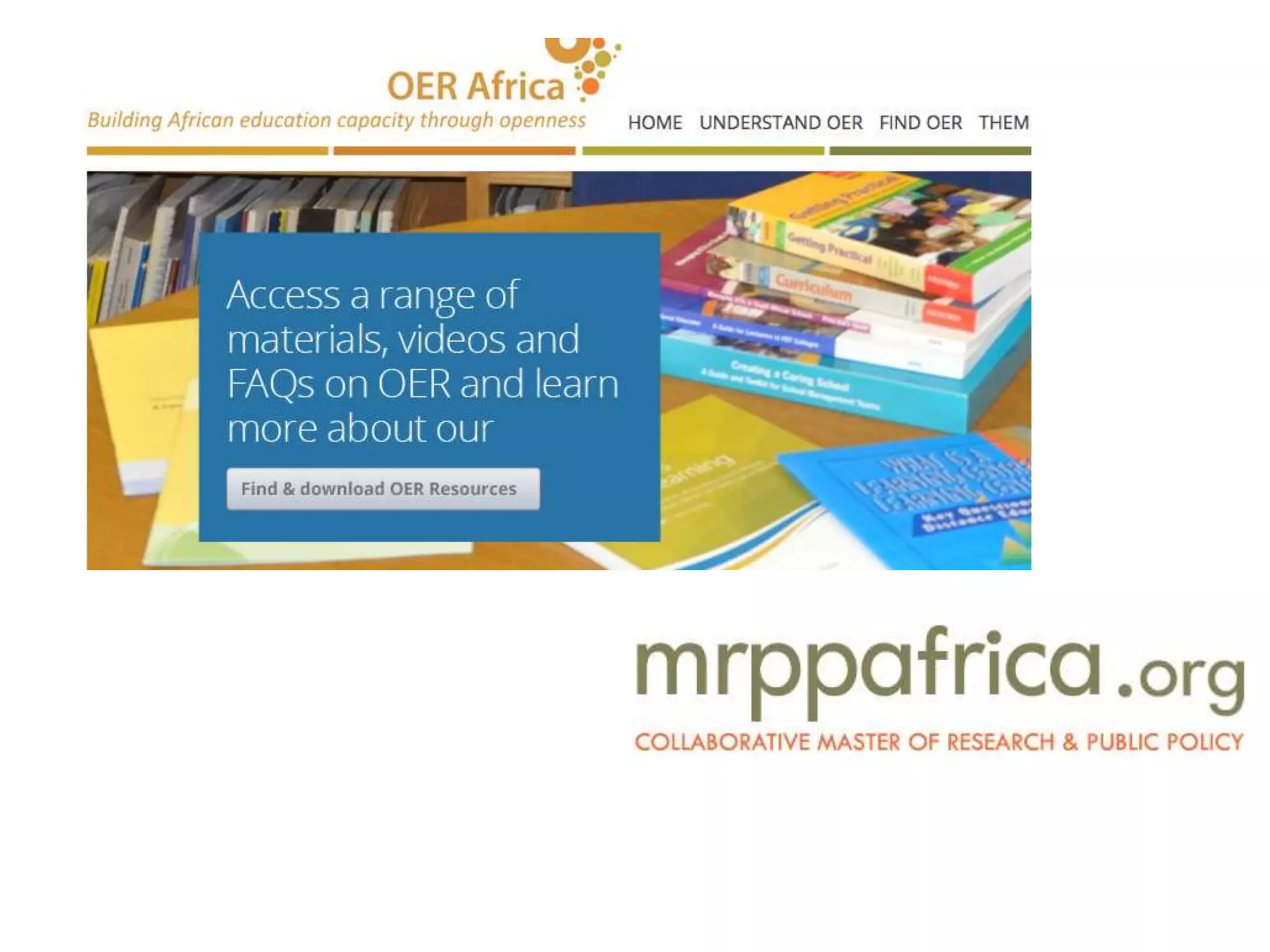
Open Educational
Resources
Freely accessible, openly formatted and
licensed media used for teaching,
learning, assessment and research
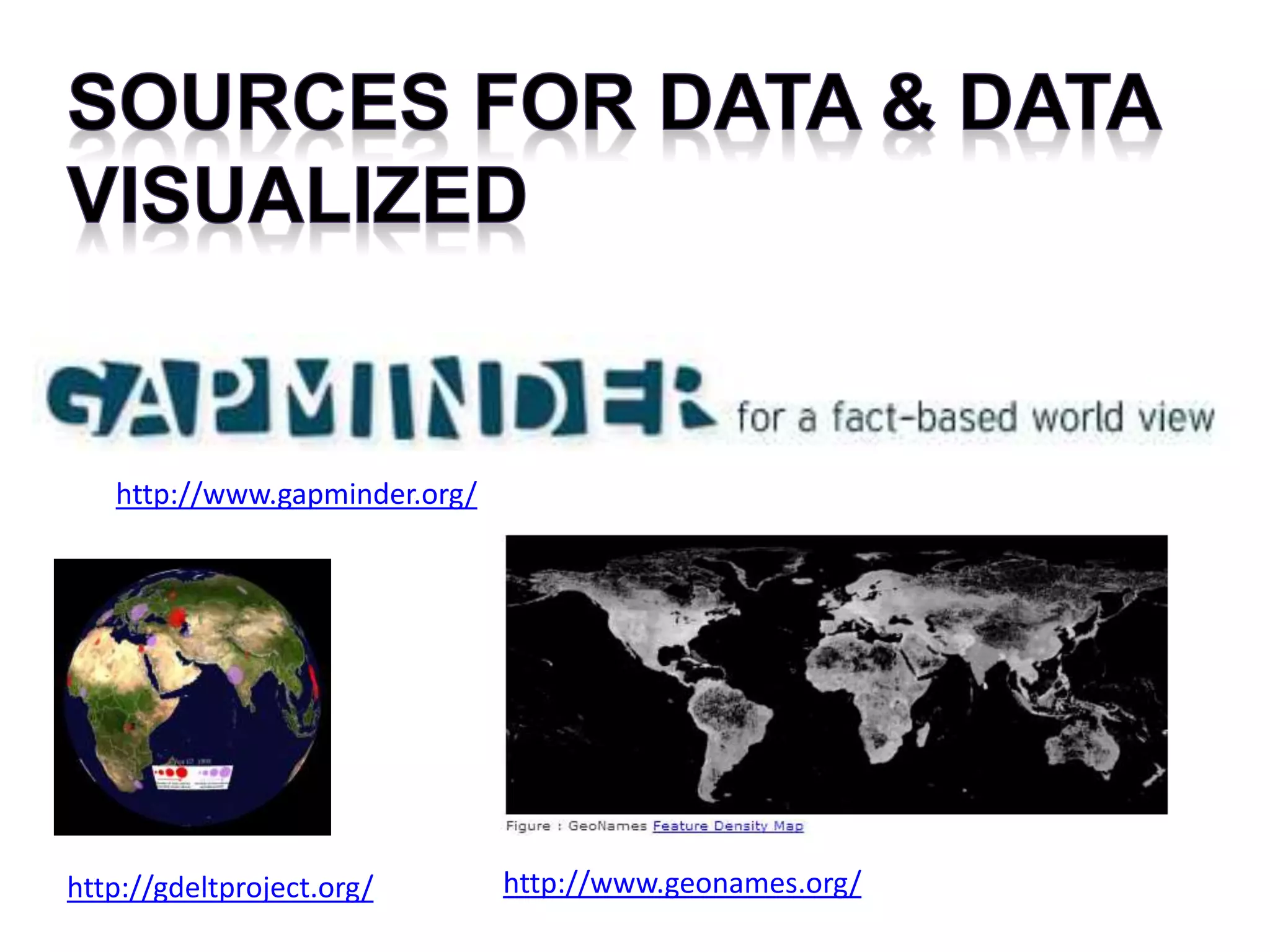
http://www.gapminder.org/
http://gdeltproject.org/ http://www.geonames.org/
Enriching your Own PLN
Share
Enriching your Own PLN
Construct
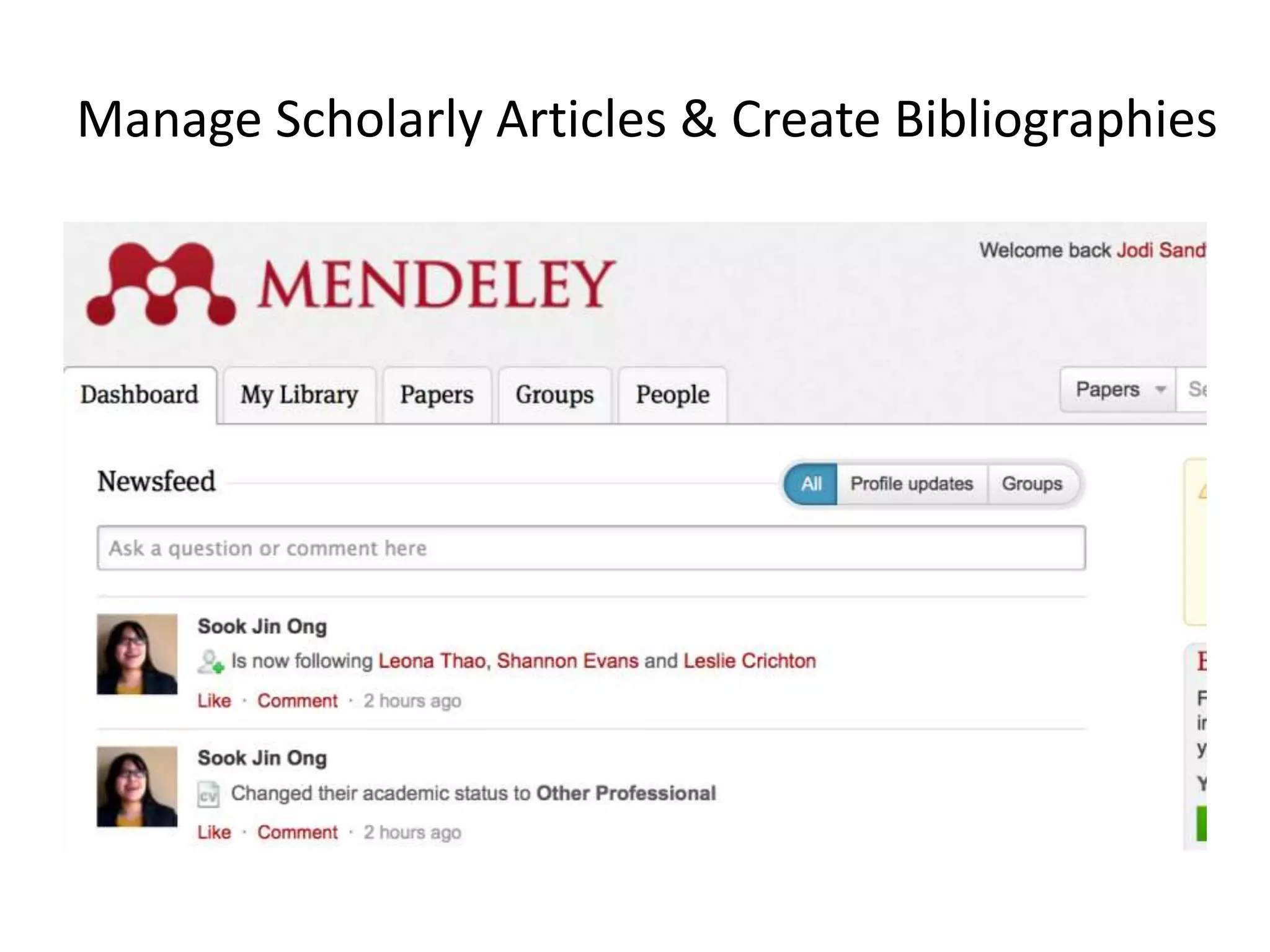
Manage Scholarly Articles & Create Bibliographies
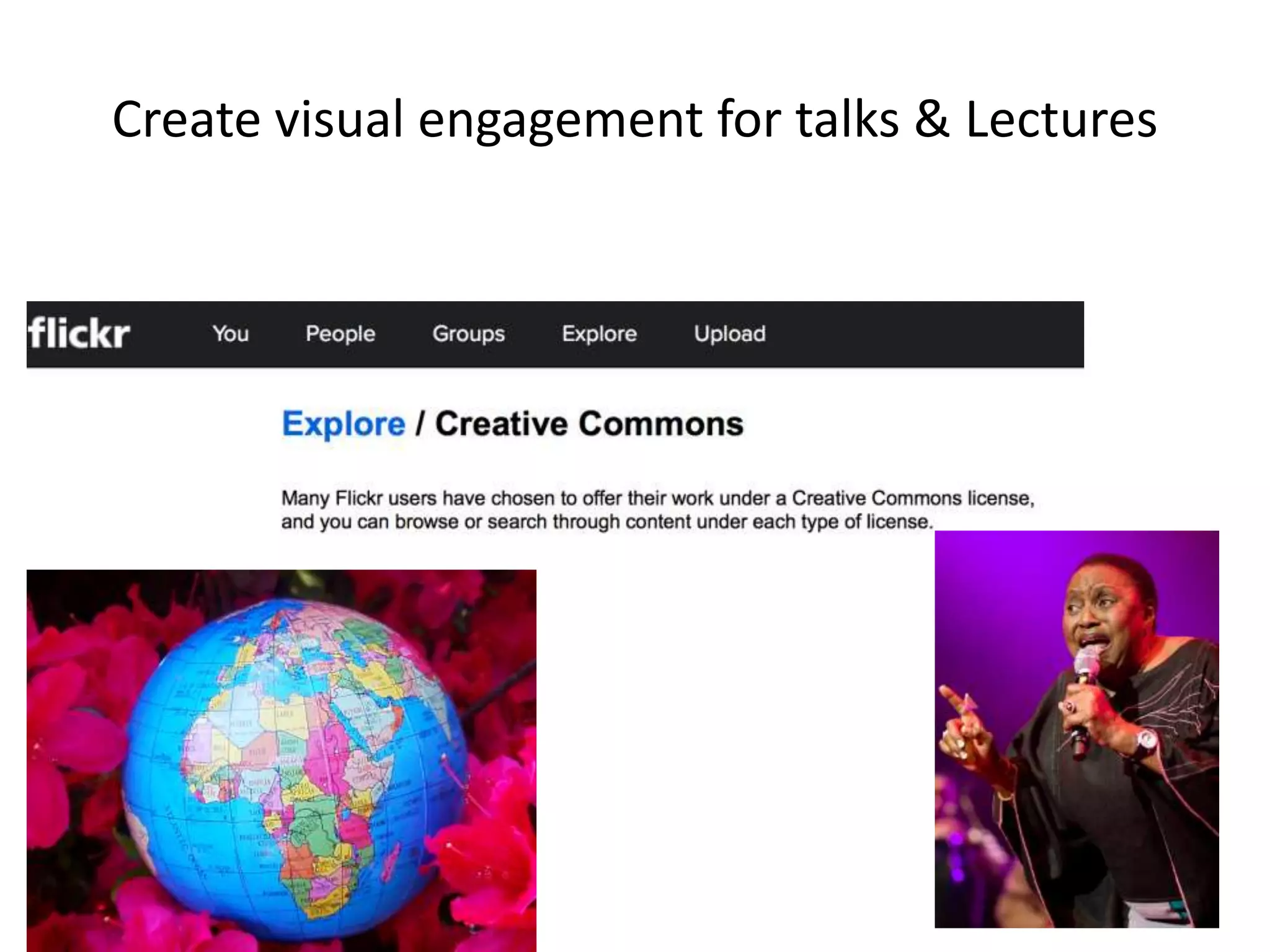
Create visual engagement for talks & Lectures
Enriching your Own PLN
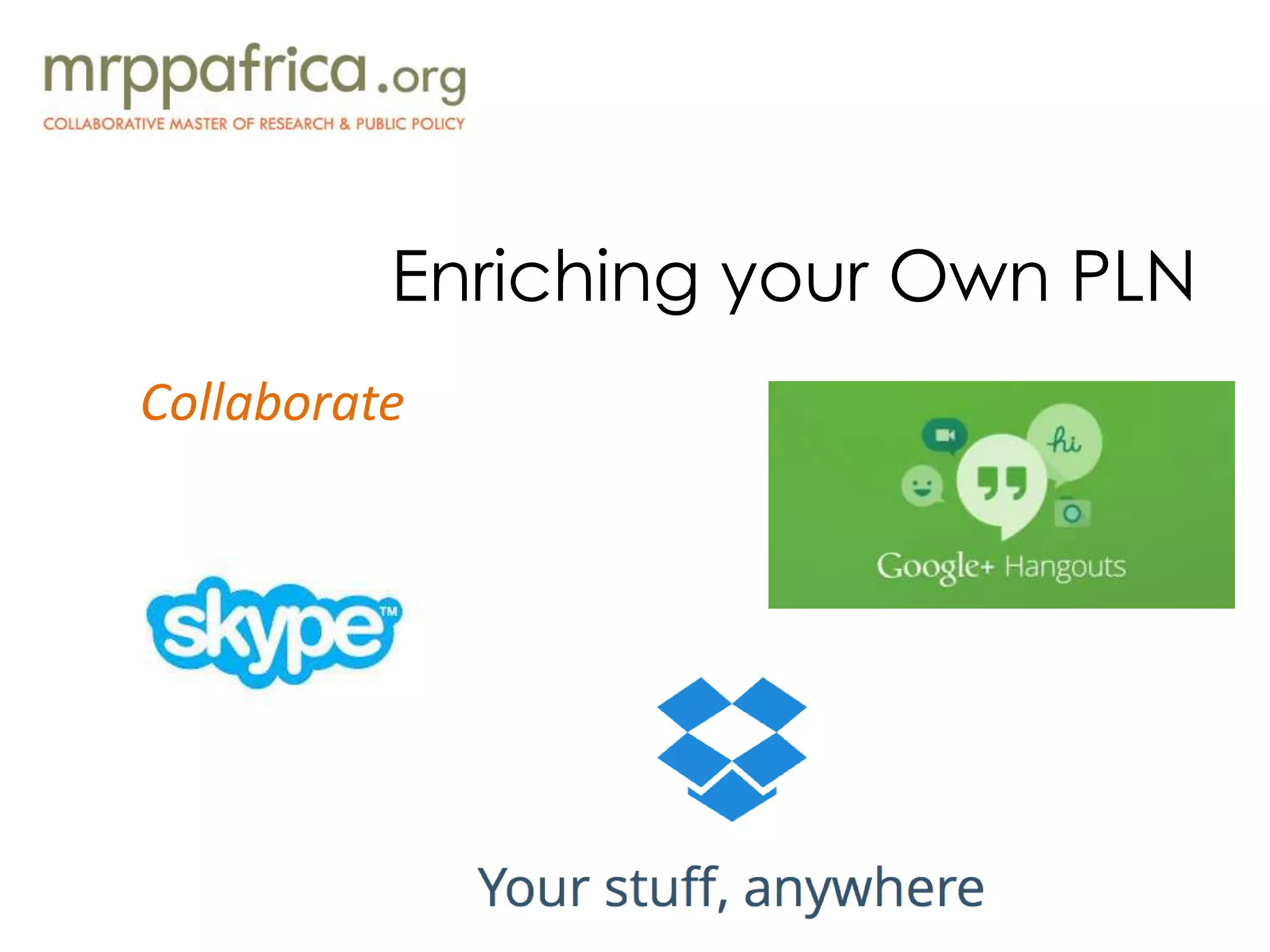
Collaborate
Enriching your Own PLN
• Time each week to explore and develop new
resources
• Create diagram (or modify) as you go –
provides framework for your own learning
tools (to learn more follow this link)
• Also teach concept to aid students in policy
research
• Build out your personal learning network and
learn more
• Try out tools described
• Capture this presentation (including hyperlinks)
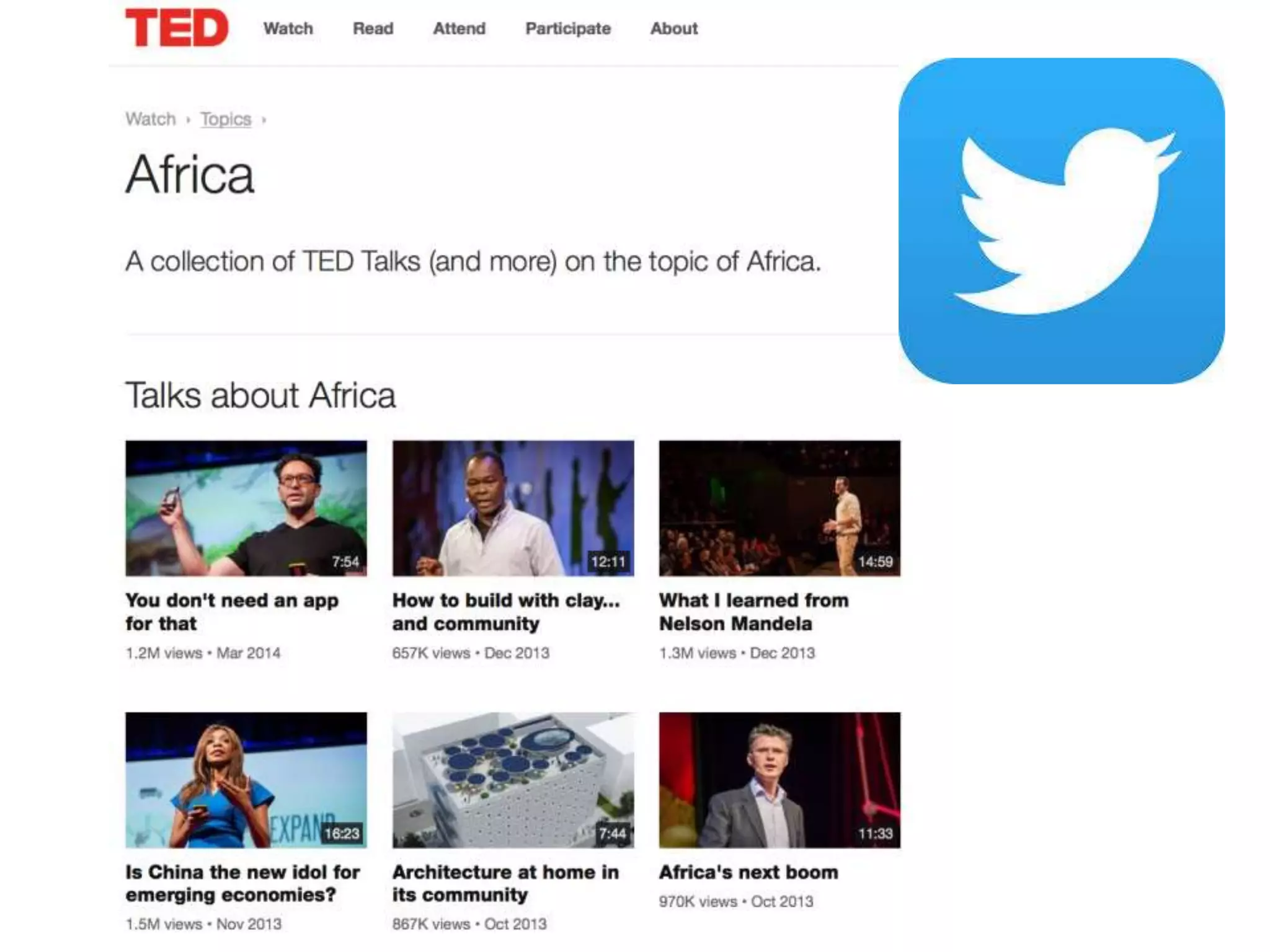
• Find & Share new ones. Share via Twitter
#MRPPlaunch @mrppafrica

Personal learning networks for MRPP faculty

  • 1.
    Personal Learning Networks ProfessorJodi Sandfort University of Minnesota, School of Public Affairs sandf002@umn.edu
  • 2.
    Except where otherwisenoted, this work is licensed under Attribution-ShareAlike 4.0 License: http://creativecommons.org/licenses/by-sa/4.0/
  • 3.
    Changing African Context •23 countries where nearly 2/3rd have mobile phones. • Considerable growth • Country by country prevalence, Gallop poll (2013)
  • 5.
  • 6.
    Workshop Learning Objectives •Explore how information environment can support your own scholarship – Teaching, Research & Engagement • Assess your own personal learning network • Consider easy ways to “fill in” the gaps
  • 7.
    Personal Learning Networks(PLN) Social and technical networks that individuals’ develop in support of life long learning and personal development
  • 8.
    “Learning is aprocess that occurs within nebulous environments of shifting core elements – not entirely under the control of the individual. Learning (defined as actionable knowledge) can reside outside of ourselves (within an organization or database), is focused on connecting specialized information sets, and the connections that enable us to learn more are more important than our current state of knowing.” George Siemens, (2005) “Connectivism: A Learning Theory for the Digital Age.”
  • 9.
    Adaptation of Blooms’Cognitive Taxonomy of Educational Objectives, 1956
  • 10.
    Assessing Your LearningNetwork 1) Think about three or four focus areas / topics of your scholarship (your teaching, research & engagement) 2) On paper, place yourself at the center 3) Use different colors, arrange the topics around you 4) Document the people / resources you draw upon to learn about these topics
  • 11.
    Analysis 1) What issurprising? 2) What are areas where you need to enrich your network? 3) How might you do so?
  • 12.
    Intentional Development of PersonalLearning Networ Personal Learning Network Collect & Curate Share Construct Collaborate
  • 13.
    Analysis What are thetools you currently use to: Collect & Curate? Share? Construct? Collaborate?
  • 14.
  • 15.
    Enriching your OwnPLN Learning Objects…. ….”anything that is set up to constitute or prompt the subject matter of an interactive teaching session.” (Alford & Brock, 2014:2) Collecting & Curating
  • 16.
    Open Educational Resources Freely accessible,openly formatted and licensed media used for teaching, learning, assessment and research
  • 17.
  • 20.
  • 22.
    Enriching your OwnPLN Construct
  • 23.
    Manage Scholarly Articles& Create Bibliographies
  • 24.
    Create visual engagementfor talks & Lectures
  • 25.
    Enriching your OwnPLN Collaborate
  • 26.
    Enriching your OwnPLN • Time each week to explore and develop new resources • Create diagram (or modify) as you go – provides framework for your own learning tools (to learn more follow this link) • Also teach concept to aid students in policy research
  • 27.
    • Build outyour personal learning network and learn more • Try out tools described • Capture this presentation (including hyperlinks) • Find & Share new ones. Share via Twitter #MRPPlaunch @mrppafrica