OUTLINE
DEFINITION OF PLN
THE AIM OF PLN
THE DIFFERENT TOOLS
THE CHALLENGE
CONCLUSION
Aim
To study the organization of Personal
Learning Networks (PLN) and to support
the optimization of teachers’ efficacy and
productivity
A personal or professional
learning network (PLN) involves
an individual’s topic-oriented
goal, a set of practices &
techniques aimed at attracting
and organizing a variety of
relevant content sources,
selected for their value, to help
the owner accomplish a
professional goal or personal
interest.
“the heart of the concept of the PLE is
that it is a tool that allows a learner (or
anyone) to engage in a distributed
environment consisting of a network of
people, services and resources. It is not
just Web 2.0, but it is certainly Web 2.0 in
the sense that it is (in the broadest sense
possible) a read-write application.”
Stephen Downes, 2006
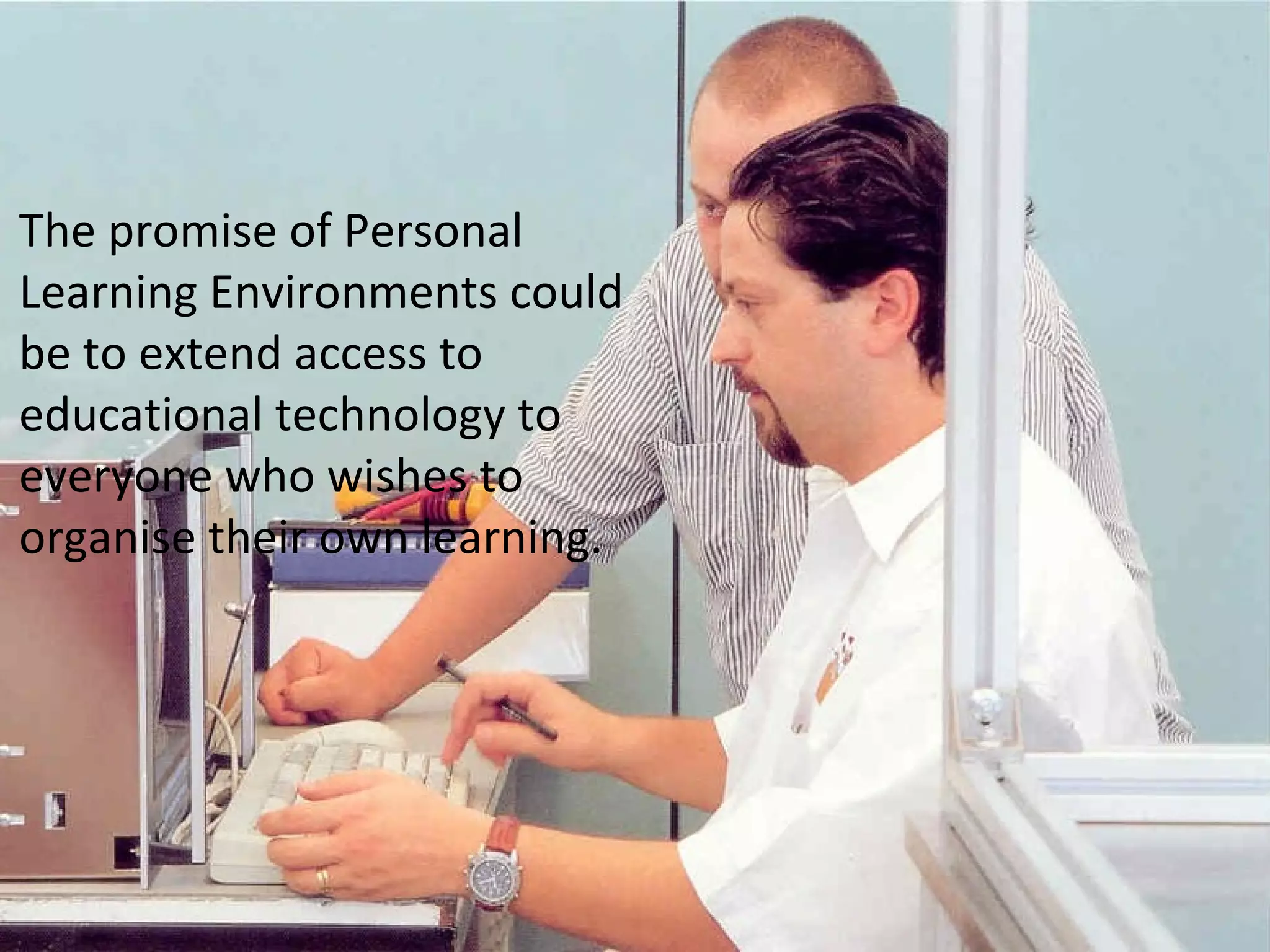
The promise of Personal
Learning Environments could
be to extend access to
educational technology to
everyone who wishes to
organise their own learning.
Personal Learning network - a concept
based on Web 2 .0 and social software
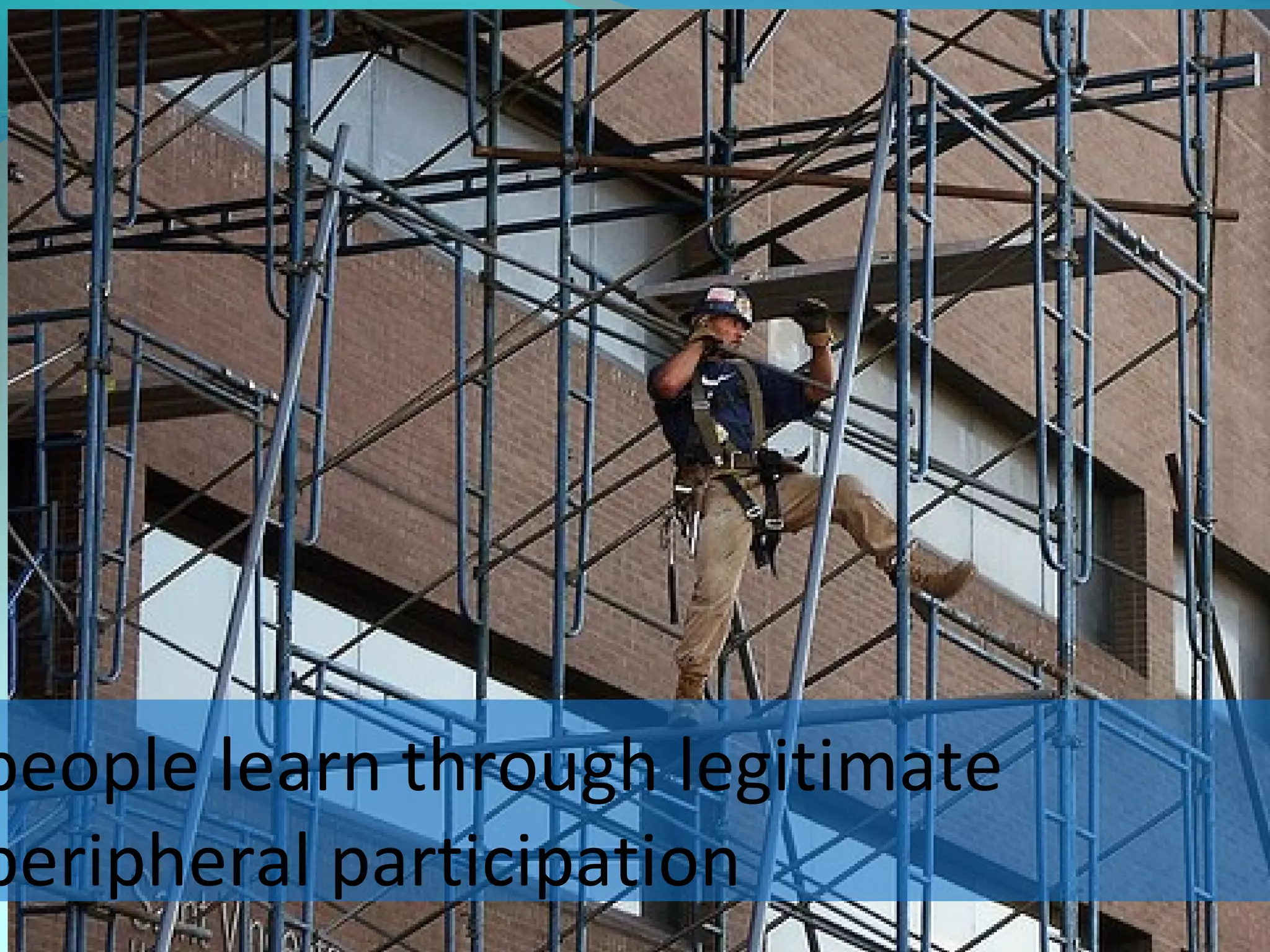
people learn through legitimate
peripheral participation
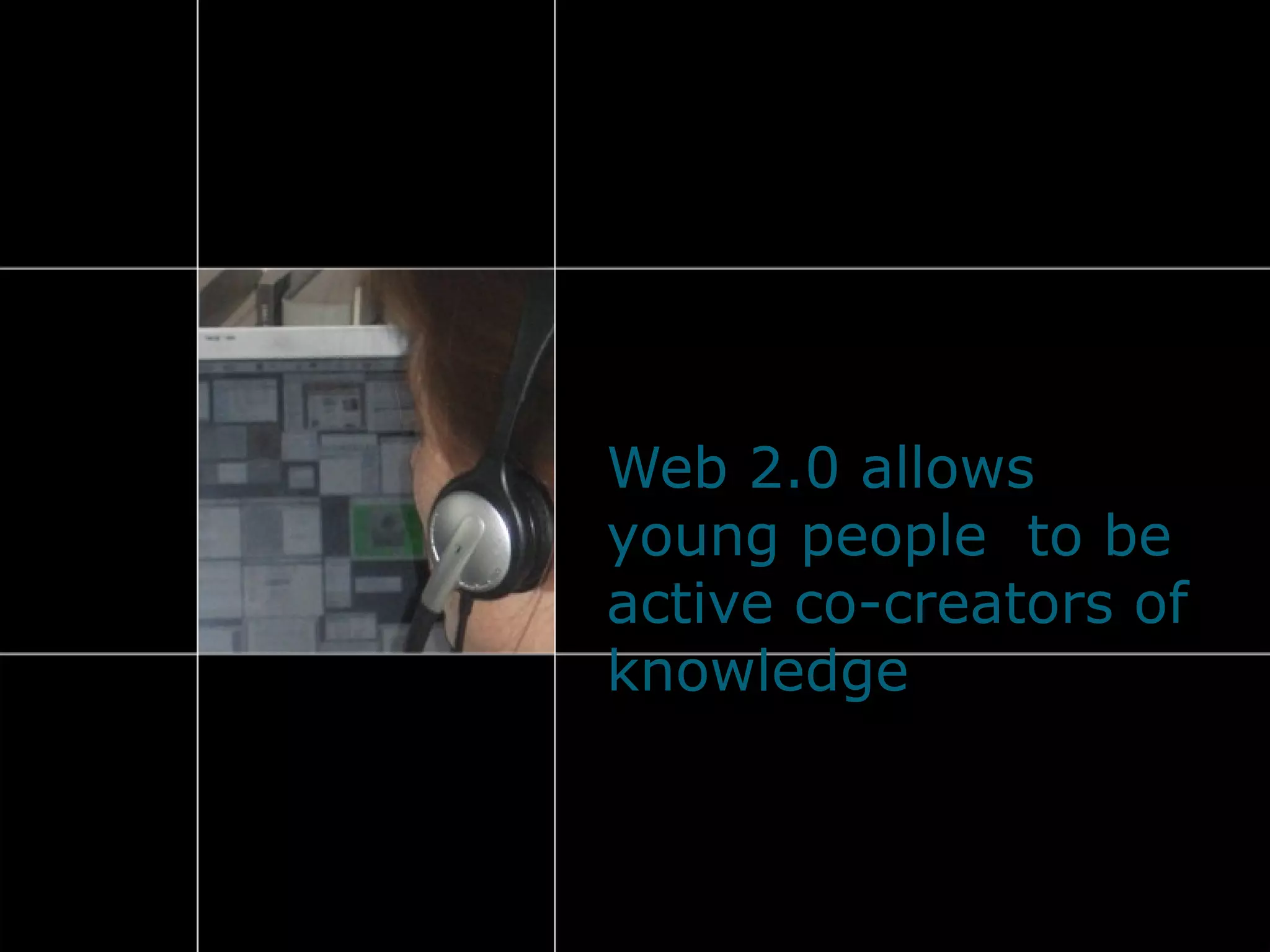
Web 2.0 allows
young people to be
active co-creators of
knowledge
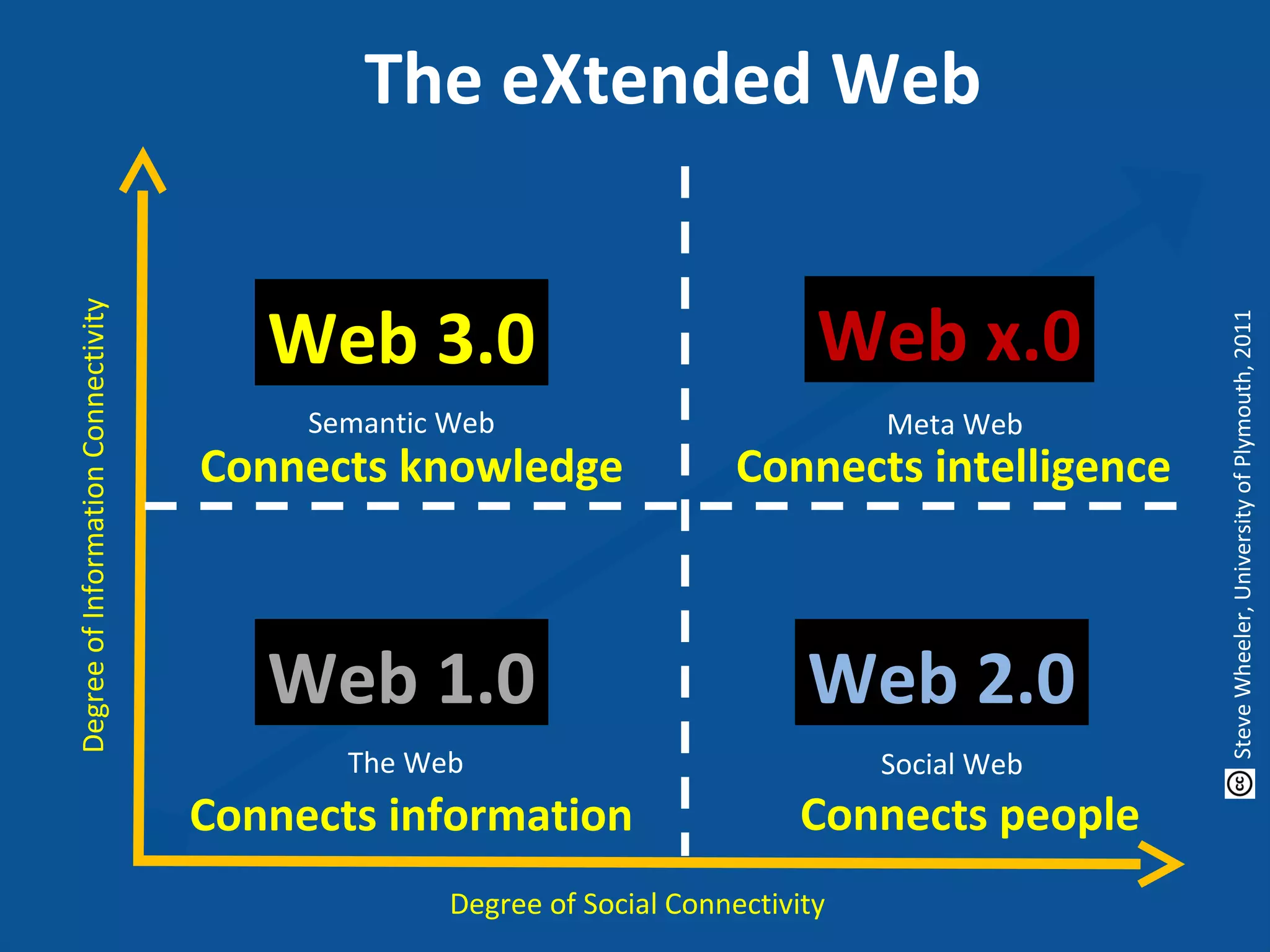
Web 3.0
Semantic Web
Web 1.0
The Web
Web x.0
Meta Web
Web 2.0
Social Web
Degree of Social Connectivity
DegreeofInformationConnectivity
Connects information Connects people
Connects knowledge Connects intelligence
The eXtended Web
SteveWheeler,UniversityofPlymouth,2011
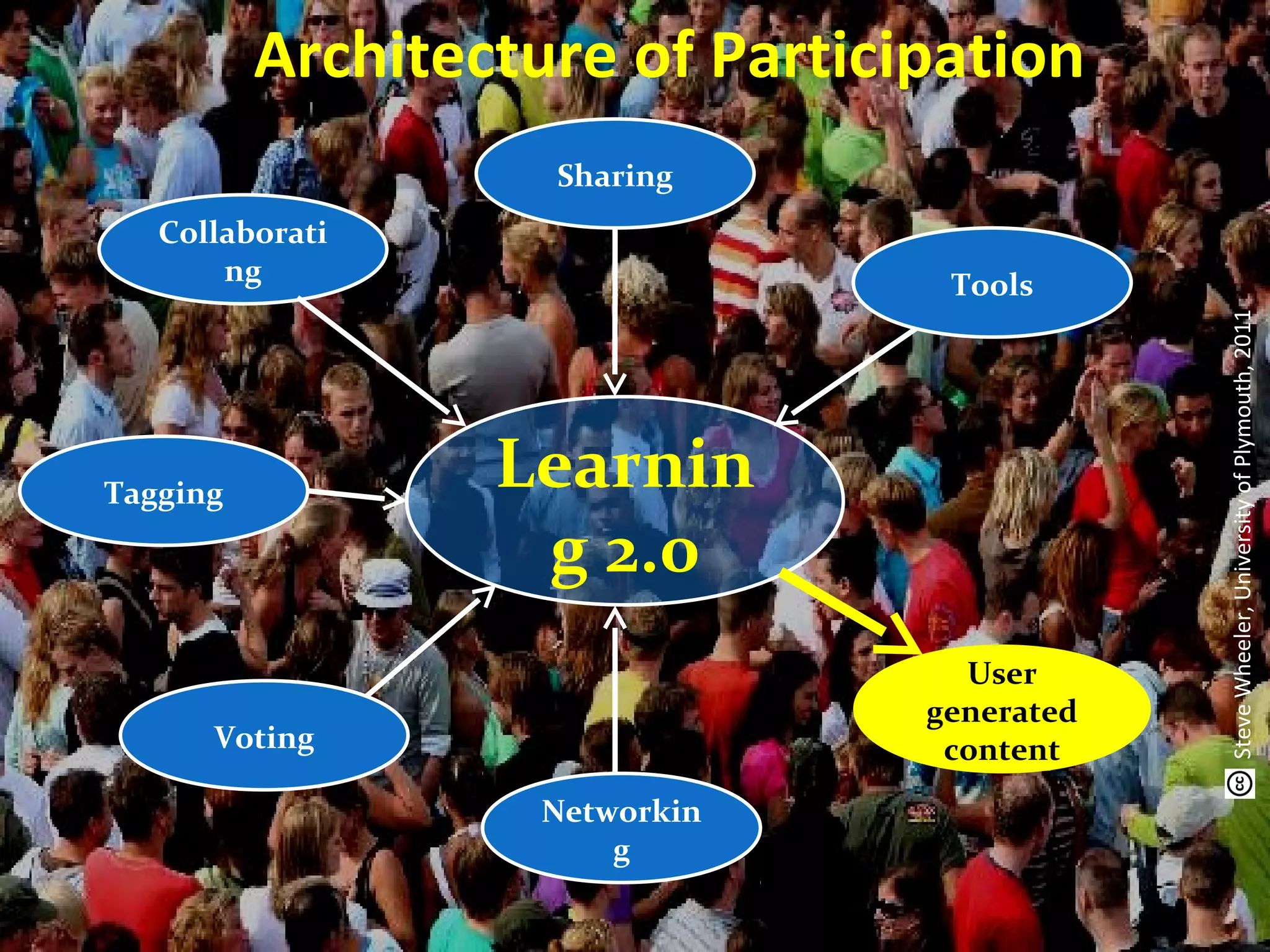
Learnin
g 2.0
Tools
Collaborati
ng
Sharing
Voting
Networkin
g
User
generated
content
Architecture of Participation
Tagging
SteveWheeler,UniversityofPlymouth,2011
http://www.eastone.co.uk/
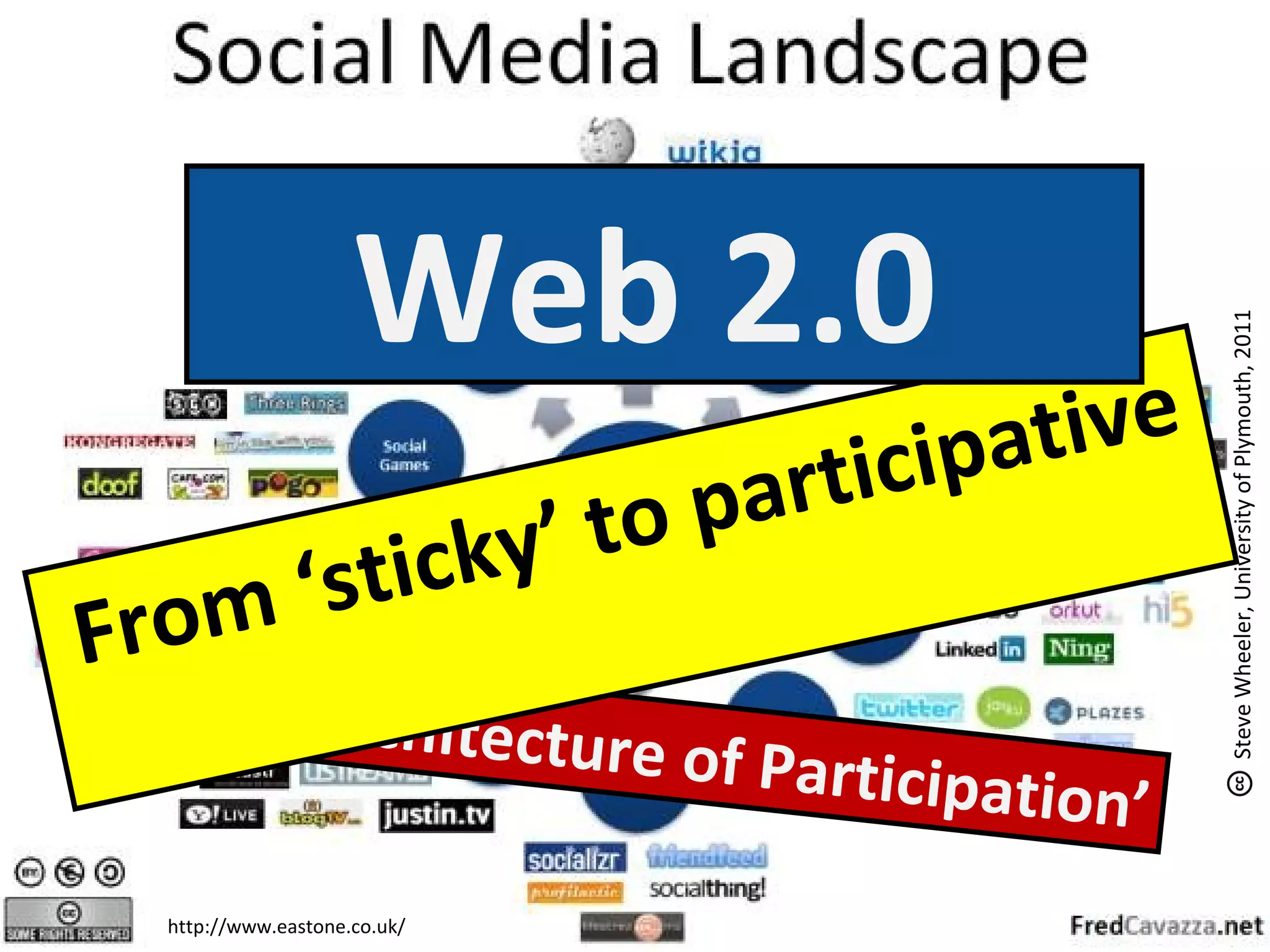
The ‘Architecture of Participation’
SteveWheeler,UniversityofPlymouth,2011
From ‘sticky’ to participative
Web 2.0
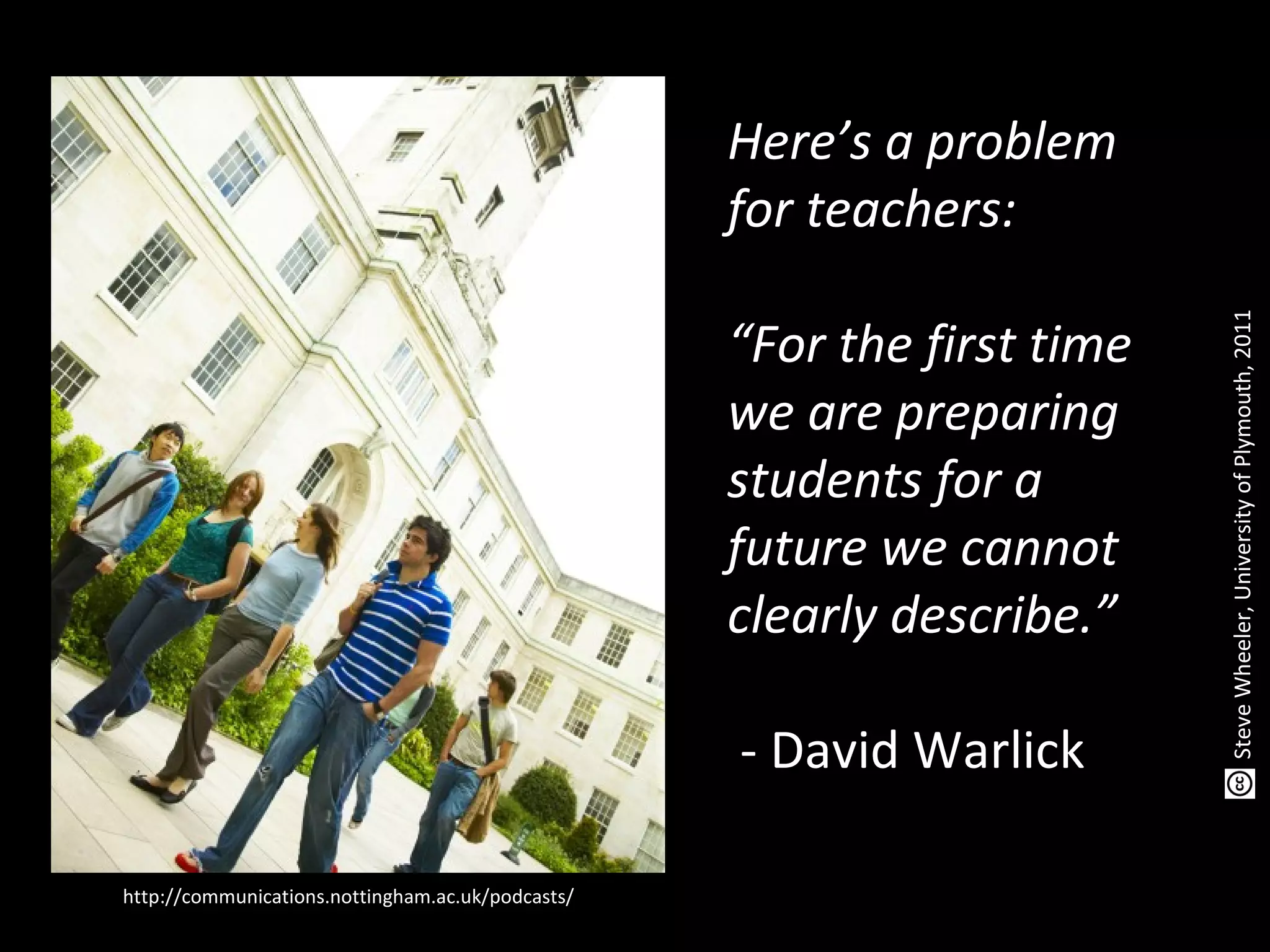
Here’s a problem
for teachers:
“For the first time
we are preparing
students for a
future we cannot
clearly describe.”
- David Warlick
http://communications.nottingham.ac.uk/podcasts/
SteveWheeler,UniversityofPlymouth,2011
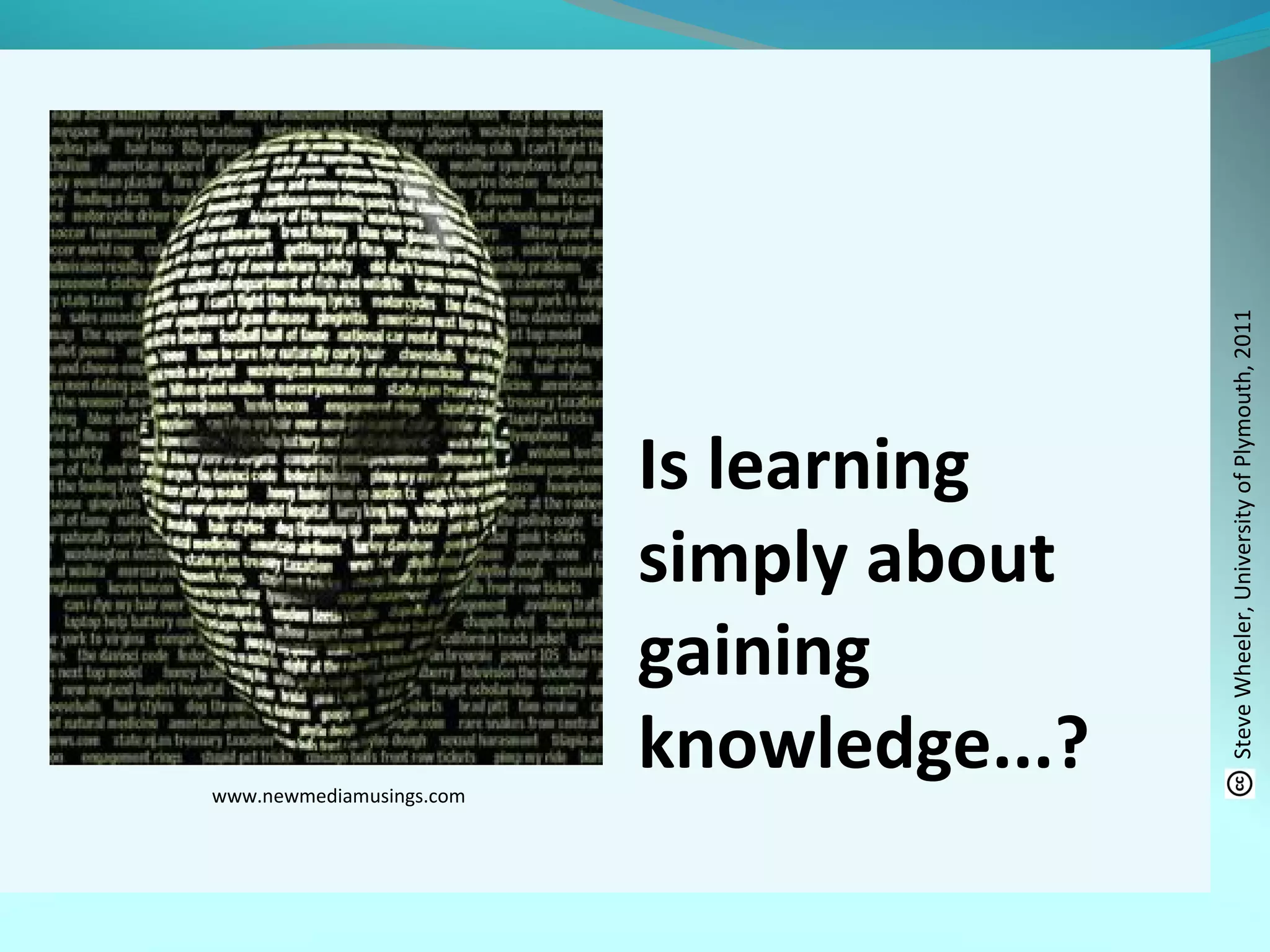
www.newmediamusings.com
Is learning
simply about
gaining
knowledge...?
SteveWheeler,UniversityofPlymouth,2011
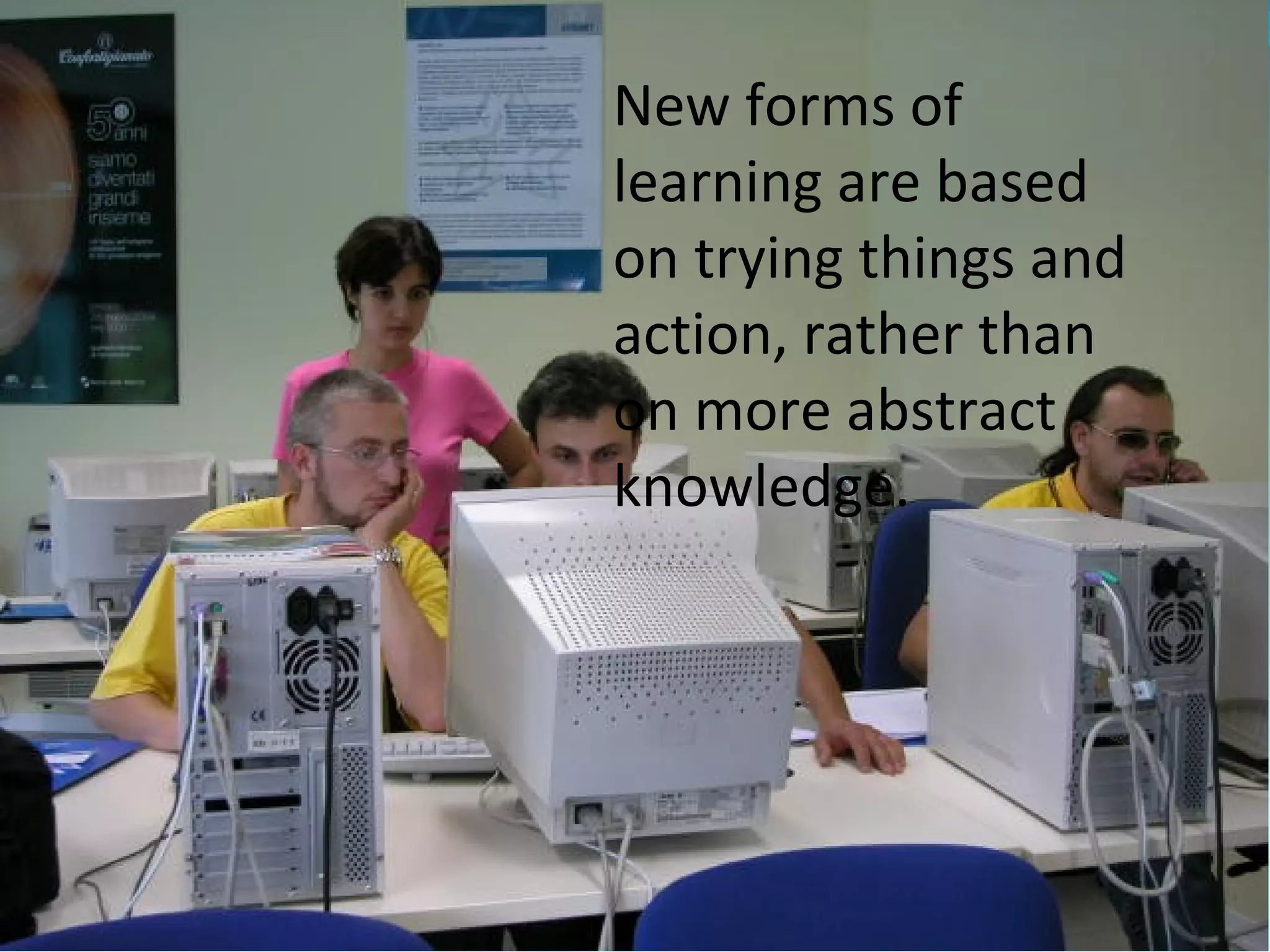
New forms of
learning are based
on trying things and
action, rather than
on more abstract
knowledge.
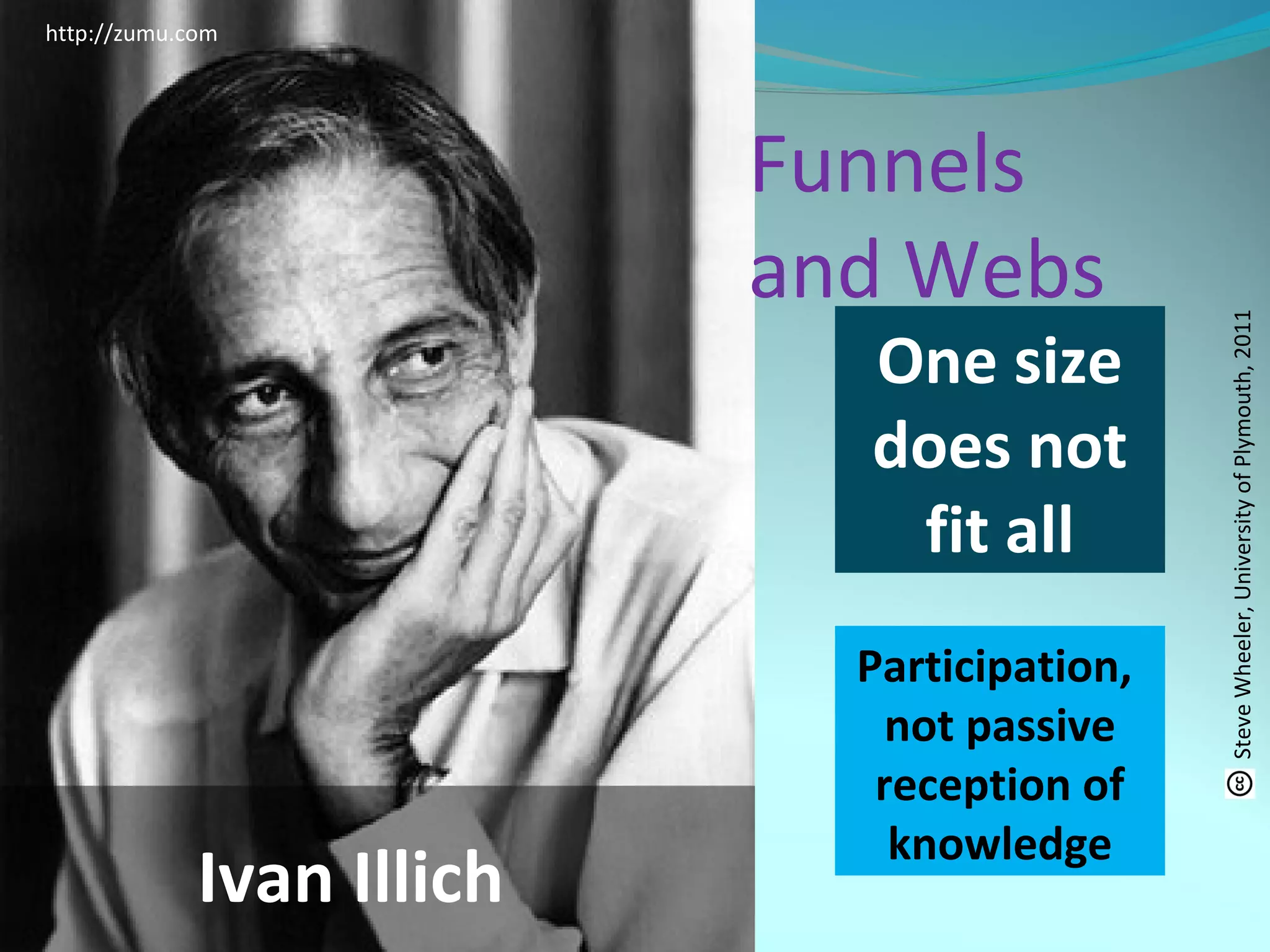
Funnels
and Webs
Ivan Illich
http://zumu.com
One size
does not
fit all
Participation,
not passive
reception of
knowledge
SteveWheeler,UniversityofPlymouth,2011
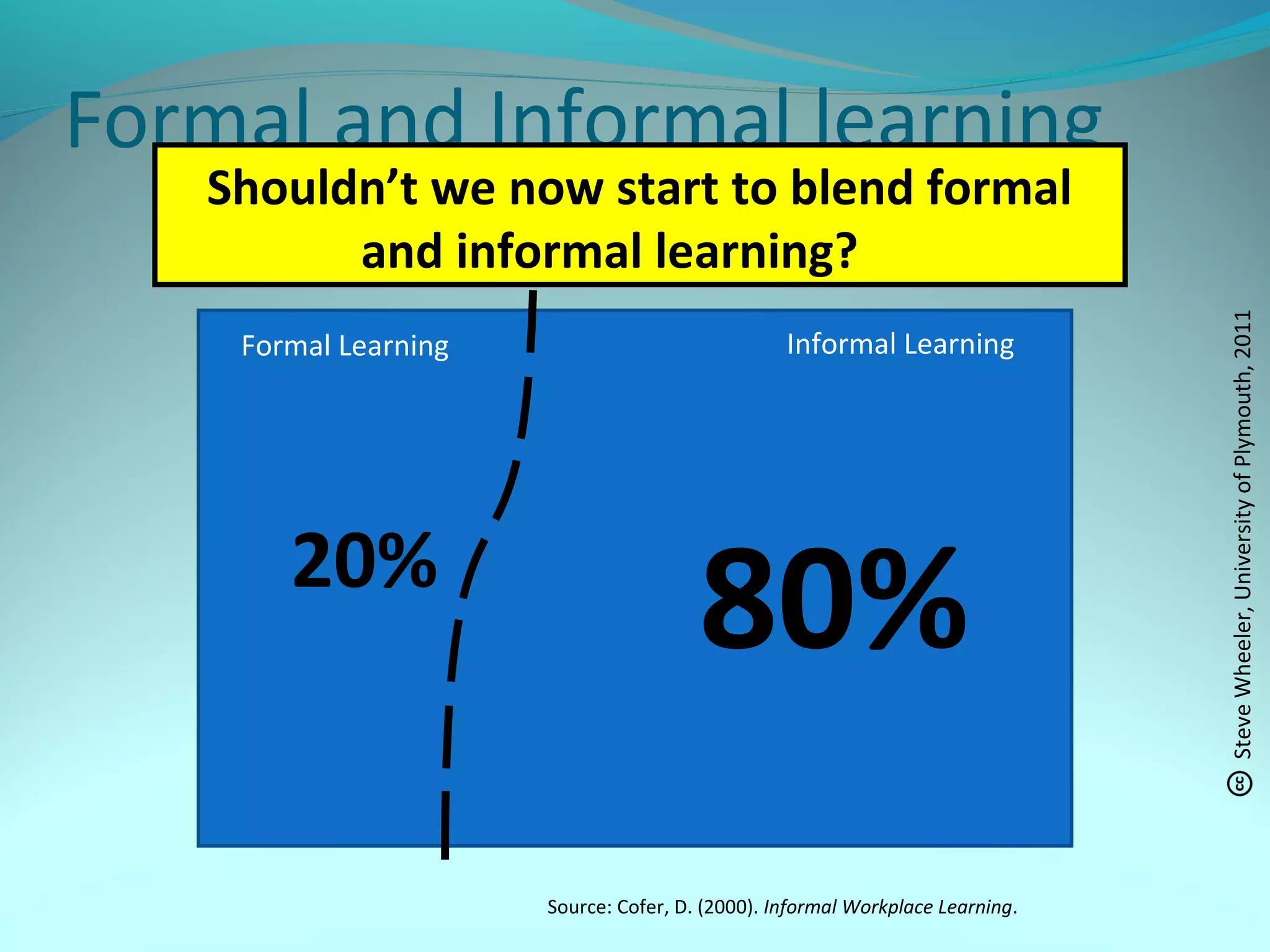
Formal and Informal learning
Formal Learning Informal Learning
20%
80%
Source: Cofer, D. (2000). Informal Workplace Learning.
Shouldn’t we now start to blend formal
and informal learning?
SteveWheeler,UniversityofPlymouth,2011
Eric Langhorst
Liberty Public Schools
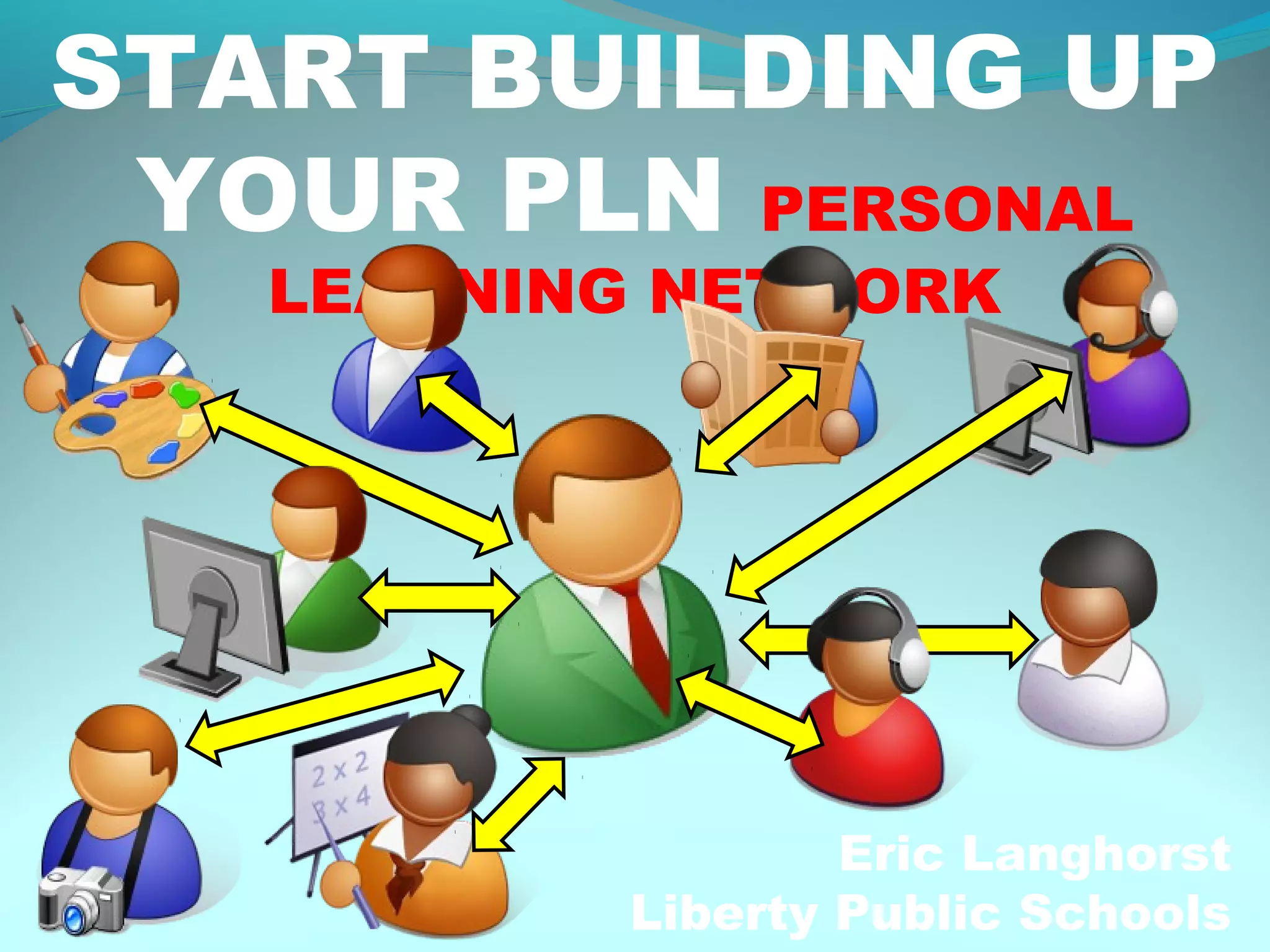
START BUILDING UP
YOUR PLN PERSONAL
LEARNING NETWORK
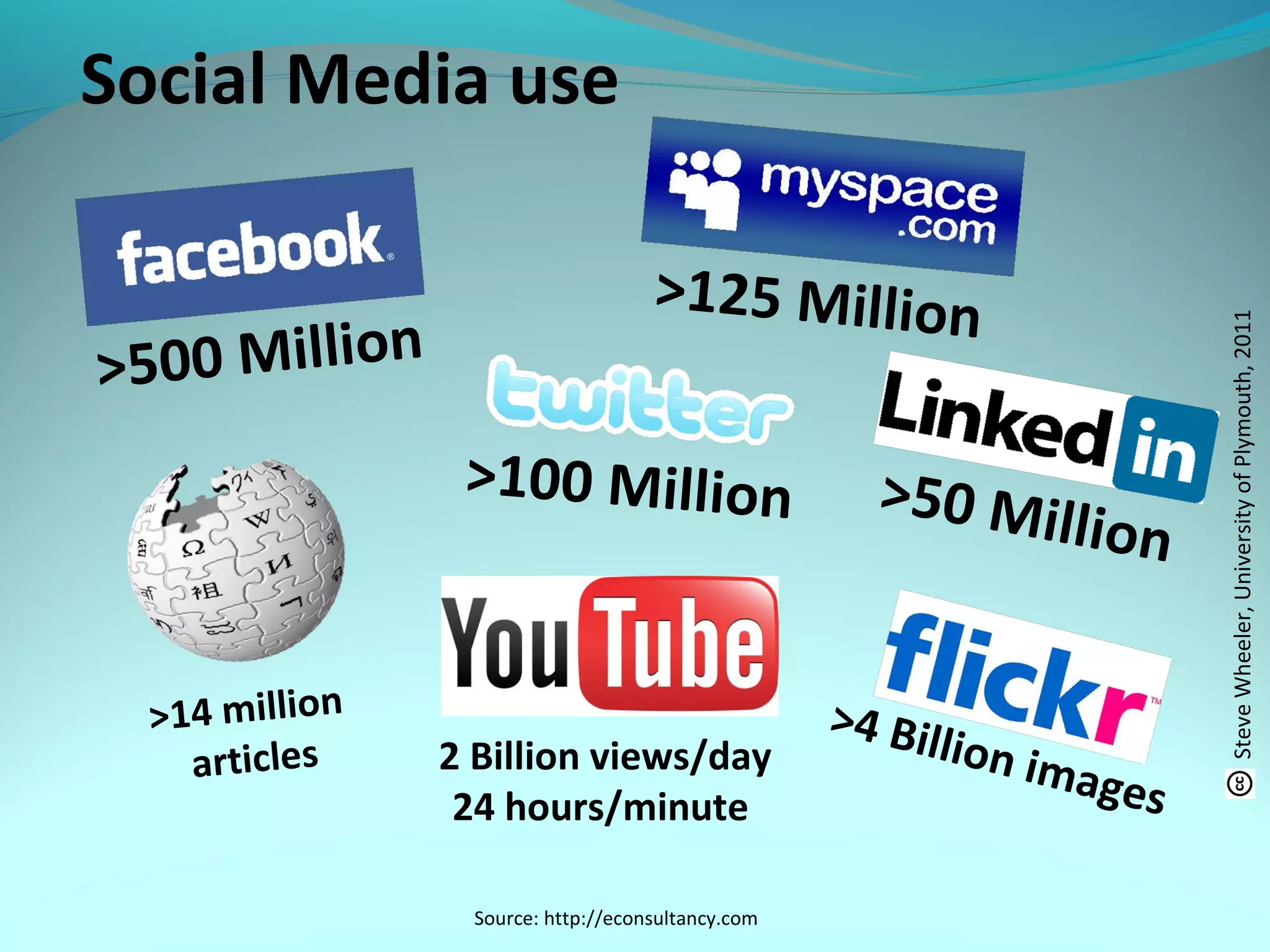
Social Media use
>500 Million
>100 Million >50 Million
>125 Million
>14 million
articles
>4 Billion images
Source: http://econsultancy.com
2 Billion views/day
24 hours/minute
SteveWheeler,UniversityofPlymouth,2011
Twitter
tool which allows you to communicate
with those you select in less than 140
characters
Flickr
Online application for posting, sharing
and commenting on pictures
As of September
2010 Flickr had 5
Billion photos
loaded
Skype
Audio and video conferencing tool
YouTube
Online application for sharing, viewing
and commenting on videos
Podcasts
Audio and/or video content which you
can subscribe to through the web
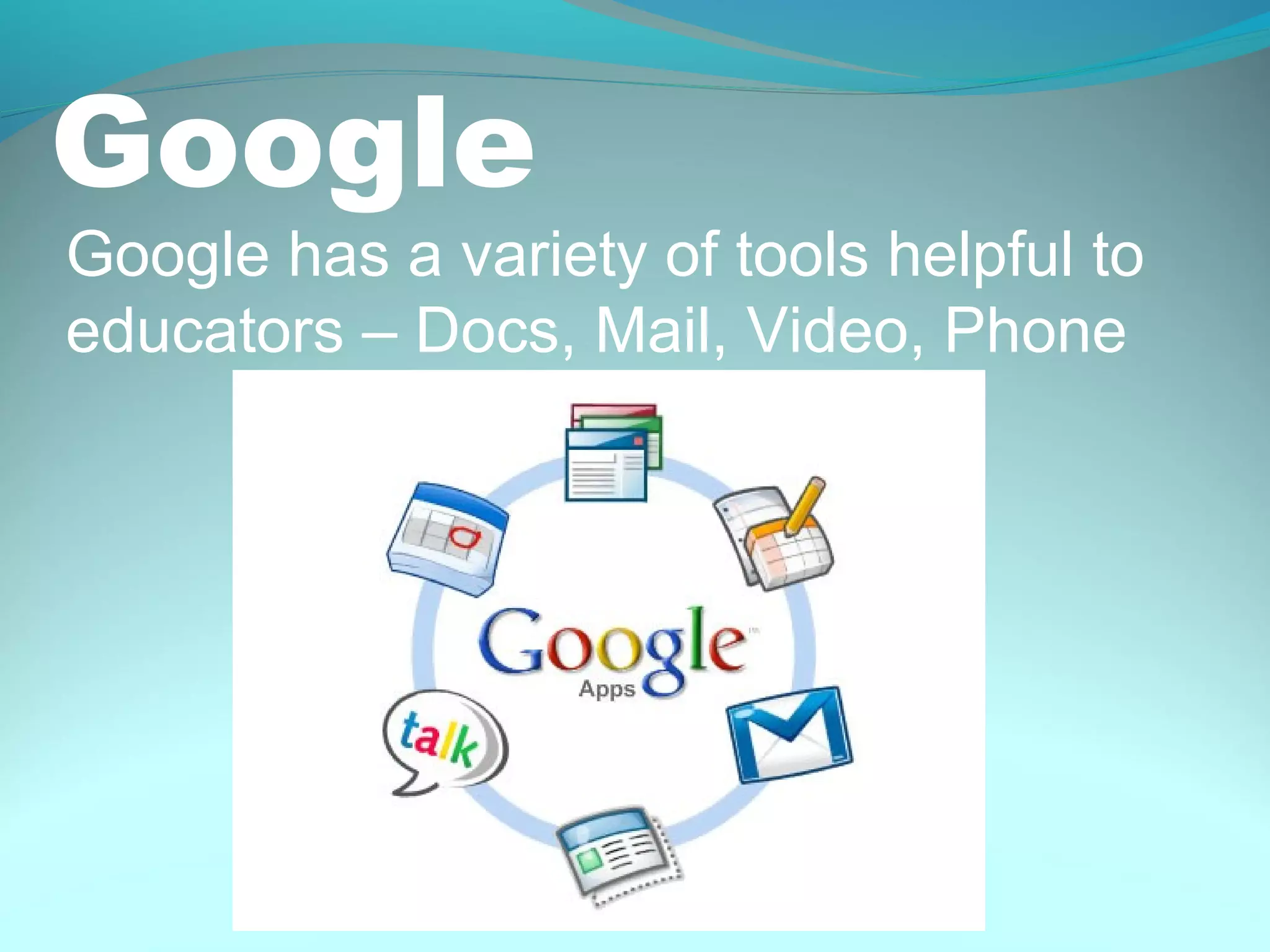
Google
Google has a variety of tools helpful to
educators – Docs, Mail, Video, Phone
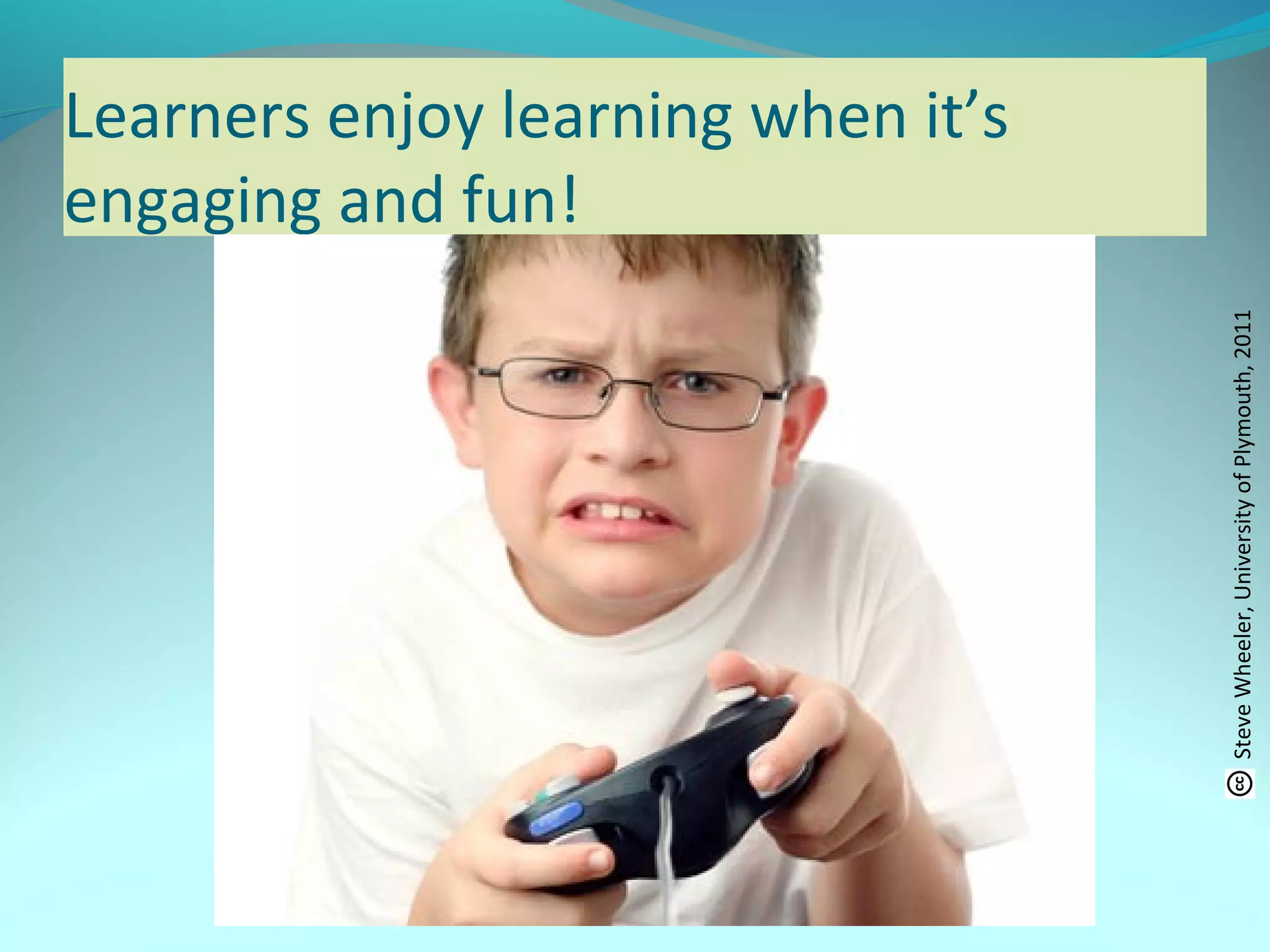
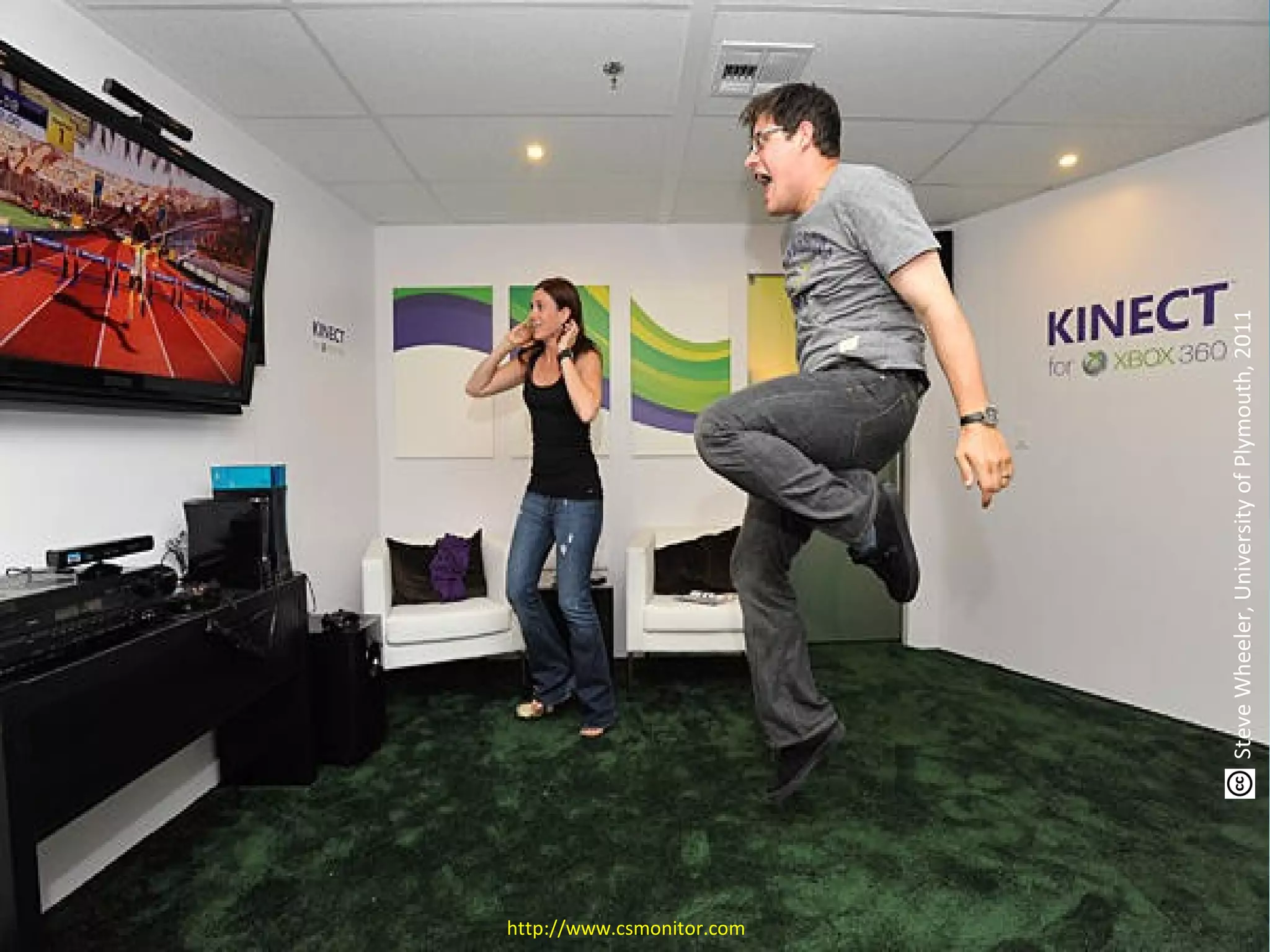
Learners enjoy learning when it’s
engaging and fun!
SteveWheeler,UniversityofPlymouth,2011
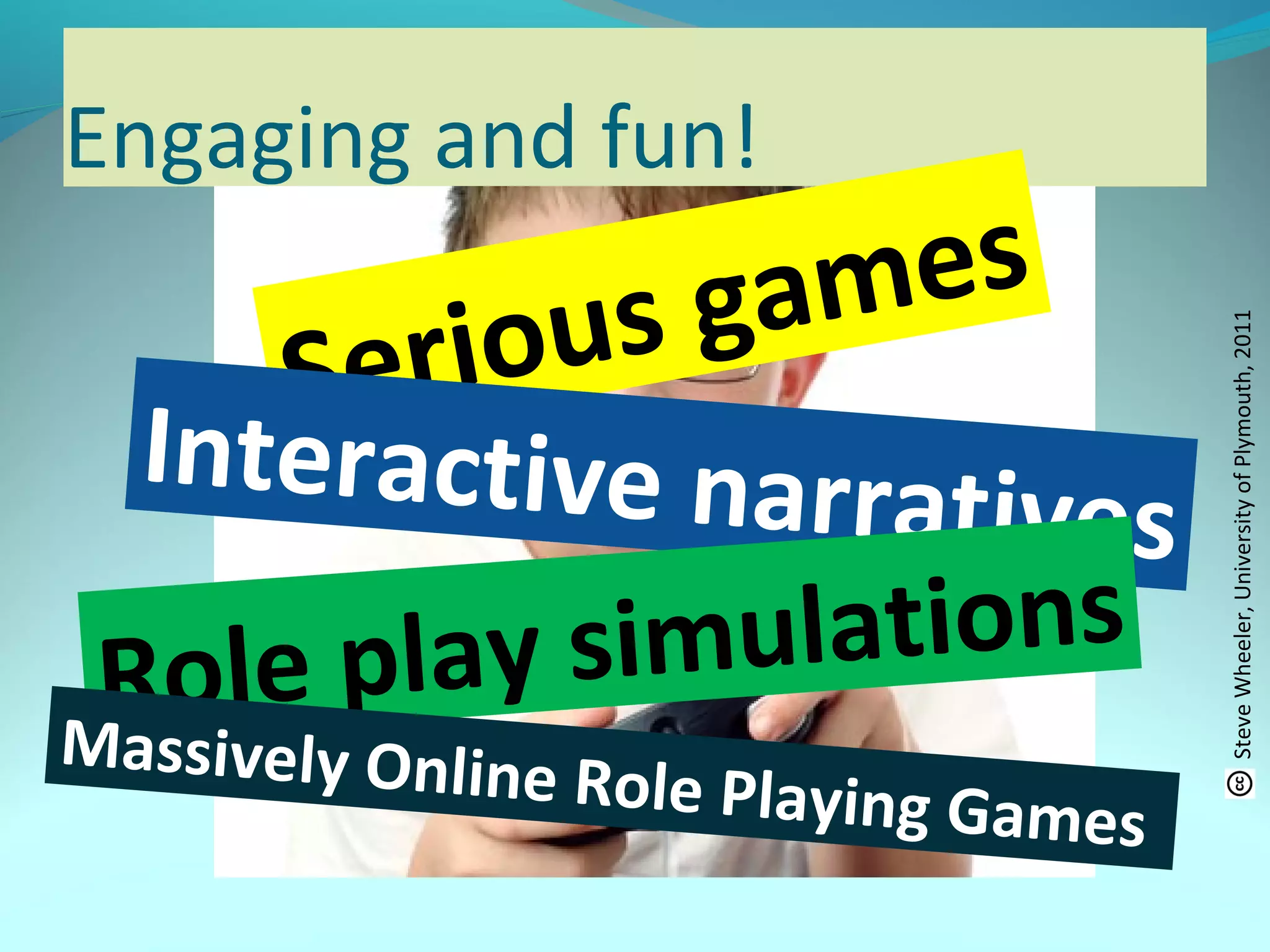
Engaging and fun!
SteveWheeler,UniversityofPlymouth,2011
Serious games
Interactive narratives
Role play simulations
Massively Online Role Playing Games
SteveWheeler,UniversityofPlymouth,2011
http://www.csmonitor.com
Source: George Siemens www.connectivism.ca/
http://www.sciencedaily.com
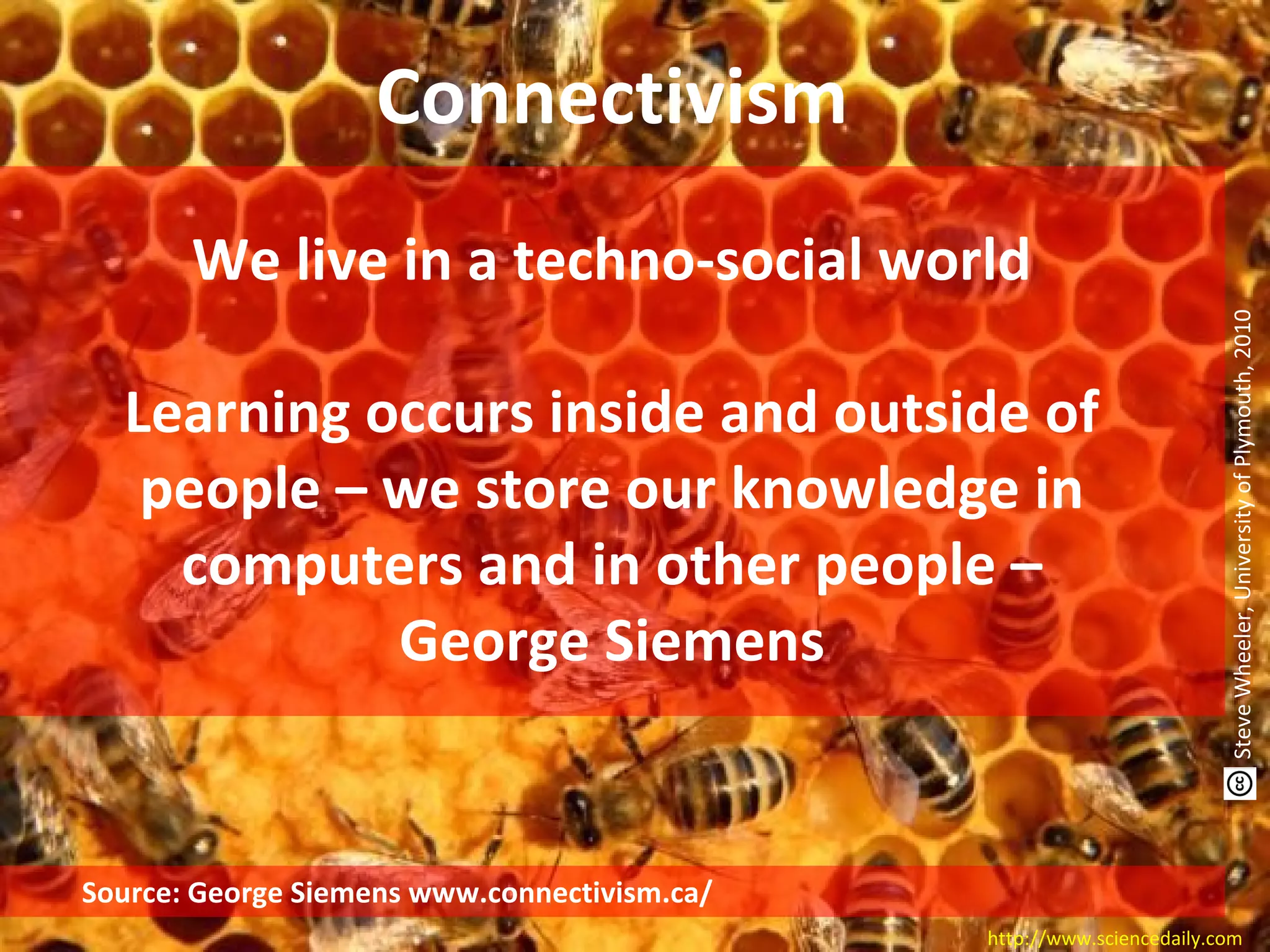
Connectivism
We live in a techno-social world
Learning occurs inside and outside of
people – we store our knowledge in
computers and in other people –
George Siemens
SteveWheeler,UniversityofPlymouth,2010
http://www.uksmallbusinesswebsites.co.uk
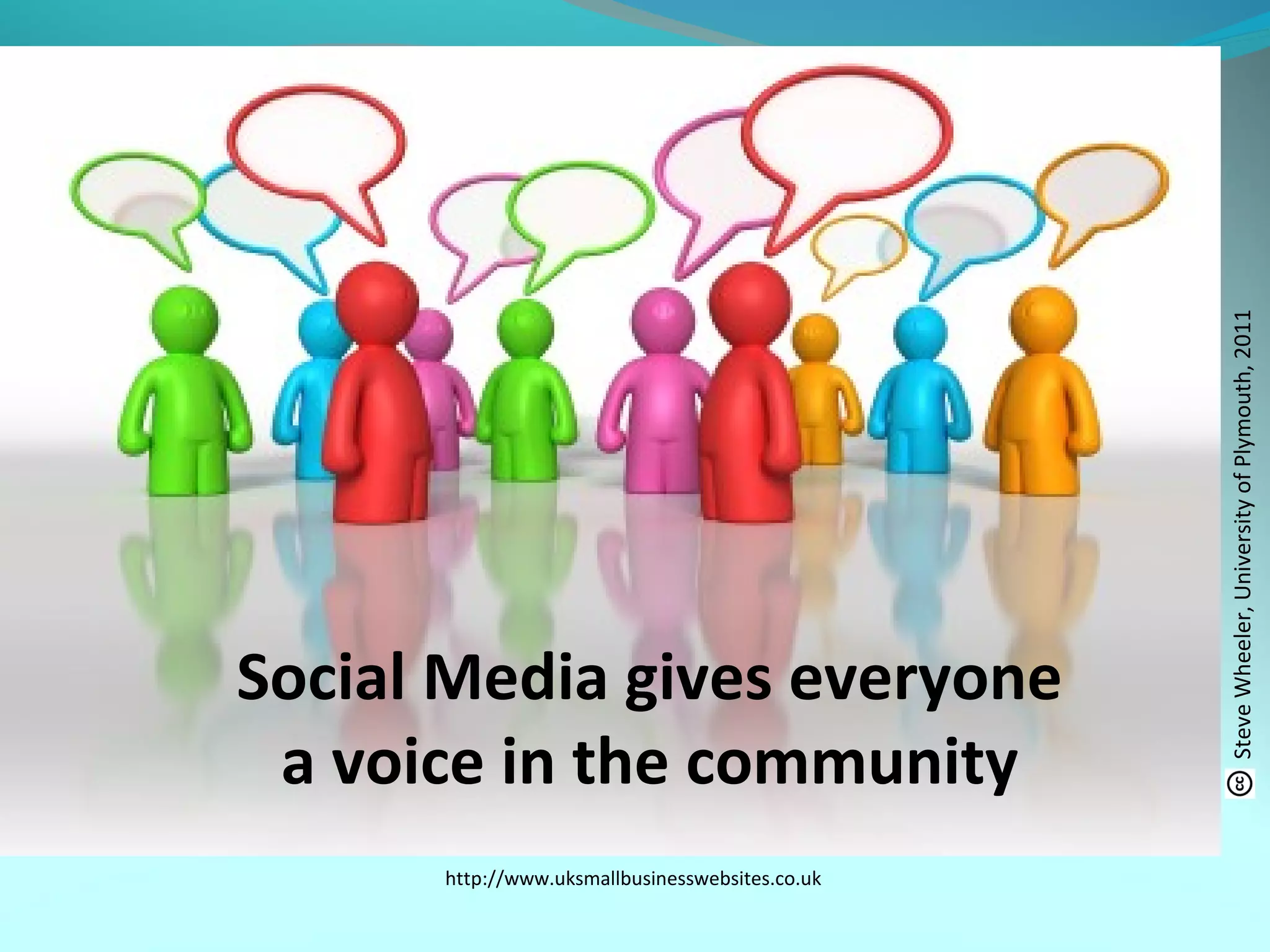
Social Media gives everyone
a voice in the community
SteveWheeler,UniversityofPlymouth,2011
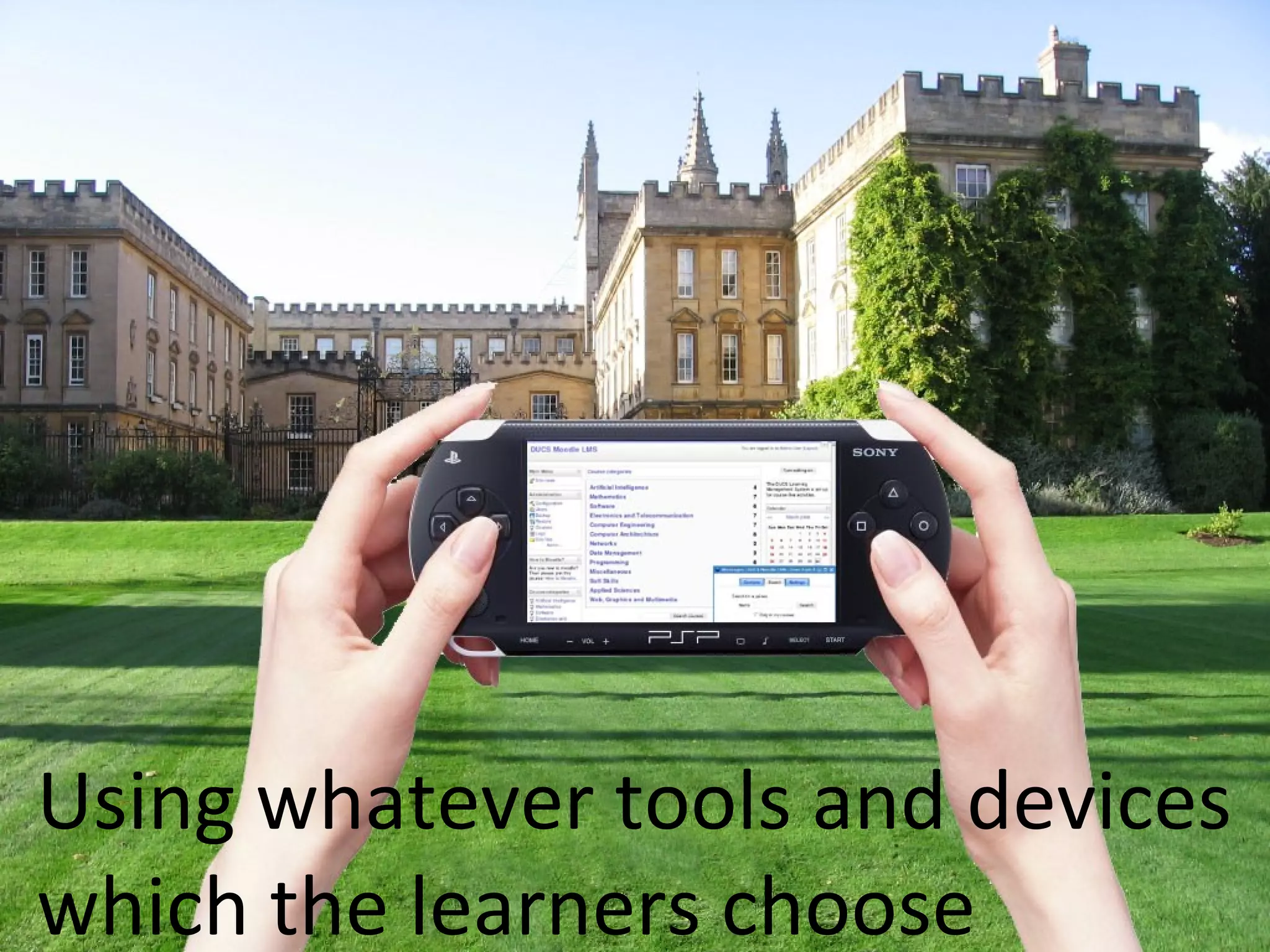
Using whatever tools and devices
which the learners choose
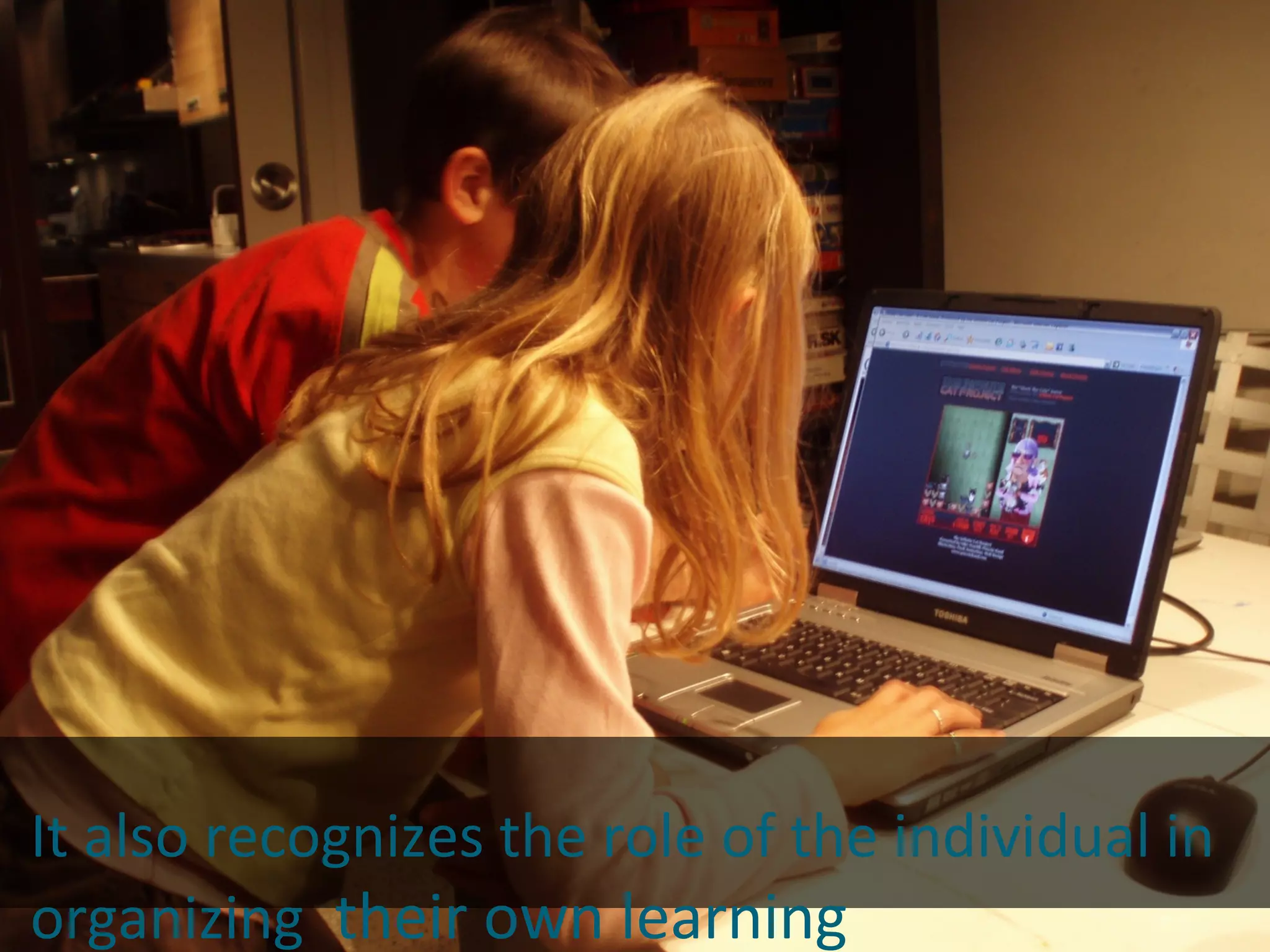
It also recognizes the role of the individual in
organizing their own learning
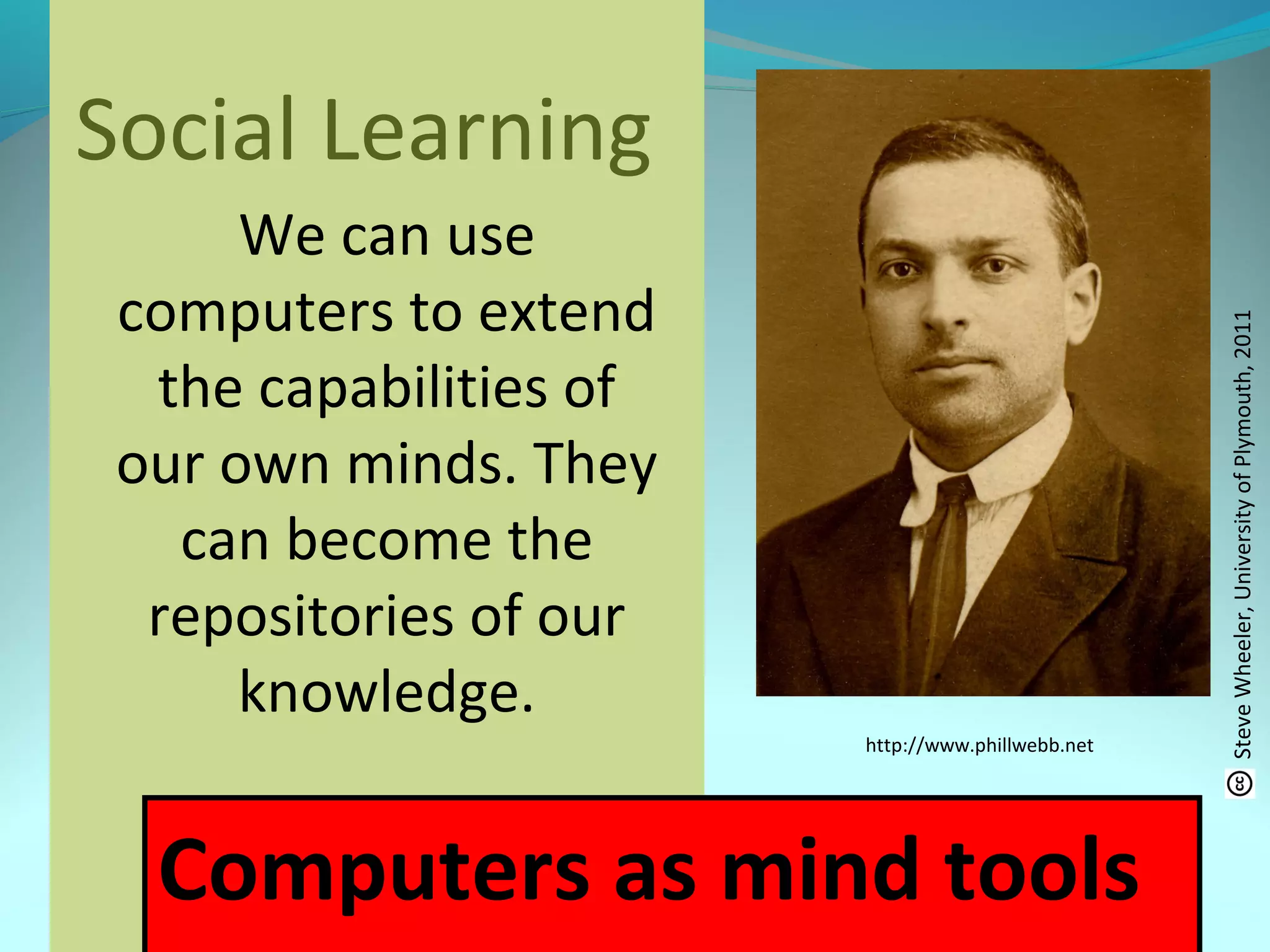
We can use
computers to extend
the capabilities of
our own minds. They
can become the
repositories of our
knowledge.
http://www.phillwebb.net
Social Learning
Computers as mind tools
SteveWheeler,UniversityofPlymouth,2011
http://www.flickr.com/photos/luc/
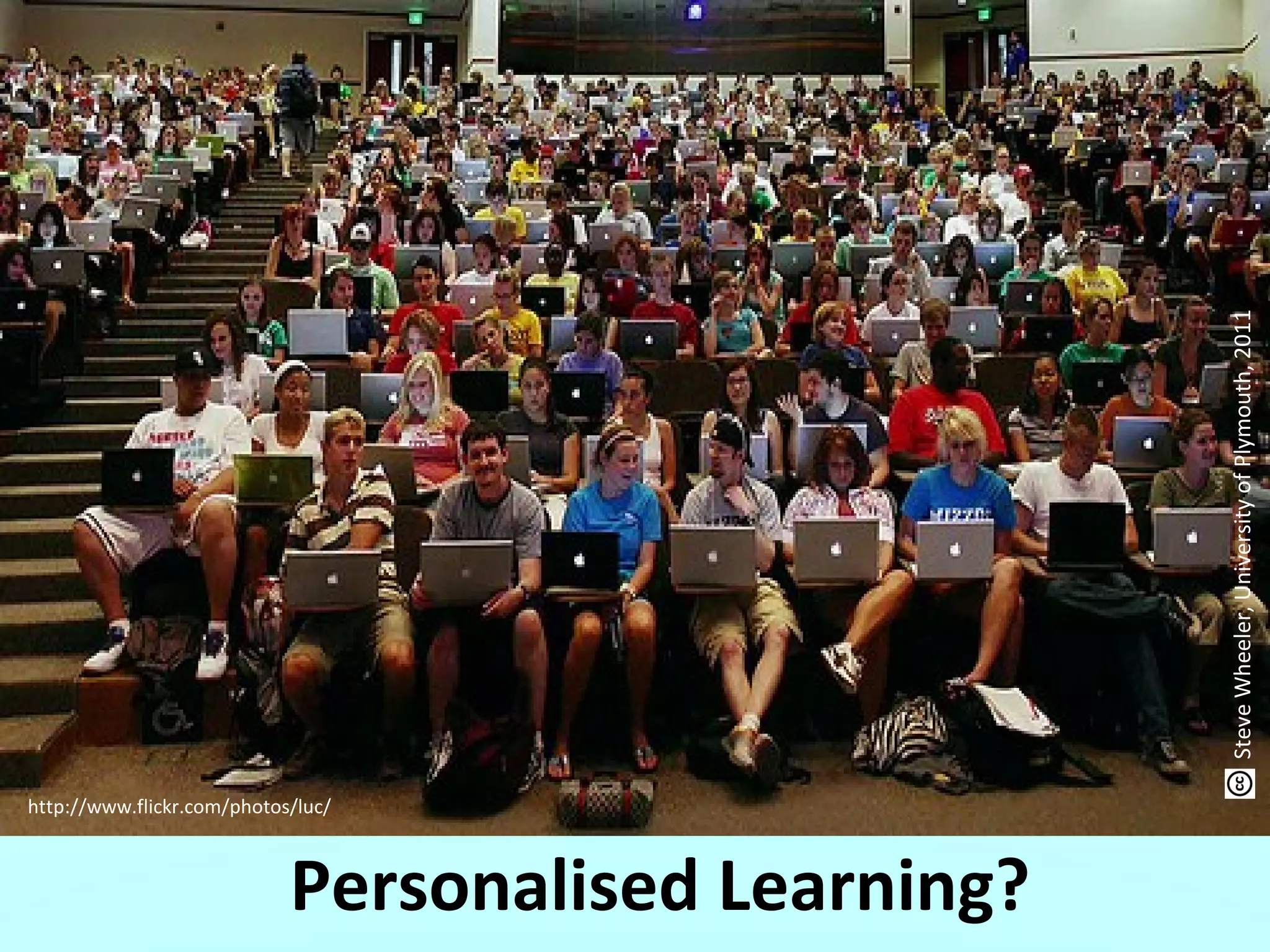
Personalised Learning?
SteveWheeler,UniversityofPlymouth,2011
Learning is now
seen as multi
episodic, with
individuals
spending occasional
periods of formal
education and
training throughout
their working life.
Personal Learning Environments
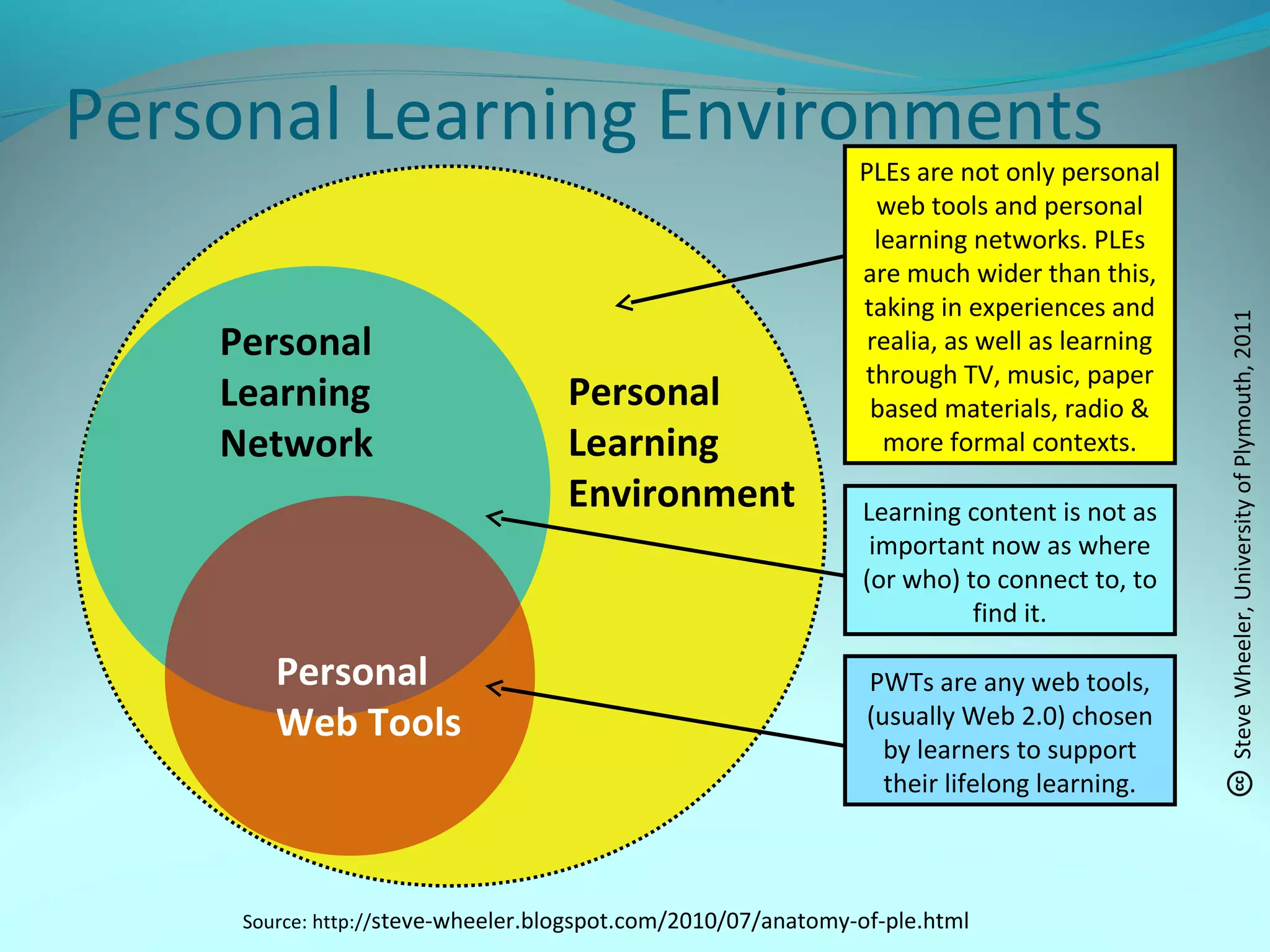
Personal
Learning
Environment
Personal
Learning
Network
Personal
Web Tools
Source: http://steve-wheeler.blogspot.com/2010/07/anatomy-of-ple.html
PLEs are not only personal
web tools and personal
learning networks. PLEs
are much wider than this,
taking in experiences and
realia, as well as learning
through TV, music, paper
based materials, radio &
more formal contexts.
Learning content is not as
important now as where
(or who) to connect to, to
find it.
PWTs are any web tools,
(usually Web 2.0) chosen
by learners to support
their lifelong learning.
SteveWheeler,UniversityofPlymouth,2011
TEACHER’S ROLE
TEACHERS SHOULD INTRODUCE THIS
CONTEPT OF PLN AS THEIR TEACHING
STRATEGY IN ORDER TO ENGAGE THEIR
STUDENTS IN DEEP LEARNING AND CREATE
MORE KNOWLEDGE AND SKILL IN TERMS OF
USING WEB 2.0 TOOLS
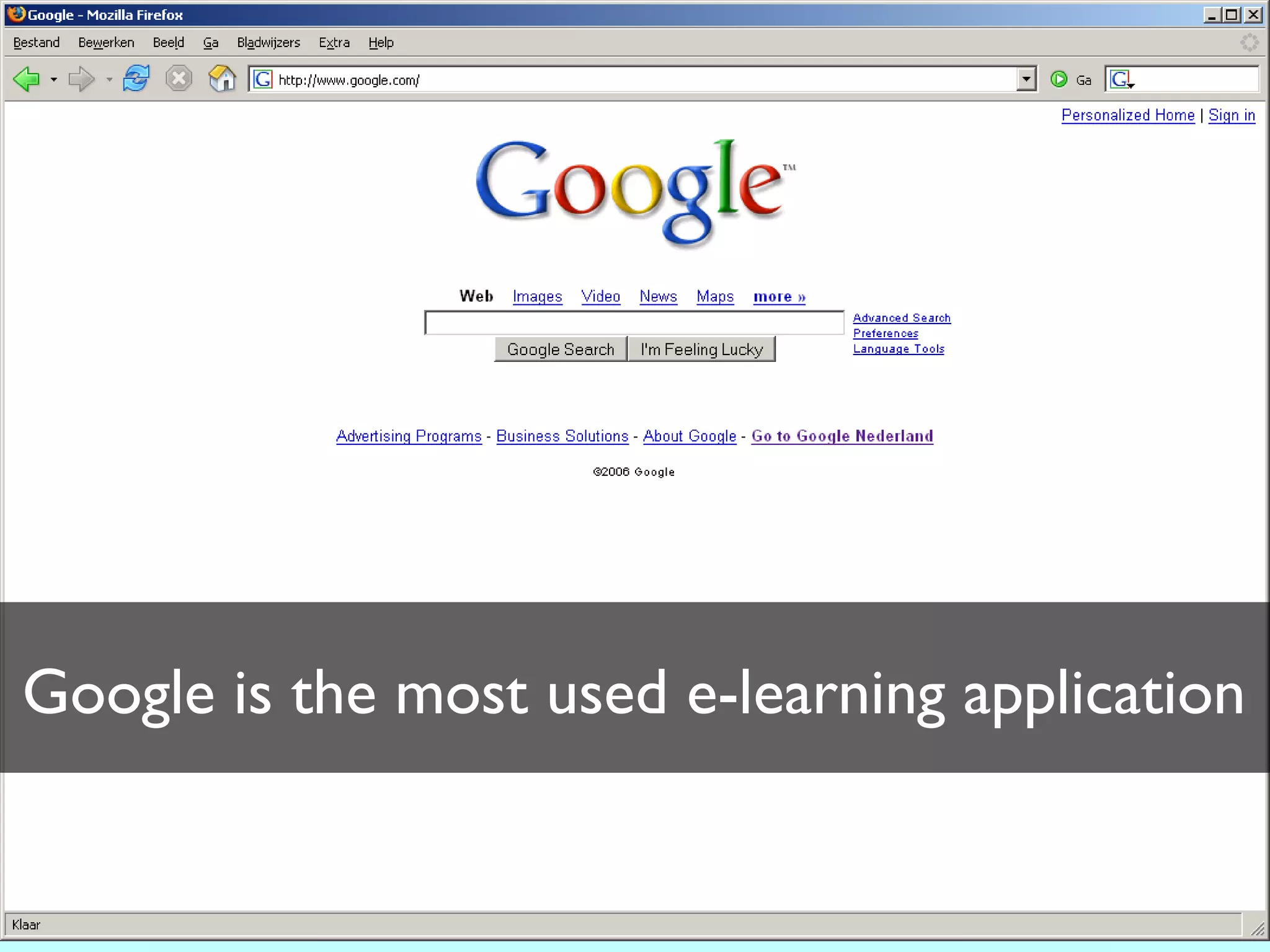
Google is the most used e-learning application
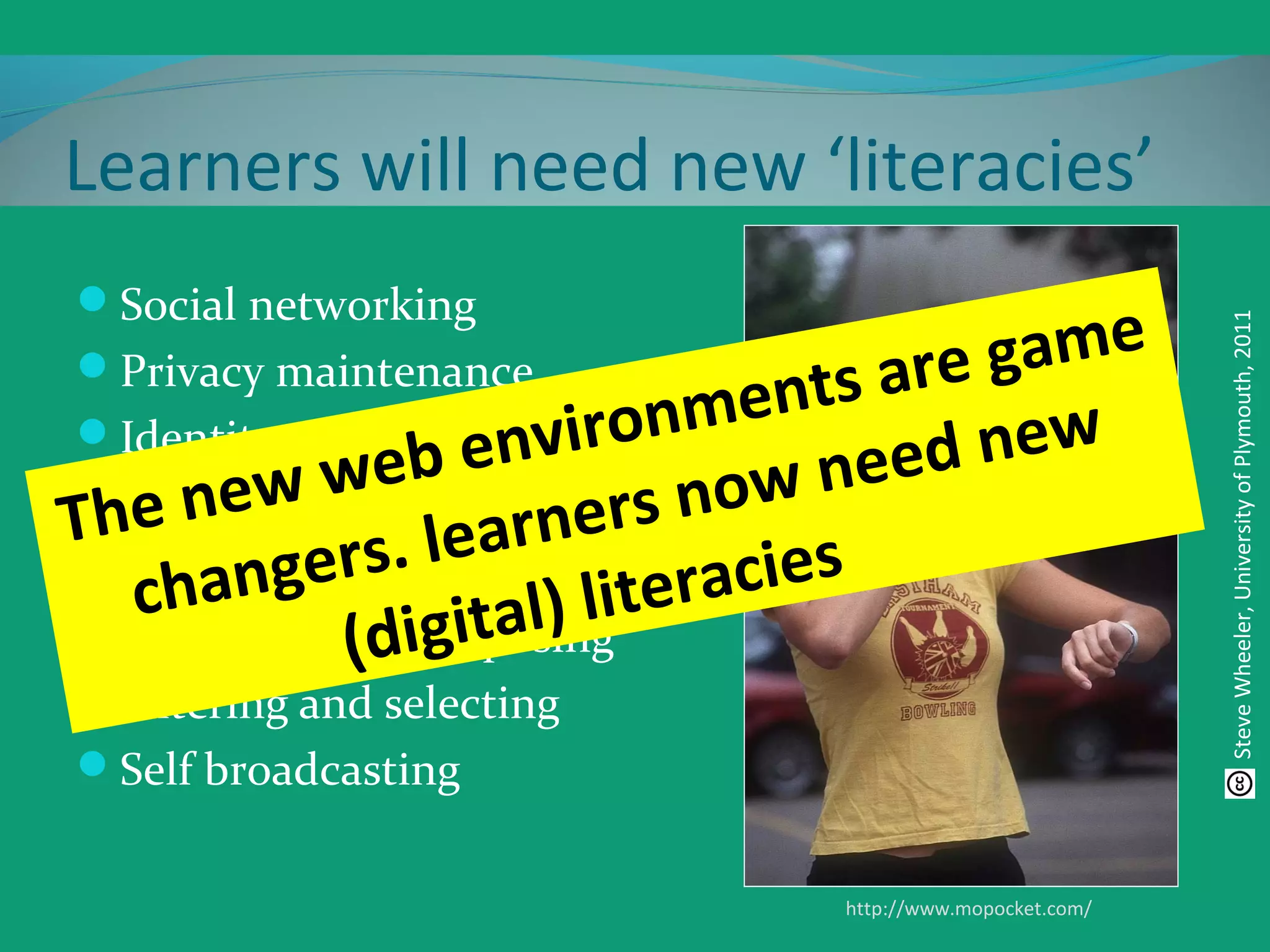
Learners will need new ‘literacies’
Social networking
Privacy maintenance
Identity management
Creating content
Organising content
Reusing and repurposing
Filtering and selecting
Self broadcasting
http://www.mopocket.com/
SteveWheeler,UniversityofPlymouth,2011
The new web environments are game
changers. learners now need new
(digital) literacies
http://media1.break.com/
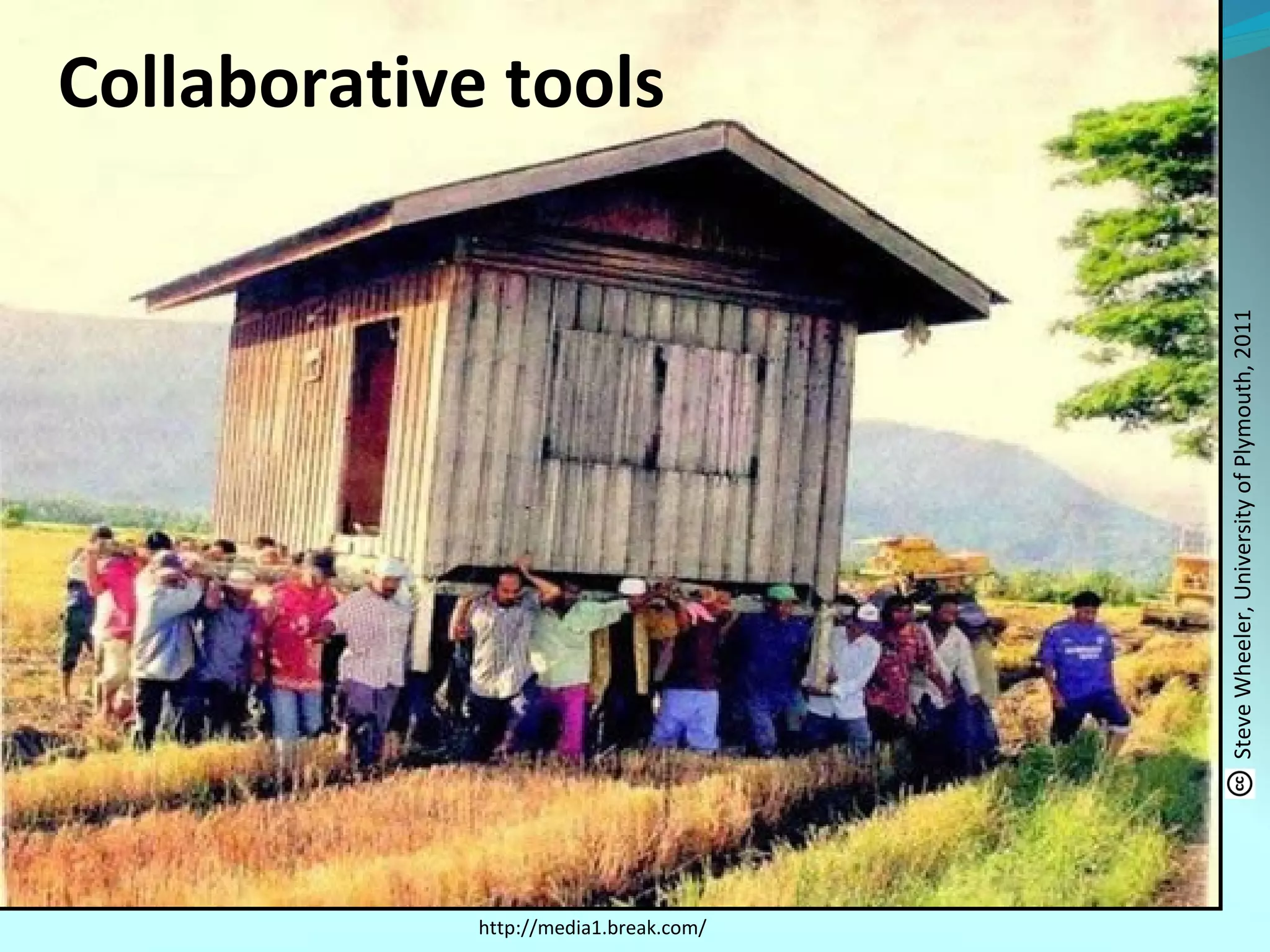
Collaborative tools
SteveWheeler,UniversityofPlymouth,2011
http://socialenterpriseambassadors.org.uk
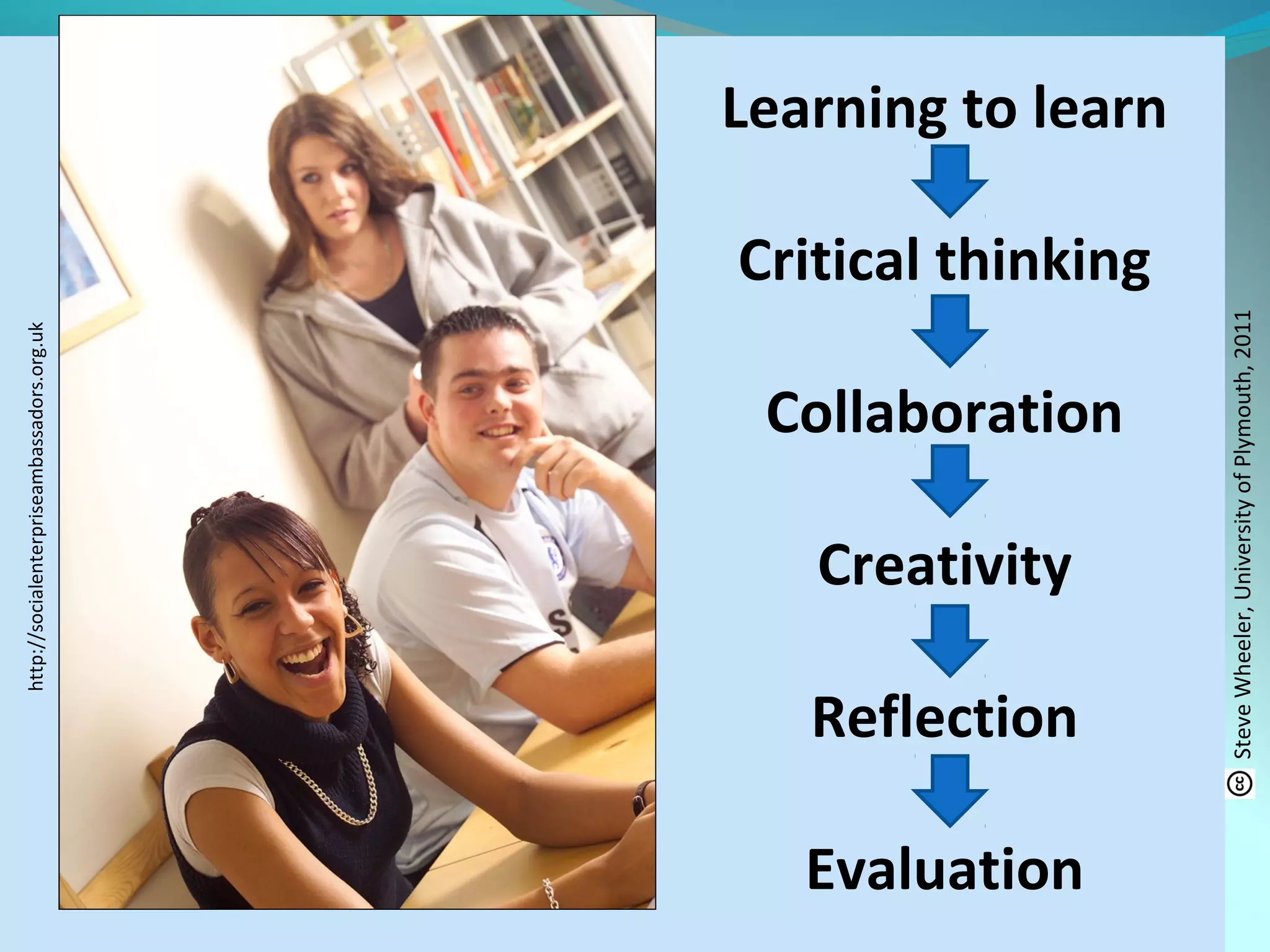
Learning to learn
Critical thinking
Collaboration
Creativity
Reflection
Evaluation
SteveWheeler,UniversityofPlymouth,2011
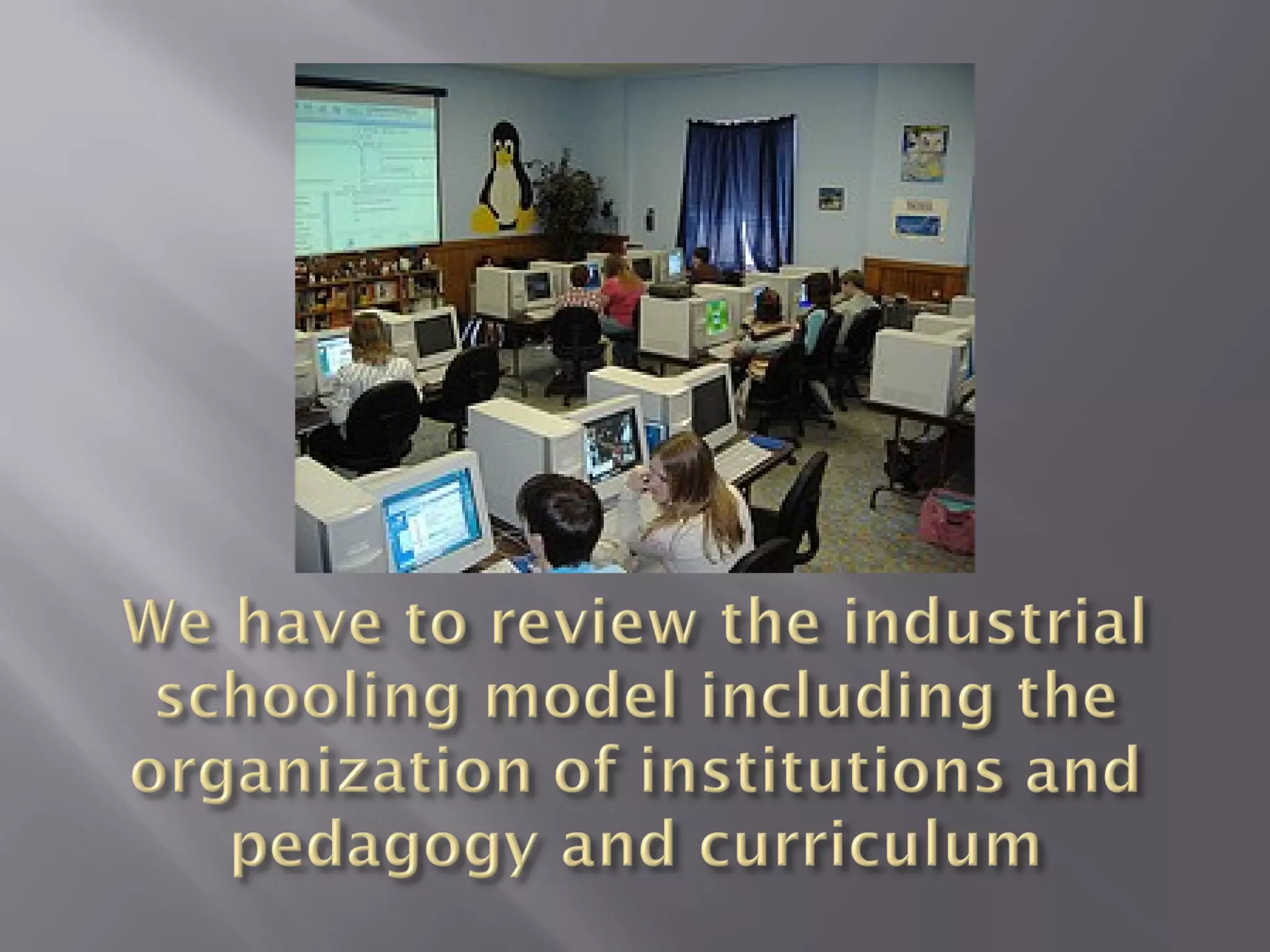
The challenge
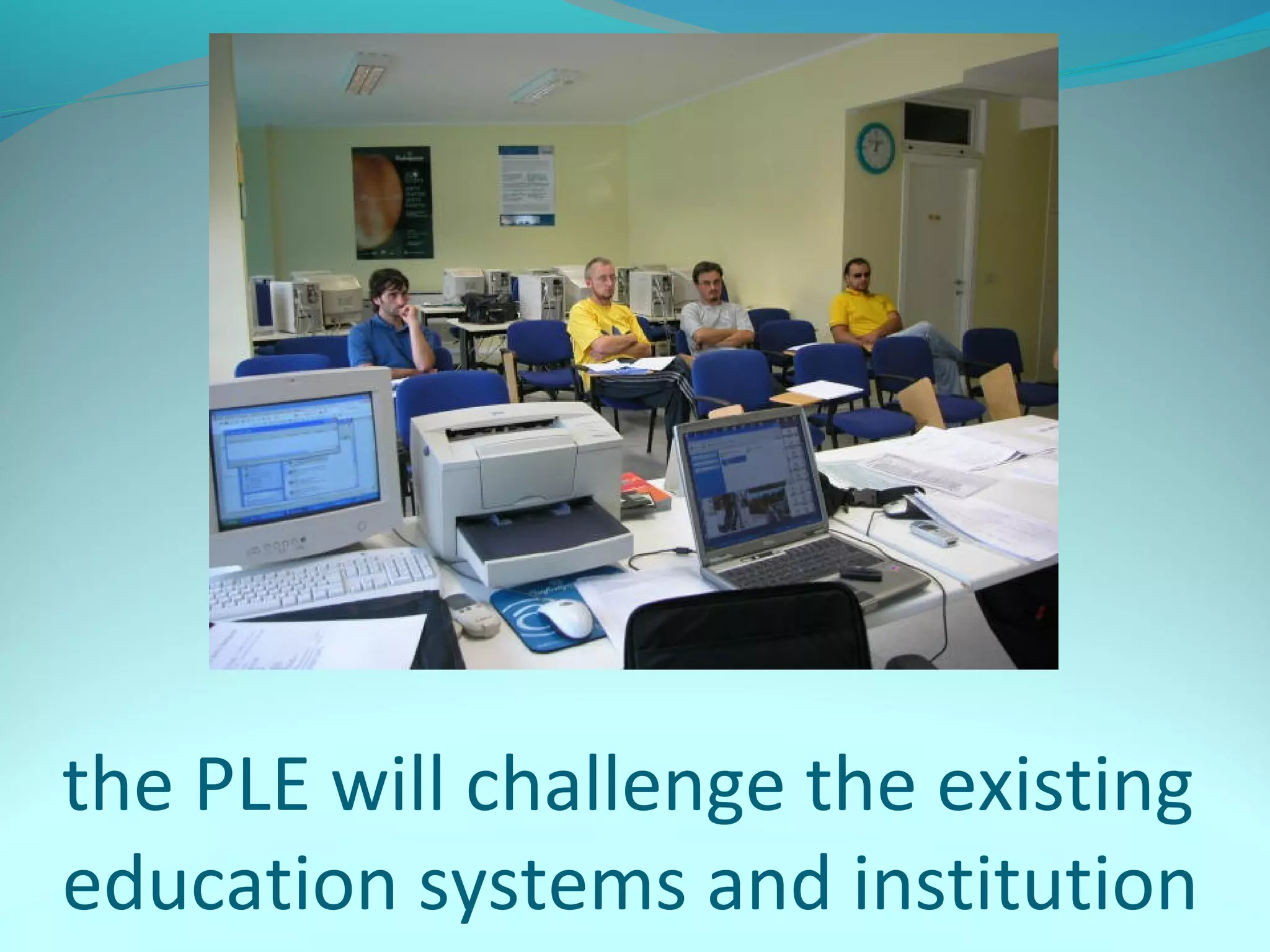
the PLE will challenge the existing
education systems and institution
It is not the development
of technology per se
which poses such a
challenge to education
systems and educational
institutions
PLNs can develop on the potential of
services oriented architectures for dispersed
and networked forms of learning and
knowledge development.
Personal learning networks can transform
ones life and assist one in terms of
acquiring knowledge from a deeper level of
learning furthermore using different tools
in the classroom with an aim of engaging
pupils in the content.
References
Abbey, E. (2009), Personal Learning Networks,
United States
Graham, A. (2007), Lifelong Competence
Development, United Kingdom
IVANOVA, M. (2012), Analysis of Personal Learning
Networks, United states
Lang horst, E. (2010), MSTA 2010 Building a Personal
Learning Network, United States
Wheeler, S. (2011), the Future of Learning, United
Kingdom

Presentation