Preparing our students in the global settingThe Philippine experienceMay 19, 2011Högskolan VastTrollhattan, Vastra, Sweden MavicPinedaGuestLecturerFrom De La Salle UniversityManila, PhilippinesE-mail address: mavic.pineda@delasalle.ph
AgendaAbout the PhilippinesAbout DLSUWho are our new generation studentsPresent technological trendsCan we prepare our students for these?Howdowedo it in the De La Salle University?
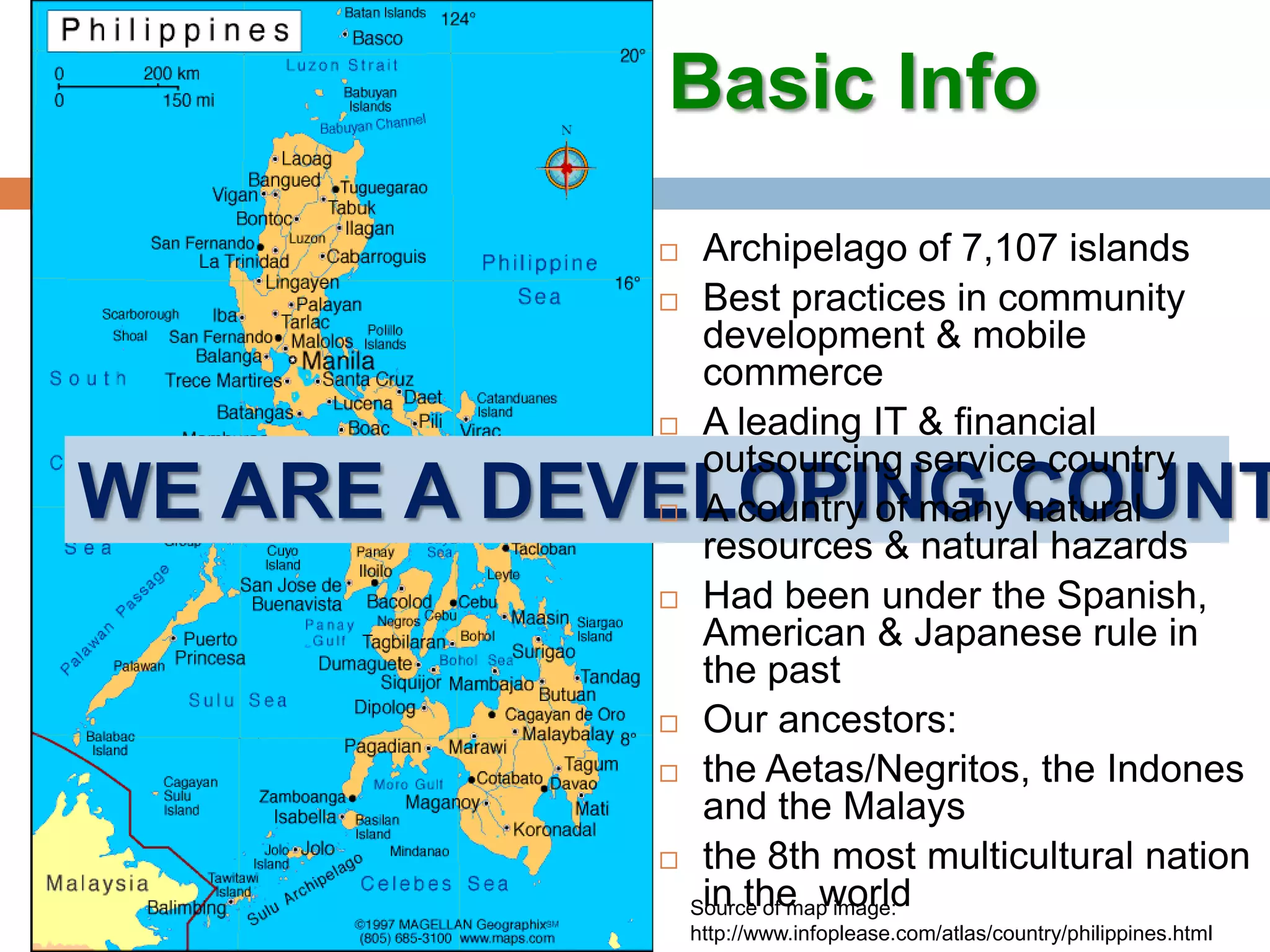
Basic InfoArchipelago of 7,107 islandsBest practices in community development & mobile commerceA leading IT & financial outsourcing service countryA country of many natural resources & natural hazardsHad been under the Spanish, American & Japanese rule in the pastOur ancestors: the Aetas/Negritos, the Indones and the Malaysthe 8th most multicultural nation in the  worldWe are a developing countrySource of map image: http://www.infoplease.com/atlas/country/philippines.html
De La Salle in the PhilippinesFounded in 1911
Manila Campus
Trimester schedule
5 colleges
Highest level of HEI accreditation in the Philippines
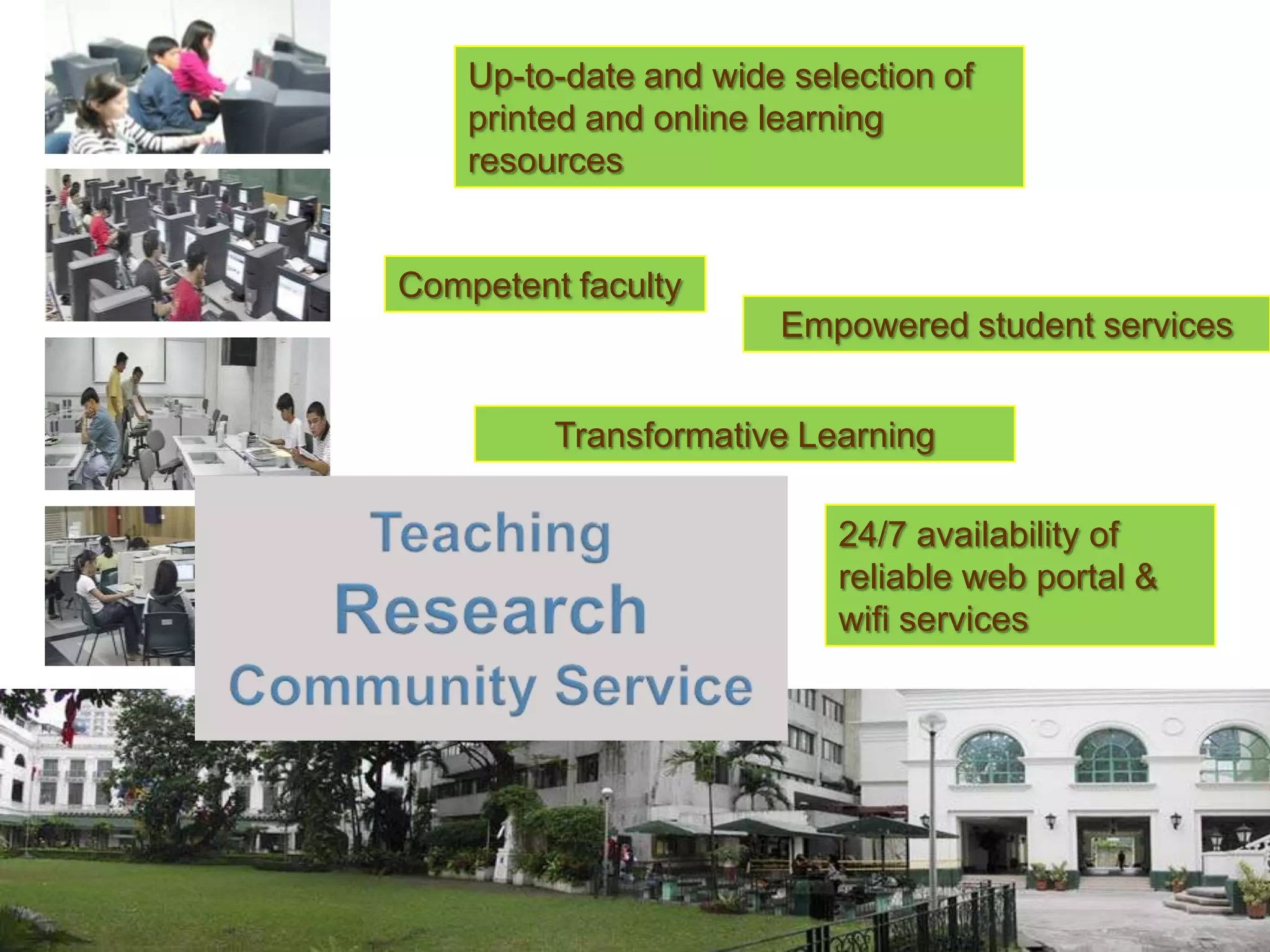
www.dlsu.edu.phUp-to-date and wide selection of printed and online learning resources Competent faculty Empowered student servicesTransformative Learning TeachingResearchCommunity Service24/7 availability of reliable web portal & wifiservices IVLE-LMS
The IT Internship Program480 hours of fulltime work in a span of 3-4months
Deployment of students in various IT companies
Systems analysis & development work
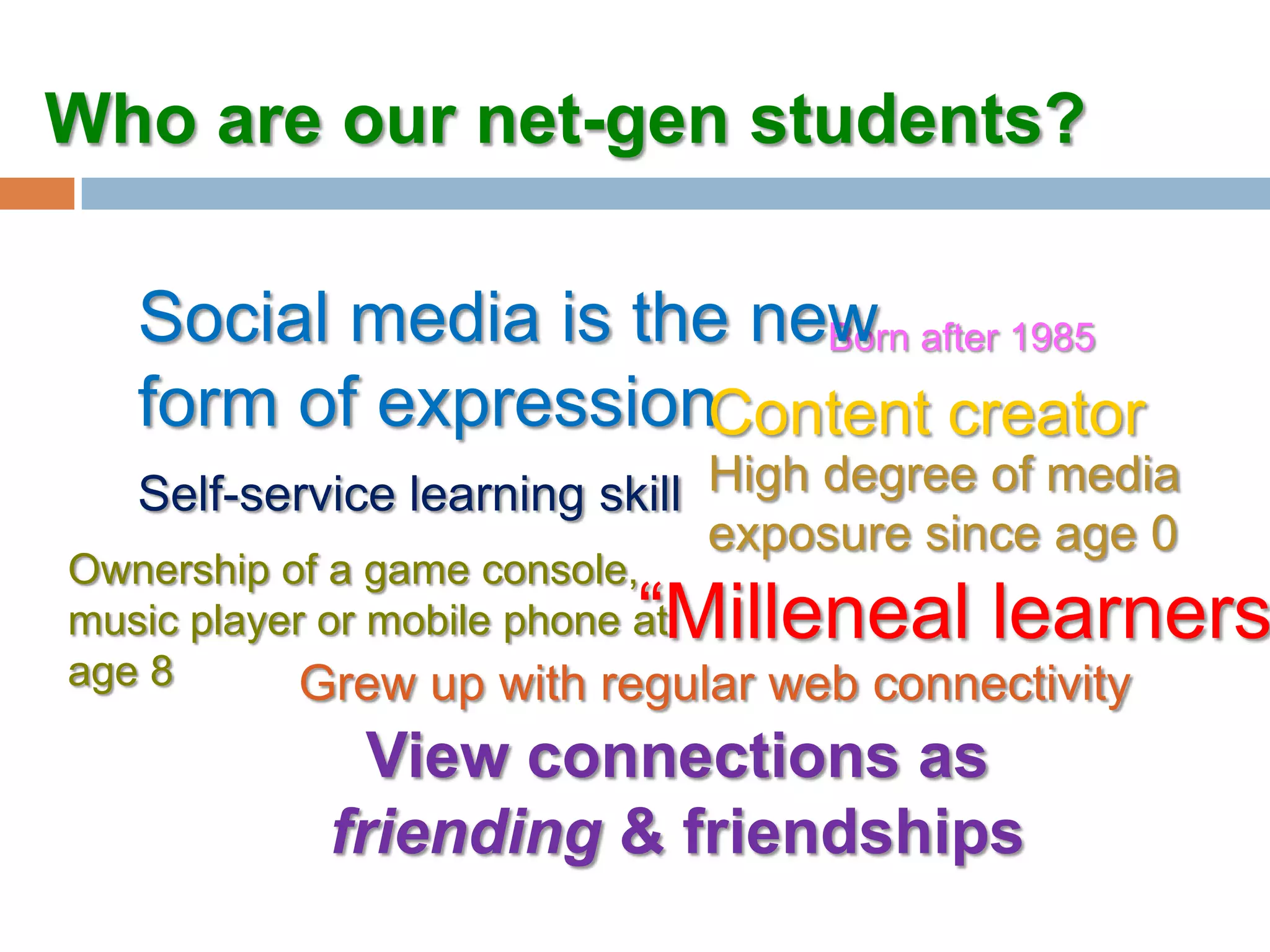
Average of 60 companies participatingWho are our net-gen students?Social media is the new form of expressionBorn after 1985Content creatorHigh degree of media exposure since age 0Self-service learning skillOwnership of a game console, music player or mobile phone at age 8“Milleneal learners”Grew up with regular web connectivityView connections as friending & friendships
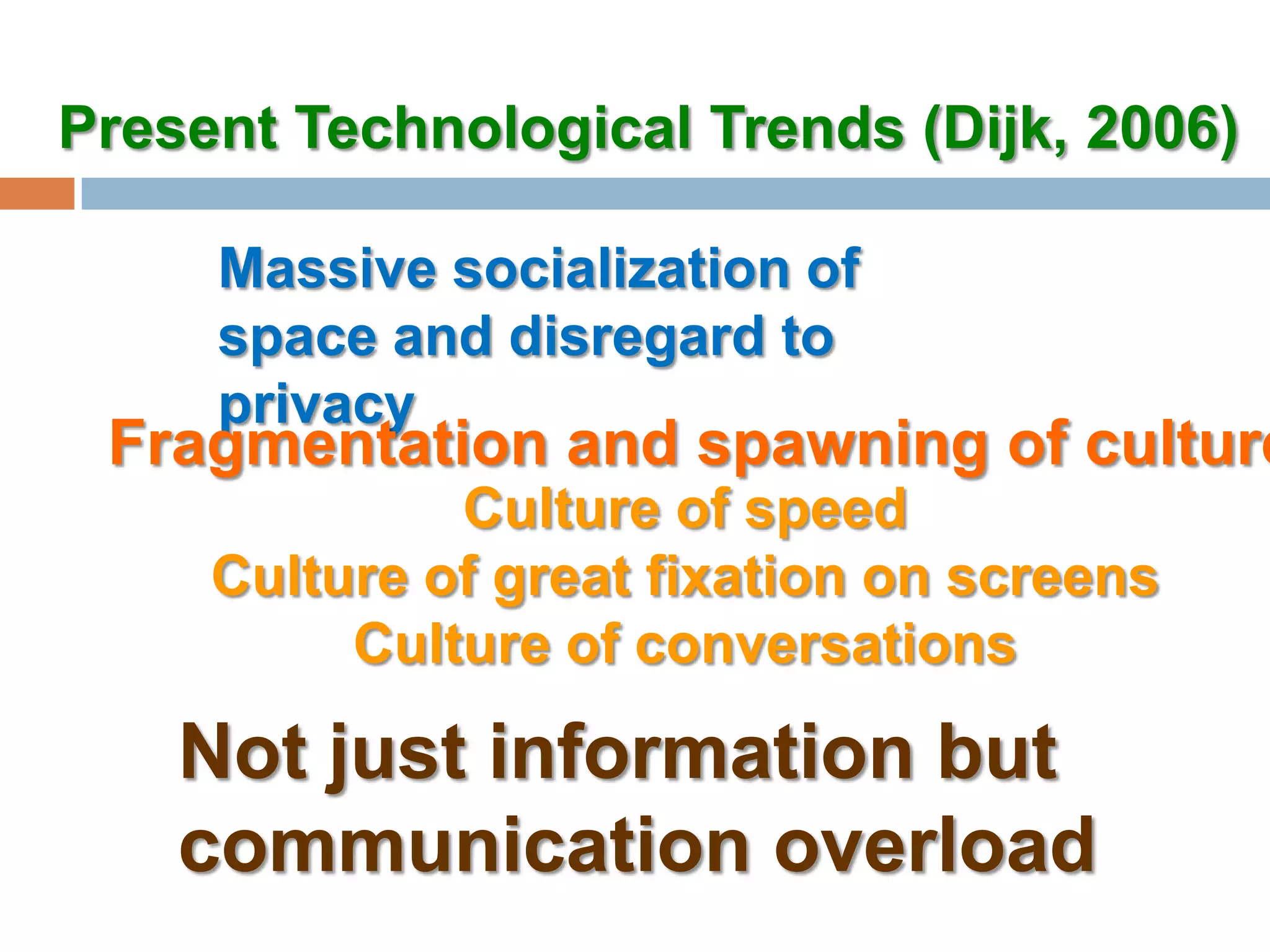
Present Technological Trends (Dijk, 2006)Massive socialization of space and disregard to privacyFragmentation and spawning of cultureCulture of speedCulture of great fixation on screensCulture of conversationsNot just information but communication overload
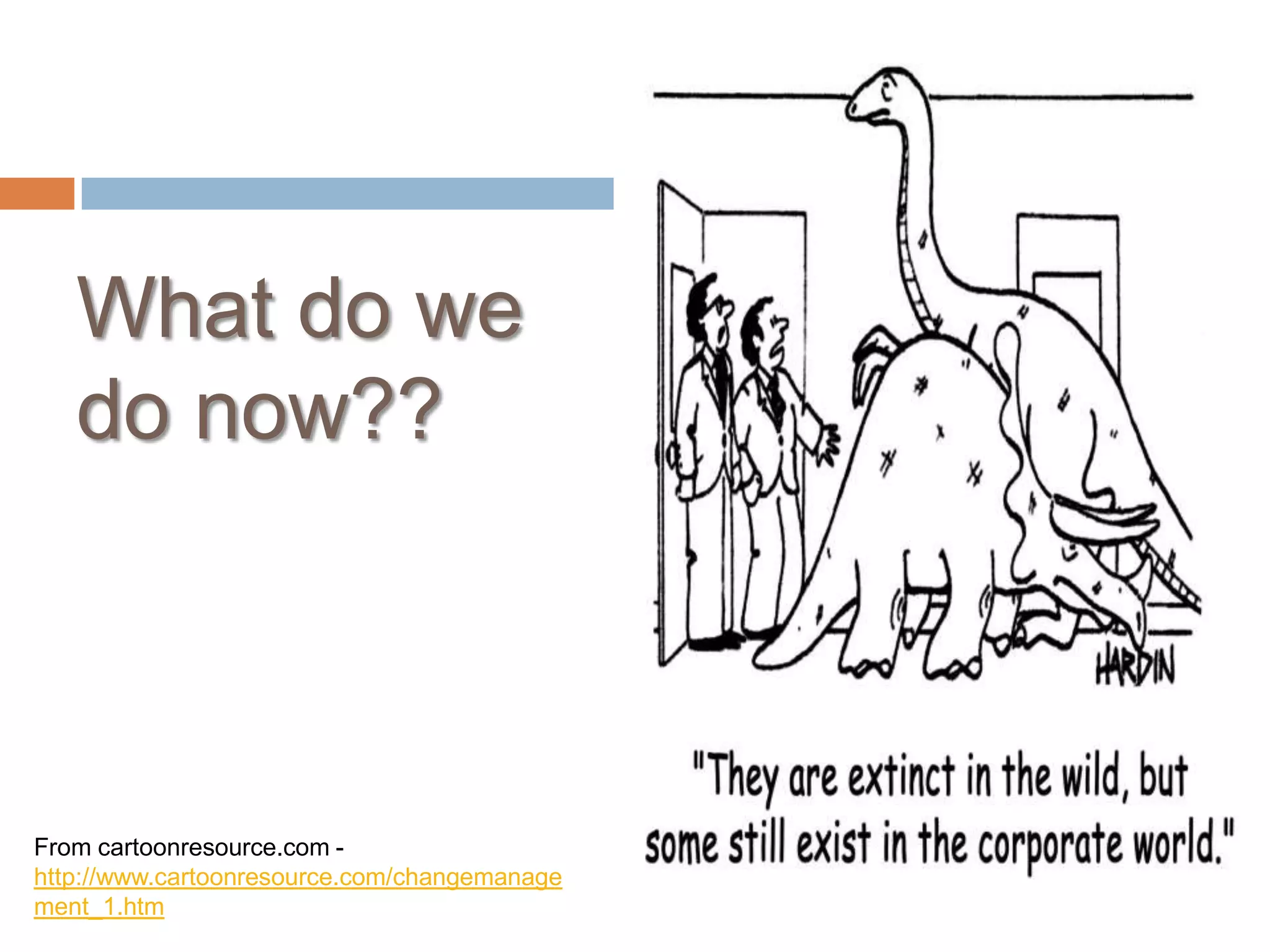
What do we do now??From cartoonresource.com - http://www.cartoonresource.com/changemanagement_1.htm
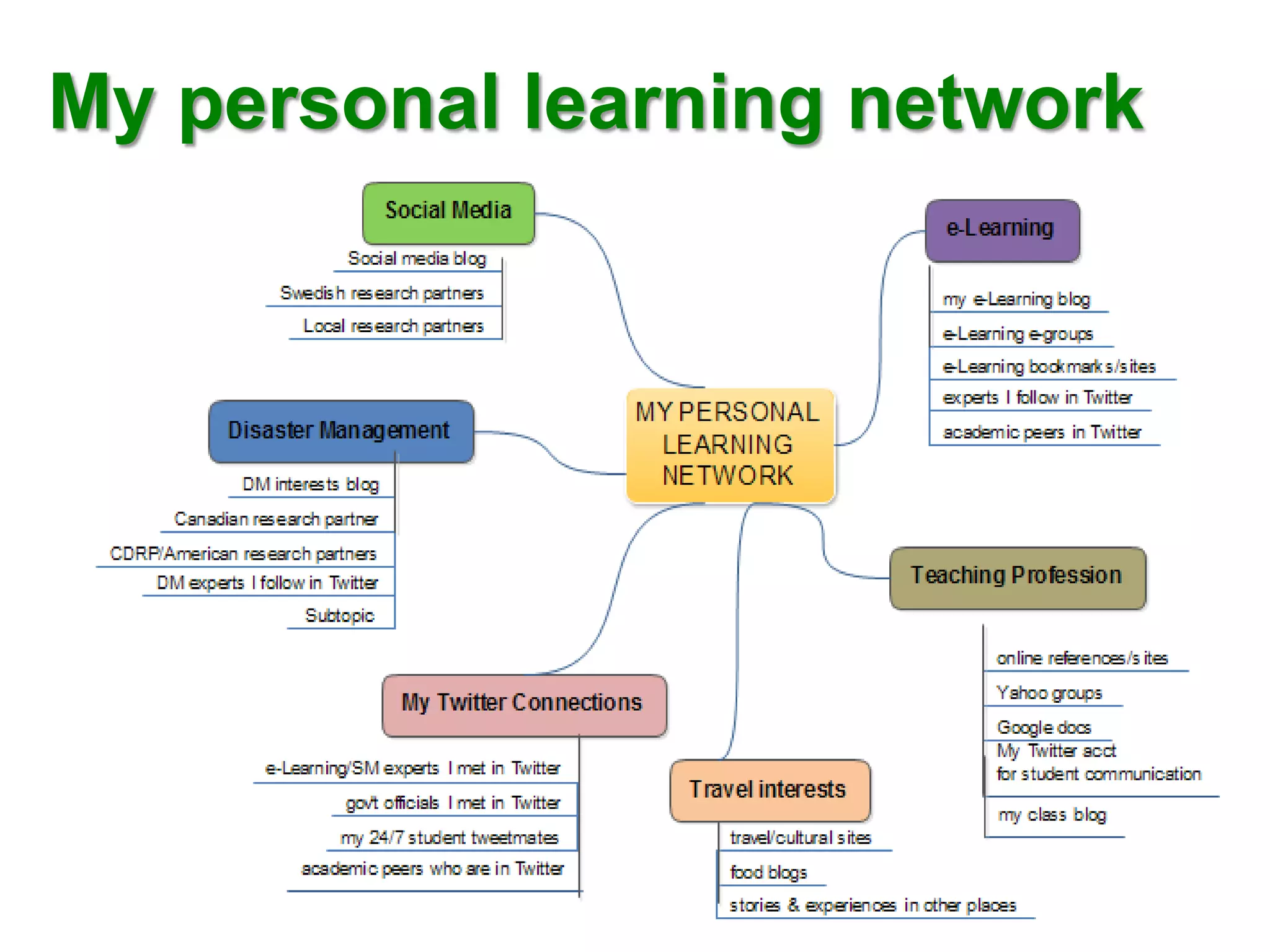
My personal learning network
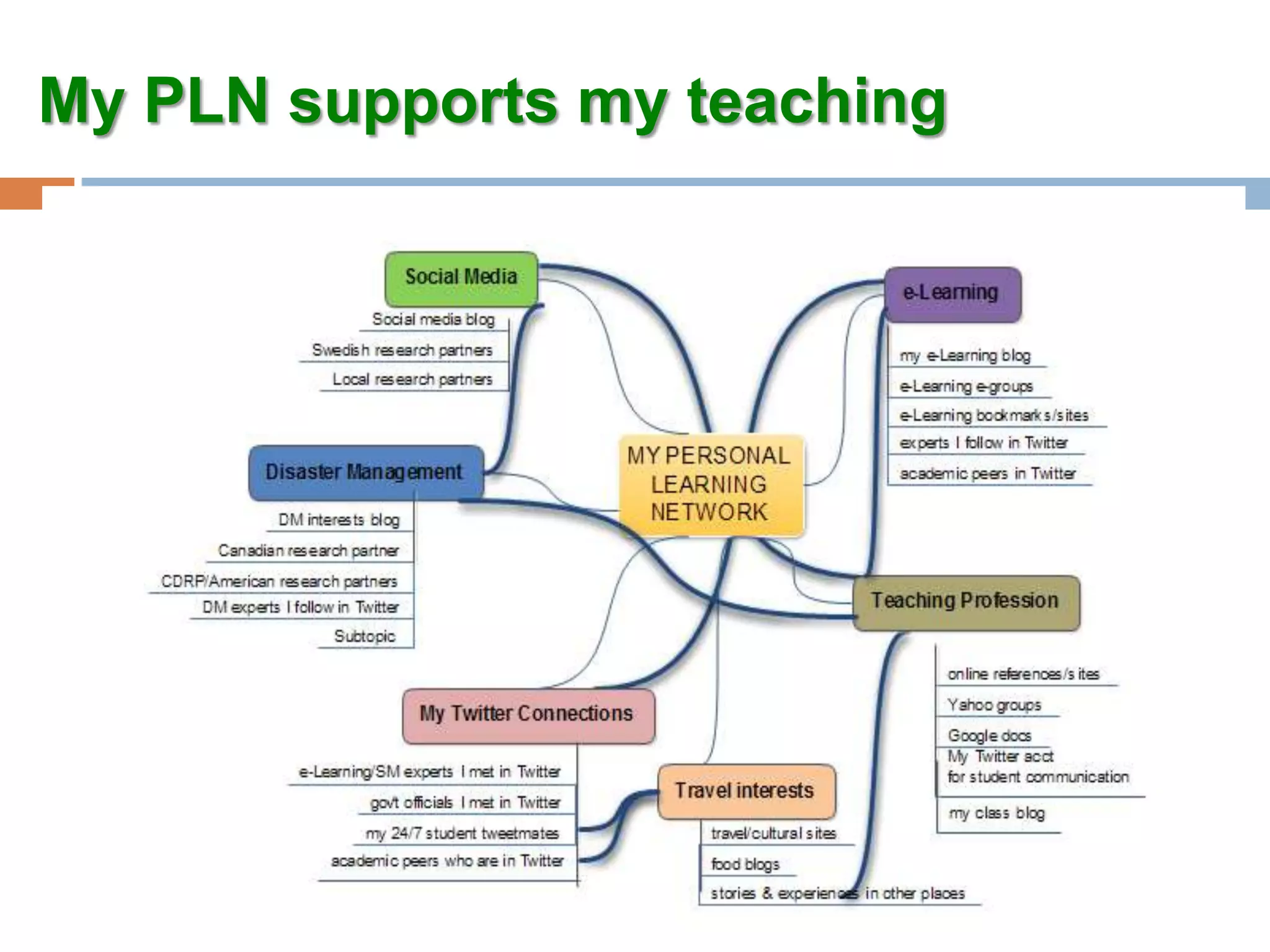
My PLN supports my teaching
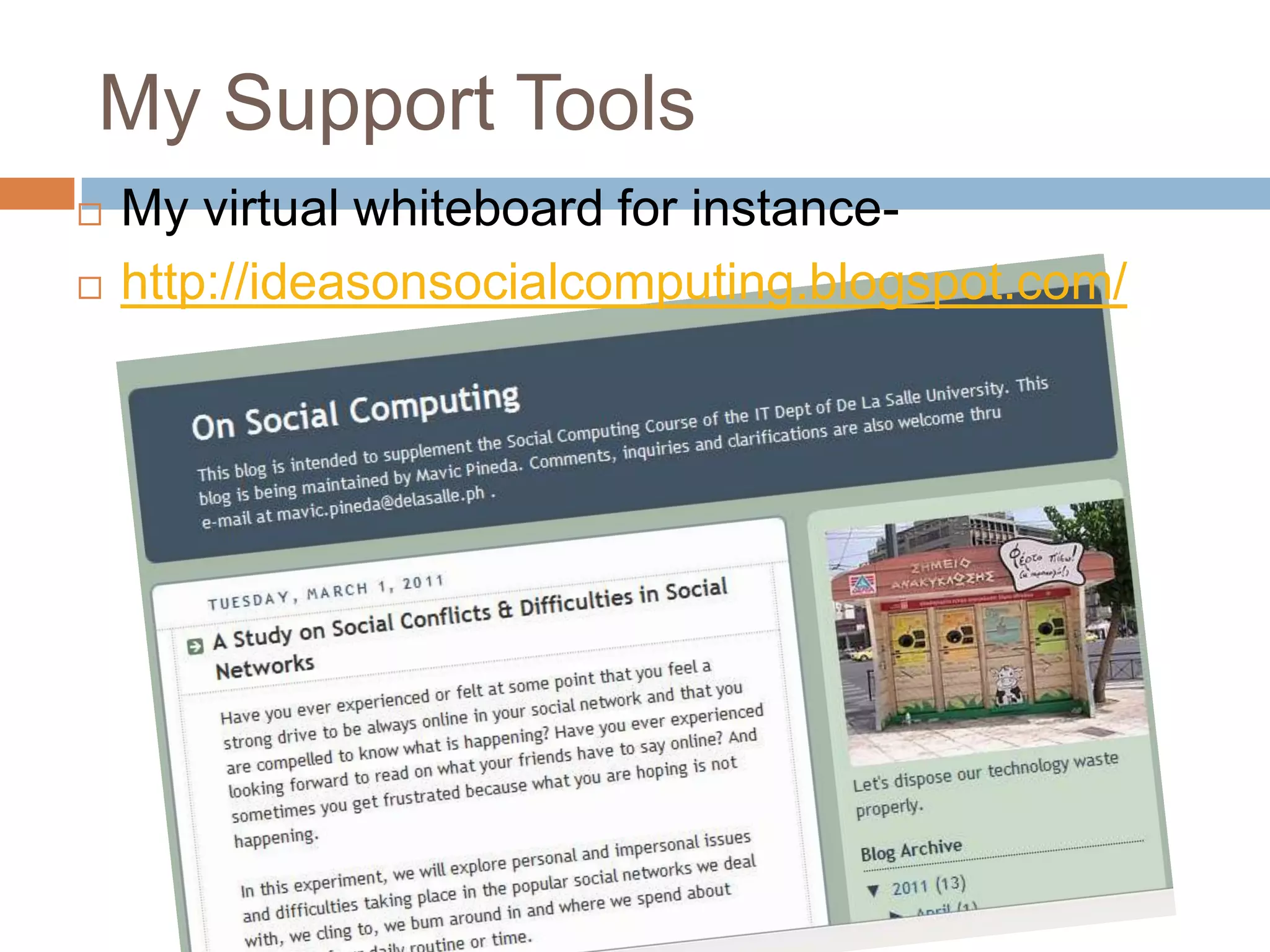
My Support ToolsMy virtual whiteboard for instance-http://ideasonsocialcomputing.blogspot.com/
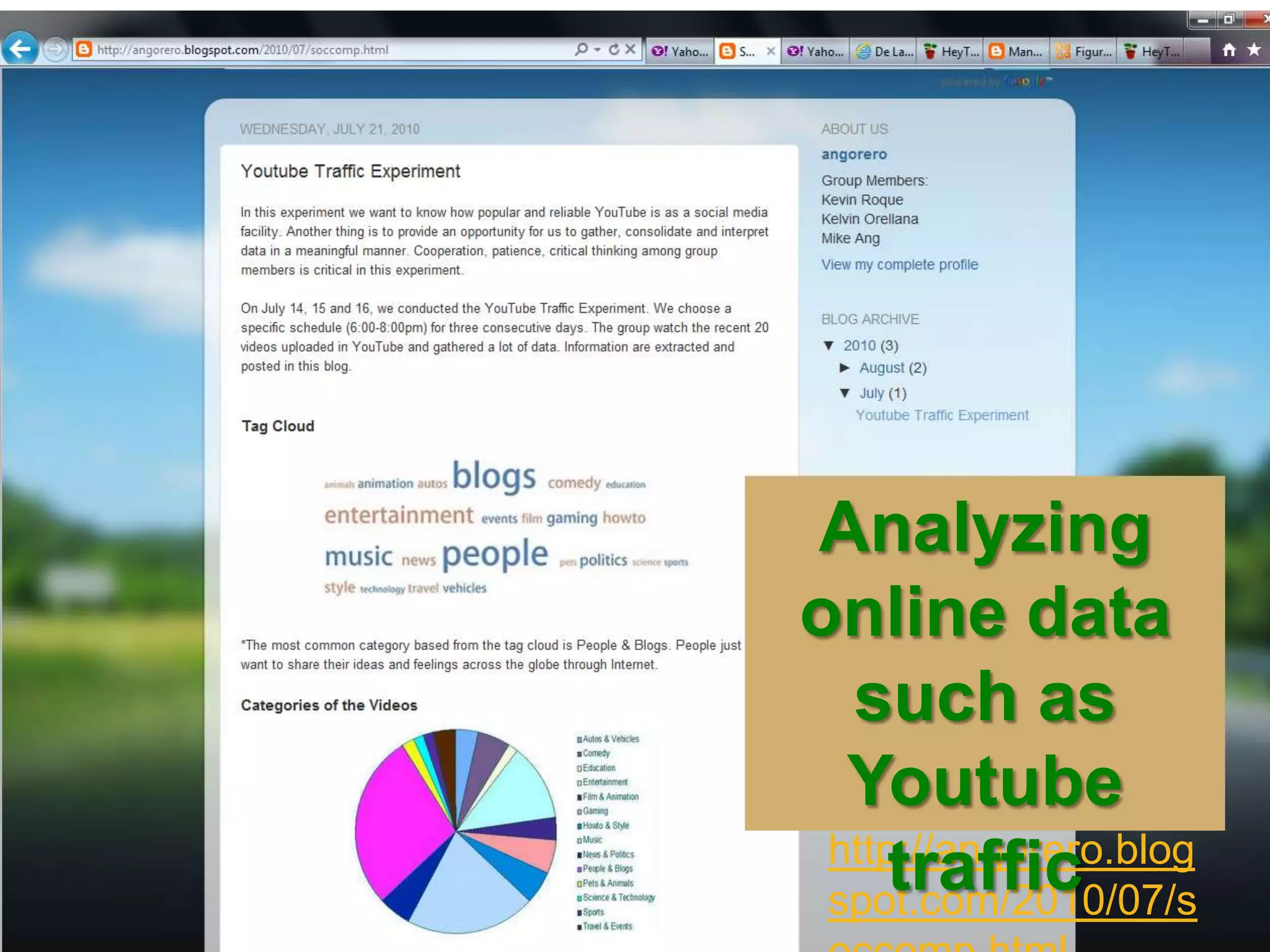
Analyzing online data such as Youtube traffichttp://angorero.blogspot.com/2010/07/soccomp.html
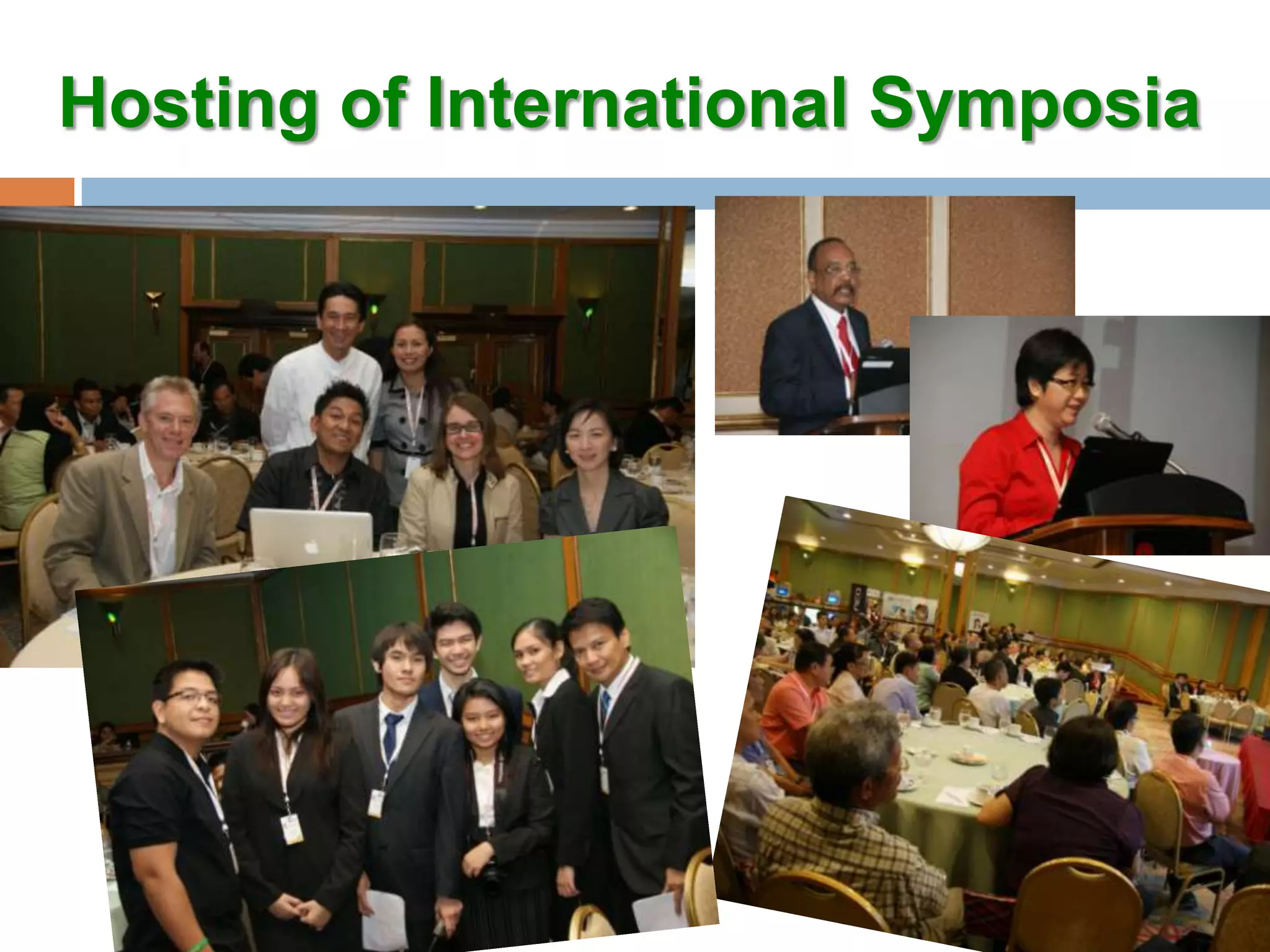
Hosting of International Symposia
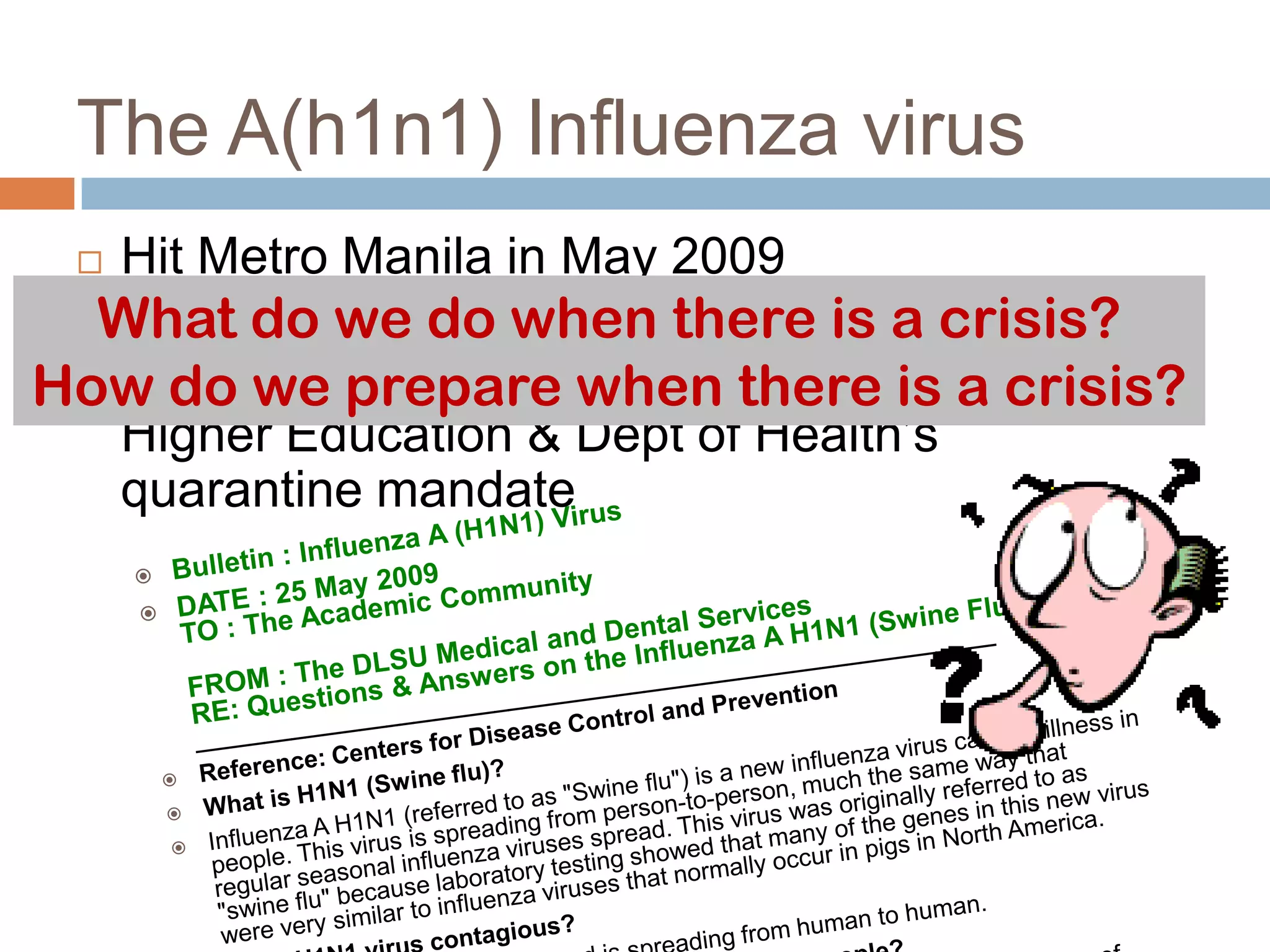
The A(h1n1) Influenza virusHit Metro Manila in May 2009DLSU has tosuspendschool operations for 10days following the Commission on HigherEducation & DeptofHealth’squarantinemandateWhat do we do whenthere is a crisis?How do wepreparewhenthere is a crisis?Bulletin : Influenza A (H1N1) VirusDATE : 25 May 2009TO : The Academic CommunityFROM : The DLSU Medical and Dental ServicesRE: Questions & Answers on the Influenza A H1N1 (Swine Flu)___________________________________________________________Reference: Centers for Disease Control and PreventionWhat is H1N1 (Swine flu)?Influenza A H1N1 (referred to as "Swine flu") is a new influenza virus causing illness in people. This virus is spreading from person-to-person, much the same way that regular seasonal influenza viruses spread. This virus was originally referred to as "swine flu" because laboratory testing showed that many of the genes in this new virus were very similar to influenza viruses that normally occur in pigs in North America.Is the H1N1 virus contagious?The H1N1 virus is contagious and is spreading from human to human.What are the signs and symptoms of this virus in people?The symptoms of this new H1N1 flu virus in people are similar to the symptoms of seasonal flu and include fever, cough, sore throat, runny or stuffy nose, body aches, headache, chills and fatigue. A significant number of people who have been infected with this virus have also reported diarrhea and vomiting.
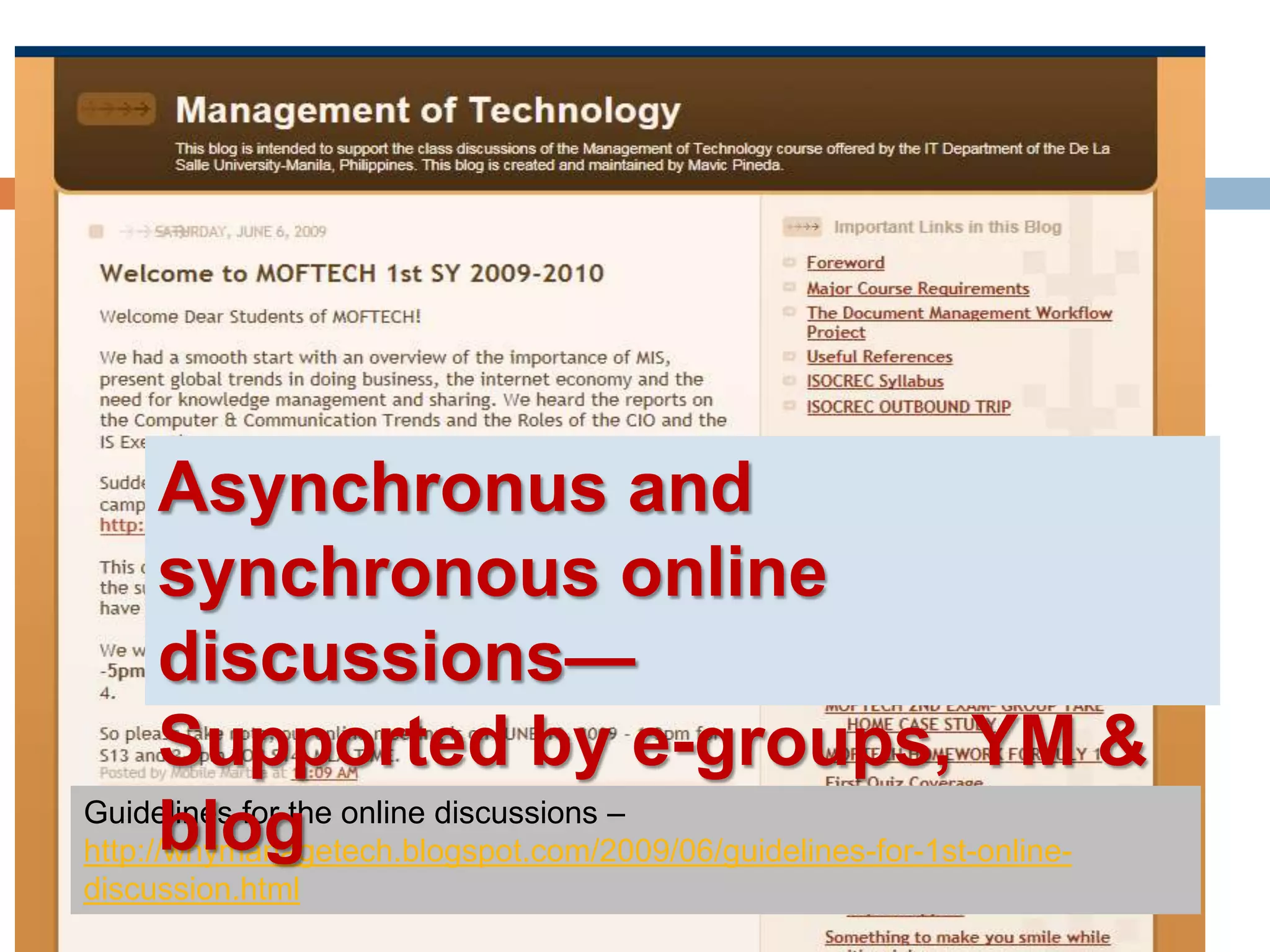
Asynchronus and synchronous online discussions—Supported by e-groups, YM & blogGuidelines for the online discussions – http://whymanagetech.blogspot.com/2009/06/guidelines-for-1st-online-discussion.html

Learning skills we need to develop among our students

  • 1.
    Preparing our studentsin the global settingThe Philippine experienceMay 19, 2011Högskolan VastTrollhattan, Vastra, Sweden MavicPinedaGuestLecturerFrom De La Salle UniversityManila, PhilippinesE-mail address: mavic.pineda@delasalle.ph
  • 2.
    AgendaAbout the PhilippinesAboutDLSUWho are our new generation studentsPresent technological trendsCan we prepare our students for these?Howdowedo it in the De La Salle University?
  • 3.
    Basic InfoArchipelago of7,107 islandsBest practices in community development & mobile commerceA leading IT & financial outsourcing service countryA country of many natural resources & natural hazardsHad been under the Spanish, American & Japanese rule in the pastOur ancestors: the Aetas/Negritos, the Indones and the Malaysthe 8th most multicultural nation in the worldWe are a developing countrySource of map image: http://www.infoplease.com/atlas/country/philippines.html
  • 4.
    De La Sallein the PhilippinesFounded in 1911
  • 5.
  • 6.
  • 7.
  • 8.
    Highest level ofHEI accreditation in the Philippines
  • 9.
    www.dlsu.edu.phUp-to-date and wideselection of printed and online learning resources Competent faculty Empowered student servicesTransformative Learning TeachingResearchCommunity Service24/7 availability of reliable web portal & wifiservices IVLE-LMS
  • 10.
    The IT InternshipProgram480 hours of fulltime work in a span of 3-4months
  • 11.
    Deployment of studentsin various IT companies
  • 12.
    Systems analysis &development work
  • 13.
    Average of 60companies participatingWho are our net-gen students?Social media is the new form of expressionBorn after 1985Content creatorHigh degree of media exposure since age 0Self-service learning skillOwnership of a game console, music player or mobile phone at age 8“Milleneal learners”Grew up with regular web connectivityView connections as friending & friendships
  • 14.
    Present Technological Trends(Dijk, 2006)Massive socialization of space and disregard to privacyFragmentation and spawning of cultureCulture of speedCulture of great fixation on screensCulture of conversationsNot just information but communication overload
  • 15.
    What do wedo now??From cartoonresource.com - http://www.cartoonresource.com/changemanagement_1.htm
  • 16.
  • 17.
    My PLN supportsmy teaching
  • 18.
    My Support ToolsMyvirtual whiteboard for instance-http://ideasonsocialcomputing.blogspot.com/
  • 19.
    Analyzing online datasuch as Youtube traffichttp://angorero.blogspot.com/2010/07/soccomp.html
  • 20.
  • 21.
    The A(h1n1) InfluenzavirusHit Metro Manila in May 2009DLSU has tosuspendschool operations for 10days following the Commission on HigherEducation & DeptofHealth’squarantinemandateWhat do we do whenthere is a crisis?How do wepreparewhenthere is a crisis?Bulletin : Influenza A (H1N1) VirusDATE : 25 May 2009TO : The Academic CommunityFROM : The DLSU Medical and Dental ServicesRE: Questions & Answers on the Influenza A H1N1 (Swine Flu)___________________________________________________________Reference: Centers for Disease Control and PreventionWhat is H1N1 (Swine flu)?Influenza A H1N1 (referred to as "Swine flu") is a new influenza virus causing illness in people. This virus is spreading from person-to-person, much the same way that regular seasonal influenza viruses spread. This virus was originally referred to as "swine flu" because laboratory testing showed that many of the genes in this new virus were very similar to influenza viruses that normally occur in pigs in North America.Is the H1N1 virus contagious?The H1N1 virus is contagious and is spreading from human to human.What are the signs and symptoms of this virus in people?The symptoms of this new H1N1 flu virus in people are similar to the symptoms of seasonal flu and include fever, cough, sore throat, runny or stuffy nose, body aches, headache, chills and fatigue. A significant number of people who have been infected with this virus have also reported diarrhea and vomiting.
  • 22.
    Asynchronus and synchronousonline discussions—Supported by e-groups, YM & blogGuidelines for the online discussions – http://whymanagetech.blogspot.com/2009/06/guidelines-for-1st-online-discussion.html
  • 23.
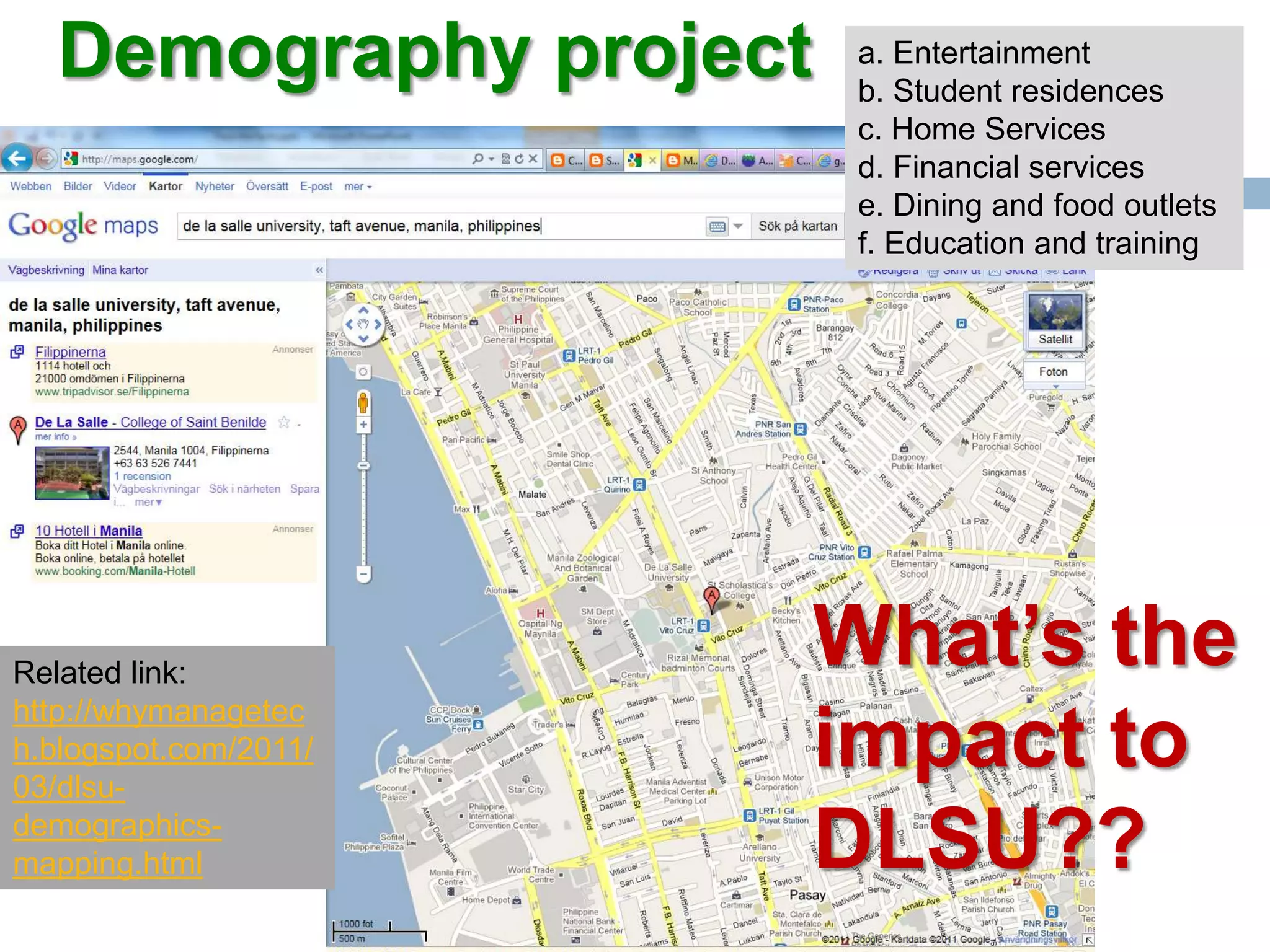
    Demographyprojecta. Entertainmentb. Studentresidencesc. Home Servicesd. Financial servicese. Dining and food outletsf. Education and trainingWhat’s the impact to DLSU??Relatedlink: http://whymanagetech.blogspot.com/2011/03/dlsu-demographics-mapping.html
  • 24.
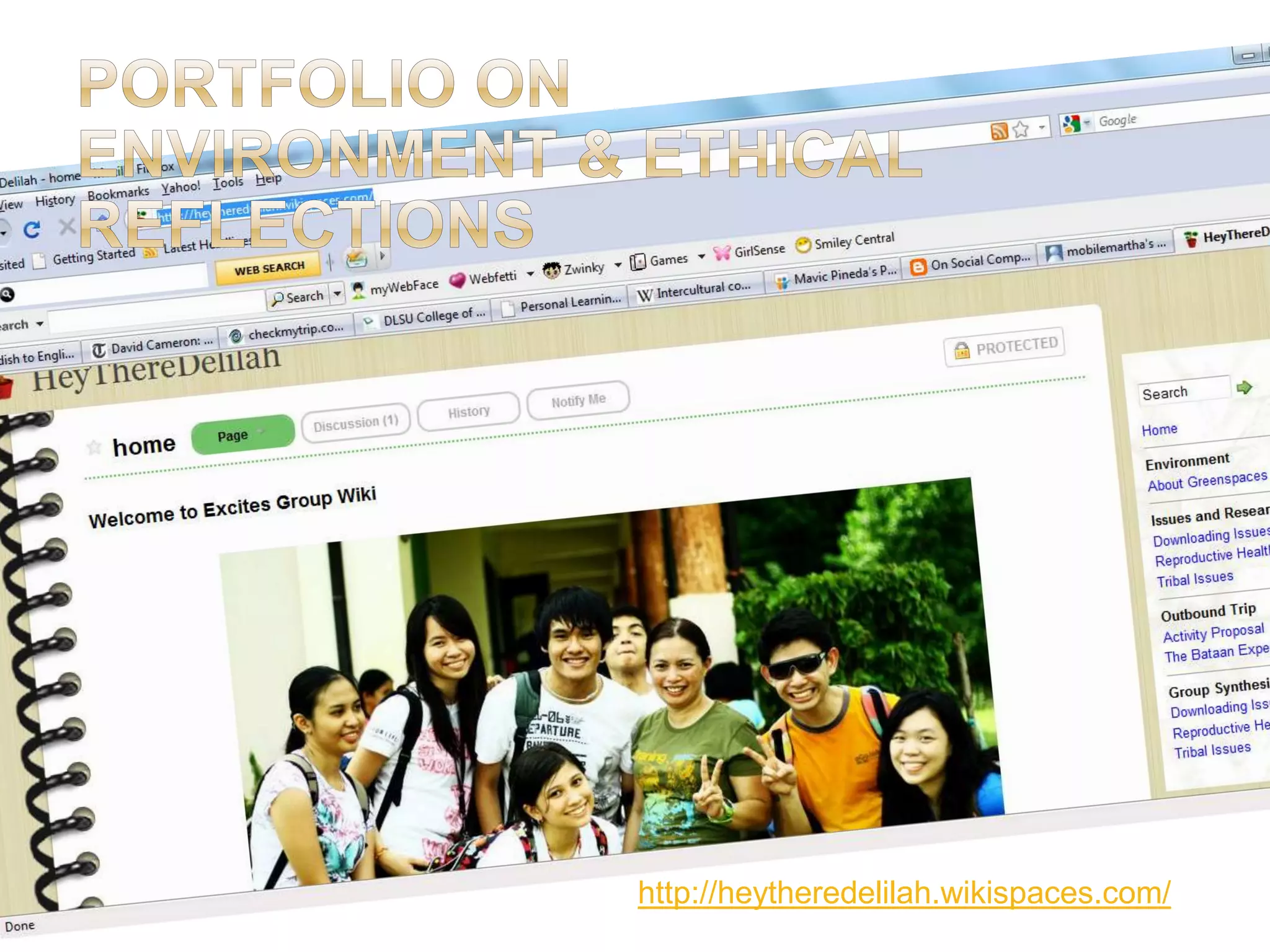
    Portfolio on Environment& ethical Reflectionshttp://heytheredelilah.wikispaces.com/
  • 25.
    Intercultural competence asdefined by Johannes De Gruyter (2011) the ability to understand and respond to cultural difference in increasingly sophisticated ways.This ability shows itself in three aspects: it is about the changes of an individual’s knowledge (cognition), attitudes (emotions) and skills (behaviour) in order to enable a positive and effective interaction with members of other cultures, both abroad and at home.
  • 26.
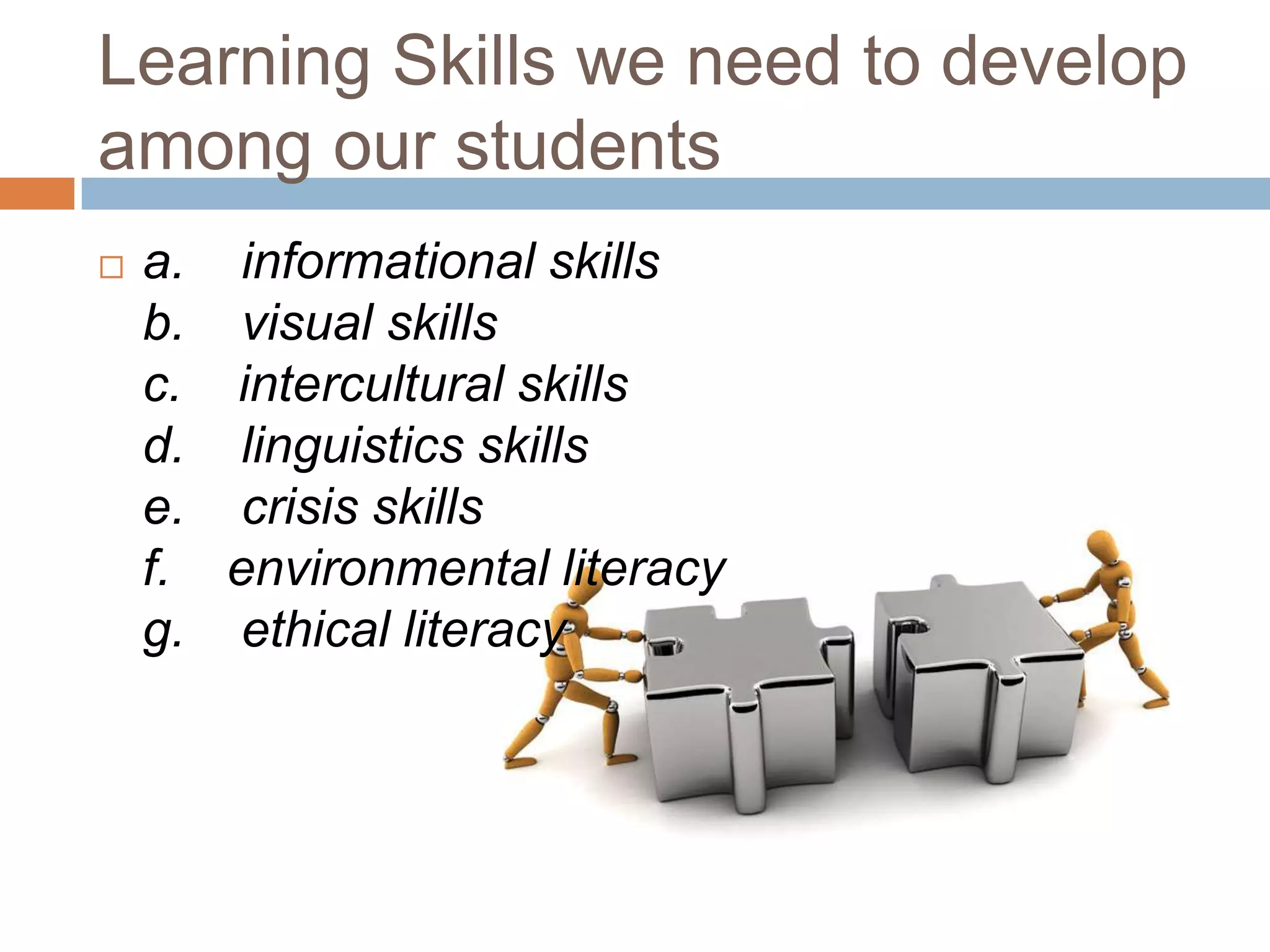
    LearningSkillsweneed to developamongourstudentsa.    informationalskillsb.    visualskillsc.    interculturalskillsd.    linguistics skillse.    crisis skillsf.    environmentalliteracyg.    ethicalliteracy
  • 27.
    ”The teaching yougive the young is not a mere matter of words, but accompanied by a great abundance of grace for those who respond to it.” – John Baptist de La SalleTack så mycket. Bra dag för alla!Mavic PinedaDe La Salle UniversityManila, PhilippinesE-mail address: mavic.pineda@delasalle.phhttp://www.slideshare.net/mobilemartha/slideshows
  • 28.
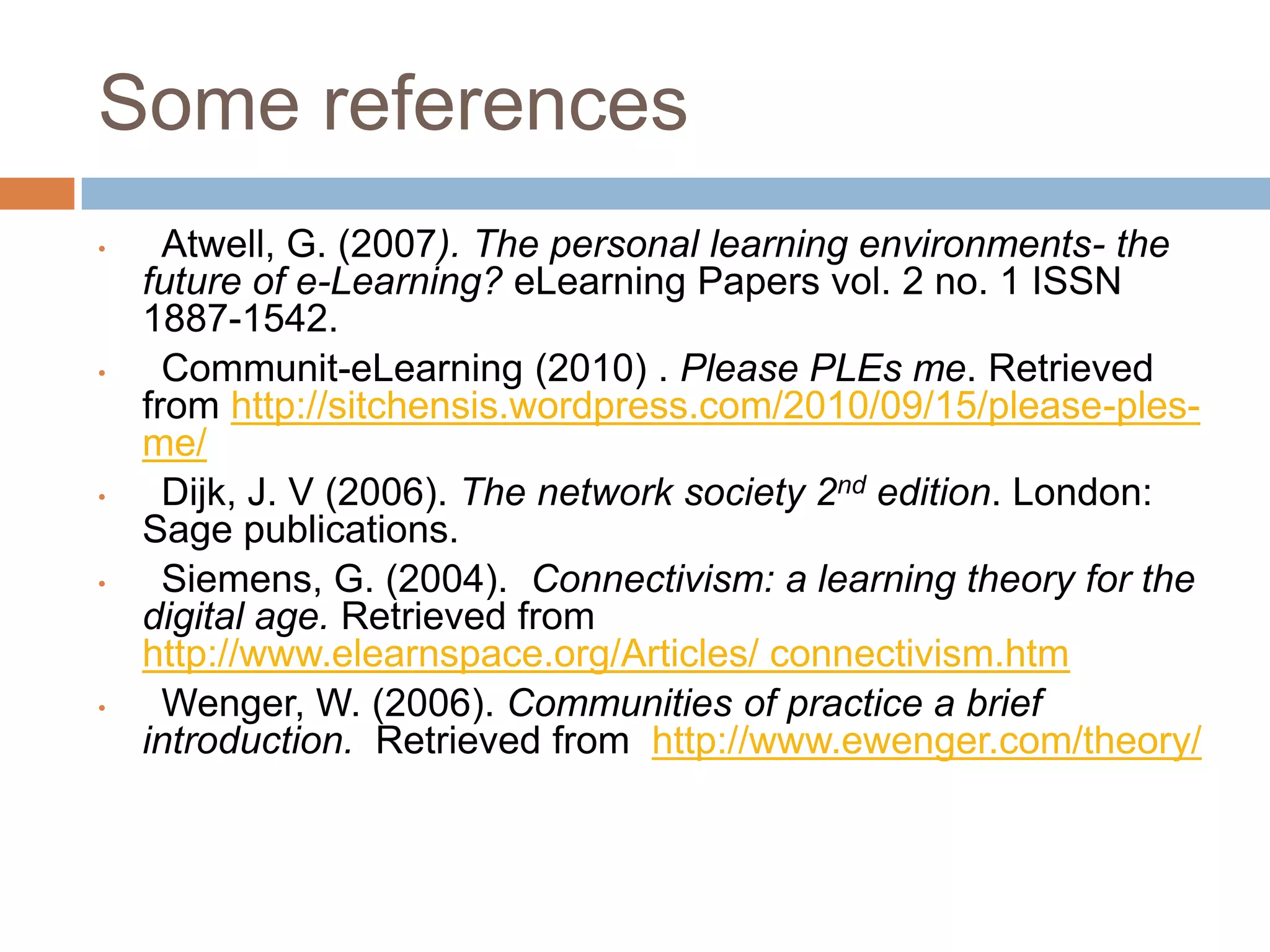
    Some referencesAtwell, G.(2007). The personal learning environments- the future of e-Learning? eLearning Papers vol. 2 no. 1 ISSN 1887-1542.
  • 29.
    Communit-eLearning (2010) .Please PLEs me. Retrieved from http://sitchensis.wordpress.com/2010/09/15/please-ples-me/
  • 30.
    Dijk, J. V(2006). The network society 2nd edition. London: Sage publications.
  • 31.
    Siemens, G. (2004). Connectivism: a learning theory for the digital age. Retrieved from http://www.elearnspace.org/Articles/ connectivism.htm
  • 32.
    Wenger, W. (2006).Communities of practice a brief introduction. Retrieved from http://www.ewenger.com/theory/

Editor's Notes

  • #2 A beautiful good morning to everyone. I am mavicpineda and I am very glad to be part of your culminating activity . I would like to extend my appreciation to University West specifically the Dept of Economics and IT for inviting me here. My role this morning is to present ideas about ICT support for teaching,learning and interculturalism and impart concrete examples from the Phils in the short 15minutes.
  • #4 Some basic informationabt the Philippines
  • #5 Some trivia on how (or why) DLSU was established in the Phils.
  • #11 This is an example with discussions on PLE/PLN
  • #12 Personal learning network or PLE is a new approach in learning. It is a philosophy, a pedagogy. It provides learners space under their own control. It provides a more holistic learning environment providing bringing together sources and context or even separately.