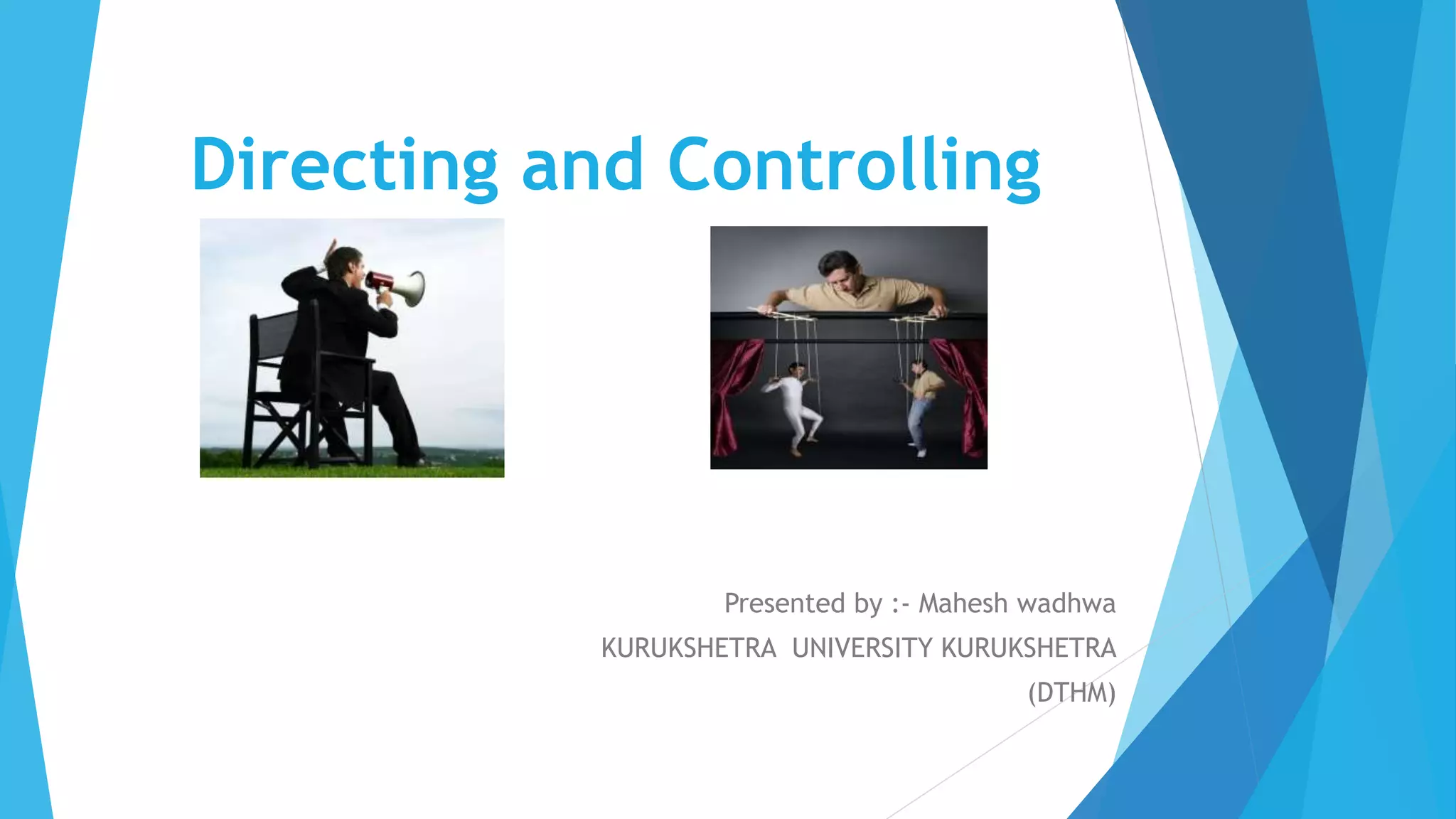
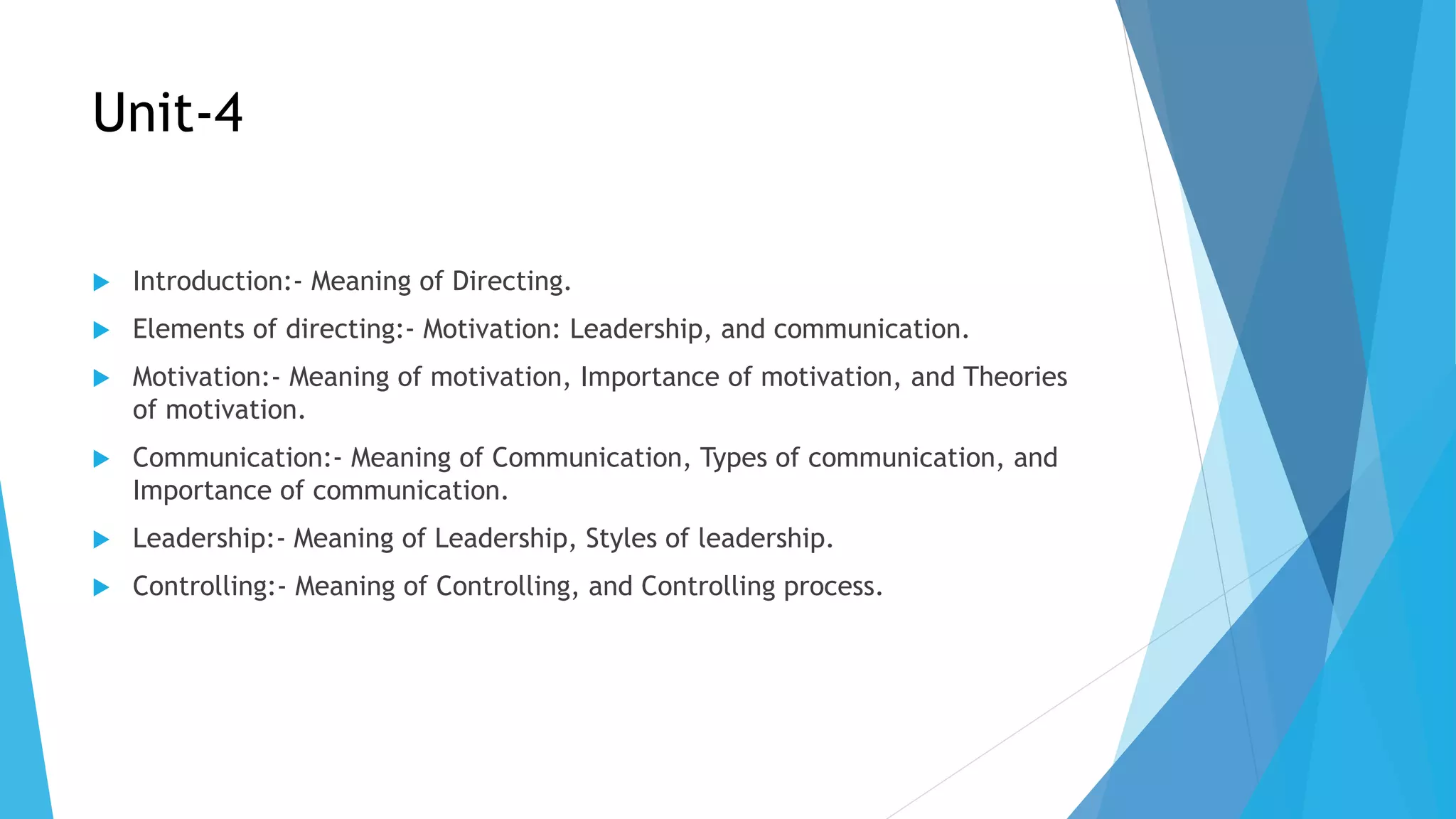
Directing and Controlling
Presented by :- Mahesh wadhwa
KURUKSHETRA UNIVERSITY KURUKSHETRA
(DTHM)
Unit-4
 Introduction:- Meaning of Directing.
 Elements of directing:- Motivation: Leadership, and communication.
 Motivation:- Meaning of motivation, Importance of motivation, and Theories
of motivation.
 Communication:- Meaning of Communication, Types of communication, and
Importance of communication.
 Leadership:- Meaning of Leadership, Styles of leadership.
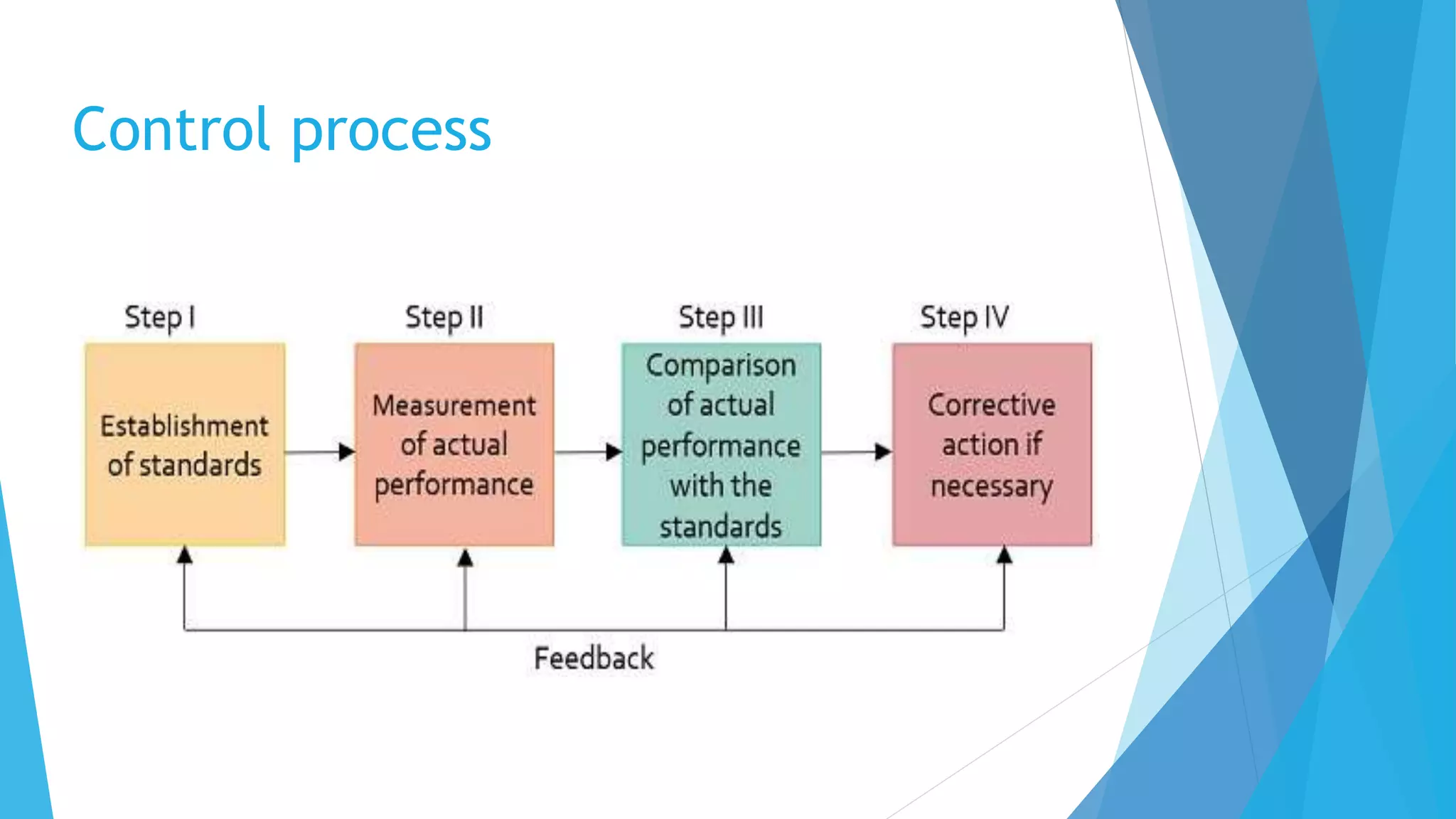
 Controlling:- Meaning of Controlling, and Controlling process.
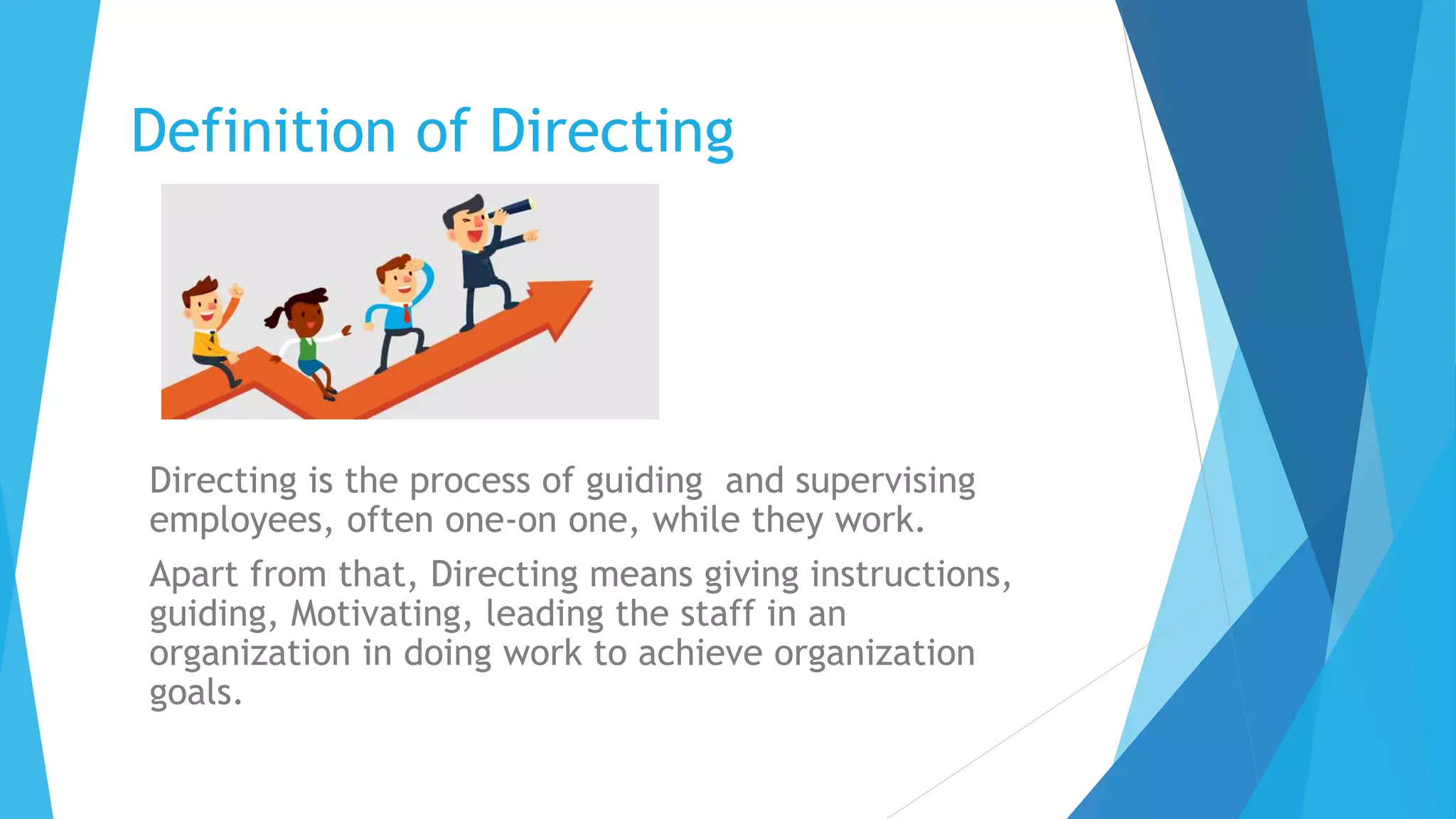
Definition of Directing
Directing is the process of guiding and supervising
employees, often one-on one, while they work.
Apart from that, Directing means giving instructions,
guiding, Motivating, leading the staff in an
organization in doing work to achieve organization
goals.
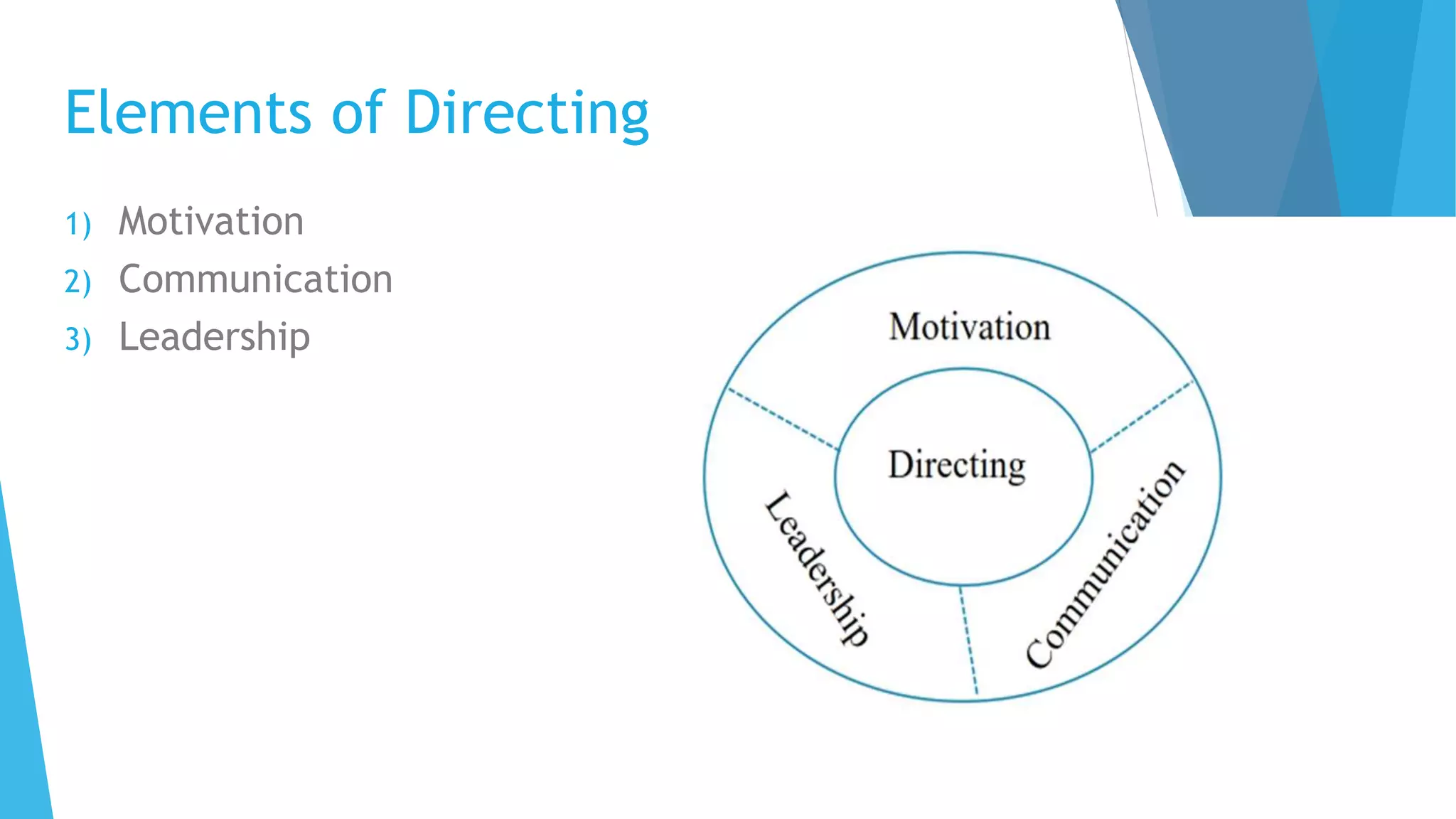
Elements of Directing
1) Motivation
2) Communication
3) Leadership
Definition of Motivation
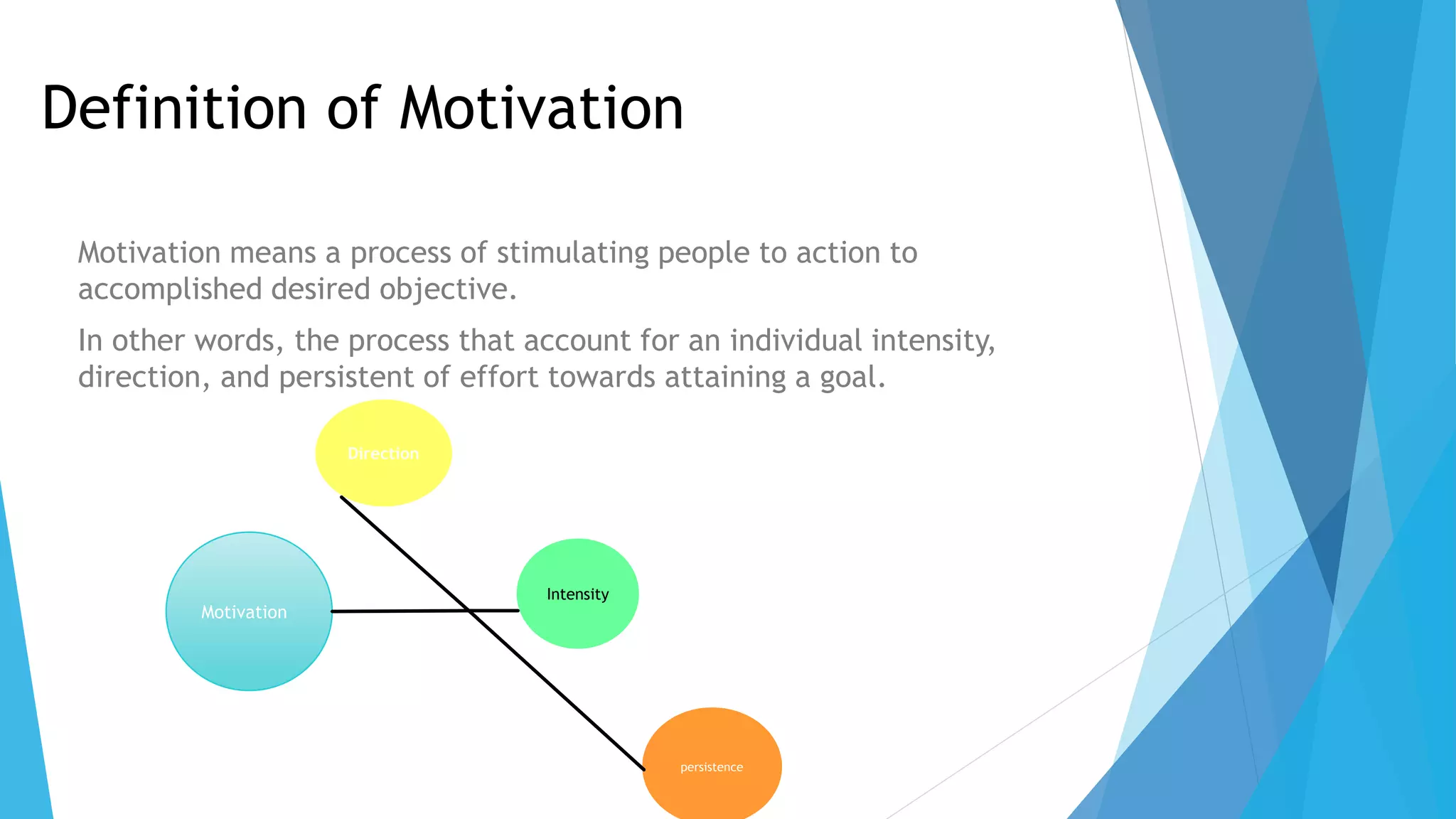
Motivation means a process of stimulating people to action to
accomplished desired objective.
In other words, the process that account for an individual intensity,
direction, and persistent of effort towards attaining a goal.
Motivation
Direction
Intensity
persistence
Importance of Motivation
1):- Improve level of efficiency of employees.
2):- Creating friendly and supportive relationship.
3):- Changes the negative attitude to positive.
4):- Helps in Satisfying needs of the employees.
Theories of human Motivation
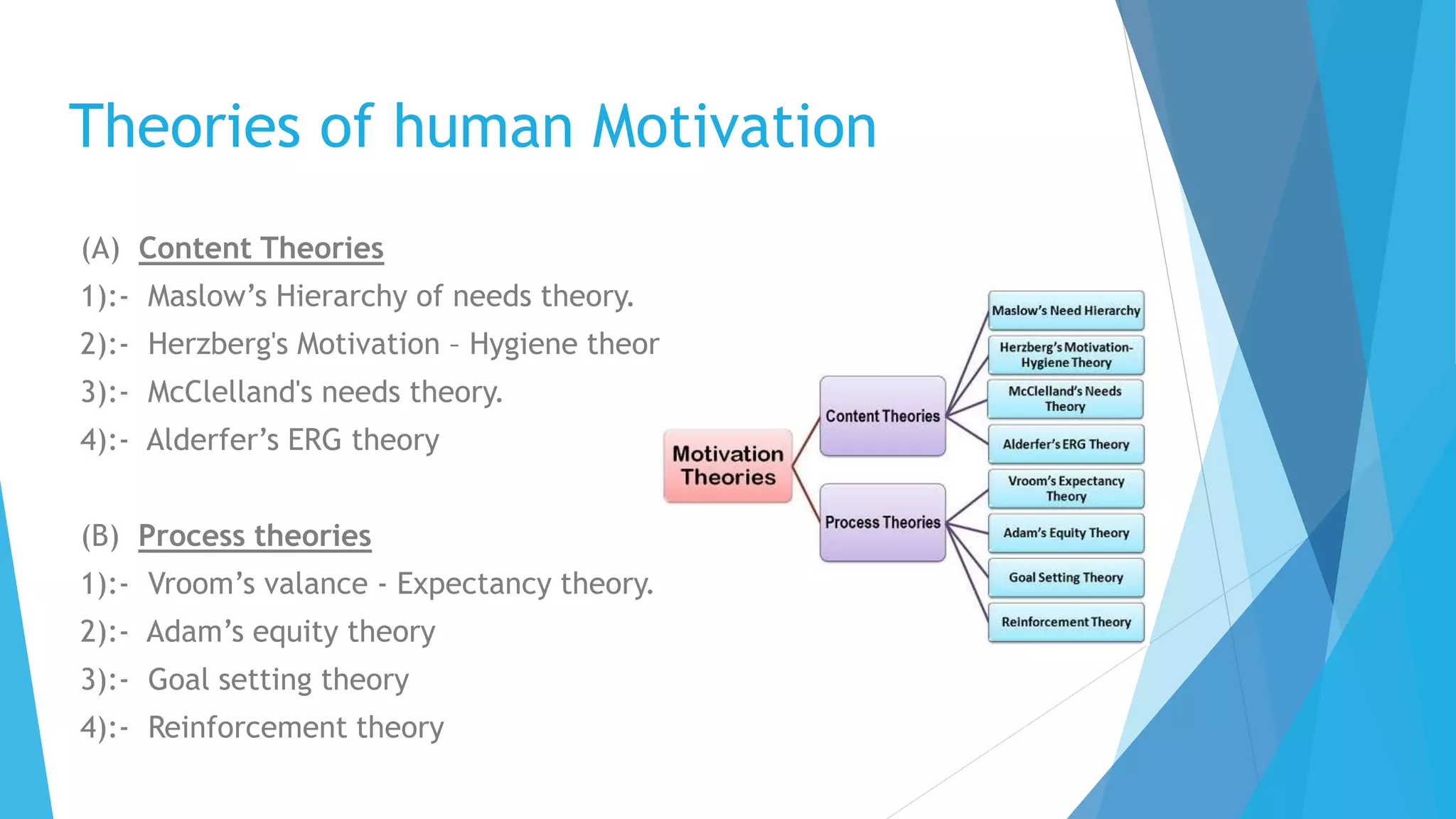
(A) Content Theories
1):- Maslow’s Hierarchy of needs theory.
2):- Herzberg's Motivation – Hygiene theory.
3):- McClelland's needs theory.
4):- Alderfer’s ERG theory
(B) Process theories
1):- Vroom’s valance - Expectancy theory.
2):- Adam’s equity theory
3):- Goal setting theory
4):- Reinforcement theory
Definition of Communication
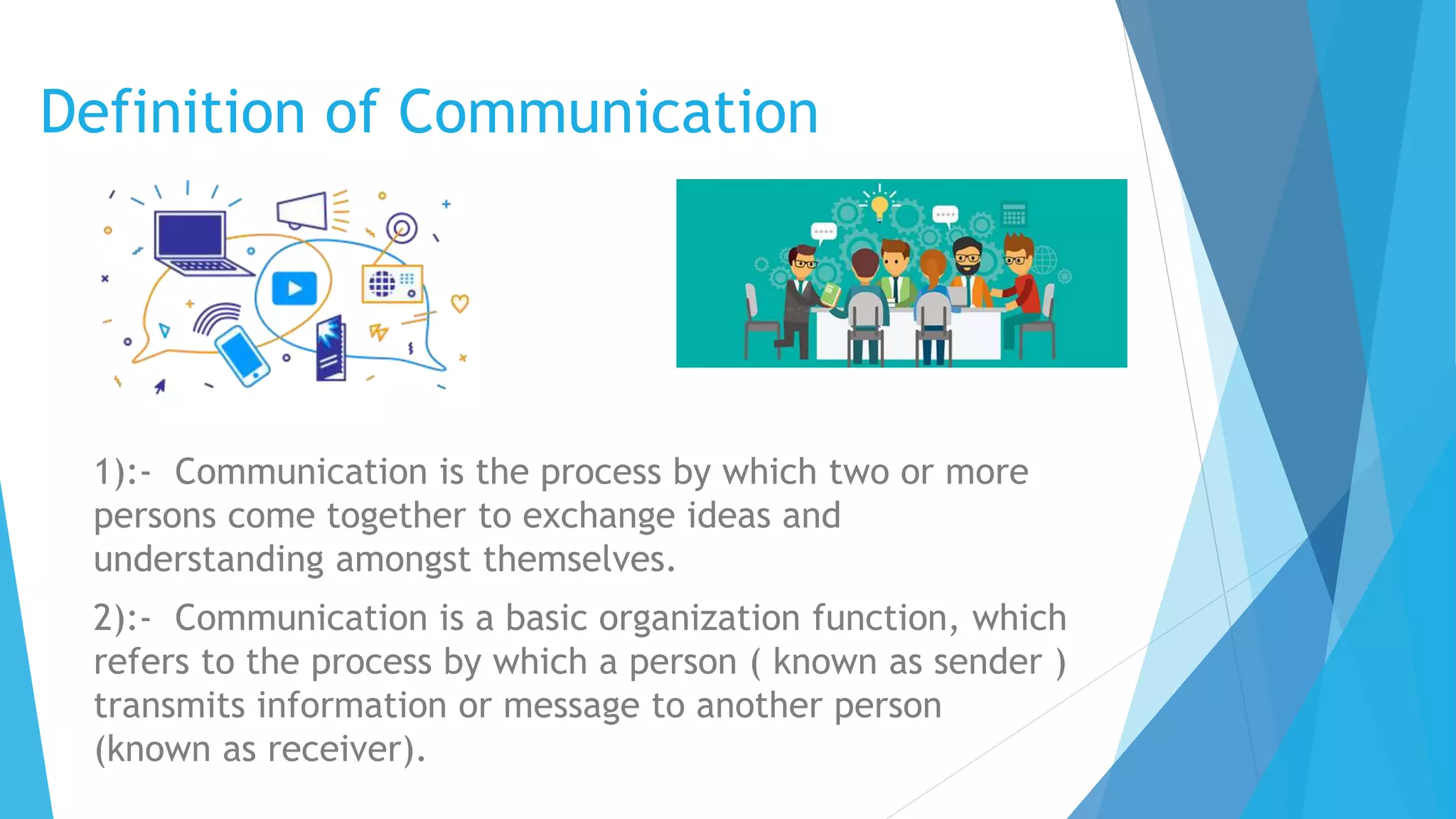
1):- Communication is the process by which two or more
persons come together to exchange ideas and
understanding amongst themselves.
2):- Communication is a basic organization function, which
refers to the process by which a person ( known as sender )
transmits information or message to another person
(known as receiver).
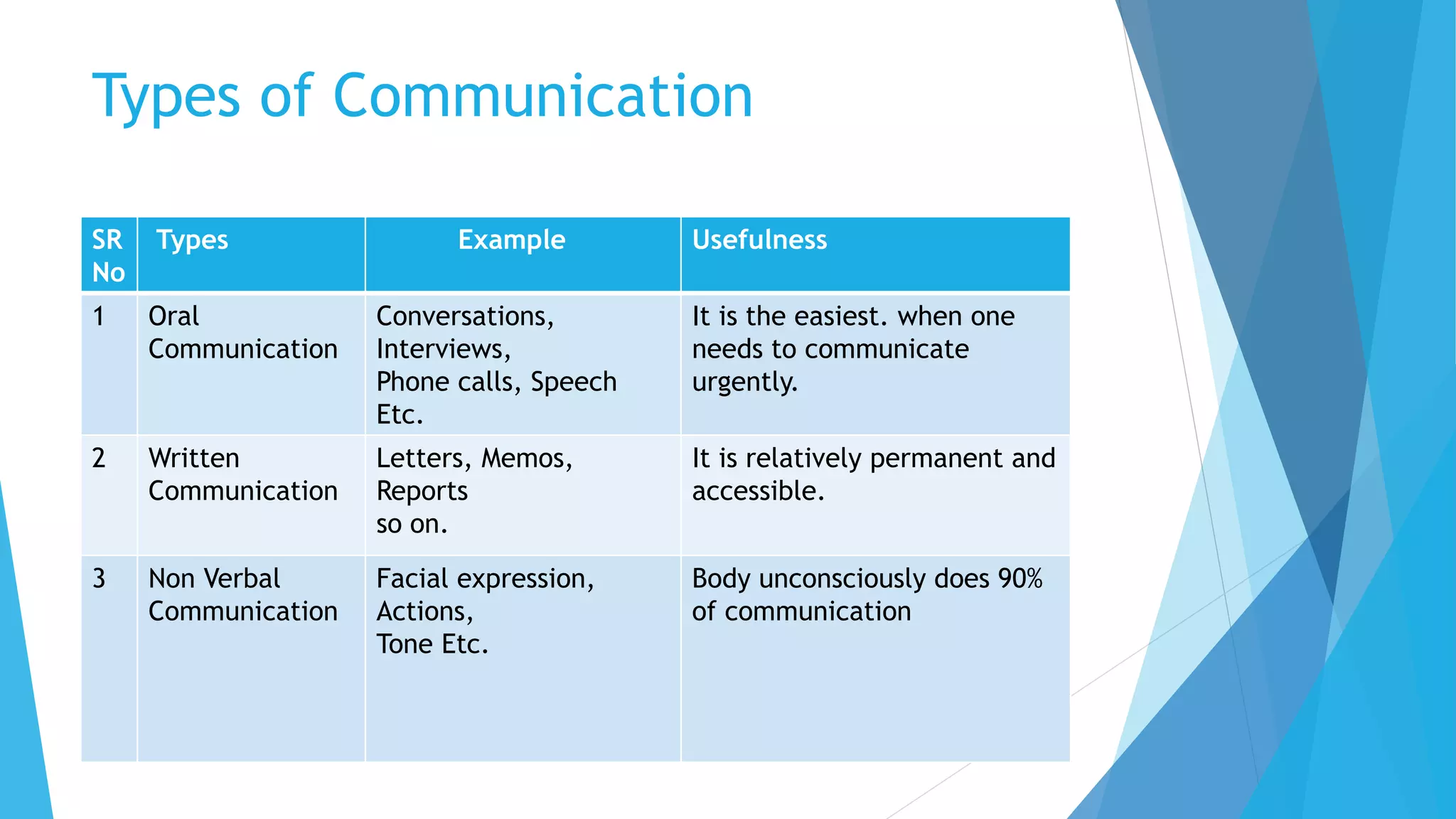
Types of Communication
SR
No
Types Example Usefulness
1 Oral
Communication
Conversations,
Interviews,
Phone calls, Speech
Etc.
It is the easiest. when one
needs to communicate
urgently.
2 Written
Communication
Letters, Memos,
Reports
so on.
It is relatively permanent and
accessible.
3 Non Verbal
Communication
Facial expression,
Actions,
Tone Etc.
Body unconsciously does 90%
of communication
Importance Of Communication
1):- Communicate helps employees to understand their roles
clearly and perform effectively.
2):- It helps to achieving co-ordination and mutual
understanding.
3):- It leads to increased productivity.
4):- Communicate improves managerial efficiency and
ensures corporation of the staff.
5):- Effective communication helps in molding attitudes and
building up employees’ morale.
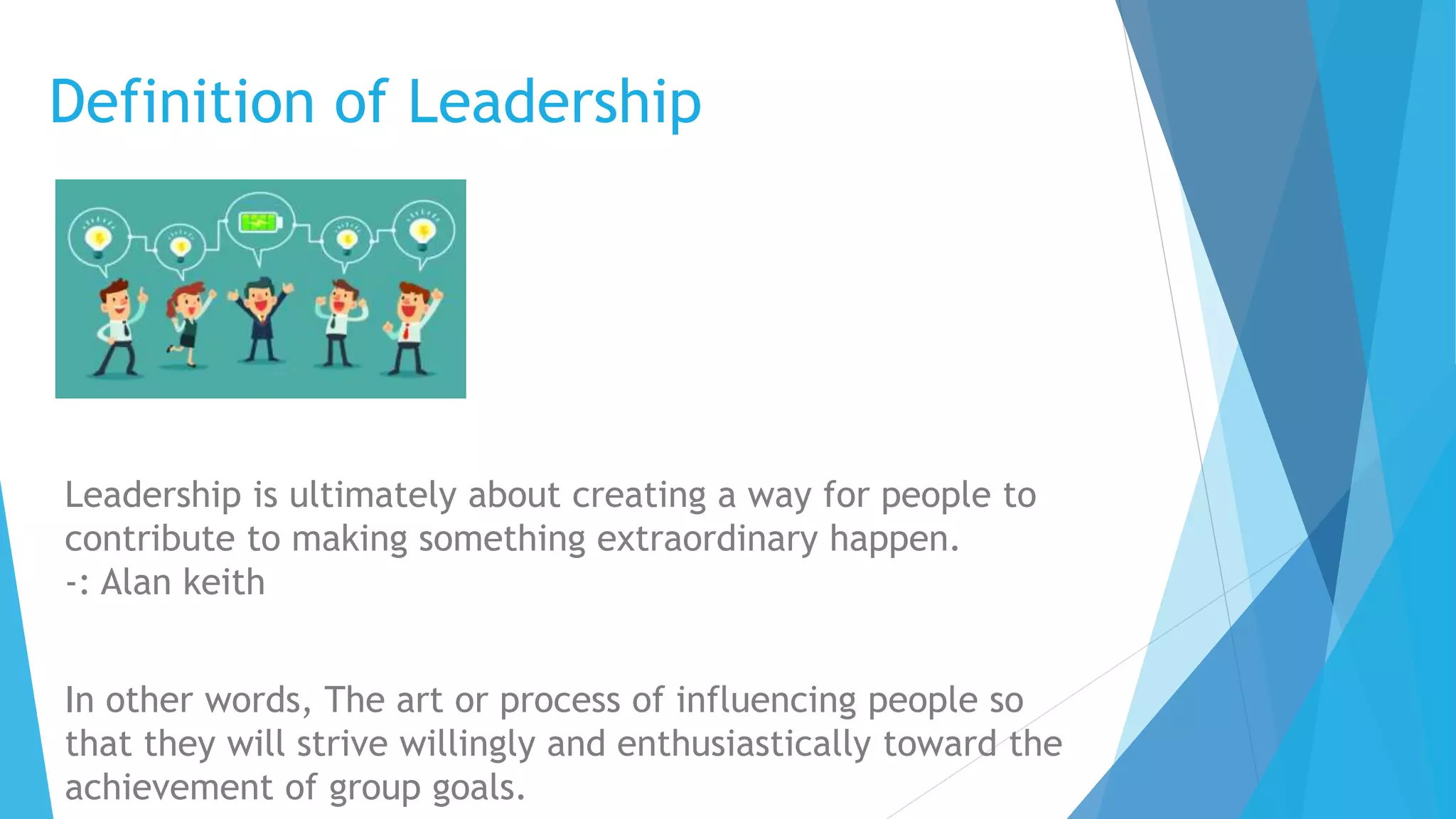
Definition of Leadership
Leadership is ultimately about creating a way for people to
contribute to making something extraordinary happen.
-: Alan keith
In other words, The art or process of influencing people so
that they will strive willingly and enthusiastically toward the
achievement of group goals.
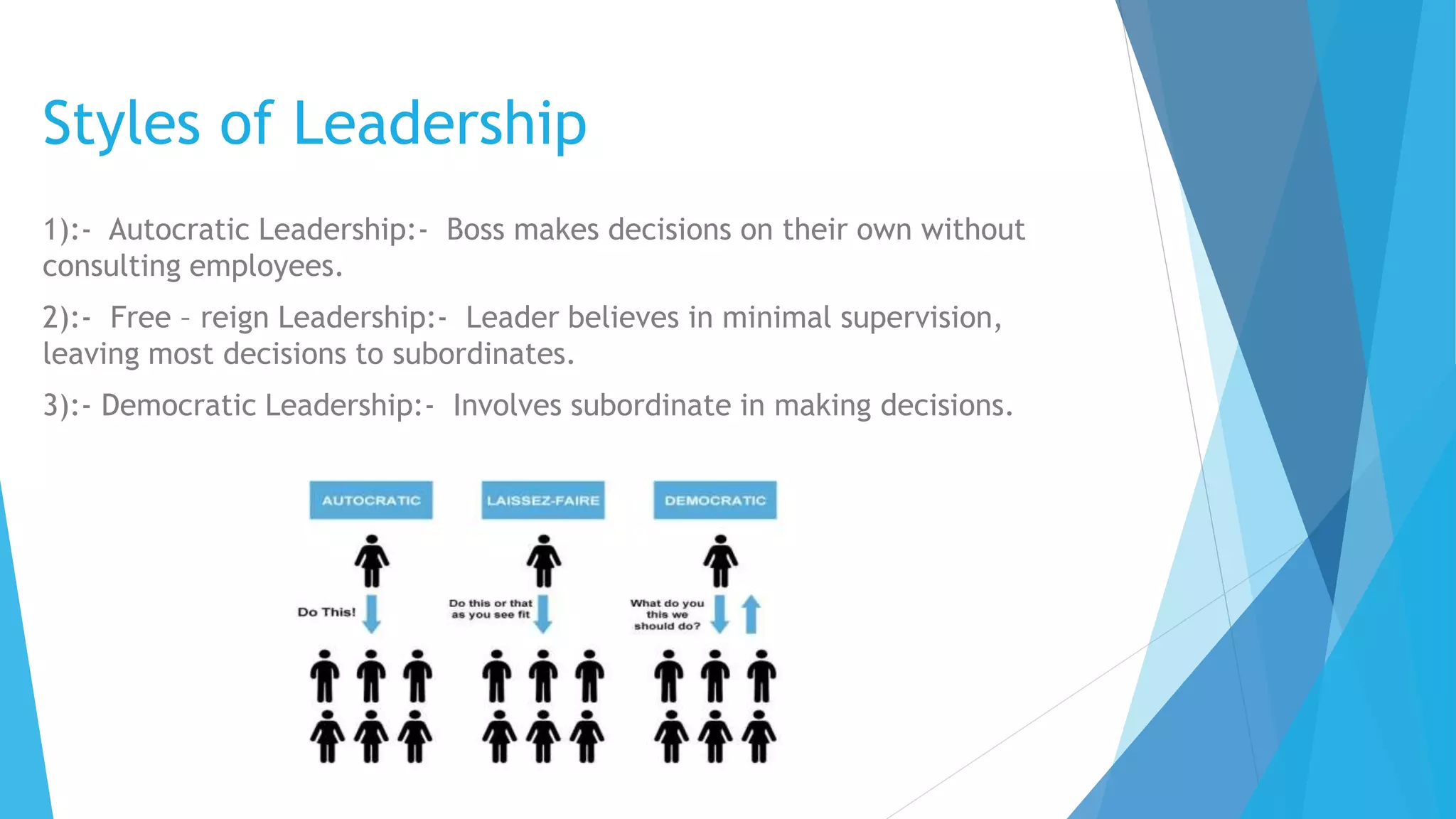
Styles of Leadership
1):- Autocratic Leadership:- Boss makes decisions on their own without
consulting employees.
2):- Free – reign Leadership:- Leader believes in minimal supervision,
leaving most decisions to subordinates.
3):- Democratic Leadership:- Involves subordinate in making decisions.
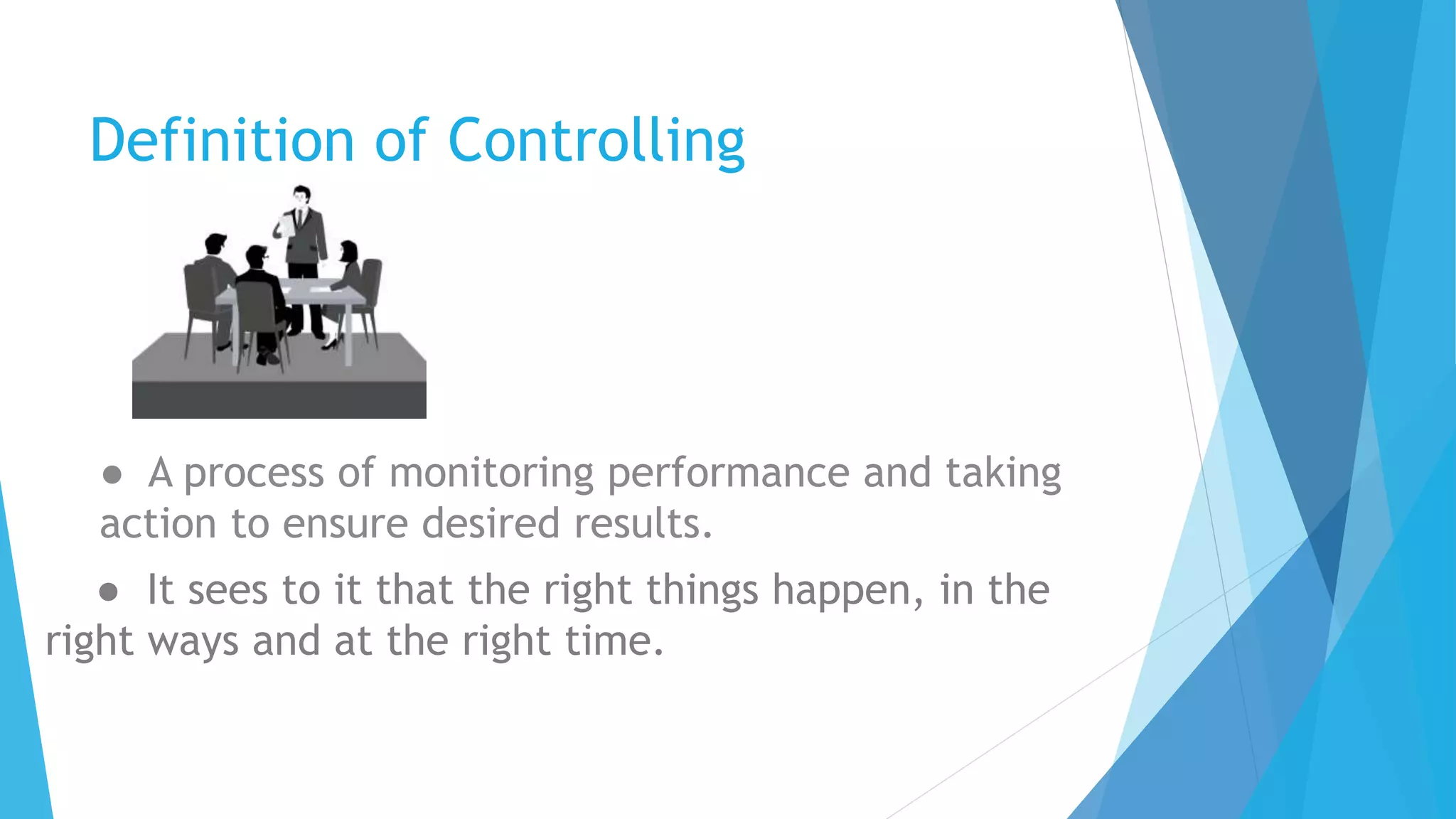
Definition of Controlling
● A process of monitoring performance and taking
action to ensure desired results.
● It sees to it that the right things happen, in the
right ways and at the right time.
Control process
Thank you

Directing and controlling

  • 1.
    Directing and Controlling Presentedby :- Mahesh wadhwa KURUKSHETRA UNIVERSITY KURUKSHETRA (DTHM)
  • 2.
    Unit-4  Introduction:- Meaningof Directing.  Elements of directing:- Motivation: Leadership, and communication.  Motivation:- Meaning of motivation, Importance of motivation, and Theories of motivation.  Communication:- Meaning of Communication, Types of communication, and Importance of communication.  Leadership:- Meaning of Leadership, Styles of leadership.  Controlling:- Meaning of Controlling, and Controlling process.
  • 3.
    Definition of Directing Directingis the process of guiding and supervising employees, often one-on one, while they work. Apart from that, Directing means giving instructions, guiding, Motivating, leading the staff in an organization in doing work to achieve organization goals.
  • 4.
    Elements of Directing 1)Motivation 2) Communication 3) Leadership
  • 5.
    Definition of Motivation Motivationmeans a process of stimulating people to action to accomplished desired objective. In other words, the process that account for an individual intensity, direction, and persistent of effort towards attaining a goal. Motivation Direction Intensity persistence
  • 6.
    Importance of Motivation 1):-Improve level of efficiency of employees. 2):- Creating friendly and supportive relationship. 3):- Changes the negative attitude to positive. 4):- Helps in Satisfying needs of the employees.
  • 7.
    Theories of humanMotivation (A) Content Theories 1):- Maslow’s Hierarchy of needs theory. 2):- Herzberg's Motivation – Hygiene theory. 3):- McClelland's needs theory. 4):- Alderfer’s ERG theory (B) Process theories 1):- Vroom’s valance - Expectancy theory. 2):- Adam’s equity theory 3):- Goal setting theory 4):- Reinforcement theory
  • 8.
    Definition of Communication 1):-Communication is the process by which two or more persons come together to exchange ideas and understanding amongst themselves. 2):- Communication is a basic organization function, which refers to the process by which a person ( known as sender ) transmits information or message to another person (known as receiver).
  • 9.
    Types of Communication SR No TypesExample Usefulness 1 Oral Communication Conversations, Interviews, Phone calls, Speech Etc. It is the easiest. when one needs to communicate urgently. 2 Written Communication Letters, Memos, Reports so on. It is relatively permanent and accessible. 3 Non Verbal Communication Facial expression, Actions, Tone Etc. Body unconsciously does 90% of communication
  • 10.
    Importance Of Communication 1):-Communicate helps employees to understand their roles clearly and perform effectively. 2):- It helps to achieving co-ordination and mutual understanding. 3):- It leads to increased productivity. 4):- Communicate improves managerial efficiency and ensures corporation of the staff. 5):- Effective communication helps in molding attitudes and building up employees’ morale.
  • 11.
    Definition of Leadership Leadershipis ultimately about creating a way for people to contribute to making something extraordinary happen. -: Alan keith In other words, The art or process of influencing people so that they will strive willingly and enthusiastically toward the achievement of group goals.
  • 12.
    Styles of Leadership 1):-Autocratic Leadership:- Boss makes decisions on their own without consulting employees. 2):- Free – reign Leadership:- Leader believes in minimal supervision, leaving most decisions to subordinates. 3):- Democratic Leadership:- Involves subordinate in making decisions.
  • 13.
    Definition of Controlling ●A process of monitoring performance and taking action to ensure desired results. ● It sees to it that the right things happen, in the right ways and at the right time.
  • 14.
  • 15.