MANAGEMENT AND ITS
FUNCTIONS
PRESENTED BY
ROHAN
SARTHAK
ANKIT
SANKET
WHAT IS MANAGEMENT?
 Management is an art of getting things done through
others.
 It is social & technical process that utilizes resources,
determines human actions & incorporates changes in
order to accomplish goals.
 Rightly Management has come into its own,like other
leading professions such as medical, engineering & law
has achieved this distinction within a comparatively short
time.
CONCEPT OF MANAGEMENT:
 1.Management is a Process:
Role of a Manager as follows-
Plan the activities
Organize the resources
Direct the subordinates
Control the activities
 2.Management is an art as well as a Science:
 3.Management follows professional approach:
A professional manager is who:
Delegates
Authority
Encourages
initiative
attitude
Invites
suggestions
of
subordinates
Provides
training to
employees
 4.Management is result oriented:
Management stresses on result orientation not on
activities. Results may lead to ultimate goals like:
Reduction
in
wastages
Optimum
utilization
of
resources
Motivated
workforce
Higher
efficiency
NEED & IMPORTANCE OF
MANAGEMENT:
 To facilitate optimum utilization of resources.
 To generate efficiency.
 To develop team spirit.
 To facilitate innovation.
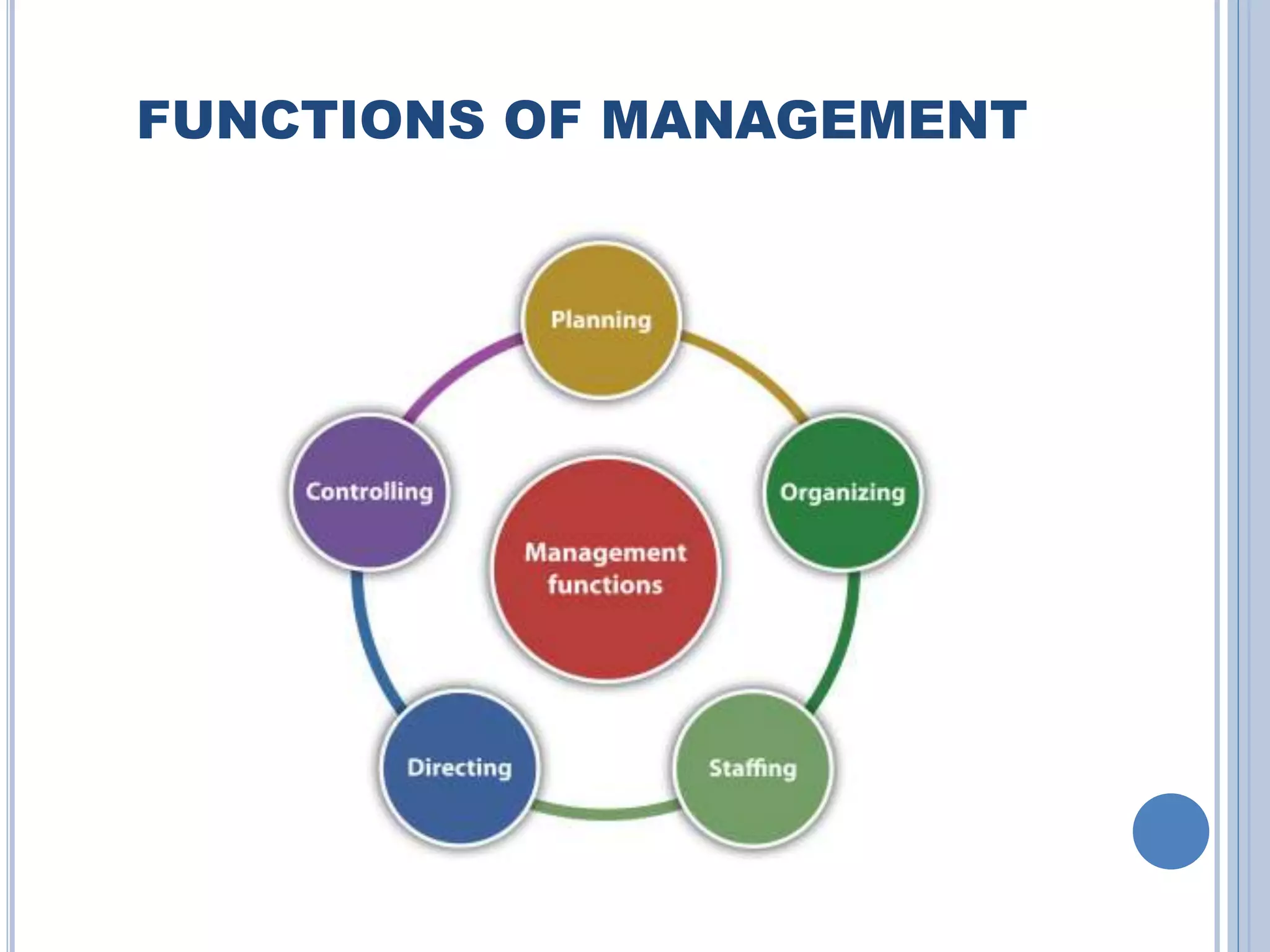
FUNCTIONS OF MANAGEMENT
PLANNING
It is a systematic activity which determines when, how
and who is going to perform a specific job.
CHARACTERISTICS OF PLANNING
 Planning is goal-oriented.
 Planning is looking ahead.
 Planning involves choice & decision making.
 Planning is a Continuous Process.
 Planning is all Pervasive.
 Planning is Flexible.
STEPS IN PLANNING FUNCTION
 Establishment of objectives
 Establishment of Planning Premises
 Choice of alternative course of action
 Formulation of derivative plans
 Securing Co-operation
 Follow up/Appraisal of plans
IMPORTANCE
 Planning facilitates management by objectives.
 Planning minimizes uncertainties
 Planning facilitates co-ordination
 Planning helps in achieving economies
CONTD.
 Planning facilitates controlling
 Planning provides competitive edge
 Planning encourages innovations
ORGANIZING
 Organizing is a function by which the concern is
able to define the role positions, the jobs related
and the co-ordination between authority and
responsibility.
NATURE
 Learning Objectives
 Identifying the tasks
 Grouping the activities
 Delegation of Authority
 Coordination
 Organizing as a process involves:
 Identification of activities.
 Classification of grouping of activities.
 Assignment of duties.
 Delegation of authority and creation of
responsibility.
 Coordinating authority and responsibility
relationships.
IMPORTANCE OF ORGANIZING
 Specialization
 Well defined jobs
 Clarifies authority
 Co-ordination
 Effective administration
CONTD.
 Growth and diversification
 Sense of security
STAFFING
 Staffing is the process of matching the jobs
with capable people.
 It is concerned with selection, placement,
growth and development of people in an
organization.
CHARACTERISTICS
 People Centered
 Responsibility of Every Manager
 Human Skills
 Continuous Function
PROCESS INVOLVED IN STAFFING
 Manpower requirements
 Recruitment
 Selection
 Orientation and Placement
 Training and Development
CONTD.
 Remuneration
 Performance Evaluation
 Promotion and transfer
IMPORTANCE
 Efficient Performance of Other Functions
 Effective Use of Technology and Other
Resources
 Optimum Utilization of Human Resources
 Development of Human Capital
 Building Higher Morale
DIRECTING
 Directing is the management function that involves
influencing others to engage in the work behaviours
necessary to reach organizational goals.
CHARACTERSTICS
 PERVASIVE FUNCTION
 CONTINUOUS ACTIVITY
 HUMAN FACTOR
 EXECUTIVE FUNCTION
 CREATIVE ACTIVITY
IMPORTANCE OF DIRECTING
 Directing initiates actions
 Directing integrates efforts
 Directing is a means of motivation
 Directing will enable to cope with the changes
 Directing helps in efficient utilization of
resources
ELEMENTS OF DIRECTING
 Supervision- implies overseeing the work of
subordinates by their superiors. It is the act of
watching & directing work & workers.
 Motivation- means inspiring, stimulating or
encouraging the sub-ordinates with zeal to work.
Positive, negative, monetary, non-monetary
incentives may be used for this purpose.
 Leadership- may be defined as a process by which
manager guides and influences the work of
subordinates in desired direction
 Communications- is the process of passing
information, experience, opinion etc from one
person to another. It is a bridge of understanding
CONTROLLING
 Controlling is the management function aimed at
regulating organizational activities so that actual
performance meets the expected objectives and standards
of company.
CHARACTERISTICS
 Controlling is an end function
 Controlling is a pervasive function
 Controlling is forward looking
 Controlling is a dynamic process
 Controlling is related with planning
PROCESS INVOLVED IN CONTROLLING
 Establishment of standards
 Measurement of performance
 Comparison of actual and standard
performance
 Taking remedial actions
IMPORTANCE
 Accomplishing Organizational Goals
 Judging Accuracy of Standards
 Making Efficient Use of Resources
 Improving Employee Motivation
 Ensuring Order and Discipline
Mpob ppt

Mpob ppt

  • 1.
    MANAGEMENT AND ITS FUNCTIONS PRESENTEDBY ROHAN SARTHAK ANKIT SANKET
  • 2.
    WHAT IS MANAGEMENT? Management is an art of getting things done through others.  It is social & technical process that utilizes resources, determines human actions & incorporates changes in order to accomplish goals.  Rightly Management has come into its own,like other leading professions such as medical, engineering & law has achieved this distinction within a comparatively short time.
  • 3.
    CONCEPT OF MANAGEMENT: 1.Management is a Process: Role of a Manager as follows- Plan the activities Organize the resources Direct the subordinates Control the activities
  • 4.
     2.Management isan art as well as a Science:  3.Management follows professional approach: A professional manager is who: Delegates Authority Encourages initiative attitude Invites suggestions of subordinates Provides training to employees
  • 5.
     4.Management isresult oriented: Management stresses on result orientation not on activities. Results may lead to ultimate goals like: Reduction in wastages Optimum utilization of resources Motivated workforce Higher efficiency
  • 6.
    NEED & IMPORTANCEOF MANAGEMENT:  To facilitate optimum utilization of resources.  To generate efficiency.  To develop team spirit.  To facilitate innovation.
  • 7.
  • 8.
    PLANNING It is asystematic activity which determines when, how and who is going to perform a specific job.
  • 9.
    CHARACTERISTICS OF PLANNING Planning is goal-oriented.  Planning is looking ahead.  Planning involves choice & decision making.  Planning is a Continuous Process.  Planning is all Pervasive.  Planning is Flexible.
  • 10.
    STEPS IN PLANNINGFUNCTION  Establishment of objectives  Establishment of Planning Premises  Choice of alternative course of action  Formulation of derivative plans  Securing Co-operation  Follow up/Appraisal of plans
  • 11.
    IMPORTANCE  Planning facilitatesmanagement by objectives.  Planning minimizes uncertainties  Planning facilitates co-ordination  Planning helps in achieving economies
  • 12.
    CONTD.  Planning facilitatescontrolling  Planning provides competitive edge  Planning encourages innovations
  • 13.
    ORGANIZING  Organizing isa function by which the concern is able to define the role positions, the jobs related and the co-ordination between authority and responsibility.
  • 14.
    NATURE  Learning Objectives Identifying the tasks  Grouping the activities  Delegation of Authority  Coordination
  • 15.
     Organizing asa process involves:  Identification of activities.  Classification of grouping of activities.  Assignment of duties.  Delegation of authority and creation of responsibility.  Coordinating authority and responsibility relationships.
  • 16.
    IMPORTANCE OF ORGANIZING Specialization  Well defined jobs  Clarifies authority  Co-ordination  Effective administration
  • 17.
    CONTD.  Growth anddiversification  Sense of security
  • 18.
    STAFFING  Staffing isthe process of matching the jobs with capable people.  It is concerned with selection, placement, growth and development of people in an organization.
  • 19.
    CHARACTERISTICS  People Centered Responsibility of Every Manager  Human Skills  Continuous Function
  • 20.
    PROCESS INVOLVED INSTAFFING  Manpower requirements  Recruitment  Selection  Orientation and Placement  Training and Development
  • 21.
    CONTD.  Remuneration  PerformanceEvaluation  Promotion and transfer
  • 22.
    IMPORTANCE  Efficient Performanceof Other Functions  Effective Use of Technology and Other Resources  Optimum Utilization of Human Resources  Development of Human Capital  Building Higher Morale
  • 23.
    DIRECTING  Directing isthe management function that involves influencing others to engage in the work behaviours necessary to reach organizational goals.
  • 24.
    CHARACTERSTICS  PERVASIVE FUNCTION CONTINUOUS ACTIVITY  HUMAN FACTOR  EXECUTIVE FUNCTION  CREATIVE ACTIVITY
  • 25.
    IMPORTANCE OF DIRECTING Directing initiates actions  Directing integrates efforts  Directing is a means of motivation  Directing will enable to cope with the changes  Directing helps in efficient utilization of resources
  • 26.
    ELEMENTS OF DIRECTING Supervision- implies overseeing the work of subordinates by their superiors. It is the act of watching & directing work & workers.  Motivation- means inspiring, stimulating or encouraging the sub-ordinates with zeal to work. Positive, negative, monetary, non-monetary incentives may be used for this purpose.
  • 27.
     Leadership- maybe defined as a process by which manager guides and influences the work of subordinates in desired direction  Communications- is the process of passing information, experience, opinion etc from one person to another. It is a bridge of understanding
  • 28.
    CONTROLLING  Controlling isthe management function aimed at regulating organizational activities so that actual performance meets the expected objectives and standards of company.
  • 29.
    CHARACTERISTICS  Controlling isan end function  Controlling is a pervasive function  Controlling is forward looking  Controlling is a dynamic process  Controlling is related with planning
  • 30.
    PROCESS INVOLVED INCONTROLLING  Establishment of standards  Measurement of performance  Comparison of actual and standard performance  Taking remedial actions
  • 31.
    IMPORTANCE  Accomplishing OrganizationalGoals  Judging Accuracy of Standards  Making Efficient Use of Resources  Improving Employee Motivation  Ensuring Order and Discipline