Integration of
metabolism
Mohammad Reza Abdullahi
Master of medical science student in biochemistry
IIUM, Malyasia
1
Overview
• Coordination between different metabolic pathways inside the body is called
integration of metabolism
• It ensures a supply of suitable fuel for all tissues, at all the time (from fully
fed state to the totally starved state)
2
Major metabolic pathway
• Glycolysis
• Gluconeogenesis
• Glycogen metabolism
• Fatty acid metabolism
• Citric acid cycle
• Amino acid metabolism
• Oxidative phosphorylation
3
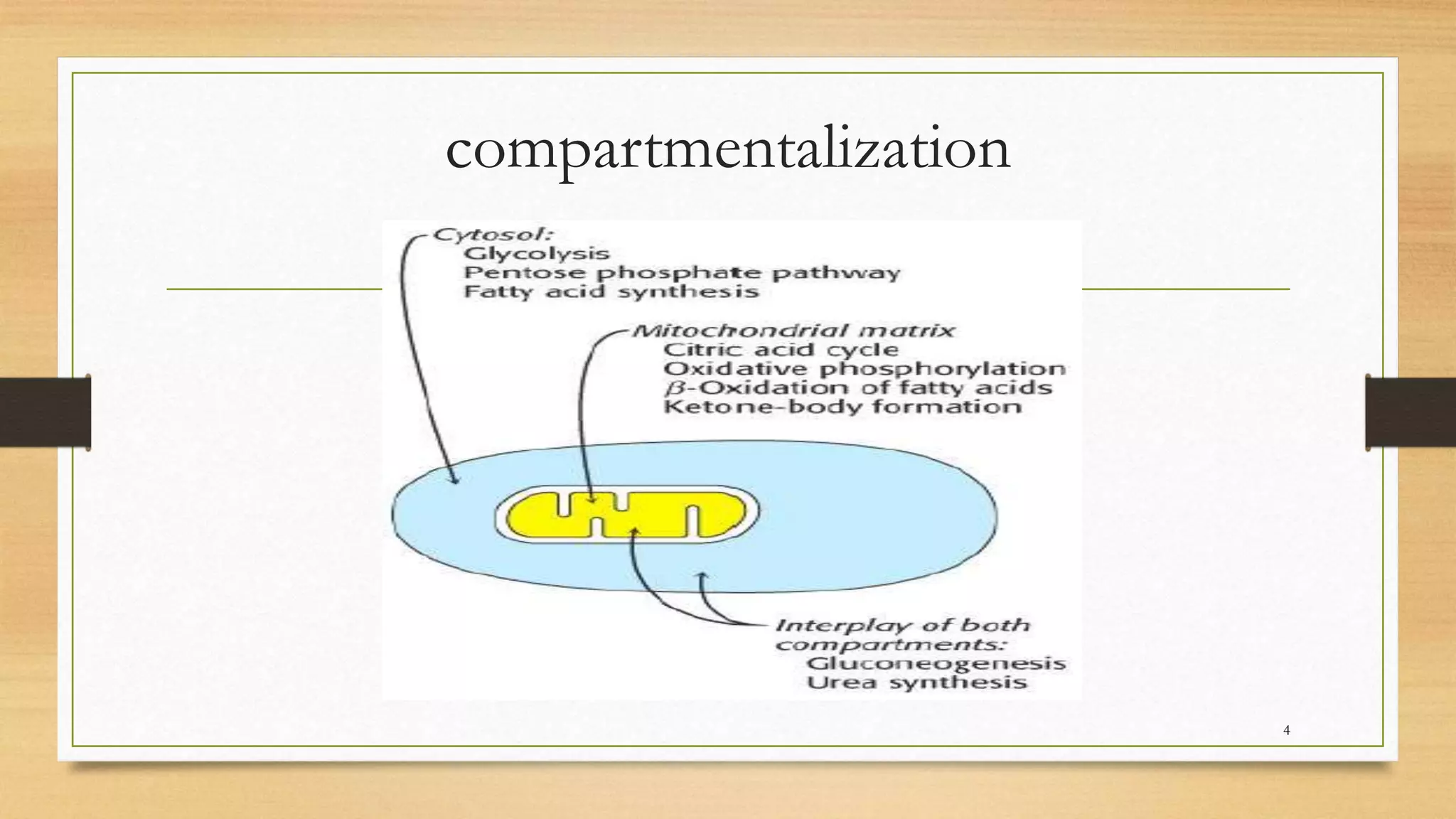
compartmentalization
4
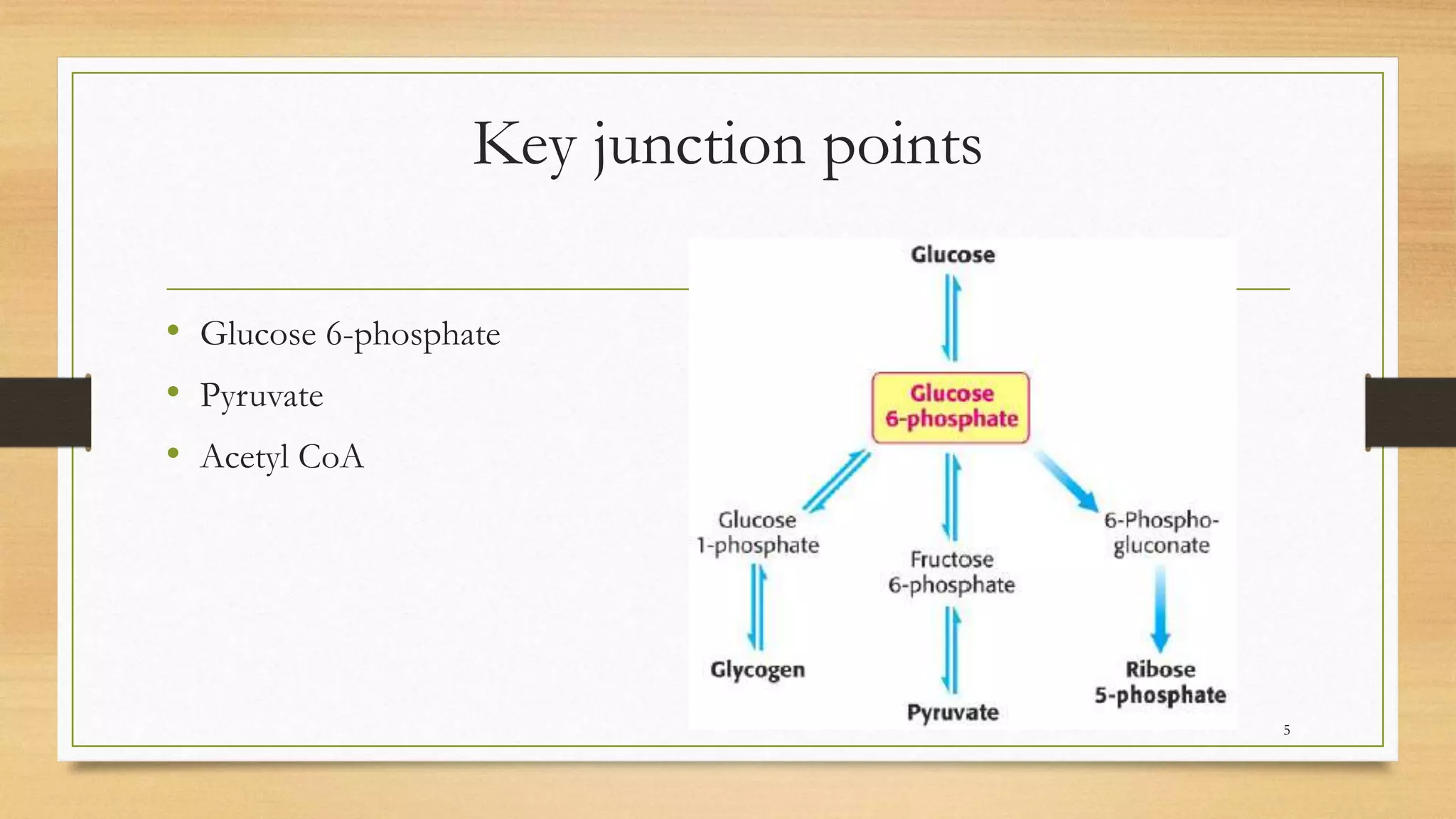
Key junction points
• Glucose 6-phosphate
• Pyruvate
• Acetyl CoA
5
6
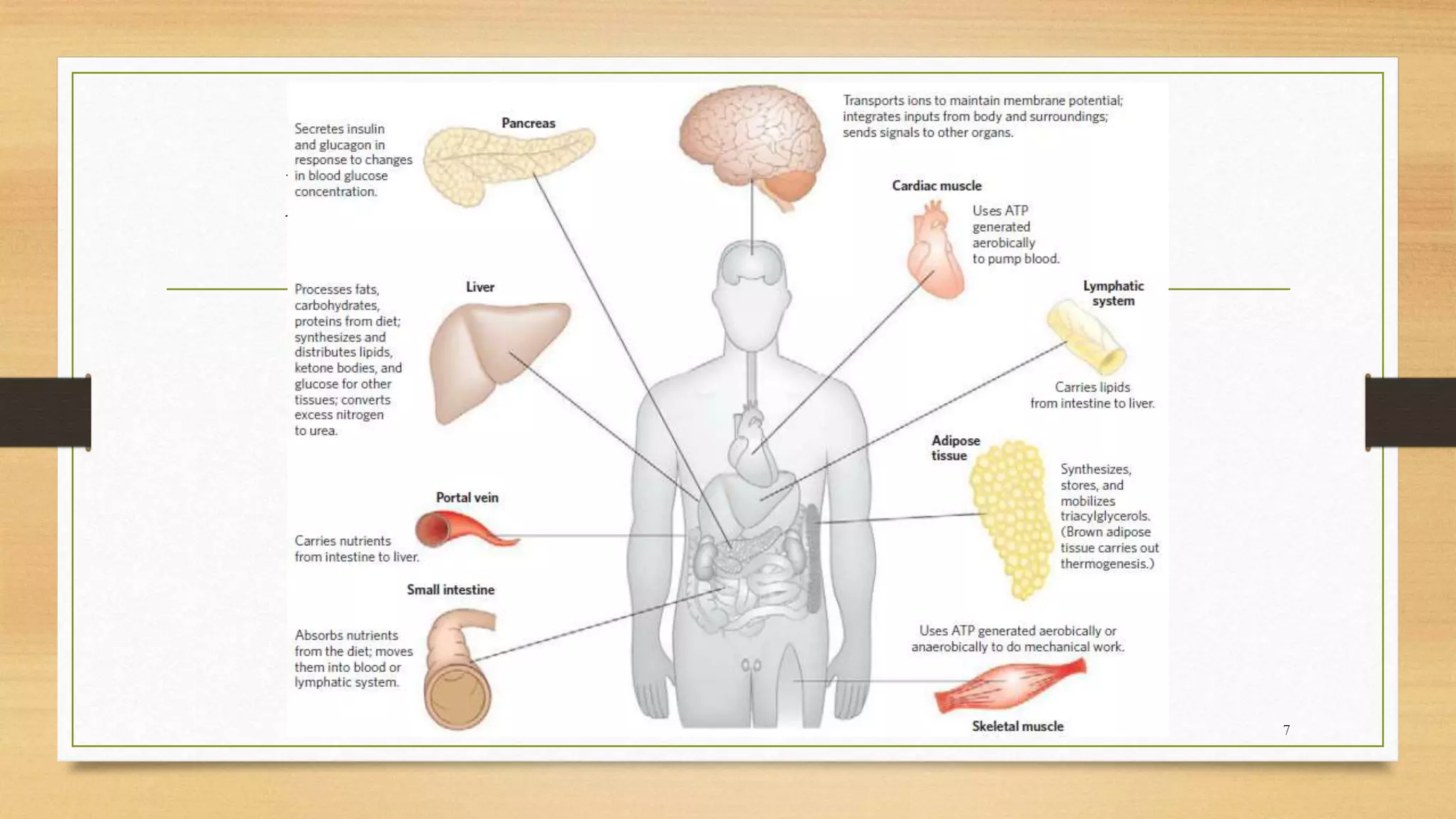
Metabolic functions of the organs
7
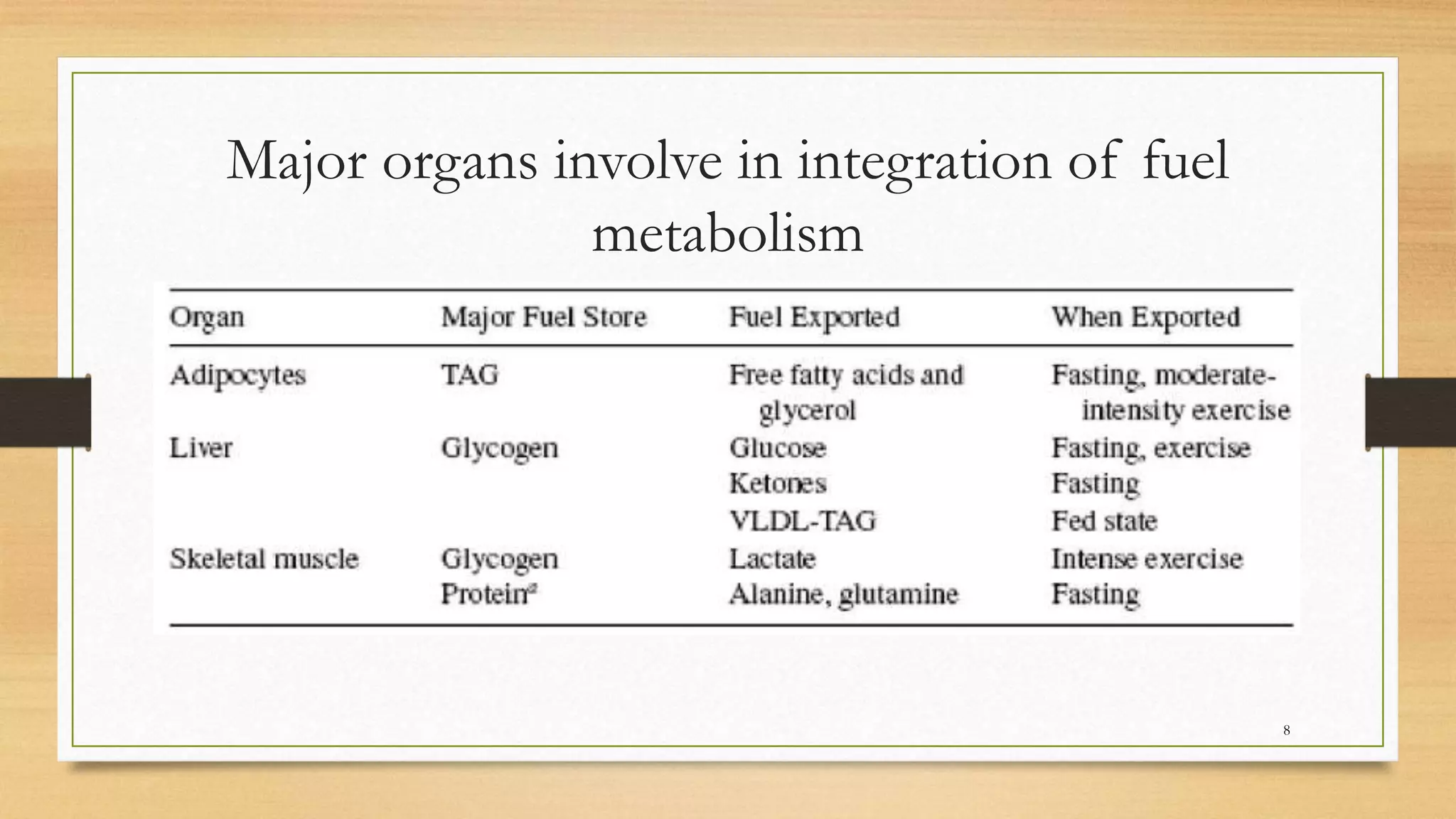
Major organs involve in integration of fuel
metabolism
8
Important hormones in metabolic pathway
• Insulin
• Glucagon
9
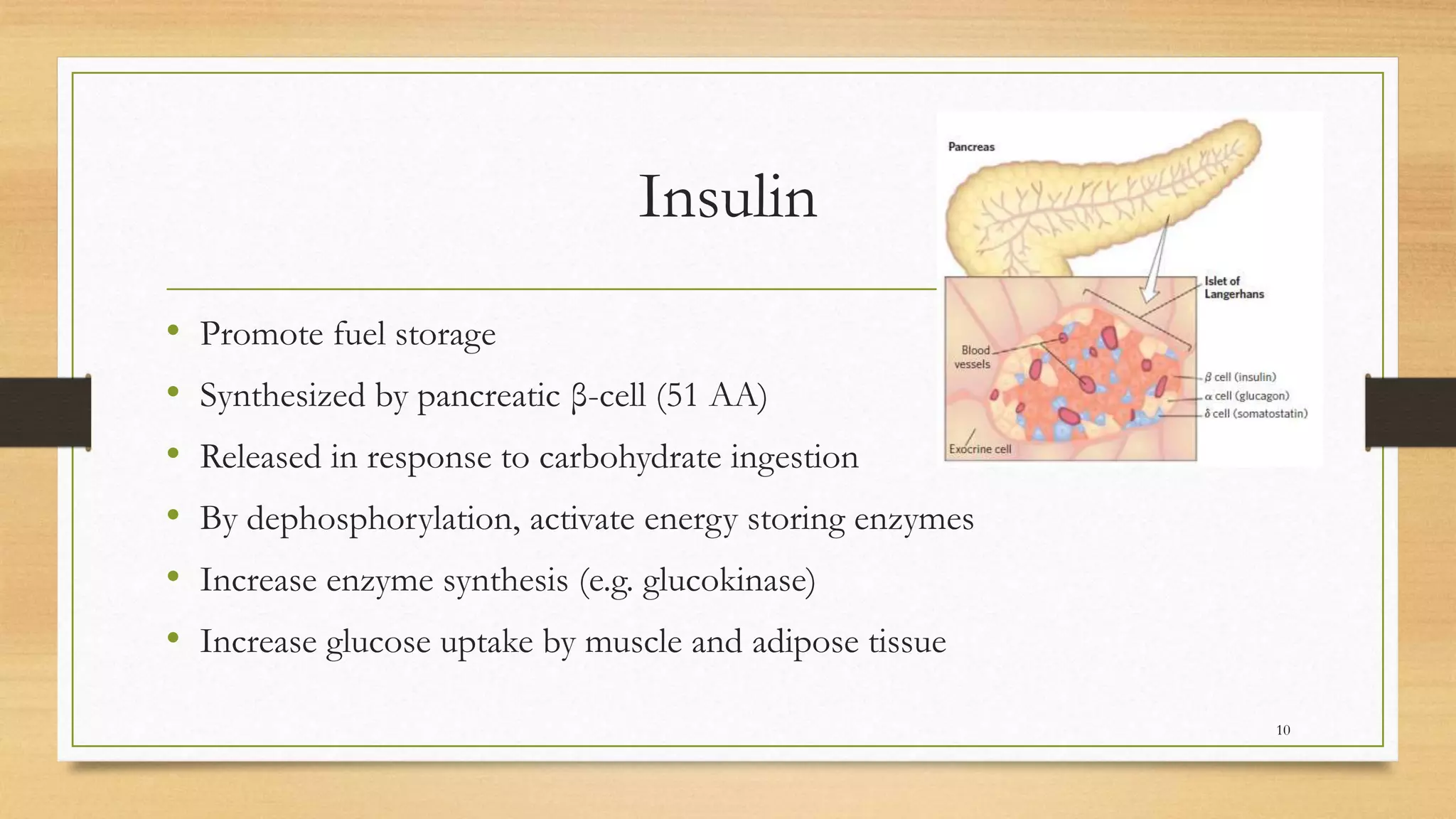
Insulin
• Promote fuel storage
• Synthesized by pancreatic β-cell (51 AA)
• Released in response to carbohydrate ingestion
• By dephosphorylation, activate energy storing enzymes
• Increase enzyme synthesis (e.g. glucokinase)
• Increase glucose uptake by muscle and adipose tissue
10
Metabolic effects of insulin
• Effects on carbohydrate metabolism
• Promote its storage
• Increase glycogen synthesis in liver and muscle
• Increase glucose uptake in muscle and adipose tissue
• Effects on lipid metabolism
• Inhibition of HSL activity
• Increase metabolism of glucose in adipose tissue and gen expression of LPL
• Effects on protein synthesis
• Stimulate the entry of amino acids into cells and protein synthesis
11
12
Glucagon
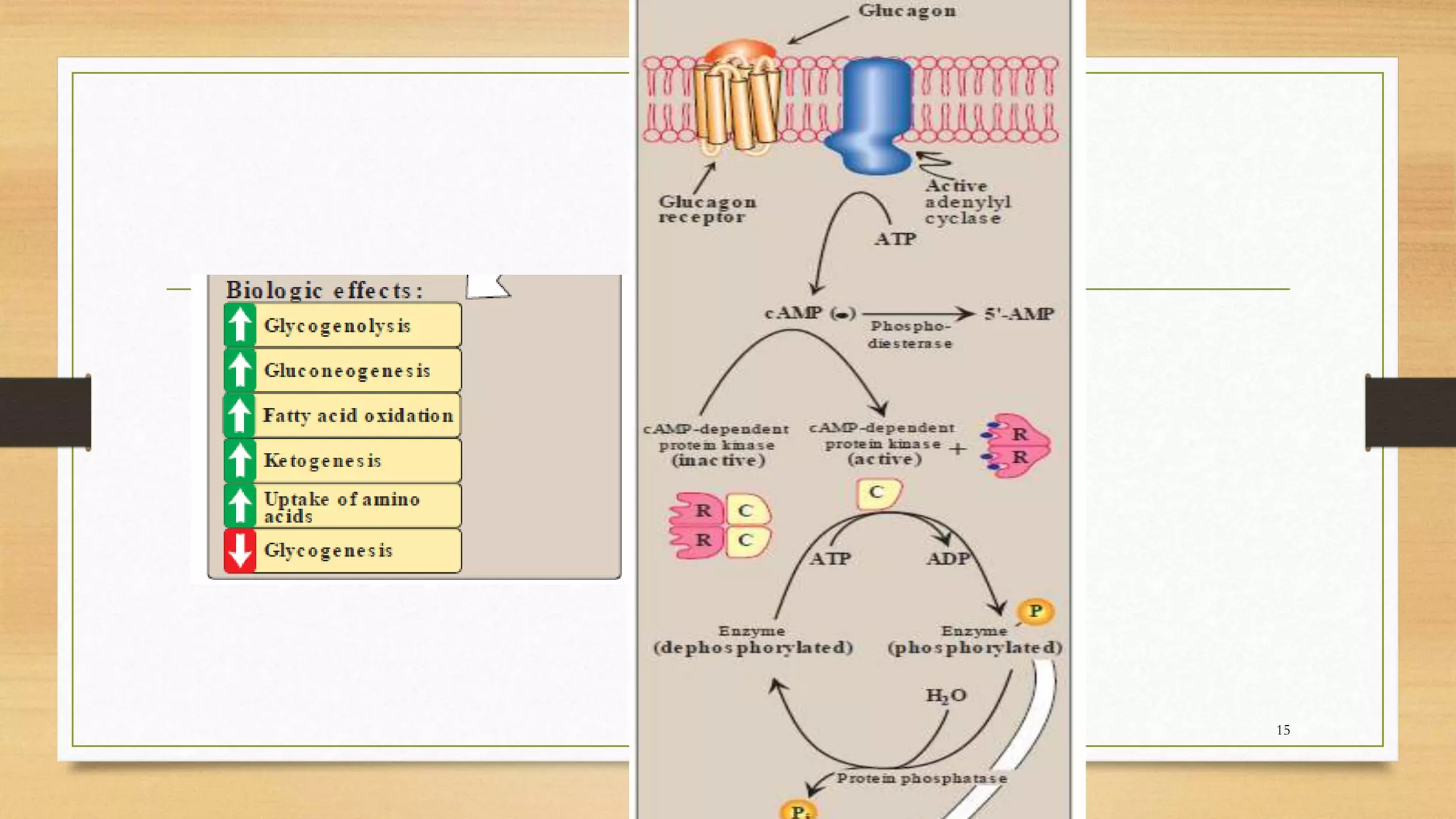
• Promote glycogenolysis and gluconeogenesis in liver
• Synthesized by pancreatic α-cells (29 AA)
• Released in response to low plasma glucose level
• By phosphorylation, activate some enzymes such as glycogen phosphorylase
and hormone sensitive lipase
• Induces gen expression of phosphoenolpyruvate carboxy kinase
13
Metabolic effects of glucagon
• Effects on carbohydrate metabolism
• Increase breakdown of liver glycogen
• Increase gluconeogenesis
• Effect on lipid metabolism
• Inhibition of fatty acid synthesis
• Activate hormone sensitive lipase
• Effects on protein metabolism
• Increase uptake of amino acids by liver
14
15
Key points about hormonal influences on
metabolism
• Insulin and glucagon are the key hormones in the short-term regulation of
blood glucose concentration under normal physiologic conditions.
• Insulin has hypoglycemic effect while glucagon has hyperglycemic effect
• Insulin primarily dephosphorylates enzymes, whereas glucagon primarily
phosphorylates them
16
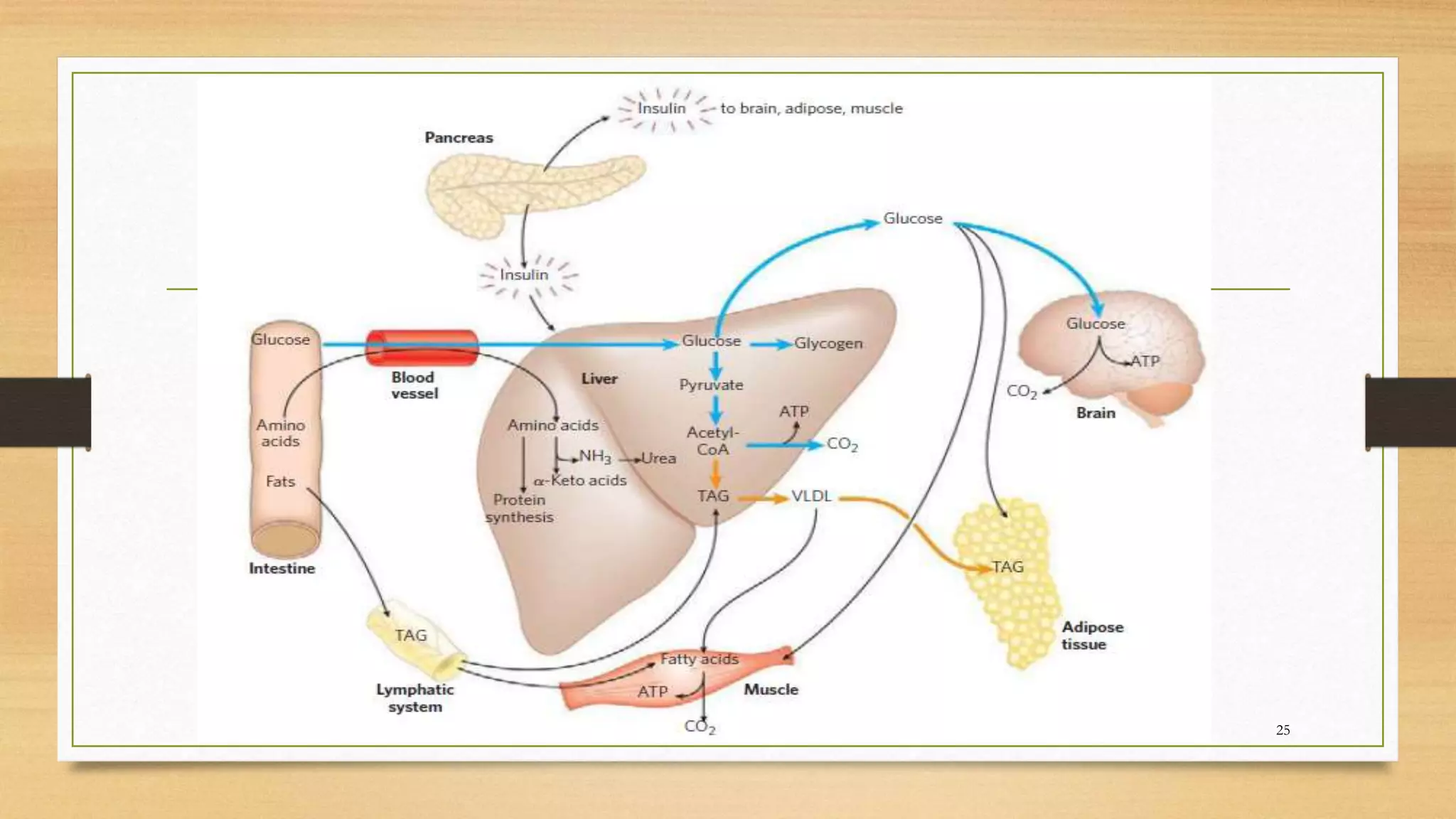
Absorptive state
• 2-4 hours after meal
• Increase glucose, amino acids and TG in plasma
• Elevated insulin to glucagon ratio
• Anabolic period
17
Enzymic changes in the absorptive state
• Availability of substrates
• Allosteric effector
• Allosteric changes usually involve rate-determining reactions
• e.g. glycolysis in the liver is stimulated following a meal by an increase in fructose 2,6-bis phosphate, an allosteric activator of
phosphofructokinase-1
• Covalent modification
• addition or removal of phosphate groups
• Most of covalently regulated enzymes are active in dephosphorylated form
• Induction and repression of enzyme synthesis
• Insulin induces expression of acetyl coenzyme A carboxylase and fatty acid synthase
• glucagon induces expression of phosphoenolpyruvate carboxykinase of gluconeogenesis
18
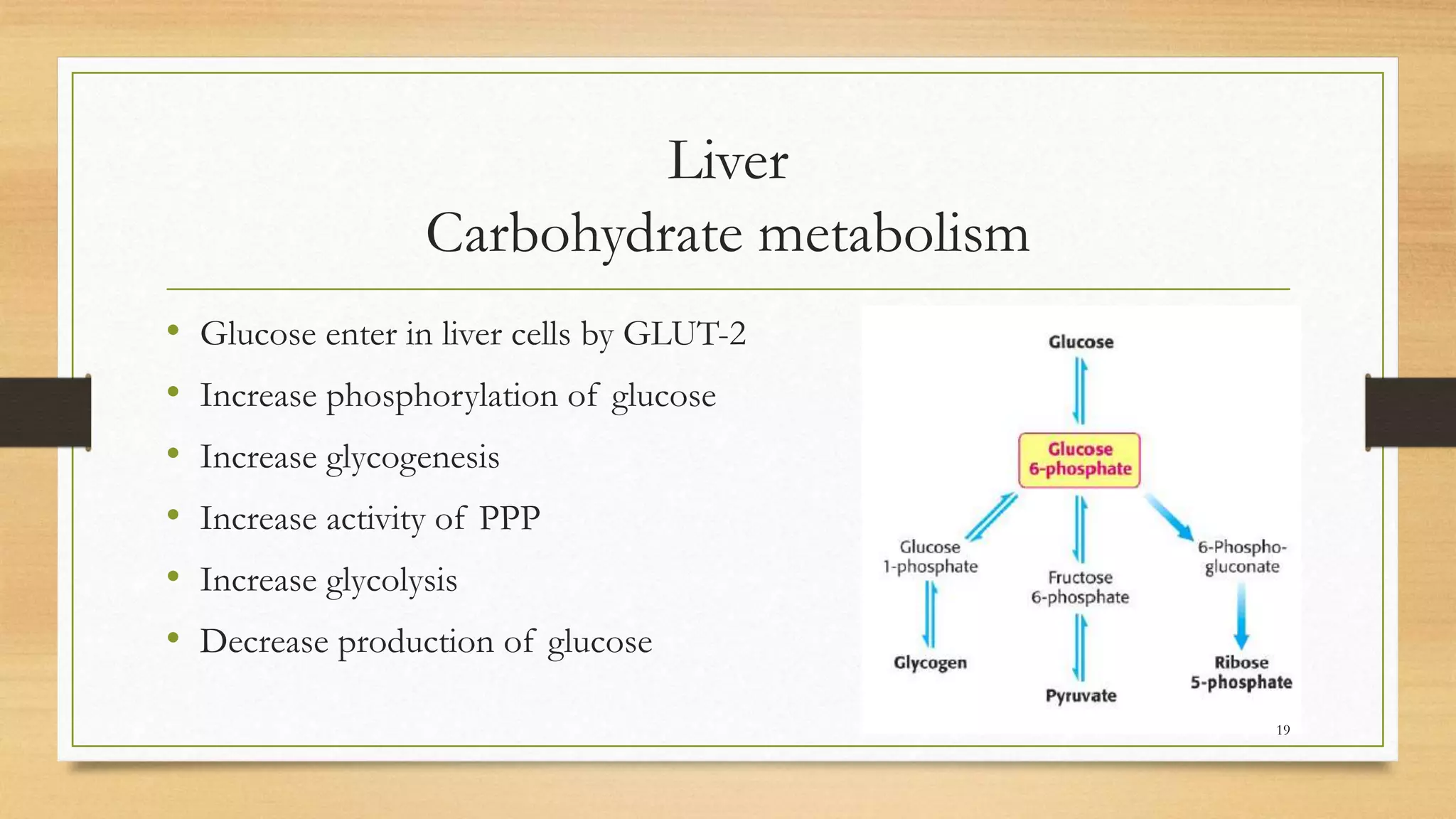
Liver
Carbohydrate metabolism
• Glucose enter in liver cells by GLUT-2
• Increase phosphorylation of glucose
• Increase glycogenesis
• Increase activity of PPP
• Increase glycolysis
• Decrease production of glucose
19
Fat metabolism
• Increase fatty acid synthesis
• Increase TG synthesis
• Increase amino acids synthesis
• Increase amino acids degradation
Amino acids metabolism
20
21
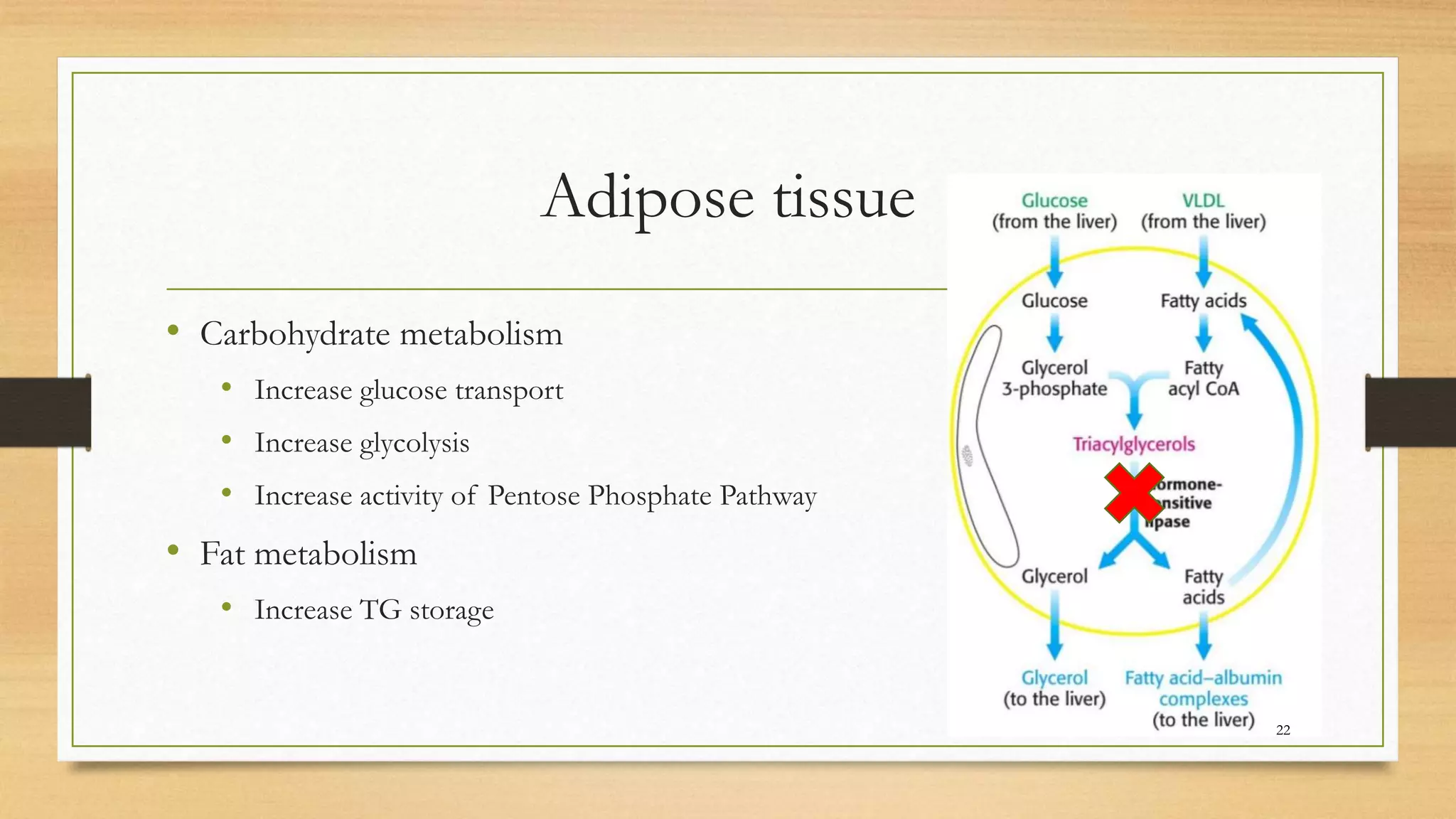
Adipose tissue
• Carbohydrate metabolism
• Increase glucose transport
• Increase glycolysis
• Increase activity of Pentose Phosphate Pathway
• Fat metabolism
• Increase TG storage
22
Resting skeletal muscle
• Carbohydrate metabolism
• Increase glucose transport
• Increase glycogen synthesis
• Fat metabolism
• LPL release FA from VLDL and chylomicron
• Protein metabolism
• Increase protein synthesis
• Increase uptake of branched-chain amino acids
23
Brain
• Glucose as a fuel
• GLUT-1
24
25
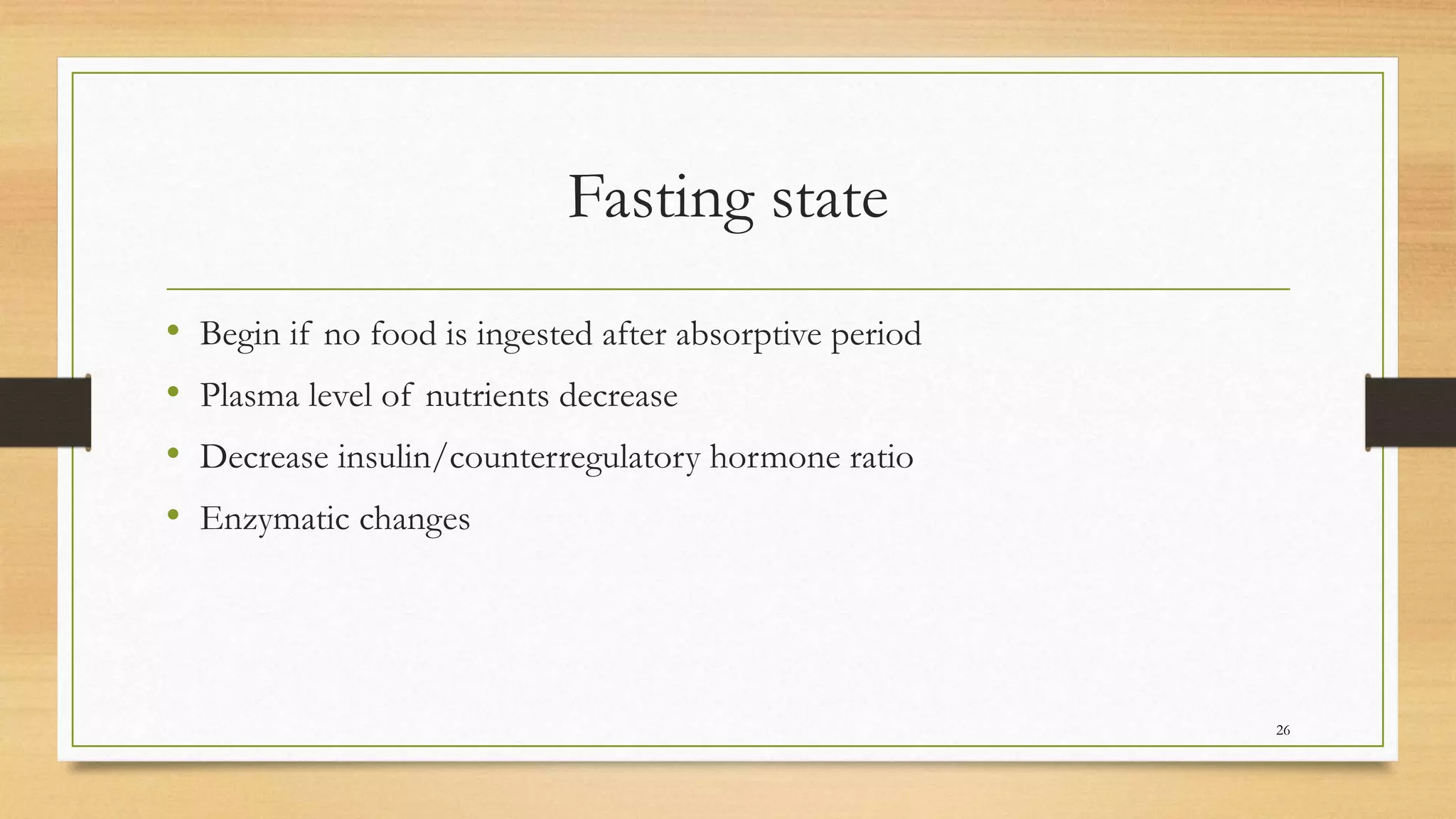
Fasting state
• Begin if no food is ingested after absorptive period
• Plasma level of nutrients decrease
• Decrease insulin/counterregulatory hormone ratio
• Enzymatic changes
26
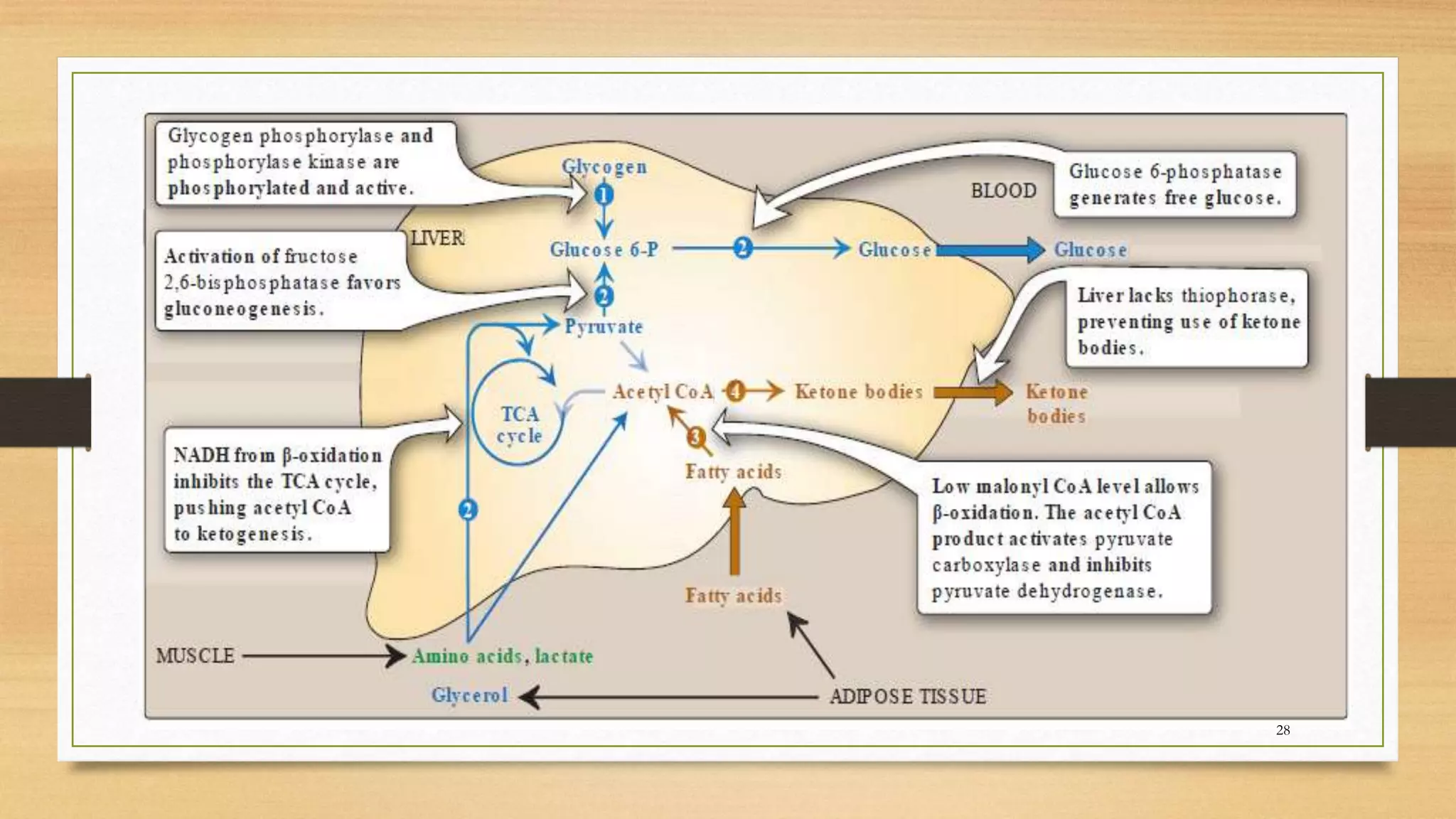
Liver in fasting
• Carbohydrate metabolism
• Increase glycogen degradation
• Increase glucose synthesis
• Lipid metabolism
• Increase fatty acid oxidation
• Increase ketone body synthesis
• Protein metabolism
27
28
Adipose tissue in fasting
• Carbohydrate metabolism
• Fat metabolism
• Increase degradation of fat
• Decrease uptake of fatty acid
29
Resting skeletal muscle in fasting
• Carbohydrate metabolism
• Lipid metabolism
• Protein metabolism
30
Brain in fasting
31
Kidney in long term fasting
• Gluconeogenesis
• Compensation for the acidosis
32
33
Summary
• Integration of metabolism ensures a supply of suitable fuel for all tissues, at all the
time
• The flow of intermediates through metabolic pathways is controlled by four
mechanisms
• The elevated insulin-to-glucagon ratio and the ready availability of circulating
substrates make the absorptive state an anabolic period
• In fast state, fatty acids are oxidized in preference to glucose, to spare glucose for
those tissue that require it (Brain & RBCs)
• In fast state, glycogenolysis, gluconeogenesis and ketogenesis occur
34
References
• Denise R.Ferrier, Lippincott’s illustrated review Biochemistry, 6th edition,
2014
• David L.Nelson, Michael M.Cox, lehninger principles of biochemistry, 6th
edition, 2013
• Jererny M.Berg, John L.Tymoczko, Lubert Stryer, Biochemistry, 7th edition,
2013
35
Thank you
36

integration of metabolism

  • 1.
    Integration of metabolism Mohammad RezaAbdullahi Master of medical science student in biochemistry IIUM, Malyasia 1
  • 2.
    Overview • Coordination betweendifferent metabolic pathways inside the body is called integration of metabolism • It ensures a supply of suitable fuel for all tissues, at all the time (from fully fed state to the totally starved state) 2
  • 3.
    Major metabolic pathway •Glycolysis • Gluconeogenesis • Glycogen metabolism • Fatty acid metabolism • Citric acid cycle • Amino acid metabolism • Oxidative phosphorylation 3
  • 4.
  • 5.
    Key junction points •Glucose 6-phosphate • Pyruvate • Acetyl CoA 5
  • 6.
  • 7.
  • 8.
    Major organs involvein integration of fuel metabolism 8
  • 9.
    Important hormones inmetabolic pathway • Insulin • Glucagon 9
  • 10.
    Insulin • Promote fuelstorage • Synthesized by pancreatic β-cell (51 AA) • Released in response to carbohydrate ingestion • By dephosphorylation, activate energy storing enzymes • Increase enzyme synthesis (e.g. glucokinase) • Increase glucose uptake by muscle and adipose tissue 10
  • 11.
    Metabolic effects ofinsulin • Effects on carbohydrate metabolism • Promote its storage • Increase glycogen synthesis in liver and muscle • Increase glucose uptake in muscle and adipose tissue • Effects on lipid metabolism • Inhibition of HSL activity • Increase metabolism of glucose in adipose tissue and gen expression of LPL • Effects on protein synthesis • Stimulate the entry of amino acids into cells and protein synthesis 11
  • 12.
  • 13.
    Glucagon • Promote glycogenolysisand gluconeogenesis in liver • Synthesized by pancreatic α-cells (29 AA) • Released in response to low plasma glucose level • By phosphorylation, activate some enzymes such as glycogen phosphorylase and hormone sensitive lipase • Induces gen expression of phosphoenolpyruvate carboxy kinase 13
  • 14.
    Metabolic effects ofglucagon • Effects on carbohydrate metabolism • Increase breakdown of liver glycogen • Increase gluconeogenesis • Effect on lipid metabolism • Inhibition of fatty acid synthesis • Activate hormone sensitive lipase • Effects on protein metabolism • Increase uptake of amino acids by liver 14
  • 15.
  • 16.
    Key points abouthormonal influences on metabolism • Insulin and glucagon are the key hormones in the short-term regulation of blood glucose concentration under normal physiologic conditions. • Insulin has hypoglycemic effect while glucagon has hyperglycemic effect • Insulin primarily dephosphorylates enzymes, whereas glucagon primarily phosphorylates them 16
  • 17.
    Absorptive state • 2-4hours after meal • Increase glucose, amino acids and TG in plasma • Elevated insulin to glucagon ratio • Anabolic period 17
  • 18.
    Enzymic changes inthe absorptive state • Availability of substrates • Allosteric effector • Allosteric changes usually involve rate-determining reactions • e.g. glycolysis in the liver is stimulated following a meal by an increase in fructose 2,6-bis phosphate, an allosteric activator of phosphofructokinase-1 • Covalent modification • addition or removal of phosphate groups • Most of covalently regulated enzymes are active in dephosphorylated form • Induction and repression of enzyme synthesis • Insulin induces expression of acetyl coenzyme A carboxylase and fatty acid synthase • glucagon induces expression of phosphoenolpyruvate carboxykinase of gluconeogenesis 18
  • 19.
    Liver Carbohydrate metabolism • Glucoseenter in liver cells by GLUT-2 • Increase phosphorylation of glucose • Increase glycogenesis • Increase activity of PPP • Increase glycolysis • Decrease production of glucose 19
  • 20.
    Fat metabolism • Increasefatty acid synthesis • Increase TG synthesis • Increase amino acids synthesis • Increase amino acids degradation Amino acids metabolism 20
  • 21.
  • 22.
    Adipose tissue • Carbohydratemetabolism • Increase glucose transport • Increase glycolysis • Increase activity of Pentose Phosphate Pathway • Fat metabolism • Increase TG storage 22
  • 23.
    Resting skeletal muscle •Carbohydrate metabolism • Increase glucose transport • Increase glycogen synthesis • Fat metabolism • LPL release FA from VLDL and chylomicron • Protein metabolism • Increase protein synthesis • Increase uptake of branched-chain amino acids 23
  • 24.
    Brain • Glucose asa fuel • GLUT-1 24
  • 25.
  • 26.
    Fasting state • Beginif no food is ingested after absorptive period • Plasma level of nutrients decrease • Decrease insulin/counterregulatory hormone ratio • Enzymatic changes 26
  • 27.
    Liver in fasting •Carbohydrate metabolism • Increase glycogen degradation • Increase glucose synthesis • Lipid metabolism • Increase fatty acid oxidation • Increase ketone body synthesis • Protein metabolism 27
  • 28.
  • 29.
    Adipose tissue infasting • Carbohydrate metabolism • Fat metabolism • Increase degradation of fat • Decrease uptake of fatty acid 29
  • 30.
    Resting skeletal musclein fasting • Carbohydrate metabolism • Lipid metabolism • Protein metabolism 30
  • 31.
  • 32.
    Kidney in longterm fasting • Gluconeogenesis • Compensation for the acidosis 32
  • 33.
  • 34.
    Summary • Integration ofmetabolism ensures a supply of suitable fuel for all tissues, at all the time • The flow of intermediates through metabolic pathways is controlled by four mechanisms • The elevated insulin-to-glucagon ratio and the ready availability of circulating substrates make the absorptive state an anabolic period • In fast state, fatty acids are oxidized in preference to glucose, to spare glucose for those tissue that require it (Brain & RBCs) • In fast state, glycogenolysis, gluconeogenesis and ketogenesis occur 34
  • 35.
    References • Denise R.Ferrier,Lippincott’s illustrated review Biochemistry, 6th edition, 2014 • David L.Nelson, Michael M.Cox, lehninger principles of biochemistry, 6th edition, 2013 • Jererny M.Berg, John L.Tymoczko, Lubert Stryer, Biochemistry, 7th edition, 2013 35
  • 36.

Editor's Notes

  • #3 Excess energy intake is stored as either glycogen or fat Under negative caloric balance fatty acids are oxidized in preference to glucose, to spare glucose for those tissues (brain and RBCs) that require it under all conditions.
  • #6 In general the main key junction points between metabolic pathways are intermediates: g6p, pyruvate and Acetyl CoA
  • #10 catecholamines epinephrine and norepinephrine
  • #15 Inhibition of fatty acid synthesis by inhibition of ACC. Glucagon increases uptake of amino acids by the liver that supplied by muscle, resulting in increased availability of carbon skeletons for gluconeogenesis
  • #18 The elevated insulin-to-glucagon ratio and the ready availability of circulating substrates make the absorptive state an anabolic period characterized by increased synthesis of TAG and glycogen to replenish fuel stores and enhanced synthesis of protein
  • #19 In contrast, gluconeogenesis is inhibited by fructose 2,6-bisphosphate, an allosteric inhibitor of fructose 1,6-bis phosphatase Three exceptions are glycogen phosphorylase kinase, glycogen phosphorylase and hormone-sensitive lipase of adipose tissue, which are inactive in their dephosphorylated form. By affecting transcription factor in cause induction and repression of enzyme
  • #20 Low affinity to glucose, increase glucose metabolism
  • #27 the flow of intermediates through the pathways of energy metabolism is controlled by four mechanisms: 1) the availability of substrates, 2) allosteric regulation of enzymes, 3) covalent modification of enzymes, and 4) induction–repression of enzyme synthesis
  • #28 The liver first uses glycogen degradation and then gluconeogenesis to maintain blood glucose levels Extremely active muscles use glycogen as their energy source, generating lactate via glycolysis. During recovery, some of this lactate is transported to the liver and converted to glucose via gluconeogenesis. This glucose is released to the blood and returned to the muscles to replenish their glycogen stores. The overall pathway (glucose S lactate S glucose) constitutes the Cori cycle.