1. Carnivores – eat meat – dogs and cats
2. Herbivores – eat plants - cattle, horses,
and sheep
3. Omnivores – both plant and animal
   eaters – pig and humans
   Monogastric – 1 stomach – can’t digest
    cellulose (fiber) – pigs and humans
   Ruminant – 4 stomachs – polygastric – digest
    cellulose, produce own B vitamins and proteins
    – cows and sheep
   Pseudo-ruminant - have 1 stomach, but have
    enlarged cecum that digests cellulose – horses
    and rabbits
   Prehension – gathering food –
    teeth, lips, tongue
   Mastication – Chewing – break food into
    smaller pieces for swallowing – teeth and
    saliva
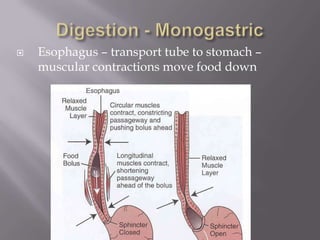
   Esophagus – transport tube to stomach –
    muscular contractions move food down
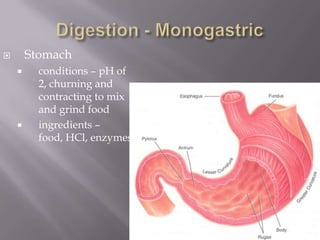
       Stomach
         conditions – pH of
          2, churning and
          contracting to mix
          and grind food
         ingredients –
          food, HCl, enzymes
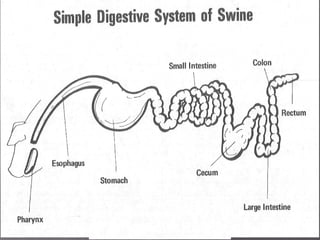
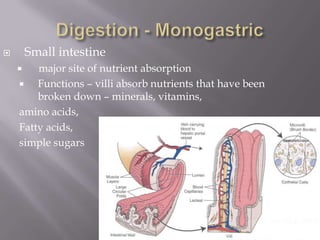
       Small intestine
       major site of nutrient absorption
       Functions – villi absorb nutrients that have been
        broken down – minerals, vitamins,
    amino acids,
    Fatty acids,
    simple sugars
   Glands –
    gallbladder secretes
    bile used for lipid
    breakdown;
    Pancreas secretes
    enzymes for protein
    and carbohydrate
    breakdown
   Large intestine – colon
       accumulates wastes
       absorbs water

   Rectum and Anus
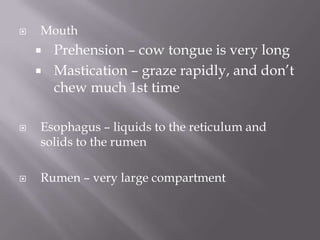
   Mouth
       Prehension – cow tongue is very long
       Mastication – graze rapidly, and don’t
        chew much 1st time

   Esophagus – liquids to the reticulum and
    solids to the rumen

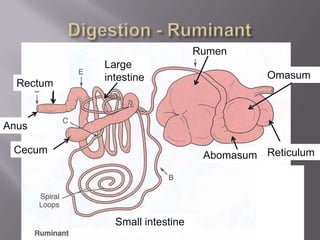
   Rumen – very large compartment
Regurgitation – when rumen full, force contents
   back up to re-chew
  Rumination
      re-mastication of cud or bolus
      Bolus – ball of grass
      Adds saliva to food
   Esophagus – re-swallow food
   Reticulum – honeycomb
– fermentation vat
   30 gal or more
   contains microbes that break down the
    cellulose
   pH of 6.5 – 7 for microbes
   releases methane – belch
   creates B vitamins and proteins from
    amino acids
   also contains papalli that absorb
    nutrients released by microbes
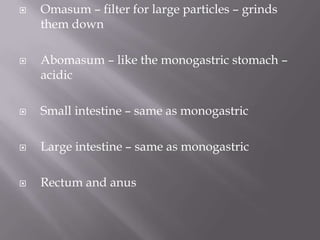
   Omasum – filter for large particles – grinds
    them down

   Abomasum – like the monogastric stomach –
    acidic

   Small intestine – same as monogastric

   Large intestine – same as monogastric

   Rectum and anus
Omasum   Abomasum
Rumen     Reticulum
Rumen
           Large
           intestine                      Omasum
  Rectum


Anus

 Cecum                          Abomasum Reticulum


             Small intestine
Small
         colon                      Large
                                    colon
Rectum
                                            Esophagus

Anus


                 Cecum


                         Small
                         intesine
Mouth
   a. prehension
   b. mastication
Esophagus
Stomach
   a. same as monogastric
   b. too small in horses and inactive
  –      doesn’t break down cellulose
   c. require frequent smaller meals
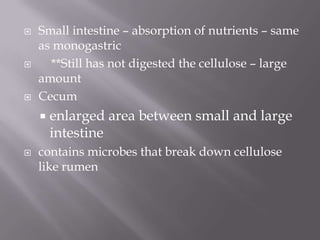
   Small intestine – absorption of nutrients – same
    as monogastric
     **Still has not digested the cellulose – large
    amount
   Cecum
       enlarged area between small and large
        intestine
   contains microbes that break down cellulose
    like rumen
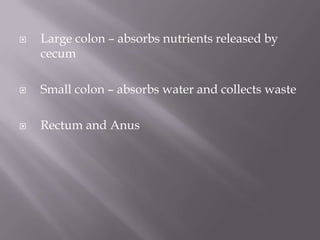
   Large colon – absorbs nutrients released by
    cecum

   Small colon – absorbs water and collects waste

   Rectum and Anus
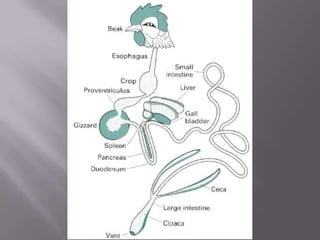
   Beak
       Prehension – claws
       Mastication - no teeth and no enzymes
        in the saliva
   Esophagus
   Crop – enlargement in esophagus that adds
    moisture
   Proventriculus – adds HCl and enzymes to
    begin digestion
   Gizzard – muscular region that contains grit to
    grind food
   Small intestine – absorbs nutrients through
    villa
   Ceca – bi-lobed region that breaks down and
    absorbs cellulose – not much in chicken diet
   Large intestine – very short – absorbs water
   Cloaca – urine is combined with feces – very
    high in N
   Vent – homologous to the anus

Digestion

  • 2.
    1. Carnivores –eat meat – dogs and cats 2. Herbivores – eat plants - cattle, horses, and sheep 3. Omnivores – both plant and animal eaters – pig and humans
  • 3.
    Monogastric – 1 stomach – can’t digest cellulose (fiber) – pigs and humans  Ruminant – 4 stomachs – polygastric – digest cellulose, produce own B vitamins and proteins – cows and sheep  Pseudo-ruminant - have 1 stomach, but have enlarged cecum that digests cellulose – horses and rabbits
  • 6.
    Prehension – gathering food – teeth, lips, tongue  Mastication – Chewing – break food into smaller pieces for swallowing – teeth and saliva
  • 7.
    Esophagus – transport tube to stomach – muscular contractions move food down
  • 8.
    Stomach  conditions – pH of 2, churning and contracting to mix and grind food  ingredients – food, HCl, enzymes
  • 9.
    Small intestine  major site of nutrient absorption  Functions – villi absorb nutrients that have been broken down – minerals, vitamins, amino acids, Fatty acids, simple sugars
  • 10.
    Glands – gallbladder secretes bile used for lipid breakdown; Pancreas secretes enzymes for protein and carbohydrate breakdown
  • 11.
    Large intestine – colon  accumulates wastes  absorbs water  Rectum and Anus
  • 14.
    Mouth  Prehension – cow tongue is very long  Mastication – graze rapidly, and don’t chew much 1st time  Esophagus – liquids to the reticulum and solids to the rumen  Rumen – very large compartment
  • 15.
    Regurgitation – whenrumen full, force contents back up to re-chew  Rumination  re-mastication of cud or bolus  Bolus – ball of grass  Adds saliva to food  Esophagus – re-swallow food  Reticulum – honeycomb
  • 16.
    – fermentation vat  30 gal or more  contains microbes that break down the cellulose  pH of 6.5 – 7 for microbes  releases methane – belch  creates B vitamins and proteins from amino acids  also contains papalli that absorb nutrients released by microbes
  • 17.
    Omasum – filter for large particles – grinds them down  Abomasum – like the monogastric stomach – acidic  Small intestine – same as monogastric  Large intestine – same as monogastric  Rectum and anus
  • 18.
    Omasum Abomasum Rumen Reticulum
  • 19.
    Rumen Large intestine Omasum Rectum Anus Cecum Abomasum Reticulum Small intestine
  • 21.
    Small colon Large colon Rectum Esophagus Anus Cecum Small intesine
  • 22.
    Mouth  a. prehension  b. mastication Esophagus Stomach  a. same as monogastric  b. too small in horses and inactive – doesn’t break down cellulose  c. require frequent smaller meals
  • 23.
    Small intestine – absorption of nutrients – same as monogastric  **Still has not digested the cellulose – large amount  Cecum  enlarged area between small and large intestine  contains microbes that break down cellulose like rumen
  • 24.
    Large colon – absorbs nutrients released by cecum  Small colon – absorbs water and collects waste  Rectum and Anus
  • 27.
    Beak  Prehension – claws  Mastication - no teeth and no enzymes in the saliva  Esophagus  Crop – enlargement in esophagus that adds moisture  Proventriculus – adds HCl and enzymes to begin digestion
  • 28.
    Gizzard – muscular region that contains grit to grind food  Small intestine – absorbs nutrients through villa  Ceca – bi-lobed region that breaks down and absorbs cellulose – not much in chicken diet  Large intestine – very short – absorbs water  Cloaca – urine is combined with feces – very high in N  Vent – homologous to the anus