CULLING OF SHEEP
AND GOAT
Dr. AKHILA M. R.
2018-MVM-01
Department of Animal Breeding and Genetics
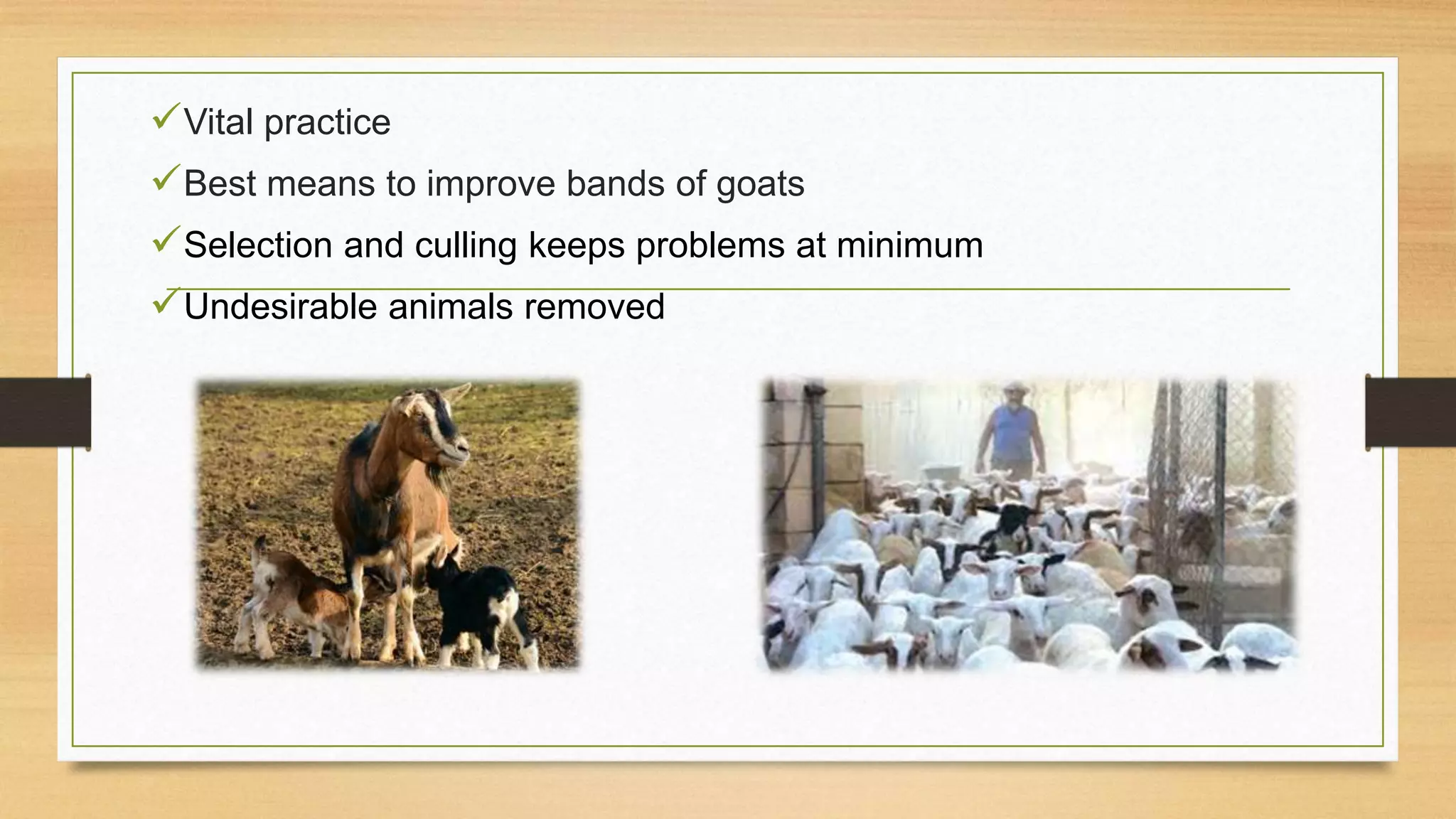
Vital practice
Best means to improve bands of goats
Selection and culling keeps problems at minimum
Undesirable animals removed
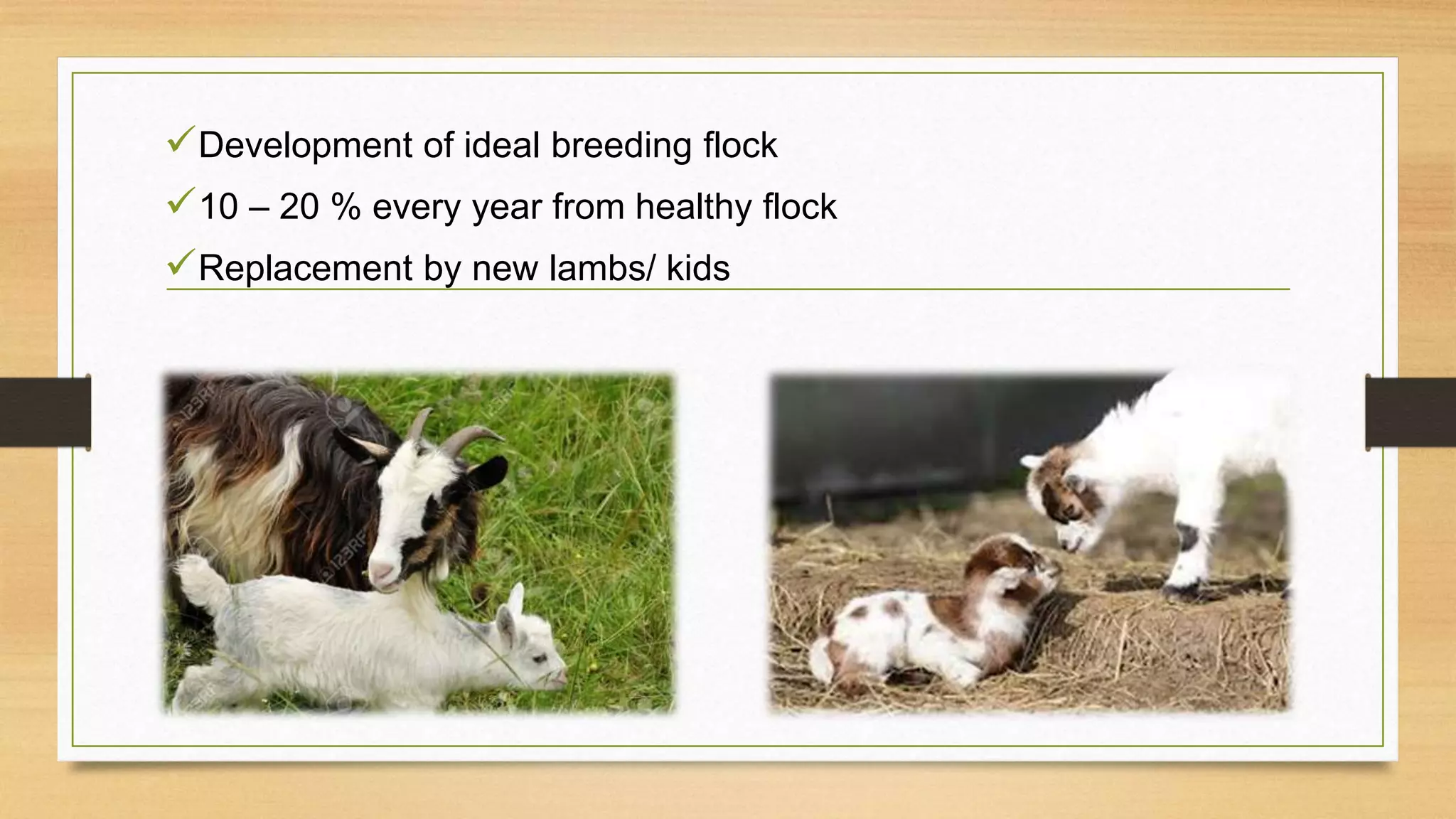
Development of ideal breeding flock
10 – 20 % every year from healthy flock
Replacement by new lambs/ kids
DEFENITION
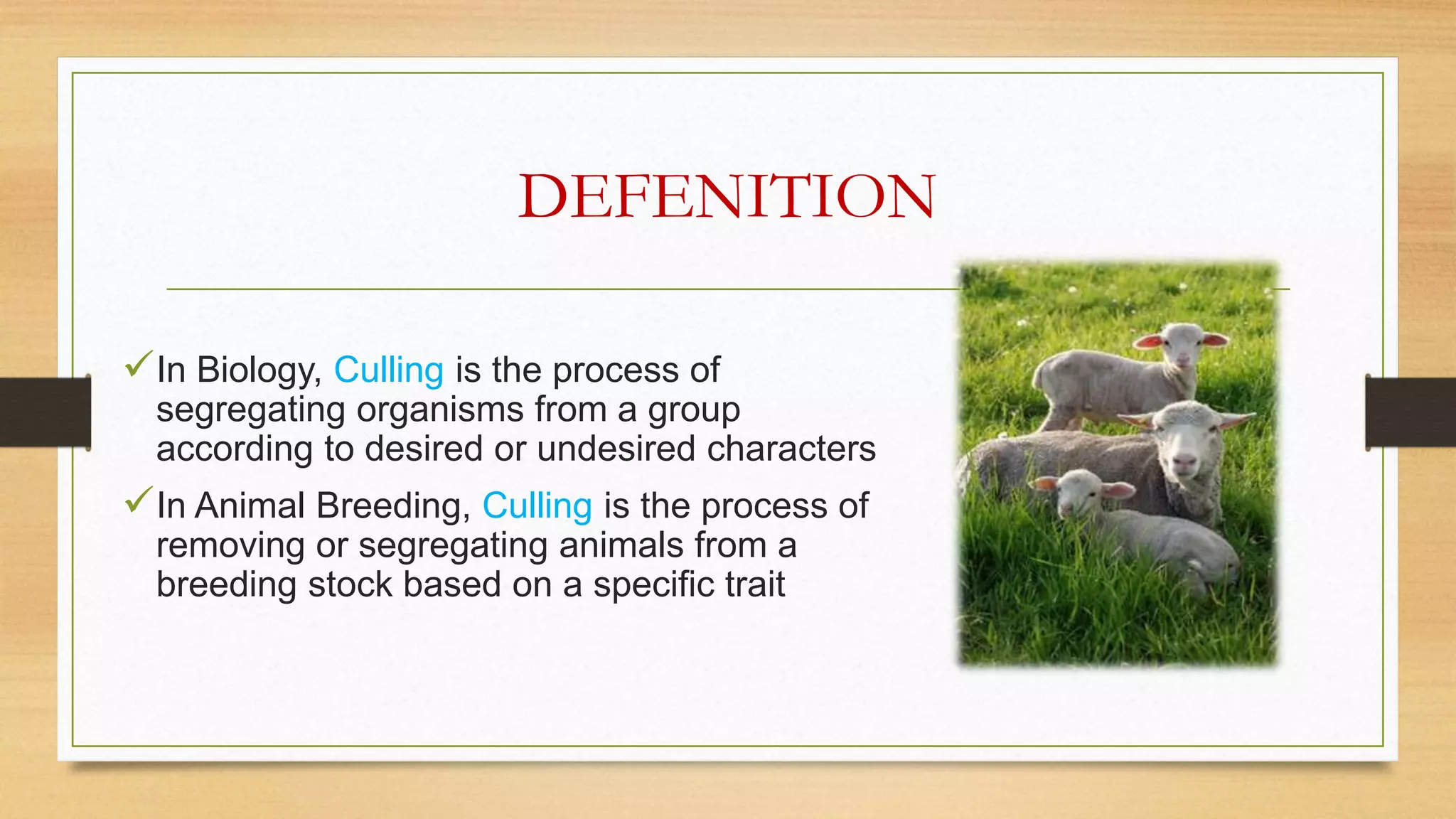
In Biology, Culling is the process of
segregating organisms from a group
according to desired or undesired characters
In Animal Breeding, Culling is the process of
removing or segregating animals from a
breeding stock based on a specific trait
To exaggerate desirable characteristics or remove undesirable
characteristics by altering genetic diversity of population
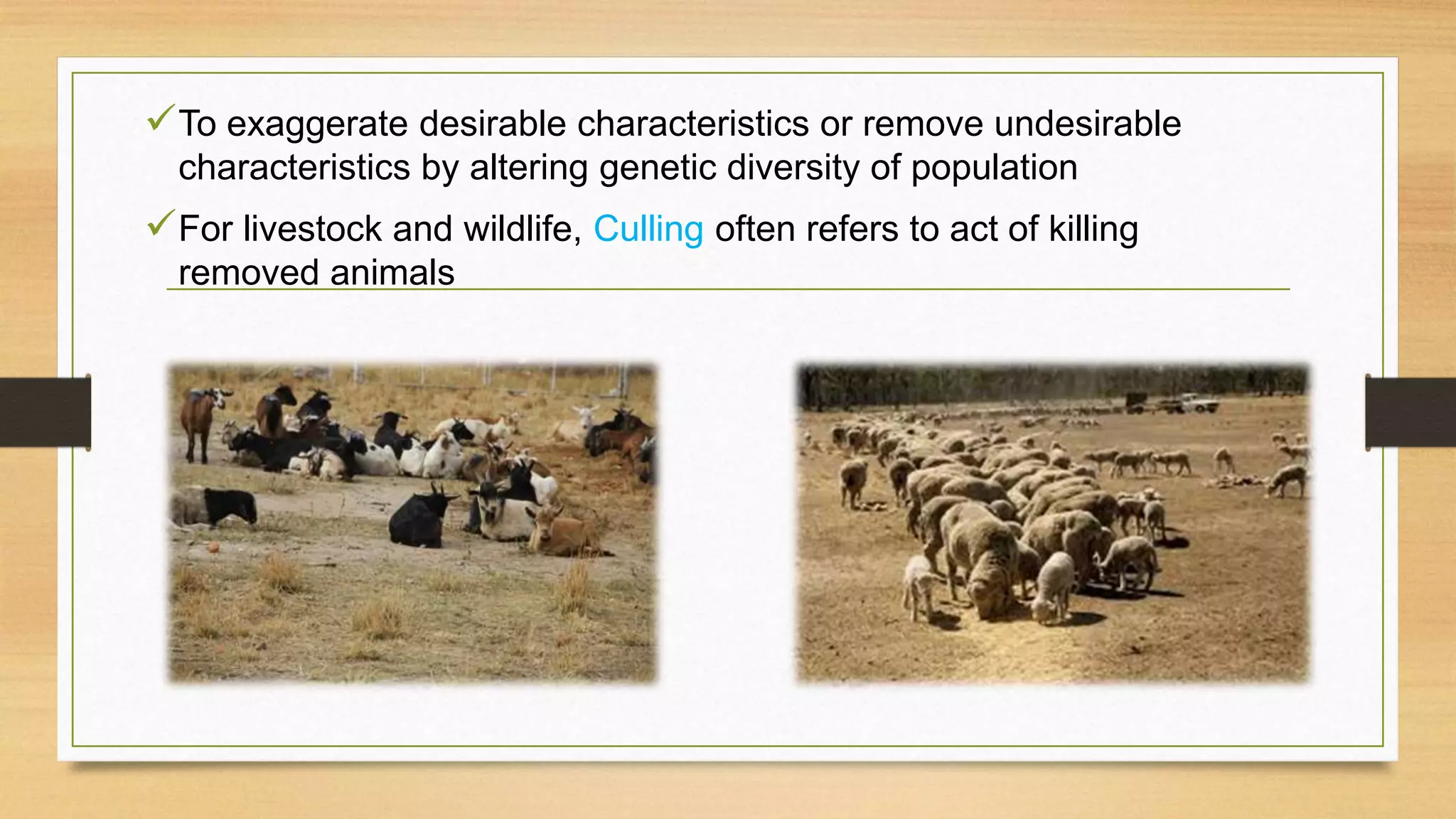
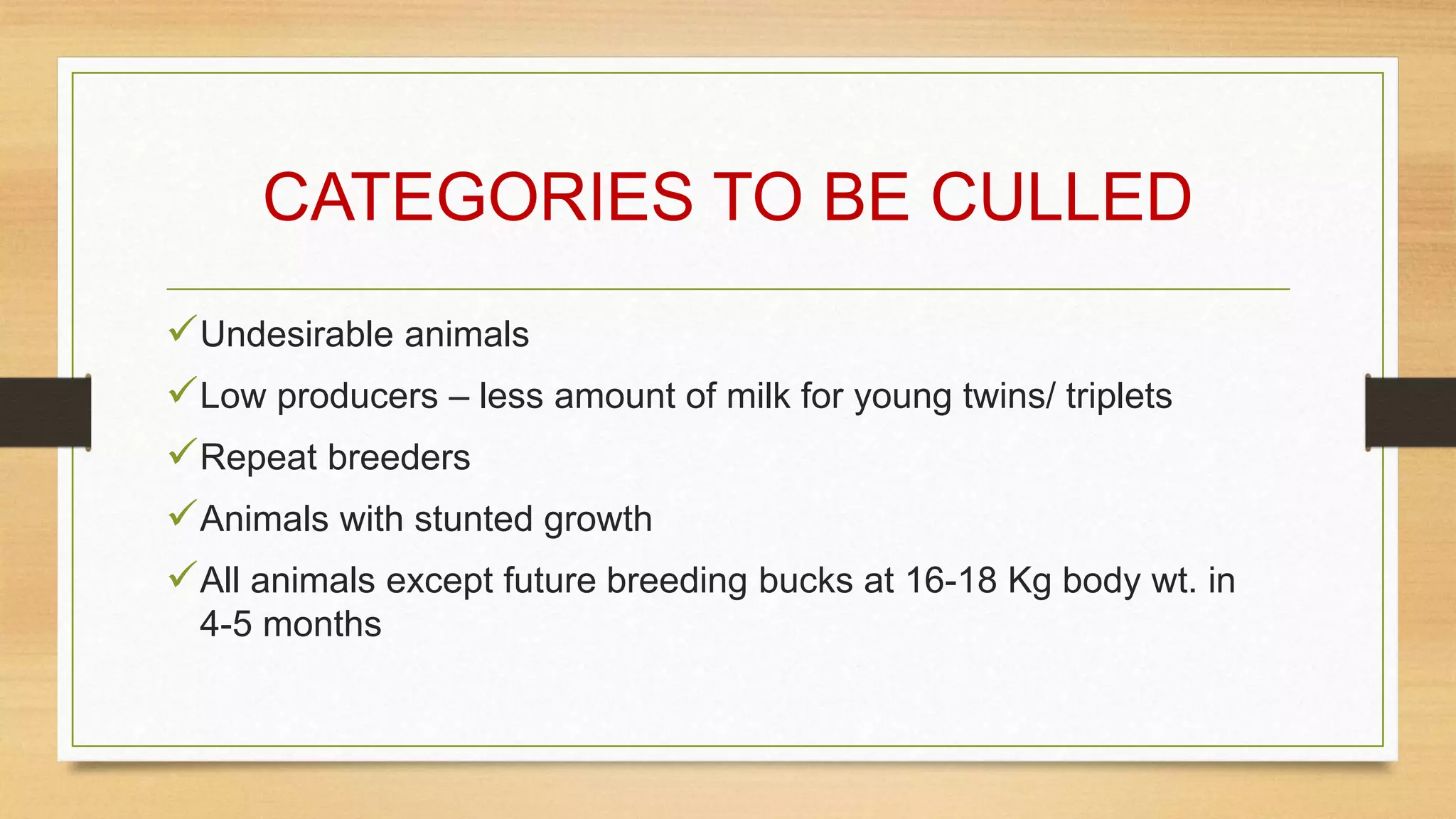
For livestock and wildlife, Culling often refers to act of killing
removed animals
CATEGORIES TO BE CULLED
Undesirable animals
Low producers – less amount of milk for young twins/ triplets
Repeat breeders
Animals with stunted growth
All animals except future breeding bucks at 16-18 Kg body wt. in
4-5 months
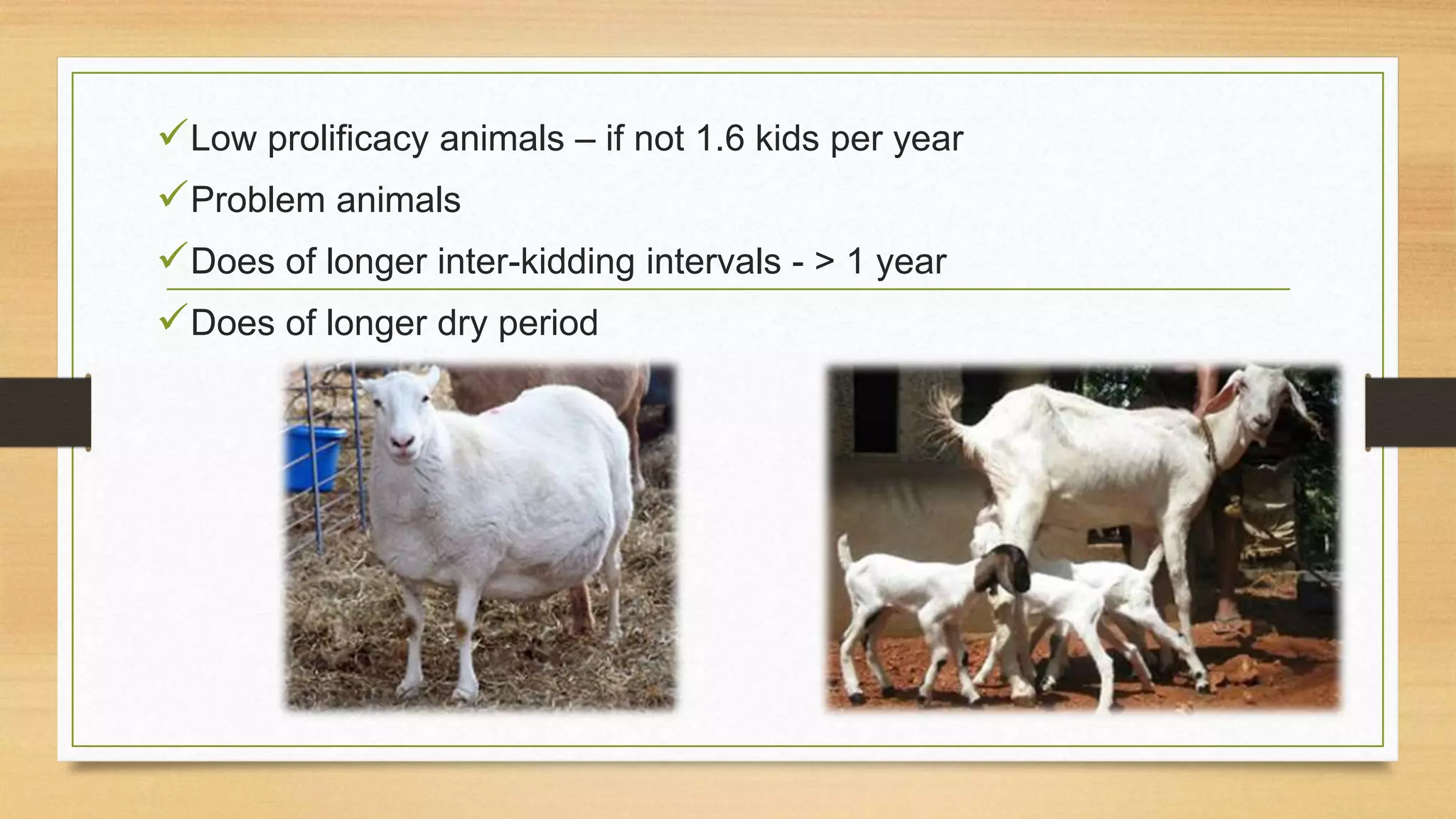
Low prolificacy animals – if not 1.6 kids per year
Problem animals
Does of longer inter-kidding intervals - > 1 year
Does of longer dry period
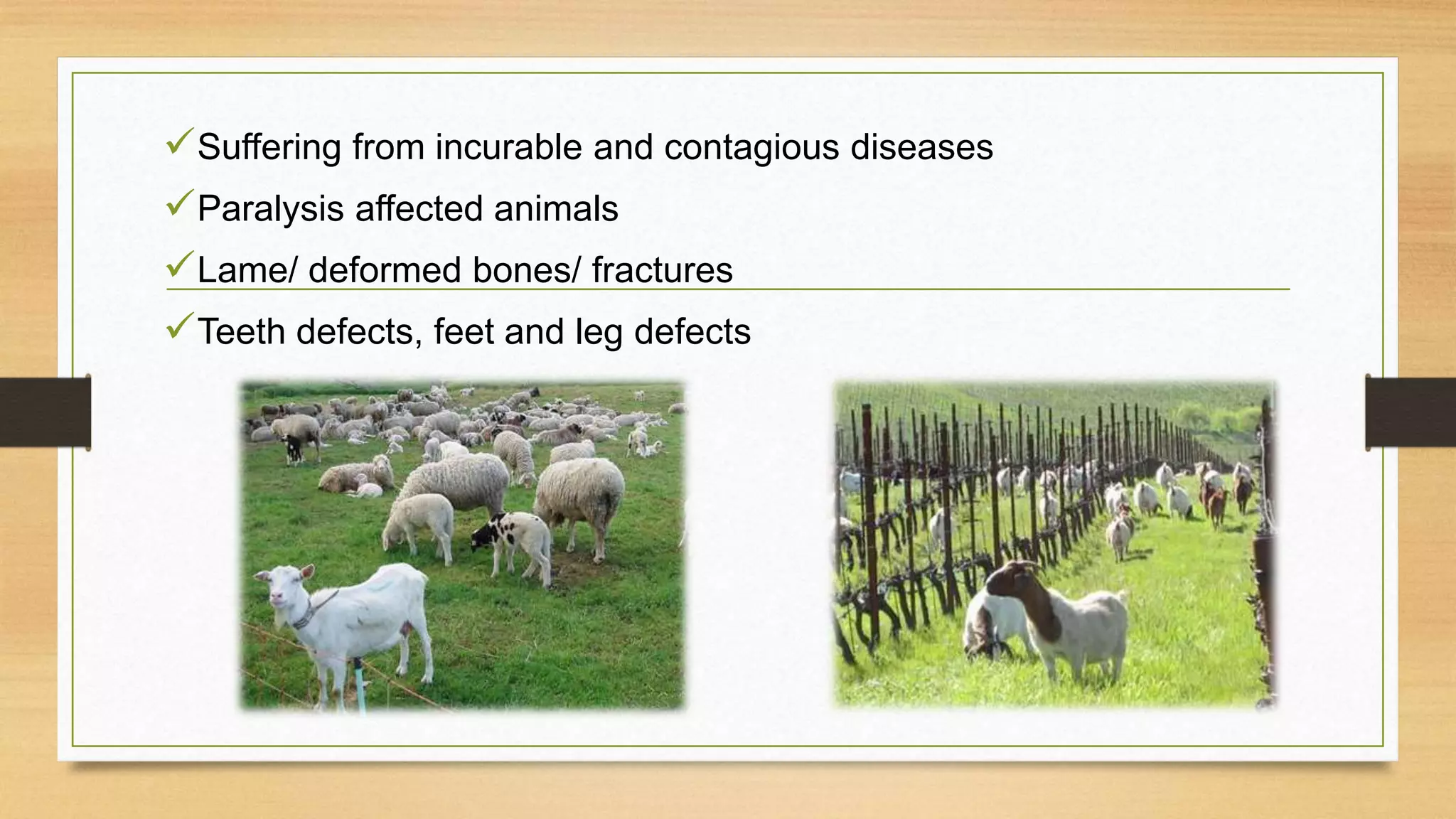
Suffering from incurable and contagious diseases
Paralysis affected animals
Lame/ deformed bones/ fractures
Teeth defects, feet and leg defects
History of abortion
Udder defects in females
Testicle defects in males
Fail to breed and produce offspring
Wean less weight and low grade offspring
Lack desirable conformation, breed characters/ sex characters
Develop incurable physical defects
Evidence of hereditary diseases
TYPES OF CULLING
Culling classified in to 3 types
Policy culling
Veterinary culling
Emergency culling
POLICY CULLING
Not true to breed/ type
Parentage not known
Genetic defects
Poor production/ reproduction
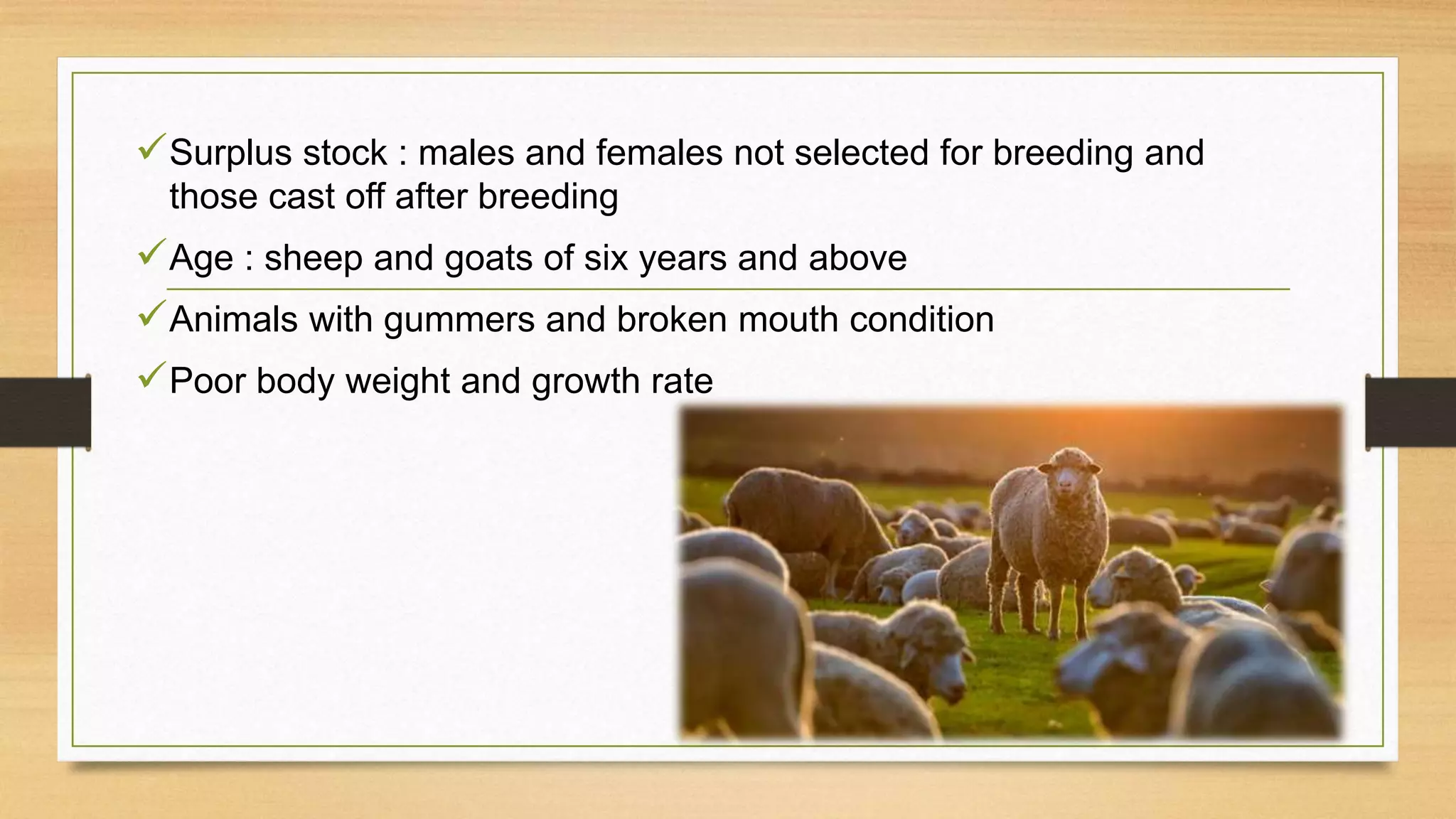
Surplus stock : males and females not selected for breeding and
those cast off after breeding
Age : sheep and goats of six years and above
Animals with gummers and broken mouth condition
Poor body weight and growth rate
VETERINARY CULLING
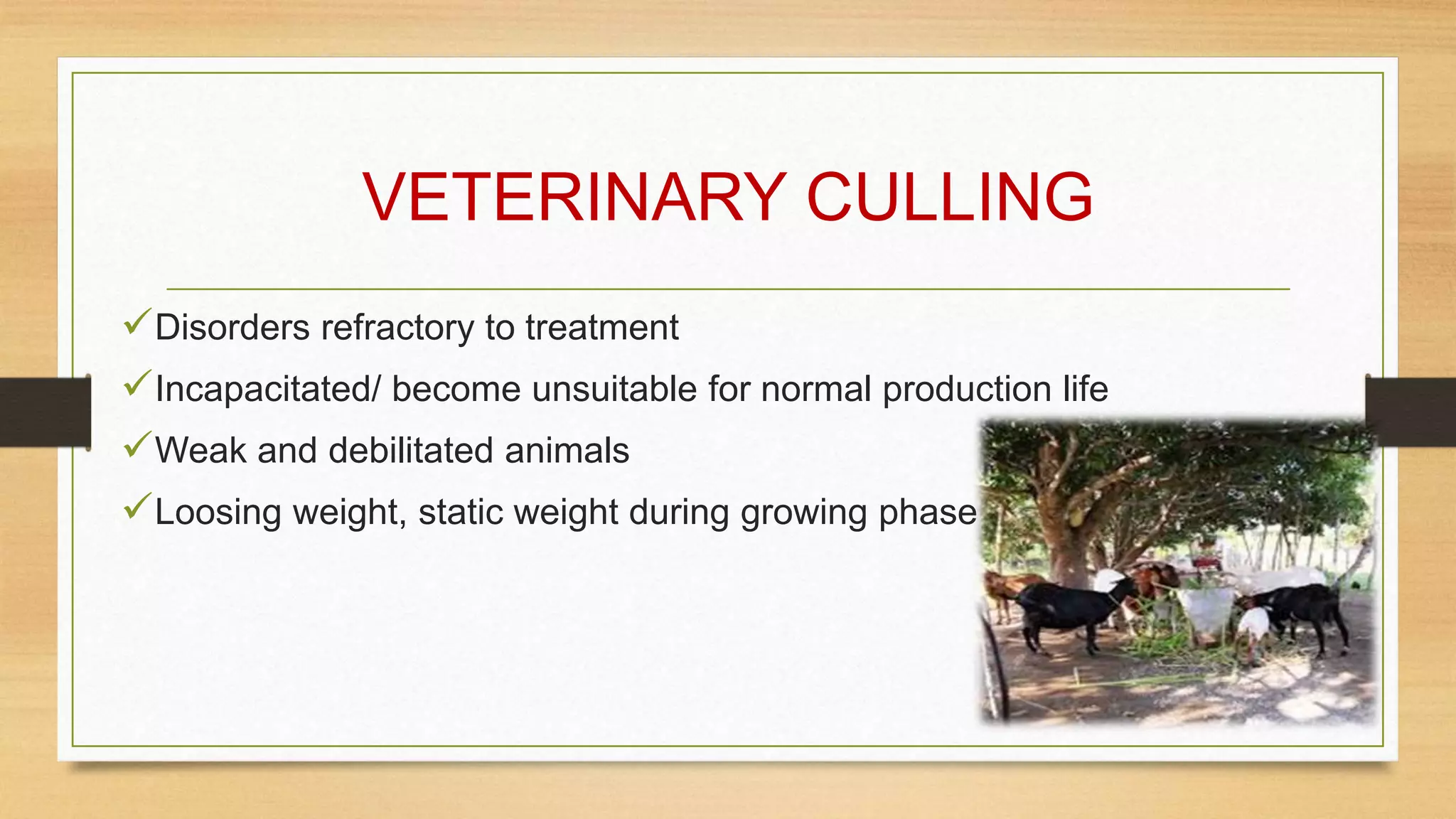
Disorders refractory to treatment
Incapacitated/ become unsuitable for normal production life
Weak and debilitated animals
Loosing weight, static weight during growing phase
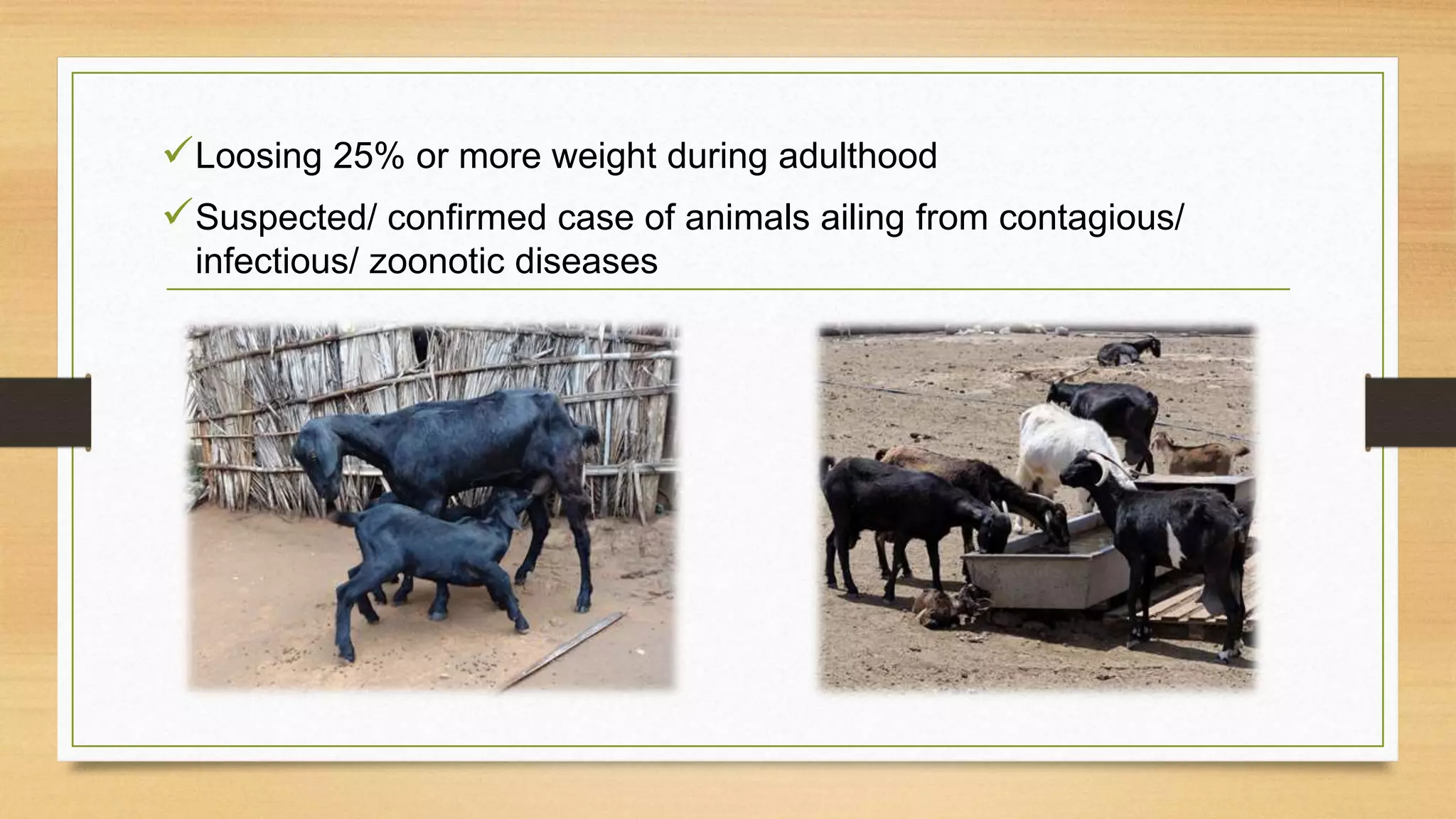
Loosing 25% or more weight during adulthood
Suspected/ confirmed case of animals ailing from contagious/
infectious/ zoonotic diseases
EMERGENCY CULLING
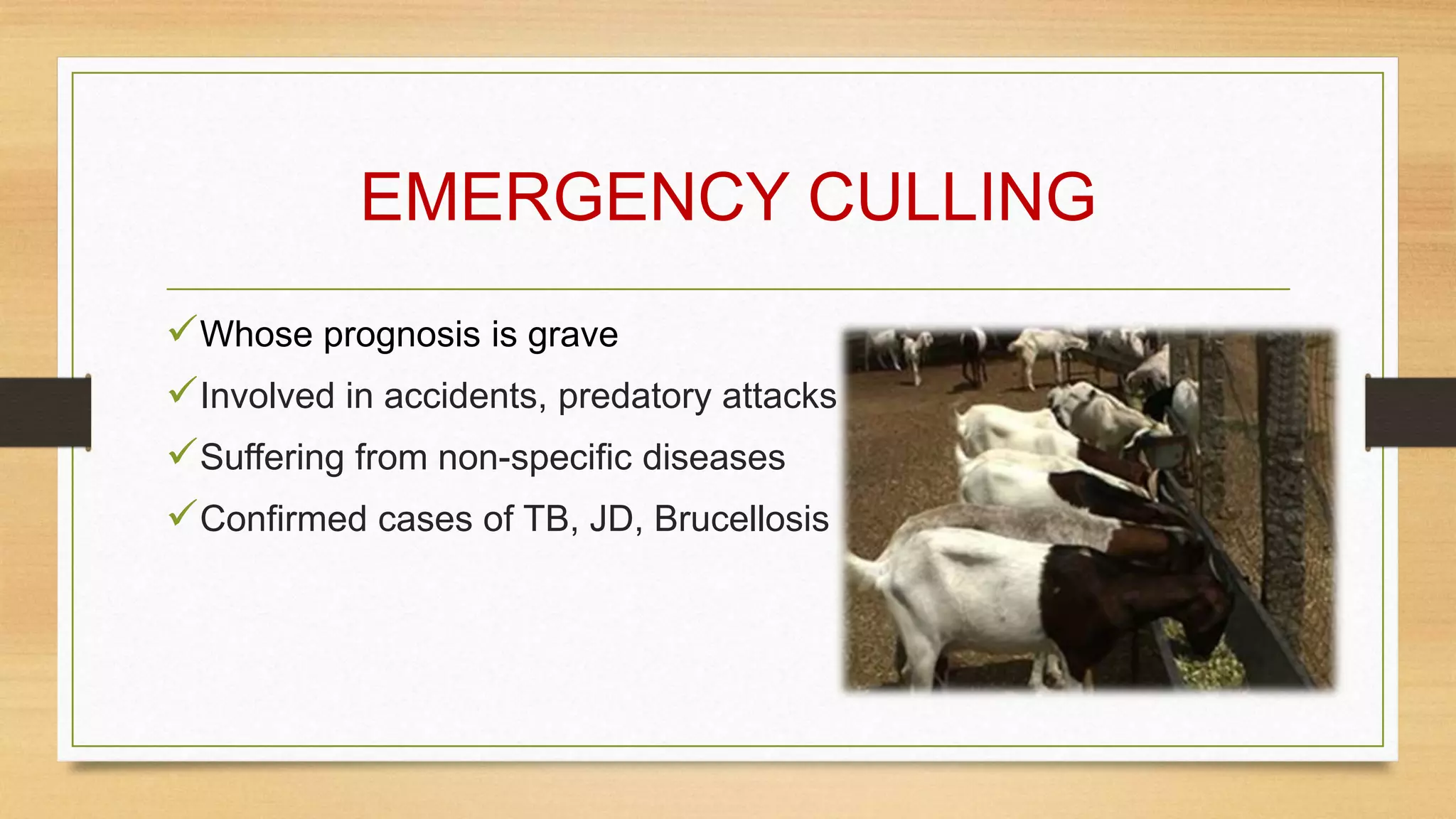
Whose prognosis is grave
Involved in accidents, predatory attacks
Suffering from non-specific diseases
Confirmed cases of TB, JD, Brucellosis
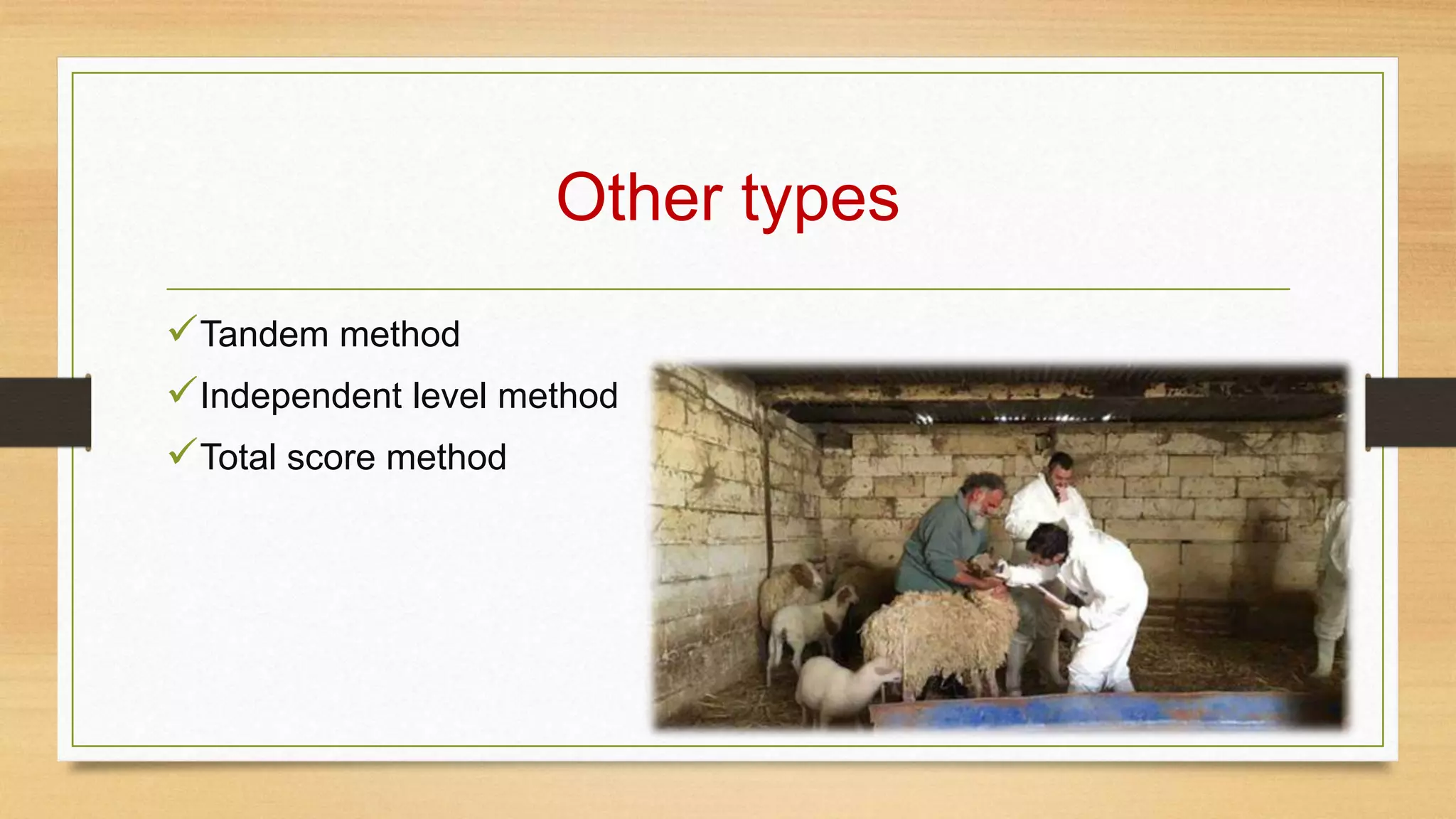
Other types
Tandem method
Independent level method
Total score method
Tandem Method
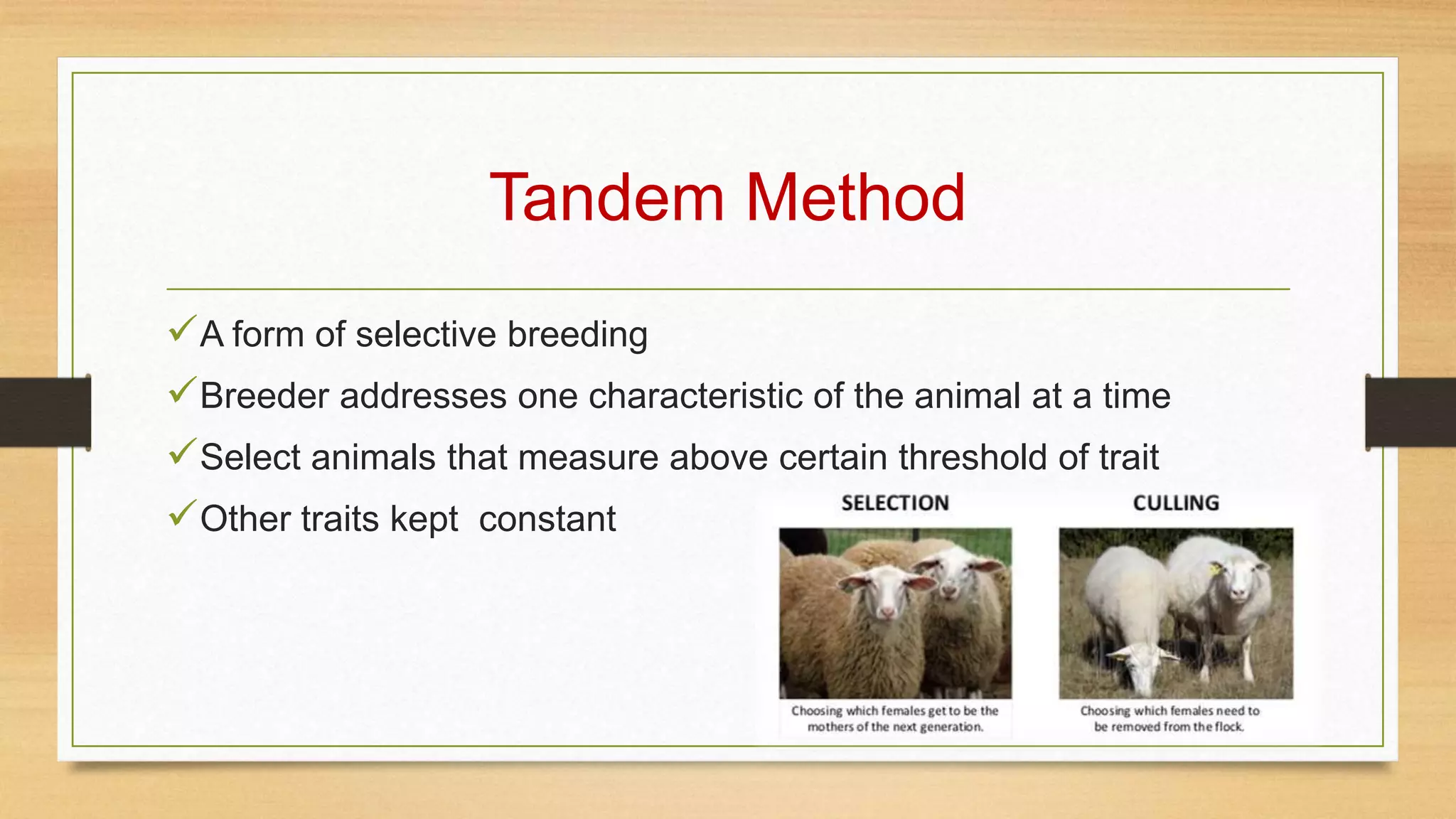
A form of selective breeding
Breeder addresses one characteristic of the animal at a time
Select animals that measure above certain threshold of trait
Other traits kept constant
Tandem Method
When level of quality in single trait achieved, breeder focus on a
second trait
Cull based on second trait quality
Improvement of one particular trait without losing quality of others
Applied in each successive generation of progeny
Ensure improvement in single characteristic of breeding program
Independent Levels Method
Animal that falls below a given standard in any single characteristic
Regardless of level of excellence of other traits
Not used in a breeding program
With each successive mating, the threshold culling criteria is raised
Independent Levels Method
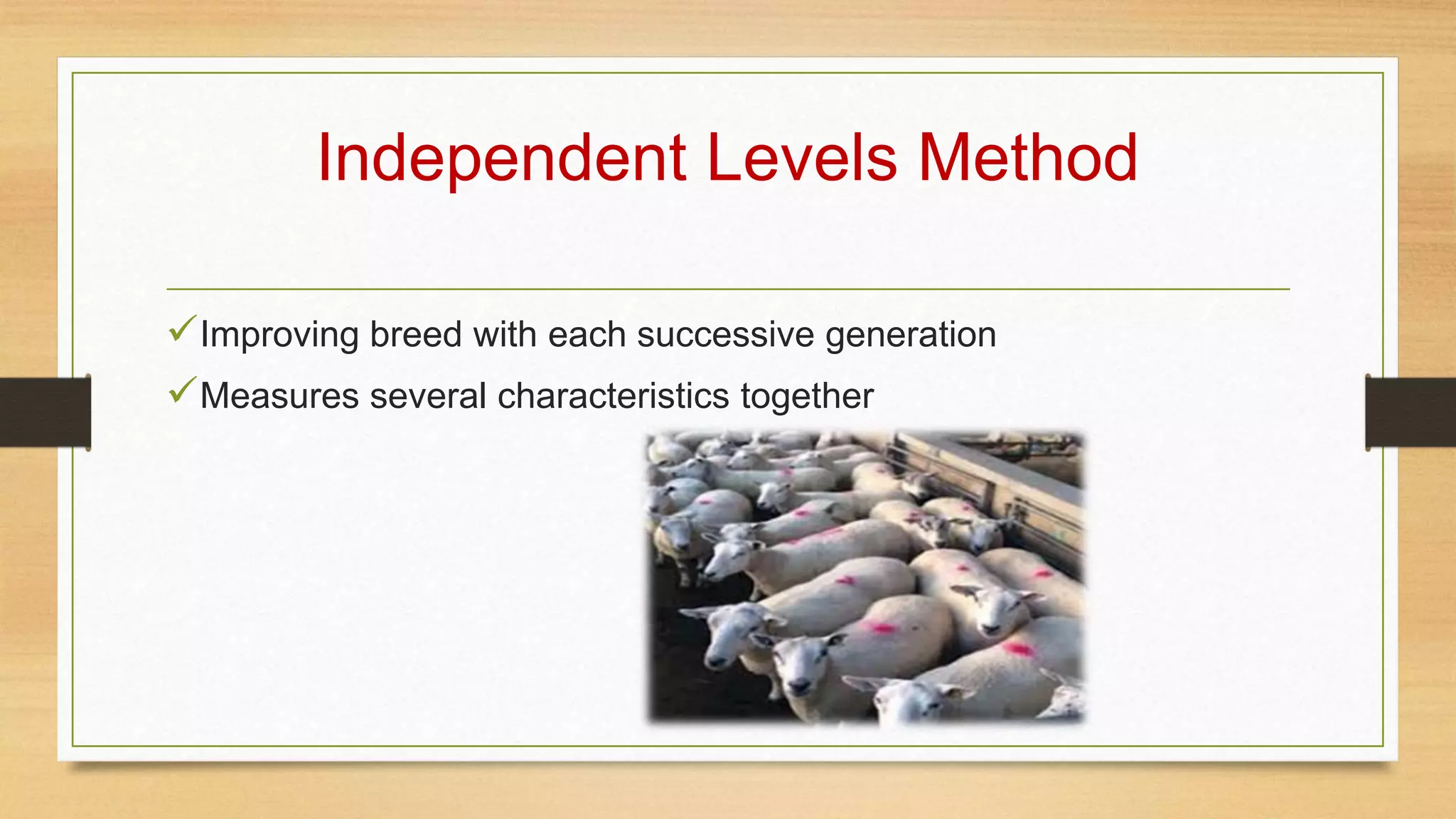
Improving breed with each successive generation
Measures several characteristics together
Total Score Method
Method where breeder evaluates and selects breeding stock
Based on a weighted table of characteristics.
Breeder selects most important qualities and assigns them a weight
Weights of all traits should add up to 100
Total Score Method
When evaluating an individual for selection, the breeder measures
the traits on a scale of 1 to 10
Scores then multiplied by their weights and added together
Individuals fail to meet a threshold are culled (or removed) from
program
Total Score Method
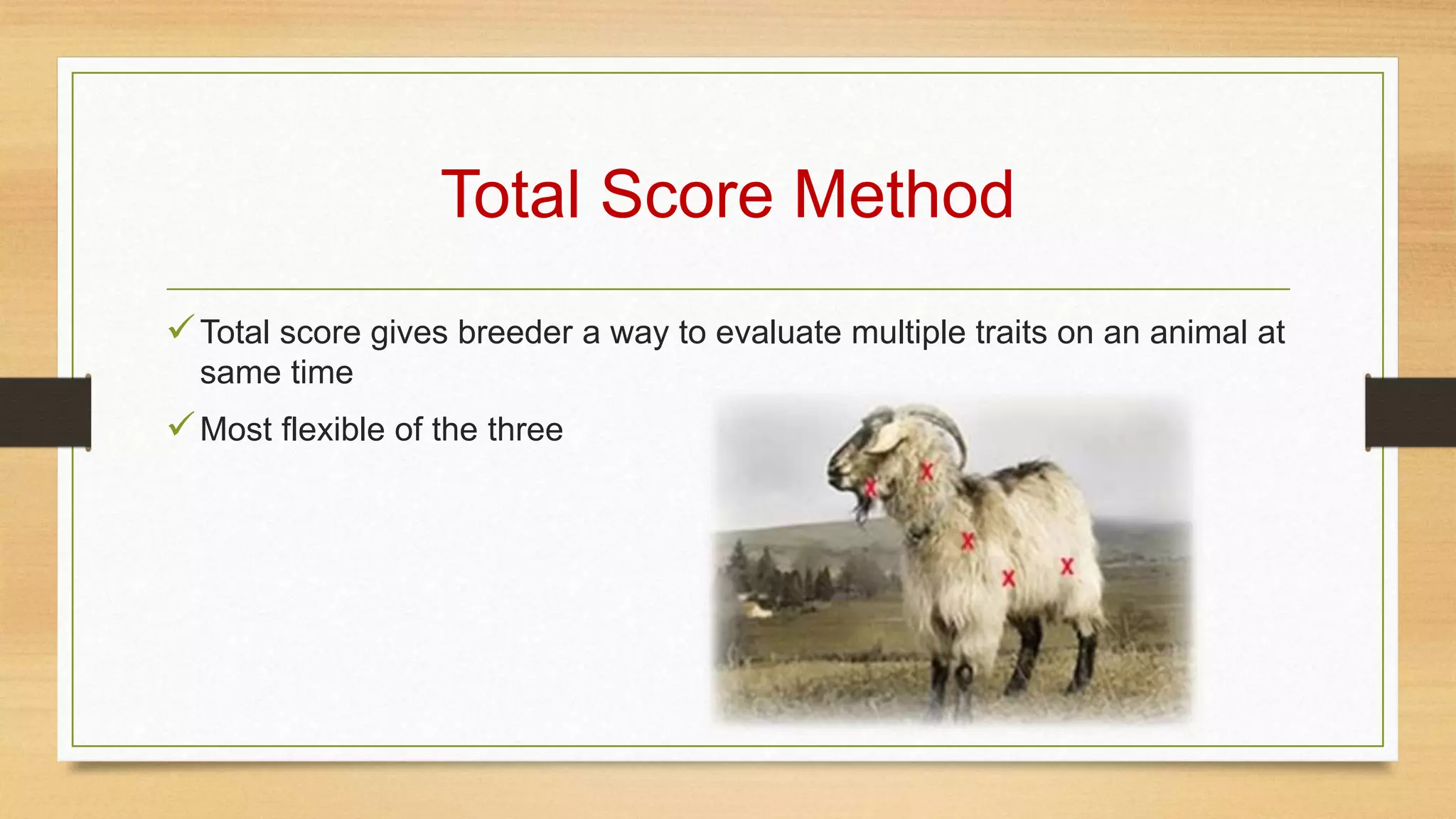
Total score gives breeder a way to evaluate multiple traits on an animal at
same time
Most flexible of the three
IMPORTANCE OF CULLING
Maintain flock size
More productive and easier to manage
Increase usefulness of animals
Helps maintain good breeding bands
Efficient grazing ability
REFERENCS
N. S. R. Sastry, C. K. Thomas; Livestock Production Management;
5th Edn; 2015; Kalyani Publishers, New Delhi; Pg no. 495-496
Jagdish Prasad; Goat, Sheep and Pig Production; 2011; Kalyani
Publishers, New Delhi; Pg no.77
P. N. Bhat, C. L. Arora; Sheep Production; 2009; Stadium Press
(India) Pvt. Ltd.; Delhi; Pg no. 96-98; 291
https://en.wikipedia.org/wiki/culling
THANK YOU

.

Culling of sheep and goat

  • 1.
    CULLING OF SHEEP ANDGOAT Dr. AKHILA M. R. 2018-MVM-01 Department of Animal Breeding and Genetics
  • 2.
    Vital practice Best meansto improve bands of goats Selection and culling keeps problems at minimum Undesirable animals removed
  • 3.
    Development of idealbreeding flock 10 – 20 % every year from healthy flock Replacement by new lambs/ kids
  • 4.
    DEFENITION In Biology, Cullingis the process of segregating organisms from a group according to desired or undesired characters In Animal Breeding, Culling is the process of removing or segregating animals from a breeding stock based on a specific trait
  • 5.
    To exaggerate desirablecharacteristics or remove undesirable characteristics by altering genetic diversity of population For livestock and wildlife, Culling often refers to act of killing removed animals
  • 6.
    CATEGORIES TO BECULLED Undesirable animals Low producers – less amount of milk for young twins/ triplets Repeat breeders Animals with stunted growth All animals except future breeding bucks at 16-18 Kg body wt. in 4-5 months
  • 7.
    Low prolificacy animals– if not 1.6 kids per year Problem animals Does of longer inter-kidding intervals - > 1 year Does of longer dry period
  • 8.
    Suffering from incurableand contagious diseases Paralysis affected animals Lame/ deformed bones/ fractures Teeth defects, feet and leg defects
  • 9.
    History of abortion Udderdefects in females Testicle defects in males Fail to breed and produce offspring
  • 10.
    Wean less weightand low grade offspring Lack desirable conformation, breed characters/ sex characters Develop incurable physical defects Evidence of hereditary diseases
  • 11.
    TYPES OF CULLING Cullingclassified in to 3 types Policy culling Veterinary culling Emergency culling
  • 12.
    POLICY CULLING Not trueto breed/ type Parentage not known Genetic defects Poor production/ reproduction
  • 13.
    Surplus stock :males and females not selected for breeding and those cast off after breeding Age : sheep and goats of six years and above Animals with gummers and broken mouth condition Poor body weight and growth rate
  • 14.
    VETERINARY CULLING Disorders refractoryto treatment Incapacitated/ become unsuitable for normal production life Weak and debilitated animals Loosing weight, static weight during growing phase
  • 15.
    Loosing 25% ormore weight during adulthood Suspected/ confirmed case of animals ailing from contagious/ infectious/ zoonotic diseases
  • 16.
    EMERGENCY CULLING Whose prognosisis grave Involved in accidents, predatory attacks Suffering from non-specific diseases Confirmed cases of TB, JD, Brucellosis
  • 17.
    Other types Tandem method Independentlevel method Total score method
  • 18.
    Tandem Method A formof selective breeding Breeder addresses one characteristic of the animal at a time Select animals that measure above certain threshold of trait Other traits kept constant
  • 19.
    Tandem Method When levelof quality in single trait achieved, breeder focus on a second trait Cull based on second trait quality Improvement of one particular trait without losing quality of others Applied in each successive generation of progeny Ensure improvement in single characteristic of breeding program
  • 20.
    Independent Levels Method Animalthat falls below a given standard in any single characteristic Regardless of level of excellence of other traits Not used in a breeding program With each successive mating, the threshold culling criteria is raised
  • 21.
    Independent Levels Method Improvingbreed with each successive generation Measures several characteristics together
  • 22.
    Total Score Method Methodwhere breeder evaluates and selects breeding stock Based on a weighted table of characteristics. Breeder selects most important qualities and assigns them a weight Weights of all traits should add up to 100
  • 23.
    Total Score Method Whenevaluating an individual for selection, the breeder measures the traits on a scale of 1 to 10 Scores then multiplied by their weights and added together Individuals fail to meet a threshold are culled (or removed) from program
  • 24.
    Total Score Method Totalscore gives breeder a way to evaluate multiple traits on an animal at same time Most flexible of the three
  • 25.
    IMPORTANCE OF CULLING Maintainflock size More productive and easier to manage Increase usefulness of animals Helps maintain good breeding bands Efficient grazing ability
  • 26.
    REFERENCS N. S. R.Sastry, C. K. Thomas; Livestock Production Management; 5th Edn; 2015; Kalyani Publishers, New Delhi; Pg no. 495-496 Jagdish Prasad; Goat, Sheep and Pig Production; 2011; Kalyani Publishers, New Delhi; Pg no.77 P. N. Bhat, C. L. Arora; Sheep Production; 2009; Stadium Press (India) Pvt. Ltd.; Delhi; Pg no. 96-98; 291 https://en.wikipedia.org/wiki/culling
  • 27.