Download to read offline

![Example 2
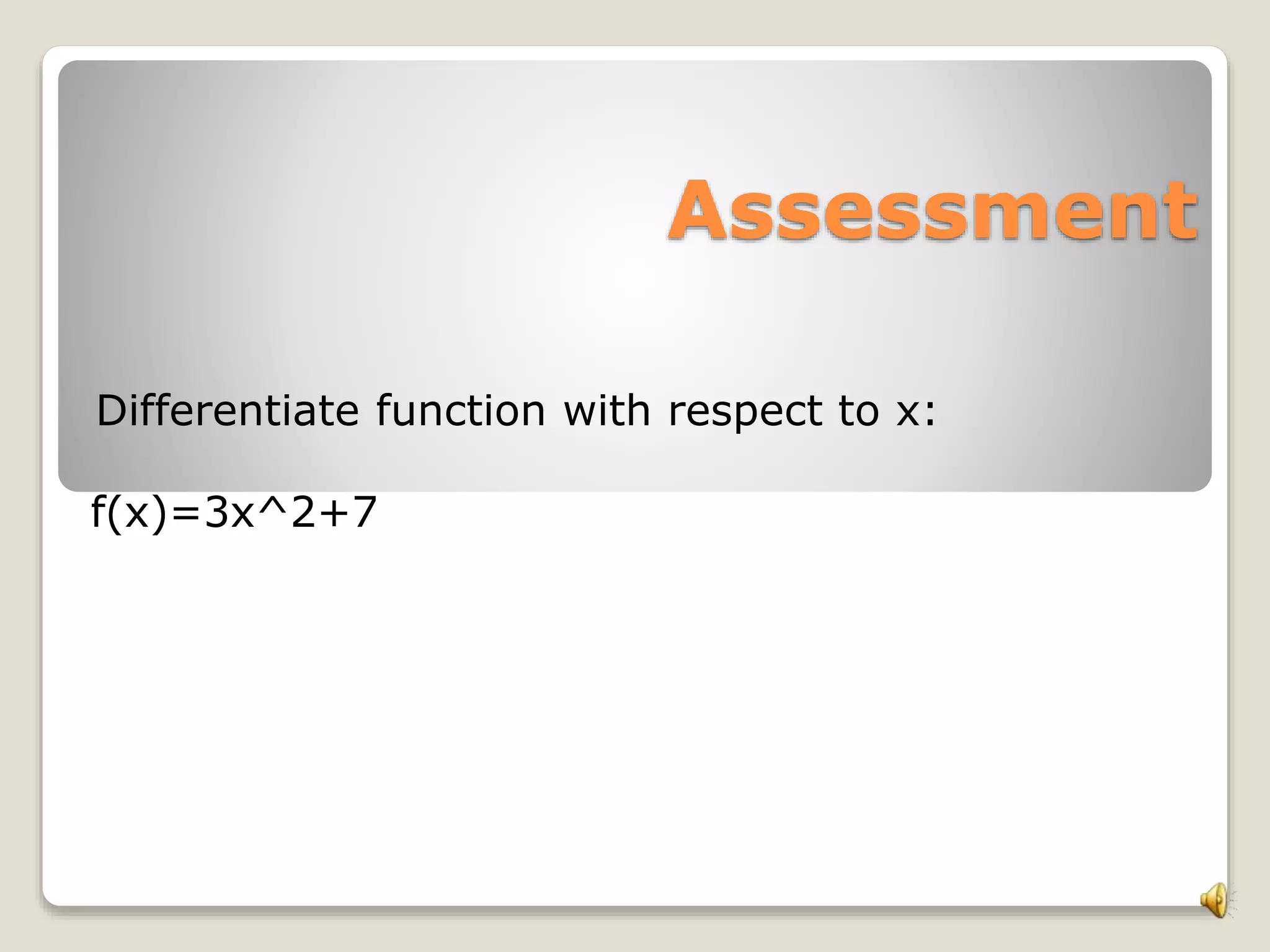
Differentiate function with respect to x:
f(x)=2x+4
Here we will use the addition result of derivatives.
f’(x)= d(2x+4 )/x
=d(2x)/dx + d(4)/dx
= 2 + 0 ............[ check formula slide for ax
and constant.]
f’(x)=2](https://image.slidesharecdn.com/differentiationf-140518062742-phpapp02/75/Differentiation-Basics-6-2048.jpg)


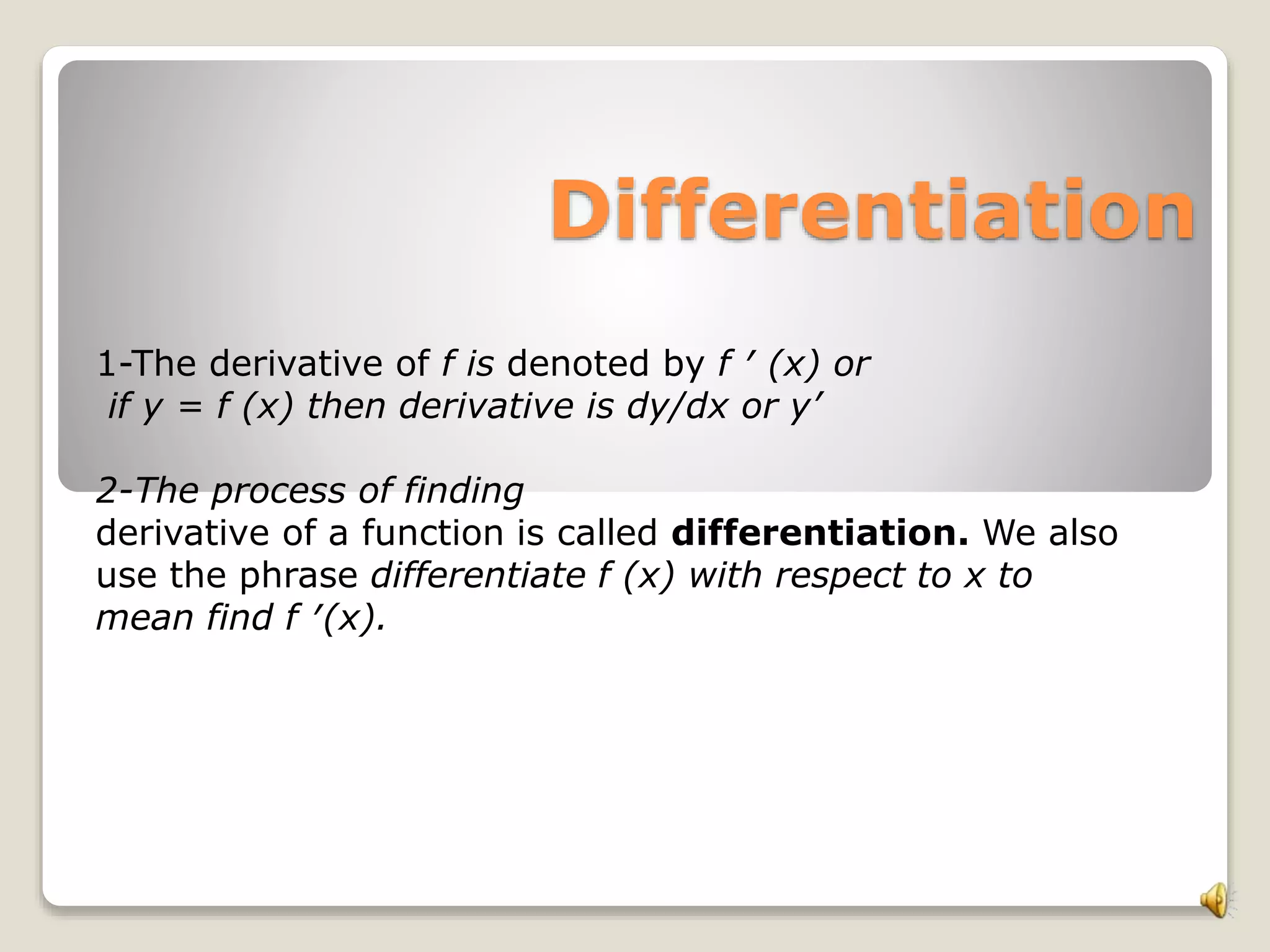
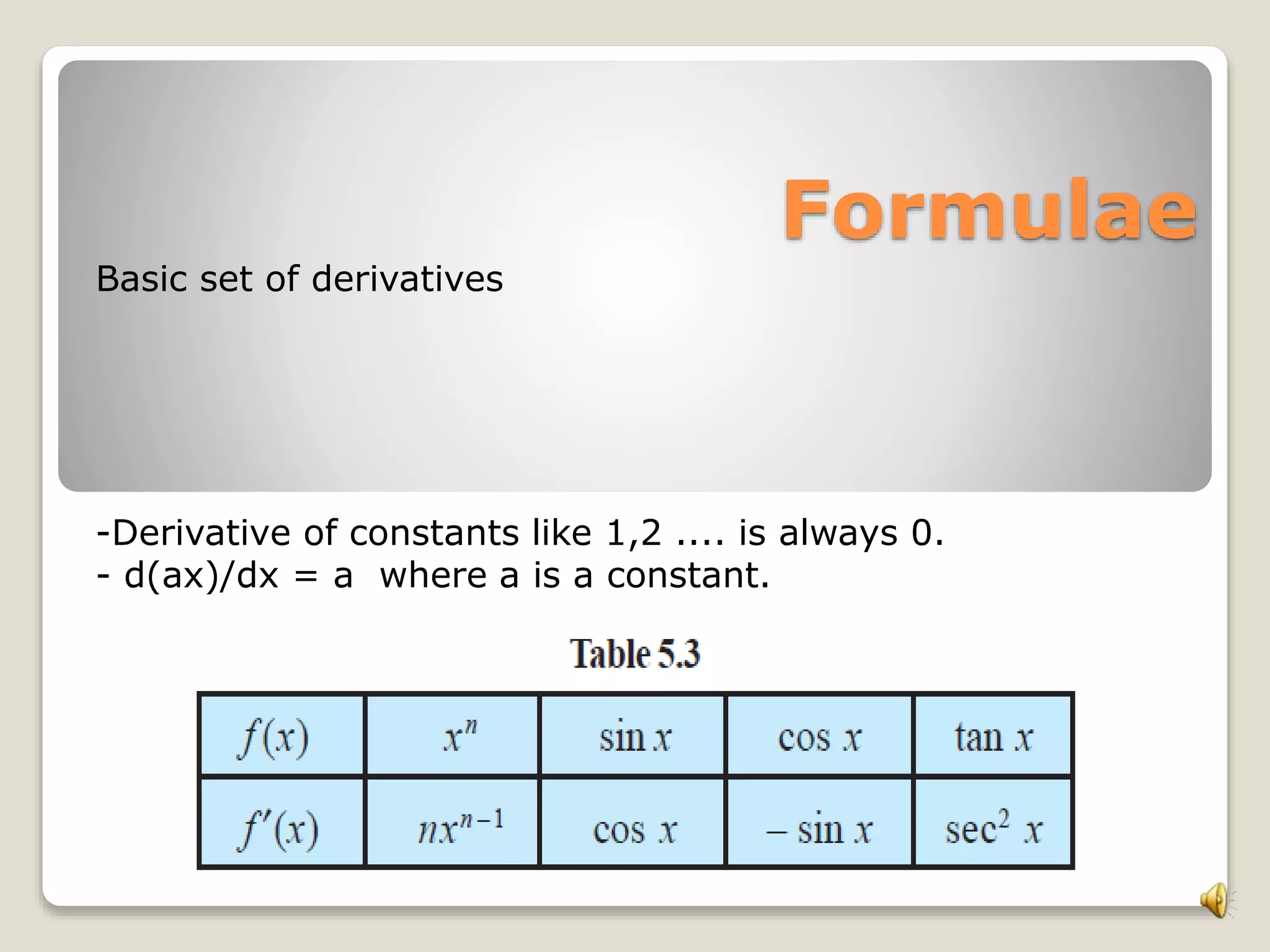
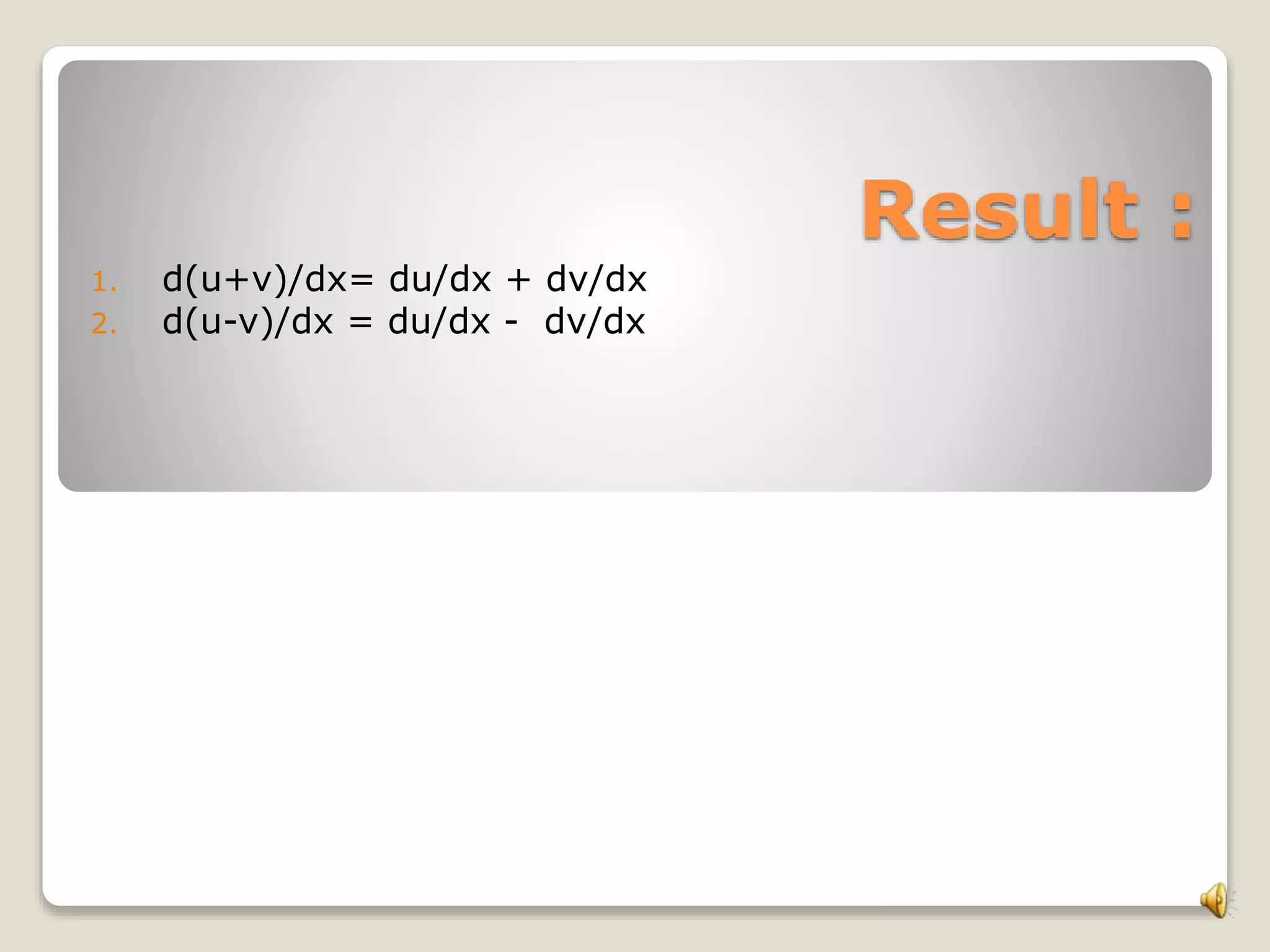
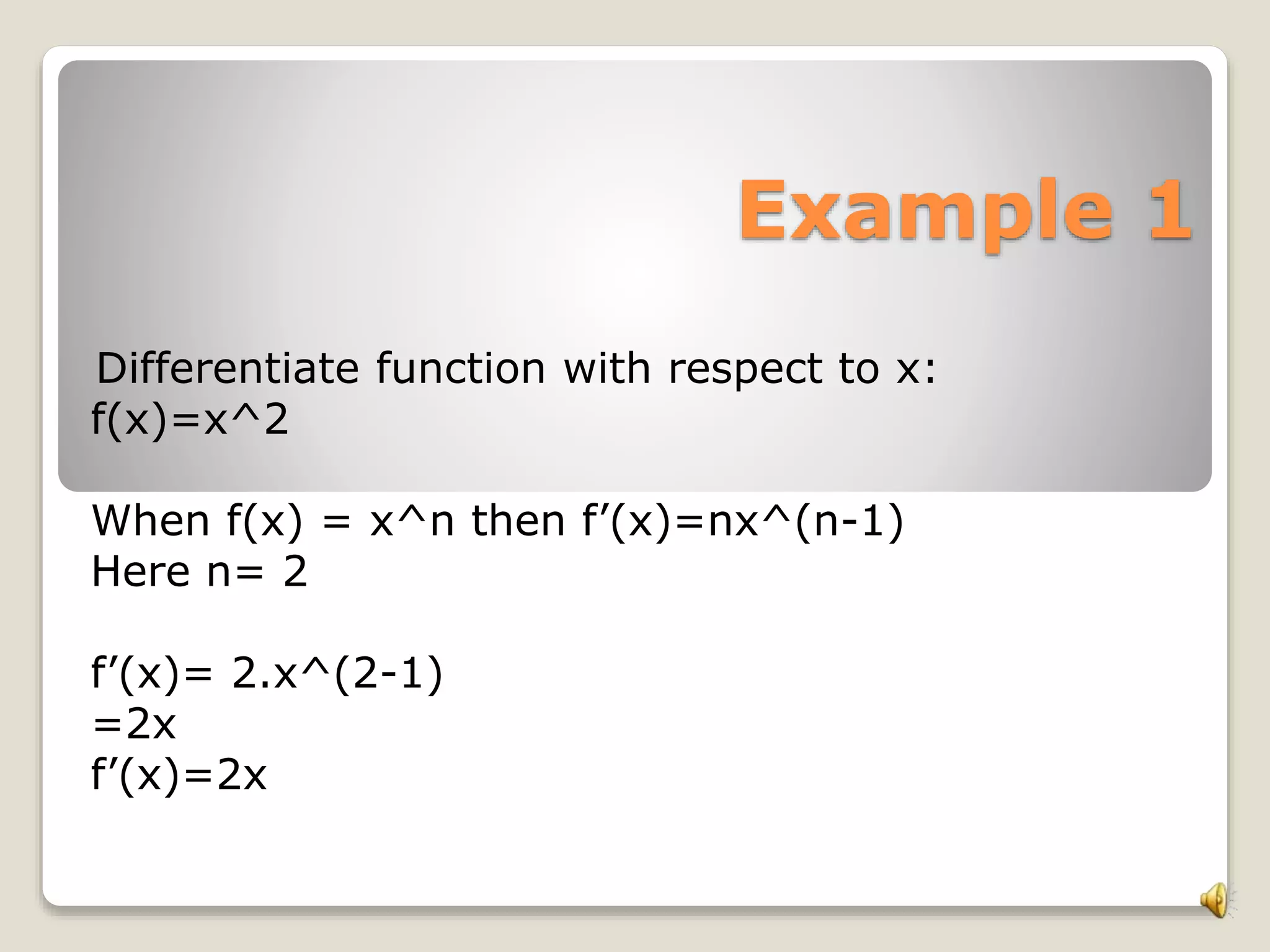
1. Differentiation is the process of finding the derivative of a function, denoted as f'(x) or dy/dx, to determine how the value of the function changes as the input variable changes. 2. Some basic derivative formulas are that the derivative of a constant is 0, the derivative of ax is a, and the derivative of the sum of two functions u and v is the sum of their individual derivatives. 3. As examples, the derivative of x^2 is 2x, and the derivative of 2x + 4 is 2.


