 Well foundation is the most commonly adopted
foundation for major bridges in India. Since then many
major bridges across wide rivers have been founded on
wells.
 Well foundation is preferable to pile foundation when
foundation has to resist large lateral forces.
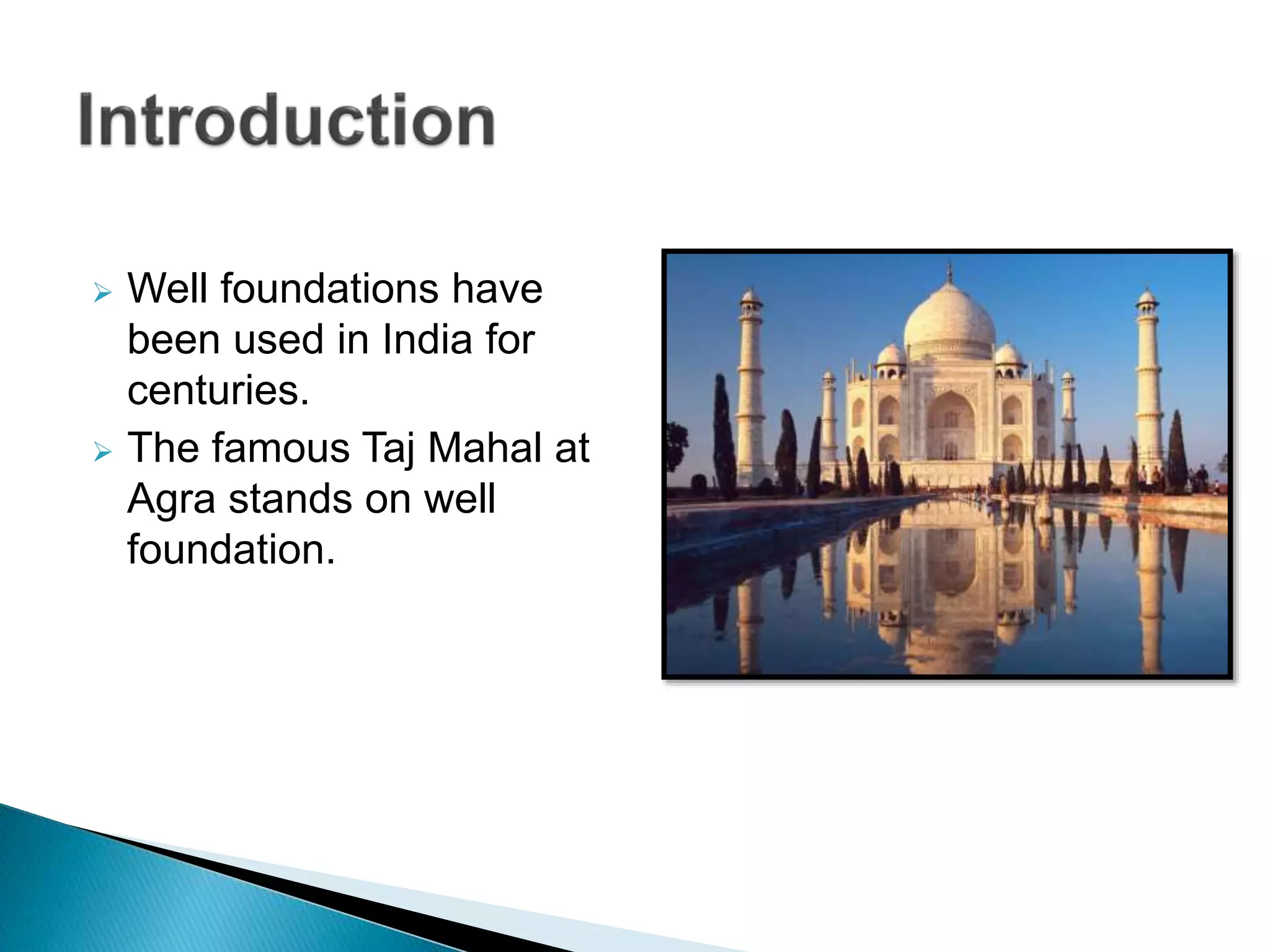
 Well foundations have
been used in India for
centuries.
 The famous Taj Mahal at
Agra stands on well
foundation.
 To know the different types and shapes of well
foundations.
 To know their relative merits and demerits.
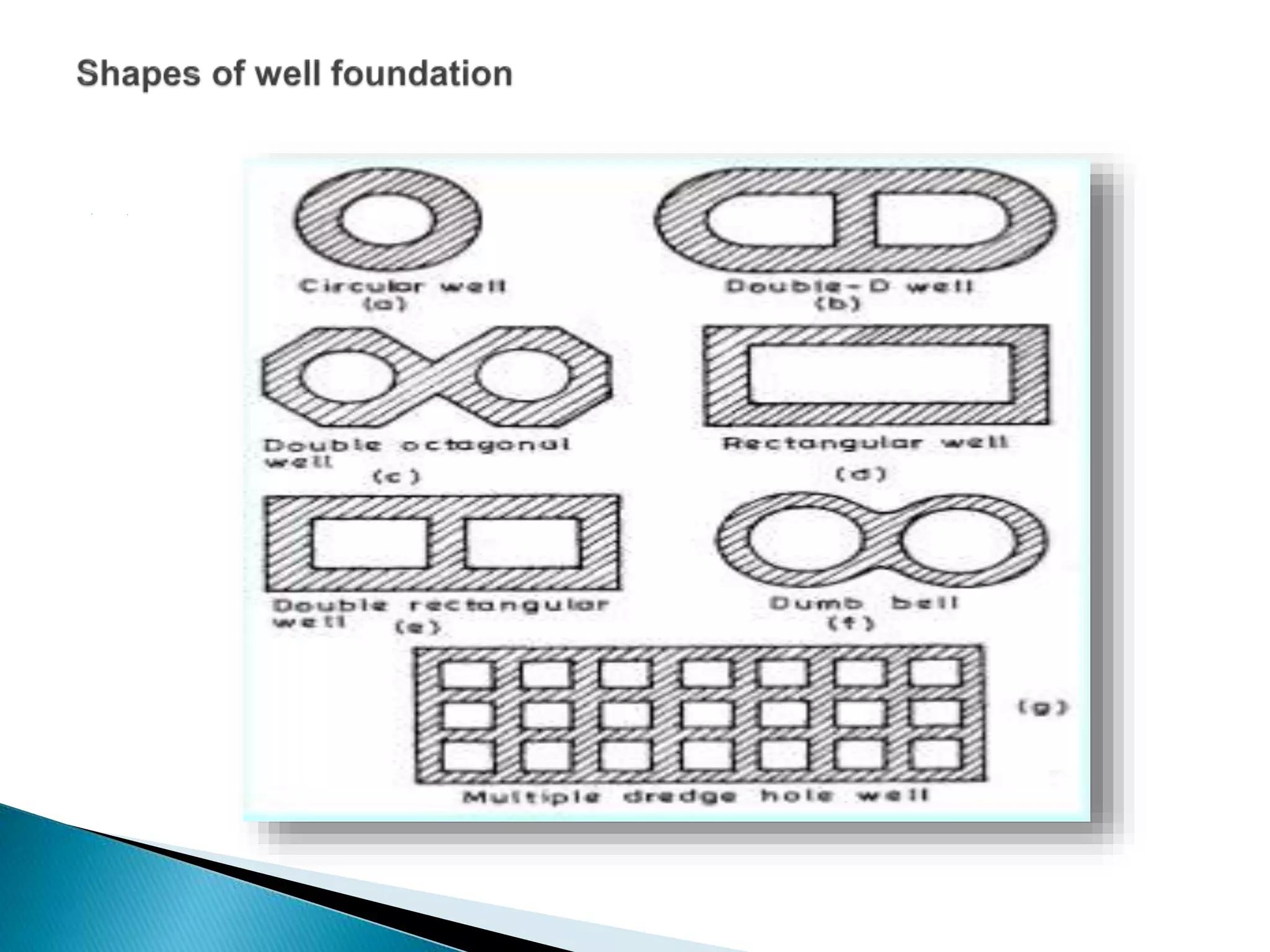
 Wells have different shapes and accordingly
they are named as:-
1. Circular well,
2. Double D well,
3. Twin circular well,
4. Double octagonal well,
5. Rectangular well.
 .
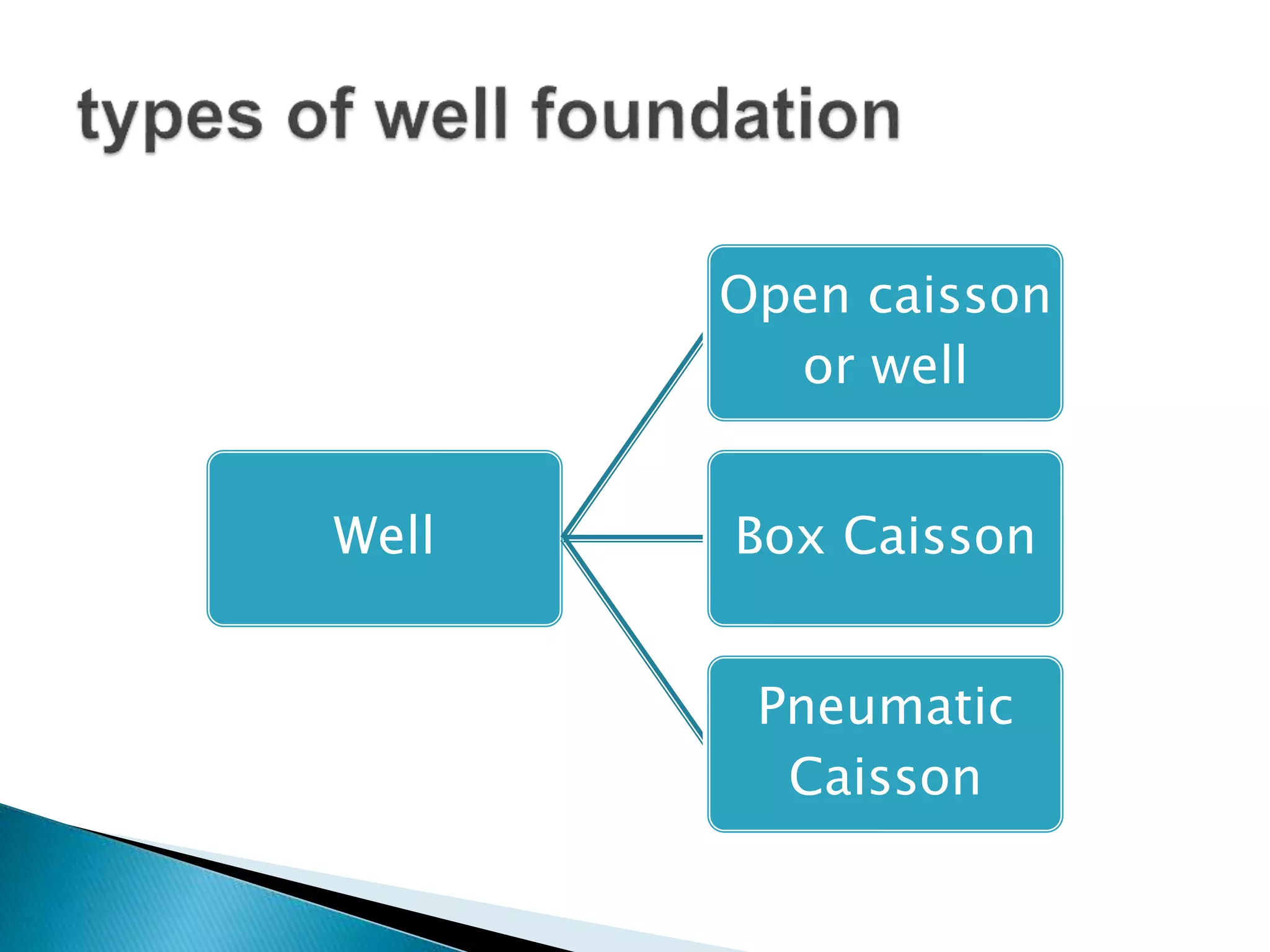
Well
Open caisson
or well
Box Caisson
Pneumatic
Caisson
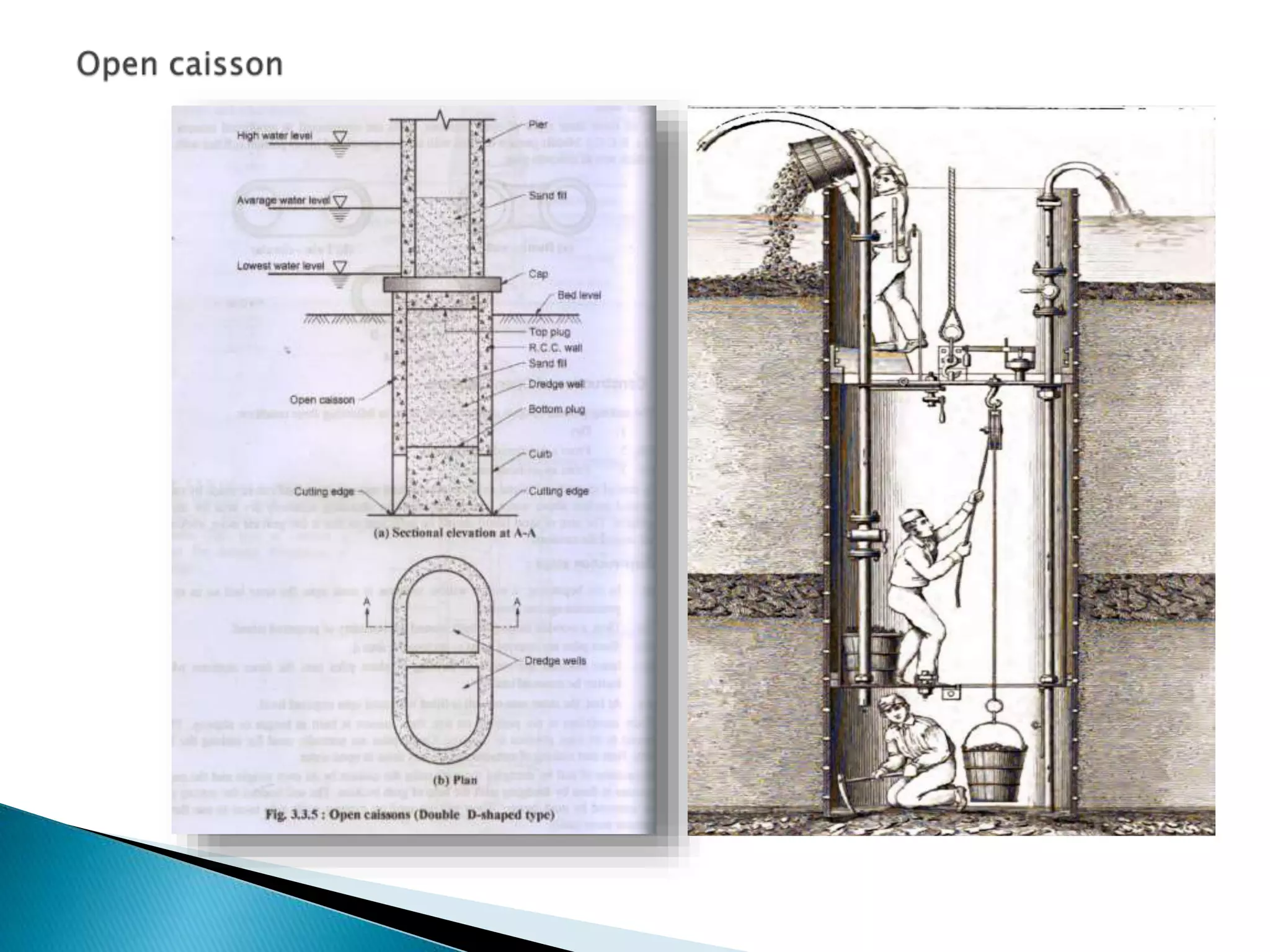
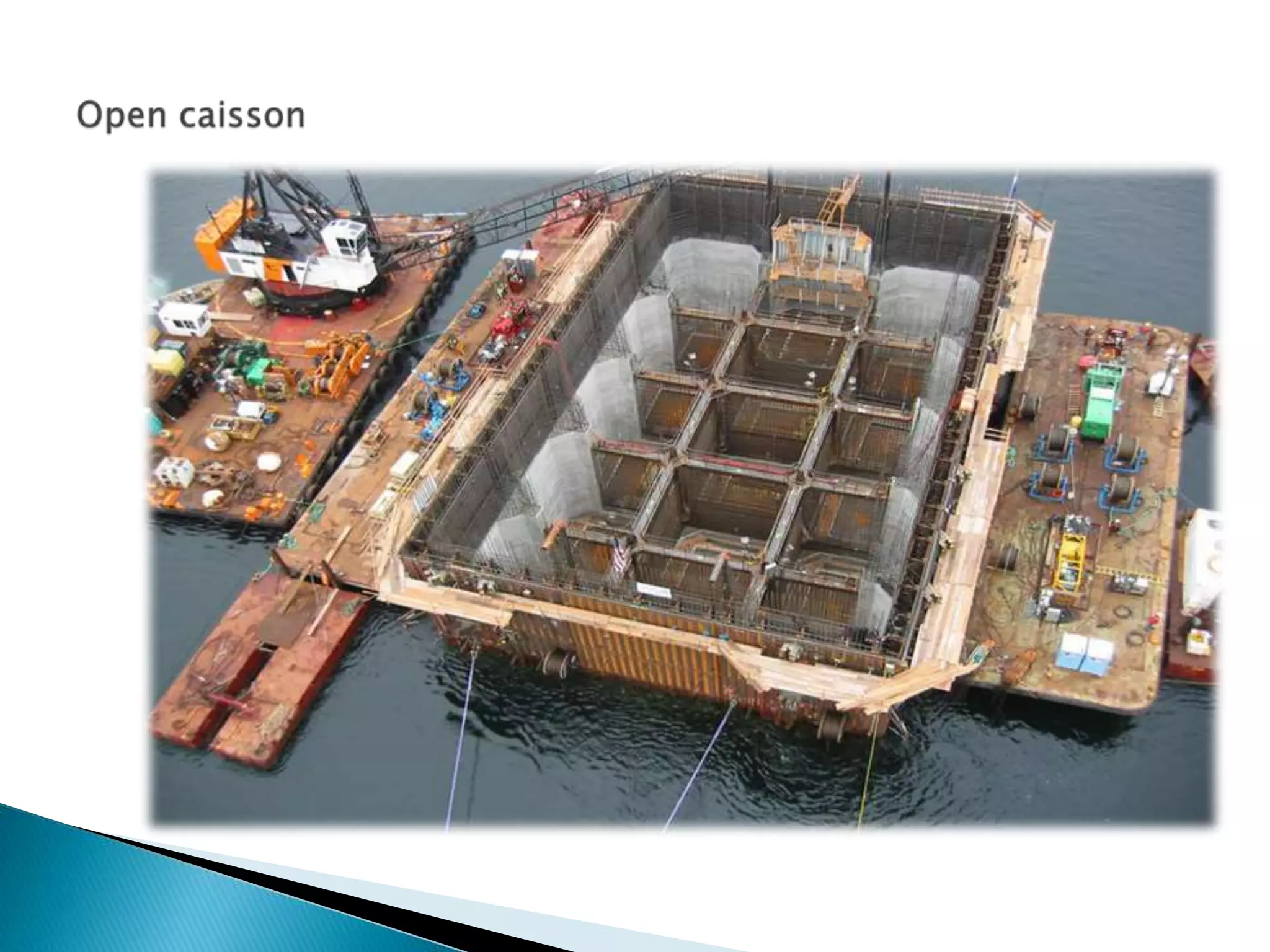
 Open caisson are hollow chambers;
 The top and bottom of the caisson is open during construction. It
may have any shape in plan.
 The caisson is sunk into place by removing the soil from the inside
of the shaft until the bearing stratum is reached.
 The advantages of open caissons are their feasibility to be sunk to
great depths.
 Their construction cost is relatively low.
 The disadvantages of the open caissons are that the bottom of the
caisson cannot be thoroughly cleaned and inspected.
 The concrete seal placed in water is not satisfactory and soil near
the cutting edge may require hand excavation by diver.
 If obstruction like boulders or logs are encountered the construction
gets slowed down.
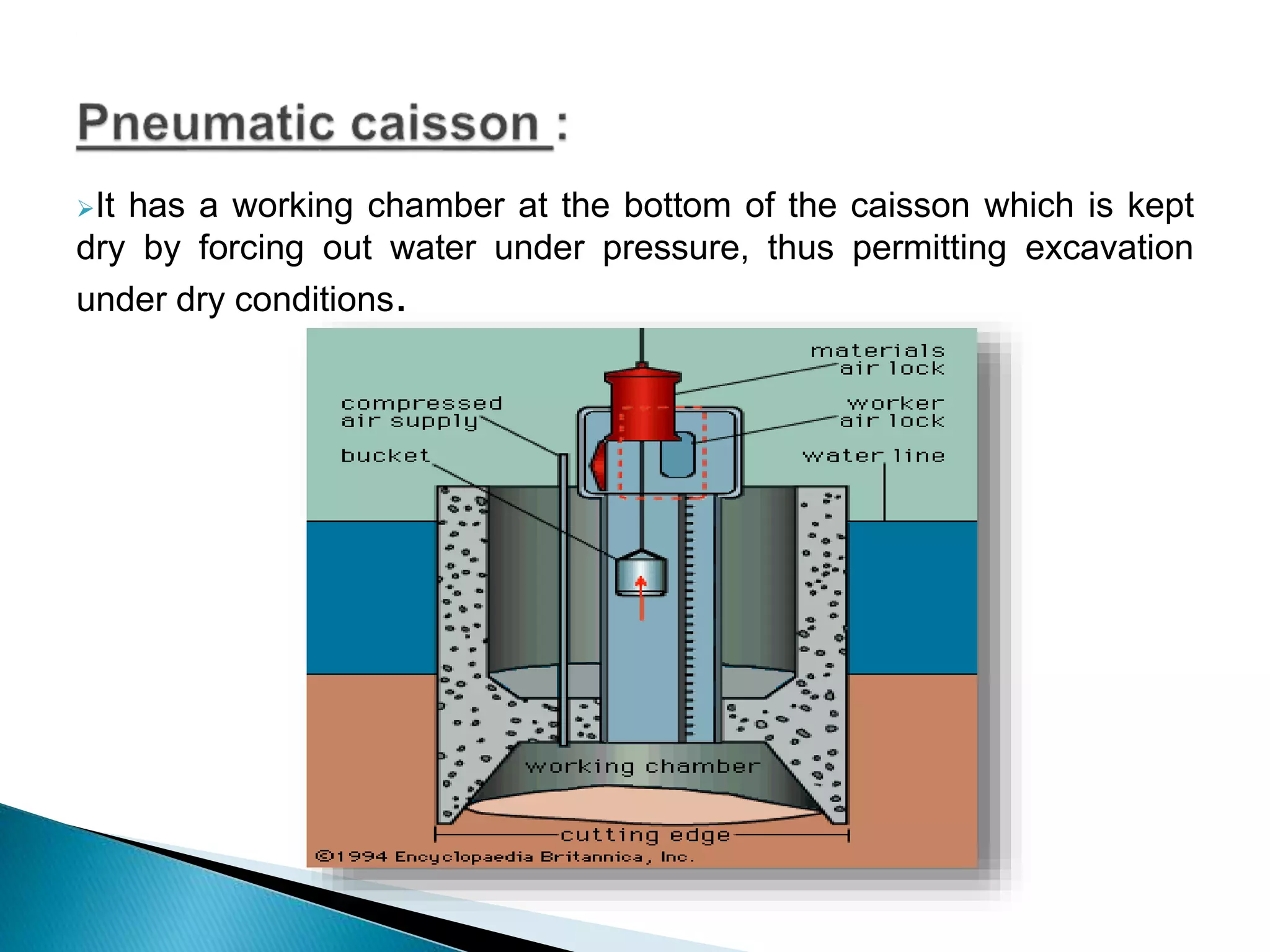
It has a working chamber at the bottom of the caisson which is kept
dry by forcing out water under pressure, thus permitting excavation
under dry conditions.
 As there is an access to the bottom of the caisson, obstruction can
be easily removed.
 The soil can be inspected and the soil samples can be ,if required.
 Soil bearing capacity can be determined by conducting in-situ tests
in the working chamber.
 Excavation and pouring of concrete is one in the dry.
 There is no settlement of the adjoining structures as the water table
is not lowered.
 Pneumatic caissons are highly expensive Pneumatic caisson should
be used only when open caissons are not feasible.
 The penetration depth of below water table limited to 30 to 40 m.
 There is a lot inconvenience caused to the workmen while working
under high pressure, the workers may develop caisson disease.
 In pneumatic caisson, large amount of manual work is required
which increases the cost.
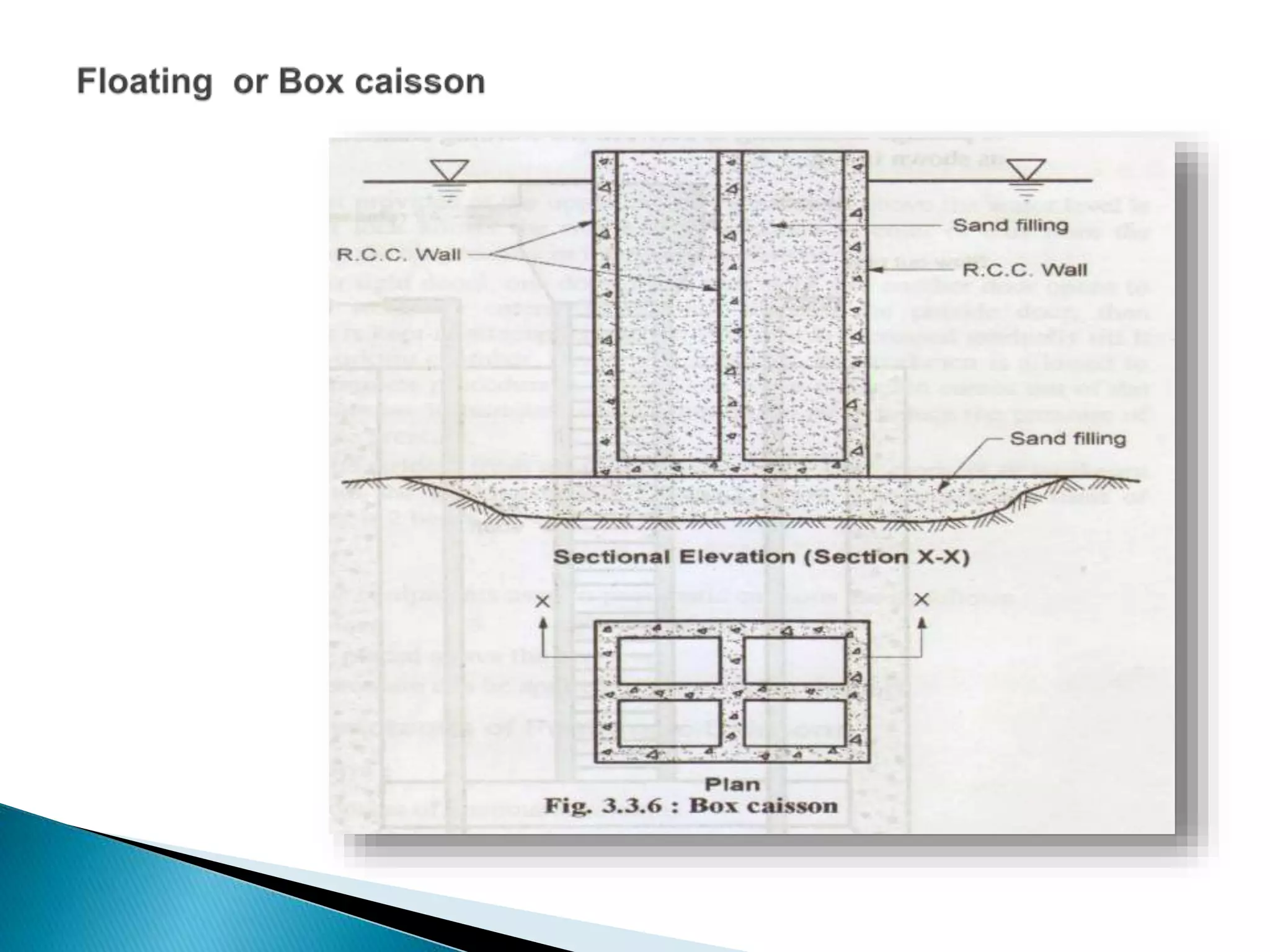
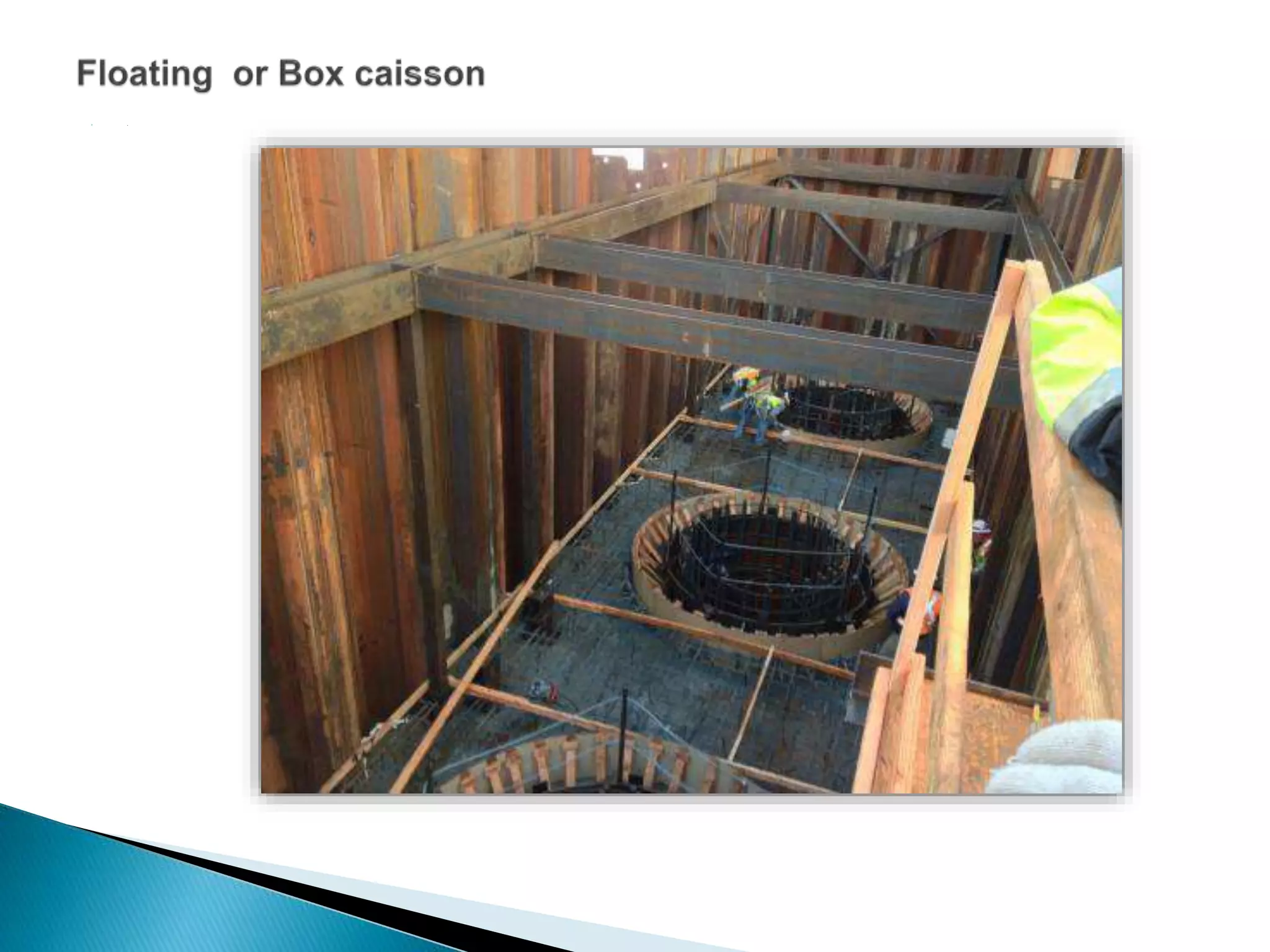
 Floating caissons are open at the top but closed at the bottom.
 These caissons are constructed on land and then transported to the
site ,and floated to the place where these are to be finally installed.
 These are sunk at that place by filling them with sand, ballast, water
or concrete to a levelled bearing surface.
 .
 The installation of the floating caisson quick and convenient.
 As the floating caisson are prefabricated or precast, the quality of
construction is good.
 Floating caisson are less expensive than open caissons.
 Floating caisson can be transported by floating at a relatively low
cost.
 The load carrying capacity of a floating caisson is much lower than
that of equivalent open caisson.
 The foundation bed has to be levelled before installation.
 The base of the floating caisson is to be protected against scour
action.
 M.N Som. , S.C Das , Theory and practice of foundation design ,
Ashok.k.Ghosh,New Delhi,2006.
 P.C.Varghese,Foundation Engineering,
Ashok.k.Ghosh,New Delhi,2005.
 Bowles, J.E. ,Foundation Analysis And Design(International
Student Edition) ,Mc-Greww hill,Singapore,1988.
 Saha G.P. “Analysis and Design of Varanasi Bridge
Well Foundations – A Conceptual Approach” Journal
of Indian Roads Congress Vol. 54-2. Paper
presented in the Annual Session of IRC in November
1993.

DIFFERENT TYPES OF Well foundation & THEIR RELATIVE MERITS &DEMRITS

  • 2.
     Well foundationis the most commonly adopted foundation for major bridges in India. Since then many major bridges across wide rivers have been founded on wells.  Well foundation is preferable to pile foundation when foundation has to resist large lateral forces.
  • 3.
     Well foundationshave been used in India for centuries.  The famous Taj Mahal at Agra stands on well foundation.
  • 4.
     To knowthe different types and shapes of well foundations.  To know their relative merits and demerits.
  • 5.
     Wells havedifferent shapes and accordingly they are named as:- 1. Circular well, 2. Double D well, 3. Twin circular well, 4. Double octagonal well, 5. Rectangular well.
  • 6.
  • 7.
    Well Open caisson or well BoxCaisson Pneumatic Caisson
  • 8.
     Open caissonare hollow chambers;  The top and bottom of the caisson is open during construction. It may have any shape in plan.  The caisson is sunk into place by removing the soil from the inside of the shaft until the bearing stratum is reached.
  • 11.
     The advantagesof open caissons are their feasibility to be sunk to great depths.  Their construction cost is relatively low.
  • 12.
     The disadvantagesof the open caissons are that the bottom of the caisson cannot be thoroughly cleaned and inspected.  The concrete seal placed in water is not satisfactory and soil near the cutting edge may require hand excavation by diver.  If obstruction like boulders or logs are encountered the construction gets slowed down.
  • 13.
    It has aworking chamber at the bottom of the caisson which is kept dry by forcing out water under pressure, thus permitting excavation under dry conditions.
  • 14.
     As thereis an access to the bottom of the caisson, obstruction can be easily removed.  The soil can be inspected and the soil samples can be ,if required.  Soil bearing capacity can be determined by conducting in-situ tests in the working chamber.  Excavation and pouring of concrete is one in the dry.  There is no settlement of the adjoining structures as the water table is not lowered.
  • 15.
     Pneumatic caissonsare highly expensive Pneumatic caisson should be used only when open caissons are not feasible.  The penetration depth of below water table limited to 30 to 40 m.  There is a lot inconvenience caused to the workmen while working under high pressure, the workers may develop caisson disease.  In pneumatic caisson, large amount of manual work is required which increases the cost.
  • 16.
     Floating caissonsare open at the top but closed at the bottom.  These caissons are constructed on land and then transported to the site ,and floated to the place where these are to be finally installed.  These are sunk at that place by filling them with sand, ballast, water or concrete to a levelled bearing surface.
  • 18.
  • 19.
     The installationof the floating caisson quick and convenient.  As the floating caisson are prefabricated or precast, the quality of construction is good.  Floating caisson are less expensive than open caissons.  Floating caisson can be transported by floating at a relatively low cost.
  • 20.
     The loadcarrying capacity of a floating caisson is much lower than that of equivalent open caisson.  The foundation bed has to be levelled before installation.  The base of the floating caisson is to be protected against scour action.
  • 21.
     M.N Som., S.C Das , Theory and practice of foundation design , Ashok.k.Ghosh,New Delhi,2006.  P.C.Varghese,Foundation Engineering, Ashok.k.Ghosh,New Delhi,2005.  Bowles, J.E. ,Foundation Analysis And Design(International Student Edition) ,Mc-Greww hill,Singapore,1988.  Saha G.P. “Analysis and Design of Varanasi Bridge Well Foundations – A Conceptual Approach” Journal of Indian Roads Congress Vol. 54-2. Paper presented in the Annual Session of IRC in November 1993.