 A foundation is the part constructed
under the pier/abutment and over the
underlying soil or rock.
 The loads transmitted by the foundation
to the underling soil must not cause soil
shear failure or damaging settlement of
the superstructure.
 Foundation is the important structural
part of bridges
 Foundation is the component part of
bridge.
 It receives the load from the piers and
abutments and transfers it to the soil.
 Purpose of foundation is to distribute the
load of bridge over a large bearing area
and provide stability of bridge against
settlement and tilting.
 It is provided sufficiently deep so that it
not affected by the scouring.
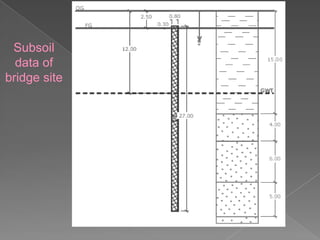
 The type of foundation is designed when
subsoil data of bridge site is obtained.
The different types of foundations for
bridges are given following;
 Shallow Foundation
Spread Foundation and Raft foundation
 Deep Foundation
Pile, caisson and well Foundation
Subsoil
data of
bridge site
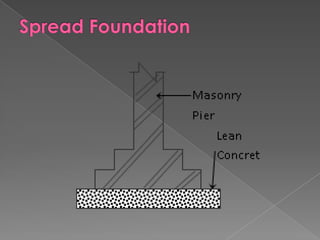
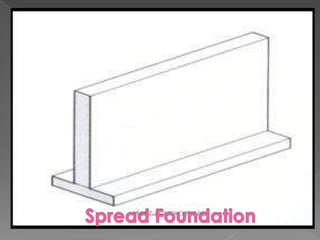
 Spread Foundation is generally constructed
for culverts
 It may be provided for small bridges when
bed is of rock or of soil having good bearing
capacity.
 It is suitable when flow in stream is less and
hence the scouring effect is less.
 A typical spread foundation is shown in
Figure.
 It is constructed with stone or brick masonry.
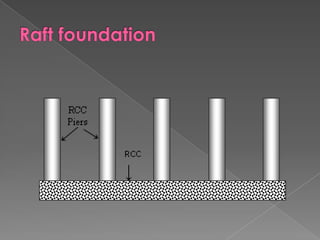
 Raft or mat foundation is suitable for
small bridges when bed contains
different types of soil.
 It may be provided when bearing
capacity of soil is less.
 Raft or mat foundation is shown in Figure.
In this the RCC slab is laid at throughout
the span of bridge.
o in which the depth of the
foundation is very large in
comparison to its width.
o Which are not constructed
by ordinary methods of
open pit excavations.
Deep
Foundations
are those
 In cases where
o The strata of good bearing capacity is not available
near the ground
o The space is restricted to allow for spread footings
 In these cases the foundation of the structure has to
be taken deep with the purpose of attaining a bearing
stratum which is suitable and which ensures stability
and durability of a structure.
 The bearing stratum is not the only case. There may
be many other cases. For example, the foundation for
a bridge pier must be placed below the scour depth,
although suitable bearing stratum may exist at a
higher level.
 Most common forms of construction
pertaining to deep foundations are:
o Caisson Foundation
o Well Foundation
o Pile Foundation
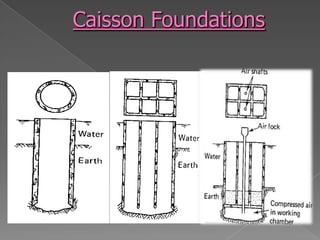
 The caisson means, “Box”. A caisson is a huge
box made up of reinforced concrete. Inside of
the box is kept hollow.
 Caissons are water light structures, employed
where the foundation is under water
 It is constructed for foundations of bridges, piers,
abutments in river, dock structure and shore
protection etc.
 The caisson remains in its position and ultimately
becomes as integral parts of the permanent
structure.
 Caisson foundation is suitable when depth of
water in the river is more and quality of bed
soil is good.
 These are best for a depth of 20m.
 Caisson may be of circular, rectangular or
any other shape.
 The caisson is prepared at bank of river
and then transported to the required
pier position on the bridge site.
 During sinking soil from the caisson is
removed by excavators or grab
buckets. When this is sunk up to the
desire depth then inside of caisson is
completely filled with concrete.
Caisson can be broadly classified into the
following three types:
o Box Caisson (Floating Caisson)
o Open Caisson
o Pneumatic Caisson
Box Caisson
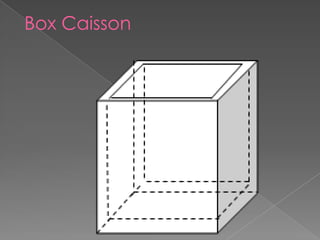
 Box caisson is as like a box that is
opened on topside and other sides
are closed.
Box Caisson
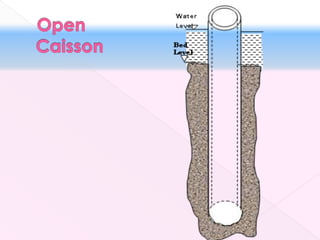
Open Caisson
 Open caisson is as like well that is

opened on top and bottom ends.
 Bottom edges are made sharp.
 During digging and sinking the inside
material is taken out.
 Open caissons are used in soft soil and
in high water level.
Pneumatic Caisson
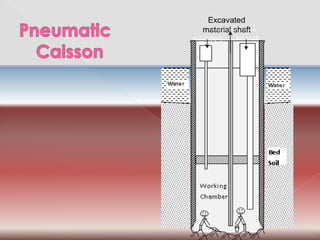
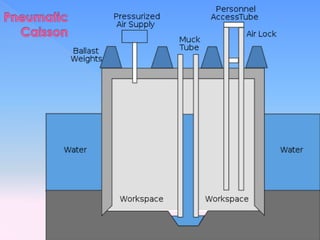
 Pneumatic caisson is special type of caisson
that is suitable for heavy bridges.
 There is a working chamber made at its
lower end and sealed at the top.
 A pressure higher than water pressure is
maintained in the working chamber with
the help of compressed air.
 Thus water not entered in the chamber
and excavation work is continued in dry
conditions.
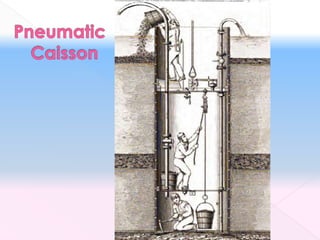
 Workers excavate the soil from the edges of
the working chamber
 Excavated material is removed manually or
a crane removes the soil with a grab
bucket.
 In early bridge construction, when they built
with the help of caissons, numerous workers
were killed or permanently injured by
caisson disease during its construction.
Afterward adopting proper measures the
disease was controlled.
Pneumatic Caisson (Cont.)
Excavated
material shaft
 Large, open-ended compartments –
shell or box with cutting edge at the
bottom
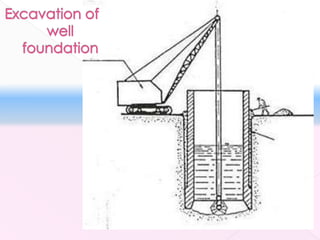
 Sunk into the ground by digging the soil
out of the center and loading the walls
 Filled with concrete (and compacted
gravel)
 Well foundation is suitable when heavy
loads are applied on the bridge.
 Well foundation can be construct in
granular soil and in cohesive soil.
 Some year ago the well foundation was
the common type of deep foundation.
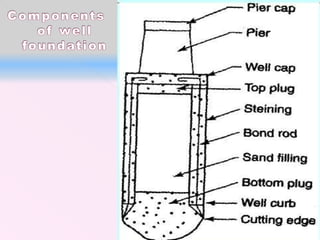
 It is usually constructed of stone or brick
masonry.
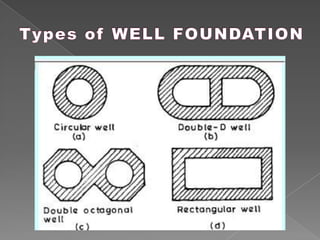
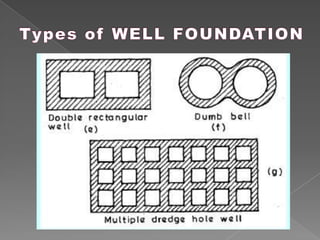
 The well may be of many shapes but
mostly it is constructed in circular shape.
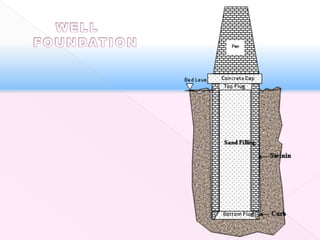
 The inside of well is filled with granular
soil.
 Well foundation can be constructed for
a depth more than 7m.
 Piers are constructed on single well or
over several connected wells.
Bridge  foundation
Bridge  foundation
Bridge  foundation
Bridge  foundation
Bridge  foundation
Bridge  foundation

Bridge foundation

  • 3.
     A foundationis the part constructed under the pier/abutment and over the underlying soil or rock.  The loads transmitted by the foundation to the underling soil must not cause soil shear failure or damaging settlement of the superstructure.
  • 4.
     Foundation isthe important structural part of bridges  Foundation is the component part of bridge.  It receives the load from the piers and abutments and transfers it to the soil.
  • 5.
     Purpose offoundation is to distribute the load of bridge over a large bearing area and provide stability of bridge against settlement and tilting.  It is provided sufficiently deep so that it not affected by the scouring.
  • 6.
     The typeof foundation is designed when subsoil data of bridge site is obtained. The different types of foundations for bridges are given following;  Shallow Foundation Spread Foundation and Raft foundation  Deep Foundation Pile, caisson and well Foundation
  • 7.
  • 8.
     Spread Foundationis generally constructed for culverts  It may be provided for small bridges when bed is of rock or of soil having good bearing capacity.  It is suitable when flow in stream is less and hence the scouring effect is less.  A typical spread foundation is shown in Figure.  It is constructed with stone or brick masonry.
  • 11.
     Raft ormat foundation is suitable for small bridges when bed contains different types of soil.  It may be provided when bearing capacity of soil is less.  Raft or mat foundation is shown in Figure. In this the RCC slab is laid at throughout the span of bridge.
  • 14.
    o in whichthe depth of the foundation is very large in comparison to its width. o Which are not constructed by ordinary methods of open pit excavations. Deep Foundations are those
  • 15.
     In caseswhere o The strata of good bearing capacity is not available near the ground o The space is restricted to allow for spread footings  In these cases the foundation of the structure has to be taken deep with the purpose of attaining a bearing stratum which is suitable and which ensures stability and durability of a structure.  The bearing stratum is not the only case. There may be many other cases. For example, the foundation for a bridge pier must be placed below the scour depth, although suitable bearing stratum may exist at a higher level.
  • 16.
     Most commonforms of construction pertaining to deep foundations are: o Caisson Foundation o Well Foundation o Pile Foundation
  • 18.
     The caissonmeans, “Box”. A caisson is a huge box made up of reinforced concrete. Inside of the box is kept hollow.  Caissons are water light structures, employed where the foundation is under water  It is constructed for foundations of bridges, piers, abutments in river, dock structure and shore protection etc.  The caisson remains in its position and ultimately becomes as integral parts of the permanent structure.
  • 19.
     Caisson foundationis suitable when depth of water in the river is more and quality of bed soil is good.  These are best for a depth of 20m.  Caisson may be of circular, rectangular or any other shape.
  • 20.
     The caissonis prepared at bank of river and then transported to the required pier position on the bridge site.  During sinking soil from the caisson is removed by excavators or grab buckets. When this is sunk up to the desire depth then inside of caisson is completely filled with concrete.
  • 21.
    Caisson can bebroadly classified into the following three types: o Box Caisson (Floating Caisson) o Open Caisson o Pneumatic Caisson
  • 22.
    Box Caisson  Boxcaisson is as like a box that is opened on topside and other sides are closed.
  • 23.
  • 24.
    Open Caisson  Opencaisson is as like well that is opened on top and bottom ends.  Bottom edges are made sharp.  During digging and sinking the inside material is taken out.  Open caissons are used in soft soil and in high water level.
  • 26.
    Pneumatic Caisson  Pneumaticcaisson is special type of caisson that is suitable for heavy bridges.  There is a working chamber made at its lower end and sealed at the top.  A pressure higher than water pressure is maintained in the working chamber with the help of compressed air.  Thus water not entered in the chamber and excavation work is continued in dry conditions.
  • 27.
     Workers excavatethe soil from the edges of the working chamber  Excavated material is removed manually or a crane removes the soil with a grab bucket.  In early bridge construction, when they built with the help of caissons, numerous workers were killed or permanently injured by caisson disease during its construction. Afterward adopting proper measures the disease was controlled. Pneumatic Caisson (Cont.)
  • 28.
  • 31.
     Large, open-endedcompartments – shell or box with cutting edge at the bottom  Sunk into the ground by digging the soil out of the center and loading the walls  Filled with concrete (and compacted gravel)
  • 32.
     Well foundationis suitable when heavy loads are applied on the bridge.  Well foundation can be construct in granular soil and in cohesive soil.  Some year ago the well foundation was the common type of deep foundation.  It is usually constructed of stone or brick masonry.
  • 33.
     The wellmay be of many shapes but mostly it is constructed in circular shape.  The inside of well is filled with granular soil.  Well foundation can be constructed for a depth more than 7m.  Piers are constructed on single well or over several connected wells.