O R I G I N A L L Y ‘ T H E B I L L O F F A R E ’ , A S I T I S T E R M E D
I N E N G L I S H , O R ‘ M E N U ’ I N F R E N C H , W A S N O T
P R E S E N T E D A T T H E T A B L E .
I T I S S A I D T H A T I N T H E Y E A R 1 5 4 1 , D U K E H E N R Y
O F B R U N S W I C K ( W A S P R I N C E O F W O L F E N B Ü T T E L
F R O M 1 5 1 4 U N T I L H I S D E A T H ) W A S S E E N T O R E F E R
T O A L O N G S L I P O F P A P E R
MENU
MENU
Why a restaurant requires menu:
 This act as bridge between the establishment and the customer.
 This provides all necessary information’s regarding dishes available,
their price range and other rules and regulations.
 This authenticates and gives guarantees to the customer for billing
purpose.
 Due to Accent problem, the server may not pronounce some dishes
names correctly and create confusion. But menu lessens this type of
human error.
 The server cannot recite the dishes available at the restaurant
several times. But this problem is solved because of the menu as
guest can refer it as necessary.
 We can group different type of dishes in different category in a
menu card and hence, making easier for guest to select his favorite
by referring the section of his/her choice.
TYPES OF MENU
 Menu may be divided in two classes:
 A LA CARTE’ ( from the card)
 TABLE DE HOTE (table of the host)
A LA CARTE: - price for each food item on
individual basis (most common in restaurant)
 The choice is generally more extensive.
 In this choice is within the course.
 Each dish is priced separately.
 There may long wait time.
 Silver is laid according to the dishes ordered.
MENU
TABLE DE HOTE: - Offers entire meal with several
courses at one price. (Fixed price menu)
 Menu has fix number of courses
 In this choice is between the courses.
 There is limited choice within the each course
 The selling price is fixed.
 The food is usually available at set time.
 Silver for whole menu is laid in advance as the menu is known.
MENU
Other types of menus which are used in
catering industry.
 FIXED MENU: - Dose not change from day to day
(static)
 CYCLE MENU: - Changes daily for certain number
of days. (e.g.:- hospital, schools)
 ALL DAY MENU/CALIFORNIA MENU: - Guest
can ask any dish from the menu at any time of the
day.
MENU PLLAING
There are a number of considerations to bear in mind when
compiling a menu, namely:
 Assess the type of meal required (Indian, Chinese, continental etc)
 Assess the type of kitchen and staff available in relation to
equipment and skills.
 Assess the type of food service area and its number capacity in
relation to the china, silver and glassware available.
 Assess the skills of food service area staff and the number of course
to be served.
 Factors Influencing Menu Planning
 Customer Satisfaction
 Management Decisions
MENU PLLAING
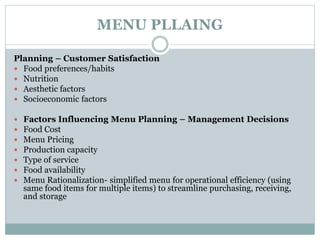
Planning – Customer Satisfaction
 Food preferences/habits
 Nutrition
 Aesthetic factors
 Socioeconomic factors
 Factors Influencing Menu Planning – Management Decisions
 Food Cost
 Menu Pricing
 Production capacity
 Type of service
 Food availability
 Menu Rationalization- simplified menu for operational efficiency (using
same food items for multiple items) to streamline purchasing, receiving,
and storage
 Supplies:
 Seasonal supplies of vegetables and non‐vegetarian
items.
 Local availability of supplies.
 Balance:
 Light to heavy, then heavy to light
 Vary the sequences of preparation of each course.
 Change the seasoning, flavouring and presentation
 Ensure that garnishes are in harmony with the main
dishes.
Food Value:
 Use commodities and methods of cooking which will
preserve the natural nutritive properties of the raw
materials.
Colour:
 Avoid either clashes of colour or repetition of similar
colour
Languages:
 The menu should be written either all in English or all in
any regional language and be easily understood by the
customer. Ensure proper spelling, correct terms, correct
sequence with courses and, where appropriate, the
correct accents.
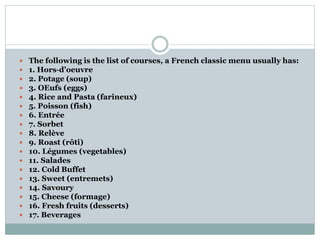
 The following is the list of courses, a French classic menu usually has:
 1. Hors‐d’oeuvre
 2. Potage (soup)
 3. OEufs (eggs)
 4. Rice and Pasta (farineux)
 5. Poisson (fish)
 6. Entrée
 7. Sorbet
 8. Relève
 9. Roast (rôti)
 10. Légumes (vegetables)
 11. Salades
 12. Cold Buffet
 13. Sweet (entremets)
 14. Savoury
 15. Cheese (formage)
 16. Fresh fruits (desserts)
 17. Beverages
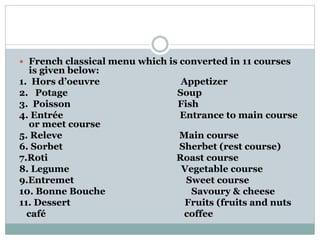
 French classical menu which is converted in 11 courses
is given below:
1. Hors d’oeuvre Appetizer
2. Potage Soup
3. Poisson Fish
4. Entrée Entrance to main course
or meet course
5. Releve Main course
6. Sorbet Sherbet (rest course)
7.Roti Roast course
8. Legume Vegetable course
9.Entremet Sweet course
10. Bonne Bouche Savoury & cheese
11. Dessert Fruits (fruits and nuts
café coffee
 Sequence of Indian A LA CARTE MENU
 A.P.C. (Achaar, Papad, Chutnny)
 Starter
 Soup
 Tandoori Items
 Fish
 murg
 Gosht
 Vegetable
 Rice
 Rotis
 Sweet

Menu

  • 1.
    O R IG I N A L L Y ‘ T H E B I L L O F F A R E ’ , A S I T I S T E R M E D I N E N G L I S H , O R ‘ M E N U ’ I N F R E N C H , W A S N O T P R E S E N T E D A T T H E T A B L E . I T I S S A I D T H A T I N T H E Y E A R 1 5 4 1 , D U K E H E N R Y O F B R U N S W I C K ( W A S P R I N C E O F W O L F E N B Ü T T E L F R O M 1 5 1 4 U N T I L H I S D E A T H ) W A S S E E N T O R E F E R T O A L O N G S L I P O F P A P E R MENU
  • 2.
    MENU Why a restaurantrequires menu:  This act as bridge between the establishment and the customer.  This provides all necessary information’s regarding dishes available, their price range and other rules and regulations.  This authenticates and gives guarantees to the customer for billing purpose.  Due to Accent problem, the server may not pronounce some dishes names correctly and create confusion. But menu lessens this type of human error.  The server cannot recite the dishes available at the restaurant several times. But this problem is solved because of the menu as guest can refer it as necessary.  We can group different type of dishes in different category in a menu card and hence, making easier for guest to select his favorite by referring the section of his/her choice.
  • 3.
    TYPES OF MENU Menu may be divided in two classes:  A LA CARTE’ ( from the card)  TABLE DE HOTE (table of the host) A LA CARTE: - price for each food item on individual basis (most common in restaurant)  The choice is generally more extensive.  In this choice is within the course.  Each dish is priced separately.  There may long wait time.  Silver is laid according to the dishes ordered.
  • 4.
    MENU TABLE DE HOTE:- Offers entire meal with several courses at one price. (Fixed price menu)  Menu has fix number of courses  In this choice is between the courses.  There is limited choice within the each course  The selling price is fixed.  The food is usually available at set time.  Silver for whole menu is laid in advance as the menu is known.
  • 5.
    MENU Other types ofmenus which are used in catering industry.  FIXED MENU: - Dose not change from day to day (static)  CYCLE MENU: - Changes daily for certain number of days. (e.g.:- hospital, schools)  ALL DAY MENU/CALIFORNIA MENU: - Guest can ask any dish from the menu at any time of the day.
  • 6.
    MENU PLLAING There area number of considerations to bear in mind when compiling a menu, namely:  Assess the type of meal required (Indian, Chinese, continental etc)  Assess the type of kitchen and staff available in relation to equipment and skills.  Assess the type of food service area and its number capacity in relation to the china, silver and glassware available.  Assess the skills of food service area staff and the number of course to be served.  Factors Influencing Menu Planning  Customer Satisfaction  Management Decisions
  • 7.
    MENU PLLAING Planning –Customer Satisfaction  Food preferences/habits  Nutrition  Aesthetic factors  Socioeconomic factors  Factors Influencing Menu Planning – Management Decisions  Food Cost  Menu Pricing  Production capacity  Type of service  Food availability  Menu Rationalization- simplified menu for operational efficiency (using same food items for multiple items) to streamline purchasing, receiving, and storage
  • 8.
     Supplies:  Seasonalsupplies of vegetables and non‐vegetarian items.  Local availability of supplies.  Balance:  Light to heavy, then heavy to light  Vary the sequences of preparation of each course.  Change the seasoning, flavouring and presentation  Ensure that garnishes are in harmony with the main dishes.
  • 9.
    Food Value:  Usecommodities and methods of cooking which will preserve the natural nutritive properties of the raw materials. Colour:  Avoid either clashes of colour or repetition of similar colour Languages:  The menu should be written either all in English or all in any regional language and be easily understood by the customer. Ensure proper spelling, correct terms, correct sequence with courses and, where appropriate, the correct accents.
  • 10.
     The followingis the list of courses, a French classic menu usually has:  1. Hors‐d’oeuvre  2. Potage (soup)  3. OEufs (eggs)  4. Rice and Pasta (farineux)  5. Poisson (fish)  6. Entrée  7. Sorbet  8. Relève  9. Roast (rôti)  10. Légumes (vegetables)  11. Salades  12. Cold Buffet  13. Sweet (entremets)  14. Savoury  15. Cheese (formage)  16. Fresh fruits (desserts)  17. Beverages
  • 11.
     French classicalmenu which is converted in 11 courses is given below: 1. Hors d’oeuvre Appetizer 2. Potage Soup 3. Poisson Fish 4. Entrée Entrance to main course or meet course 5. Releve Main course 6. Sorbet Sherbet (rest course) 7.Roti Roast course 8. Legume Vegetable course 9.Entremet Sweet course 10. Bonne Bouche Savoury & cheese 11. Dessert Fruits (fruits and nuts café coffee
  • 12.
     Sequence ofIndian A LA CARTE MENU  A.P.C. (Achaar, Papad, Chutnny)  Starter  Soup  Tandoori Items  Fish  murg  Gosht  Vegetable  Rice  Rotis  Sweet