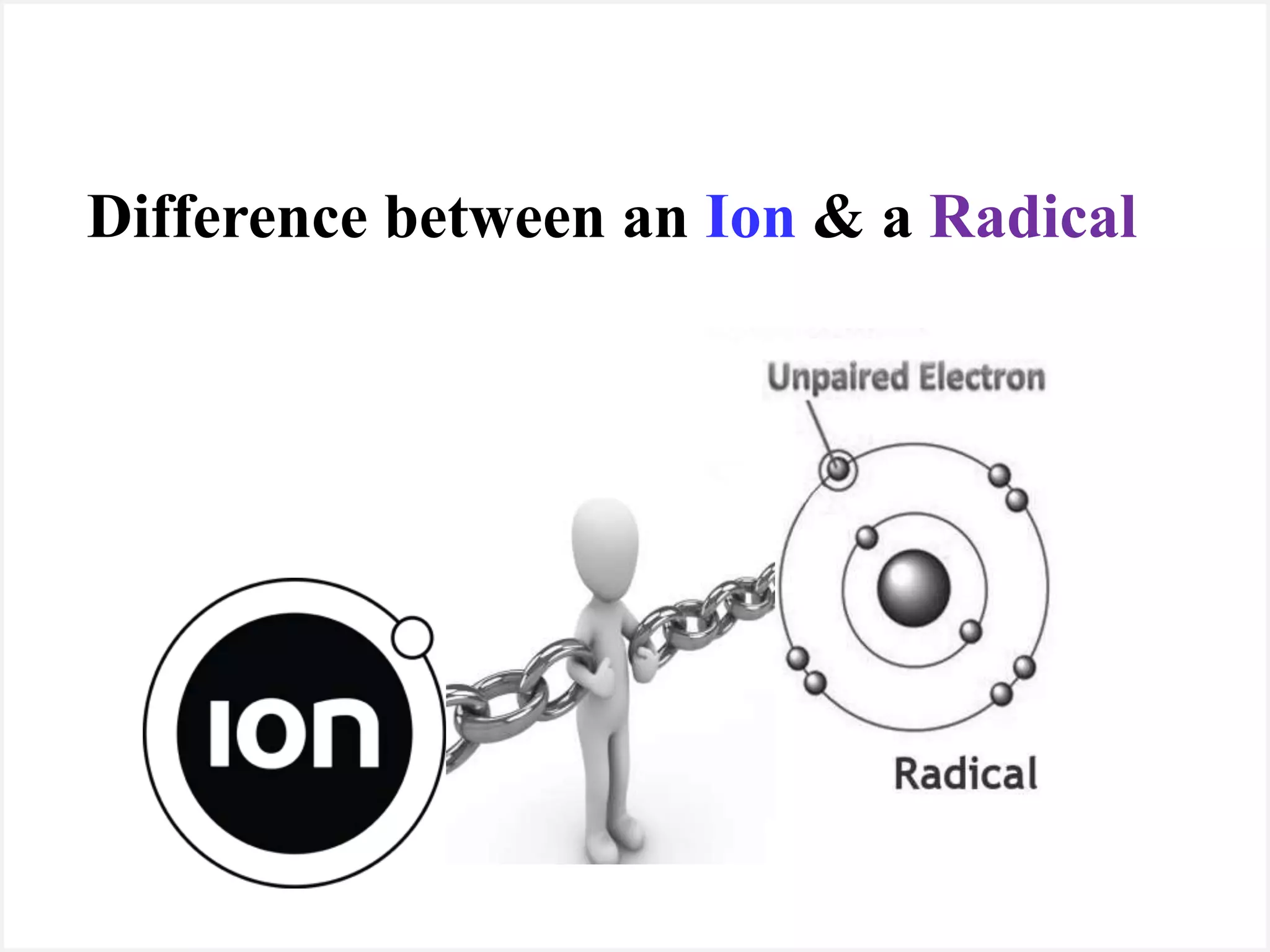

Difference between an Ion & a Radical
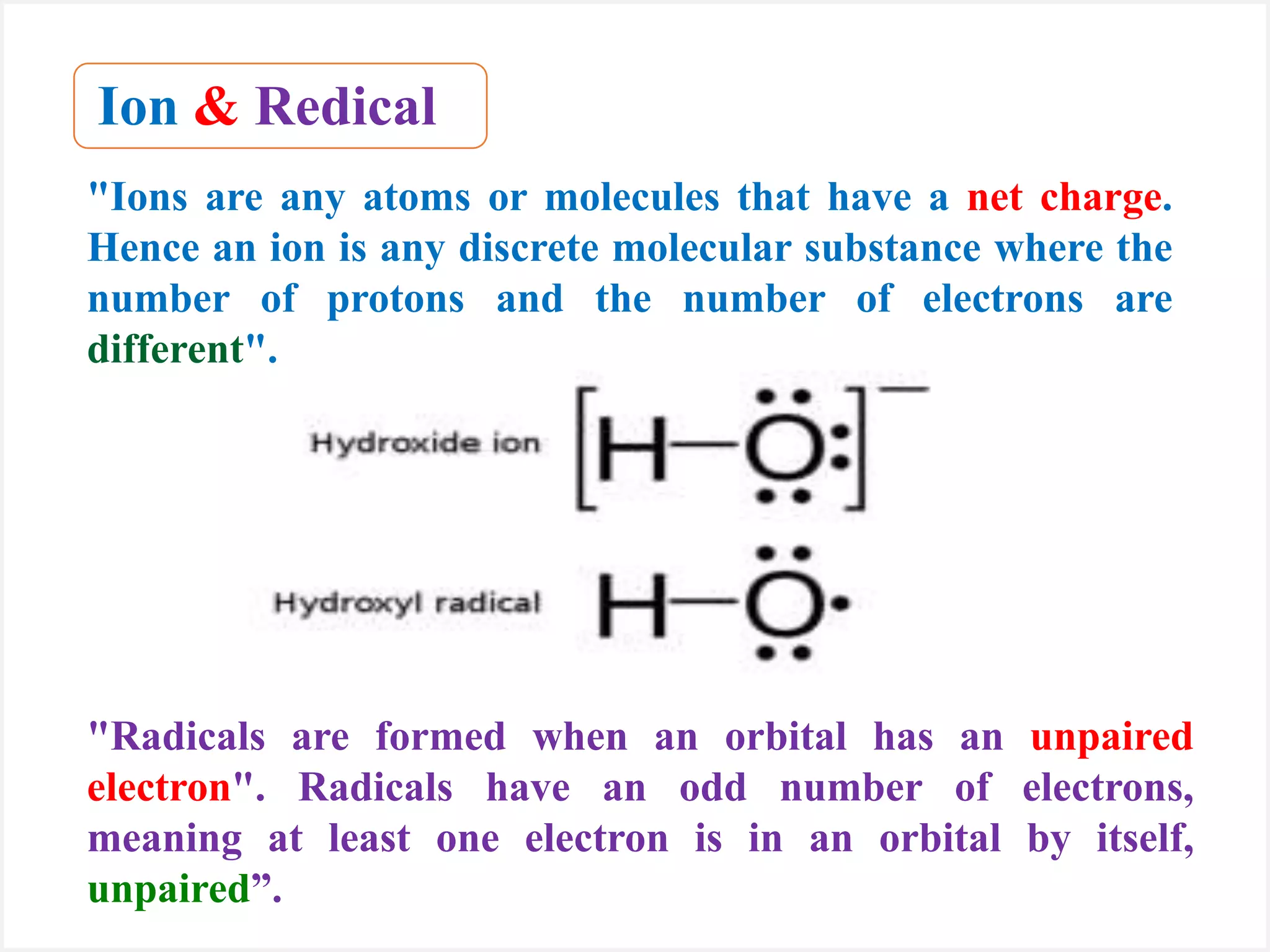
"Ions are any atoms or molecules that have a net charge.
Hence an ion is any discrete molecular substance where the
number of protons and the number of electrons are
different".
"Radicals are formed when an orbital has an unpaired
electron". Radicals have an odd number of electrons,
meaning at least one electron is in an orbital by itself,
unpaired”.
Ion & Redical
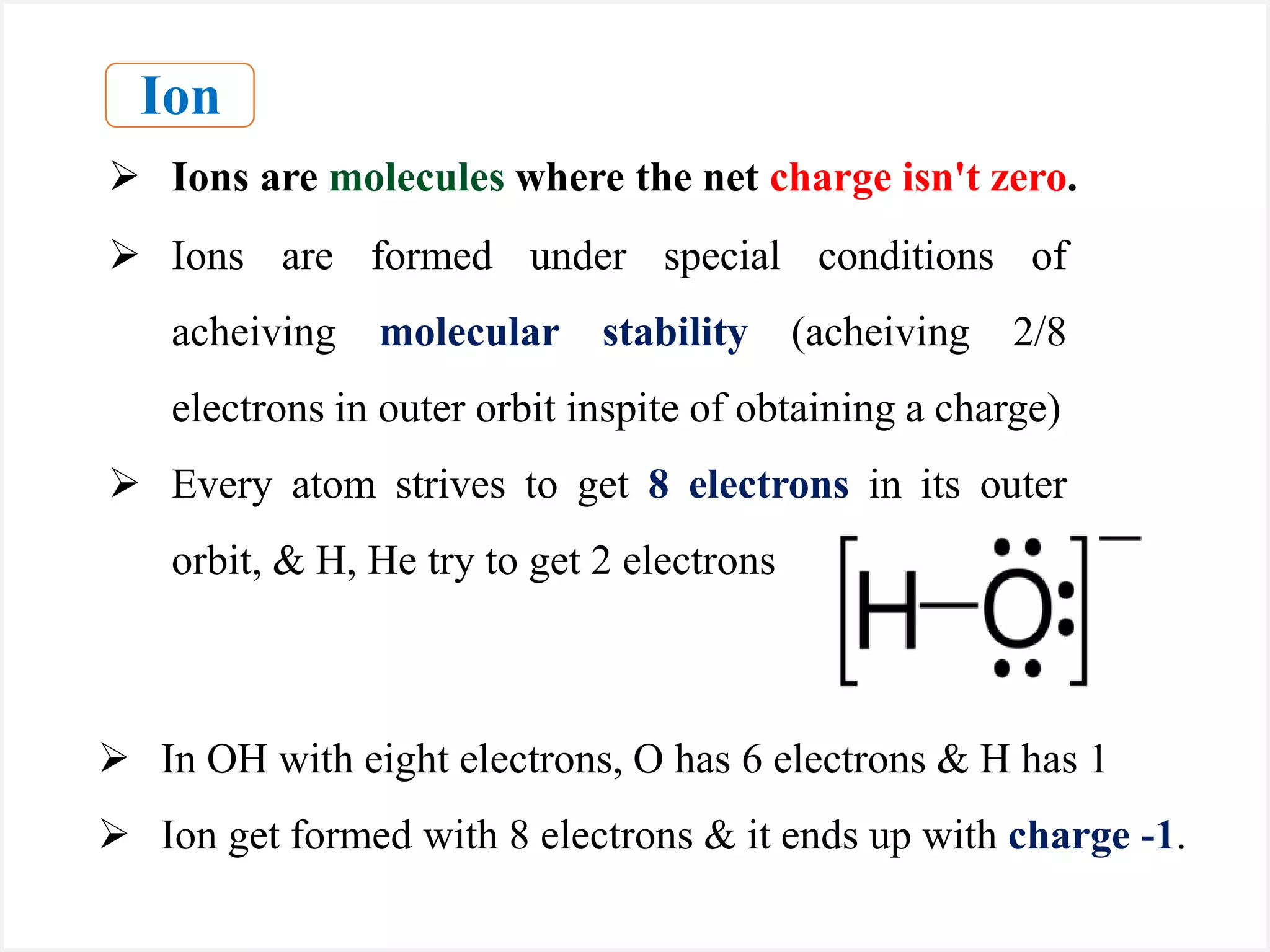
 In OH with eight electrons, O has 6 electrons & H has 1
 Ion get formed with 8 electrons & it ends up with charge -1.
Ion
 Ions are molecules where the net charge isn't zero.
 Ions are formed under special conditions of
acheiving molecular stability (acheiving 2/8
electrons in outer orbit inspite of obtaining a charge)
 Every atom strives to get 8 electrons in its outer
orbit, & H, He try to get 2 electrons
 Radical on the other hand is simply OH with 7 electrons. 6
of O and 1 of H. its charge is 0 unlike ions.
 OH has one unpaired electron
Redical
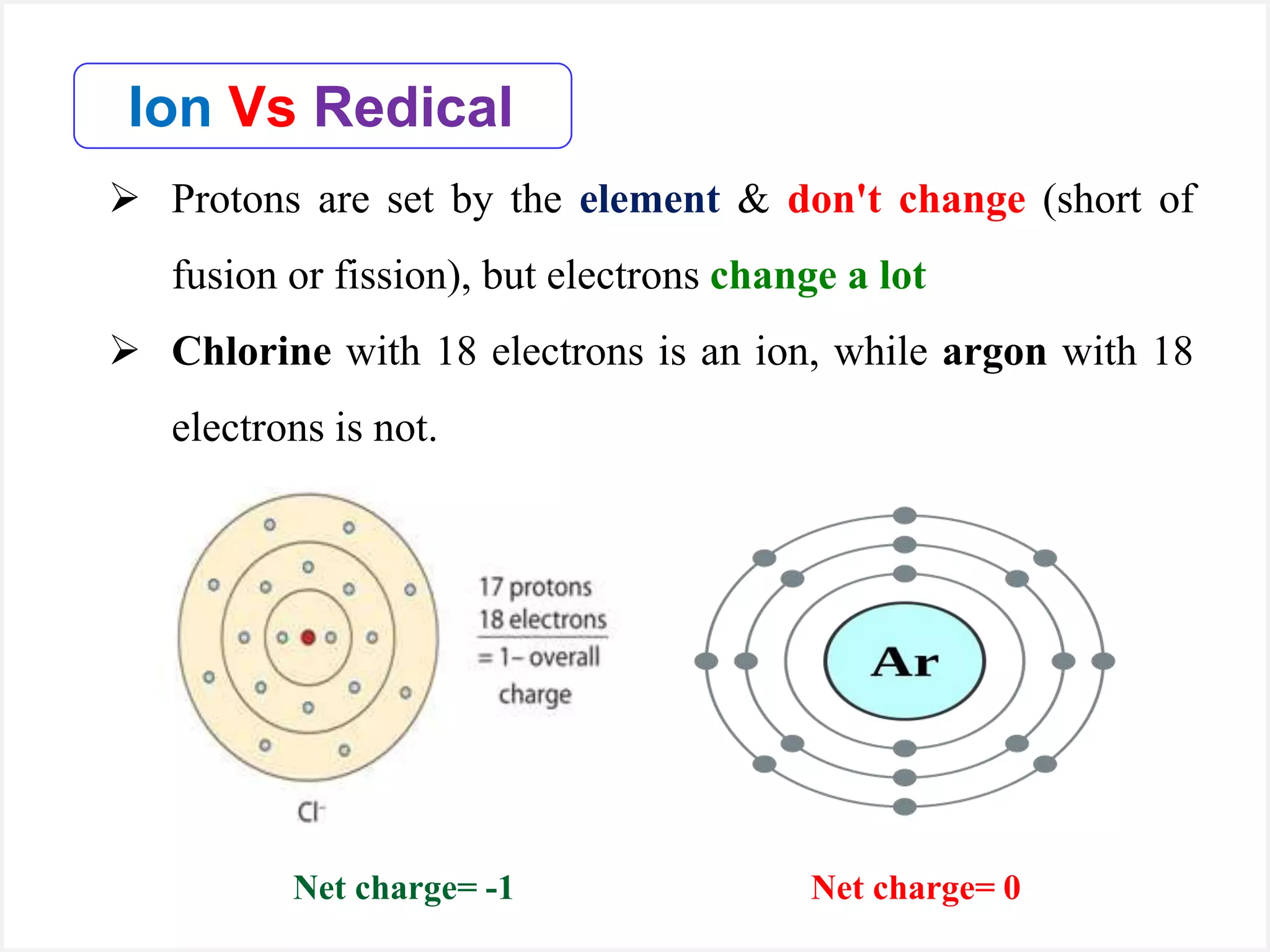
 Protons are set by the element & don't change (short of
fusion or fission), but electrons change a lot
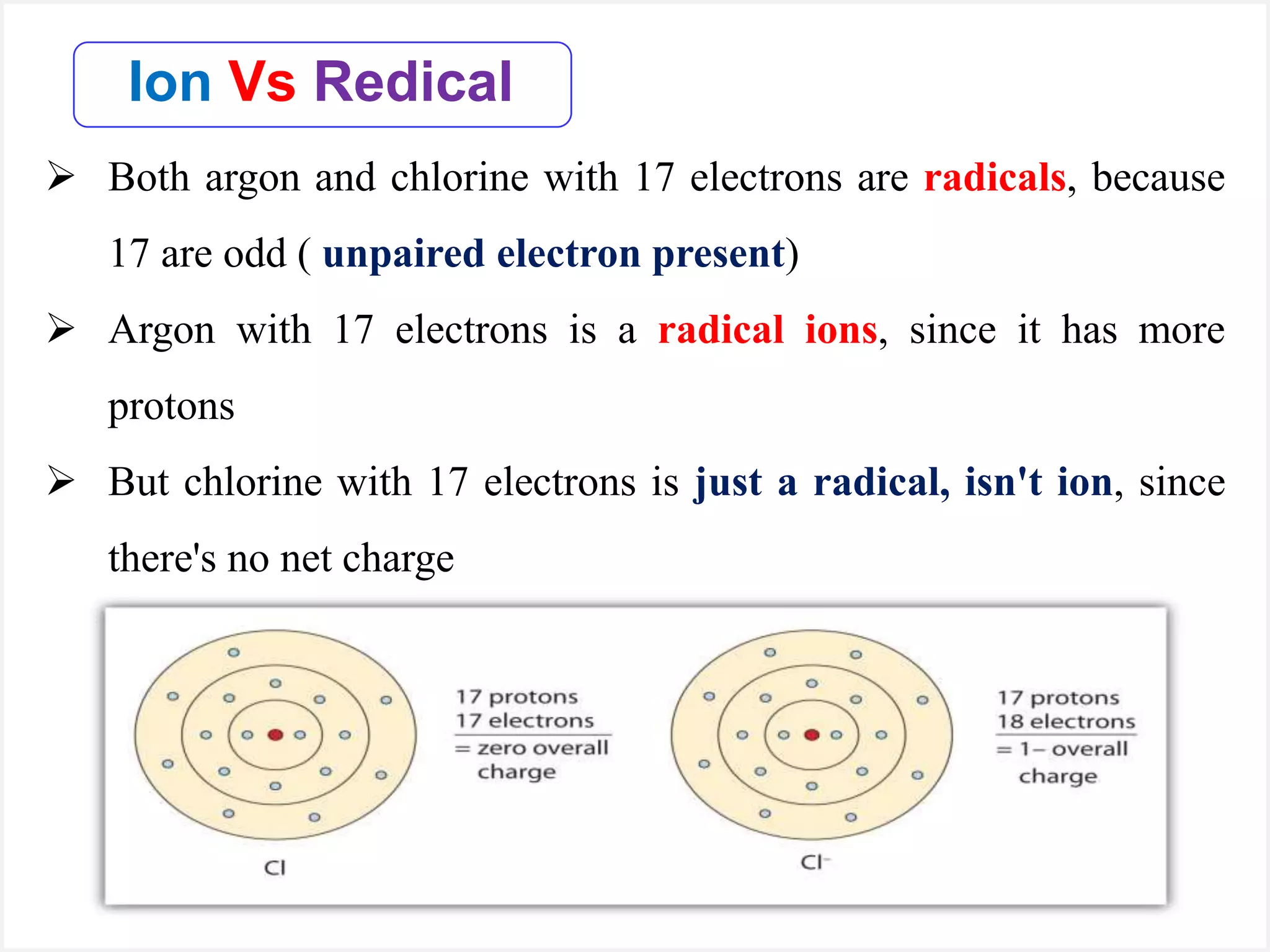
 Chlorine with 18 electrons is an ion, while argon with 18
electrons is not.
Net charge= -1 Net charge= 0
Ion Vs Redical
 Both argon and chlorine with 17 electrons are radicals, because
17 are odd ( unpaired electron present)
 Argon with 17 electrons is a radical ions, since it has more
protons
 But chlorine with 17 electrons is just a radical, isn't ion, since
there's no net charge
Ion Vs Redical
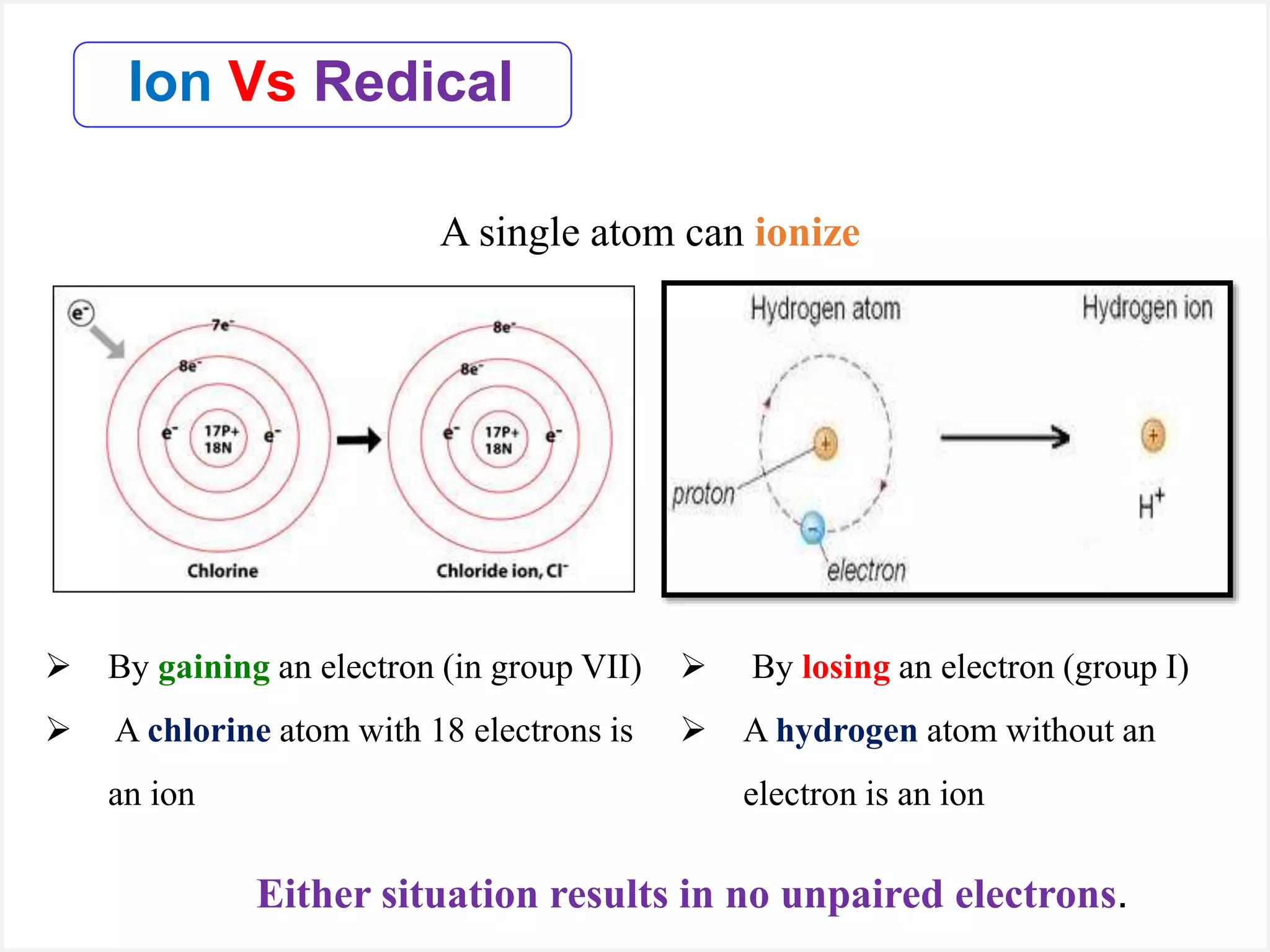
Either situation results in no unpaired electrons.
A single atom can ionize
 By gaining an electron (in group VII)
 A chlorine atom with 18 electrons is
an ion
 By losing an electron (group I)
 A hydrogen atom without an
electron is an ion
Ion Vs Redical
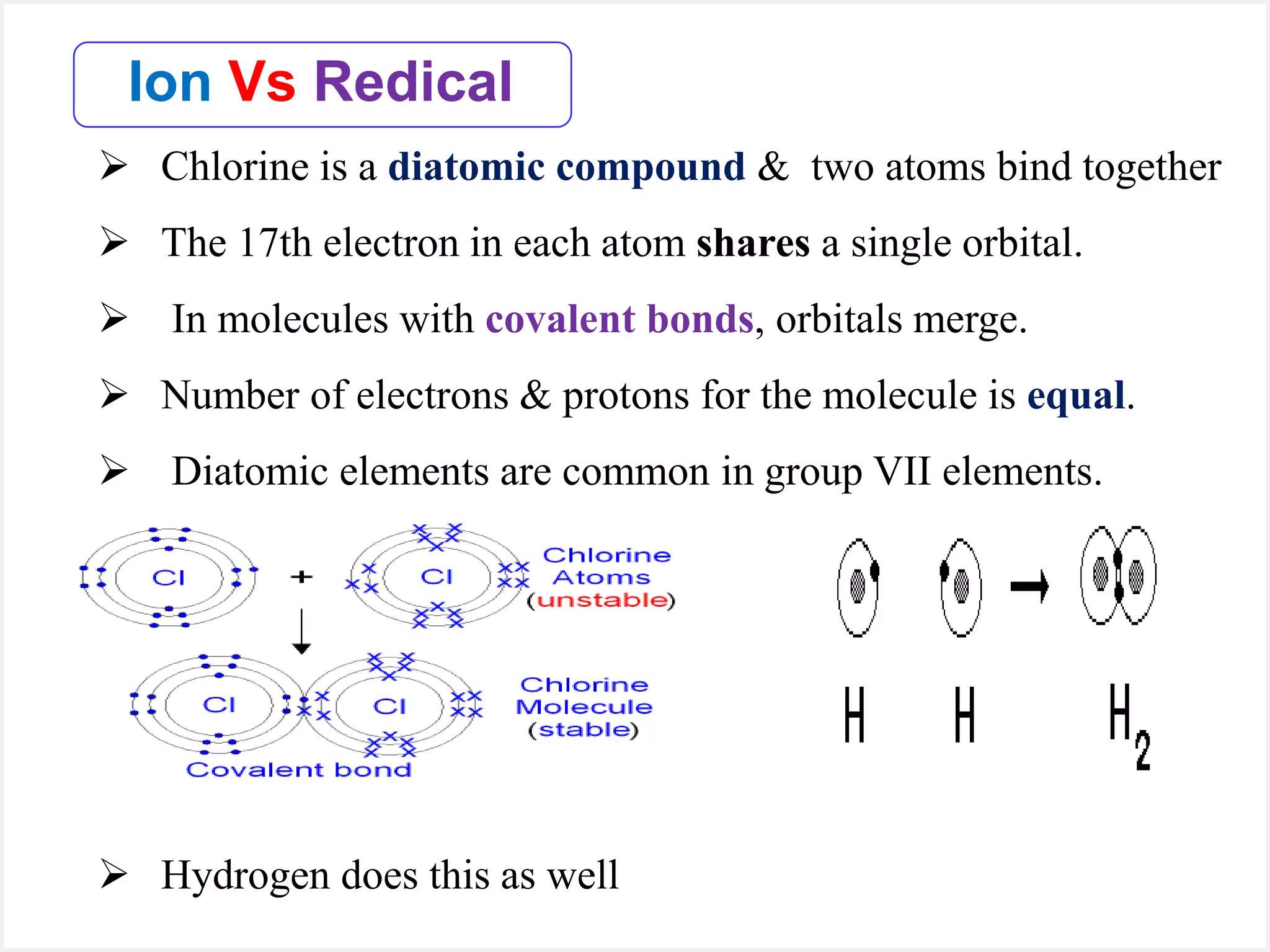
 Chlorine is a diatomic compound & two atoms bind together
 The 17th electron in each atom shares a single orbital.
 In molecules with covalent bonds, orbitals merge.
 Number of electrons & protons for the molecule is equal.
 Diatomic elements are common in group VII elements.
 Hydrogen does this as well
Ion Vs Redical
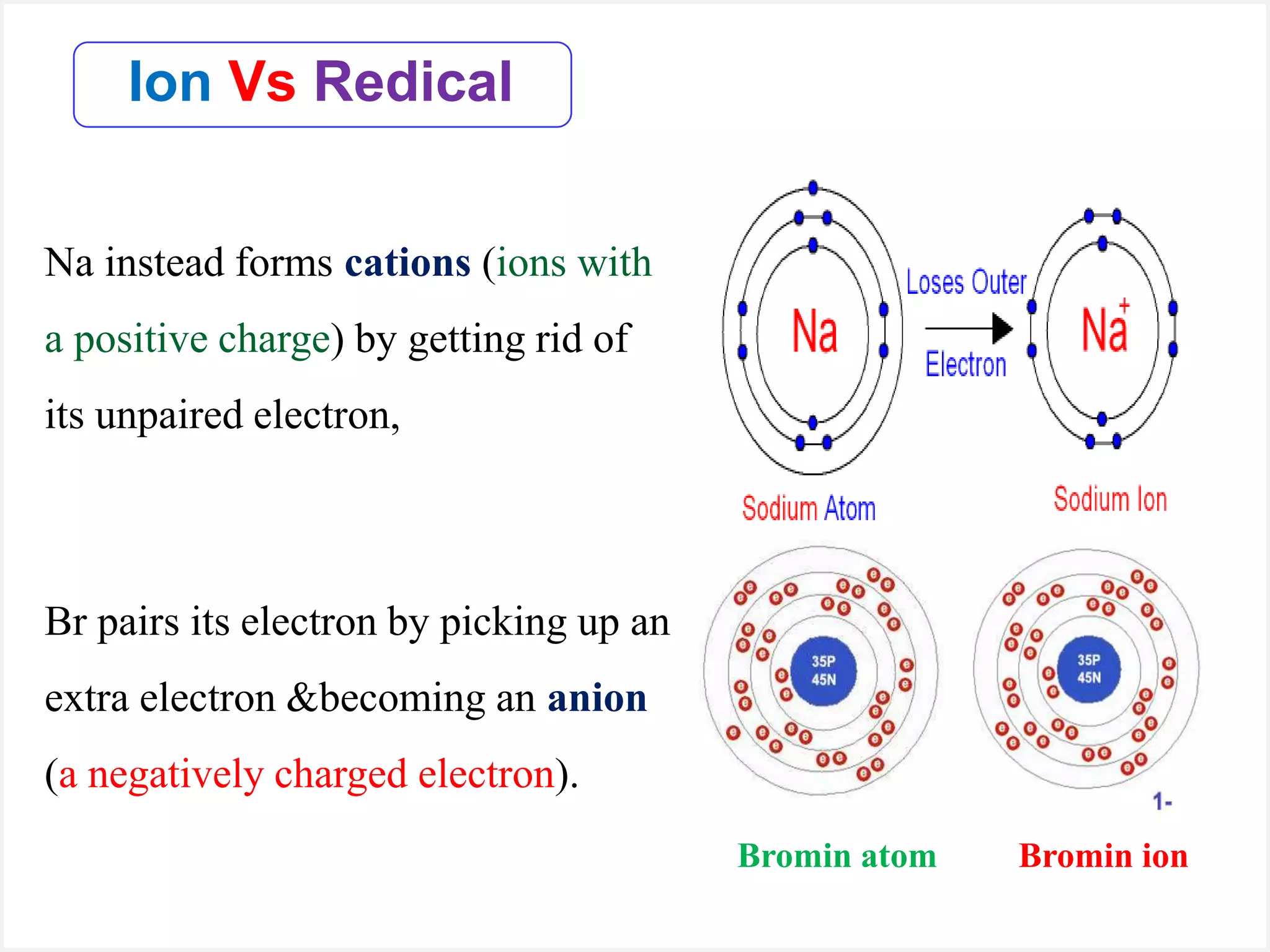
Na instead forms cations (ions with
a positive charge) by getting rid of
its unpaired electron,
Bromin atom Bromin ion
Br pairs its electron by picking up an
extra electron &becoming an anion
(a negatively charged electron).
Ion Vs Redical
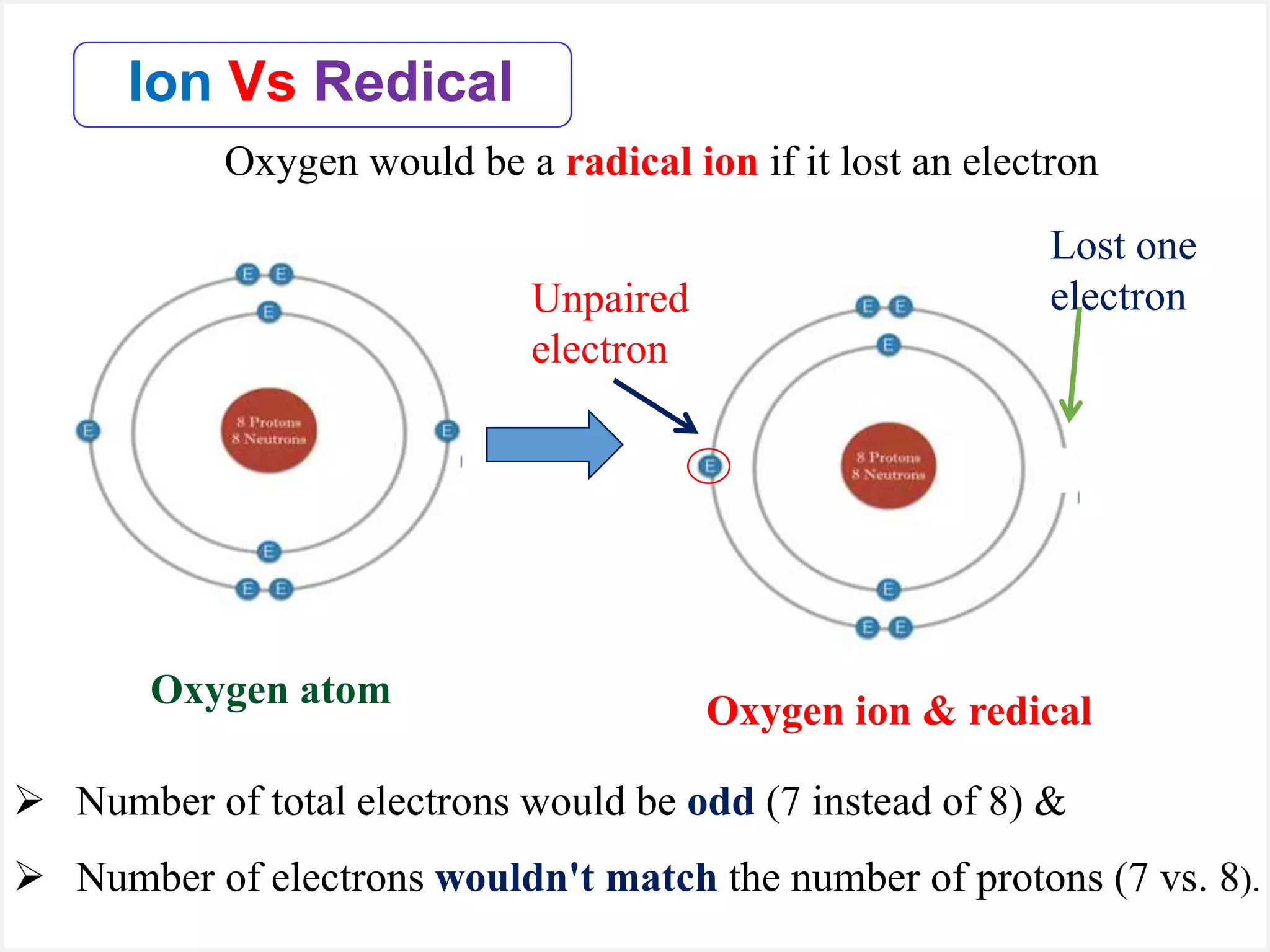
Oxygen would be a radical ion if it lost an electron
Oxygen atom
Unpaired
electron
Lost one
electron
Oxygen ion & redical
 Number of total electrons would be odd (7 instead of 8) &
 Number of electrons wouldn't match the number of protons (7 vs. 8).
Ion Vs Redical
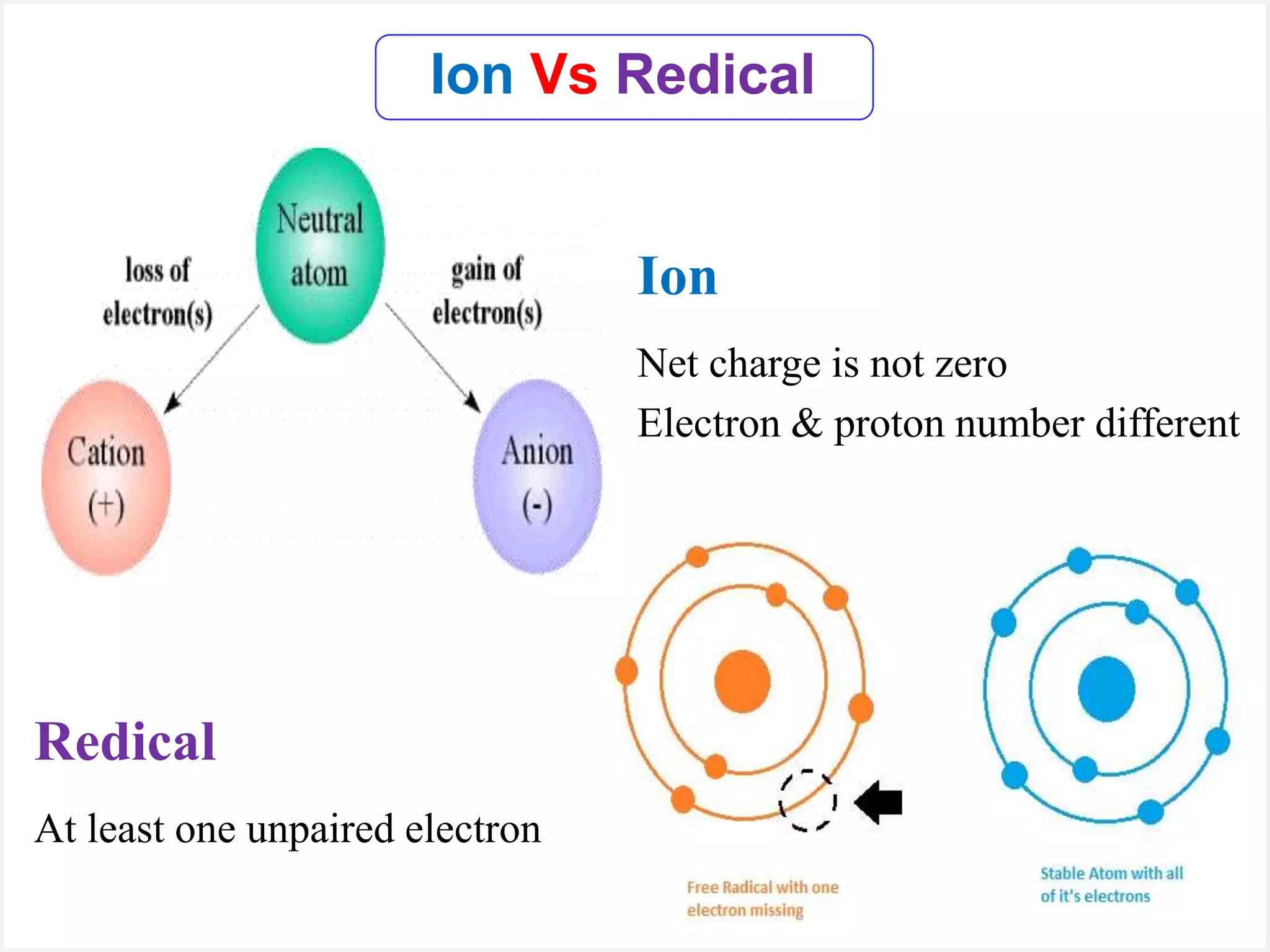
Ion
Net charge is not zero
Electron & proton number different
Redical
At least one unpaired electron
Ion Vs Redical
Difference between an Ion and a Radical

Difference between an Ion and a Radical

  • 1.
    Difference between anIon & a Radical
  • 2.
    "Ions are anyatoms or molecules that have a net charge. Hence an ion is any discrete molecular substance where the number of protons and the number of electrons are different". "Radicals are formed when an orbital has an unpaired electron". Radicals have an odd number of electrons, meaning at least one electron is in an orbital by itself, unpaired”. Ion & Redical
  • 3.
     In OHwith eight electrons, O has 6 electrons & H has 1  Ion get formed with 8 electrons & it ends up with charge -1. Ion  Ions are molecules where the net charge isn't zero.  Ions are formed under special conditions of acheiving molecular stability (acheiving 2/8 electrons in outer orbit inspite of obtaining a charge)  Every atom strives to get 8 electrons in its outer orbit, & H, He try to get 2 electrons
  • 4.
     Radical onthe other hand is simply OH with 7 electrons. 6 of O and 1 of H. its charge is 0 unlike ions.  OH has one unpaired electron Redical
  • 5.
     Protons areset by the element & don't change (short of fusion or fission), but electrons change a lot  Chlorine with 18 electrons is an ion, while argon with 18 electrons is not. Net charge= -1 Net charge= 0 Ion Vs Redical
  • 6.
     Both argonand chlorine with 17 electrons are radicals, because 17 are odd ( unpaired electron present)  Argon with 17 electrons is a radical ions, since it has more protons  But chlorine with 17 electrons is just a radical, isn't ion, since there's no net charge Ion Vs Redical
  • 7.
    Either situation resultsin no unpaired electrons. A single atom can ionize  By gaining an electron (in group VII)  A chlorine atom with 18 electrons is an ion  By losing an electron (group I)  A hydrogen atom without an electron is an ion Ion Vs Redical
  • 8.
     Chlorine isa diatomic compound & two atoms bind together  The 17th electron in each atom shares a single orbital.  In molecules with covalent bonds, orbitals merge.  Number of electrons & protons for the molecule is equal.  Diatomic elements are common in group VII elements.  Hydrogen does this as well Ion Vs Redical
  • 9.
    Na instead formscations (ions with a positive charge) by getting rid of its unpaired electron, Bromin atom Bromin ion Br pairs its electron by picking up an extra electron &becoming an anion (a negatively charged electron). Ion Vs Redical
  • 10.
    Oxygen would bea radical ion if it lost an electron Oxygen atom Unpaired electron Lost one electron Oxygen ion & redical  Number of total electrons would be odd (7 instead of 8) &  Number of electrons wouldn't match the number of protons (7 vs. 8). Ion Vs Redical
  • 11.
    Ion Net charge isnot zero Electron & proton number different Redical At least one unpaired electron Ion Vs Redical