Abdulmoein Eid Al-Agha, MBBS, DCH, CABP, FRCPCH
Professor of Pediatric Endocrinology,
King Abdulaziz University Hospital
Website: http://aagha.kau.edu.sa
Diabetes Ketoacidosis
2
Goals & Objectives
• What is DKA?
• Understand the Pathophysiology of DKA
• Criteria of diagnosis
• Clinical and laboratory features
• Discuss the management approach to the
patient with DKA
• Appreciate the complications that occur
during treatment
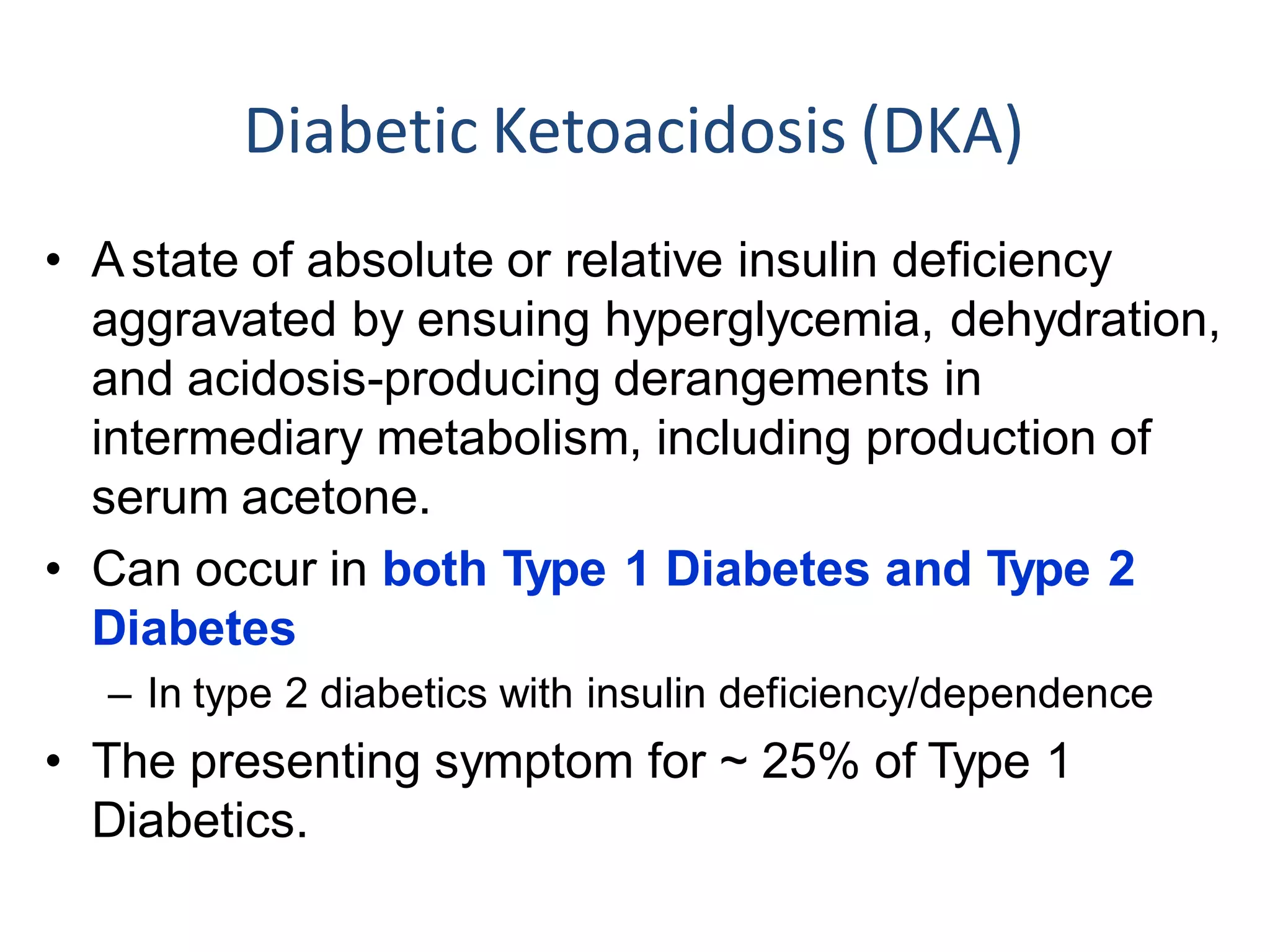
Diabetic Ketoacidosis (DKA)
• Astate of absolute or relative insulin deficiency
aggravated by ensuing hyperglycemia, dehydration,
and acidosis-producing derangements in
intermediary metabolism, including production of
serum acetone.
• Can occur in both Type 1 Diabetes and Type 2
Diabetes
– In type 2 diabetics with insulin deficiency/dependence
• The presenting symptom for ~ 25% of Type 1
Diabetics.
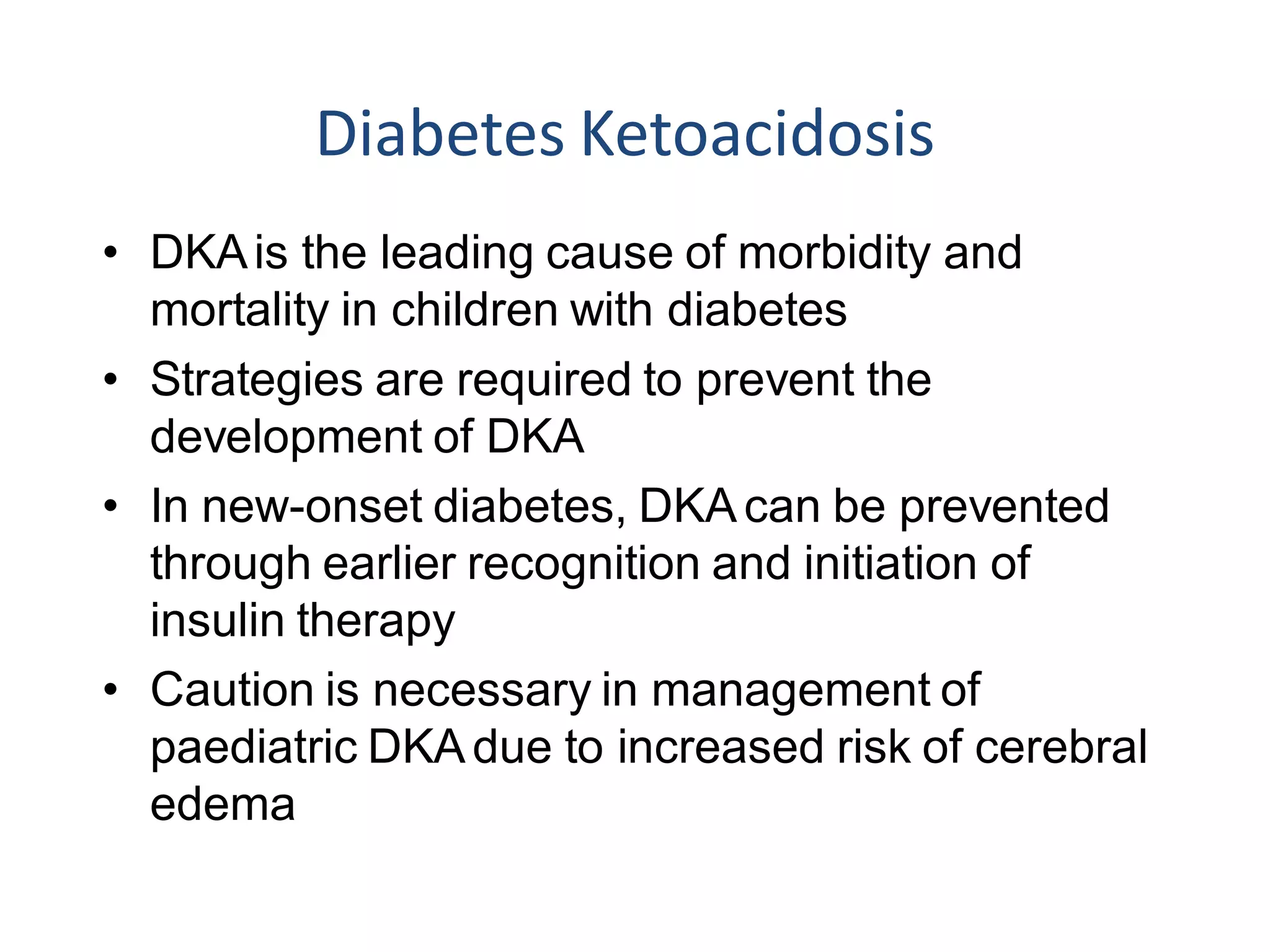
• DKAis the leading cause of morbidity and
mortality in children with diabetes
• Strategies are required to prevent the
development of DKA
• In new-onset diabetes, DKAcan be prevented
through earlier recognition and initiation of
insulin therapy
• Caution is necessary in management of
paediatric DKAdue to increased risk of cerebral
edema
Diabetes Ketoacidosis
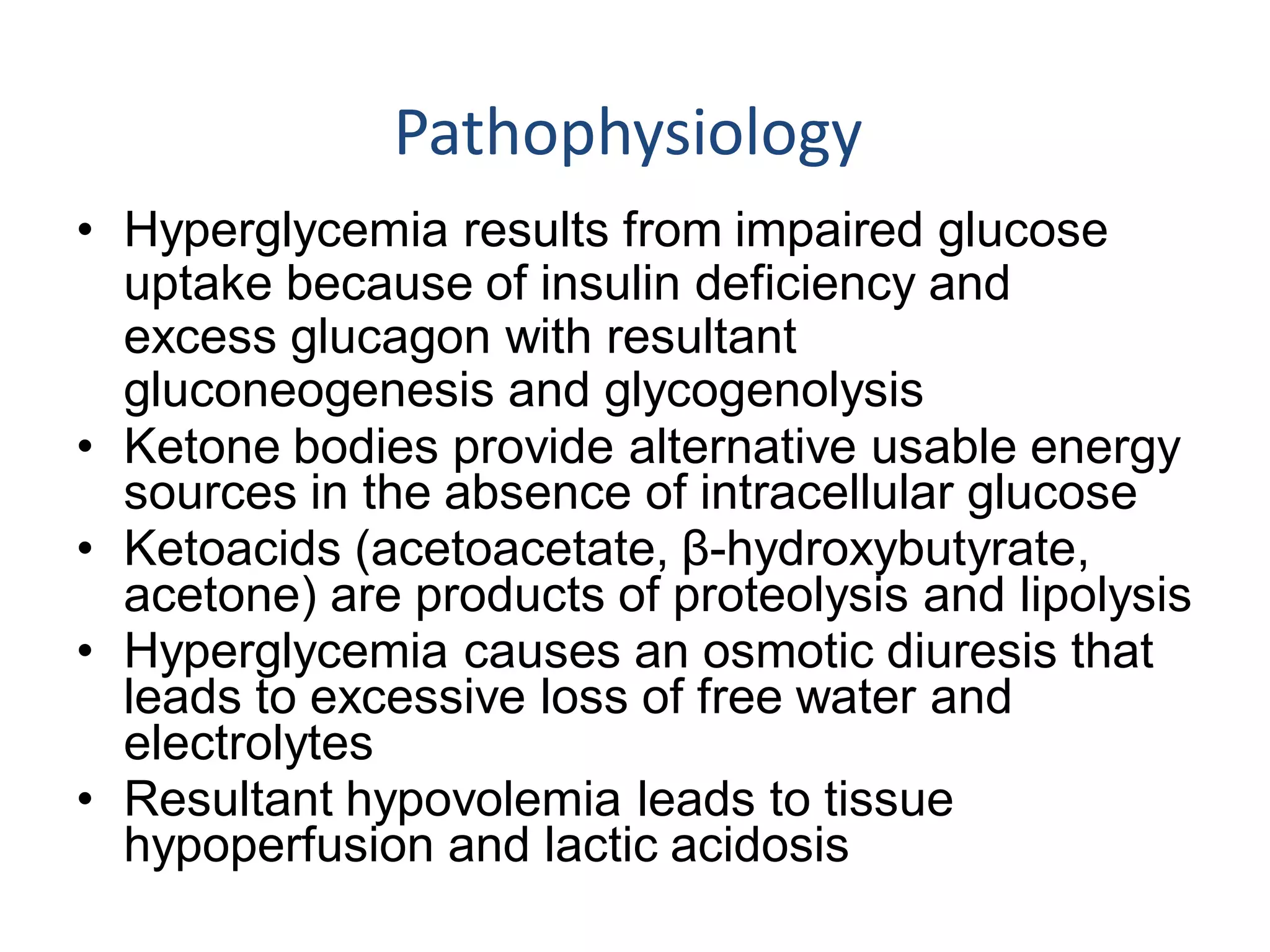
Pathophysiology
• Hyperglycemia results from impaired glucose
uptake because of insulin deficiency and
excess glucagon with resultant
gluconeogenesis and glycogenolysis
• Ketone bodies provide alternative usable energy
sources in the absence of intracellular glucose
• Ketoacids (acetoacetate, β-hydroxybutyrate,
acetone) are products of proteolysis and lipolysis
• Hyperglycemia causes an osmotic diuresis that
leads to excessive loss of free water and
electrolytes
• Resultant hypovolemia leads to tissue
hypoperfusion and lactic acidosis
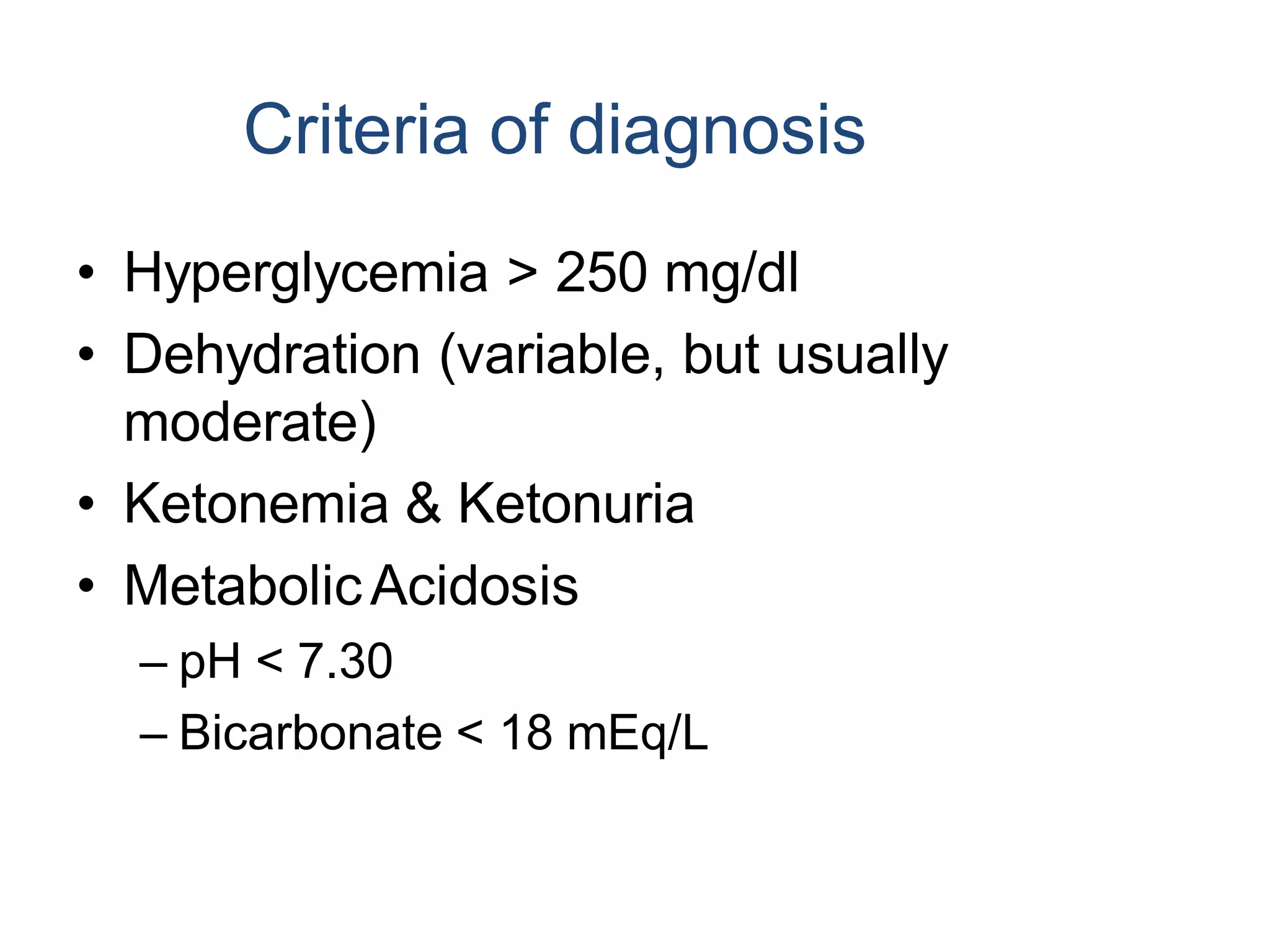
Criteria of diagnosis
• Hyperglycemia > 250 mg/dl
• Dehydration (variable, but usually
moderate)
• Ketonemia & Ketonuria
• MetabolicAcidosis
– pH < 7.30
– Bicarbonate < 18 mEq/L
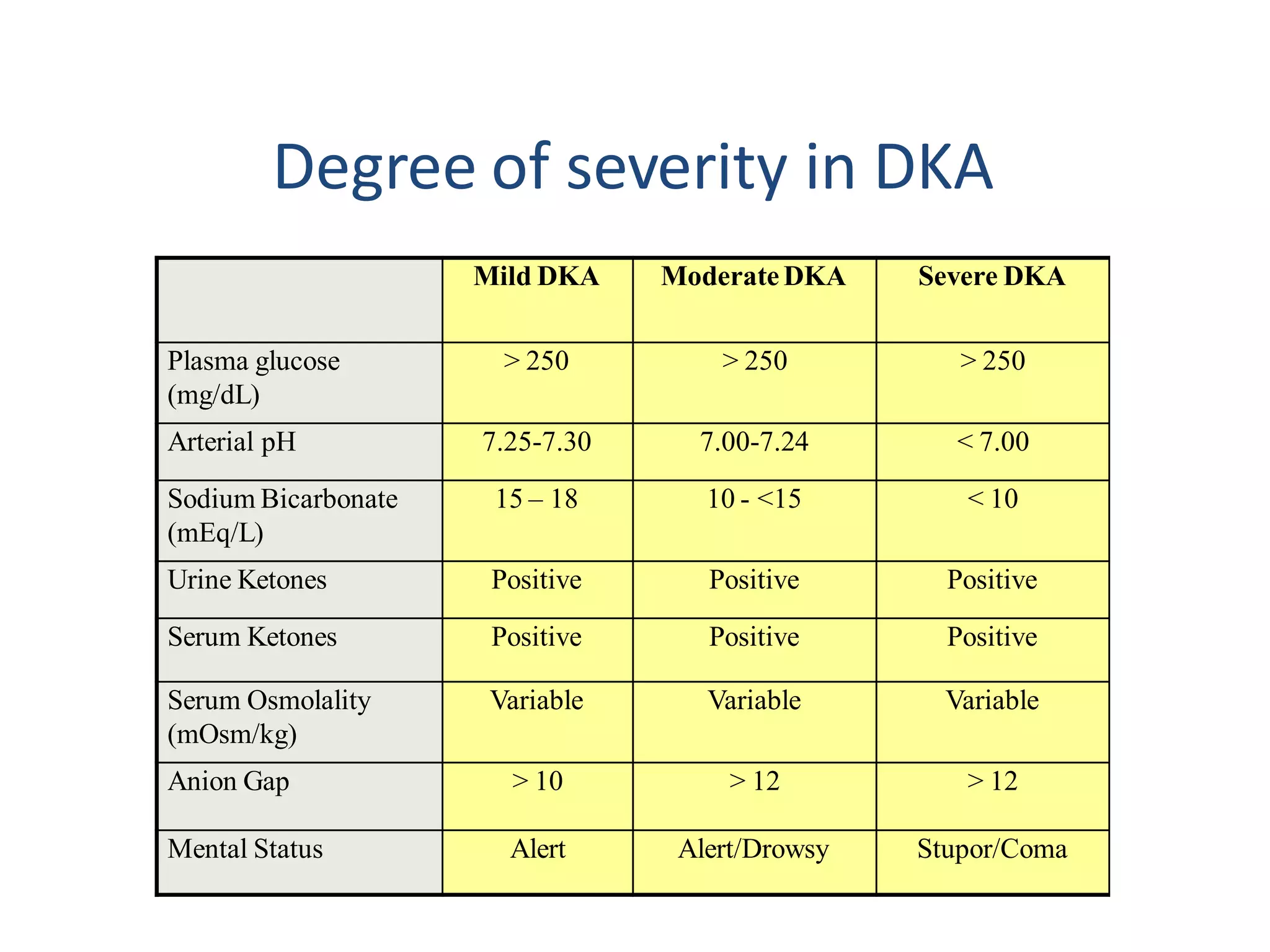
Degree of severity in DKA
Mild DKA Moderate DKA Severe DKA
Plasma glucose
(mg/dL)
> 250 > 250 > 250
Arterial pH 7.25-7.30 7.00-7.24 < 7.00
Sodium Bicarbonate
(mEq/L)
15 – 18 10 - <15 < 10
Urine Ketones Positive Positive Positive
Serum Ketones Positive Positive Positive
Serum Osmolality
(mOsm/kg)
Variable Variable Variable
Anion Gap > 10 > 12 > 12
Mental Status Alert Alert/Drowsy Stupor/Coma
8
Clinical Manifestations
• Ketoacidosis is responsible for the initial
presentation in up to 25 – 75 % of children with
newly diagnosed diabetes
• Manifestations include:
– Nausea & vomiting
– Dehydration
– Kussmaul pattern of breathing
– Acetone odor on the breath
– Abdominal pain or rigidity may be
present & mimic acute abdomen
– Cerebral confusion & coma ultimately ensue
10
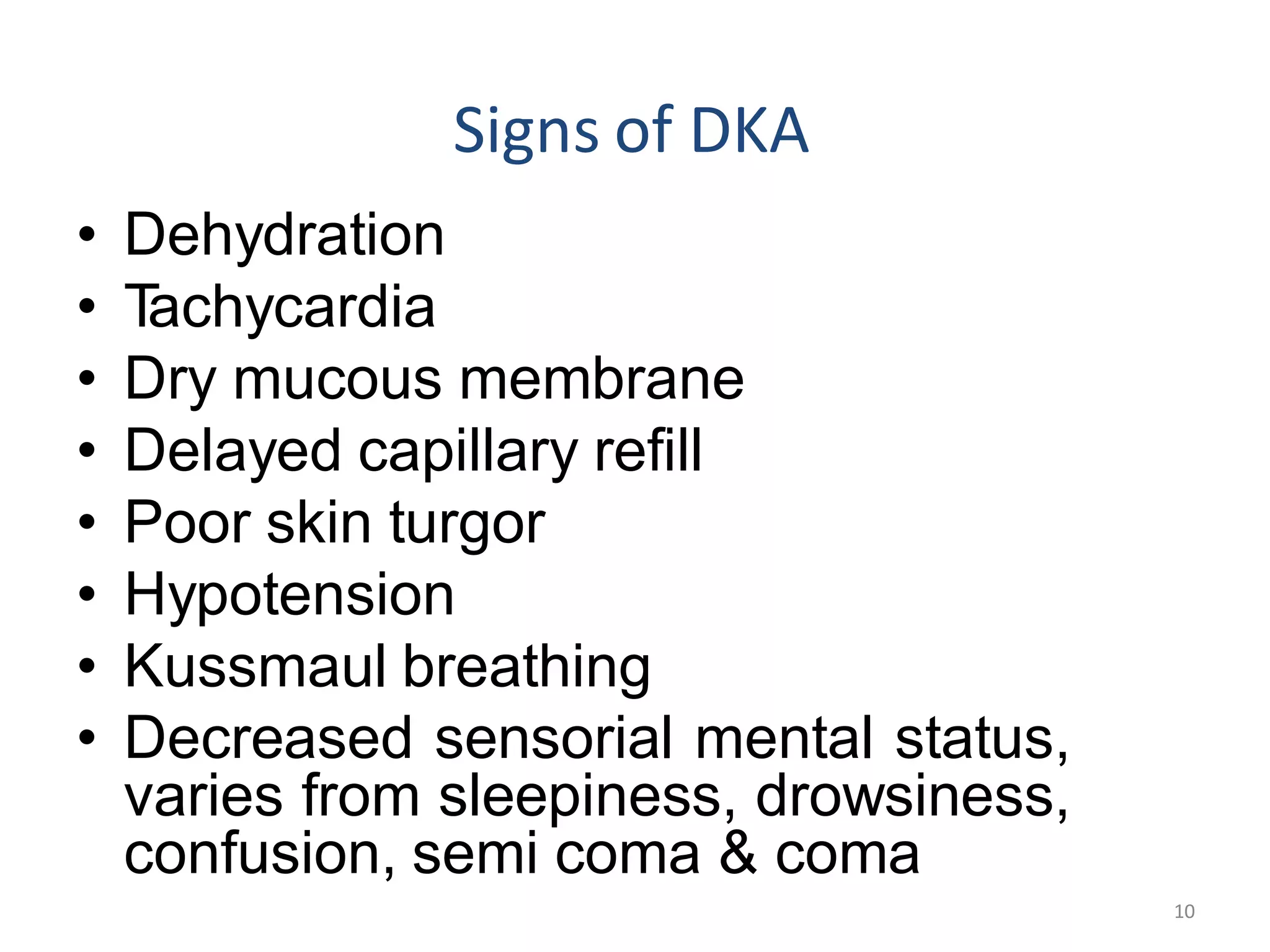
Signs of DKA
• Dehydration
• Tachycardia
• Dry mucous membrane
• Delayed capillary refill
• Poor skin turgor
• Hypotension
• Kussmaul breathing
• Decreased sensorial mental status,
varies from sleepiness, drowsiness,
confusion, semi coma & coma
11
Laboratory
• Serum glucose
• Urinary/plasma ketones
• Serum electrolytes
• BUN/Creatinine
• Serum Osmolality (measured/calculated)
• CBC, blood culture (if infection is
suspected)
• Venous blood gas
12
Management
• Correction of the following:
–Dehydration
–Hyperglycemia
–Electrolytes deficits
– Metabolic acidosis
–Underlying precipitating factors
•Infection, omission of insulin,
stress, ….etc
– Avoid impending shock
– Rapid fluid replacement has been associate with
cerebral edema
– Usually necessary to help expand vascular
compartment
• Initially fluid bolus of 5-7 ml/kg over 30-60 minutes
(only in severe DKA, otherwise start fluid rehydration
without bolus by maintainace and deficit replacements
• Fluid deficit should gradually be corrected over 36-
48 hrs
• Start with NS, then to switch to dextrose 5% with
½ NS, when glucose drop to 250 mg/dl
13
Fluid management
14
Hyperglycemia management
• Insulin should be given through
intravenous route & continued till
acidosis and dehydration resolved
• Insulin drips 0.075- 0.1 U/kg/hr (NO
BOLUS)
• Gradual correction by reducing serum
glucose by 50-100 mg/dl/hr
• Serum glucose often falls after fluid bolus
due to increase in glomerular filtration with
increased renal perfusion
• When acidosis resolved to be shifted to
subcutaneous route
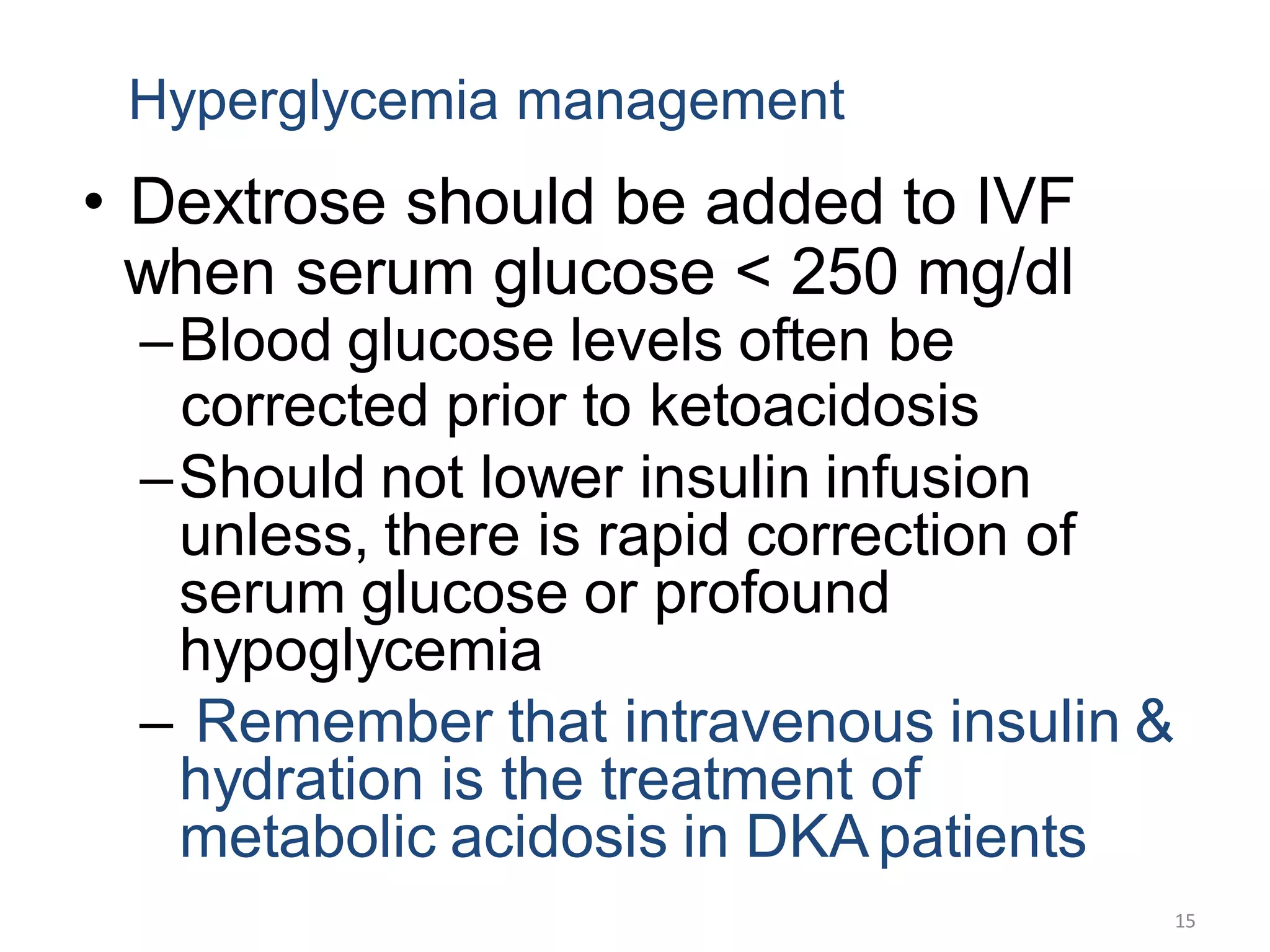
• Dextrose should be added to IVF
when serum glucose < 250 mg/dl
–Blood glucose levels often be
corrected prior to ketoacidosis
–Should not lower insulin infusion
unless, there is rapid correction of
serum glucose or profound
hypoglycemia
– Remember that intravenous insulin &
hydration is the treatment of
metabolic acidosis in DKApatients
15
Hyperglycemia management
• Potassium:
– Initially, might be false normal or high
values
– Should be added to fluids as soon as
insulin has been started
– Be sure of passing urine, prior of giving
potassium
– Total body depletion will become more
prominent with correction of acidosis
– Continuous EKG monitoring is standard of care
– Dose of 30-40 mEq/l in either KCl or KPhos
16
Electrolyte replacements
• Serum sodium & chloride will be corrected gradually
by giving normal saline or 0.45 NS over 48 hours
• Serum potassium level, is the most important
electrolyte disturbance in patients with diabetic
ketoacidosis
• A patient with a low serum potassium level should
be assumed to have a potentially life-threatening
total body potassium level
• As a result of the potential for hypokalemia-induced
dysrhythmias, not to give insulin until potassium
replenishment is underway
18
Electrolyte replacements
• Phosphate
–Total body depletion will become more prominent with
correction of acidosis
–Theoretically, has to be corrected but practically not
necessary needed
–Hypophosphatemia may cause
rhabdomyolysis, hemolysis, impaired oxygen
delivery to the tissues
–Calcium should be monitored during replacement as
acute hypocalcaemia may develop due to intravenous
phosphate infusion
Metabolic Acidosis
• Ketosis and lactic acidosis produce a metabolic
acidosis; however, supplemental bicarbonate is
not recommended
• Acidosis usually resolves with isotonic fluid
volume replenishment and insulin therapy
• Only indicated in severe metabolic acidosis
(pH < 7.0) or patient is in chock with DKA
• Studies confirmed that bicarbonate therapy
may cause paradoxical intracellular acidosis,
worsening tissue perfusion, hypokalemia, &
cerebral edema
20
Metabolic Acidosis
• Bicarbonate is almost never administered
– Bicarbonate administration leads to increased
cerebral acidosis:
– HCO - + H+  dissociated to CO and H O
3 2 2
– Bicarbonate passes the BBB slowly
– CO2 diffuses freely  exacerbating cerebral
acidosis & depression
• Indications for bicarbonate use: only in severe
acidosis leading to cardio-respiratory
compromise or if Ph < 7
Management of underlying cause
• In each case, we need to look for precipitating
factors
• Infections especially viral is the most common factor
• Using antibiotics should not be routine in children as
most infections are viral
• Presence of leukocytosis initially in DKA is due to
dehydration and stress (not usually indicates
infection)
• We need to improve education “sick-day
managements” in order to reduce number of DKA
episodes
22
Complication, Cerebral Edema
• Cerebral edema: 0.5-3% of pediatric DKA
– Mortality rate of 20%
– Responsible for 50-60% of diabetes deaths in children
– Permanent neurologic disability rate of 25%
• Typically develops within the first 24 hrs of treatment
• Etiology is still unclear
• Signs & symptoms:
– Headache
– Confusion
– Slurred speech
– Bradycardia
– Hypertension
Risk factors for Cerebral edema
• Younger age (< 5 years)
• Sevre metabolic acidosis
• New-onset diabetes
• High initial serum urea
• Severe metabolic acidosis
• Rapid administration of hypotonic fluids
• IV bolus of insulin with rapid drop of glucose
• Early IV insulin infusion (within 1st hour of fluids)
• Usage of bicarbonate
• Idiopathic
24
Therapy
• Lower intracranial pressure
–Mannitol or 3% saline
• Hyperventilation
• Surgical decompression are less
successful at preventing neurological
morbidity & mortality
Other rare complications
• Thrombosis
• Cardiac
arrhythmias
• Pulmonary
edema
• Renal failure
• Rhabdomyolysis
• Infection
• Aspiration pneumonia
• Sepsis
25
Wishing you
Best Success

Dka management in children

  • 1.
    Abdulmoein Eid Al-Agha,MBBS, DCH, CABP, FRCPCH Professor of Pediatric Endocrinology, King Abdulaziz University Hospital Website: http://aagha.kau.edu.sa Diabetes Ketoacidosis
  • 2.
    2 Goals & Objectives •What is DKA? • Understand the Pathophysiology of DKA • Criteria of diagnosis • Clinical and laboratory features • Discuss the management approach to the patient with DKA • Appreciate the complications that occur during treatment
  • 3.
    Diabetic Ketoacidosis (DKA) •Astate of absolute or relative insulin deficiency aggravated by ensuing hyperglycemia, dehydration, and acidosis-producing derangements in intermediary metabolism, including production of serum acetone. • Can occur in both Type 1 Diabetes and Type 2 Diabetes – In type 2 diabetics with insulin deficiency/dependence • The presenting symptom for ~ 25% of Type 1 Diabetics.
  • 4.
    • DKAis theleading cause of morbidity and mortality in children with diabetes • Strategies are required to prevent the development of DKA • In new-onset diabetes, DKAcan be prevented through earlier recognition and initiation of insulin therapy • Caution is necessary in management of paediatric DKAdue to increased risk of cerebral edema Diabetes Ketoacidosis
  • 5.
    Pathophysiology • Hyperglycemia resultsfrom impaired glucose uptake because of insulin deficiency and excess glucagon with resultant gluconeogenesis and glycogenolysis • Ketone bodies provide alternative usable energy sources in the absence of intracellular glucose • Ketoacids (acetoacetate, β-hydroxybutyrate, acetone) are products of proteolysis and lipolysis • Hyperglycemia causes an osmotic diuresis that leads to excessive loss of free water and electrolytes • Resultant hypovolemia leads to tissue hypoperfusion and lactic acidosis
  • 6.
    Criteria of diagnosis •Hyperglycemia > 250 mg/dl • Dehydration (variable, but usually moderate) • Ketonemia & Ketonuria • MetabolicAcidosis – pH < 7.30 – Bicarbonate < 18 mEq/L
  • 7.
    Degree of severityin DKA Mild DKA Moderate DKA Severe DKA Plasma glucose (mg/dL) > 250 > 250 > 250 Arterial pH 7.25-7.30 7.00-7.24 < 7.00 Sodium Bicarbonate (mEq/L) 15 – 18 10 - <15 < 10 Urine Ketones Positive Positive Positive Serum Ketones Positive Positive Positive Serum Osmolality (mOsm/kg) Variable Variable Variable Anion Gap > 10 > 12 > 12 Mental Status Alert Alert/Drowsy Stupor/Coma
  • 8.
    8 Clinical Manifestations • Ketoacidosisis responsible for the initial presentation in up to 25 – 75 % of children with newly diagnosed diabetes • Manifestations include: – Nausea & vomiting – Dehydration – Kussmaul pattern of breathing – Acetone odor on the breath – Abdominal pain or rigidity may be present & mimic acute abdomen – Cerebral confusion & coma ultimately ensue
  • 9.
    10 Signs of DKA •Dehydration • Tachycardia • Dry mucous membrane • Delayed capillary refill • Poor skin turgor • Hypotension • Kussmaul breathing • Decreased sensorial mental status, varies from sleepiness, drowsiness, confusion, semi coma & coma
  • 10.
    11 Laboratory • Serum glucose •Urinary/plasma ketones • Serum electrolytes • BUN/Creatinine • Serum Osmolality (measured/calculated) • CBC, blood culture (if infection is suspected) • Venous blood gas
  • 11.
    12 Management • Correction ofthe following: –Dehydration –Hyperglycemia –Electrolytes deficits – Metabolic acidosis –Underlying precipitating factors •Infection, omission of insulin, stress, ….etc
  • 12.
    – Avoid impendingshock – Rapid fluid replacement has been associate with cerebral edema – Usually necessary to help expand vascular compartment • Initially fluid bolus of 5-7 ml/kg over 30-60 minutes (only in severe DKA, otherwise start fluid rehydration without bolus by maintainace and deficit replacements • Fluid deficit should gradually be corrected over 36- 48 hrs • Start with NS, then to switch to dextrose 5% with ½ NS, when glucose drop to 250 mg/dl 13 Fluid management
  • 13.
    14 Hyperglycemia management • Insulinshould be given through intravenous route & continued till acidosis and dehydration resolved • Insulin drips 0.075- 0.1 U/kg/hr (NO BOLUS) • Gradual correction by reducing serum glucose by 50-100 mg/dl/hr • Serum glucose often falls after fluid bolus due to increase in glomerular filtration with increased renal perfusion • When acidosis resolved to be shifted to subcutaneous route
  • 14.
    • Dextrose shouldbe added to IVF when serum glucose < 250 mg/dl –Blood glucose levels often be corrected prior to ketoacidosis –Should not lower insulin infusion unless, there is rapid correction of serum glucose or profound hypoglycemia – Remember that intravenous insulin & hydration is the treatment of metabolic acidosis in DKApatients 15 Hyperglycemia management
  • 15.
    • Potassium: – Initially,might be false normal or high values – Should be added to fluids as soon as insulin has been started – Be sure of passing urine, prior of giving potassium – Total body depletion will become more prominent with correction of acidosis – Continuous EKG monitoring is standard of care – Dose of 30-40 mEq/l in either KCl or KPhos 16 Electrolyte replacements
  • 16.
    Electrolyte replacements • Serumsodium & chloride will be corrected gradually by giving normal saline or 0.45 NS over 48 hours • Serum potassium level, is the most important electrolyte disturbance in patients with diabetic ketoacidosis • A patient with a low serum potassium level should be assumed to have a potentially life-threatening total body potassium level • As a result of the potential for hypokalemia-induced dysrhythmias, not to give insulin until potassium replenishment is underway
  • 17.
    18 Electrolyte replacements • Phosphate –Totalbody depletion will become more prominent with correction of acidosis –Theoretically, has to be corrected but practically not necessary needed –Hypophosphatemia may cause rhabdomyolysis, hemolysis, impaired oxygen delivery to the tissues –Calcium should be monitored during replacement as acute hypocalcaemia may develop due to intravenous phosphate infusion
  • 18.
    Metabolic Acidosis • Ketosisand lactic acidosis produce a metabolic acidosis; however, supplemental bicarbonate is not recommended • Acidosis usually resolves with isotonic fluid volume replenishment and insulin therapy • Only indicated in severe metabolic acidosis (pH < 7.0) or patient is in chock with DKA • Studies confirmed that bicarbonate therapy may cause paradoxical intracellular acidosis, worsening tissue perfusion, hypokalemia, & cerebral edema
  • 19.
    20 Metabolic Acidosis • Bicarbonateis almost never administered – Bicarbonate administration leads to increased cerebral acidosis: – HCO - + H+  dissociated to CO and H O 3 2 2 – Bicarbonate passes the BBB slowly – CO2 diffuses freely  exacerbating cerebral acidosis & depression • Indications for bicarbonate use: only in severe acidosis leading to cardio-respiratory compromise or if Ph < 7
  • 20.
    Management of underlyingcause • In each case, we need to look for precipitating factors • Infections especially viral is the most common factor • Using antibiotics should not be routine in children as most infections are viral • Presence of leukocytosis initially in DKA is due to dehydration and stress (not usually indicates infection) • We need to improve education “sick-day managements” in order to reduce number of DKA episodes
  • 21.
    22 Complication, Cerebral Edema •Cerebral edema: 0.5-3% of pediatric DKA – Mortality rate of 20% – Responsible for 50-60% of diabetes deaths in children – Permanent neurologic disability rate of 25% • Typically develops within the first 24 hrs of treatment • Etiology is still unclear • Signs & symptoms: – Headache – Confusion – Slurred speech – Bradycardia – Hypertension
  • 22.
    Risk factors forCerebral edema • Younger age (< 5 years) • Sevre metabolic acidosis • New-onset diabetes • High initial serum urea • Severe metabolic acidosis • Rapid administration of hypotonic fluids • IV bolus of insulin with rapid drop of glucose • Early IV insulin infusion (within 1st hour of fluids) • Usage of bicarbonate • Idiopathic
  • 23.
    24 Therapy • Lower intracranialpressure –Mannitol or 3% saline • Hyperventilation • Surgical decompression are less successful at preventing neurological morbidity & mortality
  • 24.
    Other rare complications •Thrombosis • Cardiac arrhythmias • Pulmonary edema • Renal failure • Rhabdomyolysis • Infection • Aspiration pneumonia • Sepsis 25
  • 25.