Dr. K. Lakehal-Ayat Mentouri University Constantine
Differences between
  kinds of language :
LanguageSDT variety developed out
     differences in
         The
 grammar, vocabulary
         of the Eng dialects used in and
  and pronunciation
      around London, as these were
      modified through the centuries                                                Stan
Dialect by speakers at the court, by                                                vari
       scholars from universities, by                                                pri
                                                                                       a
      writers, and later on by schools

Accent
                                                         It is the variety spoken
                                                        by educated people and
                                                                   used in news
              Dr. K. Lakehal-Ayat Mentouri University Constantine
                                                                  broadcast, etc.
Dialect
       The SDT variety developed out
       Differences between into of
           Accent refers SOLELY
        The Eng dialects used kinds
     Standard Scottishused by and
       of thelanguage English the
      differences thePRONUNCIATION
              It is of variety spoken
       upper classes in the that
          language : English is capital
              Standard differences in
       around London, as theseand
             by educated people were
          grammar,whichnews from
              variety        is used in
                       vocabulary and
       modified through the centuries
        city came taught at school
               print, to diverge
                    used in
     Standard Englishthe the other
        thespeakers at bynatives by
         by one broadcast, court,
                  pronunciation
                    used English
                 and to non etc.
        scholars from universities, by
        social and laterandby schools
       writers,
                classes on came to
       be regarded as THE model.
     Standard American English


              Dr. K. Lakehal-Ayat Mentouri University Constantine
Standard English

                  Widely accepted and
                   codified grammar


Sd Eng has +
 status and                                        General consensus
  prestige


       Ds and Ls are
                                         One accent: R.P.
    evaluated in ≠ ways


         Dr. K. Lakehal-Ayat Mentouri University Constantine
Regarded as
                                 Different dialects and
                                  ‘beautiful’, ‘nic
                                accents are evaluated in
                                          ≠ ways
                                     e’, ‘pure, …

Dr. K. Lakehal-Ayat Mentouri University Constantine
Idiolect

                                    word
Variety of language         selection, vocabulary
                                  and word                                  Every individual
  UNIQUE to an              lexicon, grammar, or
     individual                                                              has an idiolect
                           words, phrases, idioms,
                             or pronunciations.


             The grouping of
           words and phrases is
                 unique
                                                   Ecolect

                      Dr. K. Lakehal-Ayat Mentouri University Constantine
Forensic linguistics

 Forensic linguists can use idiolects to decide if
  a person did or did not produce a given piece
  of writing (or transcribed speech).
 Every speaker has a very large active
  vocabulary built over many years, which will
  differ from the vocabularies others have
  similarly built up, not only in terms of actual
  items, but also in preferences for selecting
  certain items and not others.
 Una bomber: UNiversity Airlines
               Dr. K. Lakehal-Ayat Mentouri University Constantine
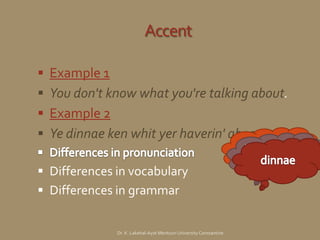
Accent

   Example 1
   You don't know what you're talking about.
   Example 2
   Ye dinnae ken whit yer haverin' aboot.
                                                                         .
                                                                     .
 Differences in vocabulary
 Differences in grammar


               Dr. K. Lakehal-Ayat Mentouri University Constantine
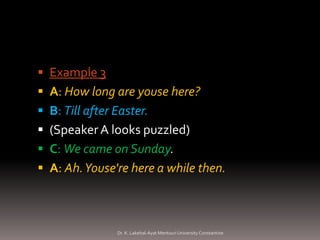
 Example 3
 A: How long are youse here?
 B: Till after Easter.
 (Speaker A looks puzzled)
 C: We came on Sunday.
 A: Ah. Youse're here a while then.


                Dr. K. Lakehal-Ayat Mentouri University Constantine

Dialect and accent (idiolect)

  • 1.
    Dr. K. Lakehal-AyatMentouri University Constantine
  • 2.
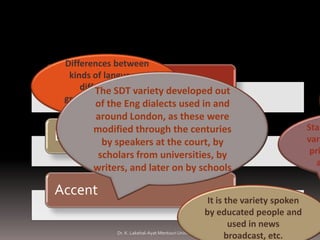
    Differences between kinds of language : LanguageSDT variety developed out differences in The grammar, vocabulary of the Eng dialects used in and and pronunciation around London, as these were modified through the centuries Stan Dialect by speakers at the court, by vari scholars from universities, by pri a writers, and later on by schools Accent It is the variety spoken by educated people and used in news Dr. K. Lakehal-Ayat Mentouri University Constantine broadcast, etc.
  • 3.
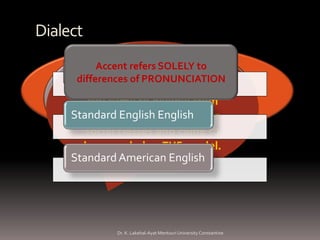
    Dialect The SDT variety developed out Differences between into of Accent refers SOLELY The Eng dialects used kinds Standard Scottishused by and of thelanguage English the differences thePRONUNCIATION It is of variety spoken upper classes in the that language : English is capital Standard differences in around London, as theseand by educated people were grammar,whichnews from variety is used in vocabulary and modified through the centuries city came taught at school print, to diverge used in Standard Englishthe the other thespeakers at bynatives by by one broadcast, court, pronunciation used English and to non etc. scholars from universities, by social and laterandby schools writers, classes on came to be regarded as THE model. Standard American English Dr. K. Lakehal-Ayat Mentouri University Constantine
  • 4.
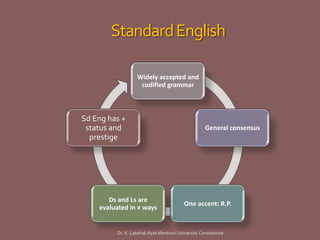
    Standard English Widely accepted and codified grammar Sd Eng has + status and General consensus prestige Ds and Ls are One accent: R.P. evaluated in ≠ ways Dr. K. Lakehal-Ayat Mentouri University Constantine
  • 5.
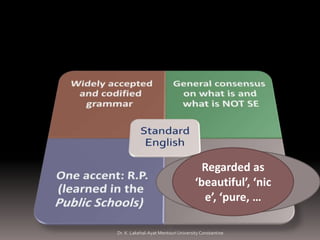
    Regarded as Different dialects and ‘beautiful’, ‘nic accents are evaluated in ≠ ways e’, ‘pure, … Dr. K. Lakehal-Ayat Mentouri University Constantine
  • 6.
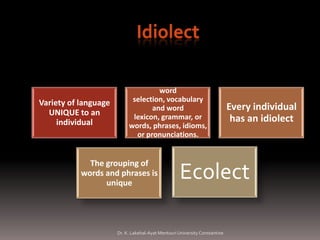
    Idiolect word Variety of language selection, vocabulary and word Every individual UNIQUE to an lexicon, grammar, or individual has an idiolect words, phrases, idioms, or pronunciations. The grouping of words and phrases is unique Ecolect Dr. K. Lakehal-Ayat Mentouri University Constantine
  • 7.
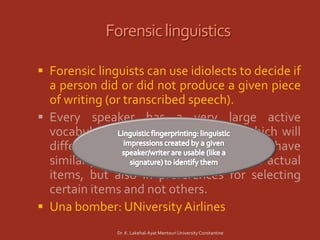
    Forensic linguistics  Forensiclinguists can use idiolects to decide if a person did or did not produce a given piece of writing (or transcribed speech).  Every speaker has a very large active vocabulary built over many years, which will differ from the vocabularies others have similarly built up, not only in terms of actual items, but also in preferences for selecting certain items and not others.  Una bomber: UNiversity Airlines Dr. K. Lakehal-Ayat Mentouri University Constantine
  • 8.
    Accent  Example 1  You don't know what you're talking about.  Example 2  Ye dinnae ken whit yer haverin' aboot. . .  Differences in vocabulary  Differences in grammar Dr. K. Lakehal-Ayat Mentouri University Constantine
  • 9.
     Example 3 A: How long are youse here?  B: Till after Easter.  (Speaker A looks puzzled)  C: We came on Sunday.  A: Ah. Youse're here a while then. Dr. K. Lakehal-Ayat Mentouri University Constantine

Editor's Notes

  • #4 The term dialect refers, strictly speaking to differences between kinds of language which are differences of grammar and vocabulary as well as pronunciation. The term accent refers solely to differences of pronunciation. For example, the dialect known as Standard English is that variety of English which is used in print, and which is normally taught in schools and to non-natives learning the language. It is also the variety spoken by educated people and used in news broadcasts and other similar situations. The difference between standard non standard has nothing to do with differences between formal and colloquial languages. Historically speaking, the standard variety developed out of the English dialects used in and around London, as these were modified through the centuries by speakers at the court, by scholars from universities, by writers and, later on by schools. The language used by the upper classes in the capital city came to diverge from the one used by the other social classes and came to be regarded as the model. Within Standard English, there are regional differences, for example Standard Scottish English vs. Standard English English vs. Standard American English.
  • #8 Forensic linguists can use idiolects to decide if a certain person did or did not produce a given piece of writing (or transcribed speech). The supposed confession of Derek Bentley was inconsistent with his idiolect, and modern analysis of the confession led to a posthumous pardon. The family of the Unabomber recognized his idiolect and informed the police of their suspicions.While often passing unnoticed in speech, some idiolects, particularly unusual ones employed by famous individuals, are immortalized in the form of nicknames. A famous example is the nickname of Willy Mays ("the Say-Hey Kid"), who frequently used "say hey".Every speaker has a very large active vocabulary built up over many years, which will differ from the vocabularies others have similarly built up not only in terms of actual items but also in preferences for selecting certain items rather than others. Thus, whereas in principle any speaker/writer can use any word at any time, speakers in fact tend to make typical and individuating co-selections of preferred words. This implies that it should be possible to devise a method of linguistic fingerprinting – in other words that the linguistic ‘impressions’ created by a given speaker/writer should be usable, just like a signature, to identify them. So far, however, practice is a long way behind theory and no one has even begun to speculate about how much and what kind of data would be needed to uniquely Between 1978 and 1995, someone living in the United States, who referred to himself as FC, sent a series of bombs, on average once a year, through the post. At first there seemed to be no pattern, but after several years the FBI noticed that the victims seemed to be people working in Universities and Airlines and so named the unknown individual the Unabomber. In 1995 six national publications received a 35,000 manuscript, entitled Industrial Society and its Future, from someone claiming to be the Unabomber, along with an offer to stop sending bombs if the manuscript were published.  
  • #9 Every language user speaks with an accent: some speakers have very distinct or easily recognized types of accent, while others have a more subtle or less noticeable accent. Technically, the term 'accent' is restricted to the description of aspects of pronunciation that identify where an individual speaker is from, regionally or socially. It is different from the term 'dialect', which is used to describe features of grammar and vocabulary as well as aspects of pronunciation. Example 1You don't know what you're talking about. Example 2Ye dinnae ken whit yerhaverin' aboot. We recognize that sentence 1 will generally 'look' the same whether spoken with an American accent or a Scottish accent. Both speakers will be using Standard English forms, but have different pronunciations. However the next sentence, sentence 2, has the same meaning as the first, but has been written out in approximation of what a person who speaks one dialect of Scottish English might say. There are differences in pronunciation (e.g. whit, aboot), but there are also examples of different vocabulary (e.g. ken, haverin') and a different grammatical form (dinnae).