
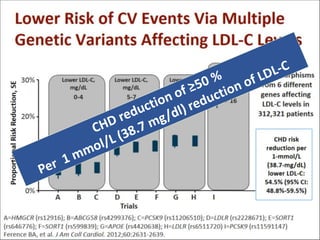


DIABETIC DYSLIPIDEMIA
IS LOWER ,BETTER ?
DR. MOHAMMAD DAOUD
CONSULTANT ENDOCRINOLOGIST- ABIM CERTIFIED
KAMC-NGHA JEDDAH
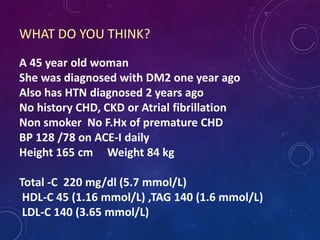
WHAT DO YOU THINK?
A 45 year old woman
She was diagnosed with DM2 one year ago
Also has HTN diagnosed 2 years ago
No history CHD, CKD or Atrial fibrillation
Non smoker No F.Hx of premature CHD
BP 128 /78 on ACE-I daily
Height 165 cm Weight 84 kg
Total -C 220 mg/dl (5.7 mmol/L)
HDL-C 45 (1.16 mmol/L) ,TAG 140 (1.6 mmol/L)
LDL-C 140 (3.65 mmol/L)
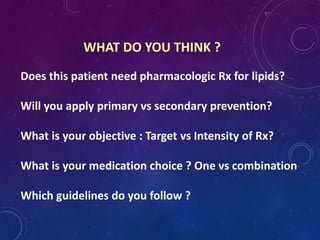
WHAT DO YOU THINK ?
Does this patient need pharmacologic Rx for lipids?
Will you apply primary vs secondary prevention?
What is your objective : Target vs Intensity of Rx?
What is your medication choice ? One vs combination
Which guidelines do you follow ?
THE AGENDA…
INTRODUCTION
RISK ASSESSMENT
MANAGEMENT GUIDELINES
MANAGEMENT : STATINS +/-
CONCLUSION
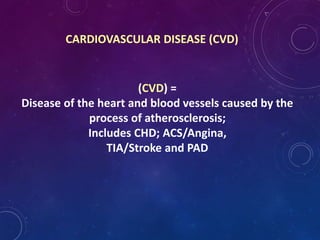
CARDIOVASCULAR DISEASE (CVD)
(CVD) =
Disease of the heart and blood vessels caused by the
process of atherosclerosis;
Includes CHD; ACS/Angina,
TIA/Stroke and PAD
CARDIOVASCULAR DISEASE (CVD)
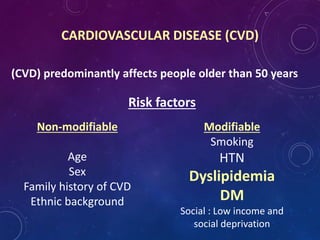
(CVD) predominantly affects people older than 50 years
Risk factors
Non-modifiable
Age
Sex
Family history of CVD
Ethnic background
Modifiable
Smoking
HTN
Dyslipidemia
DM
Social : Low income and
social deprivation
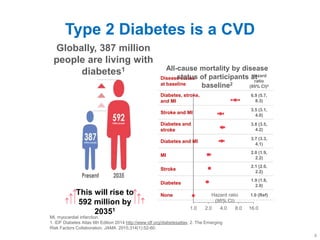
Type 2 Diabetes Prevalence
MI, myocardial infarction.
1. IDF Diabetes Atlas 6th Edition 2014 http://www.idf.org/diabetesatlas; 2. The Emerging
Risk Factors Collaboration. JAMA. 2015;314(1):52-60.
8
This will rise to
592 million by
20351
Disease status
at baseline
Hazard
ratio
(95% Cl)a
Diabetes, stroke,
and MI
6.9 (5.7,
8.3)
Stroke and MI
3.5 (3.1,
4.0)
Diabetes and
stroke
3.8 (3.5,
4.2)
Diabetes and MI
3.7 (3.3,
4.1)
MI
2.0 (1.9,
2.2)
Stroke
2.1 (2.0,
2.2)
Diabetes
1.9 (1.8,
2.0)
None 1.0 (Ref)
Globally, 387 million
people are living with
diabetes1 All-cause mortality by disease
status of participants at
baseline2
Hazard ratio
(95% CI)
1.0 2.0 4.0 8.0 16.0
Type 2 Diabetes is a CVD
DM AND DYSLIPIDEMIA
WHAT MAKES PEOPLE WITH DIABETES
AT SUCH HIGH RISK?
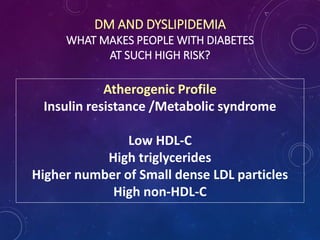
Atherogenic Profile
Insulin resistance /Metabolic syndrome
Low HDL-C
High triglycerides
Higher number of Small dense LDL particles
High non-HDL-C
A
DM AND DYSLIPIDEMIA
Role of Statins
DM AND DYSLIPIDEMIA
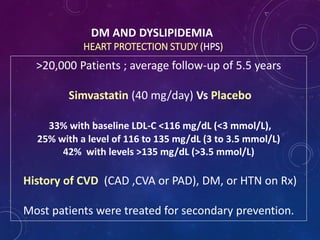
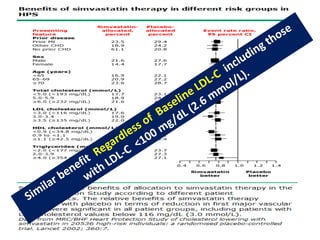
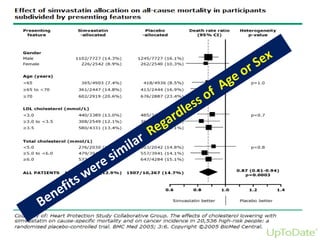
HEART PROTECTION STUDY (HPS)
>20,000 Patients ; average follow-up of 5.5 years
Simvastatin (40 mg/day) Vs Placebo
33% with baseline LDL-C <116 mg/dL (<3 mmol/L),
25% with a level of 116 to 135 mg/dL (3 to 3.5 mmol/L)
42% with levels >135 mg/dL (>3.5 mmol/L)
History of CVD (CAD ,CVA or PAD), DM, or HTN on Rx)
Most patients were treated for secondary prevention.
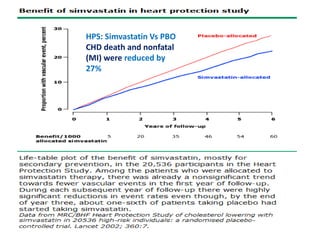
HPS: Simvastatin Vs PBO
CHD death and nonfatal
(MI) were reduced by
27%
DM AND DYSLIPIDEMIA
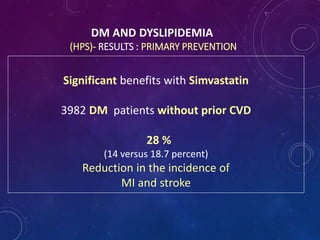
(HPS)- RESULTS : PRIMARY PREVENTION
Significant benefits with Simvastatin
3982 DM patients without prior CVD
28 %
(14 versus 18.7 percent)
Reduction in the incidence of
MI and stroke
DM AND DYSLIPIDEMIA
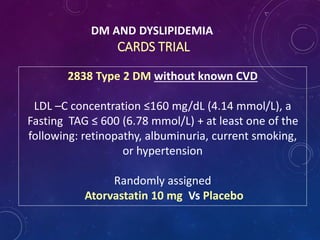
CARDS TRIAL
2838 Type 2 DM without known CVD
LDL –C concentration ≤160 mg/dL (4.14 mmol/L), a
Fasting TAG ≤ 600 (6.78 mmol/L) + at least one of the
following: retinopathy, albuminuria, current smoking,
or hypertension
Randomly assigned
Atorvastatin 10 mg Vs Placebo
DM AND DYSLIPIDEMIA
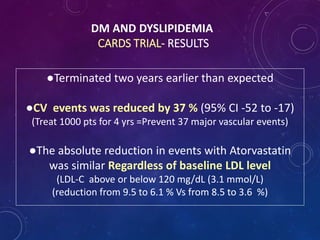
CARDS TRIAL- RESULTS
●Terminated two years earlier than expected
●CV events was reduced by 37 % (95% CI -52 to -17)
(Treat 1000 pts for 4 yrs =Prevent 37 major vascular events)
●The absolute reduction in events with Atorvastatin
was similar Regardless of baseline LDL level
(LDL-C above or below 120 mg/dL (3.1 mmol/L)
(reduction from 9.5 to 6.1 % Vs from 8.5 to 3.6 %)
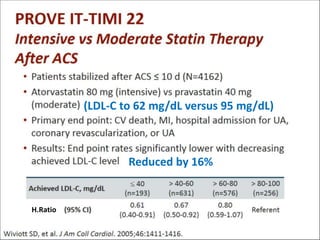
H.Ratio
(LDL-C to 62 mg/dL versus 95 mg/dL)
Reduced by 16%
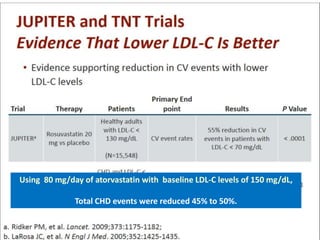
LDL : 77 vs 101 mg/dl
Using 80 mg/day of atorvastatin with baseline LDL-C levels of 150 mg/dL,
Total CHD events were reduced 45% to 50%.
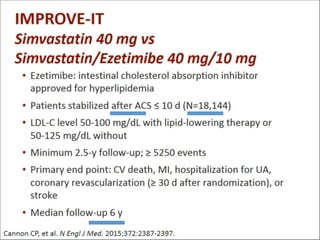
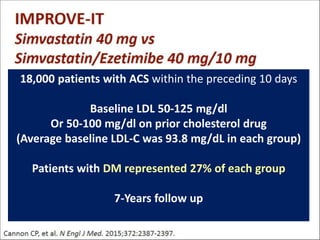
18,000 patients with ACS within the preceding 10 days
Baseline LDL 50-125 mg/dl
Or 50-100 mg/dl on prior cholesterol drug
(Average baseline LDL-C was 93.8 mg/dL in each group)
Patients with DM represented 27% of each group
7-Years follow up
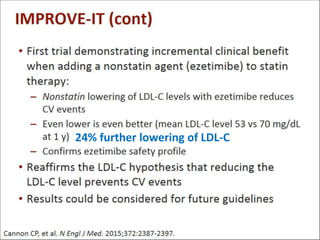
24% further lowering of LDL-C
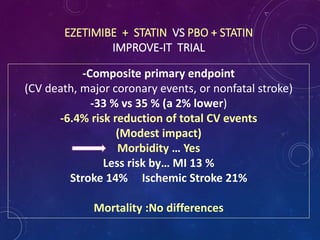
EZETIMIBE + STATIN VS PBO + STATIN
IMPROVE-IT TRIAL
-Composite primary endpoint
(CV death, major coronary events, or nonfatal stroke)
-33 % vs 35 % (a 2% lower)
-6.4% risk reduction of total CV events
(Modest impact)
Morbidity … Yes
Less risk by… MI 13 %
Stroke 14% Ischemic Stroke 21%
Mortality :No differences
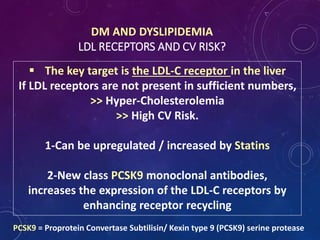
DM AND DYSLIPIDEMIA
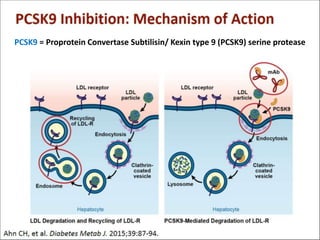
LDL RECEPTORS AND CV RISK?
 The key target is the LDL-C receptor in the liver
If LDL receptors are not present in sufficient numbers,
>> Hyper-Cholesterolemia
>> High CV Risk.
1-Can be upregulated / increased by Statins
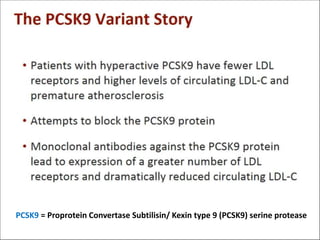
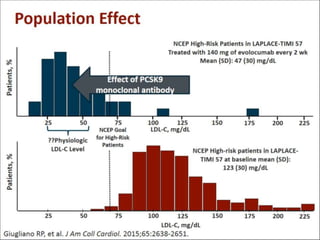
2-New class PCSK9 monoclonal antibodies,
increases the expression of the LDL-C receptors by
enhancing receptor recycling
PCSK9 = Proprotein Convertase Subtilisin/ Kexin type 9 (PCSK9) serine protease
DYSLIPIDEMIA AND (CVD)
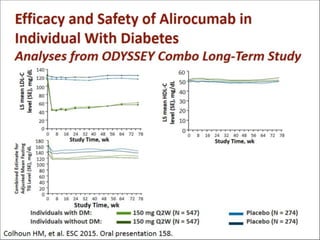
PCSK9 INHIBITION- ODYSSEY COMBO
ALIROCUMAB VS EZETIMIBE
Efficacy and safety of Alirocumab as add-on to stable,
maximally tolerated, daily statin therapy (Patients with
hypercholesterolemia at high CV risk)
35% of patients have T2DM
An LDL-C of <1.8 mmol/L(<70 mg/dL) was achieved in:
77% with Alirocumab vs
45.6% with Ezetimibe
(P =.0001),
DYSLIPIDEMIA AND (CVD)
PCSK9 INHIBITION- ODYSSEY COMBO
ALIROCUMAB VS EZETIMIBE
Comparable reduction rate of the LDL-C level was
comparable in the diabetic and nondiabetic
The LDL-C level :
Reduced from 130 mg/dL to 50 mg/dL; i.e
average decline of 50% ( 60% for non DM )
DM AND DYSLIPIDEMIA
FIELD TRIAL / ACCORD-LLA
FIELD trial
9795 patients ages 50 to 75 with type 2 DM (2131 with prior CVD
; 2nd Prevention)
Median follow-up of 5 years
Micronized Fenofibrate 200 mg daily Vs Placebo
ACCOR-LLA
5518 patients with type 2 DM
Fenofibrate 160 mg Vs Placebo;
All patients were treated with Simvastatin
Mean follow-up of 4.7 years
Any Guidelines to Help ?
DM AND DYSLIPIDEMIA
GUIDELINES?
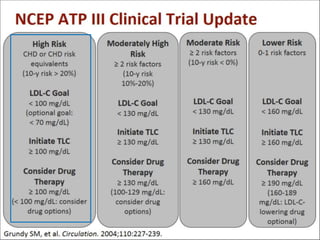
ATP III-2004
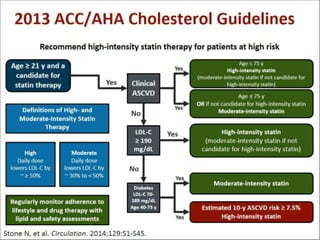
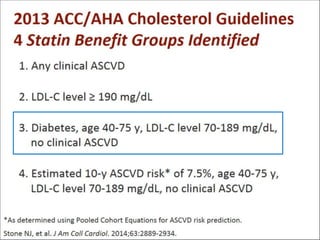
American College of Cardiology (ACC)/American Heart
Association (AHA) guideline- 2013
European Society of Cardiology (ESC)/European
Atherosclerosis Society (EAS) guideline 2014
NICE guideline 2014
DM AND DYSLIPIDEMIA
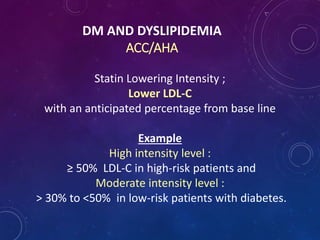
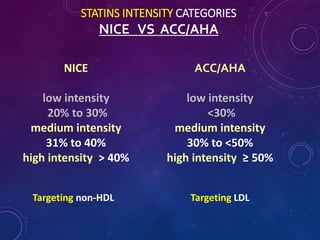
ACC/AHA
Statin Lowering Intensity ;
Lower LDL-C
with an anticipated percentage from base line
Example
High intensity level :
≥ 50% LDL-C in high-risk patients and
Moderate intensity level :
> 30% to <50% in low-risk patients with diabetes.
DM AND DYSLIPIDEMIA
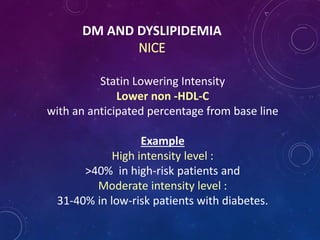
NICE
Statin Lowering Intensity
Lower non -HDL-C
with an anticipated percentage from base line
Example
High intensity level :
>40% in high-risk patients and
Moderate intensity level :
31-40% in low-risk patients with diabetes.
DM AND DYSLIPIDEMIA
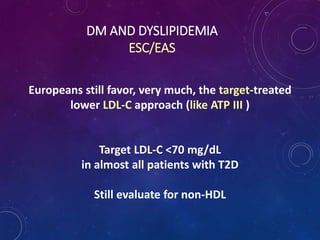
ESC/EAS
Europeans still favor, very much, the target-treated
lower LDL-C approach (like ATP III )
Target LDL-C <70 mg/dL
in almost all patients with T2D
Still evaluate for non-HDL
DYSLIPIDEMIA GUIDELINES
WHERE ARE WE NOW?
FROM ….TO
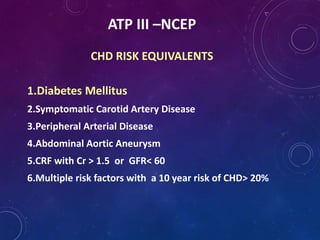
1.Diabetes Mellitus
2.Symptomatic Carotid Artery Disease
3.Peripheral Arterial Disease
4.Abdominal Aortic Aneurysm
5.CRF with Cr > 1.5 or GFR< 60
6.Multiple risk factors with a 10 year risk of CHD> 20%
ATP III –NCEP
CHD RISK EQUIVALENTS
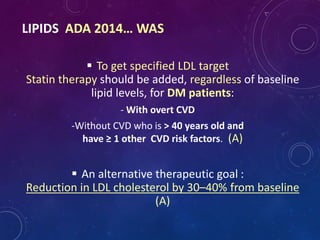
LIPIDS ADA 2014… WAS
 To get specified LDL target
Statin therapy should be added, regardless of baseline
lipid levels, for DM patients:
- With overt CVD
-Without CVD who is > 40 years old and
have ≥ 1 other CVD risk factors. (A)
 An alternative therapeutic goal :
Reduction in LDL cholesterol by 30–40% from baseline
(A)
LIPIDS ADA 2014… WAS
If targets are not reached;
Use combination therapy
No outcome studies; CVD outcomes or safety.
(E)
Statins use is based on desired
LDL-C Intensity lowering rather than LDL target number
Adjustment of intensity of statin therapy
may be needed based on individual patient response to medication
(e.g., side effects, tolerability, LDL cholesterol levels). E
LIPIDS ADA 2015 … 2013 ACC/AHA
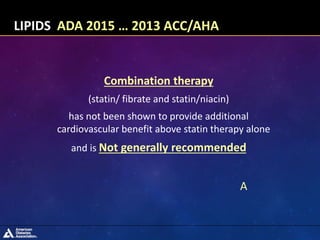
Combination therapy
(statin/ fibrate and statin/niacin)
has not been shown to provide additional
cardiovascular benefit above statin therapy alone
and is Not generally recommended
A
LIPIDS ADA 2015 … 2013 ACC/AHA
NICE CLINICAL GUIDELINE 181
GUIDANCE.NICE.ORG.UK/CG181
NICE 2014
An update of existing National Institute for Health and
Care Excellence (NICE) guidance (published in 2008)
NICE GUIDELINES-2014
DYSLIPIDEMIA AND (CVD)
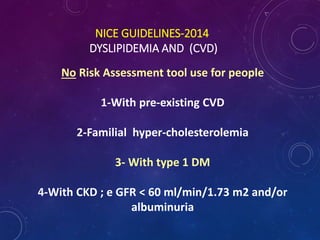
No Risk Assessment tool use for people
1-With pre-existing CVD
2-Familial hyper-cholesterolemia
3- With type 1 DM
4-With CKD ; e GFR < 60 ml/min/1.73 m2 and/or
albuminuria
STATINS INTENSITY CATEGORIES
NICE VS ACC/AHA
NICE
low intensity
20% to 30%
medium intensity
31% to 40%
high intensity > 40%
ACC/AHA
low intensity
<30%
medium intensity
30% to <50%
high intensity ≥ 50%
Targeting LDLTargeting non-HDL
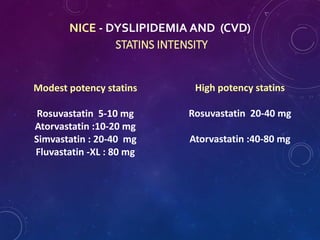
NICE - DYSLIPIDEMIA AND (CVD)
STATINS INTENSITY
Modest potency statins
Rosuvastatin 5-10 mg
Atorvastatin :10-20 mg
Simvastatin : 20-40 mg
Fluvastatin -XL : 80 mg
High potency statins
Rosuvastatin 20-40 mg
Atorvastatin :40-80 mg
NICE
COMBINATION RX
Do not routinely offer Fibrates
(Field trial & ACCORD –Lipid)
and
Do not offer Nicotinic acid (niacin) or Bile acid sequestrants (anion
exchange resins) or omega-3 fatty acid compounds for the
prevention of CVD to any of the following group of patients :
-Treated for primary prevention
-Treated for secondary prevention
-With CKD
-With type 1 DM
-With type 2 DM
[new 2014]
NICE
COMBINATION THERAPY FOR PREVENTING CVD
Ezetimibe treatment in addition to Statins
should be considered (IMPROVE IT)
For people with primary hyper- cholesterolemia
(heterozygous familial and non-familial hyper- cholesterolemia )
(2014)
ESC/EAS 2014
DYSLIPIDEMIA
 VERY HIGH or HIGH TOTAL CARDIOVASCULAR RISK
Known CVD
Type 2 DM or type 1 DM with micro-albuminuria
Chronic kidney disease (CKD)
Very high levels of individual risk factors
 All other people
Use of a risk estimation system such as SCORE to estimate total
CV risk
DYSLIPIDEMIA AND (CVD)
STATINS
EFFICACY , SAFETY , TOLERABILITY
NICE
ADVICE AND MONITORING FOR STATINS AE
.
Statins and pregnancy/lactation
Potential teratogenicity
Stop Statins if pregnancy is a possibility
Stop Statins 3 months before any attempt to conceive and
to not restart them until breastfeeding is finished
NICE
ADVICE AND MONITORING FOR STATINS AE
Statins and creatine kinase (CK)
1- Do not measure CK levels in asymptomatic people who are being
treated with a statin
2- If patient has suggestive myopathy symptoms ( persistent
generalized unexplained muscle pain, associated or not with
previous lipid-lowering therapy) before or after start of a statin
If they have, measure creatine kinase (CK) levels
3- Review medications list ; Look for Drug-Drug interaction
(CYP450 / Gemfibrozil ; Macrolides; Cyclosporine, Ketoconazole…)
NICE
ADVICE AND MONITORING FOR STATINS AE
Statins and creatine kinase (CK)
4- If patient has suggestive myopathy symptoms measure (CK):
If CK levels are > 5 times the ULN, re-measure it after 7 days.
If CK levels are still 5 times ULN, do not start statin treatment
If CK levels are raised but < 5 times ULN, start statin treatment at a
lower dose
5- If statin therapy was tolerated for > 3 months ; R/O other causes
of muscle pain or weakness and raised CK
NICE
ADVICE AND MONITORING FOR STATINS AE
Statins and Liver Transaminases
1- Measure baseline liver transaminase enzymes (ALT or AST ) ,at
baseline , 3 and 12 months of starting a statin
-No more testing unless clinically indicated
2- Do not routinely exclude from statin therapy people who have
liver transaminase levels that are raised but are < 3 times ULN
NICE
INTOLERANCE OF STATINS
If a patient is un-able to tolerate a high-intensity statin
Treat with the maximum tolerated dose
If a certain statin is not tolerated
Try another statin
Take Home Messages
DYSLIPIDEMIA AND DIABETES MELLITUS
TAKE HOME MESSAGES
 DM = Cardiovascular Disease
 Risk assessment tools
High risk groups = No need to calculate Risk
Diabetics are a very high risk group
Treat Regardless of the baseline LDL-C
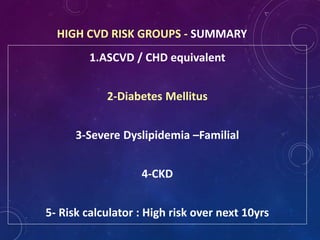
1.ASCVD / CHD equivalent
2-Diabetes Mellitus
3-Severe Dyslipidemia –Familial
4-CKD
5- Risk calculator : High risk over next 10yrs
HIGH CVD RISK GROUPS - SUMMARY
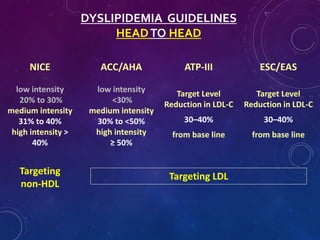
DYSLIPIDEMIA GUIDELINES
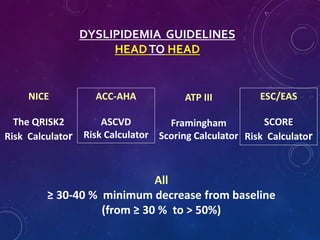
HEADTO HEAD
NICE
low intensity
20% to 30%
medium intensity
31% to 40%
high intensity >
40%
ACC/AHA
low intensity
<30%
medium intensity
30% to <50%
high intensity
≥ 50%
Targeting LDLTargeting
non-HDL
ATP-III
Target Level
Reduction in LDL-C
30–40%
from base line
ESC/EAS
Target Level
Reduction in LDL-C
30–40%
from base line
DYSLIPIDEMIA GUIDELINES
HEADTO HEAD
NICE
The QRISK2
Risk Calculator
ACC-AHA
ASCVD
Risk Calculator
ATP III
Framingham
Scoring Calculator
All
≥ 30-40 % minimum decrease from baseline
(from ≥ 30 % to > 50%)
ESC/EAS
SCORE
Risk Calculator
DYSLIPIDEMIA AND (CVD)
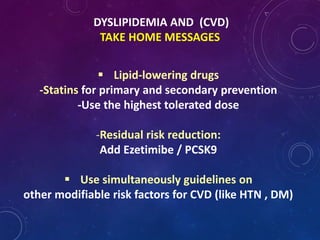
TAKE HOME MESSAGES
 Lipid-lowering drugs
-Statins for primary and secondary prevention
-Use the highest tolerated dose
-Residual risk reduction:
Add Ezetimibe / PCSK9
 Use simultaneously guidelines on
other modifiable risk factors for CVD (like HTN , DM)

Diabetic Dyslipidemia Slide Share

  • 1.
    DIABETIC DYSLIPIDEMIA IS LOWER,BETTER ? DR. MOHAMMAD DAOUD CONSULTANT ENDOCRINOLOGIST- ABIM CERTIFIED KAMC-NGHA JEDDAH
  • 2.
    WHAT DO YOUTHINK? A 45 year old woman She was diagnosed with DM2 one year ago Also has HTN diagnosed 2 years ago No history CHD, CKD or Atrial fibrillation Non smoker No F.Hx of premature CHD BP 128 /78 on ACE-I daily Height 165 cm Weight 84 kg Total -C 220 mg/dl (5.7 mmol/L) HDL-C 45 (1.16 mmol/L) ,TAG 140 (1.6 mmol/L) LDL-C 140 (3.65 mmol/L)
  • 3.
    WHAT DO YOUTHINK ? Does this patient need pharmacologic Rx for lipids? Will you apply primary vs secondary prevention? What is your objective : Target vs Intensity of Rx? What is your medication choice ? One vs combination Which guidelines do you follow ?
  • 4.
    THE AGENDA… INTRODUCTION RISK ASSESSMENT MANAGEMENTGUIDELINES MANAGEMENT : STATINS +/- CONCLUSION
  • 5.
    CARDIOVASCULAR DISEASE (CVD) (CVD)= Disease of the heart and blood vessels caused by the process of atherosclerosis; Includes CHD; ACS/Angina, TIA/Stroke and PAD
  • 7.
    CARDIOVASCULAR DISEASE (CVD) (CVD)predominantly affects people older than 50 years Risk factors Non-modifiable Age Sex Family history of CVD Ethnic background Modifiable Smoking HTN Dyslipidemia DM Social : Low income and social deprivation
  • 8.
    Type 2 DiabetesPrevalence MI, myocardial infarction. 1. IDF Diabetes Atlas 6th Edition 2014 http://www.idf.org/diabetesatlas; 2. The Emerging Risk Factors Collaboration. JAMA. 2015;314(1):52-60. 8 This will rise to 592 million by 20351 Disease status at baseline Hazard ratio (95% Cl)a Diabetes, stroke, and MI 6.9 (5.7, 8.3) Stroke and MI 3.5 (3.1, 4.0) Diabetes and stroke 3.8 (3.5, 4.2) Diabetes and MI 3.7 (3.3, 4.1) MI 2.0 (1.9, 2.2) Stroke 2.1 (2.0, 2.2) Diabetes 1.9 (1.8, 2.0) None 1.0 (Ref) Globally, 387 million people are living with diabetes1 All-cause mortality by disease status of participants at baseline2 Hazard ratio (95% CI) 1.0 2.0 4.0 8.0 16.0 Type 2 Diabetes is a CVD
  • 9.
    DM AND DYSLIPIDEMIA WHATMAKES PEOPLE WITH DIABETES AT SUCH HIGH RISK? Atherogenic Profile Insulin resistance /Metabolic syndrome Low HDL-C High triglycerides Higher number of Small dense LDL particles High non-HDL-C
  • 11.
  • 12.
  • 13.
    DM AND DYSLIPIDEMIA HEARTPROTECTION STUDY (HPS) >20,000 Patients ; average follow-up of 5.5 years Simvastatin (40 mg/day) Vs Placebo 33% with baseline LDL-C <116 mg/dL (<3 mmol/L), 25% with a level of 116 to 135 mg/dL (3 to 3.5 mmol/L) 42% with levels >135 mg/dL (>3.5 mmol/L) History of CVD (CAD ,CVA or PAD), DM, or HTN on Rx) Most patients were treated for secondary prevention.
  • 14.
    HPS: Simvastatin VsPBO CHD death and nonfatal (MI) were reduced by 27%
  • 15.
    DM AND DYSLIPIDEMIA (HPS)-RESULTS : PRIMARY PREVENTION Significant benefits with Simvastatin 3982 DM patients without prior CVD 28 % (14 versus 18.7 percent) Reduction in the incidence of MI and stroke
  • 18.
    DM AND DYSLIPIDEMIA CARDSTRIAL 2838 Type 2 DM without known CVD LDL –C concentration ≤160 mg/dL (4.14 mmol/L), a Fasting TAG ≤ 600 (6.78 mmol/L) + at least one of the following: retinopathy, albuminuria, current smoking, or hypertension Randomly assigned Atorvastatin 10 mg Vs Placebo
  • 19.
    DM AND DYSLIPIDEMIA CARDSTRIAL- RESULTS ●Terminated two years earlier than expected ●CV events was reduced by 37 % (95% CI -52 to -17) (Treat 1000 pts for 4 yrs =Prevent 37 major vascular events) ●The absolute reduction in events with Atorvastatin was similar Regardless of baseline LDL level (LDL-C above or below 120 mg/dL (3.1 mmol/L) (reduction from 9.5 to 6.1 % Vs from 8.5 to 3.6 %)
  • 20.
    H.Ratio (LDL-C to 62mg/dL versus 95 mg/dL) Reduced by 16%
  • 21.
    LDL : 77vs 101 mg/dl Using 80 mg/day of atorvastatin with baseline LDL-C levels of 150 mg/dL, Total CHD events were reduced 45% to 50%.
  • 23.
    18,000 patients withACS within the preceding 10 days Baseline LDL 50-125 mg/dl Or 50-100 mg/dl on prior cholesterol drug (Average baseline LDL-C was 93.8 mg/dL in each group) Patients with DM represented 27% of each group 7-Years follow up
  • 24.
  • 25.
    EZETIMIBE + STATINVS PBO + STATIN IMPROVE-IT TRIAL -Composite primary endpoint (CV death, major coronary events, or nonfatal stroke) -33 % vs 35 % (a 2% lower) -6.4% risk reduction of total CV events (Modest impact) Morbidity … Yes Less risk by… MI 13 % Stroke 14% Ischemic Stroke 21% Mortality :No differences
  • 26.
    DM AND DYSLIPIDEMIA LDLRECEPTORS AND CV RISK?  The key target is the LDL-C receptor in the liver If LDL receptors are not present in sufficient numbers, >> Hyper-Cholesterolemia >> High CV Risk. 1-Can be upregulated / increased by Statins 2-New class PCSK9 monoclonal antibodies, increases the expression of the LDL-C receptors by enhancing receptor recycling PCSK9 = Proprotein Convertase Subtilisin/ Kexin type 9 (PCSK9) serine protease
  • 27.
    PCSK9 = ProproteinConvertase Subtilisin/ Kexin type 9 (PCSK9) serine protease
  • 28.
    PCSK9 = ProproteinConvertase Subtilisin/ Kexin type 9 (PCSK9) serine protease
  • 31.
    DYSLIPIDEMIA AND (CVD) PCSK9INHIBITION- ODYSSEY COMBO ALIROCUMAB VS EZETIMIBE Efficacy and safety of Alirocumab as add-on to stable, maximally tolerated, daily statin therapy (Patients with hypercholesterolemia at high CV risk) 35% of patients have T2DM An LDL-C of <1.8 mmol/L(<70 mg/dL) was achieved in: 77% with Alirocumab vs 45.6% with Ezetimibe (P =.0001),
  • 32.
    DYSLIPIDEMIA AND (CVD) PCSK9INHIBITION- ODYSSEY COMBO ALIROCUMAB VS EZETIMIBE Comparable reduction rate of the LDL-C level was comparable in the diabetic and nondiabetic The LDL-C level : Reduced from 130 mg/dL to 50 mg/dL; i.e average decline of 50% ( 60% for non DM )
  • 33.
    DM AND DYSLIPIDEMIA FIELDTRIAL / ACCORD-LLA FIELD trial 9795 patients ages 50 to 75 with type 2 DM (2131 with prior CVD ; 2nd Prevention) Median follow-up of 5 years Micronized Fenofibrate 200 mg daily Vs Placebo ACCOR-LLA 5518 patients with type 2 DM Fenofibrate 160 mg Vs Placebo; All patients were treated with Simvastatin Mean follow-up of 4.7 years
  • 34.
  • 35.
    DM AND DYSLIPIDEMIA GUIDELINES? ATPIII-2004 American College of Cardiology (ACC)/American Heart Association (AHA) guideline- 2013 European Society of Cardiology (ESC)/European Atherosclerosis Society (EAS) guideline 2014 NICE guideline 2014
  • 36.
    DM AND DYSLIPIDEMIA ACC/AHA StatinLowering Intensity ; Lower LDL-C with an anticipated percentage from base line Example High intensity level : ≥ 50% LDL-C in high-risk patients and Moderate intensity level : > 30% to <50% in low-risk patients with diabetes.
  • 37.
    DM AND DYSLIPIDEMIA NICE StatinLowering Intensity Lower non -HDL-C with an anticipated percentage from base line Example High intensity level : >40% in high-risk patients and Moderate intensity level : 31-40% in low-risk patients with diabetes.
  • 38.
    DM AND DYSLIPIDEMIA ESC/EAS Europeansstill favor, very much, the target-treated lower LDL-C approach (like ATP III ) Target LDL-C <70 mg/dL in almost all patients with T2D Still evaluate for non-HDL
  • 39.
  • 40.
    1.Diabetes Mellitus 2.Symptomatic CarotidArtery Disease 3.Peripheral Arterial Disease 4.Abdominal Aortic Aneurysm 5.CRF with Cr > 1.5 or GFR< 60 6.Multiple risk factors with a 10 year risk of CHD> 20% ATP III –NCEP CHD RISK EQUIVALENTS
  • 42.
    LIPIDS ADA 2014…WAS  To get specified LDL target Statin therapy should be added, regardless of baseline lipid levels, for DM patients: - With overt CVD -Without CVD who is > 40 years old and have ≥ 1 other CVD risk factors. (A)  An alternative therapeutic goal : Reduction in LDL cholesterol by 30–40% from baseline (A)
  • 43.
    LIPIDS ADA 2014…WAS If targets are not reached; Use combination therapy No outcome studies; CVD outcomes or safety. (E)
  • 44.
    Statins use isbased on desired LDL-C Intensity lowering rather than LDL target number Adjustment of intensity of statin therapy may be needed based on individual patient response to medication (e.g., side effects, tolerability, LDL cholesterol levels). E LIPIDS ADA 2015 … 2013 ACC/AHA
  • 45.
    Combination therapy (statin/ fibrateand statin/niacin) has not been shown to provide additional cardiovascular benefit above statin therapy alone and is Not generally recommended A LIPIDS ADA 2015 … 2013 ACC/AHA
  • 48.
    NICE CLINICAL GUIDELINE181 GUIDANCE.NICE.ORG.UK/CG181 NICE 2014 An update of existing National Institute for Health and Care Excellence (NICE) guidance (published in 2008)
  • 49.
    NICE GUIDELINES-2014 DYSLIPIDEMIA AND(CVD) No Risk Assessment tool use for people 1-With pre-existing CVD 2-Familial hyper-cholesterolemia 3- With type 1 DM 4-With CKD ; e GFR < 60 ml/min/1.73 m2 and/or albuminuria
  • 50.
    STATINS INTENSITY CATEGORIES NICEVS ACC/AHA NICE low intensity 20% to 30% medium intensity 31% to 40% high intensity > 40% ACC/AHA low intensity <30% medium intensity 30% to <50% high intensity ≥ 50% Targeting LDLTargeting non-HDL
  • 51.
    NICE - DYSLIPIDEMIAAND (CVD) STATINS INTENSITY Modest potency statins Rosuvastatin 5-10 mg Atorvastatin :10-20 mg Simvastatin : 20-40 mg Fluvastatin -XL : 80 mg High potency statins Rosuvastatin 20-40 mg Atorvastatin :40-80 mg
  • 52.
    NICE COMBINATION RX Do notroutinely offer Fibrates (Field trial & ACCORD –Lipid) and Do not offer Nicotinic acid (niacin) or Bile acid sequestrants (anion exchange resins) or omega-3 fatty acid compounds for the prevention of CVD to any of the following group of patients : -Treated for primary prevention -Treated for secondary prevention -With CKD -With type 1 DM -With type 2 DM [new 2014]
  • 53.
    NICE COMBINATION THERAPY FORPREVENTING CVD Ezetimibe treatment in addition to Statins should be considered (IMPROVE IT) For people with primary hyper- cholesterolemia (heterozygous familial and non-familial hyper- cholesterolemia )
  • 54.
  • 55.
    ESC/EAS 2014 DYSLIPIDEMIA  VERYHIGH or HIGH TOTAL CARDIOVASCULAR RISK Known CVD Type 2 DM or type 1 DM with micro-albuminuria Chronic kidney disease (CKD) Very high levels of individual risk factors  All other people Use of a risk estimation system such as SCORE to estimate total CV risk
  • 56.
  • 57.
    NICE ADVICE AND MONITORINGFOR STATINS AE . Statins and pregnancy/lactation Potential teratogenicity Stop Statins if pregnancy is a possibility Stop Statins 3 months before any attempt to conceive and to not restart them until breastfeeding is finished
  • 58.
    NICE ADVICE AND MONITORINGFOR STATINS AE Statins and creatine kinase (CK) 1- Do not measure CK levels in asymptomatic people who are being treated with a statin 2- If patient has suggestive myopathy symptoms ( persistent generalized unexplained muscle pain, associated or not with previous lipid-lowering therapy) before or after start of a statin If they have, measure creatine kinase (CK) levels 3- Review medications list ; Look for Drug-Drug interaction (CYP450 / Gemfibrozil ; Macrolides; Cyclosporine, Ketoconazole…)
  • 59.
    NICE ADVICE AND MONITORINGFOR STATINS AE Statins and creatine kinase (CK) 4- If patient has suggestive myopathy symptoms measure (CK): If CK levels are > 5 times the ULN, re-measure it after 7 days. If CK levels are still 5 times ULN, do not start statin treatment If CK levels are raised but < 5 times ULN, start statin treatment at a lower dose 5- If statin therapy was tolerated for > 3 months ; R/O other causes of muscle pain or weakness and raised CK
  • 60.
    NICE ADVICE AND MONITORINGFOR STATINS AE Statins and Liver Transaminases 1- Measure baseline liver transaminase enzymes (ALT or AST ) ,at baseline , 3 and 12 months of starting a statin -No more testing unless clinically indicated 2- Do not routinely exclude from statin therapy people who have liver transaminase levels that are raised but are < 3 times ULN
  • 61.
    NICE INTOLERANCE OF STATINS Ifa patient is un-able to tolerate a high-intensity statin Treat with the maximum tolerated dose If a certain statin is not tolerated Try another statin
  • 62.
  • 63.
    DYSLIPIDEMIA AND DIABETESMELLITUS TAKE HOME MESSAGES  DM = Cardiovascular Disease  Risk assessment tools High risk groups = No need to calculate Risk Diabetics are a very high risk group Treat Regardless of the baseline LDL-C
  • 64.
    1.ASCVD / CHDequivalent 2-Diabetes Mellitus 3-Severe Dyslipidemia –Familial 4-CKD 5- Risk calculator : High risk over next 10yrs HIGH CVD RISK GROUPS - SUMMARY
  • 65.
    DYSLIPIDEMIA GUIDELINES HEADTO HEAD NICE lowintensity 20% to 30% medium intensity 31% to 40% high intensity > 40% ACC/AHA low intensity <30% medium intensity 30% to <50% high intensity ≥ 50% Targeting LDLTargeting non-HDL ATP-III Target Level Reduction in LDL-C 30–40% from base line ESC/EAS Target Level Reduction in LDL-C 30–40% from base line
  • 66.
    DYSLIPIDEMIA GUIDELINES HEADTO HEAD NICE TheQRISK2 Risk Calculator ACC-AHA ASCVD Risk Calculator ATP III Framingham Scoring Calculator All ≥ 30-40 % minimum decrease from baseline (from ≥ 30 % to > 50%) ESC/EAS SCORE Risk Calculator
  • 67.
    DYSLIPIDEMIA AND (CVD) TAKEHOME MESSAGES  Lipid-lowering drugs -Statins for primary and secondary prevention -Use the highest tolerated dose -Residual risk reduction: Add Ezetimibe / PCSK9  Use simultaneously guidelines on other modifiable risk factors for CVD (like HTN , DM)

Editor's Notes

  • #2  Statin eligibility and cardiovascular risk.. Cost-effectiveness of the medications in primary prevention given that statins are now available cheaply as generics. Is the 7.5% is too low ; overestimating the eligible number to need statins
  • #5 This guideline offers best practice advice on the care of people at risk of cardiovascular disease.
  • #10 For example, mortality from stroke is increased almost 3-fold when patients with diabetes are matched to those without diabetes.[1,2]
  • #13 For example, mortality from stroke is increased almost 3-fold when patients with diabetes are matched to those without diabetes.[1,2]
  • #14 For example, mortality from stroke is increased almost 3-fold when patients with diabetes are matched to those without diabetes.[1,2]
  • #16 For example, mortality from stroke is increased almost 3-fold when patients with diabetes are matched to those without diabetes.[1,2]
  • #19 For example, mortality from stroke is increased almost 3-fold when patients with diabetes are matched to those without diabetes.[1,2]
  • #20 For example, mortality from stroke is increased almost 3-fold when patients with diabetes are matched to those without diabetes.[1,2]
  • #21 PROVE IT trial (7), more than 4000 very-high-risk patients with acute coronary syndrome and a total cholesterol level < 240 mg/dL untreated or < 200 mg/dL on lipid-lowering therapy Randomized to receive intensive therapy with atorvastatin 80 mg or moderate therapy with pravastatin 40 mg. Intensive therapy decreased LDL cholesterol to 62 mg/dL versus 95 mg/dL Reduced the composite primary endpoint (death, MI, unstable angina requiring rehospitalization, revascularization after 30 days, and stroke) by 16% compared with moderate therapy.
  • #22 TNT study : 10,000 patients with stable CHD and LDL cholesterol < 130 mg/dL on atorvastatin 10 mg randomly received either high-dose 80 mg or low-dose 10 mg atorvastatin. After 4.9 years and mean LDL-C 77 mg/dL Vs 101 mg/dL for the 80- and 10- mg doses, respectively Nonfatal MI and CHD death were reduced by 20% and stroke by 23%. Patients using 80 mg/day of atorvastatin with baseline LDL cholesterol levels of 150 mg/dL, total CHD events were reduced 45% to 50%.
  • #26 Primary end points: CV death , MI ,hospitalization for unstable angina ,stroke or coronary revascularization after one month of randomizaion
  • #27 For example, mortality from stroke is increased almost 3-fold when patients with diabetes are matched to those without diabetes.[1,2]
  • #34 For example, mortality from stroke is increased almost 3-fold when patients with diabetes are matched to those without diabetes.[1,2]
  • #36 For example, mortality from stroke is increased almost 3-fold when patients with diabetes are matched to those without diabetes.[1,2]
  • #37 For example, mortality from stroke is increased almost 3-fold when patients with diabetes are matched to those without diabetes.[1,2]
  • #38 For example, mortality from stroke is increased almost 3-fold when patients with diabetes are matched to those without diabetes.[1,2]
  • #39 For example, mortality from stroke is increased almost 3-fold when patients with diabetes are matched to those without diabetes.[1,2]
  • #40 This guideline offers best practice advice on the care of people at risk of cardiovascular disease.
  • #43 Lifestyle modification focusing on the reduction of saturated fat, trans fat,and cholesterol intake; increase of n-3 fatty acids, viscous fiber, and plant stanols/sterols; weight loss (if indicated);and increased physical activity should be recommended to improve the lipid profile in patients with diabetes. (A)
  • #44 The evidence that combination therapy provides a significant increment in CVD risk reduction over statin therapy alone is still elusive.
  • #45 Patients with type 2 diabetes have an increased prevalence of lipid abnormalities, contributing to their high risk of CVD This set of seven slides summarize recommendations for screening, treatment, and goals for dyslipidemia/lipid management in patients with diabetes Slide 1 of 7 – Screening In most adult patients, measure fasting lipid profile at least annually In adults with low-risk lipid values (LDL cholesterol <100 mg/dl, HDL cholesterol >50 mg/dl, and triglycerides <150 mg/dl), lipid assessments may be repeated every 2 years (E)
  • #46 Patients with type 2 diabetes have an increased prevalence of lipid abnormalities, contributing to their high risk of CVD This set of seven slides summarize recommendations for screening, treatment, and goals for dyslipidemia/lipid management in patients with diabetes Slide 1 of 7 – Screening In most adult patients, measure fasting lipid profile at least annually In adults with low-risk lipid values (LDL cholesterol <100 mg/dl, HDL cholesterol >50 mg/dl, and triglycerides <150 mg/dl), lipid assessments may be repeated every 2 years (E)
  • #49 This guideline offers best practice advice on the care of people at risk of cardiovascular disease.
  • #51 LDL cholesterol is not directly measured but requires a calculation using a fasting sample and for triglyceride levels to be less than 4.5 mmol/litre, whereas the measurement of non-HDL cholesterol does not. ASCVD ….AHA/ACA Moderate 30% -<50% High ≥ 50%)
  • #52 LDL cholesterol is not directly measured but requires a calculation using a fasting sample and for triglyceride levels to be less than 4.5 mmol/litre, whereas the measurement of non-HDL cholesterol does not.
  • #56 The SCORE system estimates the 10 year risk of a first only fatal atherosclerotic event, whether heart attack, stroke, or other occlusive arterial disease, including sudden cardiac death The new nomenclature In the 2007 guideline5 is that everyone with a 10 year risk of CV death of ≥5% has an increased risk. So that a SCORE risk of 5% translates into a CVD risk of 15% of total (fatal plus non-fatal) hard CVD endpoints; the multiplier is slightly higher in women and lower in older persons.
  • #64 LDL cholesterol is not directly measured but requires a calculation using a fasting sample and for triglyceride levels to be less than 4.5 mmol/litre, whereas the measurement of non-HDL cholesterol does not. ASCVD ….AHA/ACA Moderate 30% -<50% High ≥ 50%)
  • #66 LDL cholesterol is not directly measured but requires a calculation using a fasting sample and for triglyceride levels to be less than 4.5 mmol/litre, whereas the measurement of non-HDL cholesterol does not. ASCVD ….AHA/ACA Moderate 30% -<50% High ≥ 50%)