


Pfizer Talk Family Medicine 13/1/2010Dr Ihab Suliman
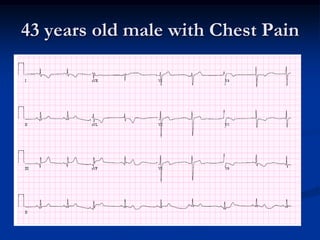
43 years old male with Chest Pain
Acute Inferior STEMI in NSR.
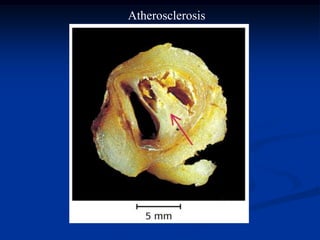
Atherosclerosis
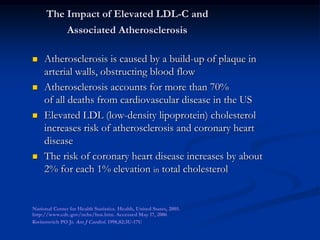
The Impact of Elevated LDL-C and Associated AtherosclerosisAtherosclerosis is caused by a build-up of plaque in arterial walls, obstructing blood flowAtherosclerosis accounts for more than 70% of all deaths from cardiovascular disease in the USElevated LDL (low-density lipoprotein) cholesterol increases risk of atherosclerosis and coronary heart diseaseThe risk of coronary heart disease increases by about 2% for each 1% elevation in total cholesterolNational Center for Health Statistics. Health, United States, 2005.http://www.cdc.gov/nchs/hus.htm. Accessed May 17, 2006Kwiterovich PO Jr. Am J Cardiol. 1998,82:3U-17U
Cholesterol is important in so many metabolic activities , there fore it is more important in adults or infants????
What is the normal Cholesterol level in Infancy???.
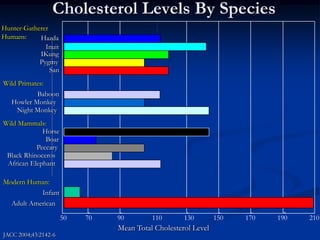
Cholesterol Levels By SpeciesInfantAdult AmericanHunter-GathererHumans:HazdaInuitIKungPygmySanWild Primates:BaboonHowlerMonkeyNight MonkeyWild Mammals:HorseBoarPeccaryBlackRhinocerosAfricanElephantModern Human:507090110130150170190210Mean Total Cholesterol LevelJACC 2004;43:2142-6
Discovery of statinsSome drugs available but not effectiveIn 1971,Endo and Kuroda (Sankyo Pharmaceuticals in Japan) began search for better drugsCholesterol pathway known and they wanted to find a HMG-CoA reductase inhibitor – looked for a microorganism – screened over 6000Two (3rd later) cmpds identified - one was from Penicillium citrinum  - named mevastatinIn 1976 isolated and crystallized Clinical trials started in 1978 and quickly stopped because of animal tumors
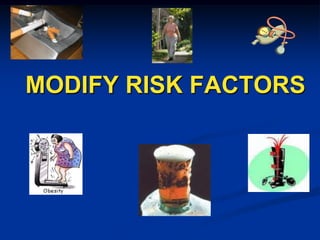
Modifiable Risk FactorsBehavioursCigarette smoking
Heavy alcohol use
Physical inactivity  Medical conditionsHypertension
Diabetes mellitus
Hypercholesterolemia
Obesity
Insulin resistance?
Cardiac diseasesAtrial fibrillationCoronary artery diseaseCHF
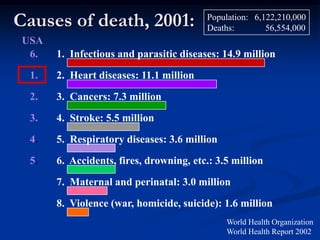
Causes of death, 2001:USA1.  Infectious and parasitic diseases: 14.9 million6.2.  Heart diseases: 11.1 million1.3.  Cancers: 7.3 million2.4.  Stroke: 5.5 million3.5.  Respiratory diseases: 3.6 million4.6.  Accidents, fires, drowning, etc.: 3.5 million5.7.  Maternal and perinatal: 3.0 million8.  Violence (war, homicide, suicide): 1.6 million Population:   6,122,210,000Deaths:              56,554,000World Health OrganizationWorld Health Report 2002
Therapeutic lifestyle change is the cornerstone of the management of hyperlipidemia and dyslipidemia? LDL-C with AHA diet: ~ 5%Response variability: familial/geneticHypocaloric diets in overweight & obese
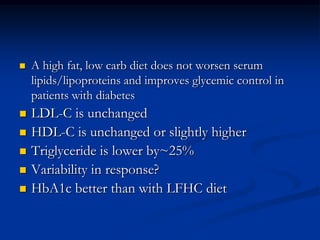
A high fat, low carb diet does not worsen serum lipids/lipoproteins and improves glycemic control in patients with diabetesLDL-C is unchangedHDL-C is unchanged or slightly higherTriglyceride is lower by~25%Variability in response?HbA1c better than with LFHC diet
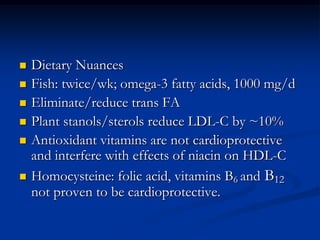
Dietary NuancesFish: twice/wk; omega-3 fatty acids, 1000 mg/dEliminate/reduce trans FA Plant stanols/sterols reduce LDL-C by ~10%Antioxidant vitamins are not cardioprotective and interfere with effects of niacin on HDL-CHomocysteine: folic acid, vitamins B6 and B12not proven to be cardioprotective.
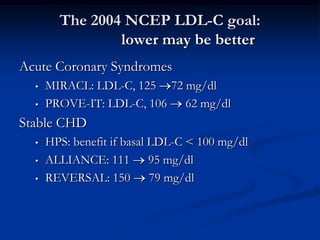
The 2004 NCEP LDL-C goal:lower may be betterAcute Coronary SyndromesMIRACL: LDL-C, 125 72 mg/dl
PROVE-IT: LDL-C, 106  62 mg/dlStable CHDHPS: benefit if basal LDL-C
ALLIANCE: 111  95 mg/dl
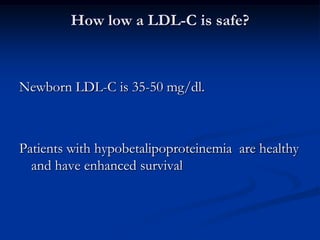
REVERSAL: 150  79 mg/dlHow low a LDL-C is safe?Newborn LDL-C is 35-50 mg/dl.Patients with hypobetalipoproteinemia  are healthy and have enhanced survival
ATP III Treatment PrioritiesReduce LDL-C to goal (new goals)Correct residual lipid/lipoprotein abnormalities( non-HDL-cholesterol)Address the metabolic syndrome
Utility of the non-HDL-cholesterolTotal minus HDL-CIncludes all atherogenic lipoproteinsLDL-C, Lp(a), IDL, VLDLSurrogate for apoprotein BOptimum; add 30 mg/dl to LDL-C goals
All patients should receive TLC advise. Simultaneous drug therapy should be started in:Patients with symptomatic CHDAll high risk patientsIntermediate risk men@40-45 yrs
women@50-55 yrsOptions for reducing LDL-cholesterolStatins
Cholesterol absorption inhibitors
Bile acid binding resins
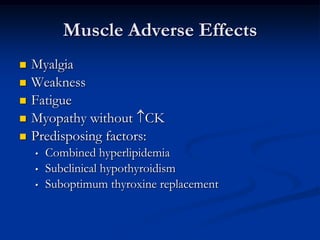
NiacinMuscle Adverse EffectsMyalgiaWeaknessFatigueMyopathy without CKPredisposing factors:Combined hyperlipidemia
Subclinical hypothyroidism
Suboptimum thyroxine replacementMODIFY RISK FACTORS
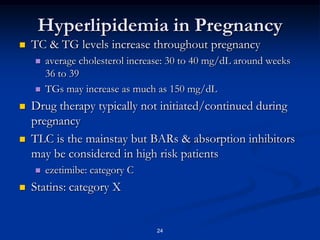
Hyperlipidemia in PregnancyTC & TG levels increase throughout pregnancyaverage cholesterol increase: 30 to 40 mg/dL around weeks 36 to 39TGs may increase as much as 150 mg/dLDrug therapy typically not initiated/continued during pregnancyTLC is the mainstay but BARs & absorption inhibitors may be considered in high risk patientsezetimibe: category C   Statins: category X24
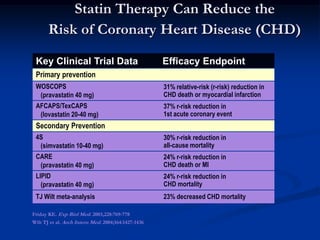
Statin Therapy Can Reduce the Risk of Coronary Heart Disease (CHD)Friday KE. Exp Biol Med. 2003,228:769-778Wilt TJ et al. Arch Intern Med. 2004;164:1427-1436
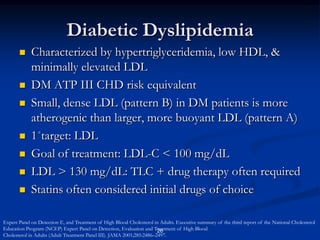
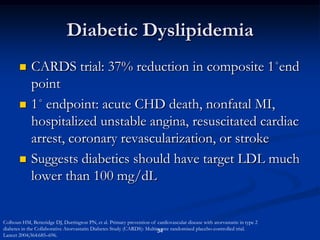
Diabetic DyslipidemiaCharacterized by hypertriglyceridemia, low HDL, & minimally elevated LDLDM ATP III CHD risk equivalentSmall, dense LDL (pattern B) in DM patients is more atherogenic than larger, more buoyant LDL (pattern A)1˚target: LDL Goal of treatment: LDL-C < 100 mg/dLLDL > 130 mg/dL: TLC + drug therapy often required Statins often considered initial drugs of choice26Expert Panel on Detection E, and Treatment of High Blood Cholesterol in Adults. Executive summary of the third report of the National Cholesterol Education Program (NCEP) Expert Panel on Detection, Evaluation and Treatment of High Blood Cholesterol in Adults (Adult Treatment Panel III). JAMA 2001;285:2486–2497.

Pfizer Talk Final

  • 1.
    Pfizer Talk FamilyMedicine 13/1/2010Dr Ihab Suliman
  • 2.
    43 years oldmale with Chest Pain
  • 3.
  • 4.
  • 6.
    The Impact ofElevated LDL-C and Associated AtherosclerosisAtherosclerosis is caused by a build-up of plaque in arterial walls, obstructing blood flowAtherosclerosis accounts for more than 70% of all deaths from cardiovascular disease in the USElevated LDL (low-density lipoprotein) cholesterol increases risk of atherosclerosis and coronary heart diseaseThe risk of coronary heart disease increases by about 2% for each 1% elevation in total cholesterolNational Center for Health Statistics. Health, United States, 2005.http://www.cdc.gov/nchs/hus.htm. Accessed May 17, 2006Kwiterovich PO Jr. Am J Cardiol. 1998,82:3U-17U
  • 7.
    Cholesterol is importantin so many metabolic activities , there fore it is more important in adults or infants????
  • 8.
    What is thenormal Cholesterol level in Infancy???.
  • 9.
    Cholesterol Levels BySpeciesInfantAdult AmericanHunter-GathererHumans:HazdaInuitIKungPygmySanWild Primates:BaboonHowlerMonkeyNight MonkeyWild Mammals:HorseBoarPeccaryBlackRhinocerosAfricanElephantModern Human:507090110130150170190210Mean Total Cholesterol LevelJACC 2004;43:2142-6
  • 10.
    Discovery of statinsSomedrugs available but not effectiveIn 1971,Endo and Kuroda (Sankyo Pharmaceuticals in Japan) began search for better drugsCholesterol pathway known and they wanted to find a HMG-CoA reductase inhibitor – looked for a microorganism – screened over 6000Two (3rd later) cmpds identified - one was from Penicillium citrinum - named mevastatinIn 1976 isolated and crystallized Clinical trials started in 1978 and quickly stopped because of animal tumors
  • 11.
  • 12.
  • 13.
    Physical inactivity Medical conditionsHypertension
  • 14.
  • 15.
  • 16.
  • 17.
  • 18.
  • 19.
    Causes of death,2001:USA1. Infectious and parasitic diseases: 14.9 million6.2. Heart diseases: 11.1 million1.3. Cancers: 7.3 million2.4. Stroke: 5.5 million3.5. Respiratory diseases: 3.6 million4.6. Accidents, fires, drowning, etc.: 3.5 million5.7. Maternal and perinatal: 3.0 million8. Violence (war, homicide, suicide): 1.6 million Population: 6,122,210,000Deaths: 56,554,000World Health OrganizationWorld Health Report 2002
  • 20.
    Therapeutic lifestyle changeis the cornerstone of the management of hyperlipidemia and dyslipidemia? LDL-C with AHA diet: ~ 5%Response variability: familial/geneticHypocaloric diets in overweight & obese
  • 21.
    A high fat,low carb diet does not worsen serum lipids/lipoproteins and improves glycemic control in patients with diabetesLDL-C is unchangedHDL-C is unchanged or slightly higherTriglyceride is lower by~25%Variability in response?HbA1c better than with LFHC diet
  • 22.
    Dietary NuancesFish: twice/wk;omega-3 fatty acids, 1000 mg/dEliminate/reduce trans FA Plant stanols/sterols reduce LDL-C by ~10%Antioxidant vitamins are not cardioprotective and interfere with effects of niacin on HDL-CHomocysteine: folic acid, vitamins B6 and B12not proven to be cardioprotective.
  • 23.
    The 2004 NCEPLDL-C goal:lower may be betterAcute Coronary SyndromesMIRACL: LDL-C, 125 72 mg/dl
  • 24.
    PROVE-IT: LDL-C, 106 62 mg/dlStable CHDHPS: benefit if basal LDL-C
  • 25.
  • 26.
    REVERSAL: 150 79 mg/dlHow low a LDL-C is safe?Newborn LDL-C is 35-50 mg/dl.Patients with hypobetalipoproteinemia are healthy and have enhanced survival
  • 27.
    ATP III TreatmentPrioritiesReduce LDL-C to goal (new goals)Correct residual lipid/lipoprotein abnormalities( non-HDL-cholesterol)Address the metabolic syndrome
  • 28.
    Utility of thenon-HDL-cholesterolTotal minus HDL-CIncludes all atherogenic lipoproteinsLDL-C, Lp(a), IDL, VLDLSurrogate for apoprotein BOptimum; add 30 mg/dl to LDL-C goals
  • 29.
    All patients shouldreceive TLC advise. Simultaneous drug therapy should be started in:Patients with symptomatic CHDAll high risk patientsIntermediate risk men@40-45 yrs
  • 30.
    women@50-55 yrsOptions forreducing LDL-cholesterolStatins
  • 31.
  • 32.
  • 33.
    NiacinMuscle Adverse EffectsMyalgiaWeaknessFatigueMyopathywithout CKPredisposing factors:Combined hyperlipidemia
  • 34.
  • 35.
  • 36.
    Hyperlipidemia in PregnancyTC& TG levels increase throughout pregnancyaverage cholesterol increase: 30 to 40 mg/dL around weeks 36 to 39TGs may increase as much as 150 mg/dLDrug therapy typically not initiated/continued during pregnancyTLC is the mainstay but BARs & absorption inhibitors may be considered in high risk patientsezetimibe: category C Statins: category X24
  • 37.
    Statin Therapy CanReduce the Risk of Coronary Heart Disease (CHD)Friday KE. Exp Biol Med. 2003,228:769-778Wilt TJ et al. Arch Intern Med. 2004;164:1427-1436
  • 38.
    Diabetic DyslipidemiaCharacterized byhypertriglyceridemia, low HDL, & minimally elevated LDLDM ATP III CHD risk equivalentSmall, dense LDL (pattern B) in DM patients is more atherogenic than larger, more buoyant LDL (pattern A)1˚target: LDL Goal of treatment: LDL-C < 100 mg/dLLDL > 130 mg/dL: TLC + drug therapy often required Statins often considered initial drugs of choice26Expert Panel on Detection E, and Treatment of High Blood Cholesterol in Adults. Executive summary of the third report of the National Cholesterol Education Program (NCEP) Expert Panel on Detection, Evaluation and Treatment of High Blood Cholesterol in Adults (Adult Treatment Panel III). JAMA 2001;285:2486–2497.