

Diabetes: At a Glance

By Deepmala Chawdhary
What is Diabetes

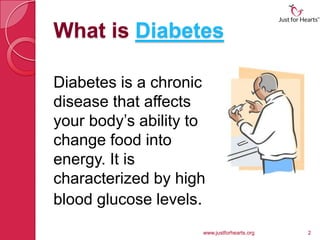
Diabetes is a chronic
disease that affects
your body’s ability to
change food into
energy. It is
characterized by high
blood glucose levels.
                     www.justforhearts.org   2
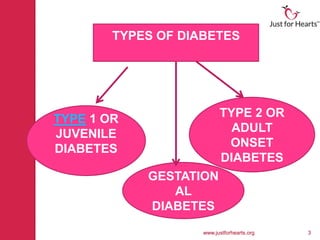
TYPES OF DIABETES


TYPE 1 OR                 TYPE 2 OR
JUVENILE                    ADULT
DIABETES                   ONSET
                          DIABETES
            GESTATION
               AL
            DIABETES
                    www.justforhearts.org   3
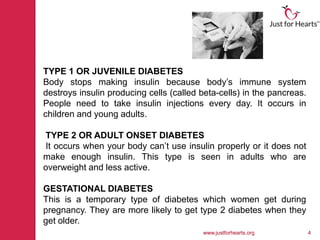
TYPE 1 OR JUVENILE DIABETES
Body stops making insulin because body’s immune system
destroys insulin producing cells (called beta-cells) in the pancreas.
People need to take insulin injections every day. It occurs in
children and young adults.

TYPE 2 OR ADULT ONSET DIABETES
It occurs when your body can’t use insulin properly or it does not
make enough insulin. This type is seen in adults who are
overweight and less active.

GESTATIONAL DIABETES
This is a temporary type of diabetes which women get during
pregnancy. They are more likely to get type 2 diabetes when they
get older.
                                         www.justforhearts.org          4
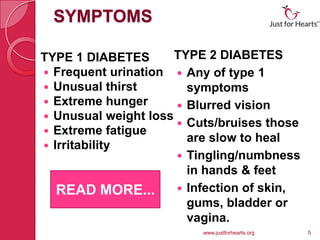
SYMPTOMS

TYPE 1 DIABETES       TYPE 2 DIABETES
 Frequent urination  Any of type 1
 Unusual thirst        symptoms
 Extreme hunger       Blurred vision
 Unusual weight loss
                       Cuts/bruises those
 Extreme fatigue
                        are slow to heal
 Irritability
                       Tingling/numbness
                        in hands & feet
   READ MORE...        Infection of skin,
                        gums, bladder or
                        vagina.
                          www.justforhearts.org   5
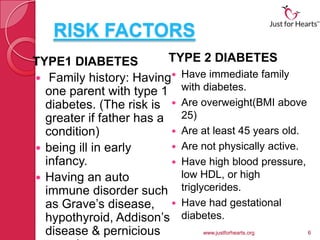
RISK FACTORS
TYPE1 DIABETES           TYPE 2 DIABETES
 Family history: Having Have immediate family
  one parent with type 1 with diabetes.
  diabetes. (The risk is  Are overweight(BMI above
  greater if father has a 25)
  condition)              Are at least 45 years old.

 being ill in early      Are not physically active.
  infancy.                Have high blood pressure,
 Having an auto           low HDL, or high
  immune disorder such triglycerides.
  as Grave’s disease,  Have had gestational
  hypothyroid, Addison’s diabetes.
  disease & pernicious         www.justforhearts.org  6
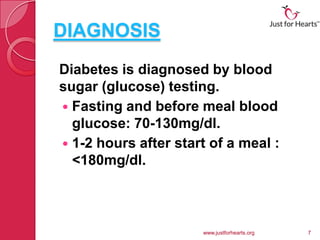
DIAGNOSIS
Diabetes is diagnosed by blood
sugar (glucose) testing.
 Fasting and before meal blood
  glucose: 70-130mg/dl.
 1-2 hours after start of a meal :
  <180mg/dl.


                      www.justforhearts.org   7
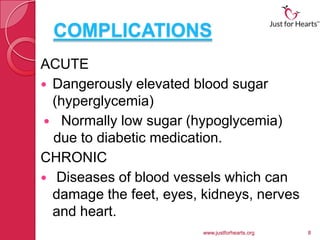
COMPLICATIONS
ACUTE
 Dangerously elevated blood sugar
  (hyperglycemia)
 Normally low sugar (hypoglycemia)
  due to diabetic medication.
CHRONIC
 Diseases of blood vessels which can
  damage the feet, eyes, kidneys, nerves
  and heart.
                         www.justforhearts.org   8
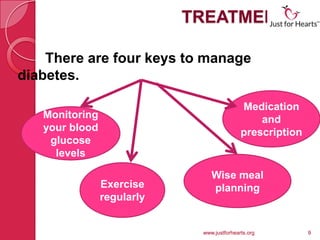
TREATMENT

    There are four keys to manage
diabetes.

                                            Medication
   Monitoring                                   and
   your blood                               prescription
    glucose
     levels

                                Wise meal
                Exercise        planning
                regularly


                             www.justforhearts.org         9
TREATMENT
 MONITORING BLOOD GLUCOSE LEVELS
This is very important to the management of diabetes
because: That’s how you know right way if you are
keeping your blood glucose near normal.
It will tell you rather quickly whether your treatment
(diet, exercise, and medication) are working for you.

EXERCISE REGULARLY
Exercise can actually help control blood sugar levels as
it depresses insulin production & also prompts muscle
cells to take in more glucose from blood stream.
It also improves the cardio vascular system, thus
reducing the risk of heart attack.
It also encourages the weight loss which can have big
benefits for people with diabetes.
                                  www.justforhearts.org    10
TREATMENT
PLANNING YOUR MEAL WISELY
1. Generally many people with diabetes seem to
   tolerate a more moderate carbohydrate (around 50%
   of calories from carbohydrates), moderate fat
   (30%calories from fat), and moderate proteins
   (around 20% calories from proteins) way of eating.
2. Make fiber apart of almost every meal. There are two
   types of fibers Soluble and insoluble fibers. Soluble
   fiber is a vital component of blood glucose control for
   many people. It leaves the stomach slowly so it
   makes you feel satisfied longer. Insoluble fiber is not
   digested by the body causes other carbohydrates in
   the meal to be digested and absorbed more slowly,
   encouraging lower blood sugar. Beans, oats &oats
   bran, barley, fruits like apple, pear, berries, oranges,
                                     www.justforhearts.org    11
TREATMENT
PLANNING YOUR MEAL WISELY
3. Switch to smart carbohydrates and emphasize on
   low glycemic load foods. High glycemic index foods,
   such as white bread & white rice, give you a quick
   blood sugar boost that also fades quickly, leaving
   you hungry again. Low glycemic index foods such as
   whole grains & beans keep you feeling full longer,
   because they cause your blood sugar levels to rise
   more slowly.
4. Emphasize Heart protective fats.Omega-3 and
   monounsaturated fats to make up most of the
   30%.Use canola oil, olive oil for cooking, enjoy a
   handful of nuts per day & eating fish twice a week.
5. Fat helps slow down digestion in general. It also
   helps people feel more satisfied after a meal or
                                www.justforhearts.org    12
TREATMENT
MEDICATION & PRESCRIPTION

It’s important to work with your healthcare team particularly if insulin is
part of your treatment plan


  Read More:
  1. Advantages Of Insulin
  2. Diabetes Education
  3. New Trends in Insulin


                                              www.justforhearts.org           13
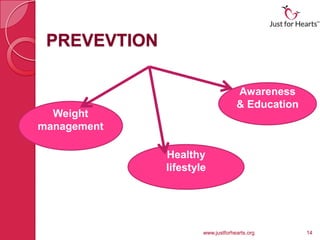
PREVEVTION

                                   Awareness
                                   & Education
  Weight
management

              Healthy
              lifestyle


                      www.justforhearts.org      14
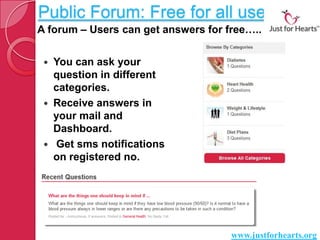
Public Forum: Free for all users
A forum – Users can get answers for free…..


    You can ask your
     question in different
     categories.
    Receive answers in
     your mail and
     Dashboard.
    Get sms notifications
     on registered no.


                                     www.justforhearts.org

Diabetes

  • 1.
    Diabetes: At aGlance By Deepmala Chawdhary
  • 2.
    What is Diabetes Diabetesis a chronic disease that affects your body’s ability to change food into energy. It is characterized by high blood glucose levels. www.justforhearts.org 2
  • 3.
    TYPES OF DIABETES TYPE1 OR TYPE 2 OR JUVENILE ADULT DIABETES ONSET DIABETES GESTATION AL DIABETES www.justforhearts.org 3
  • 4.
    TYPE 1 ORJUVENILE DIABETES Body stops making insulin because body’s immune system destroys insulin producing cells (called beta-cells) in the pancreas. People need to take insulin injections every day. It occurs in children and young adults. TYPE 2 OR ADULT ONSET DIABETES It occurs when your body can’t use insulin properly or it does not make enough insulin. This type is seen in adults who are overweight and less active. GESTATIONAL DIABETES This is a temporary type of diabetes which women get during pregnancy. They are more likely to get type 2 diabetes when they get older. www.justforhearts.org 4
  • 5.
    SYMPTOMS TYPE 1 DIABETES TYPE 2 DIABETES  Frequent urination  Any of type 1  Unusual thirst symptoms  Extreme hunger  Blurred vision  Unusual weight loss  Cuts/bruises those  Extreme fatigue are slow to heal  Irritability  Tingling/numbness in hands & feet READ MORE...  Infection of skin, gums, bladder or vagina. www.justforhearts.org 5
  • 6.
    RISK FACTORS TYPE1 DIABETES TYPE 2 DIABETES  Family history: Having Have immediate family one parent with type 1 with diabetes. diabetes. (The risk is  Are overweight(BMI above greater if father has a 25) condition)  Are at least 45 years old.  being ill in early  Are not physically active. infancy.  Have high blood pressure,  Having an auto low HDL, or high immune disorder such triglycerides. as Grave’s disease,  Have had gestational hypothyroid, Addison’s diabetes. disease & pernicious www.justforhearts.org 6
  • 7.
    DIAGNOSIS Diabetes is diagnosedby blood sugar (glucose) testing.  Fasting and before meal blood glucose: 70-130mg/dl.  1-2 hours after start of a meal : <180mg/dl. www.justforhearts.org 7
  • 8.
    COMPLICATIONS ACUTE  Dangerously elevatedblood sugar (hyperglycemia)  Normally low sugar (hypoglycemia) due to diabetic medication. CHRONIC  Diseases of blood vessels which can damage the feet, eyes, kidneys, nerves and heart. www.justforhearts.org 8
  • 9.
    TREATMENT There are four keys to manage diabetes. Medication Monitoring and your blood prescription glucose levels Wise meal Exercise planning regularly www.justforhearts.org 9
  • 10.
    TREATMENT MONITORING BLOODGLUCOSE LEVELS This is very important to the management of diabetes because: That’s how you know right way if you are keeping your blood glucose near normal. It will tell you rather quickly whether your treatment (diet, exercise, and medication) are working for you. EXERCISE REGULARLY Exercise can actually help control blood sugar levels as it depresses insulin production & also prompts muscle cells to take in more glucose from blood stream. It also improves the cardio vascular system, thus reducing the risk of heart attack. It also encourages the weight loss which can have big benefits for people with diabetes. www.justforhearts.org 10
  • 11.
    TREATMENT PLANNING YOUR MEALWISELY 1. Generally many people with diabetes seem to tolerate a more moderate carbohydrate (around 50% of calories from carbohydrates), moderate fat (30%calories from fat), and moderate proteins (around 20% calories from proteins) way of eating. 2. Make fiber apart of almost every meal. There are two types of fibers Soluble and insoluble fibers. Soluble fiber is a vital component of blood glucose control for many people. It leaves the stomach slowly so it makes you feel satisfied longer. Insoluble fiber is not digested by the body causes other carbohydrates in the meal to be digested and absorbed more slowly, encouraging lower blood sugar. Beans, oats &oats bran, barley, fruits like apple, pear, berries, oranges, www.justforhearts.org 11
  • 12.
    TREATMENT PLANNING YOUR MEALWISELY 3. Switch to smart carbohydrates and emphasize on low glycemic load foods. High glycemic index foods, such as white bread & white rice, give you a quick blood sugar boost that also fades quickly, leaving you hungry again. Low glycemic index foods such as whole grains & beans keep you feeling full longer, because they cause your blood sugar levels to rise more slowly. 4. Emphasize Heart protective fats.Omega-3 and monounsaturated fats to make up most of the 30%.Use canola oil, olive oil for cooking, enjoy a handful of nuts per day & eating fish twice a week. 5. Fat helps slow down digestion in general. It also helps people feel more satisfied after a meal or www.justforhearts.org 12
  • 13.
    TREATMENT MEDICATION & PRESCRIPTION It’simportant to work with your healthcare team particularly if insulin is part of your treatment plan Read More: 1. Advantages Of Insulin 2. Diabetes Education 3. New Trends in Insulin www.justforhearts.org 13
  • 14.
    PREVEVTION Awareness & Education Weight management Healthy lifestyle www.justforhearts.org 14
  • 15.
    Public Forum: Freefor all users A forum – Users can get answers for free…..  You can ask your question in different categories.  Receive answers in your mail and Dashboard.  Get sms notifications on registered no. www.justforhearts.org