GROUP N AME


Hope you enjoy t he show 
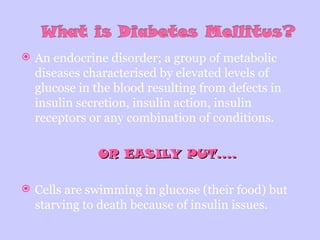
   An endocrine disorder; a group of metabolic
    diseases characterised by elevated levels of
    glucose in the blood resulting from defects in
    insulin secretion, insulin action, insulin
    receptors or any combination of conditions.

               OR EASILY PUT….

   Cells are swimming in glucose (their food) but
    starving to death because of insulin issues.
   Type I: Destruction of beta cells->
    decreased insulin production->uncontrolled
    glucose production-> HYPERGLYCEMIA

   Type II: Decreased sensitivity of insulin
    receptor to insulin-> less uptake of glucose->
    HYPERGLYCEMIA
         REMEMBER the concept
           ~Sugar Into The Cells~
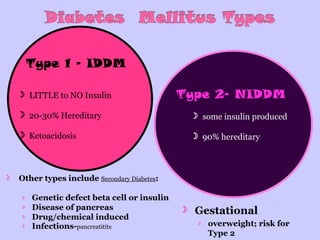
Type 1 – IDDM

     LITTLE to NO Insulin                    Type 2– NIDDM
     20-30% Hereditary                            some insulin produced

     Ketoacidosis                                 90% hereditary


   Other types include Secondary Diabetes:

    ›   Genetic defect beta cell or insulin
    ›   Disease of pancreas                      Gestational
    ›   Drug/chemical induced
    ›   Infections-pancreatitits                   › overweight; risk for
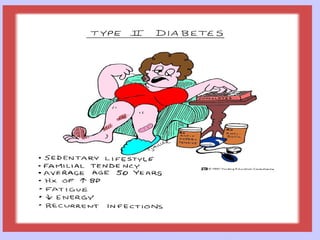
                                                     Type 2
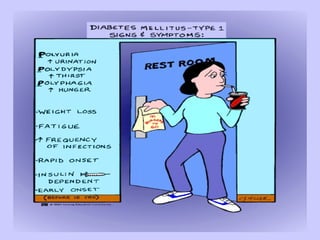
   Classic 3 P’s
                                        Family Hx diabetes
   Fatigue
                                        Race/Ethnicity
   Body Weakness
                                        Age
   Weight Changes
                                        Hypertension
   Visual Changes
                                        Hyperlipidemia
   Slow Wound Healing/
                                        Hx of Gestational Diabetes
    Recurrent Skin infections
                                         Mellitus
   Laboratory Tests-> FBS/fasting
                                        Other signs and symptoms of
    blood sugar >7.0 mmol/L
                                         diabetes complications
Chronic
      MACROVASCULAR             Acute
 Cardiovascular disease
 Cerebrovascular disease

                                   Diabetic ketoacidosis
      MICROVASCULAR
   Retinopathy (vision)           Hyperglycemic-
    problems                        hyperosmolar-nonketotic
   Diabetic neuropathy             syndrome
   Diabetic nephropathy
                                   Hypoglycemia from too
   Male erectile dysfunction       much insulin or too little
                                    glucose
Diabetes can be managed or controlled by:

 Educating patient about diabetes
 Exercising regularly
 Eating a healthy well balanced diet
 Avoiding smoking (people with diabetes who smoke
                      are at a higher risk of developing
                      cardiovascular complications).
 Avoid alcohol
 Pharmacologic Therapy

      Type One: Insulin Injections given
              subcutaneously
      Type Two: Oral Medication, such as Metformin
Hot + Dry = Sugar High


Cold n Clammy= Need
     Some Candy
And For All You
 Visual Learners,
 Heres A Treat:
http://www.youtube.com/wat
ch?
v=NnIWDxuZKUo&feature=r
elated
Diabetes Made Easy
Diabetes Made Easy

Diabetes Made Easy

  • 2.
    GROUP N AME Hopeyou enjoy t he show 
  • 3.
    An endocrine disorder; a group of metabolic diseases characterised by elevated levels of glucose in the blood resulting from defects in insulin secretion, insulin action, insulin receptors or any combination of conditions. OR EASILY PUT….  Cells are swimming in glucose (their food) but starving to death because of insulin issues.
  • 4.
    Type I: Destruction of beta cells-> decreased insulin production->uncontrolled glucose production-> HYPERGLYCEMIA  Type II: Decreased sensitivity of insulin receptor to insulin-> less uptake of glucose-> HYPERGLYCEMIA REMEMBER the concept ~Sugar Into The Cells~
  • 5.
    Type 1 –IDDM  LITTLE to NO Insulin Type 2– NIDDM  20-30% Hereditary  some insulin produced  Ketoacidosis  90% hereditary  Other types include Secondary Diabetes: › Genetic defect beta cell or insulin › Disease of pancreas  Gestational › Drug/chemical induced › Infections-pancreatitits › overweight; risk for Type 2
  • 8.
    Classic 3 P’s  Family Hx diabetes  Fatigue  Race/Ethnicity  Body Weakness  Age  Weight Changes  Hypertension  Visual Changes  Hyperlipidemia  Slow Wound Healing/  Hx of Gestational Diabetes Recurrent Skin infections Mellitus  Laboratory Tests-> FBS/fasting  Other signs and symptoms of blood sugar >7.0 mmol/L diabetes complications
  • 9.
    Chronic MACROVASCULAR Acute  Cardiovascular disease  Cerebrovascular disease  Diabetic ketoacidosis MICROVASCULAR  Retinopathy (vision)  Hyperglycemic- problems hyperosmolar-nonketotic  Diabetic neuropathy syndrome  Diabetic nephropathy  Hypoglycemia from too  Male erectile dysfunction much insulin or too little glucose
  • 10.
    Diabetes can bemanaged or controlled by:  Educating patient about diabetes  Exercising regularly  Eating a healthy well balanced diet  Avoiding smoking (people with diabetes who smoke are at a higher risk of developing cardiovascular complications).  Avoid alcohol  Pharmacologic Therapy Type One: Insulin Injections given subcutaneously Type Two: Oral Medication, such as Metformin
  • 12.
    Hot + Dry= Sugar High Cold n Clammy= Need Some Candy
  • 13.
    And For AllYou Visual Learners, Heres A Treat: http://www.youtube.com/wat ch? v=NnIWDxuZKUo&feature=r elated

Editor's Notes

  • #11 DIET: Goals of diet therapy Principles of nutrition in diabetes Protein, fats and carbohydrates, fiber, sweeteners, fat replacers Alcohol Food labeling Exchange system, carbohydrate counting Special considerations for type 1 and type 2 diabetes EXERCISE Purpose - controls blood glucose and lowers blood glucose Purpose - reduce the amount of insulin needed