





www.justforhearts.org
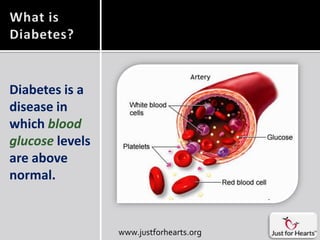
Diabetes is a
disease in
which blood
glucose levels
are above
normal.


                 www.justforhearts.org
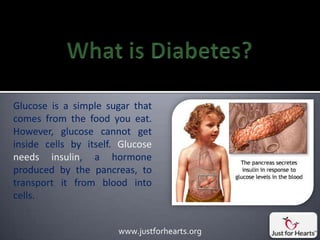
Glucose is a simple sugar that
comes from the food you eat.
However, glucose cannot get
inside cells by itself. Glucose
needs insulin, a hormone
produced by the pancreas, to
transport it from blood into
cells.


                       www.justforhearts.org
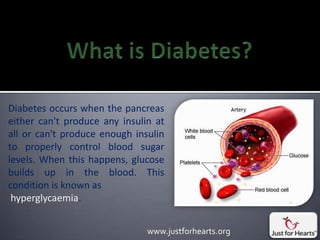
Diabetes occurs when the pancreas
either can't produce any insulin at
all or can't produce enough insulin
to properly control blood sugar
levels. When this happens, glucose
builds up in the blood. This
condition is known as
 hyperglycaemia.


                               www.justforhearts.org
Anyone can develop diabetes, but it is more common in
people who are:
   •Overweight .
   •Not physically active .
Or who have:
   •A family member with diabetes.
   •Had diabetes when pregnant .
   •Blood glucose levels that are higher than normal (pre-
   diabetes) .


                   www.justforhearts.org
www.justforhearts.org


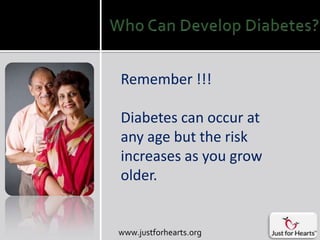
Remember !!!

Diabetes can occur at
any age but the risk
increases as you grow
older.


www.justforhearts.org
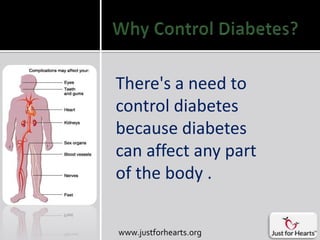
There's a need to
control diabetes
because diabetes
can affect any part
of the body .


www.justforhearts.org
Are you often thirsty, hungry, or tired?
Do you urinate often?
Do you have sores that heal slowly, tingling in your feet,
or blurry eyesight?
These MAY be signs of diabetes. Even without these
signs, you could still have diabetes.
                      www.justforhearts.org
Healthy eating.
Physical activity .
Blood glucose testing.
People with Type 2 diabetes require pills,
insulin, or both, to control their blood glucose
levels.
                   www.justforhearts.org
How?
Get More Physical Activity.
Get Plenty of Fibre.
Lose Extra Weight.
Make Healthier choices in food.

                 www.justforhearts.org
Clinical trials have shown that lifestyle changes
including increase in physical activity have reduced
risk of developing diabetes especially Type 2 Diabetes.


                  www.justforhearts.org
There are many benefits to regular physical
activity.
 Lose weight
 Lower your blood sugar
 Boosts your sensitivity to insulin — which helps
keep your blood sugar within a normal range.


                 www.justforhearts.org
Fiber helps you in:

 Reducing your risk of diabetes by improving
your blood sugar control.
Lowering your risk of heart disease.
Promoting weight loss by helping you feel full.


                  www.justforhearts.org
Every pound you lose can improve your health.
In one study, overweight adults reduced their
diabetes risk by 16 percent for every kilogram (2.2
pounds) of weight lost.


                 www.justforhearts.org
Eat lots of vegetables and fruits.
Choose whole grain foods over processed grain products.
Choose water and calorie-free "diet" drinks .
Cut back on high calorie snack foods and desserts .
Avoid Eating too much even healthy food too.

                   www.justforhearts.org
Diabetes is serious yet
controllable!

You Must Learn about
Diabetes in order to
prevent it.


               www.justforhearts.org
Be physically active
every day.
Learn what you
should eat.
Make wise food
choices .


              www.justforhearts.org
Know you Ideal
Weight and try to
reach it.
Visit your doctor or
health care provider
regularly.


              www.justforhearts.org
Website:     www.justforhearts.org
Email:       ravindra@justforhearts.org ,
             drravindrakulkarni@gmail.com
Direct:      +91 20 27610671 , +91 20 67306537
Mobile:      +91 94223 00251
Blog:        justforhearts.wordpress.com
Twitter:     twitter.com/justforhearts
Facebook:    facebook.com/justforhearts
Linked In:   linkedin.com/pub/dr-ravindralkulkarni/15/258/4ab


                    www.justforhearts.org
www.justforhearts.org

How to save yourself from diabetes ?

  • 1.
  • 2.
    Diabetes is a diseasein which blood glucose levels are above normal. www.justforhearts.org
  • 3.
    Glucose is asimple sugar that comes from the food you eat. However, glucose cannot get inside cells by itself. Glucose needs insulin, a hormone produced by the pancreas, to transport it from blood into cells. www.justforhearts.org
  • 4.
    Diabetes occurs whenthe pancreas either can't produce any insulin at all or can't produce enough insulin to properly control blood sugar levels. When this happens, glucose builds up in the blood. This condition is known as hyperglycaemia. www.justforhearts.org
  • 5.
    Anyone can developdiabetes, but it is more common in people who are: •Overweight . •Not physically active . Or who have: •A family member with diabetes. •Had diabetes when pregnant . •Blood glucose levels that are higher than normal (pre- diabetes) . www.justforhearts.org
  • 6.
    www.justforhearts.org Remember !!! Diabetes canoccur at any age but the risk increases as you grow older. www.justforhearts.org
  • 7.
    There's a needto control diabetes because diabetes can affect any part of the body . www.justforhearts.org
  • 8.
    Are you oftenthirsty, hungry, or tired? Do you urinate often? Do you have sores that heal slowly, tingling in your feet, or blurry eyesight? These MAY be signs of diabetes. Even without these signs, you could still have diabetes. www.justforhearts.org
  • 9.
    Healthy eating. Physical activity. Blood glucose testing. People with Type 2 diabetes require pills, insulin, or both, to control their blood glucose levels. www.justforhearts.org
  • 10.
    How? Get More PhysicalActivity. Get Plenty of Fibre. Lose Extra Weight. Make Healthier choices in food. www.justforhearts.org
  • 11.
    Clinical trials haveshown that lifestyle changes including increase in physical activity have reduced risk of developing diabetes especially Type 2 Diabetes. www.justforhearts.org
  • 12.
    There are manybenefits to regular physical activity.  Lose weight  Lower your blood sugar  Boosts your sensitivity to insulin — which helps keep your blood sugar within a normal range. www.justforhearts.org
  • 13.
    Fiber helps youin:  Reducing your risk of diabetes by improving your blood sugar control. Lowering your risk of heart disease. Promoting weight loss by helping you feel full. www.justforhearts.org
  • 14.
    Every pound youlose can improve your health. In one study, overweight adults reduced their diabetes risk by 16 percent for every kilogram (2.2 pounds) of weight lost. www.justforhearts.org
  • 15.
    Eat lots ofvegetables and fruits. Choose whole grain foods over processed grain products. Choose water and calorie-free "diet" drinks . Cut back on high calorie snack foods and desserts . Avoid Eating too much even healthy food too. www.justforhearts.org
  • 16.
    Diabetes is seriousyet controllable! You Must Learn about Diabetes in order to prevent it. www.justforhearts.org
  • 17.
    Be physically active everyday. Learn what you should eat. Make wise food choices . www.justforhearts.org
  • 18.
    Know you Ideal Weightand try to reach it. Visit your doctor or health care provider regularly. www.justforhearts.org
  • 19.
    Website: www.justforhearts.org Email: ravindra@justforhearts.org , drravindrakulkarni@gmail.com Direct: +91 20 27610671 , +91 20 67306537 Mobile: +91 94223 00251 Blog: justforhearts.wordpress.com Twitter: twitter.com/justforhearts Facebook: facebook.com/justforhearts Linked In: linkedin.com/pub/dr-ravindralkulkarni/15/258/4ab www.justforhearts.org
  • 20.