DHATURA
PRESENTED BY_RAJEEV RAMAN
Introduction:
Dhatura, a member of the Solanaceae family and
belongs to the genus Datura, which consists of
nine species, such as Datura ferox, Datura alba,
Datura fastuosa, etc.
Toxic part
„. All parts of these plants are poisonous—fruit,
flowers and seeds (highest concentrations of
alkaloids are found in roots and seeds).
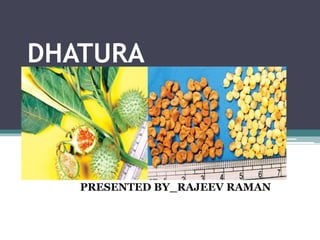
„. The seeds resemble chilli seeds.
„. The usual route is ingesting seeds or other plant
parts as tea, although smoking dried leaves also
are common.
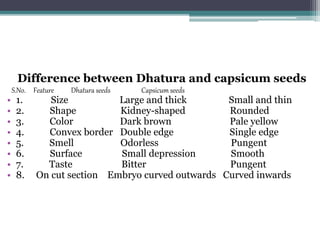
Difference between Dhatura and capsicum seeds
S.No. Feature Dhatura seeds Capsicum seeds
• 1. Size Large and thick Small and thin
• 2. Shape Kidney-shaped Rounded
• 3. Color Dark brown Pale yellow
• 4. Convex border Double edge Single edge
• 5. Smell Odorless Pungent
• 6. Surface Small depression Smooth
• 7. Taste Bitter Pungent
• 8. On cut section Embryo curved outwards Curved inwards
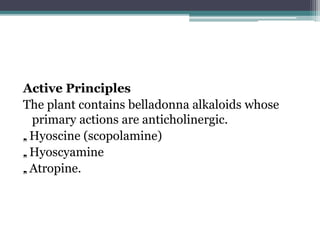
Active Principles
The plant contains belladonna alkaloids whose
primary actions are anticholinergic.
„. Hyoscine (scopolamine)
„. Hyoscyamine
„. Atropine.
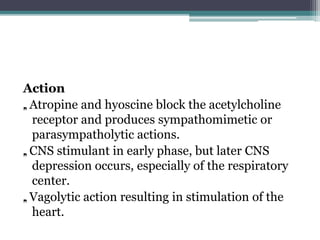
Action
„. Atropine and hyoscine block the acetylcholine
receptor and produces sympathomimetic or
parasympatholytic actions.
„. CNS stimulant in early phase, but later CNS
depression occurs, especially of the respiratory
center.
„. Vagolytic action resulting in stimulation of the
heart.
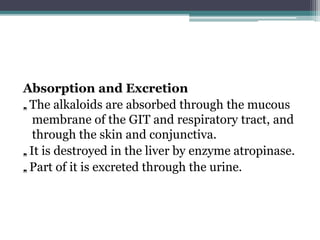
Absorption and Excretion
„. The alkaloids are absorbed through the mucous
membrane of the GIT and respiratory tract, and
through the skin and conjunctiva.
„. It is destroyed in the liver by enzyme atropinase.
„. Part of it is excreted through the urine.
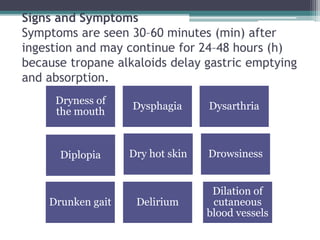
Signs and Symptoms
Symptoms are seen 30–60 minutes (min) after
ingestion and may continue for 24–48 hours (h)
because tropane alkaloids delay gastric emptying
and absorption.
Dryness of
the mouth
Dysphagia Dysarthria
Diplopia Dry hot skin Drowsiness
Drunken gait Delirium
Dilation of
cutaneous
blood vessels
• FATAL DOSE:
.seeds: 75-125(stupefying dose 40-50seeds)
.hyoscine:15-30mg
FATAL PERIOD : 24 hours
DIFFERENTIAL DIAGNOSIS: Drunkenness and
heat stroke
Treatment
i. Emetics.
ii. Gastric lavage with tannic acid, KMnO4 or activated
charcoal.
iii. Physiological antidote: Physostigmine
salicylate
iv. Pilocarpine 5–15 mg subcutaneously is also useful.
v. Purgatives and colonic lavage is recommended.
vi. Tepid sponge baths to control high temperature,and
diazepam IV for sedation and seizures. Morphine is
avoided.
vii. Delirium is controlled by short acting barbiturates.
viii. O2 inhalation and artificial respiration.
Postmortem Findings
External: Signs of asphyxia.
Internal
i. Seeds may be detected in the stomach and small
intestines. It resists putrefaction and may be
found even in a decomposed body. Identification
of ingested seeds can be diagnostic of tropane
alkaloid poisoning.
ii. Stomach: Mucosa may show inflammation.
iii. Lungs: Edematous and congested.
iv. Heart: Petechial hemorrhages in
endocardium.
Medico-legal Aspects
„. In India, dhatura is employed mainly as a stupefying
poison prior to robbery, kidnapping and rape.
„. Occasionally, it is used for suicidal purpose and for
criminal abortion. In Mexico, Datura is taken by Yaqui
women to lessen pain of childbirth.
„. Accidental poisoning is common in children who may
chew the fruit. Sometimes, it may be due to intake of
seeds mistaking them for chilli seeds.
„. Chinese herbal medicines containing tropane alkaloids
have been used to treat asthma, chronic bronchitis, pain
and flu symptoms. In Africa, a common use is to smoke
leaves of Datura to relieve asthma and pulmonary
problems.
„. It is used as an adulterant in country liquor for enhancing
the ‘kick’ effect.
THANK YOU

Dhatura

  • 1.
  • 2.
    Introduction: Dhatura, a memberof the Solanaceae family and belongs to the genus Datura, which consists of nine species, such as Datura ferox, Datura alba, Datura fastuosa, etc.
  • 3.
    Toxic part „. Allparts of these plants are poisonous—fruit, flowers and seeds (highest concentrations of alkaloids are found in roots and seeds). „. The seeds resemble chilli seeds. „. The usual route is ingesting seeds or other plant parts as tea, although smoking dried leaves also are common.
  • 4.
    Difference between Dhaturaand capsicum seeds S.No. Feature Dhatura seeds Capsicum seeds • 1. Size Large and thick Small and thin • 2. Shape Kidney-shaped Rounded • 3. Color Dark brown Pale yellow • 4. Convex border Double edge Single edge • 5. Smell Odorless Pungent • 6. Surface Small depression Smooth • 7. Taste Bitter Pungent • 8. On cut section Embryo curved outwards Curved inwards
  • 5.
    Active Principles The plantcontains belladonna alkaloids whose primary actions are anticholinergic. „. Hyoscine (scopolamine) „. Hyoscyamine „. Atropine.
  • 6.
    Action „. Atropine andhyoscine block the acetylcholine receptor and produces sympathomimetic or parasympatholytic actions. „. CNS stimulant in early phase, but later CNS depression occurs, especially of the respiratory center. „. Vagolytic action resulting in stimulation of the heart.
  • 7.
    Absorption and Excretion „.The alkaloids are absorbed through the mucous membrane of the GIT and respiratory tract, and through the skin and conjunctiva. „. It is destroyed in the liver by enzyme atropinase. „. Part of it is excreted through the urine.
  • 8.
    Signs and Symptoms Symptomsare seen 30–60 minutes (min) after ingestion and may continue for 24–48 hours (h) because tropane alkaloids delay gastric emptying and absorption. Dryness of the mouth Dysphagia Dysarthria Diplopia Dry hot skin Drowsiness Drunken gait Delirium Dilation of cutaneous blood vessels
  • 9.
    • FATAL DOSE: .seeds:75-125(stupefying dose 40-50seeds) .hyoscine:15-30mg FATAL PERIOD : 24 hours DIFFERENTIAL DIAGNOSIS: Drunkenness and heat stroke
  • 10.
    Treatment i. Emetics. ii. Gastriclavage with tannic acid, KMnO4 or activated charcoal. iii. Physiological antidote: Physostigmine salicylate iv. Pilocarpine 5–15 mg subcutaneously is also useful. v. Purgatives and colonic lavage is recommended. vi. Tepid sponge baths to control high temperature,and diazepam IV for sedation and seizures. Morphine is avoided. vii. Delirium is controlled by short acting barbiturates. viii. O2 inhalation and artificial respiration.
  • 11.
    Postmortem Findings External: Signsof asphyxia. Internal i. Seeds may be detected in the stomach and small intestines. It resists putrefaction and may be found even in a decomposed body. Identification of ingested seeds can be diagnostic of tropane alkaloid poisoning. ii. Stomach: Mucosa may show inflammation. iii. Lungs: Edematous and congested. iv. Heart: Petechial hemorrhages in endocardium.
  • 12.
    Medico-legal Aspects „. InIndia, dhatura is employed mainly as a stupefying poison prior to robbery, kidnapping and rape. „. Occasionally, it is used for suicidal purpose and for criminal abortion. In Mexico, Datura is taken by Yaqui women to lessen pain of childbirth. „. Accidental poisoning is common in children who may chew the fruit. Sometimes, it may be due to intake of seeds mistaking them for chilli seeds. „. Chinese herbal medicines containing tropane alkaloids have been used to treat asthma, chronic bronchitis, pain and flu symptoms. In Africa, a common use is to smoke leaves of Datura to relieve asthma and pulmonary problems. „. It is used as an adulterant in country liquor for enhancing the ‘kick’ effect.
  • 13.