The Sociology of
  Knowledge
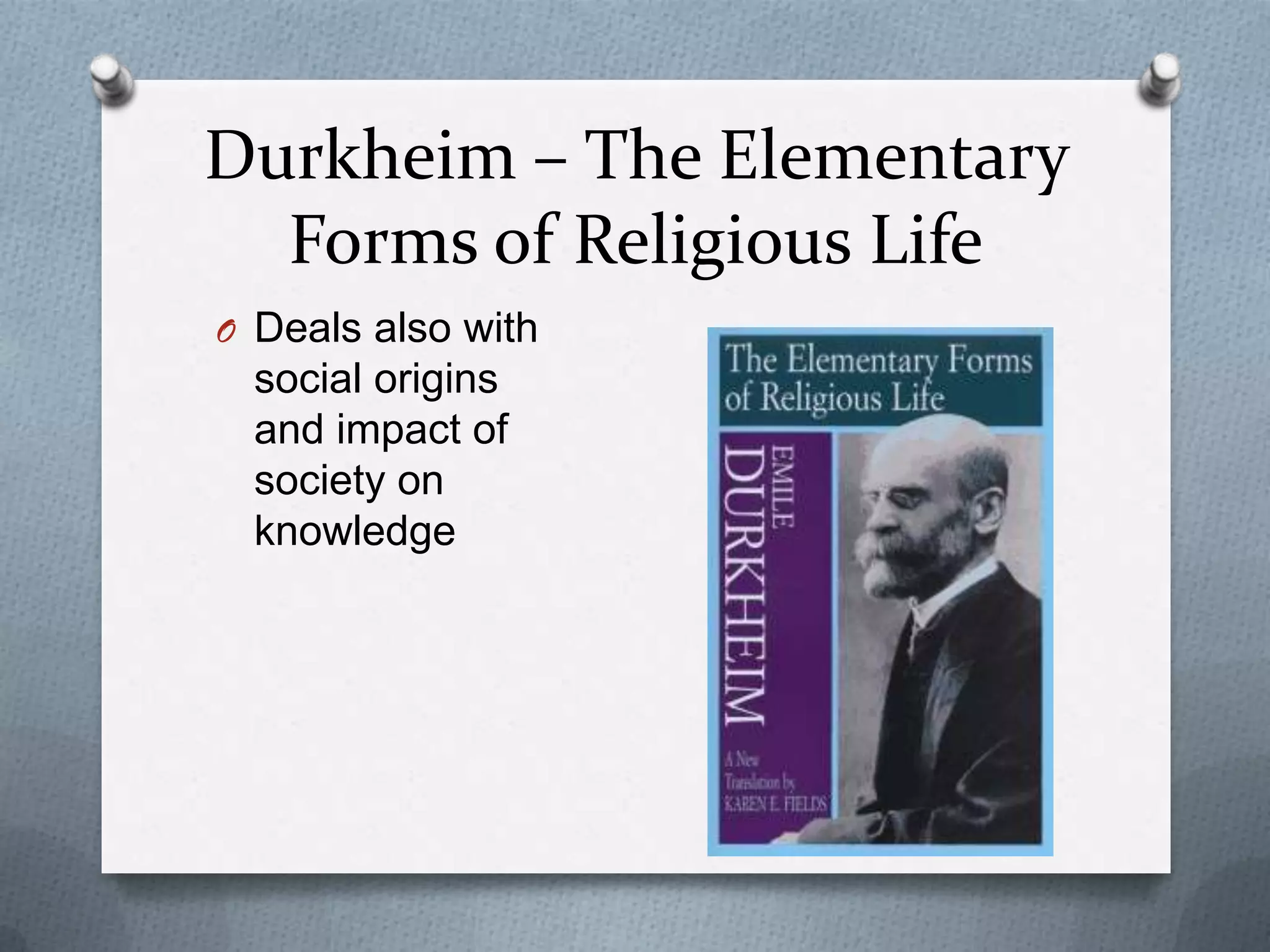
Durkheim – The Elementary
  Forms of Religious Life
O Deals also with
  social origins
  and impact of
  society on
  knowledge
Collective Representations
O Symbols and images that represent
 ideas, beliefs and values of the collective
  O Contradictory existence
    O Both external to the individual (created and
      controlled by society)
    O And internal to the individual (part of the
      individual as a participant in society)
  O Help conform the individual to society‟s
    thoughts and morality
  O Help make sense of the world
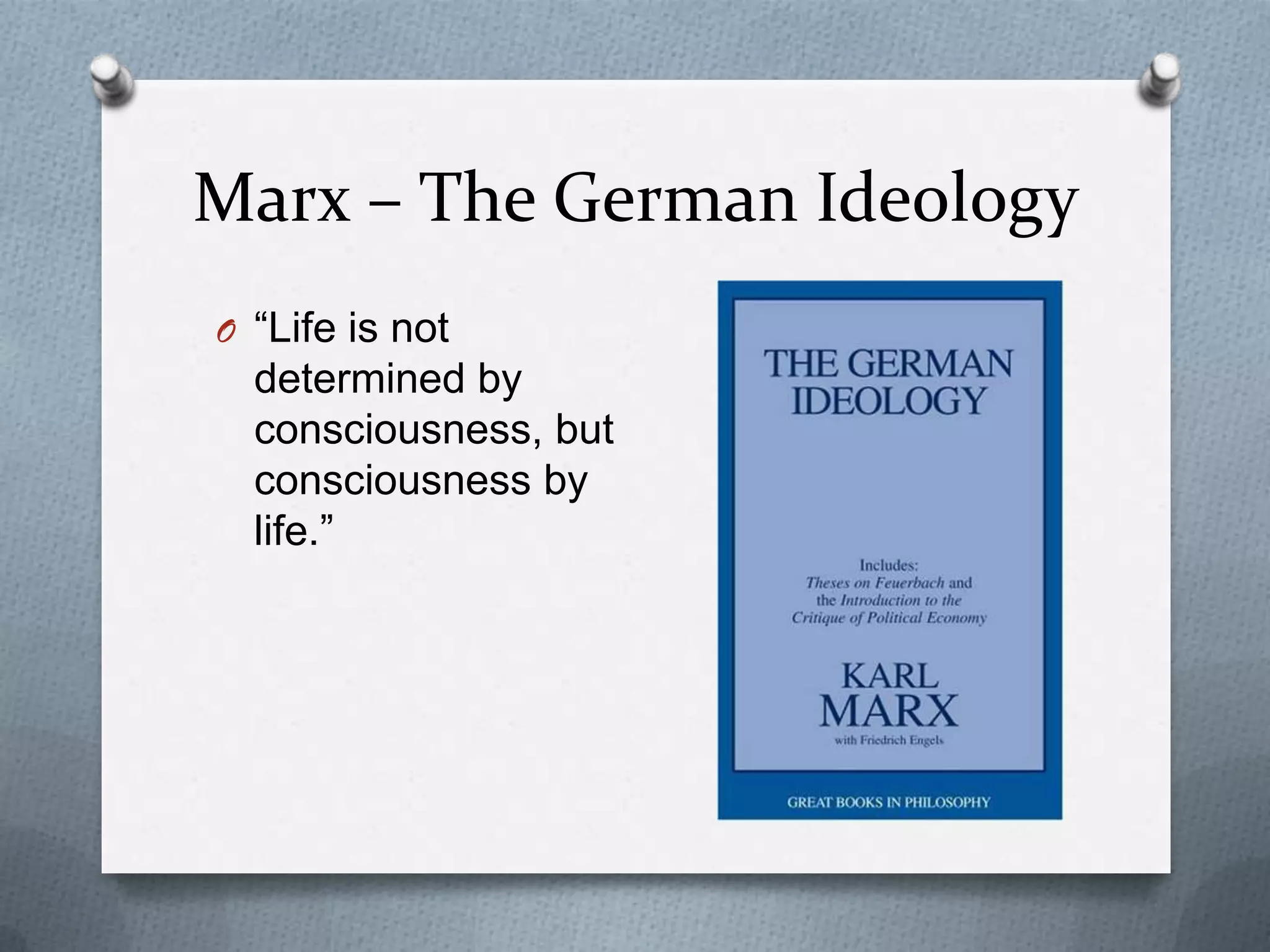
Marx – The German Ideology
O “Life is not
  determined by
  consciousness, but
  consciousness by
  life.”
Peter Berger and Thomas
         Luckmann
O The Social Construction of Reality
  O Looks at how roles become
    institutionalized
  O Institutionalizing roles embeds meaning in
    society
  O Knowledge and conceptualizations of
    reality become embedded in social
    institutions
  O Ergo, reality and knowledge are socially
    constructed
Social Stock of Knowledge
O “Theoretical knowledge is only a small
  and by no means the most important part
  of what passed for knowledge in a
  society…the primary knowledge about the
  institutional order…is the sum total of
  „what everybody knows‟ about a social
  world, an assemblage of
  maxims, morals, proverbial nuggets of
  wisdom, values and beliefs, myths, and so
  forth.”
Berger and Luckmann
O The general body of knowledge in a
  society is distributed throughout the
  society
O Symbolic universes are created to
  legitimate the institutional structure of
  society
  O Beliefs that everybody knows
  O Have to be maintained
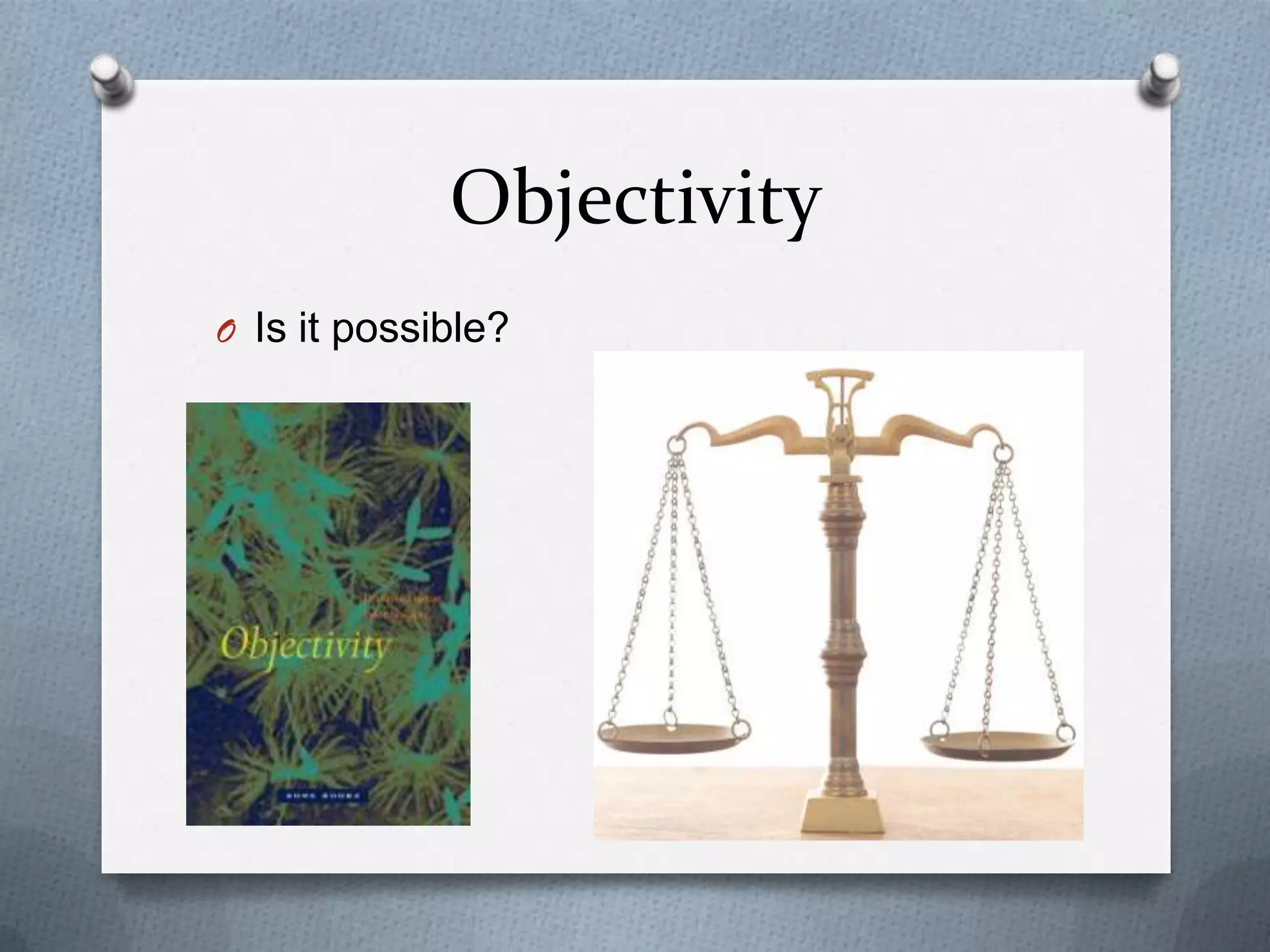
Objectivity
O Is it possible?
Karl Mannheim
O If all knowledge is socially
  constructed, the argument is self-
  defeating
O Relationism
  O Certain things are only true in certain times
     and places
     O Doesn‟t make them any less true overall
Michel Foucault
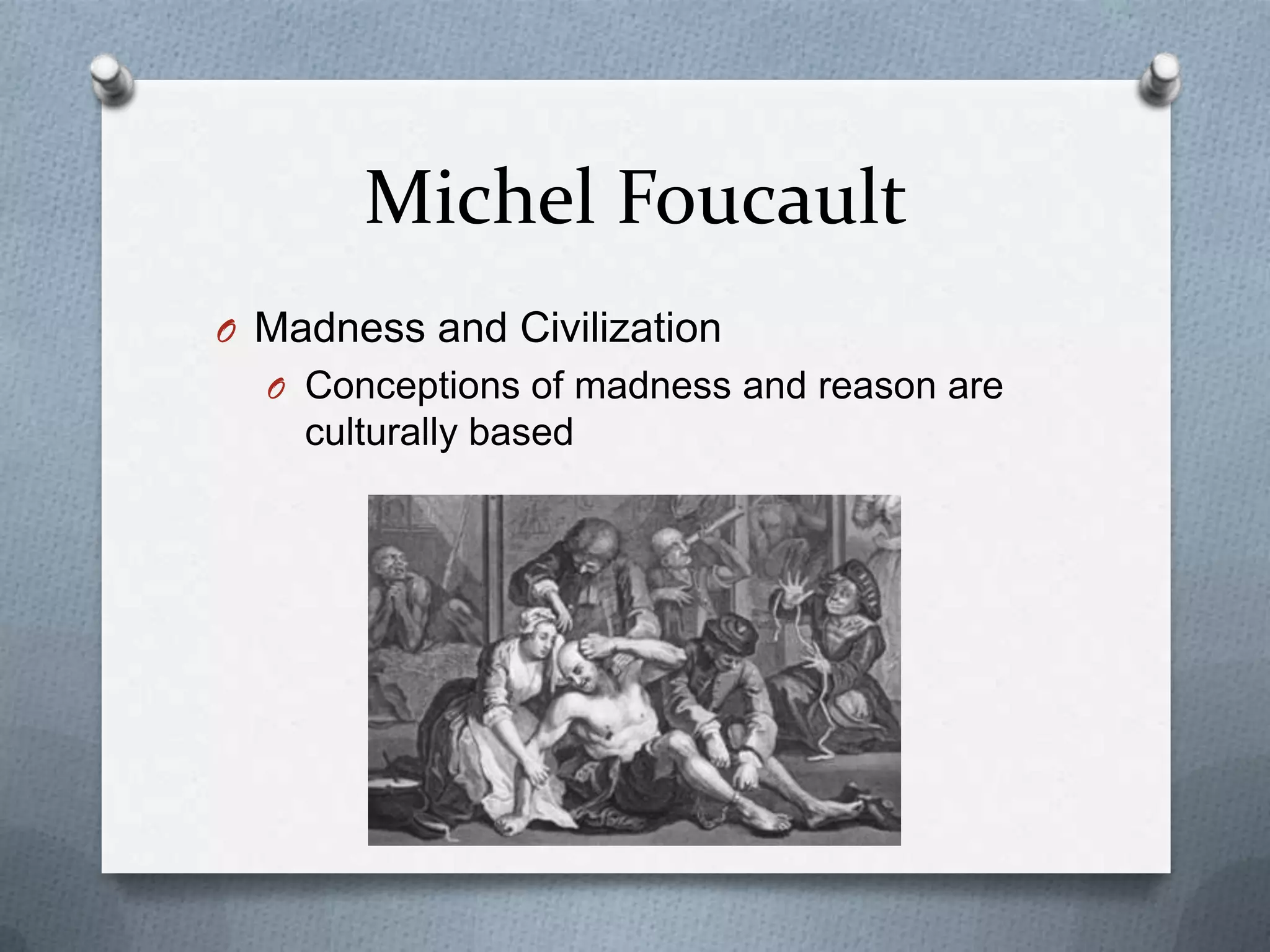
O Madness and Civilization
  O Conceptions of madness and reason are
    culturally based
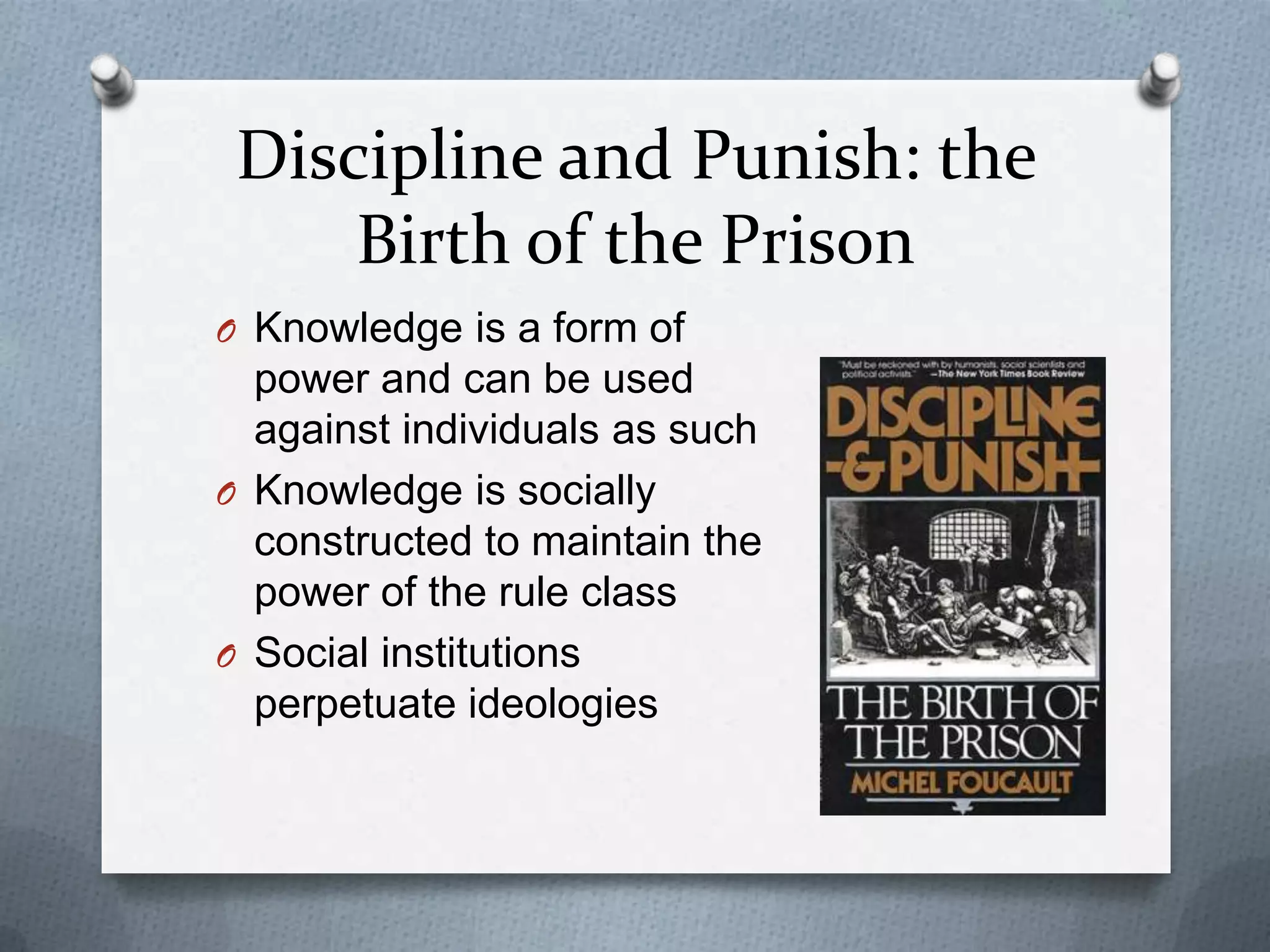
Discipline and Punish: the
     Birth of the Prison
O Knowledge is a form of
  power and can be used
  against individuals as such
O Knowledge is socially
  constructed to maintain the
  power of the rule class
O Social institutions
  perpetuate ideologies
Discipline and Punish: the
     Birth of the Prison
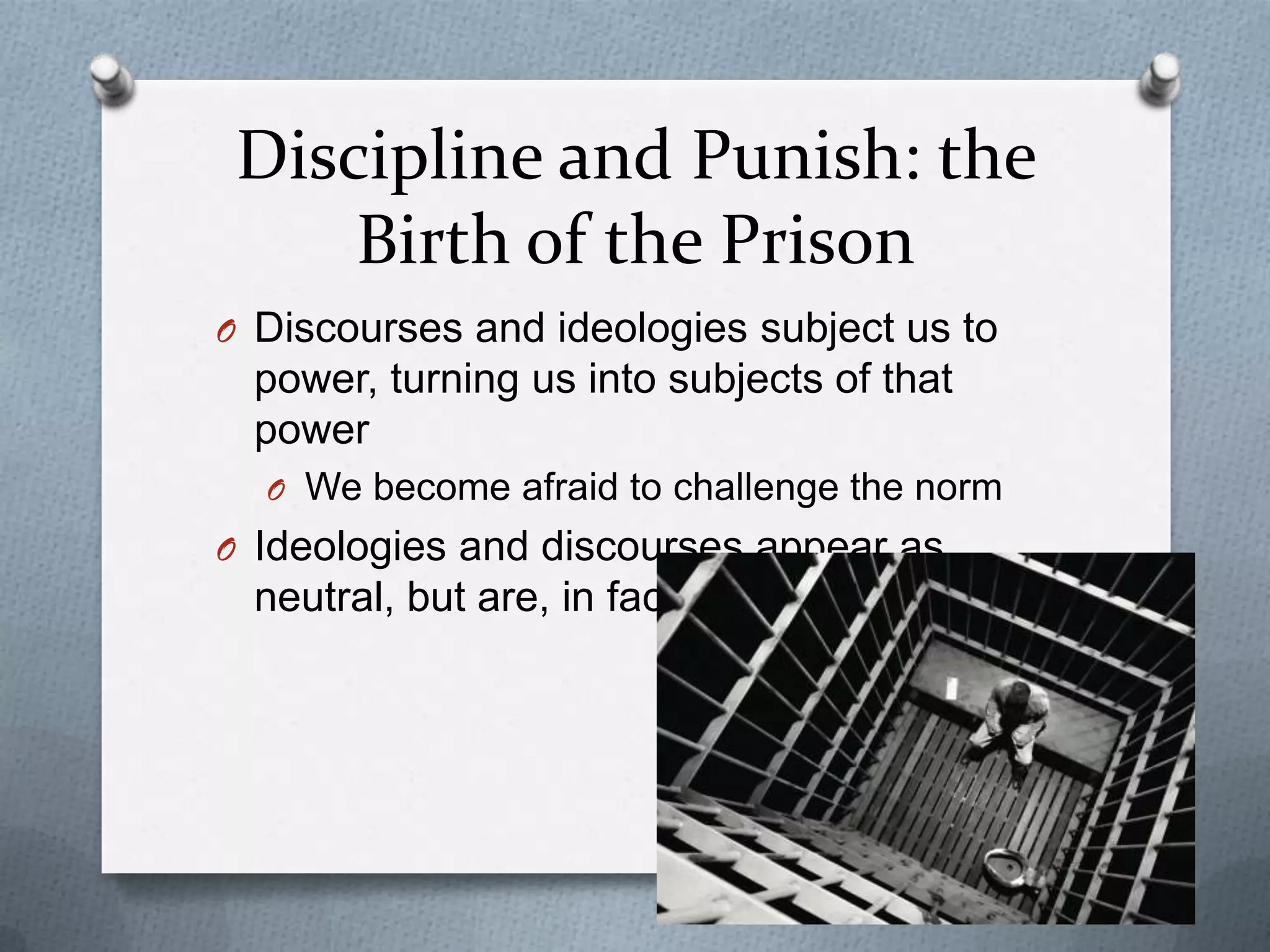
O Discourses and ideologies subject us to
 power, turning us into subjects of that
 power
  O We become afraid to challenge the norm
O Ideologies and discourses appear as
 neutral, but are, in fact, not

Knowledge

  • 1.
  • 2.
    Durkheim – TheElementary Forms of Religious Life O Deals also with social origins and impact of society on knowledge
  • 3.
    Collective Representations O Symbolsand images that represent ideas, beliefs and values of the collective O Contradictory existence O Both external to the individual (created and controlled by society) O And internal to the individual (part of the individual as a participant in society) O Help conform the individual to society‟s thoughts and morality O Help make sense of the world
  • 4.
    Marx – TheGerman Ideology O “Life is not determined by consciousness, but consciousness by life.”
  • 5.
    Peter Berger andThomas Luckmann O The Social Construction of Reality O Looks at how roles become institutionalized O Institutionalizing roles embeds meaning in society O Knowledge and conceptualizations of reality become embedded in social institutions O Ergo, reality and knowledge are socially constructed
  • 6.
    Social Stock ofKnowledge O “Theoretical knowledge is only a small and by no means the most important part of what passed for knowledge in a society…the primary knowledge about the institutional order…is the sum total of „what everybody knows‟ about a social world, an assemblage of maxims, morals, proverbial nuggets of wisdom, values and beliefs, myths, and so forth.”
  • 7.
    Berger and Luckmann OThe general body of knowledge in a society is distributed throughout the society O Symbolic universes are created to legitimate the institutional structure of society O Beliefs that everybody knows O Have to be maintained
  • 8.
  • 9.
    Karl Mannheim O Ifall knowledge is socially constructed, the argument is self- defeating O Relationism O Certain things are only true in certain times and places O Doesn‟t make them any less true overall
  • 10.
    Michel Foucault O Madnessand Civilization O Conceptions of madness and reason are culturally based
  • 11.
    Discipline and Punish:the Birth of the Prison O Knowledge is a form of power and can be used against individuals as such O Knowledge is socially constructed to maintain the power of the rule class O Social institutions perpetuate ideologies
  • 12.
    Discipline and Punish:the Birth of the Prison O Discourses and ideologies subject us to power, turning us into subjects of that power O We become afraid to challenge the norm O Ideologies and discourses appear as neutral, but are, in fact, not