Developing a Science Lesson
A. The Need for Planning
Why should you plan early enough?
 Assurance of an
effective procedure
and a complete
coverage of the subject
that you aim to teach.
The activities that you
need to perform
together with the
corresponding time
allotment will enable
you to progress
smoothly.
 A good and reliable
plan can definitely
enhance your self-
confidence. Together
with a relaxed and
“authoritative poise”
which will make it easy
for you to control the
class.
 Your plan can be
submitted to your
department head or
head teacher for
comments and
suggestions, thus
adding to your learning
experience.
 Experience gained
from your daily lesson
planning task can
serve as well-earned
qualification for future
classroom activities.
 A systematically
conceived lesson plan
speaks of an orderly
work and study habits
of teachers worthy of
commendation.
 The choice of
appropriate
instructional materials
can be decided and
included in the plan.
B. Factors to Consider
In order to be able to prepare a complete lesson
plan, teachers should be ready with the
following:
 Adequate knowledge
about the subject
matter to be taught-
The number of
concepts and
subtopics to be
covered and the time
allowed shall have
been determined
ahead of time.
 Appropriate teaching
methodology to be
followed- This shall
be considered
depending on the
background
knowledge, level of
understanding of the
students and the
nature of the
concepts to be
taught.
 Instructional materials and supplies – They
must be sufficient.
 Equipment and laboratory tools to be used-
They must be ready to be operated during
the class hours.
 Books references and other instructional
devices must be handy at the time of need.
C. Basic Steps and Parts of a Lesson
Plan
Steps in Preparing A Lesson Plan
1. Writing the objectives
2. Determining the teaching strategies
to be followed.
3. Identifying and incorporating
appropriate instructional aids to be
used
4. Designing the assignments
Parts of a Lesson Plan:
1. Objectives
2. Subject matter
3. Materials Needed
4. Background knowledge
5. Lesson proper
a. Preliminary activities
b. Motivation
c. Planned activities including questions for
discussions and direction
d. Concluding statement
6. Assessment
7. Assignment
D. Planning the Lesson
• The Lesson Objectives
• The Subject
• The Methodology
• The Materials and Equipment
• The Lesson Proper
• Assessment
• Additional Activities
• Assignment
E. Evaluating Effectiveness of the
Plan
1. General Classroom Atmosphere
2. Student Interactions
3. Student Performance
4. Self-evaluation
F. A Sample of Lesson Plan
G. A Sample of a Detailed Plan
H. Developing a Unit
The FORMAT
 Title of the Unit
 Relevance of the Unit
 Concepts Included
 Useful Background Knowledge
 Instructional Objectives
 Suggested Activities for the Unit
 Summary
 Evaluation of the Unit
 References
 Equipment/ Materials Needed
 Culminating Activity
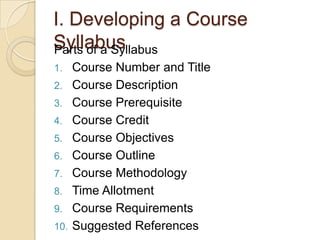
I. Developing a Course
SyllabusParts of a Syllabus
1. Course Number and Title
2. Course Description
3. Course Prerequisite
4. Course Credit
5. Course Objectives
6. Course Outline
7. Course Methodology
8. Time Allotment
9. Course Requirements
10. Suggested References

Developing A Science Lesson

  • 1.
  • 2.
    A. The Needfor Planning Why should you plan early enough?
  • 3.
     Assurance ofan effective procedure and a complete coverage of the subject that you aim to teach. The activities that you need to perform together with the corresponding time allotment will enable you to progress smoothly.  A good and reliable plan can definitely enhance your self- confidence. Together with a relaxed and “authoritative poise” which will make it easy for you to control the class.
  • 4.
     Your plancan be submitted to your department head or head teacher for comments and suggestions, thus adding to your learning experience.  Experience gained from your daily lesson planning task can serve as well-earned qualification for future classroom activities.
  • 5.
     A systematically conceivedlesson plan speaks of an orderly work and study habits of teachers worthy of commendation.  The choice of appropriate instructional materials can be decided and included in the plan.
  • 6.
    B. Factors toConsider In order to be able to prepare a complete lesson plan, teachers should be ready with the following:
  • 7.
     Adequate knowledge aboutthe subject matter to be taught- The number of concepts and subtopics to be covered and the time allowed shall have been determined ahead of time.  Appropriate teaching methodology to be followed- This shall be considered depending on the background knowledge, level of understanding of the students and the nature of the concepts to be taught.
  • 8.
     Instructional materialsand supplies – They must be sufficient.  Equipment and laboratory tools to be used- They must be ready to be operated during the class hours.  Books references and other instructional devices must be handy at the time of need.
  • 9.
    C. Basic Stepsand Parts of a Lesson Plan Steps in Preparing A Lesson Plan 1. Writing the objectives 2. Determining the teaching strategies to be followed. 3. Identifying and incorporating appropriate instructional aids to be used 4. Designing the assignments
  • 10.
    Parts of aLesson Plan: 1. Objectives 2. Subject matter 3. Materials Needed 4. Background knowledge 5. Lesson proper a. Preliminary activities b. Motivation c. Planned activities including questions for discussions and direction d. Concluding statement 6. Assessment 7. Assignment
  • 11.
  • 12.
    • The LessonObjectives • The Subject • The Methodology • The Materials and Equipment • The Lesson Proper • Assessment • Additional Activities • Assignment
  • 13.
    E. Evaluating Effectivenessof the Plan 1. General Classroom Atmosphere 2. Student Interactions 3. Student Performance 4. Self-evaluation
  • 14.
    F. A Sampleof Lesson Plan G. A Sample of a Detailed Plan
  • 15.
    H. Developing aUnit The FORMAT  Title of the Unit  Relevance of the Unit  Concepts Included  Useful Background Knowledge  Instructional Objectives  Suggested Activities for the Unit  Summary  Evaluation of the Unit  References  Equipment/ Materials Needed  Culminating Activity
  • 16.
    I. Developing aCourse SyllabusParts of a Syllabus 1. Course Number and Title 2. Course Description 3. Course Prerequisite 4. Course Credit 5. Course Objectives 6. Course Outline 7. Course Methodology 8. Time Allotment 9. Course Requirements 10. Suggested References