Differentiating Project-Based
and Problem-Based Learning
By: Marisol Audia: Instructional Coach for Innovative Learning
Introducing
Problem-Based
and Project-Based
Learning
Project-Based Learning
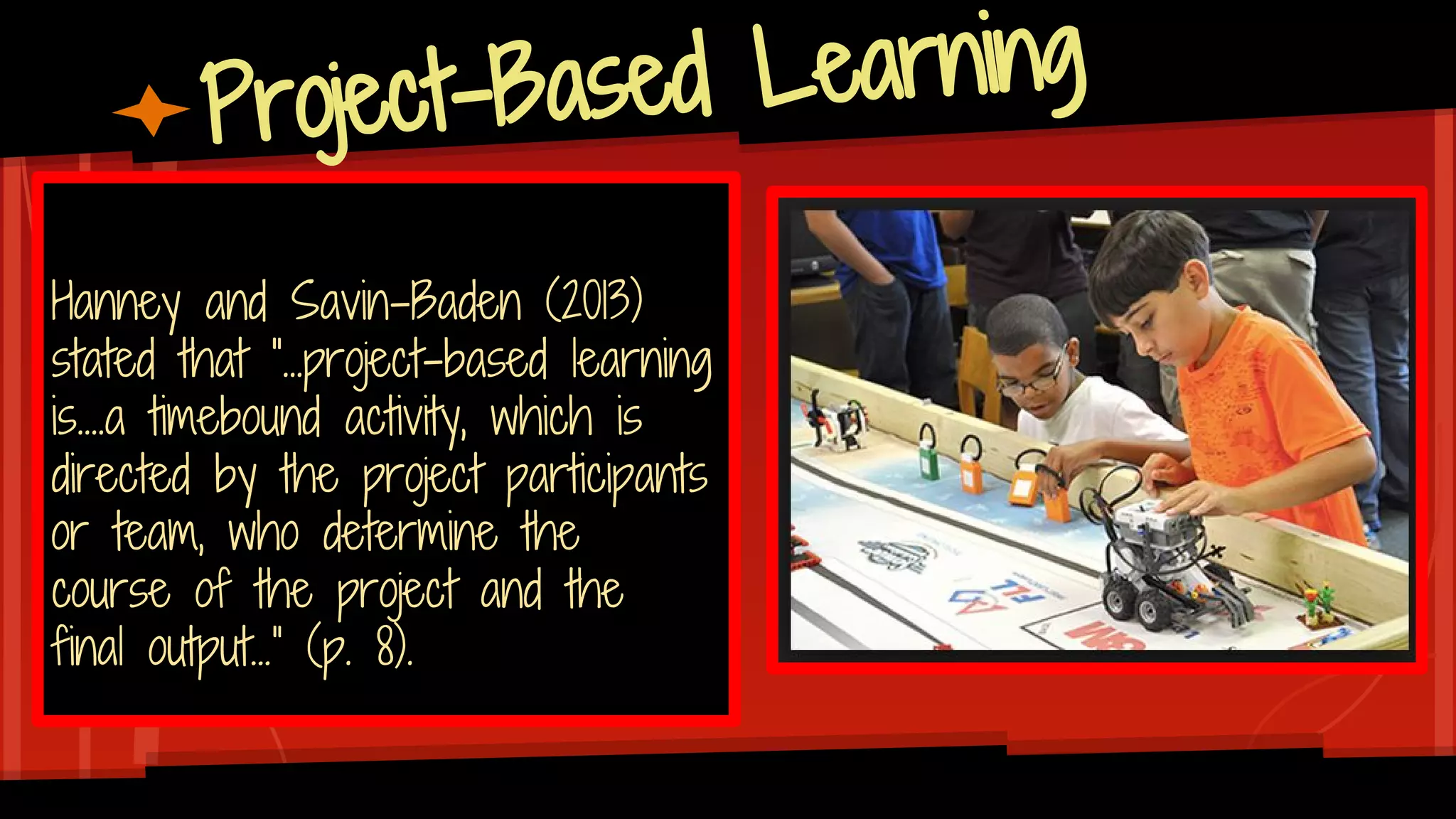
Hanney and Savin-Baden (2013)
stated that “...project-based learning
is....a timebound activity, which is
directed by the project participants
or team, who determine the
course of the project and the
final output…” (p. 8).
Project-Based Learning
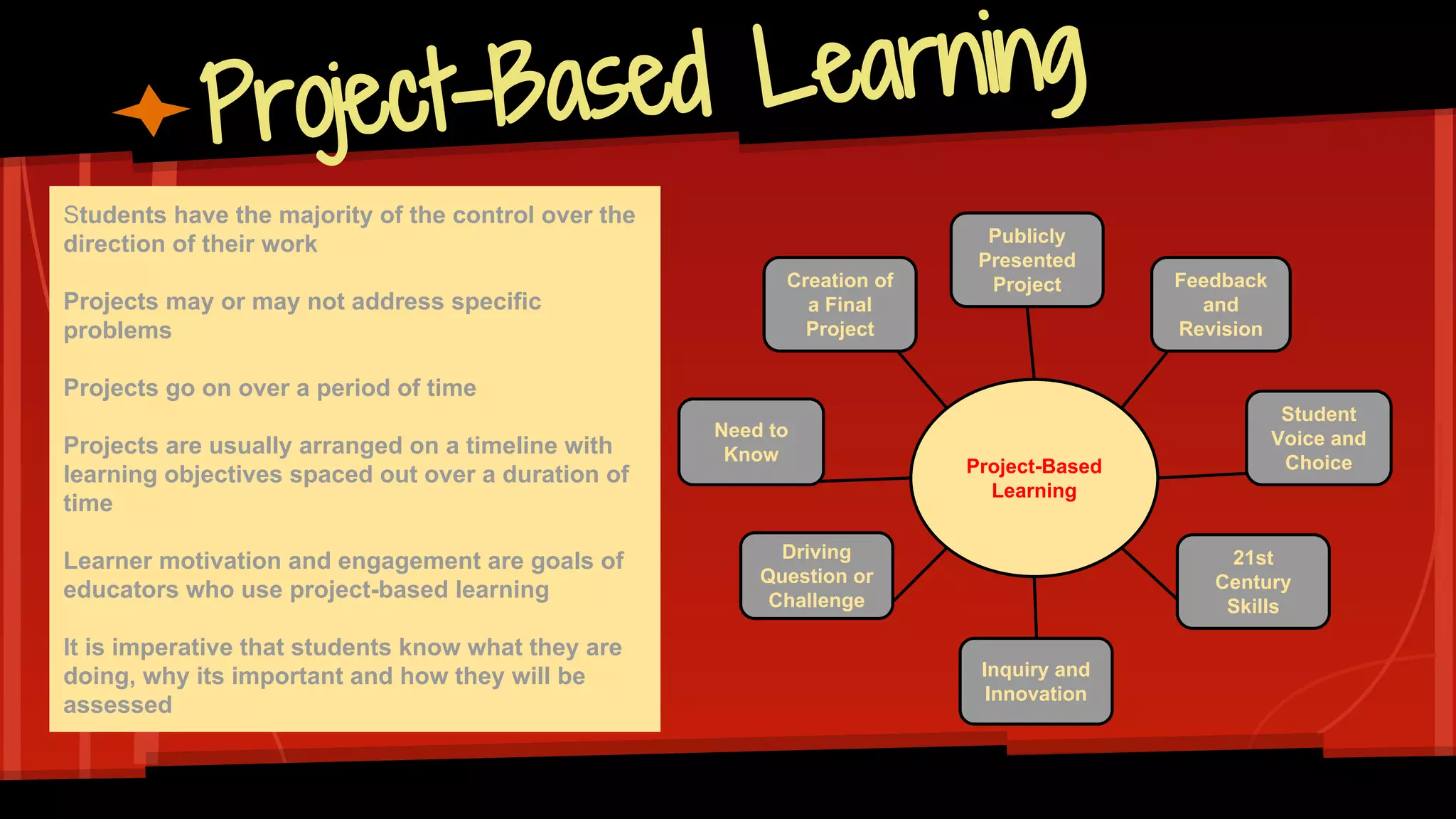
Project-Based
Learning
Publicly
Presented
Project Feedback
and
Revision
Creation of
a Final
Project
Need to
Know
Student
Voice and
Choice
Driving
Question or
Challenge
21st
Century
Skills
Inquiry and
Innovation
Students have the majority of the control over the
direction of their work
Projects may or may not address specific
problems
Projects go on over a period of time
Projects are usually arranged on a timeline with
learning objectives spaced out over a duration of
time
Learner motivation and engagement are goals of
educators who use project-based learning
It is imperative that students know what they are
doing, why its important and how they will be
assessed
Problem-Based Learning
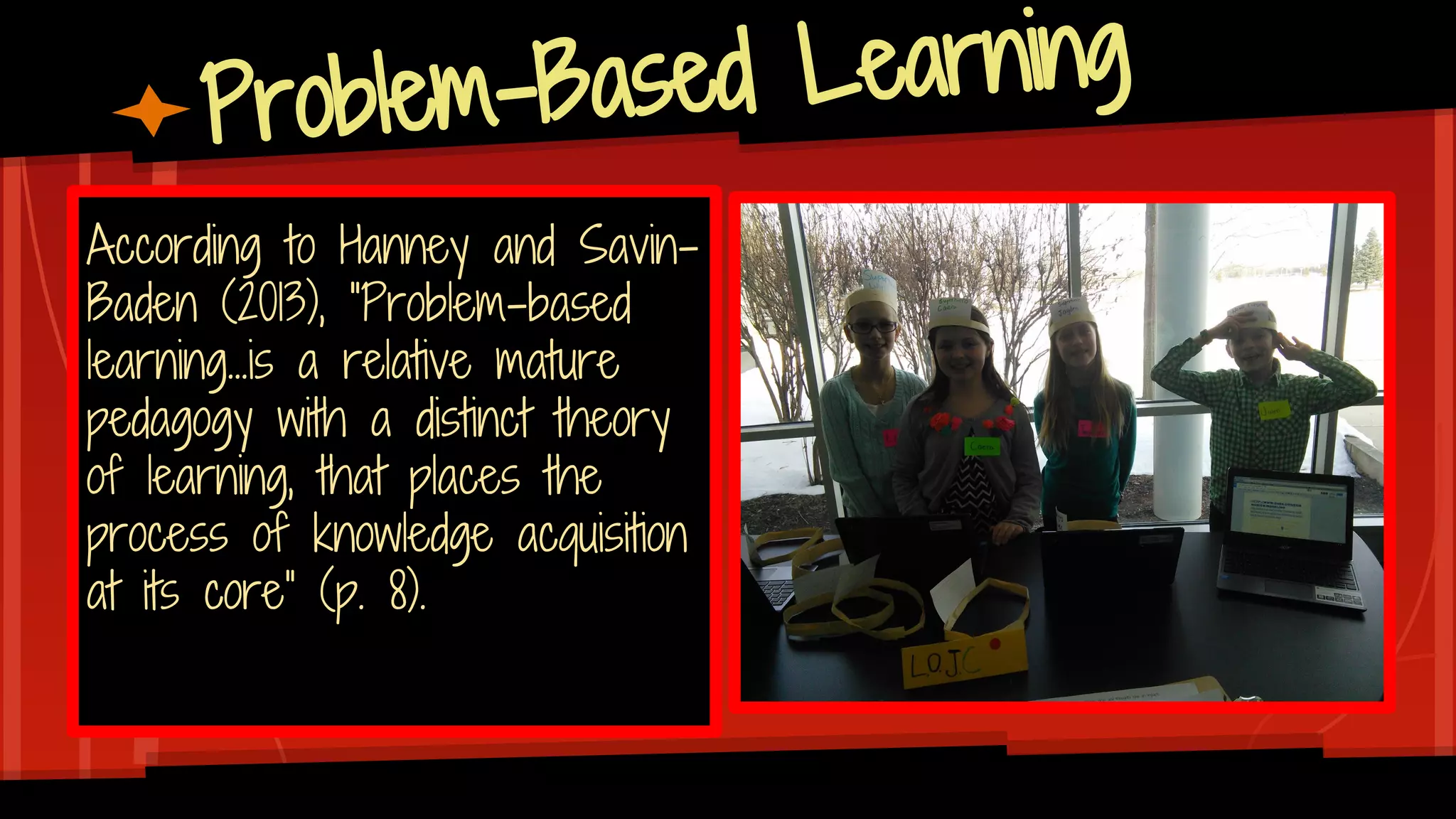
According to Hanney and Savin-
Baden (2013), “Problem-based
learning...is a relative mature
pedagogy with a distinct theory
of learning, that places the
process of knowledge acquisition
at its core” (p. 8).
Problem-Based Learning
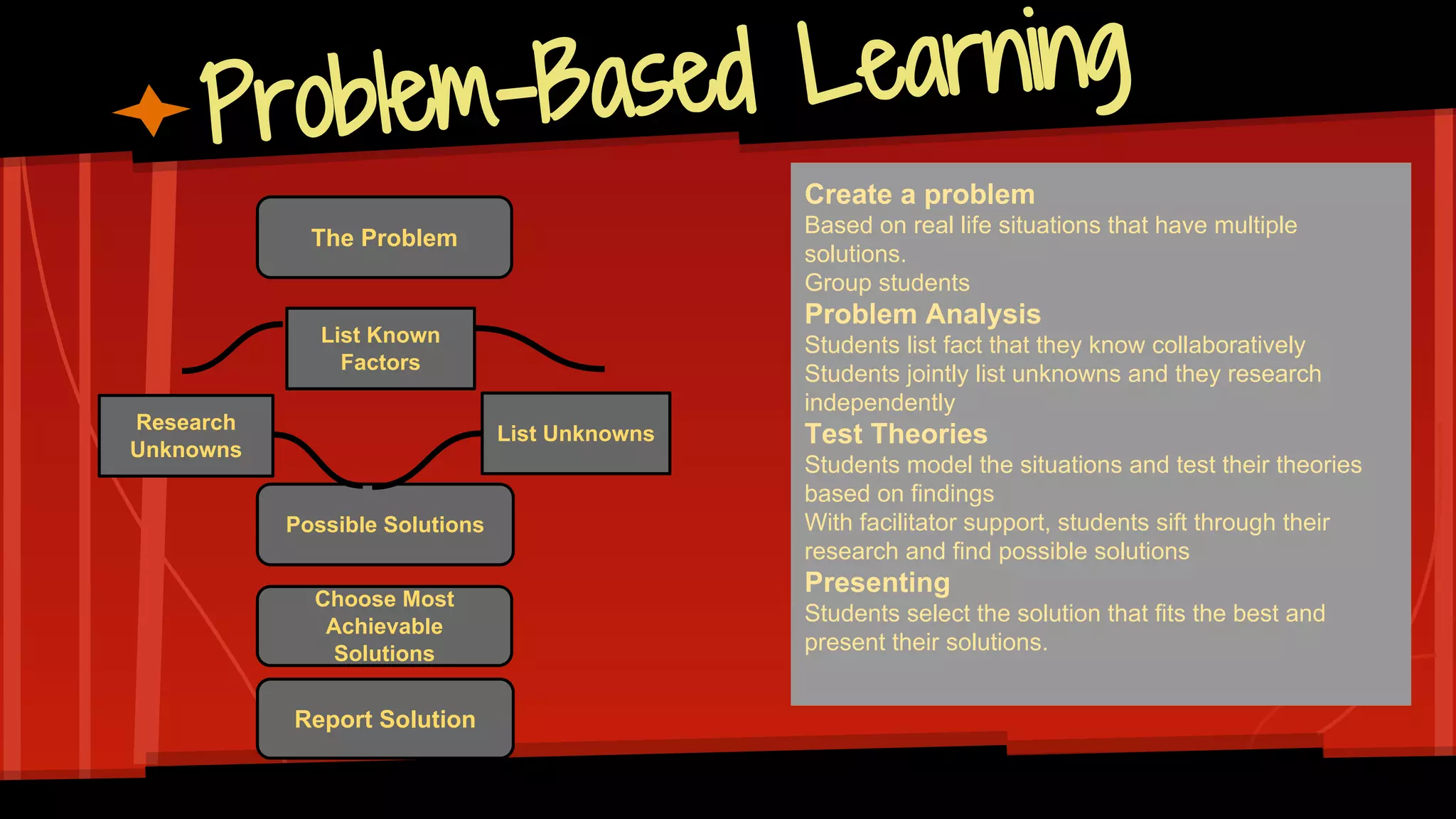
The Problem
Possible Solutions
Choose Most
Achievable
Solutions
Report Solution
List Known
Factors
List Unknowns
Research
Unknowns
Create a problem
Based on real life situations that have multiple
solutions.
Group students
Problem Analysis
Students list fact that they know collaboratively
Students jointly list unknowns and they research
independently
Test Theories
Students model the situations and test their theories
based on findings
With facilitator support, students sift through their
research and find possible solutions
Presenting
Students select the solution that fits the best and
present their solutions.
My Practical Application
Learning Goal:
By the end of the unit, the students will be able to identify, analyze and discuss
ways to improve the environment within their community by finding ways to
encourage recycling and reusing products creatively.
Essential Questions:
How do my actions contribute or detract from a clean environment?
What should be done in response to environmental pollution?
What is the impact to the environment within my school community?
What can I do to impact the community and feel empowered?
Project-Based Approach
Sample 4th
Grade
Assignment
Students will select an item typically disposed of at
their school and create an alternative use for that
item.
Goal: Students will learn how to reduce waste and
lessen negative impacts on the environment.
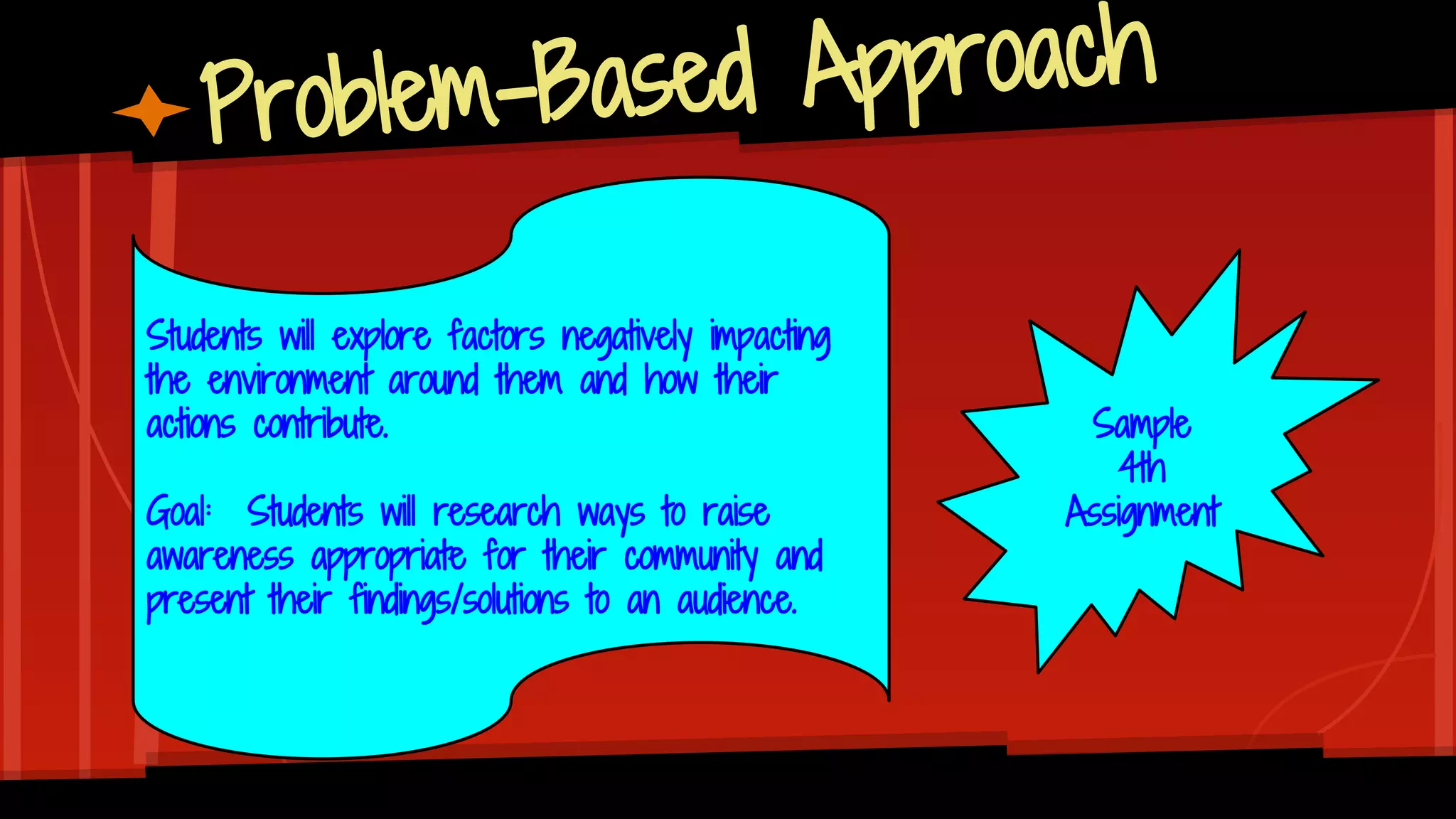
Problem-Based Approach
Sample
4th
Assignment
Students will explore factors negatively impacting
the environment around them and how their
actions contribute.
Goal: Students will research ways to raise
awareness appropriate for their community and
present their findings/solutions to an audience.
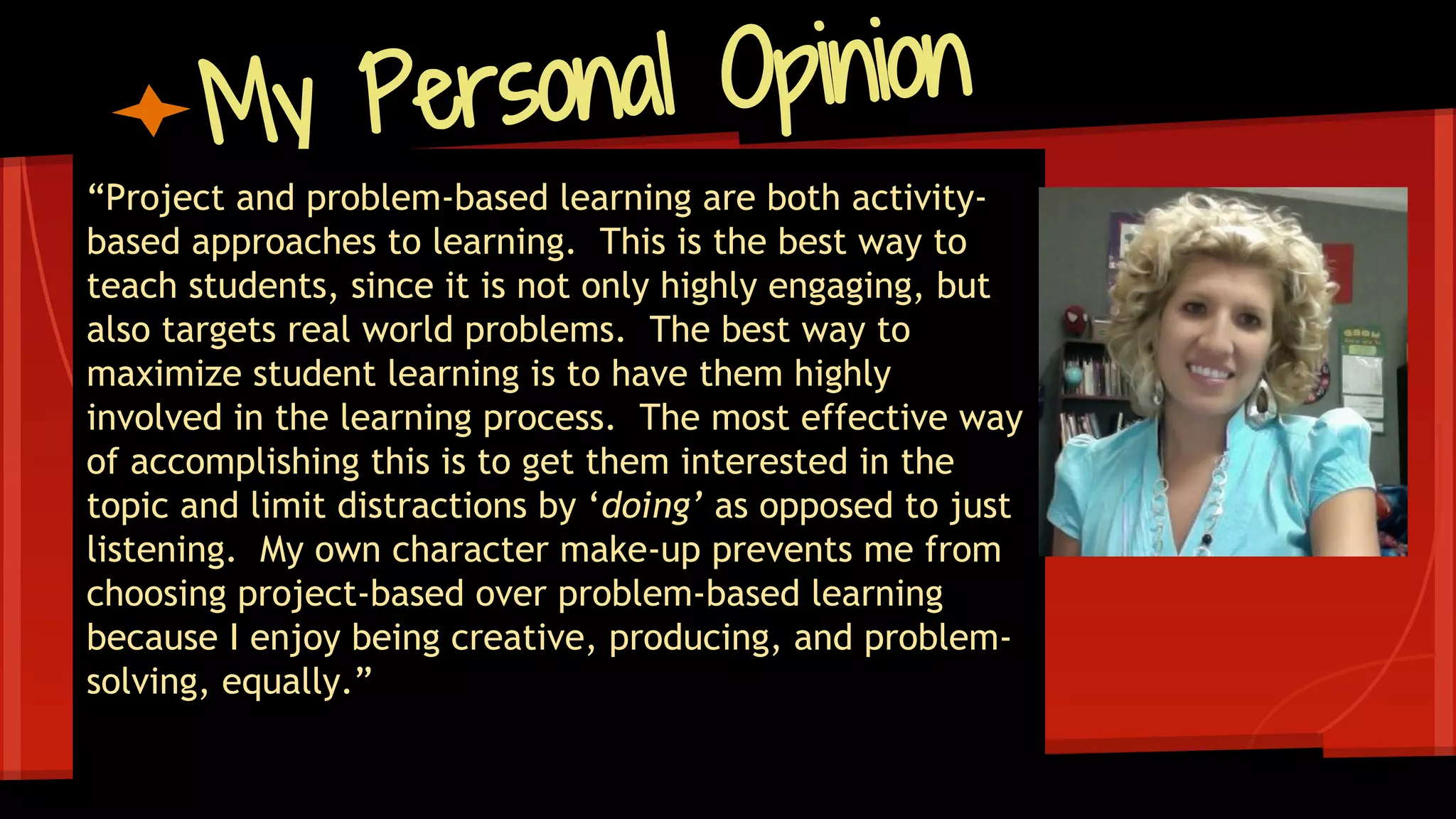
My Personal Opinion
“Project and problem-based learning are both activity-
based approaches to learning. This is the best way to
teach students, since it is not only highly engaging, but
also targets real world problems. The best way to
maximize student learning is to have them highly
involved in the learning process. The most effective way
of accomplishing this is to get them interested in the
topic and limit distractions by ‘doing’ as opposed to just
listening. My own character make-up prevents me from
choosing project-based over problem-based learning
because I enjoy being creative, producing, and problem-
solving, equally.”
References
Hanney, R. r., & Savin-Baden, M. (2013). The Problem of
Projects: Understanding the Theoretical Underpinnings of
Project-led PBL. London Review Of Education, 11(1), 7-19.
Landsberger, J. (2011). Problem-based learning. Retrieved from
http://www.studygs.net/pbl.html

Project/Problem Based Learning Unit (audia marisol)

  • 1.
    Differentiating Project-Based and Problem-BasedLearning By: Marisol Audia: Instructional Coach for Innovative Learning
  • 2.
  • 3.
    Project-Based Learning Hanney andSavin-Baden (2013) stated that “...project-based learning is....a timebound activity, which is directed by the project participants or team, who determine the course of the project and the final output…” (p. 8).
  • 4.
    Project-Based Learning Project-Based Learning Publicly Presented Project Feedback and Revision Creationof a Final Project Need to Know Student Voice and Choice Driving Question or Challenge 21st Century Skills Inquiry and Innovation Students have the majority of the control over the direction of their work Projects may or may not address specific problems Projects go on over a period of time Projects are usually arranged on a timeline with learning objectives spaced out over a duration of time Learner motivation and engagement are goals of educators who use project-based learning It is imperative that students know what they are doing, why its important and how they will be assessed
  • 5.
    Problem-Based Learning According toHanney and Savin- Baden (2013), “Problem-based learning...is a relative mature pedagogy with a distinct theory of learning, that places the process of knowledge acquisition at its core” (p. 8).
  • 6.
    Problem-Based Learning The Problem PossibleSolutions Choose Most Achievable Solutions Report Solution List Known Factors List Unknowns Research Unknowns Create a problem Based on real life situations that have multiple solutions. Group students Problem Analysis Students list fact that they know collaboratively Students jointly list unknowns and they research independently Test Theories Students model the situations and test their theories based on findings With facilitator support, students sift through their research and find possible solutions Presenting Students select the solution that fits the best and present their solutions.
  • 7.
    My Practical Application LearningGoal: By the end of the unit, the students will be able to identify, analyze and discuss ways to improve the environment within their community by finding ways to encourage recycling and reusing products creatively. Essential Questions: How do my actions contribute or detract from a clean environment? What should be done in response to environmental pollution? What is the impact to the environment within my school community? What can I do to impact the community and feel empowered?
  • 8.
    Project-Based Approach Sample 4th Grade Assignment Studentswill select an item typically disposed of at their school and create an alternative use for that item. Goal: Students will learn how to reduce waste and lessen negative impacts on the environment.
  • 9.
    Problem-Based Approach Sample 4th Assignment Students willexplore factors negatively impacting the environment around them and how their actions contribute. Goal: Students will research ways to raise awareness appropriate for their community and present their findings/solutions to an audience.
  • 10.
    My Personal Opinion “Projectand problem-based learning are both activity- based approaches to learning. This is the best way to teach students, since it is not only highly engaging, but also targets real world problems. The best way to maximize student learning is to have them highly involved in the learning process. The most effective way of accomplishing this is to get them interested in the topic and limit distractions by ‘doing’ as opposed to just listening. My own character make-up prevents me from choosing project-based over problem-based learning because I enjoy being creative, producing, and problem- solving, equally.”
  • 11.
    References Hanney, R. r.,& Savin-Baden, M. (2013). The Problem of Projects: Understanding the Theoretical Underpinnings of Project-led PBL. London Review Of Education, 11(1), 7-19. Landsberger, J. (2011). Problem-based learning. Retrieved from http://www.studygs.net/pbl.html