Interaction Design (IxD) in the Context of User Experience (UX) IA Summit Montreal, QB March 6, 2005
Overview Defining User Experience (UX) Breaking down UX Placing IxD into UX Defining IxD Connecting IxD and IA
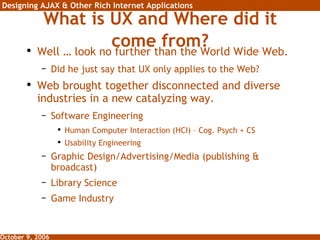
What is UX and Where did it come from? Well … look no further than the World Wide Web. Did he just say that UX only applies to the Web? Web brought together disconnected and diverse industries in a new catalyzing way. Software Engineering Human Computer Interaction (HCI) – Cog. Psych + CS Usability Engineering Graphic Design/Advertising/Media (publishing & broadcast) Library Science Game Industry
We need some limits Digital Product Design NOT Experience Design That would be our umbrella Informs the strategy  Includes important issues beyond the product
Understanding UX Experts who helped found UX have been trying to place it in context for a while. Here are some examples …
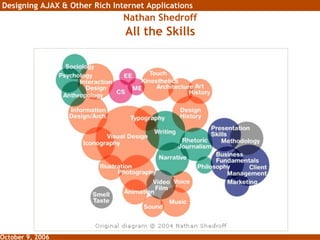
Nathan Shedroff All the Skills
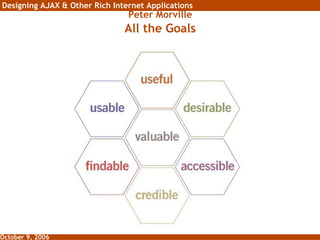
Peter Morville All the Goals
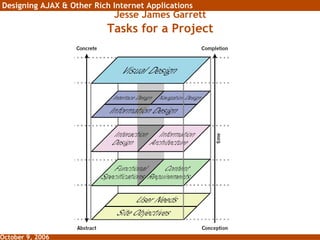
Jesse James Garrett Tasks for a Project
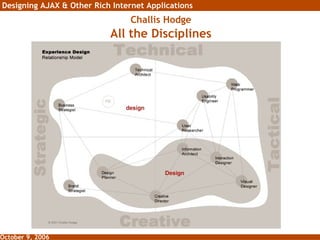
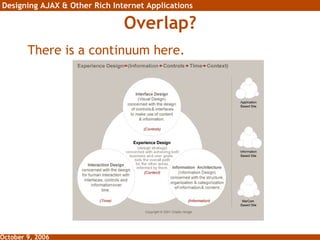
Challis Hodge All the Disciplines
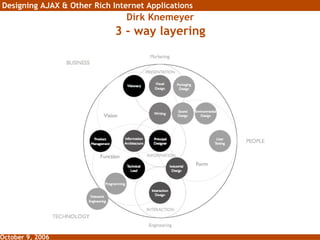
Dirk Knemeyer 3 - way layering
My turn Goals of my attempt Eliminate jargon Clarify big vs. little
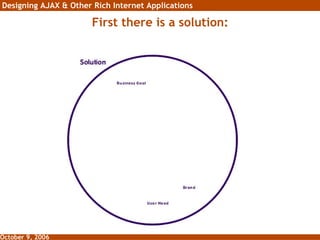
First there is a solution:
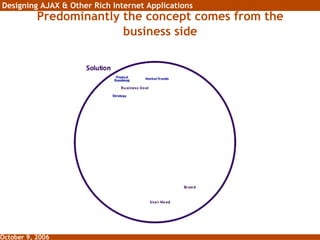
Predominantly the concept comes from the business side
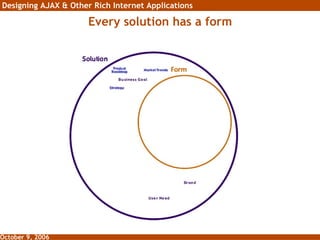
Every solution has a form
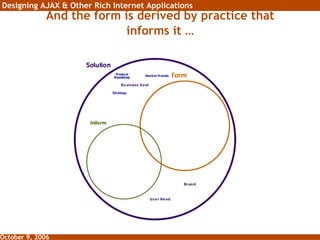
And the form is derived by practice that informs it …
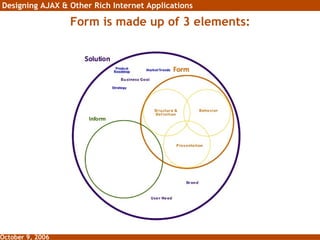
Form is made up of 3 elements:
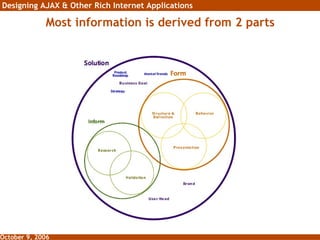
Most information is derived from 2 parts
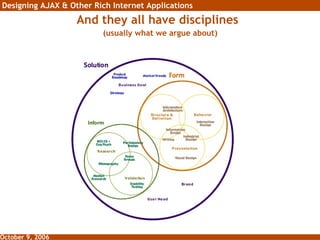
And they all have disciplines   (usually what we argue about)
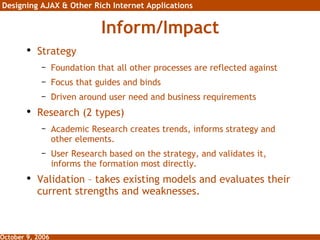
Inform/Impact Strategy Foundation that all other processes are reflected against Focus that guides and binds Driven around user need and business requirements Research (2 types) Academic Research creates trends, informs strategy and other elements. User Research based on the strategy, and validates it, informs the formation most directly. Validation – takes existing models and evaluates their current strengths and weaknesses.
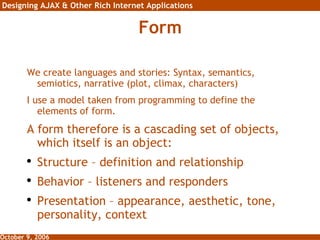
Form We create languages and stories: Syntax, semantics, semiotics, narrative (plot, climax, characters) I use a model taken from programming to define the elements of form. A form therefore is a cascading set of objects, which itself is an object: Structure – definition and relationship Behavior – listeners and responders Presentation – appearance, aesthetic, tone, personality, context
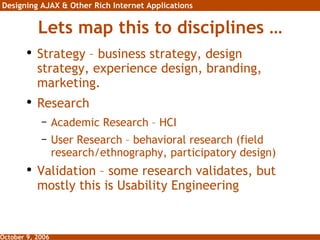
Lets map this to disciplines … Strategy – business strategy, design strategy, experience design, branding, marketing. Research Academic Research – HCI User Research – behavioral research (field research/ethnography, participatory design) Validation – some research validates, but mostly this is Usability Engineering
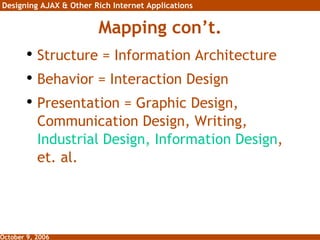
Mapping con’t. Structure = Information Architecture Behavior = Interaction Design Presentation = Graphic Design, Communication Design, Writing,  Industrial Design, Information Design , et. al.
Questions? … We’re not quite done yet, but thought before getting deeper people might like to ask some questions.
A Definition of  Interaction Design interaction design defines the structure and behaviors of interactive products and services  user interactions with those products and services More @  http:// define.ixdg.org /
Digging Deeper What are the components of behavior? Listeners Responders Impact of designing behavior (or not designing it) Affordances, conventions, intuitiveness Managing complexity
IxD’s focus in a product Tasks Flow User Relationship to Task & Flow Use over TIME Interactivity in the presentation layer
Overlap? There is a continuum here.
IA & IxD: Couple Made in Heaven IA prepares content/information Findability,Consumption,Creation Using metadata, taxonomies, facets, relationships IxD presents interaction models for that information to be reached. Search/Browse Wayfinding Conent Management Systems - workflow
Marrying metadata & a rich GUI: Ford Trucks Ford Trucks @  Ford Trucks Interactive Towing Guide   http:// www.fordvehicles.com/towing/popup.asp?type = TRUCK&u id =   Using a Flash GUI, utilizing Sliders, mouseovers, to manipulate metadata
Make the Semantic Web Behave mSpace mSpace @  http:// mspace.fn / Takes the existing data of the networked space: Organize search data Use predictable facets of organization They call it iTunes + Google
Thanx! Questions UXnet:  http:// uxnet.org /   David Heller dave (at)  syapticburn  (dot) com   http:// synapticburn.com / Interaction Design Group (IxDG) http:// ixdg.org /

Interaction Design (IxD) in the context of User Experience (UX)

  • 1.
    Interaction Design (IxD)in the Context of User Experience (UX) IA Summit Montreal, QB March 6, 2005
  • 2.
    Overview Defining UserExperience (UX) Breaking down UX Placing IxD into UX Defining IxD Connecting IxD and IA
  • 3.
    What is UXand Where did it come from? Well … look no further than the World Wide Web. Did he just say that UX only applies to the Web? Web brought together disconnected and diverse industries in a new catalyzing way. Software Engineering Human Computer Interaction (HCI) – Cog. Psych + CS Usability Engineering Graphic Design/Advertising/Media (publishing & broadcast) Library Science Game Industry
  • 4.
    We need somelimits Digital Product Design NOT Experience Design That would be our umbrella Informs the strategy Includes important issues beyond the product
  • 5.
    Understanding UX Expertswho helped found UX have been trying to place it in context for a while. Here are some examples …
  • 6.
  • 7.
  • 8.
    Jesse James GarrettTasks for a Project
  • 9.
    Challis Hodge Allthe Disciplines
  • 10.
    Dirk Knemeyer 3- way layering
  • 11.
    My turn Goalsof my attempt Eliminate jargon Clarify big vs. little
  • 12.
    First there isa solution:
  • 13.
    Predominantly the conceptcomes from the business side
  • 14.
  • 15.
    And the formis derived by practice that informs it …
  • 16.
    Form is madeup of 3 elements:
  • 17.
    Most information isderived from 2 parts
  • 18.
    And they allhave disciplines (usually what we argue about)
  • 19.
    Inform/Impact Strategy Foundationthat all other processes are reflected against Focus that guides and binds Driven around user need and business requirements Research (2 types) Academic Research creates trends, informs strategy and other elements. User Research based on the strategy, and validates it, informs the formation most directly. Validation – takes existing models and evaluates their current strengths and weaknesses.
  • 20.
    Form We createlanguages and stories: Syntax, semantics, semiotics, narrative (plot, climax, characters) I use a model taken from programming to define the elements of form. A form therefore is a cascading set of objects, which itself is an object: Structure – definition and relationship Behavior – listeners and responders Presentation – appearance, aesthetic, tone, personality, context
  • 21.
    Lets map thisto disciplines … Strategy – business strategy, design strategy, experience design, branding, marketing. Research Academic Research – HCI User Research – behavioral research (field research/ethnography, participatory design) Validation – some research validates, but mostly this is Usability Engineering
  • 22.
    Mapping con’t. Structure= Information Architecture Behavior = Interaction Design Presentation = Graphic Design, Communication Design, Writing, Industrial Design, Information Design , et. al.
  • 23.
    Questions? … We’renot quite done yet, but thought before getting deeper people might like to ask some questions.
  • 24.
    A Definition of Interaction Design interaction design defines the structure and behaviors of interactive products and services user interactions with those products and services More @ http:// define.ixdg.org /
  • 25.
    Digging Deeper Whatare the components of behavior? Listeners Responders Impact of designing behavior (or not designing it) Affordances, conventions, intuitiveness Managing complexity
  • 26.
    IxD’s focus ina product Tasks Flow User Relationship to Task & Flow Use over TIME Interactivity in the presentation layer
  • 27.
    Overlap? There isa continuum here.
  • 28.
    IA & IxD:Couple Made in Heaven IA prepares content/information Findability,Consumption,Creation Using metadata, taxonomies, facets, relationships IxD presents interaction models for that information to be reached. Search/Browse Wayfinding Conent Management Systems - workflow
  • 29.
    Marrying metadata &a rich GUI: Ford Trucks Ford Trucks @ Ford Trucks Interactive Towing Guide http:// www.fordvehicles.com/towing/popup.asp?type = TRUCK&u id = Using a Flash GUI, utilizing Sliders, mouseovers, to manipulate metadata
  • 30.
    Make the SemanticWeb Behave mSpace mSpace @ http:// mspace.fn / Takes the existing data of the networked space: Organize search data Use predictable facets of organization They call it iTunes + Google
  • 31.
    Thanx! Questions UXnet: http:// uxnet.org / David Heller dave (at) syapticburn (dot) com http:// synapticburn.com / Interaction Design Group (IxDG) http:// ixdg.org /