Introduction to
the Basic Principles
of Design
Principles of Design
• Are guidelines for designers.
• Help us understand what looks “good”
and why a design or composition seems “right”.
• Helps you to explain your ideas, and why they
“work”.
The Basic Principles
of Design
• Rhythm
• Variety
• Emphasis
• Balance
• Proportion
• Harmony/Unity
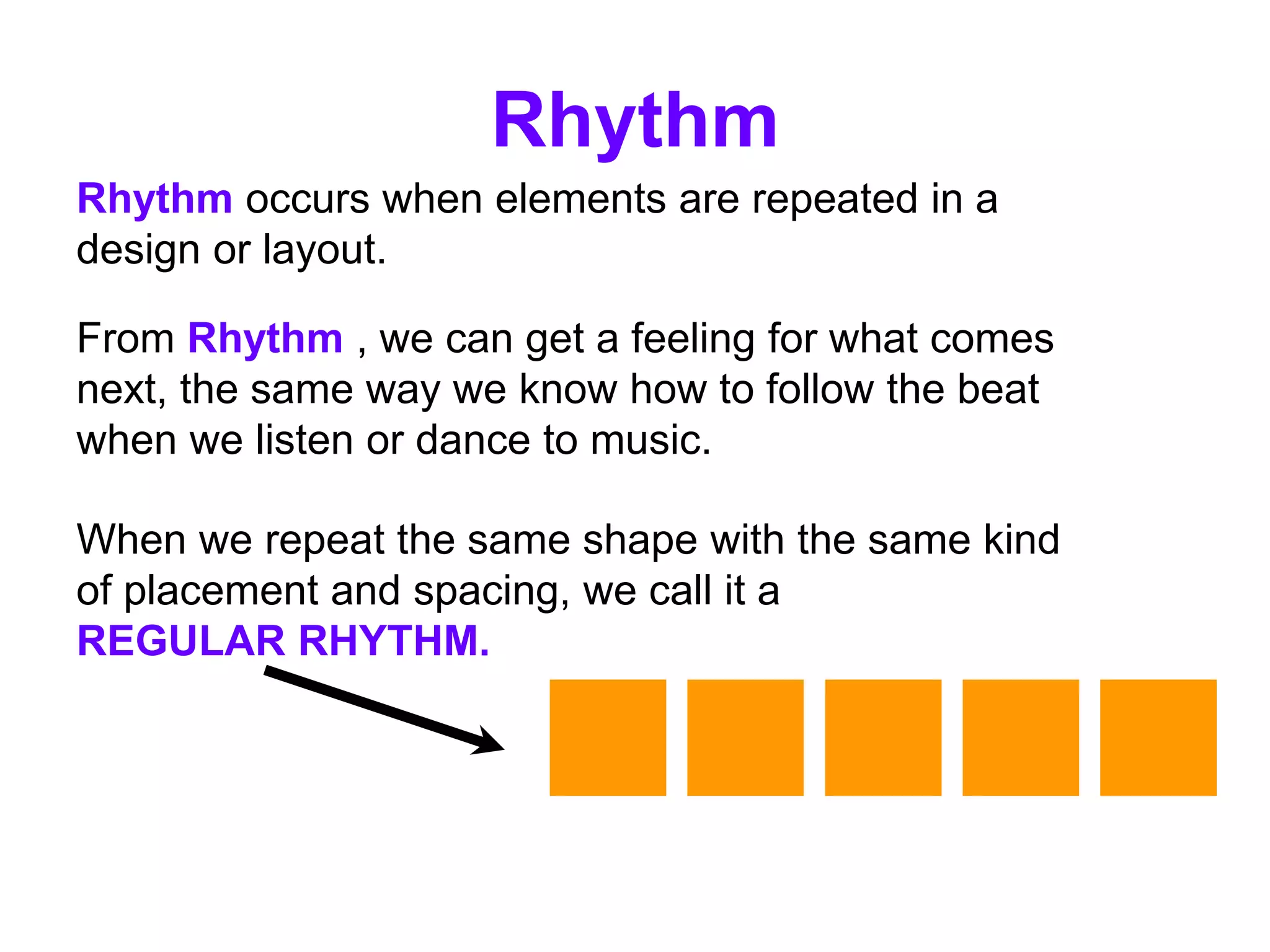
Rhythm occurs when elements are repeated in a
design or layout.
Rhythm
From Rhythm , we can get a feeling for what comes
next, the same way we know how to follow the beat
when we listen or dance to music.
When we repeat the same shape with the same kind
of placement and spacing, we call it a
REGULAR RHYTHM.
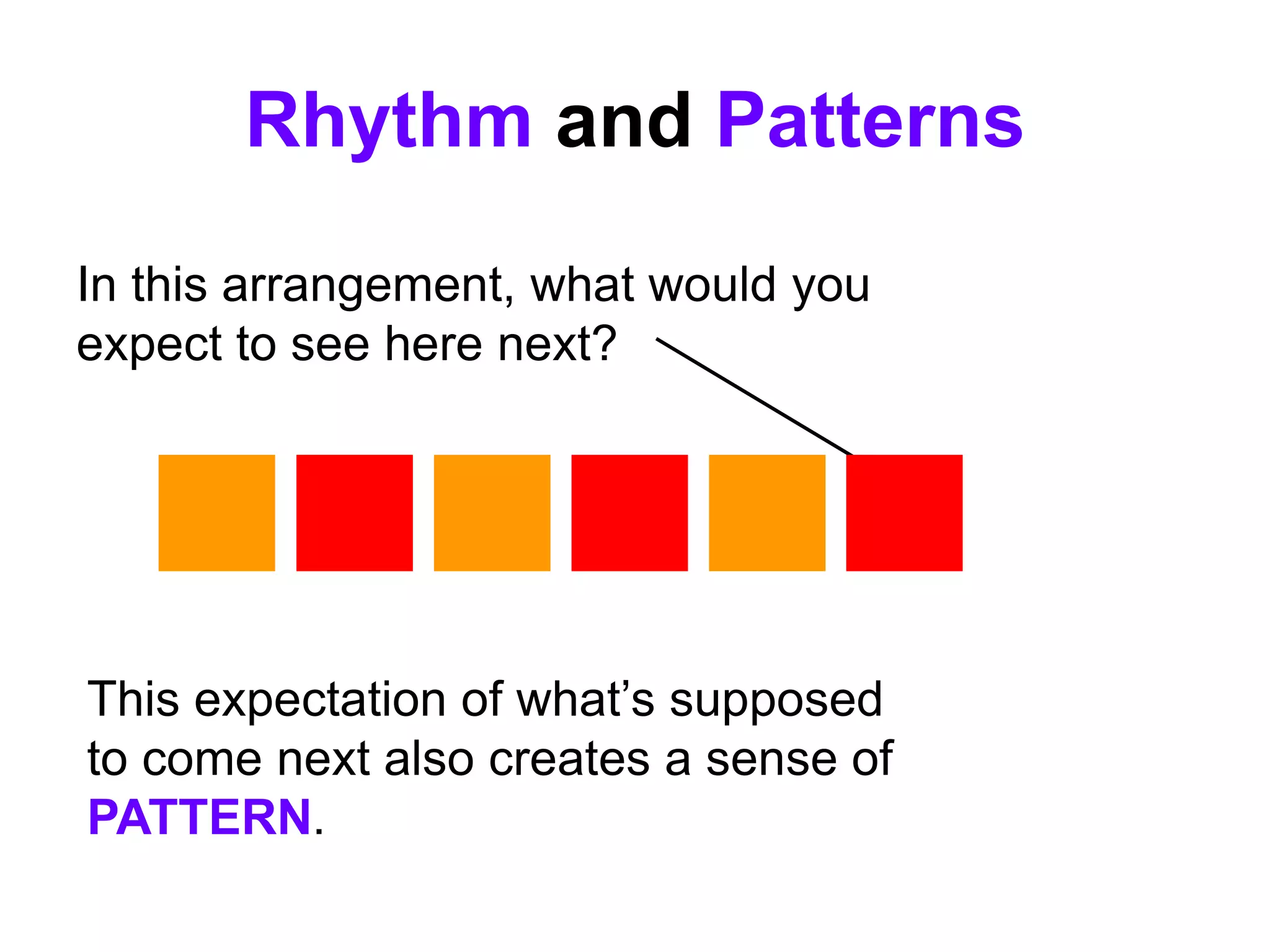
In this arrangement, what would you
expect to see here next?
Rhythm and Patterns
This expectation of what’s supposed
to come next also creates a sense of
PATTERN.
?
Rhythm and Patterns
• Sometimes it is the unexpected that makes a pattern
interesting.
• By “messing” up the rhythm of the pattern, a designer
can add variety or emphasis to create interest in the
composition.
Variety
• Variety is using difference to add interest to your
design.
• Playing with expectations, adding different colours,
experimenting with different sizes of elements, or
styles of fonts, are just some of the ways to play with
variety.
Emphasis
• Emphasis refers to how a graphic designer gets your
attention.
• It is a way of making important things stand out.
Balance
• When all the elements are placed in a way the gives the
impression of equal weight or “steadiness” on a page.
• To help understand Balance, you first need to
understand what “weight” means in the world of graphic
design…
Examples of Weight
• “Weight” in design means “visual weight”:
• Elements can “feel” or look like insignificant,
unimportant specks, or they can grab your attention
with their size, line thickness or placement on the
page.
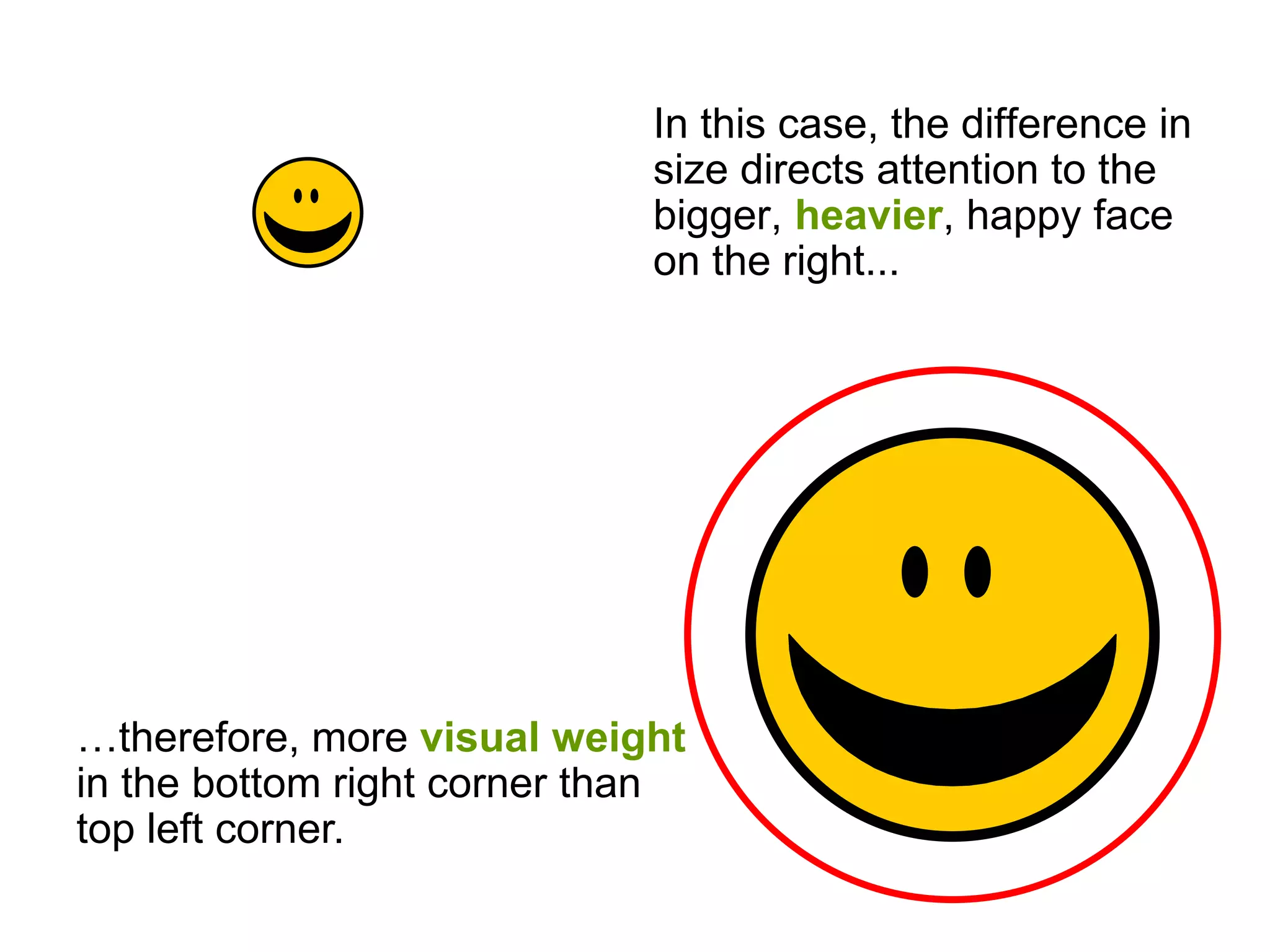
In this case, the difference in
size directs attention to the
bigger, heavier, happy face
on the right...
…therefore, more visual weight
in the bottom right corner than
top left corner.
Two types of Balance
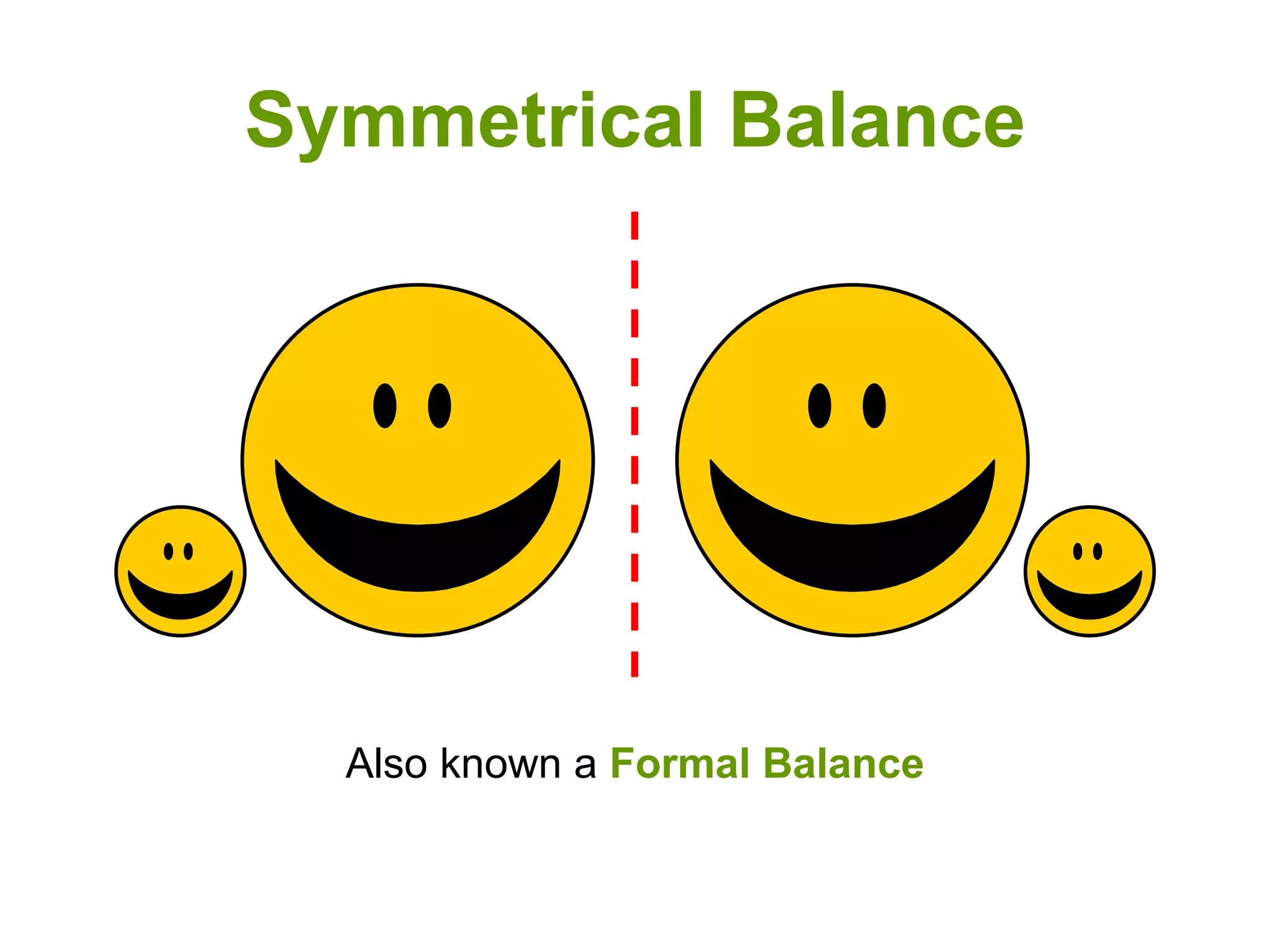
Symmetrical Balance
Also known a Formal Balance
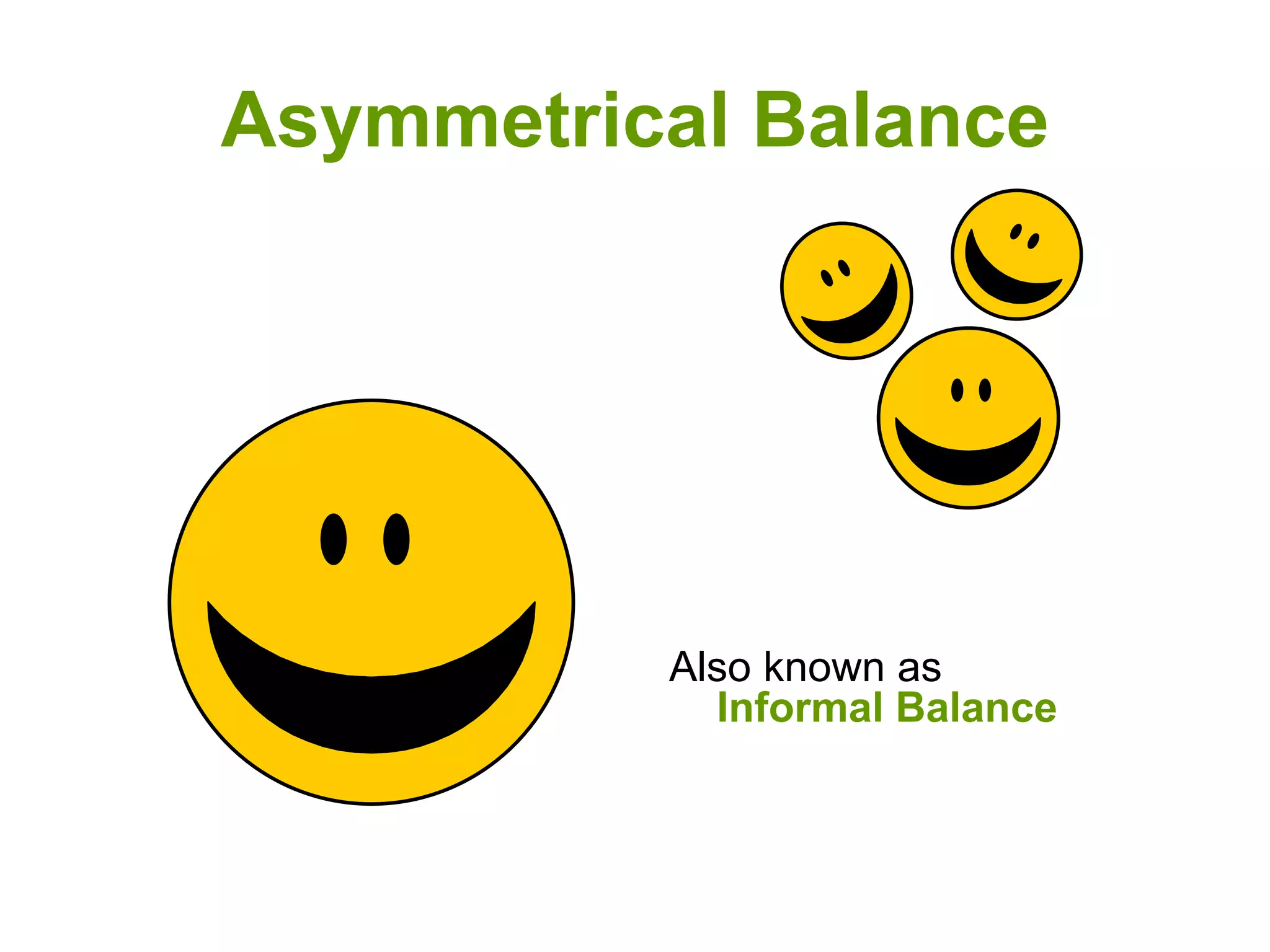
Asymmetrical Balance
Also known as
Informal Balance
Symmetrical Balance
• We tend to use Symmetrical or formal balance to
create stability and a “straight forward”, no nonsense
approach to composition and layout.
Asymmetrical Balance
• We tend to use Asymmetrical or Informal balance to
create “movement” and interest in the layout, but still
trying to create stability and balance in the composition.
Proportion
• Proportion has to do with different sized elements and
the relationship of one thing to another.
• For example, something can’t be big unless there
is something smaller beside it.
• Working with proportions on a page, you must look
at the overall composition and ask yourself, “Is this
comfortable to look at, or does something seem out of
place or out of balance with the rest of the page?”
Harmony/Unity
• Harmony or Unity in design refers to how all the
elements in the composition work together to keep it
working as a “whole”.

Basic Design Principles

  • 1.
    Introduction to the BasicPrinciples of Design
  • 2.
    Principles of Design •Are guidelines for designers. • Help us understand what looks “good” and why a design or composition seems “right”. • Helps you to explain your ideas, and why they “work”.
  • 3.
    The Basic Principles ofDesign • Rhythm • Variety • Emphasis • Balance • Proportion • Harmony/Unity
  • 4.
    Rhythm occurs whenelements are repeated in a design or layout. Rhythm From Rhythm , we can get a feeling for what comes next, the same way we know how to follow the beat when we listen or dance to music. When we repeat the same shape with the same kind of placement and spacing, we call it a REGULAR RHYTHM.
  • 5.
    In this arrangement,what would you expect to see here next? Rhythm and Patterns This expectation of what’s supposed to come next also creates a sense of PATTERN. ?
  • 6.
    Rhythm and Patterns •Sometimes it is the unexpected that makes a pattern interesting. • By “messing” up the rhythm of the pattern, a designer can add variety or emphasis to create interest in the composition.
  • 7.
    Variety • Variety isusing difference to add interest to your design. • Playing with expectations, adding different colours, experimenting with different sizes of elements, or styles of fonts, are just some of the ways to play with variety.
  • 8.
    Emphasis • Emphasis refersto how a graphic designer gets your attention. • It is a way of making important things stand out.
  • 9.
    Balance • When allthe elements are placed in a way the gives the impression of equal weight or “steadiness” on a page. • To help understand Balance, you first need to understand what “weight” means in the world of graphic design…
  • 10.
    Examples of Weight •“Weight” in design means “visual weight”: • Elements can “feel” or look like insignificant, unimportant specks, or they can grab your attention with their size, line thickness or placement on the page.
  • 11.
    In this case,the difference in size directs attention to the bigger, heavier, happy face on the right... …therefore, more visual weight in the bottom right corner than top left corner.
  • 12.
    Two types ofBalance
  • 13.
  • 14.
  • 15.
    Symmetrical Balance • Wetend to use Symmetrical or formal balance to create stability and a “straight forward”, no nonsense approach to composition and layout.
  • 16.
    Asymmetrical Balance • Wetend to use Asymmetrical or Informal balance to create “movement” and interest in the layout, but still trying to create stability and balance in the composition.
  • 17.
    Proportion • Proportion hasto do with different sized elements and the relationship of one thing to another. • For example, something can’t be big unless there is something smaller beside it. • Working with proportions on a page, you must look at the overall composition and ask yourself, “Is this comfortable to look at, or does something seem out of place or out of balance with the rest of the page?”
  • 18.
    Harmony/Unity • Harmony orUnity in design refers to how all the elements in the composition work together to keep it working as a “whole”.