Dentin_pulp complex
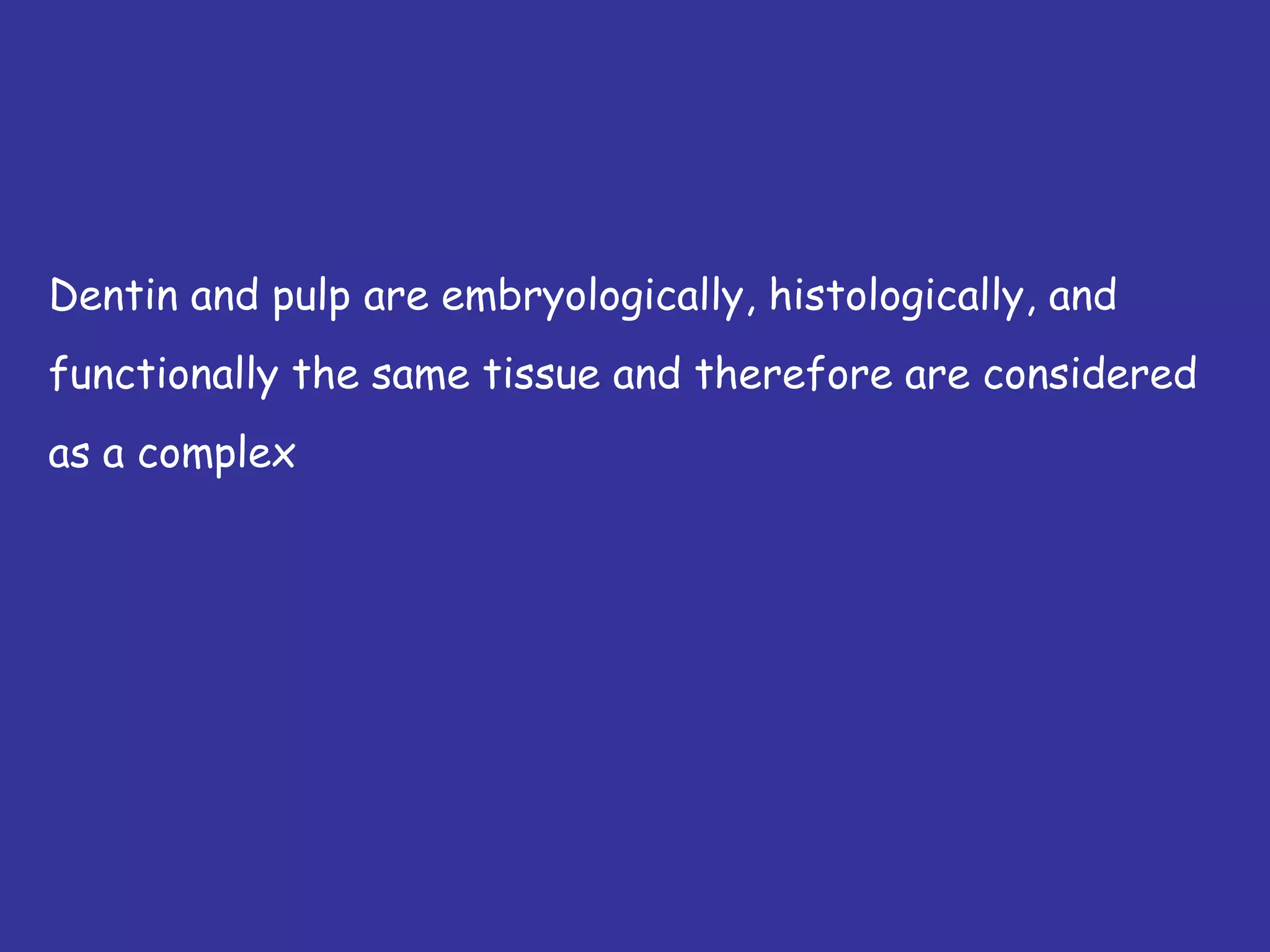
Dentin and pulp are embryologically, histologically, and
functionally the same tissue and therefore are considered
as a complex
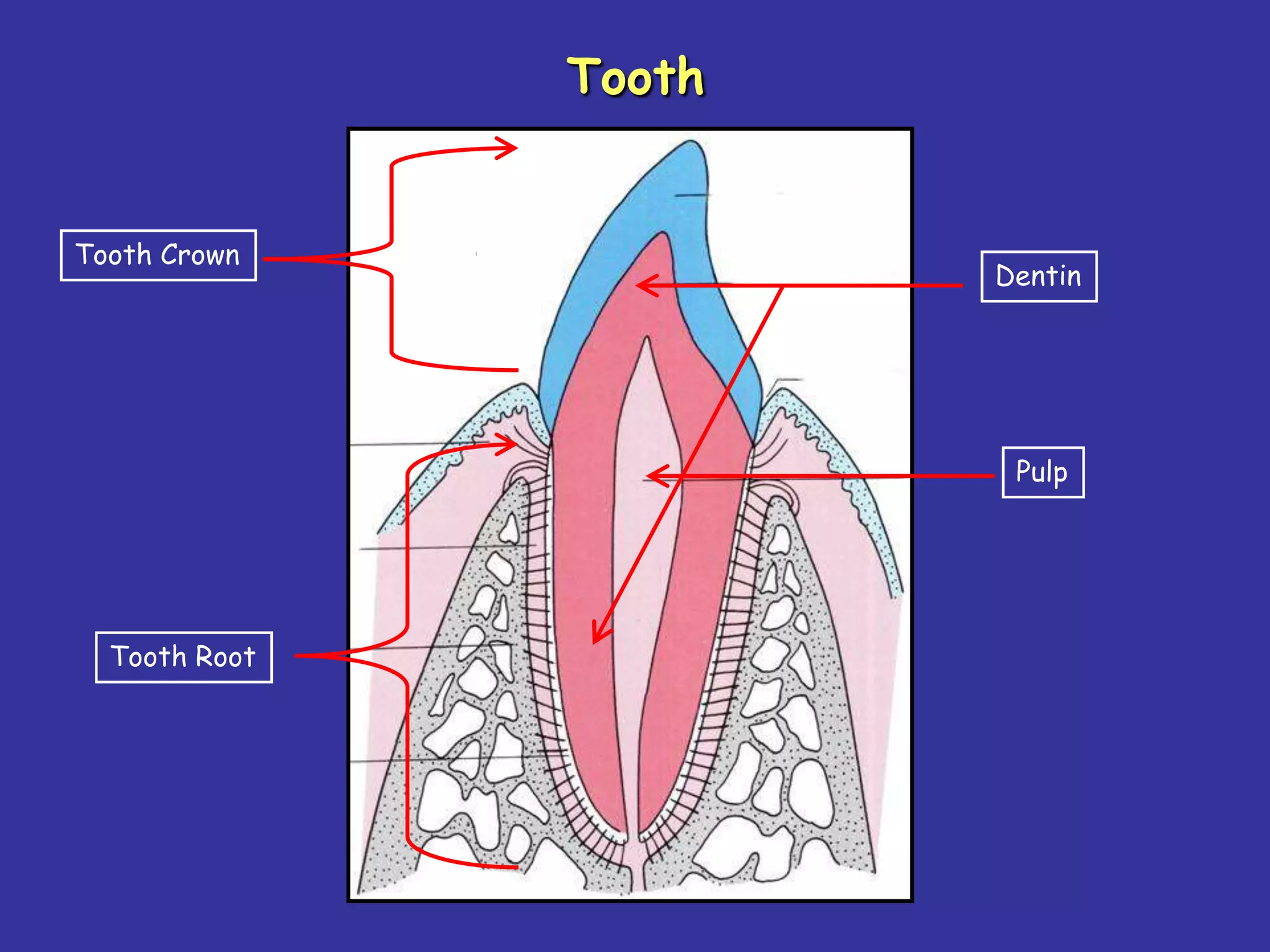
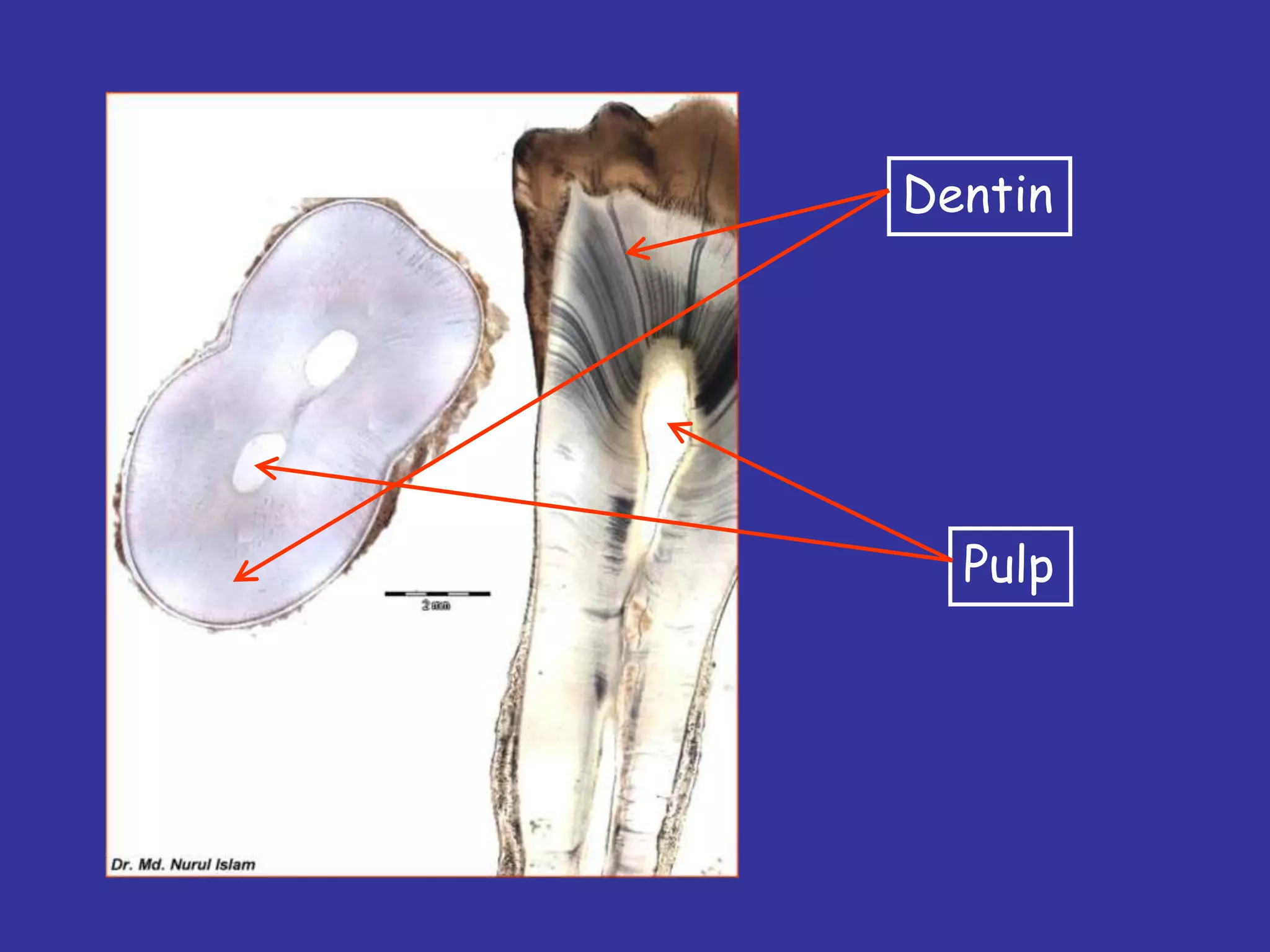
Tooth


Tooth Crown
                       Dentin


                        Pulp


  Tooth Root
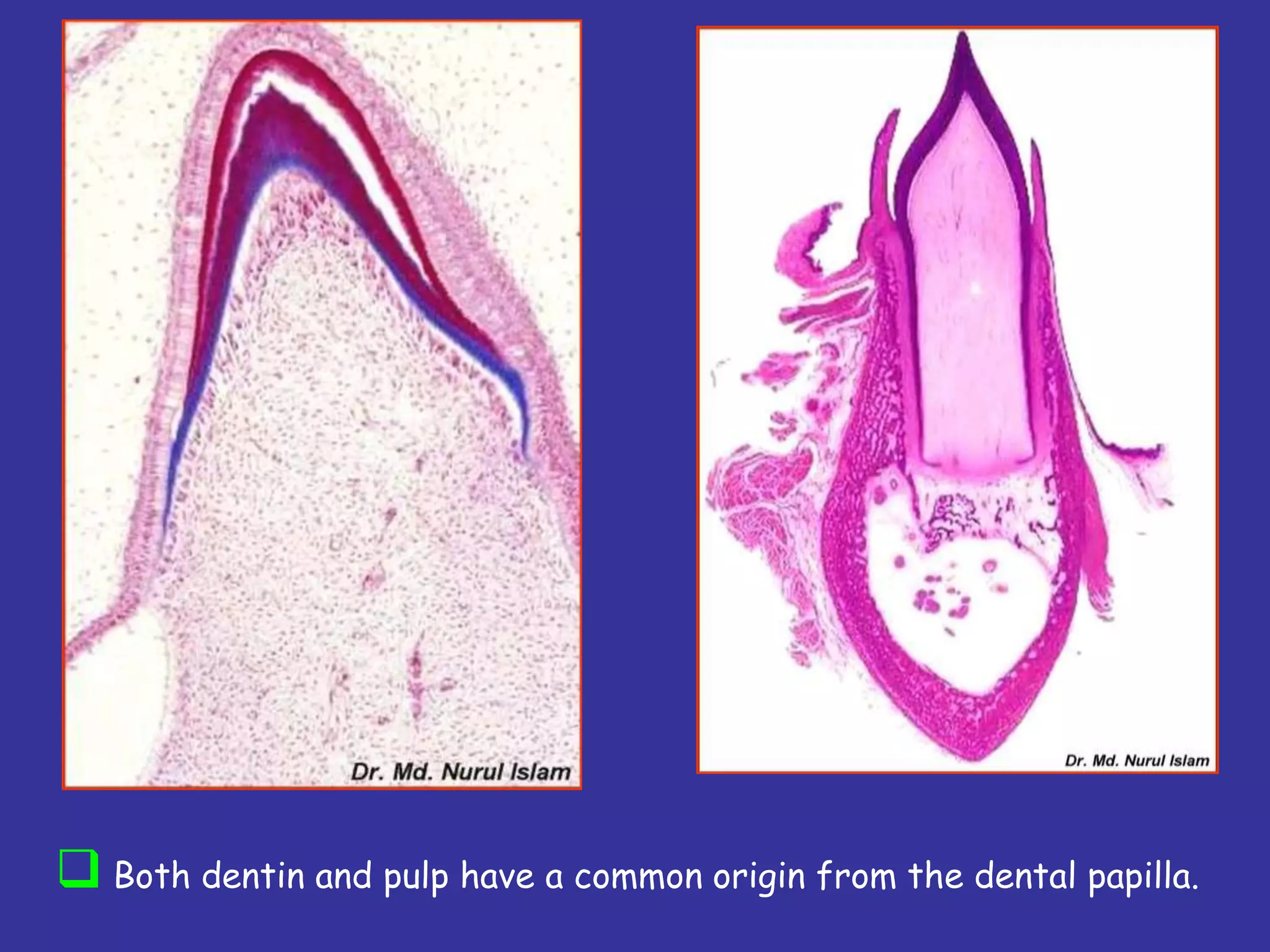
 Both dentin and pulp have a common origin from the dental papilla.
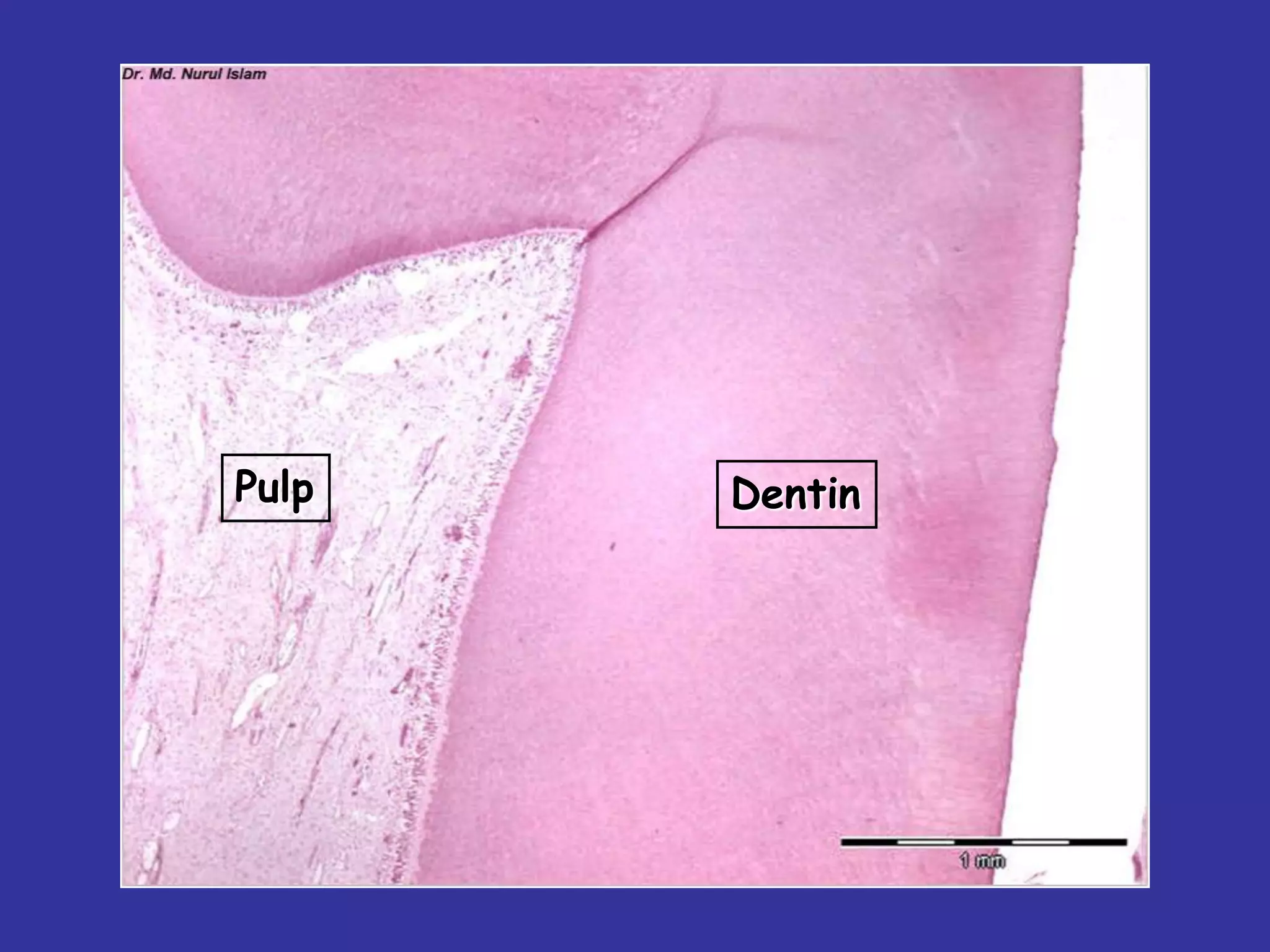
Pulp   Dentin
Pulp
                  Dentin


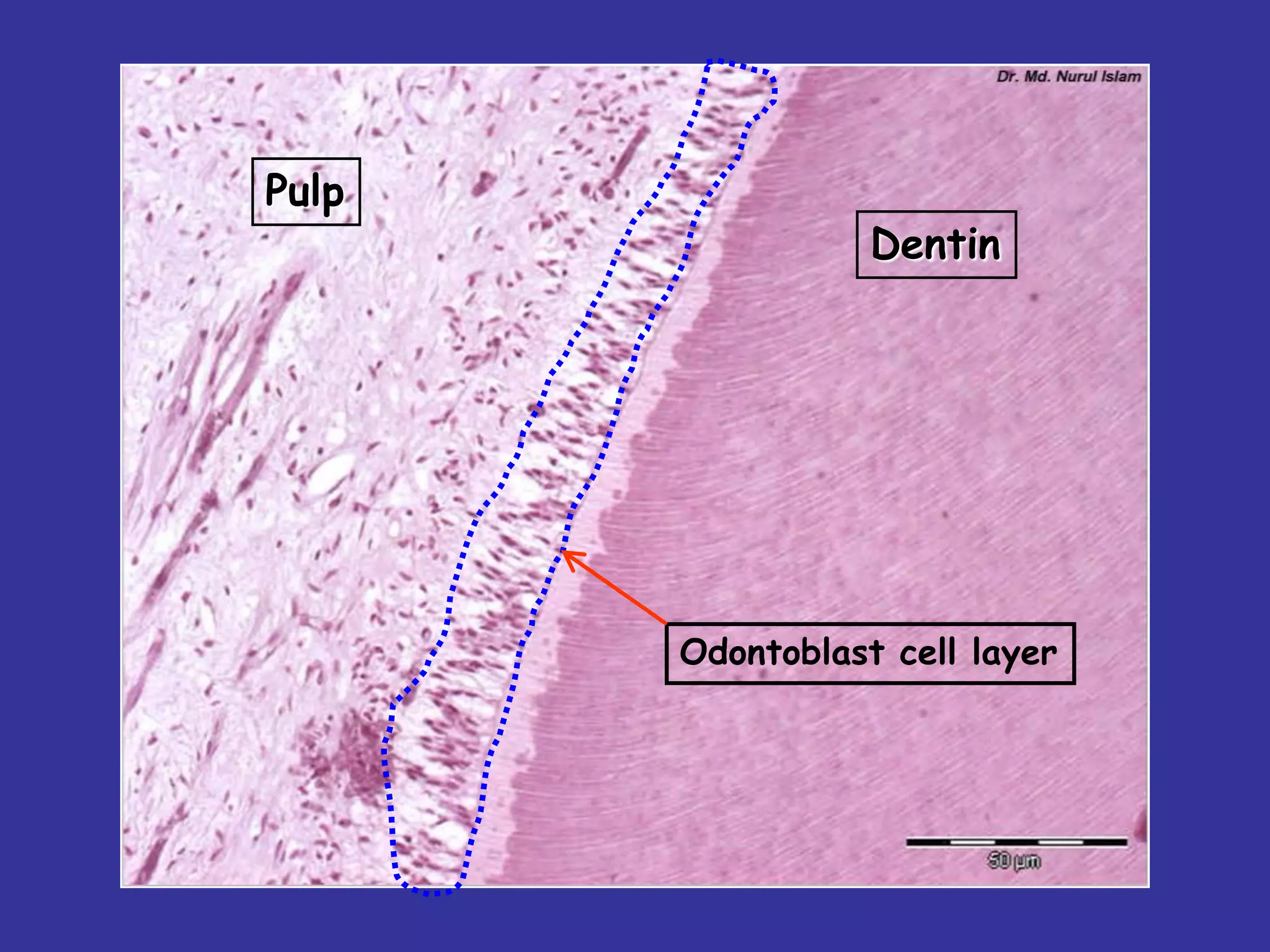
       Odontoblast cell layer
Dentin


  Pulp
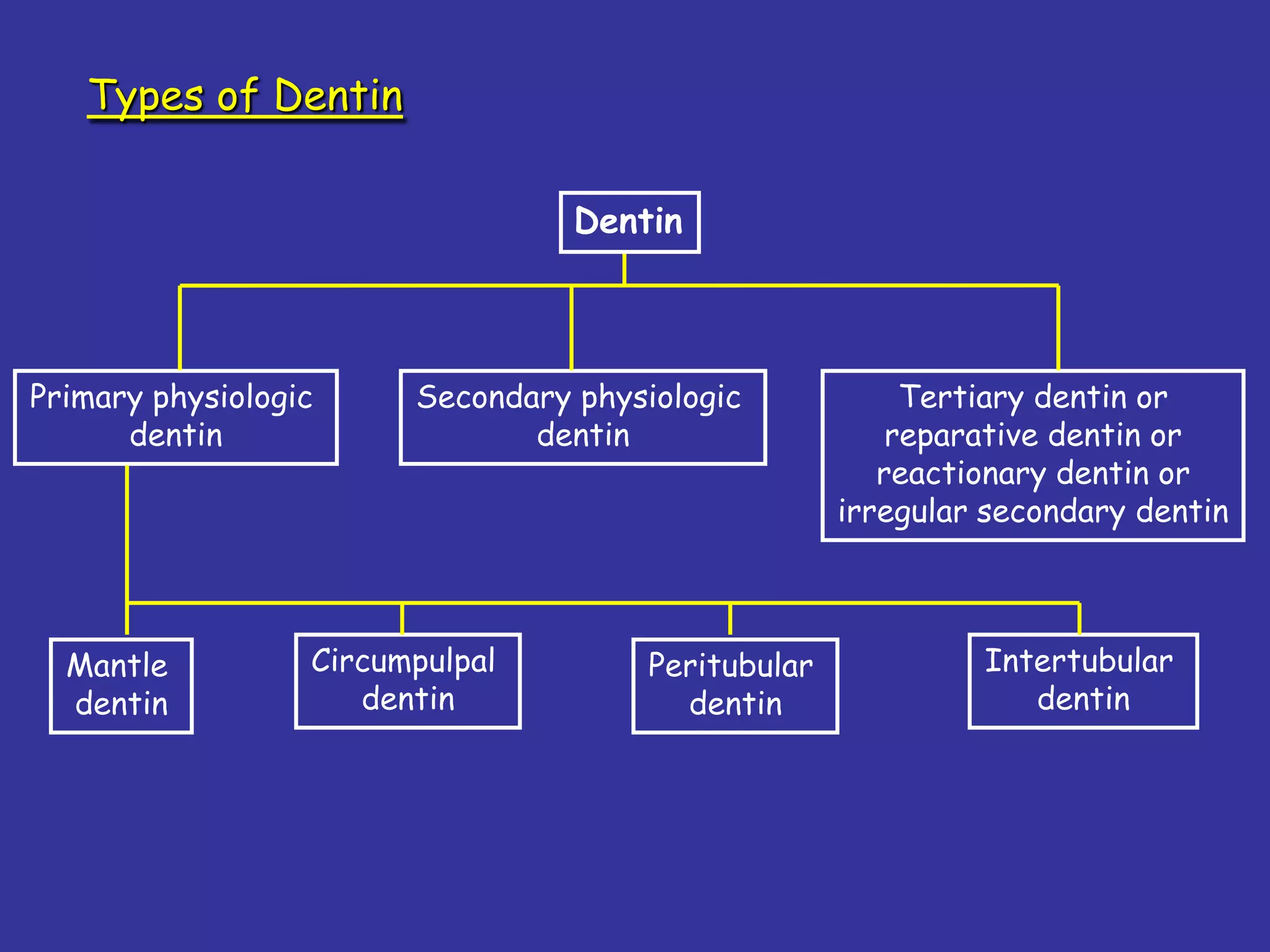
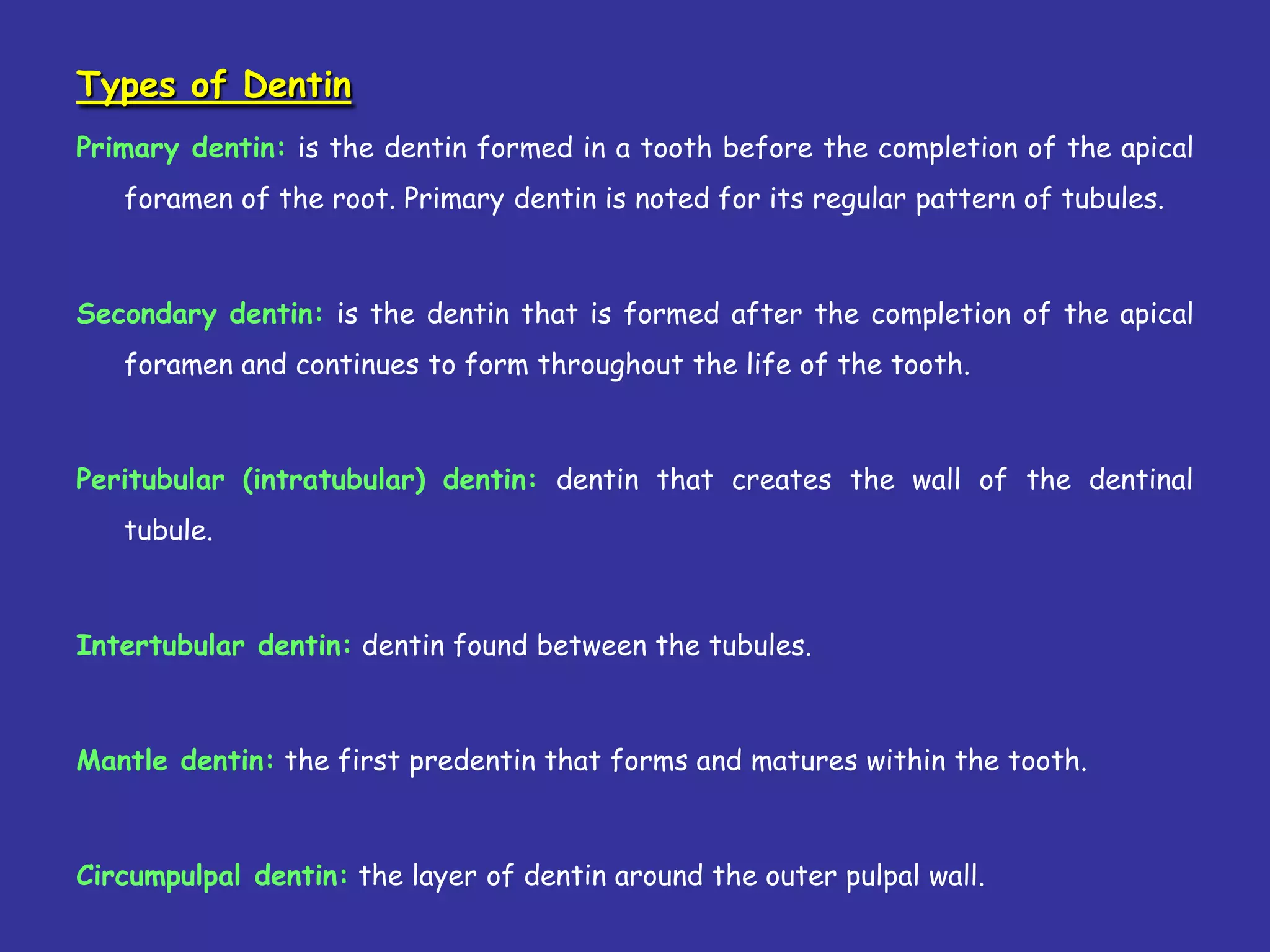
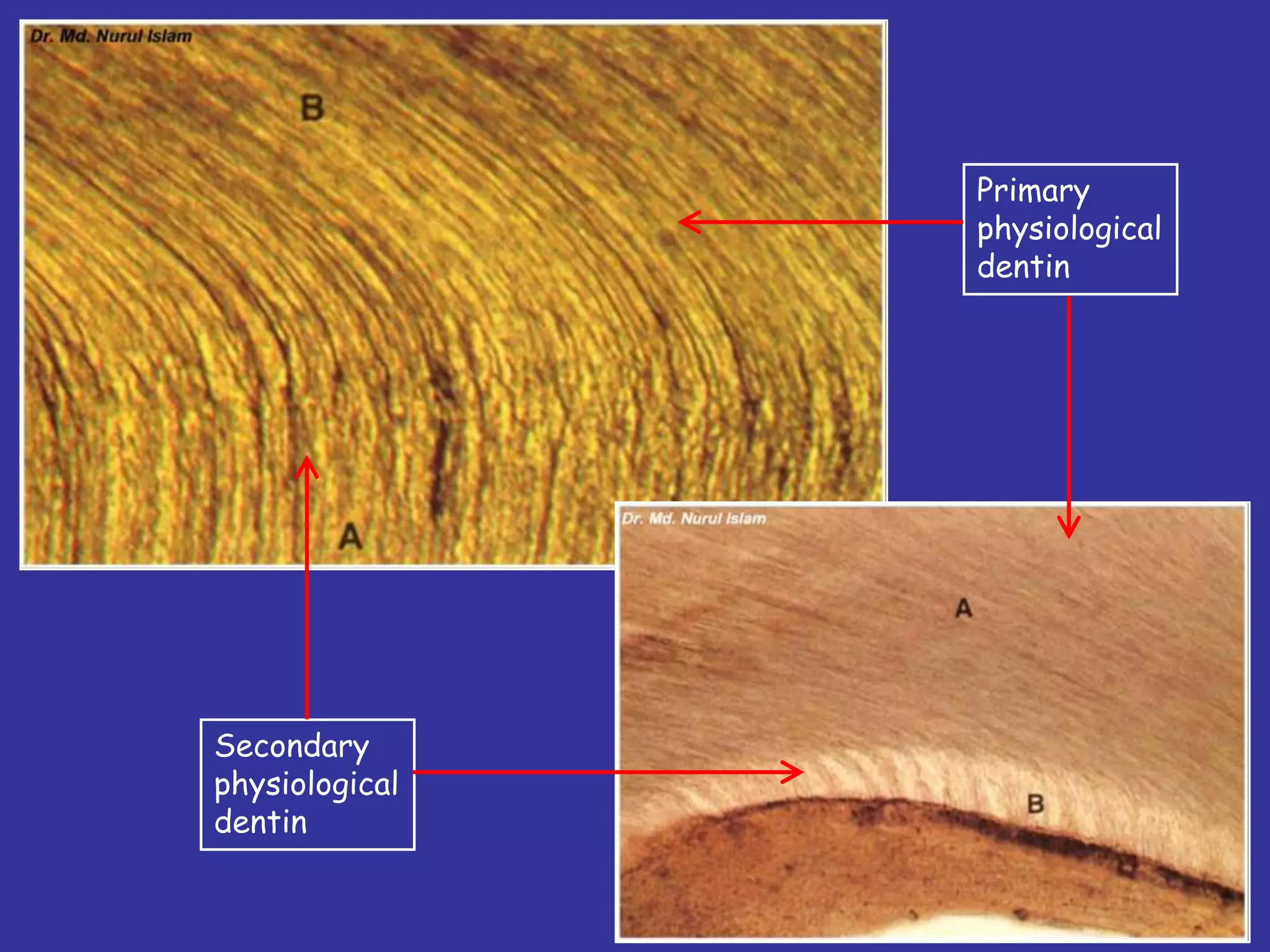
Types of Dentin

                                  Dentin


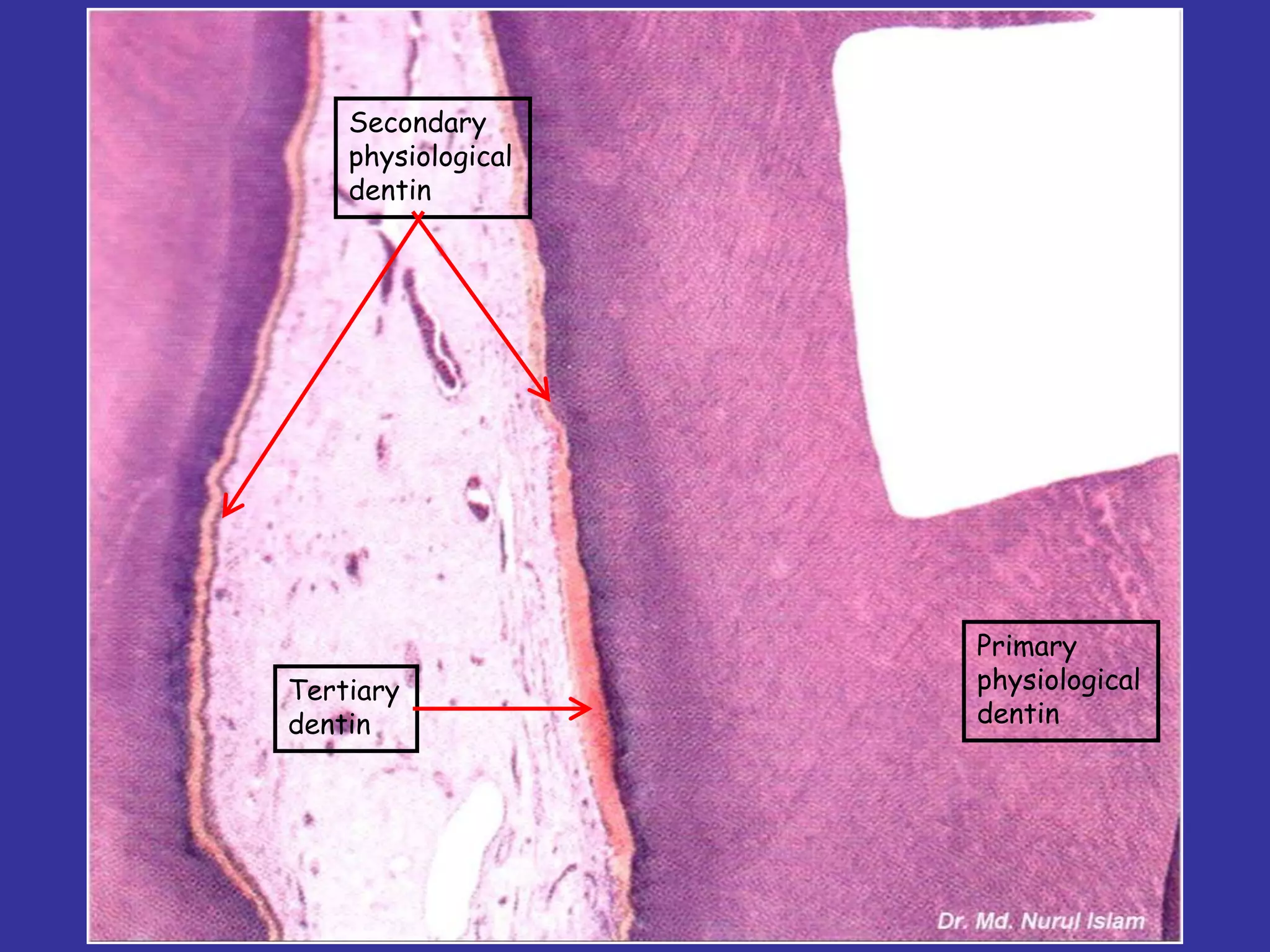
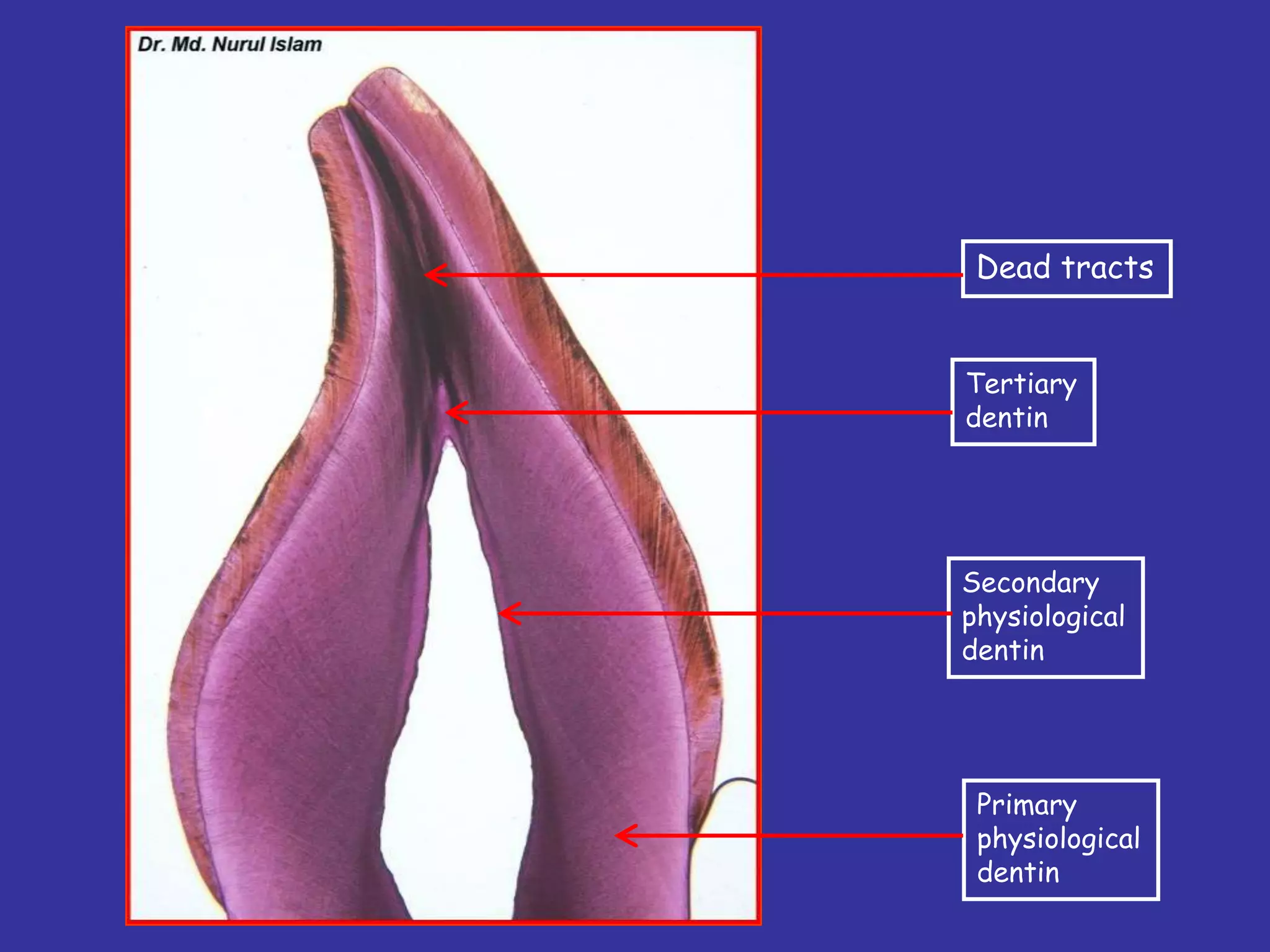
Primary physiologic     Secondary physiologic             Tertiary dentin or
      dentin                   dentin                    reparative dentin or
                                                        reactionary dentin or
                                                     irregular secondary dentin


  Mantle          Circumpulpal         Peritubular            Intertubular
  dentin             dentin              dentin                  dentin
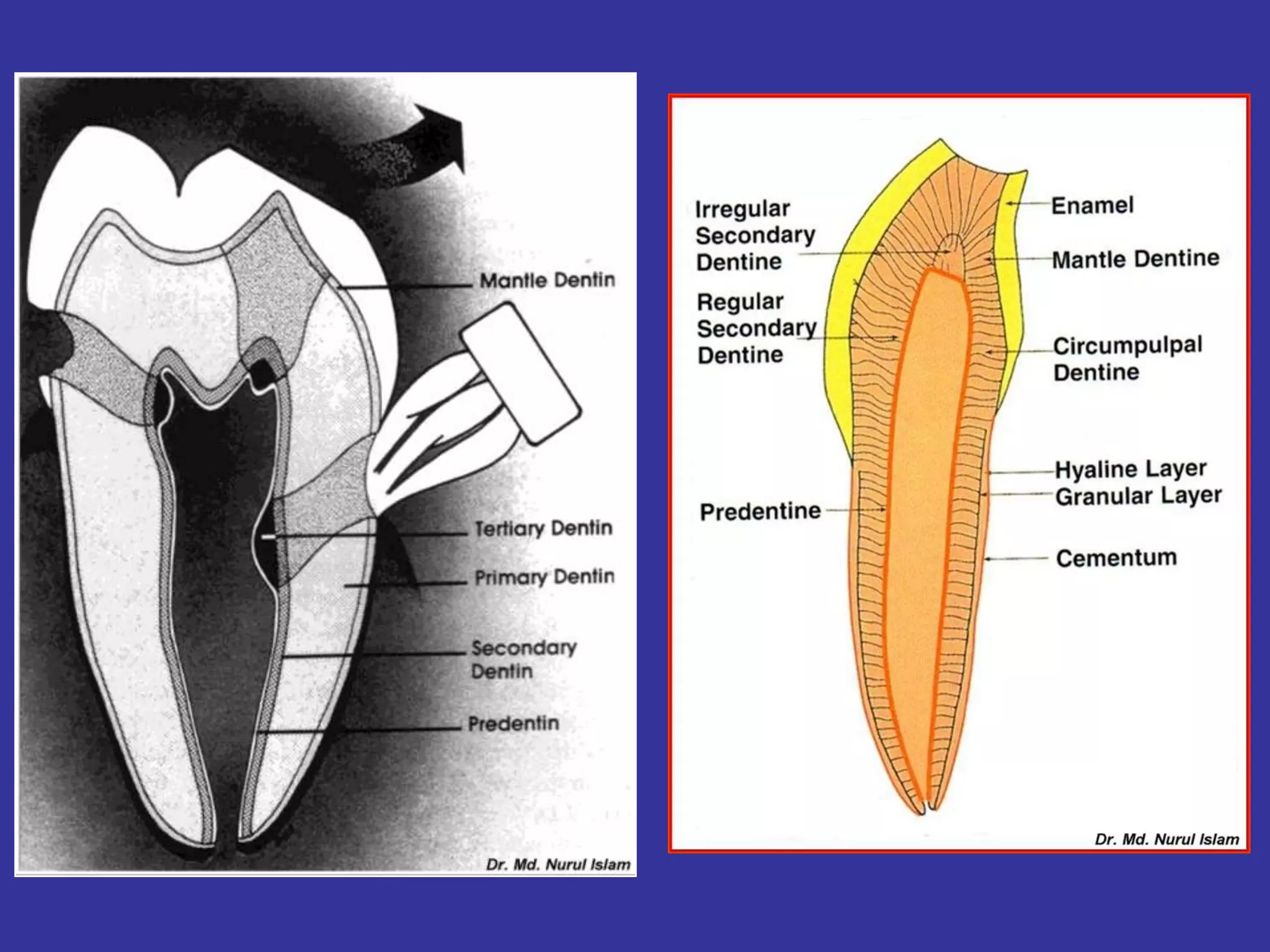
Types of Dentin
Primary dentin: is the dentin formed in a tooth before the completion of the apical
   foramen of the root. Primary dentin is noted for its regular pattern of tubules.


Secondary dentin: is the dentin that is formed after the completion of the apical
   foramen and continues to form throughout the life of the tooth.


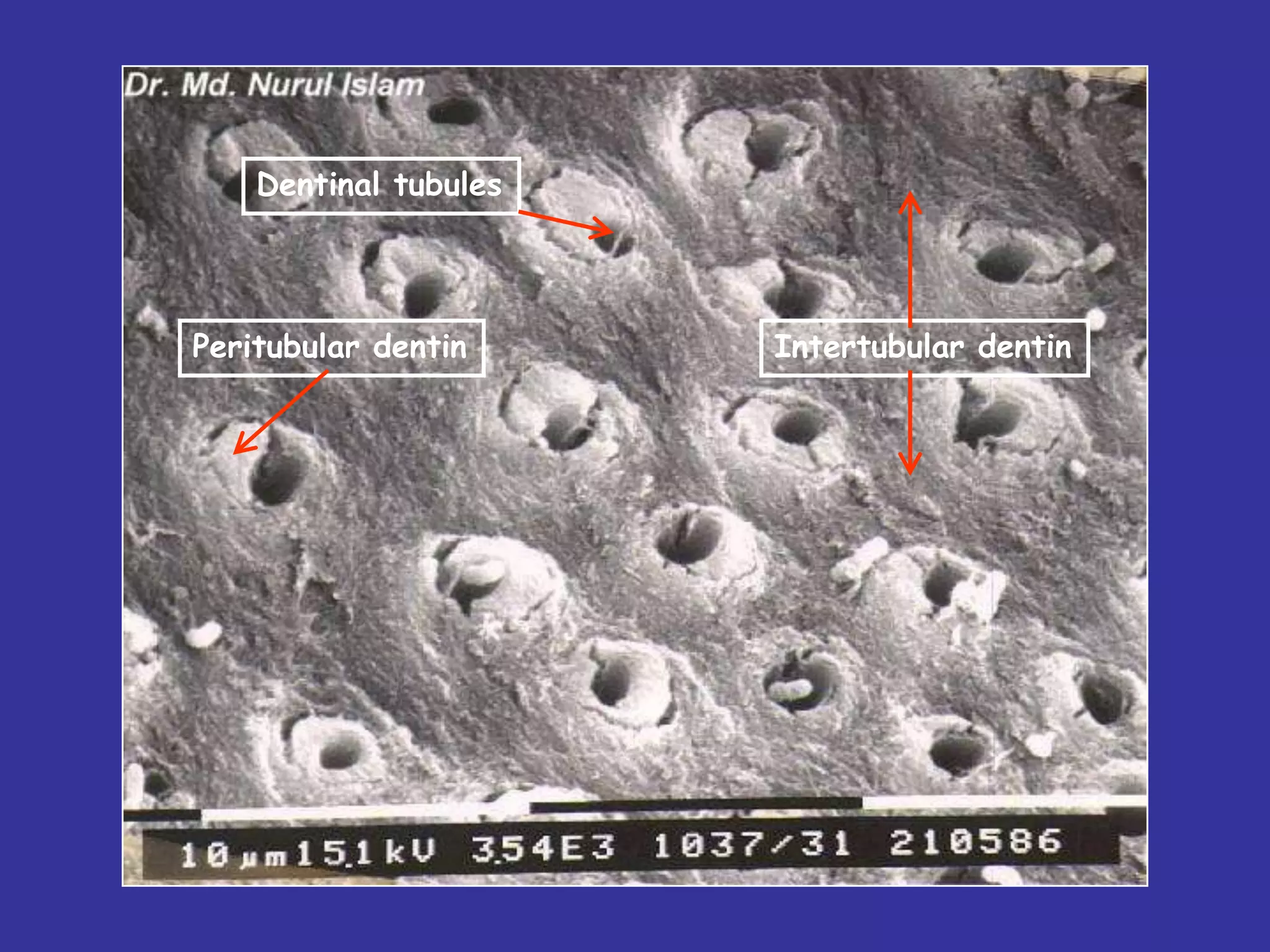
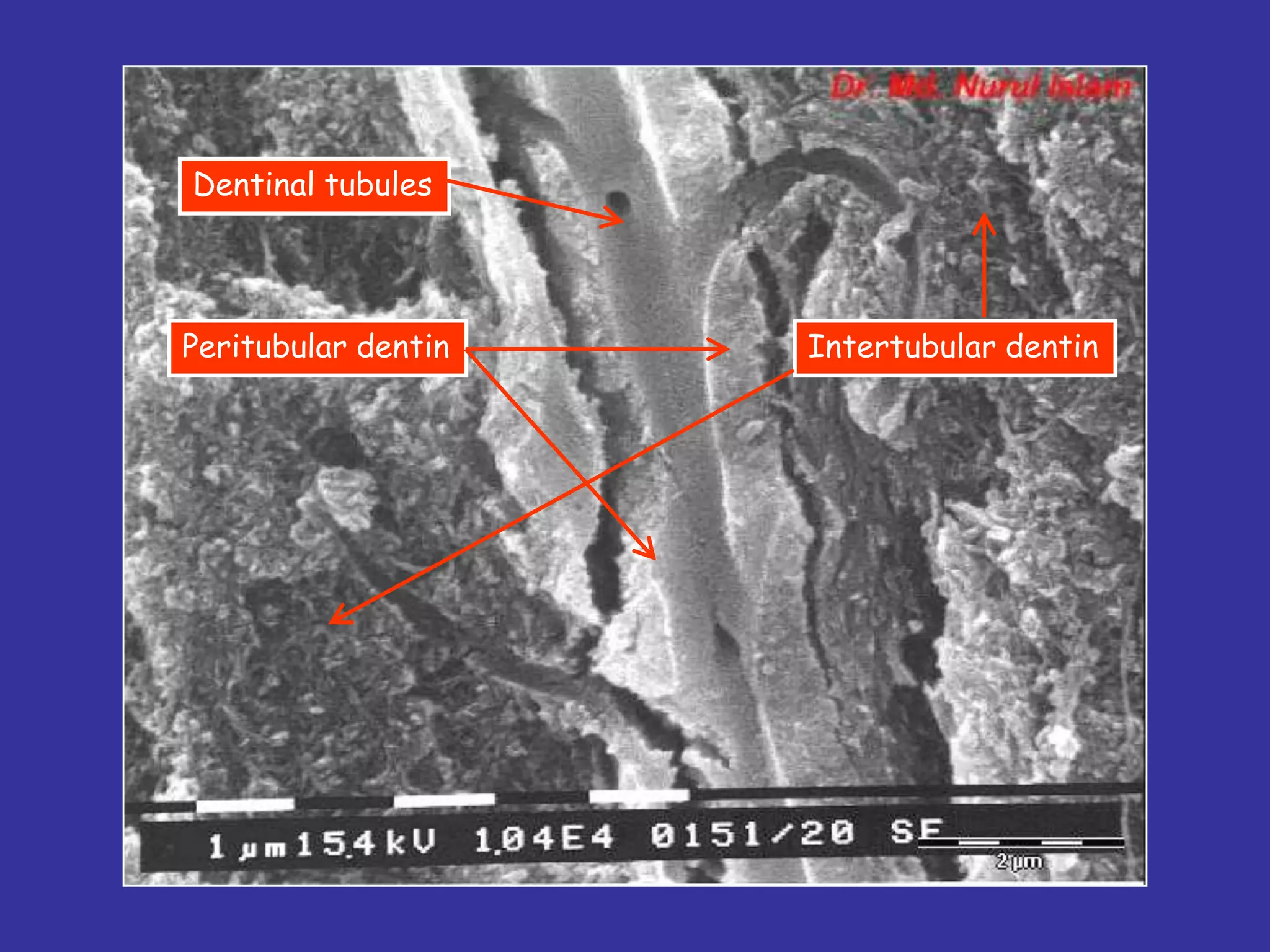
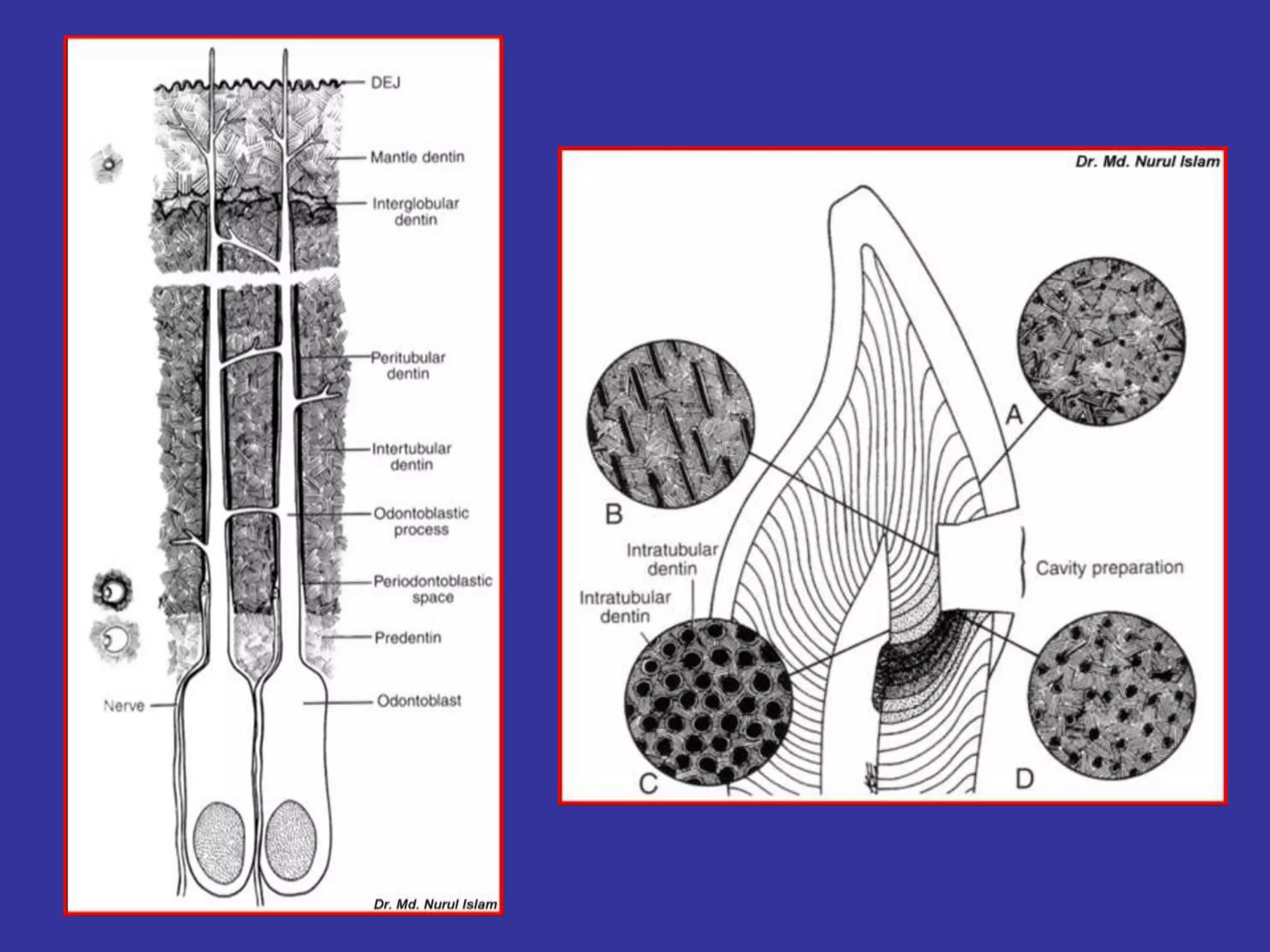
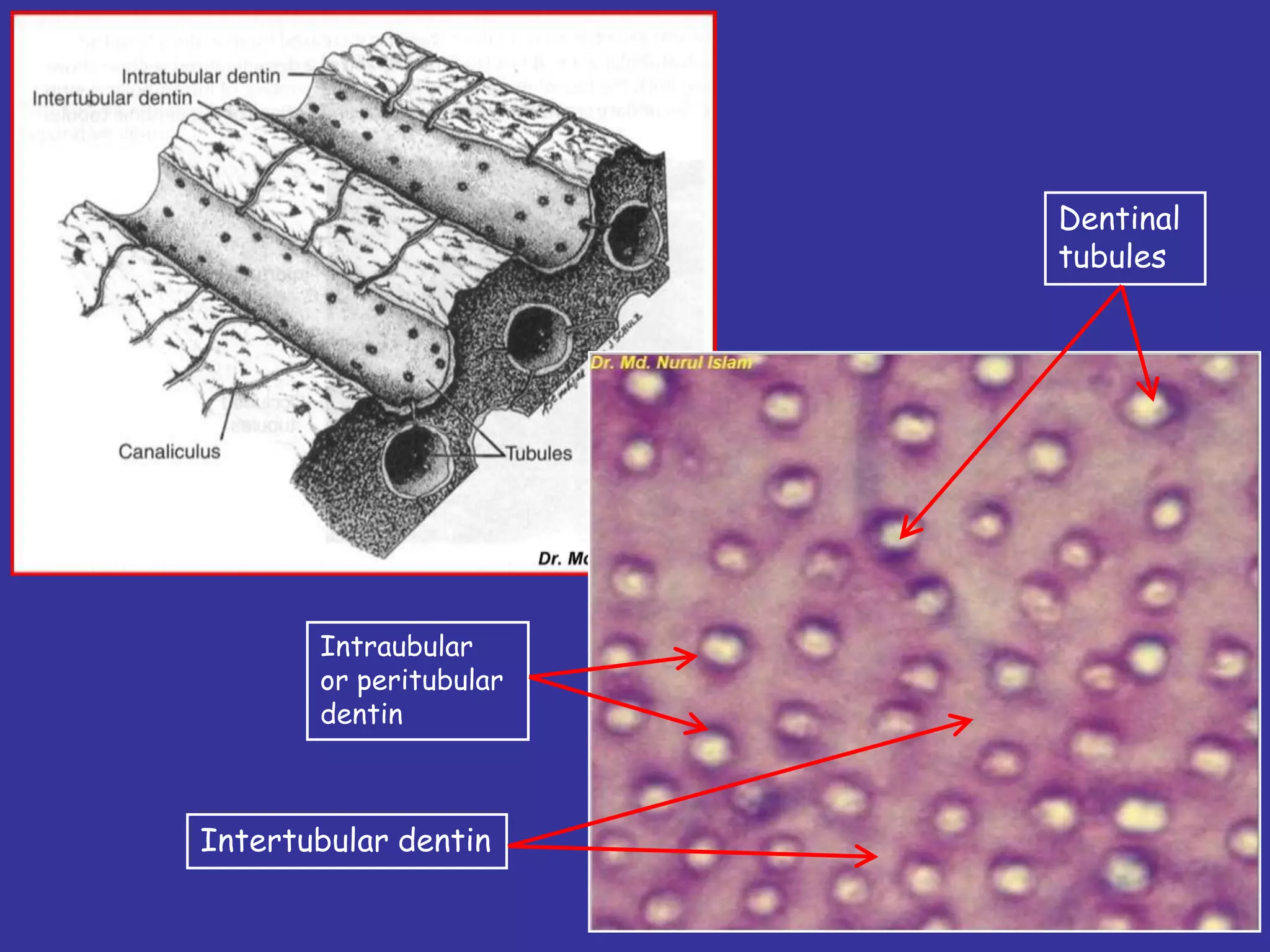
Peritubular (intratubular) dentin: dentin that creates the wall of the dentinal
   tubule.


Intertubular dentin: dentin found between the tubules.


Mantle dentin: the first predentin that forms and matures within the tooth.


Circumpulpal dentin: the layer of dentin around the outer pulpal wall.
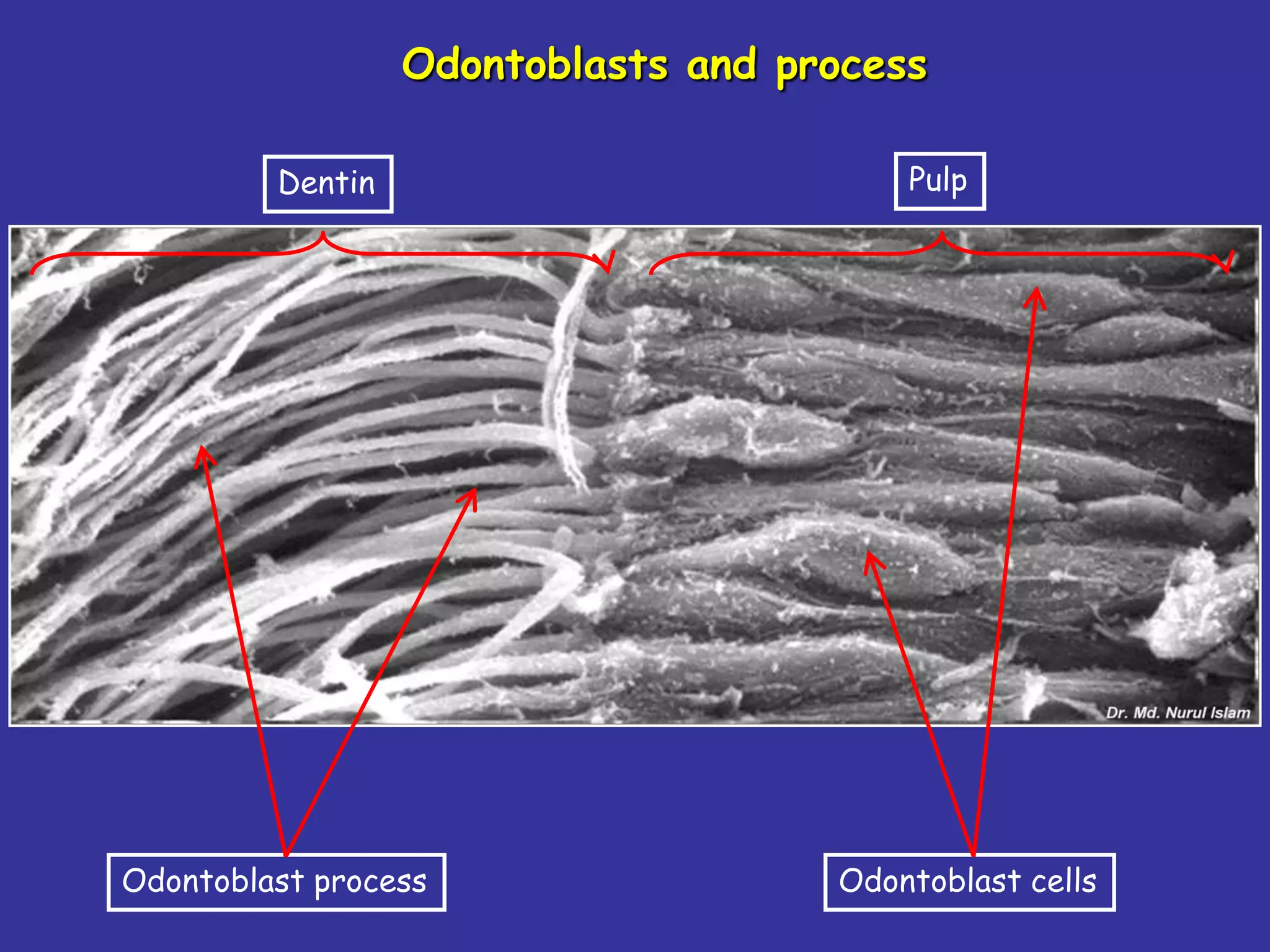
Odontoblasts and process

         Dentin                          Pulp


Odontoblast process                  Odontoblast cells
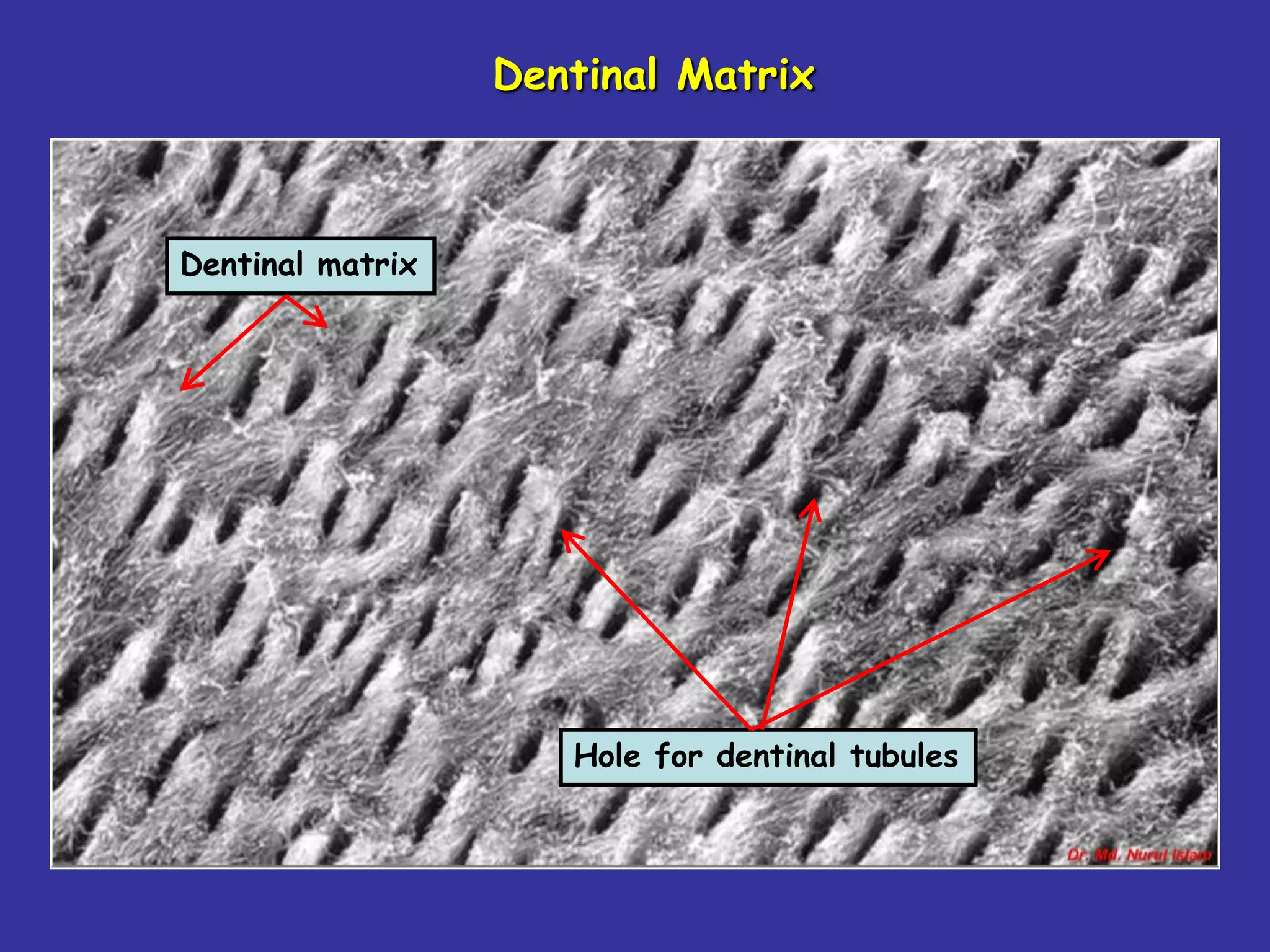
Dentinal Matrix


Dentinal matrix


                     Hole for dentinal tubules
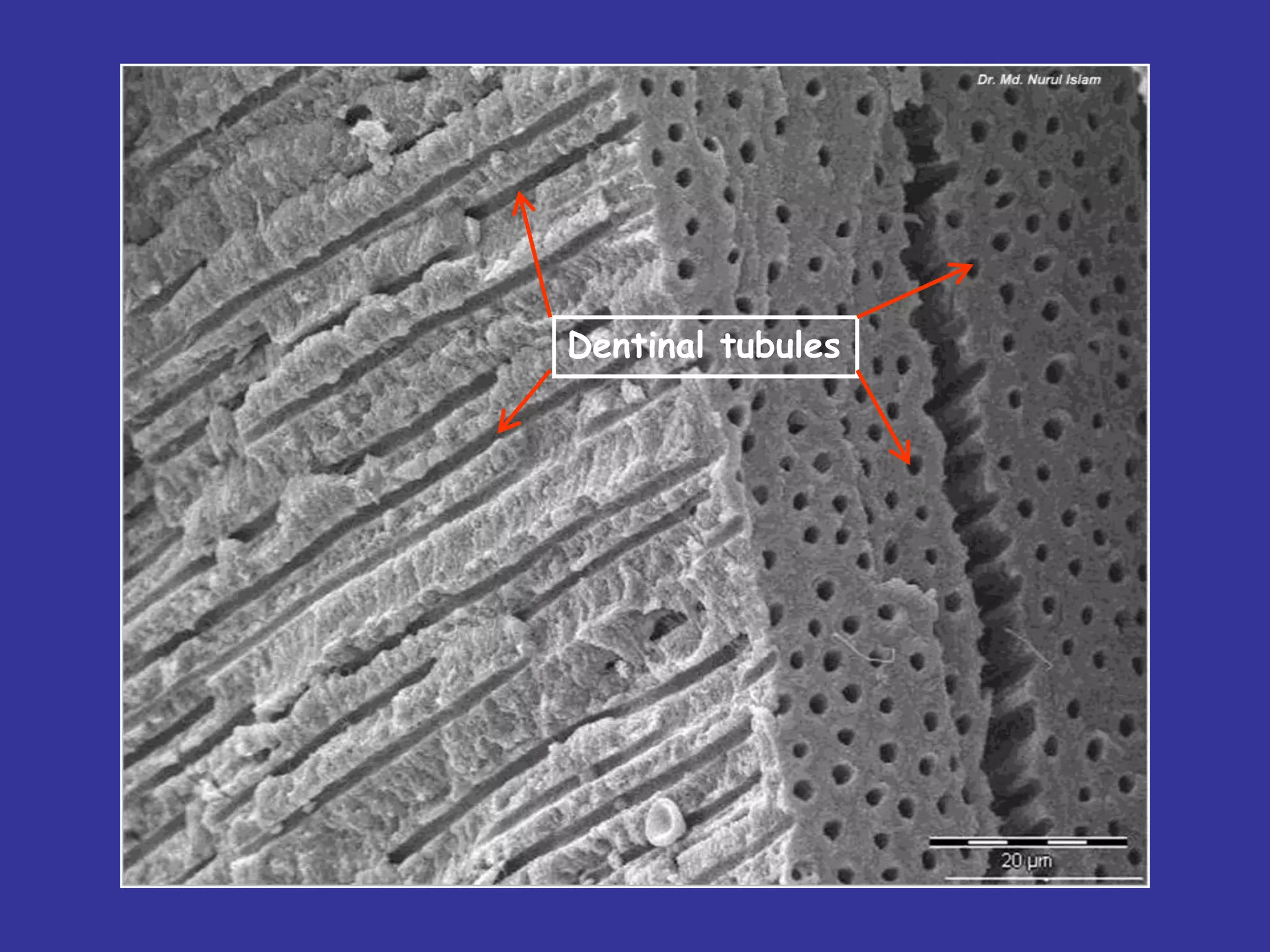
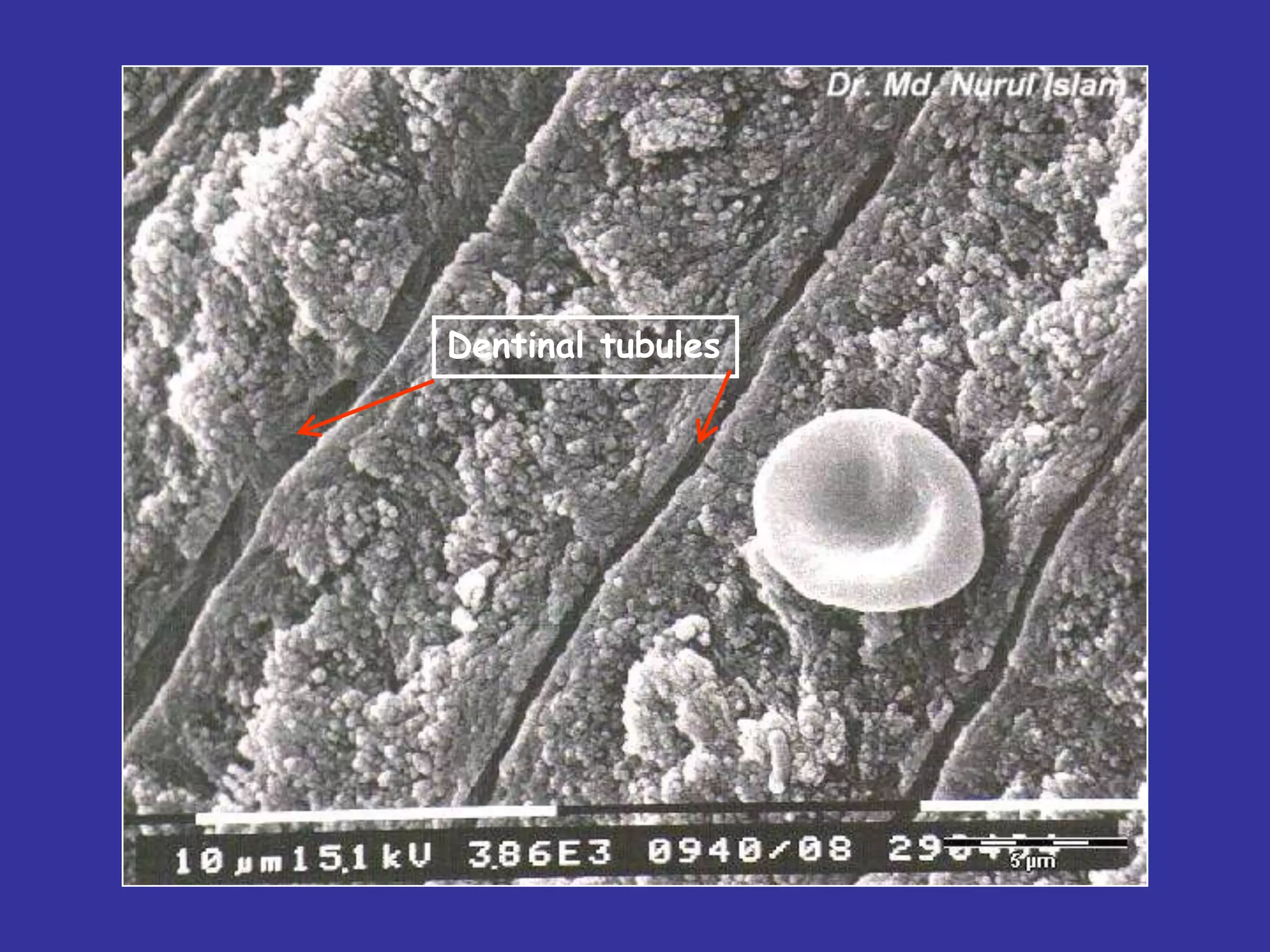
Dentinal tubules
Dentinal tubules
Dentinal tubules


Peritubular dentin     Intertubular dentin
Dentinal tubules


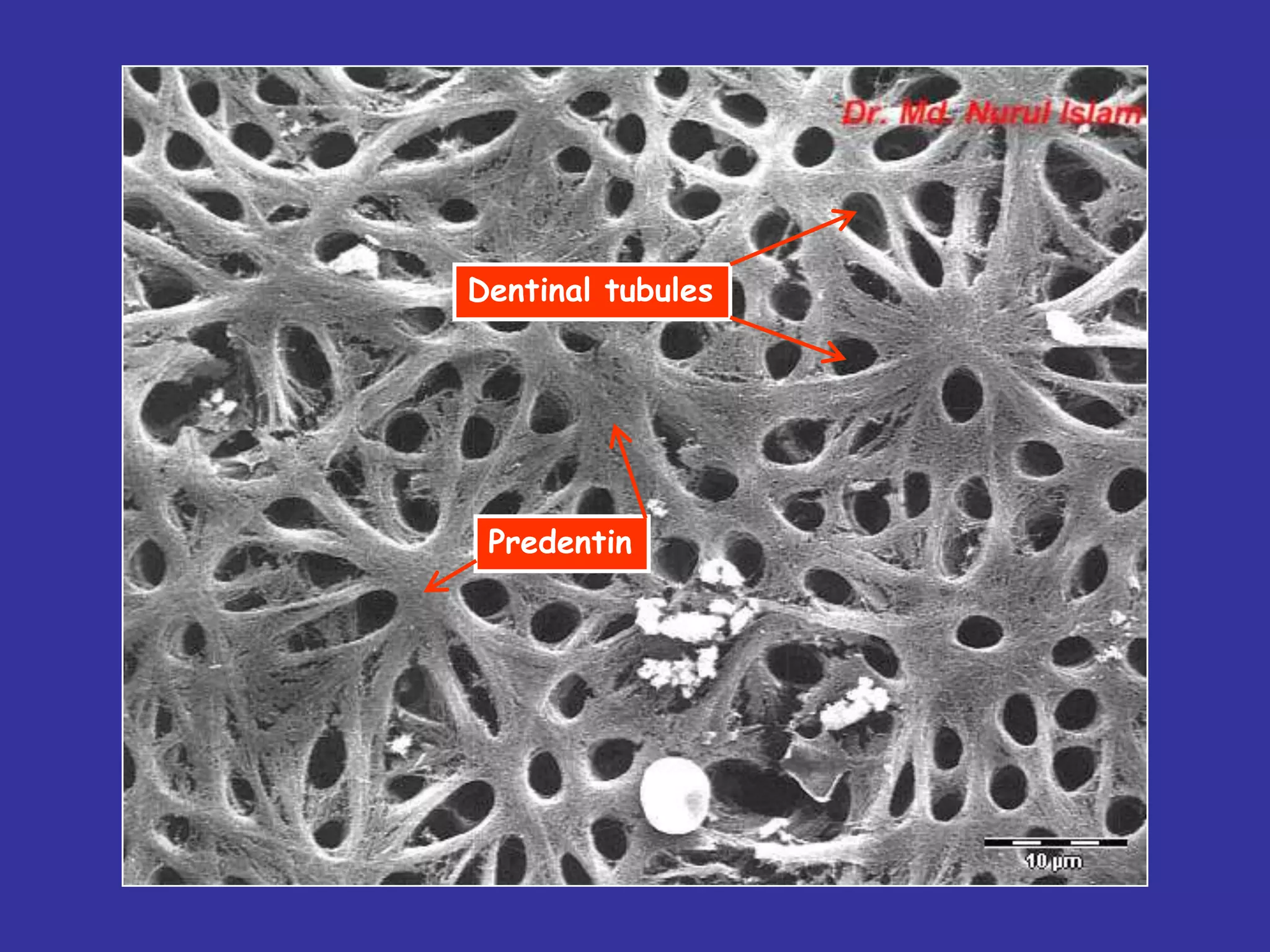
 Predentin
Dentinal tubules


Peritubular dentin   Intertubular dentin
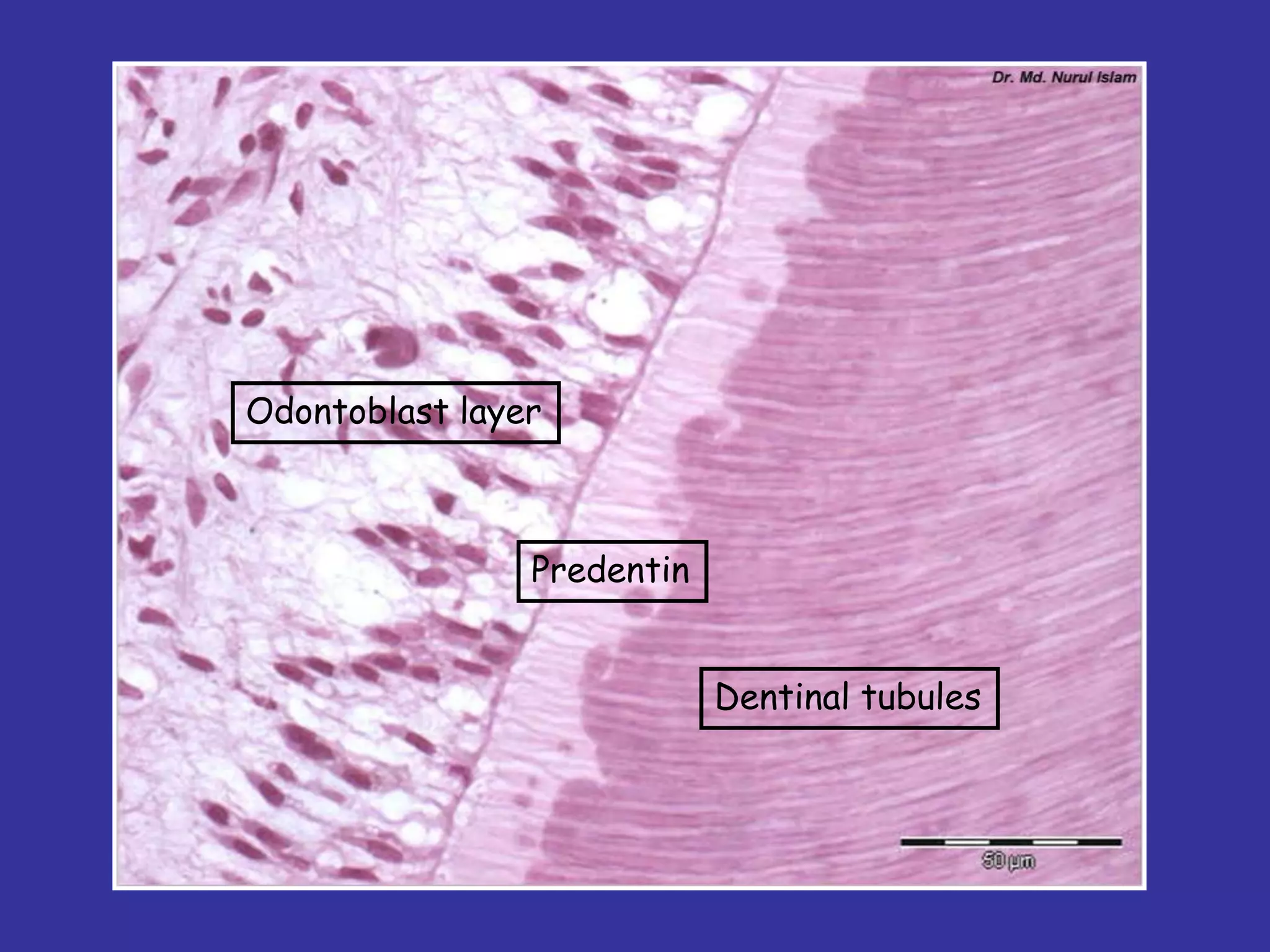
Odontoblast layer


                Predentin


                            Dentinal tubules
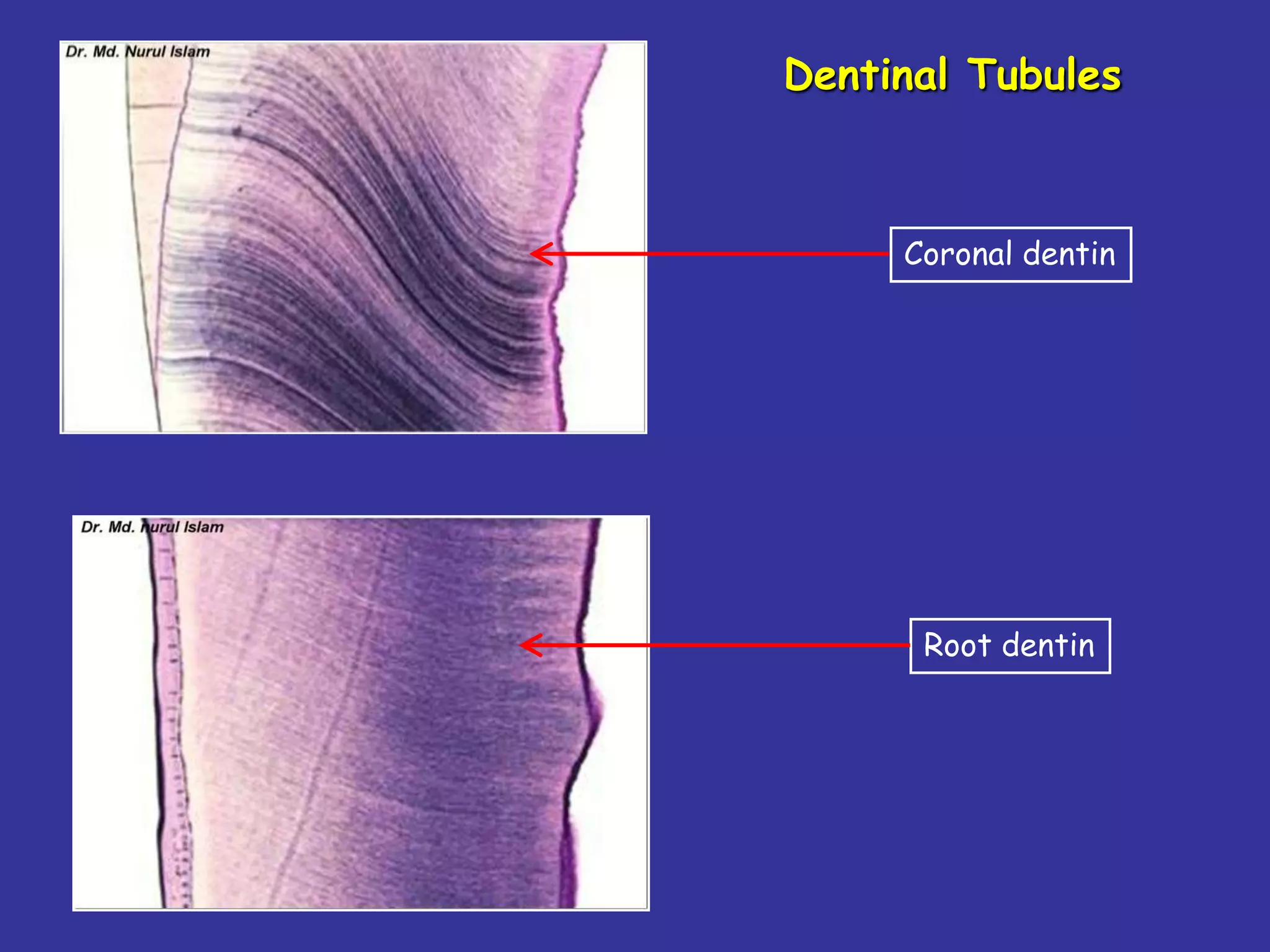
Dentinal Tubules


     Coronal dentin


      Root dentin
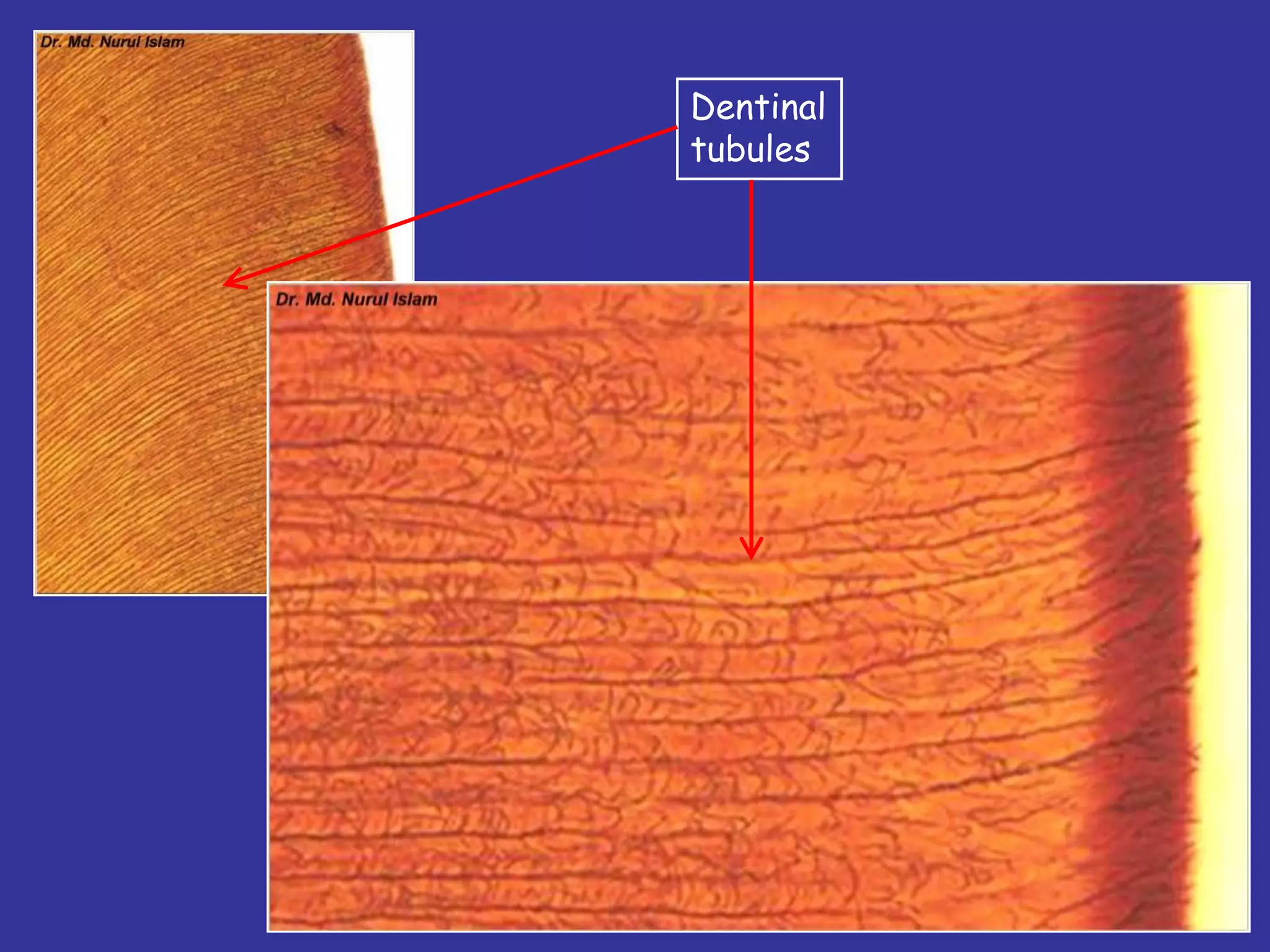
Dentinal
tubules
Dentinal
                        tubules


       Intraubular
       or peritubular
       dentin


Intertubular dentin
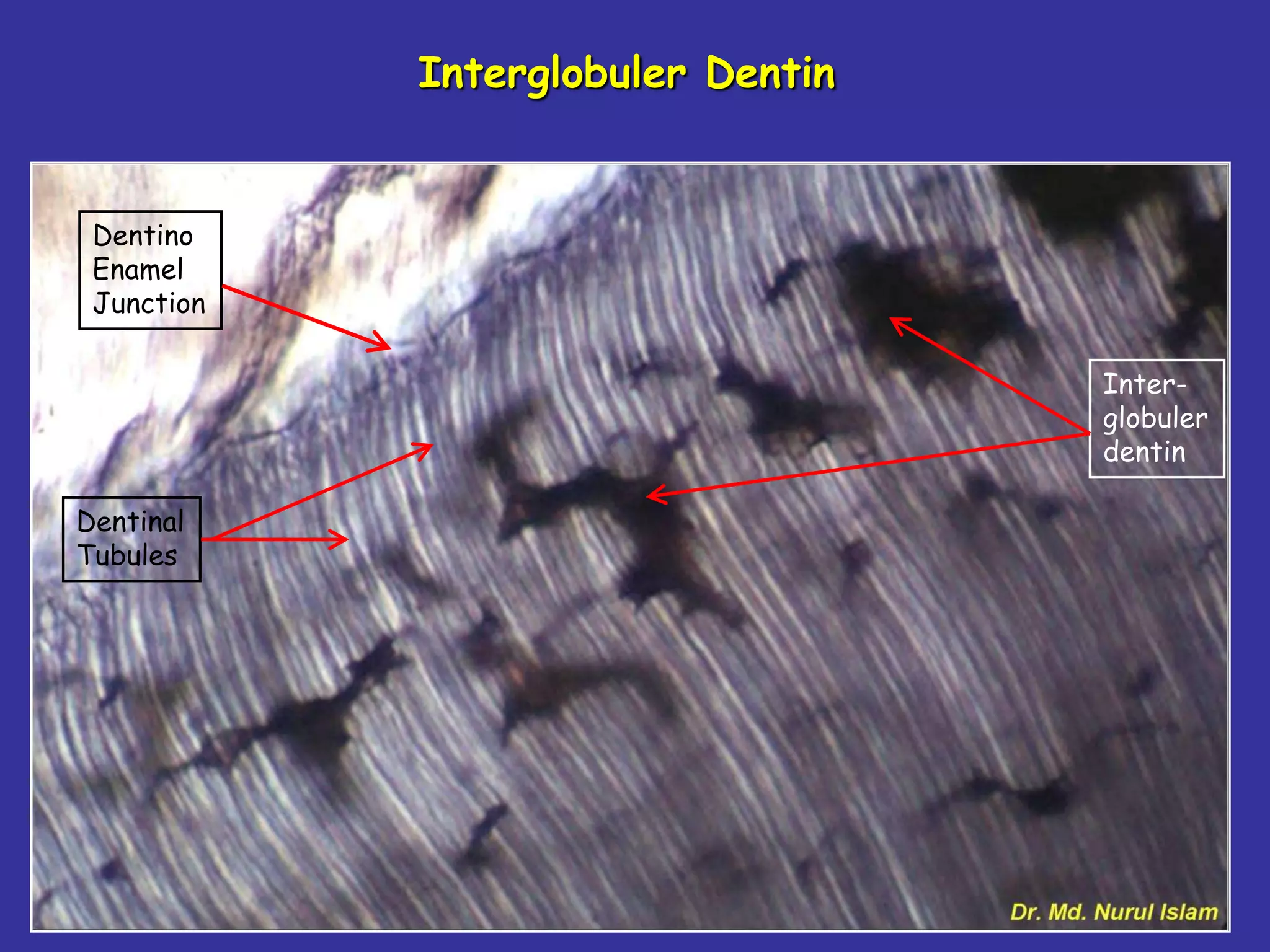
Interglobuler Dentin


 Dentino
 Enamel
 Junction

                                   Inter-
                                   globuler
                                   dentin

Dentinal
Tubules
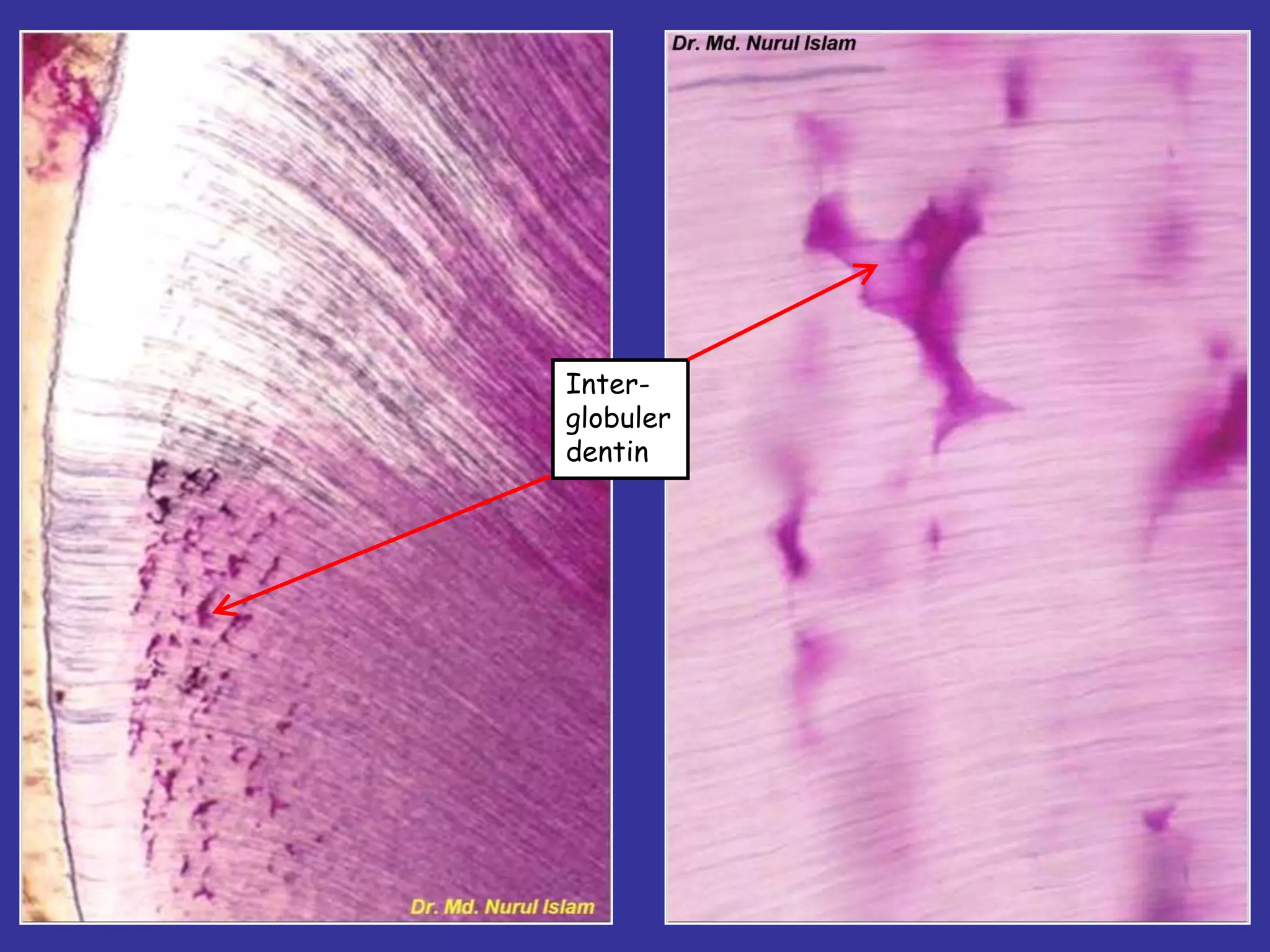
Inter-
globuler
dentin
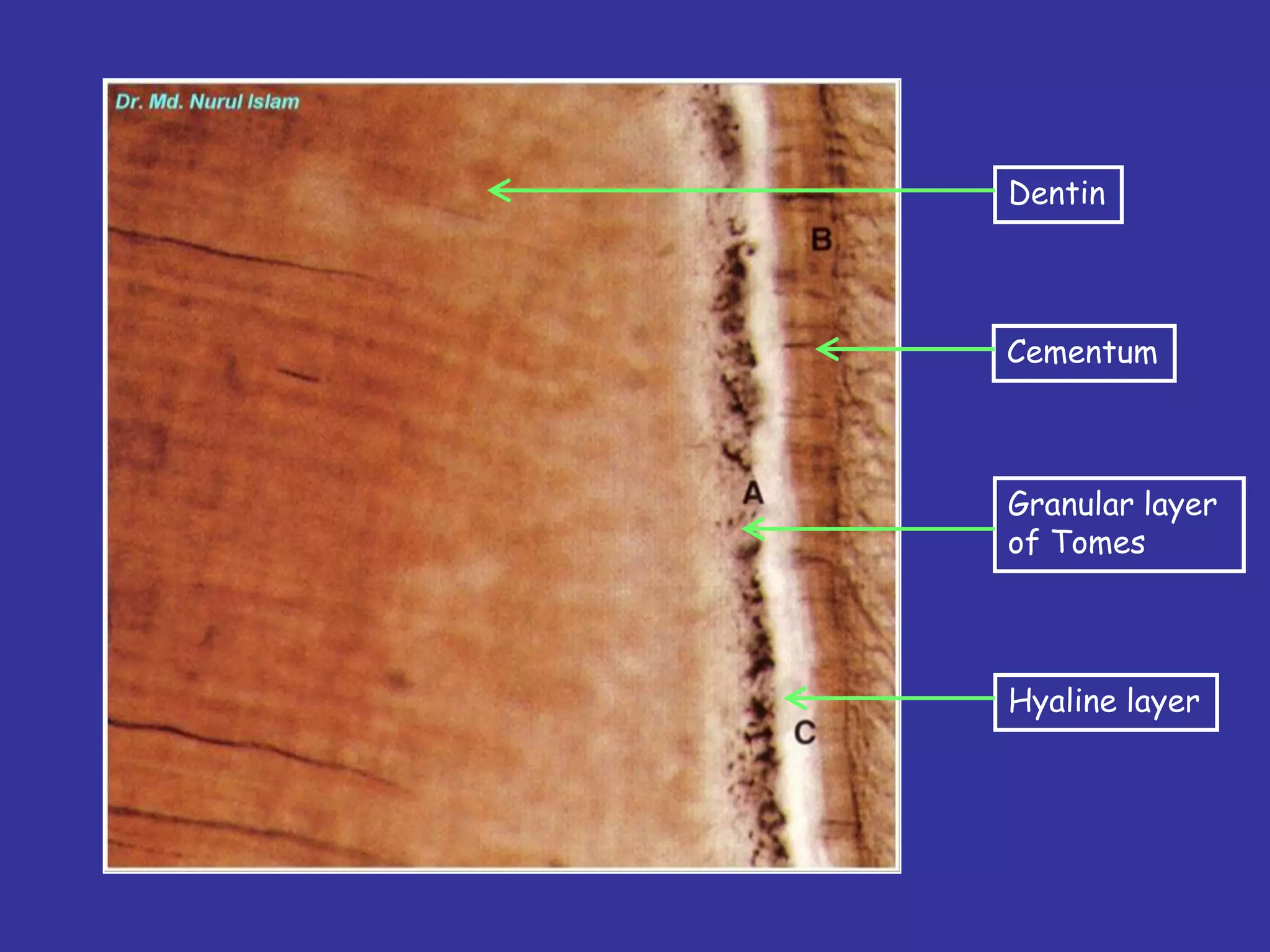
Dentin


Cementum


Granular layer
of Tomes


Hyaline layer
Primary
                physiological
                dentin


Secondary
physiological
dentin
Secondary
    physiological
    dentin


                    Primary
Tertiary            physiological
dentin              dentin
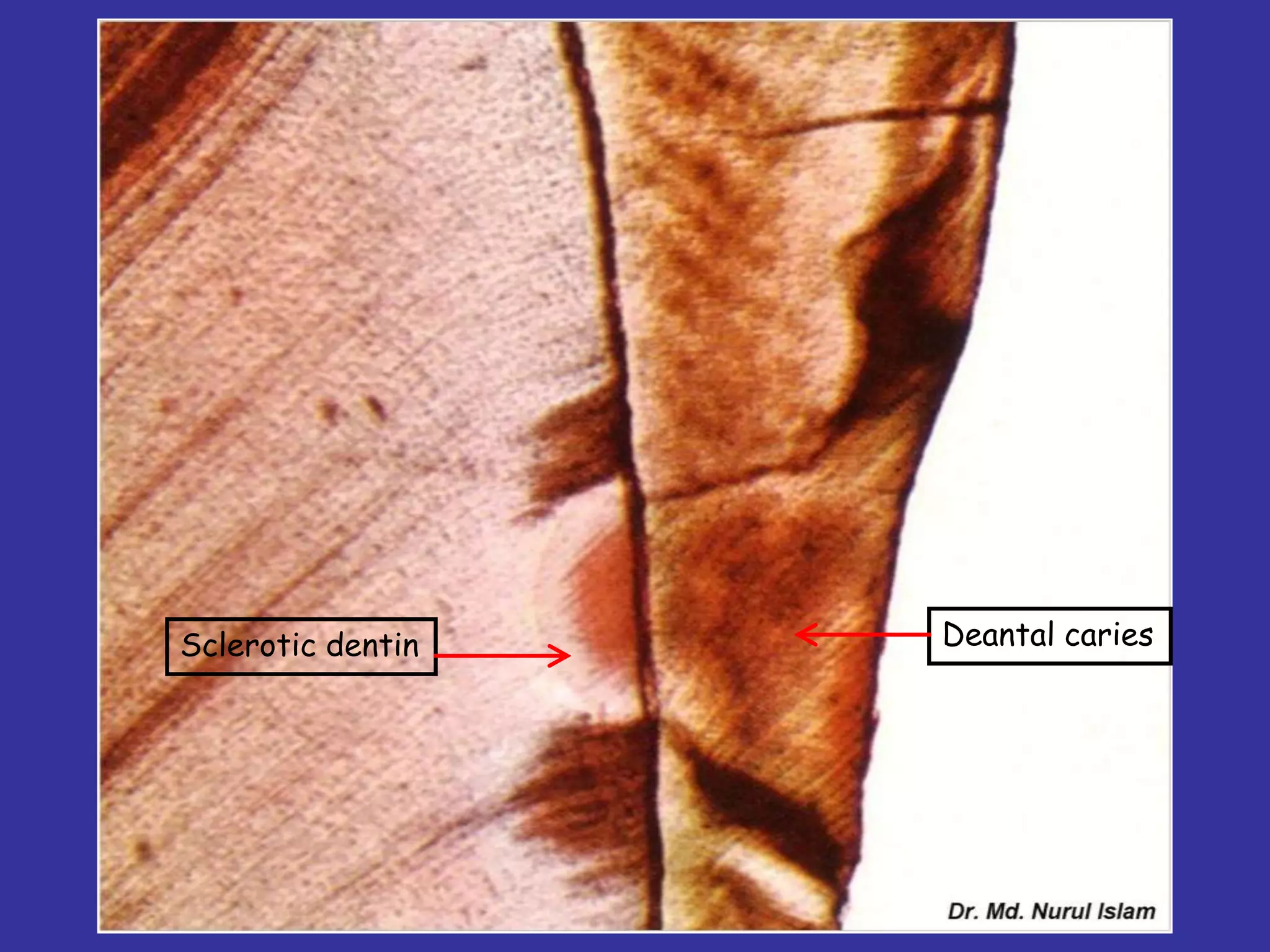
Sclerotic dentin   Deantal caries
Dead tracts

Tertiary
dentin


Secondary
physiological
dentin


 Primary
 physiological
 dentin
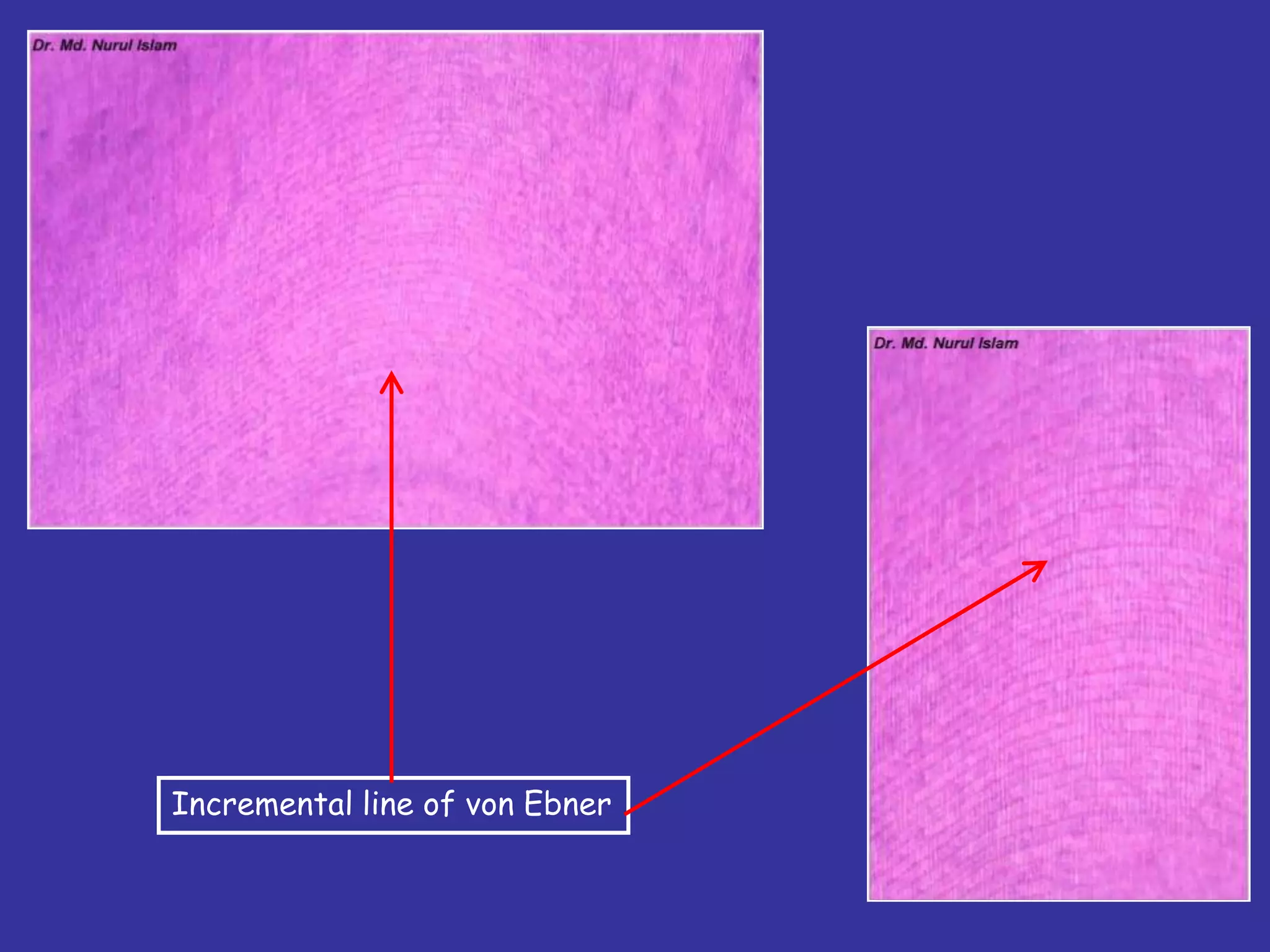
Incremental line of von Ebner
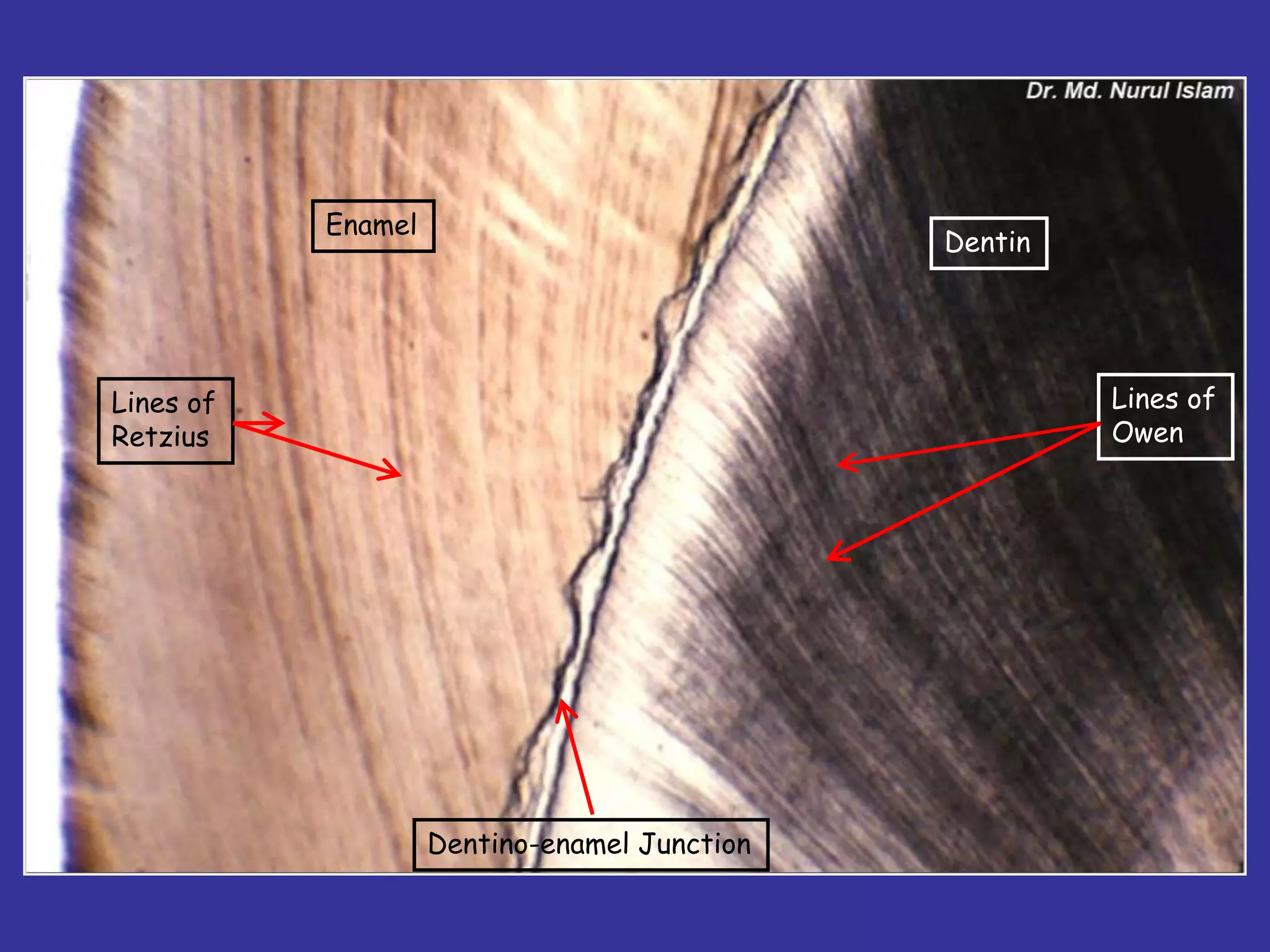
Enamel
                                              Dentin


Lines of                                               Lines of
Retzius                                                Owen


                    Dentino-enamel Junction
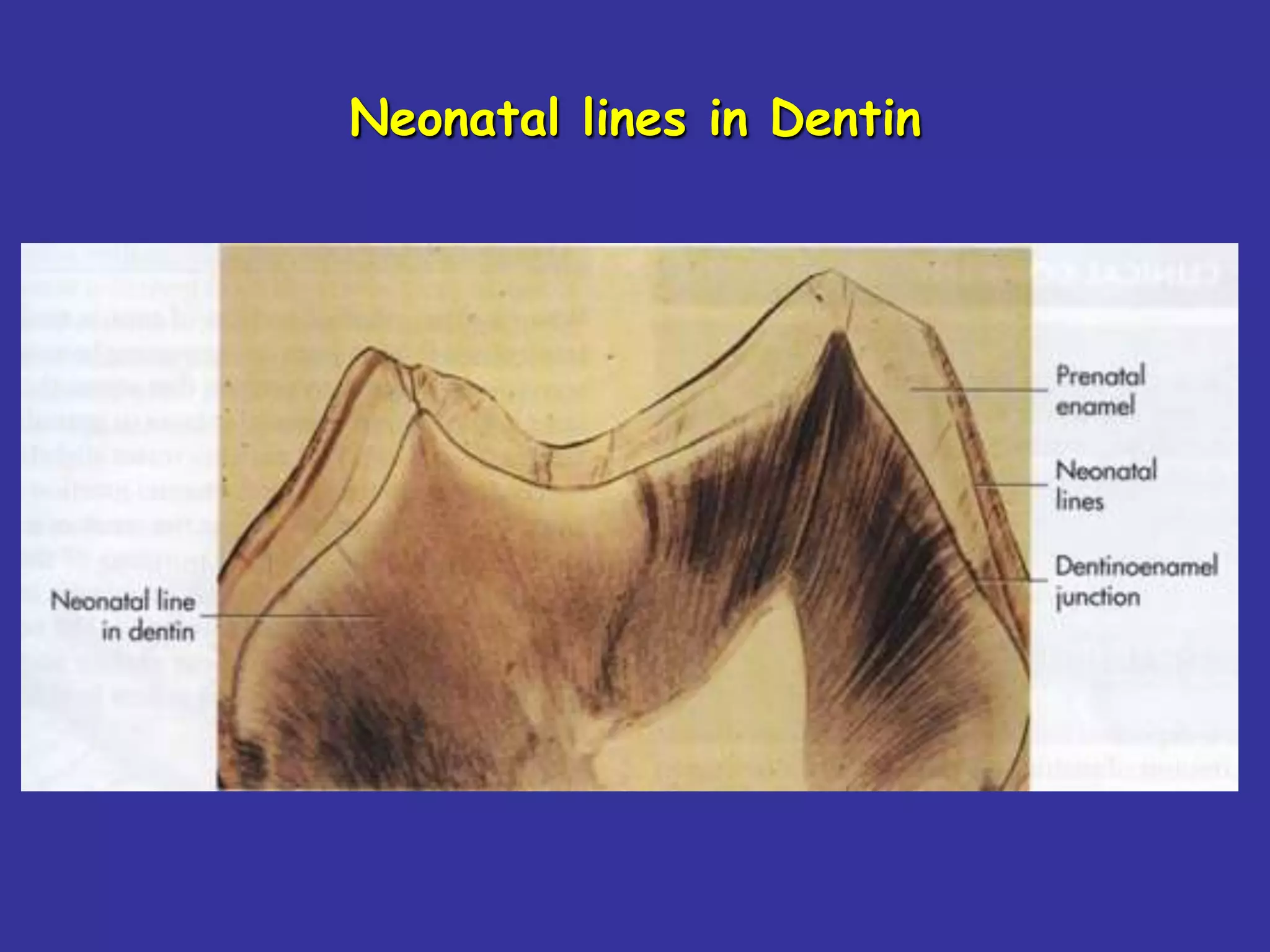
Neonatal lines in Dentin
Functions of the Dental Pulp

 Nutrition: blood supply for pulp and dentin.
 Sensory: changes in temp., vibration and chemical
  that affect the dentin and pulp.
 Formative: the pulp involve in the support,
  maintenance and continued formation of dentin.
 Defensive: triggering of inflammatory and immune
  response.
 Protective: Development and formation of
  secondary and tertiary dentin which increase the
  coverage of the pulp.
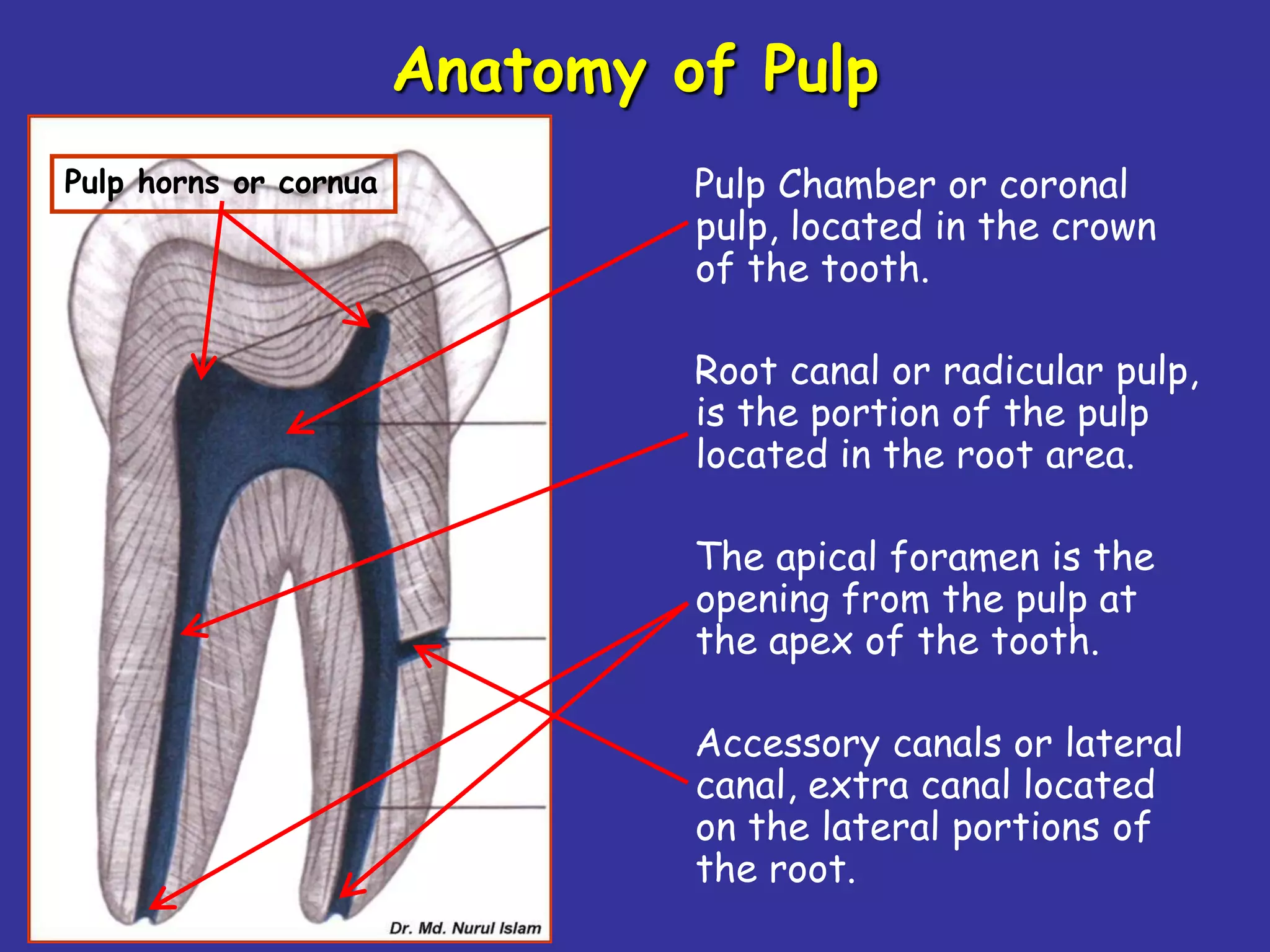
Anatomy of Pulp
Pulp horns or cornua            Pulp Chamber or coronal
                                pulp, located in the crown
                                of the tooth.

                                Root canal or radicular pulp,
                                is the portion of the pulp
                                located in the root area.

                                The apical foramen is the
                                opening from the pulp at
                                the apex of the tooth.

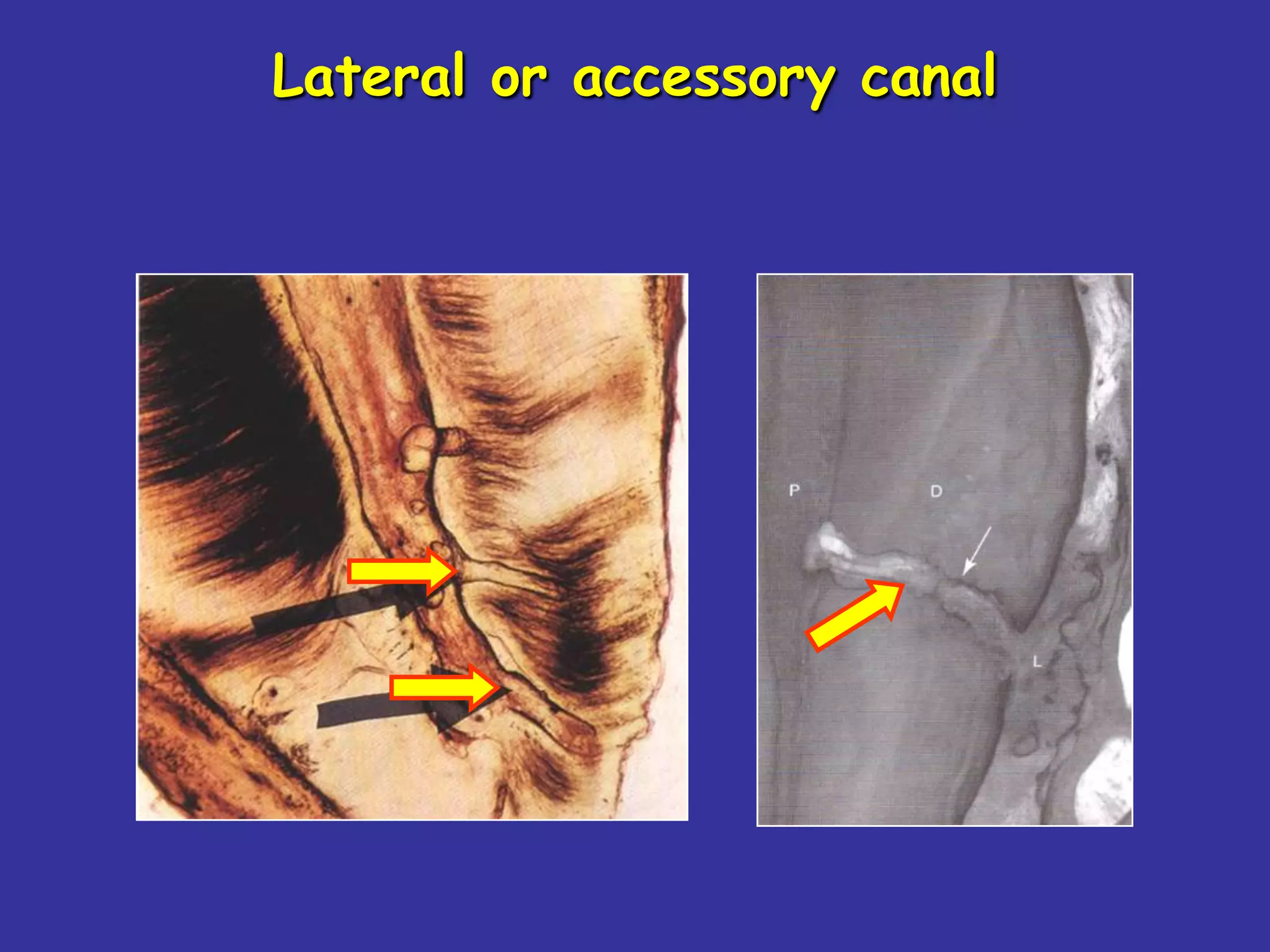
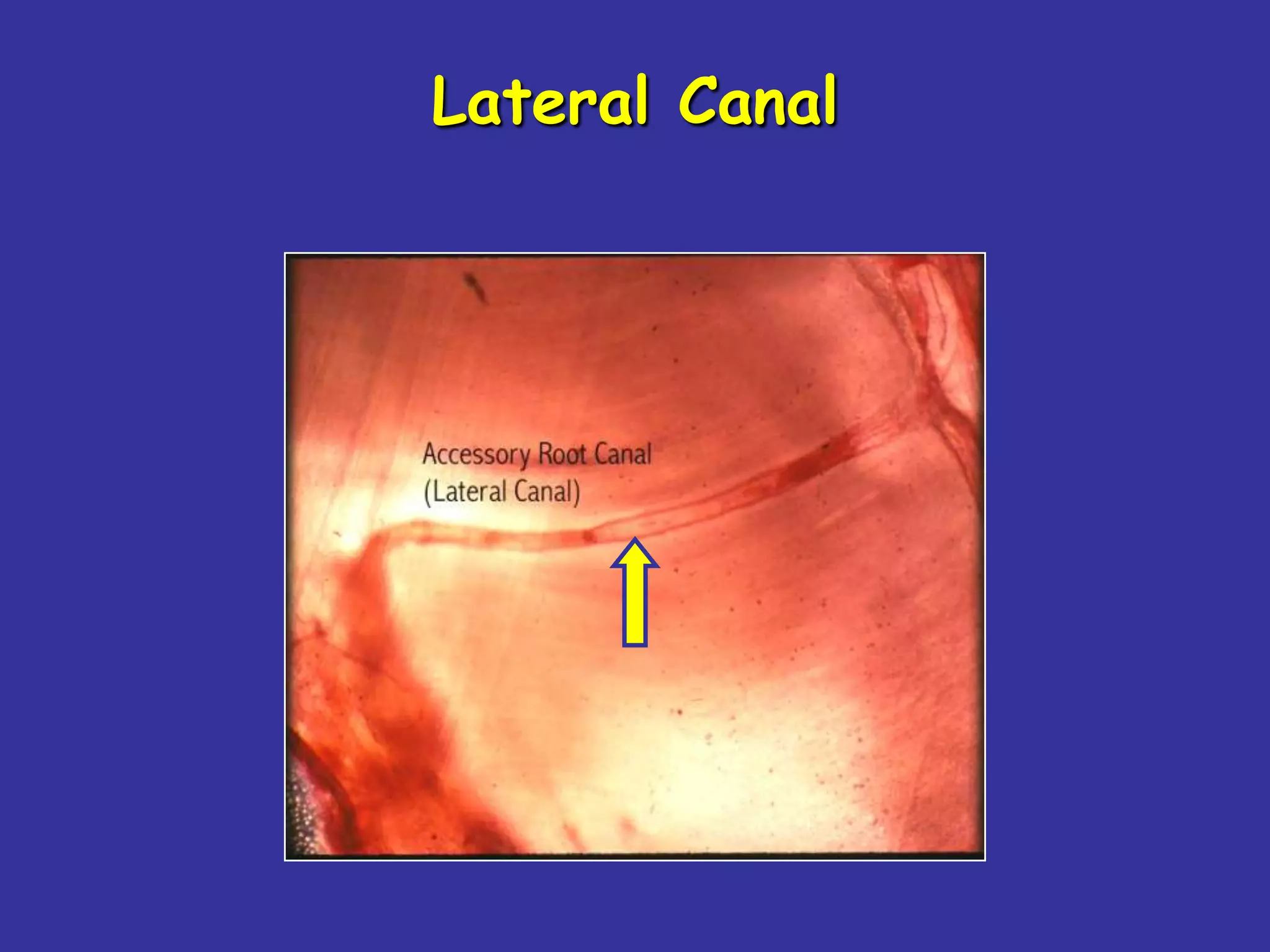
                                Accessory canals or lateral
                                canal, extra canal located
                                on the lateral portions of
                                the root.
Lateral or accessory canal
Lateral Canal
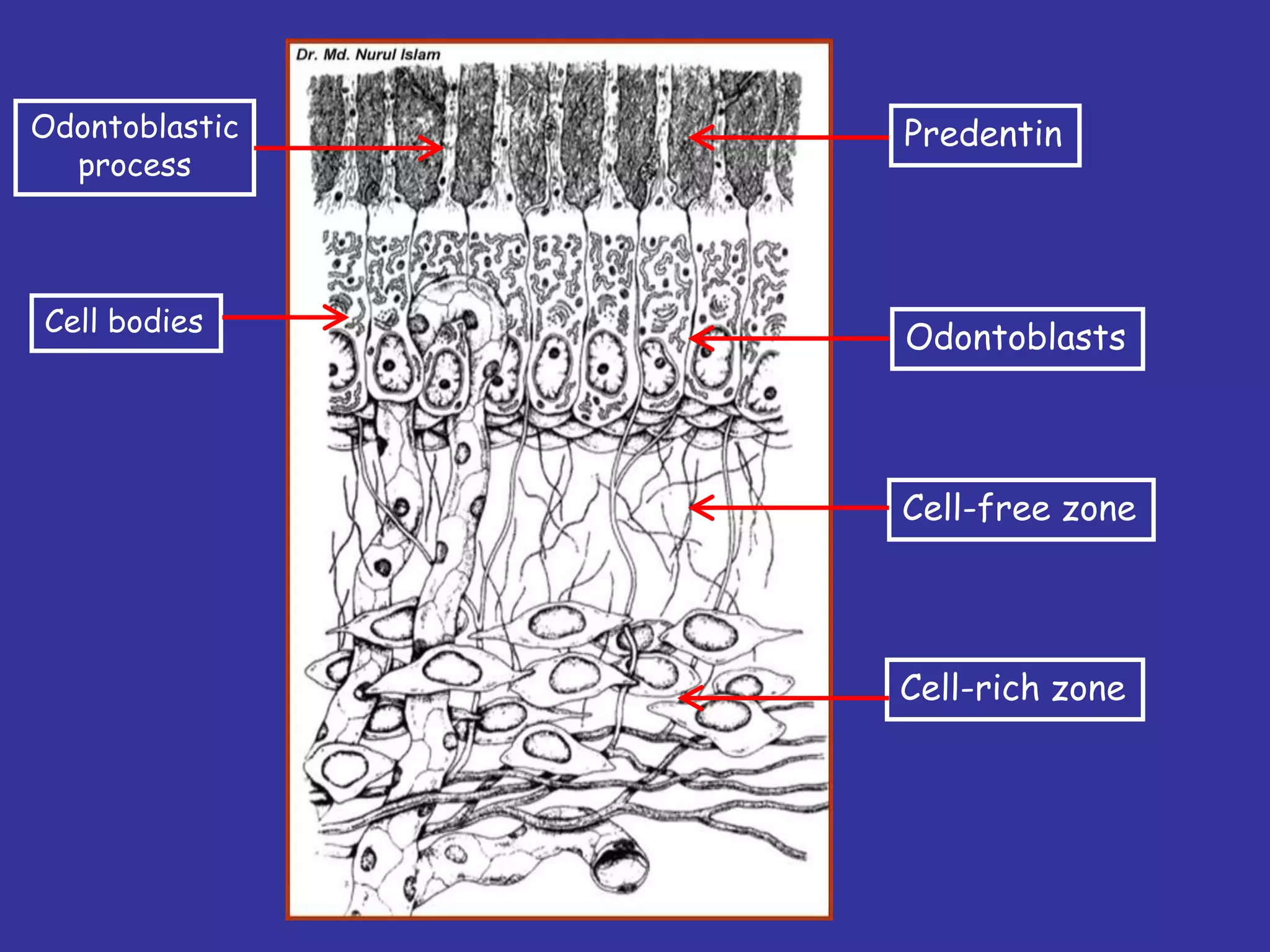
Odontoblastic   Predentin
  process


Cell bodies
                Odontoblasts


                Cell-free zone


                Cell-rich zone
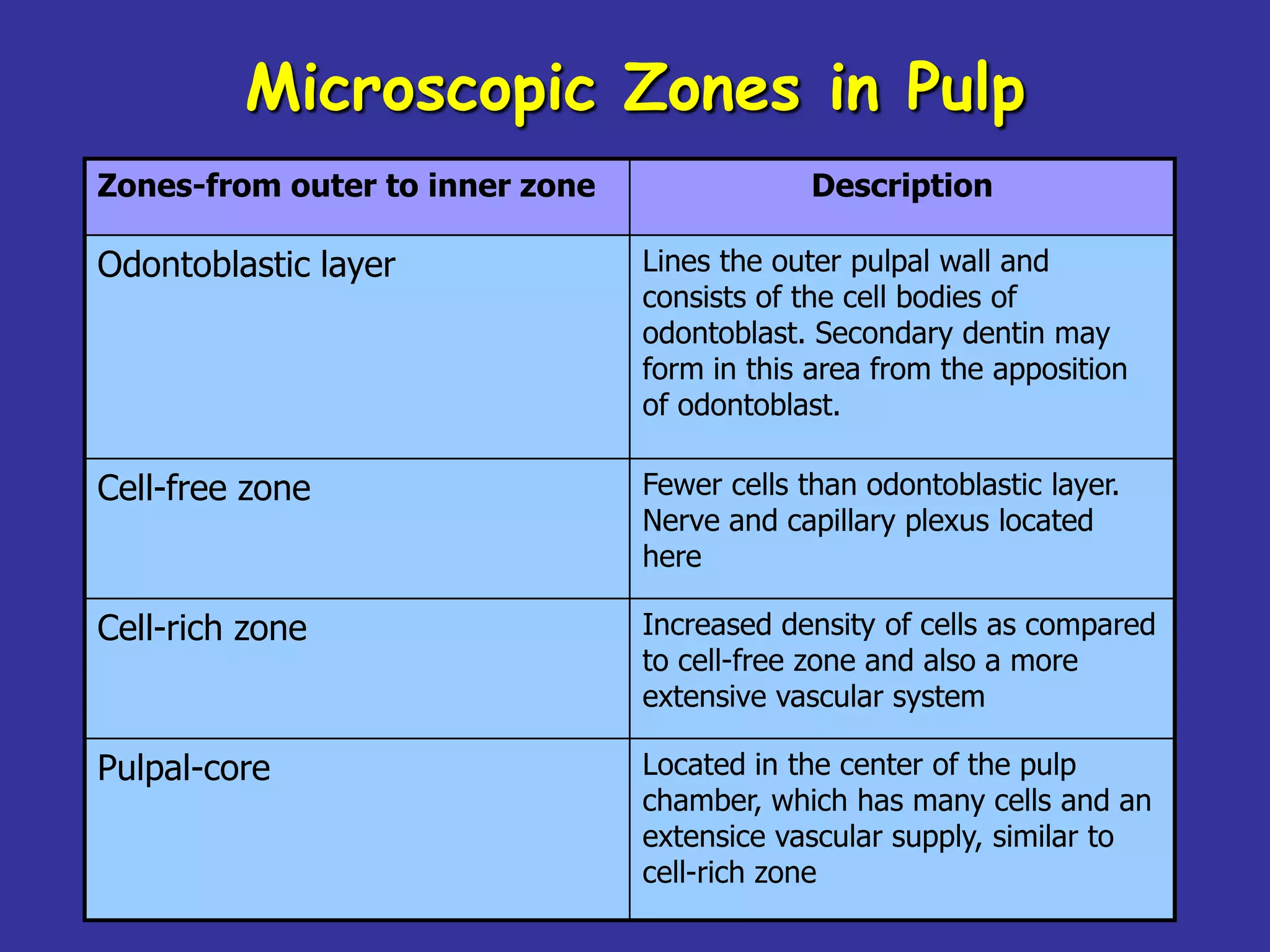
Microscopic Zones in Pulp
Zones-from outer to inner zone                Description

Odontoblastic layer              Lines the outer pulpal wall and
                                 consists of the cell bodies of
                                 odontoblast. Secondary dentin may
                                 form in this area from the apposition
                                 of odontoblast.

Cell-free zone                   Fewer cells than odontoblastic layer.
                                 Nerve and capillary plexus located
                                 here

Cell-rich zone                   Increased density of cells as compared
                                 to cell-free zone and also a more
                                 extensive vascular system

Pulpal-core                      Located in the center of the pulp
                                 chamber, which has many cells and an
                                 extensice vascular supply, similar to
                                 cell-rich zone
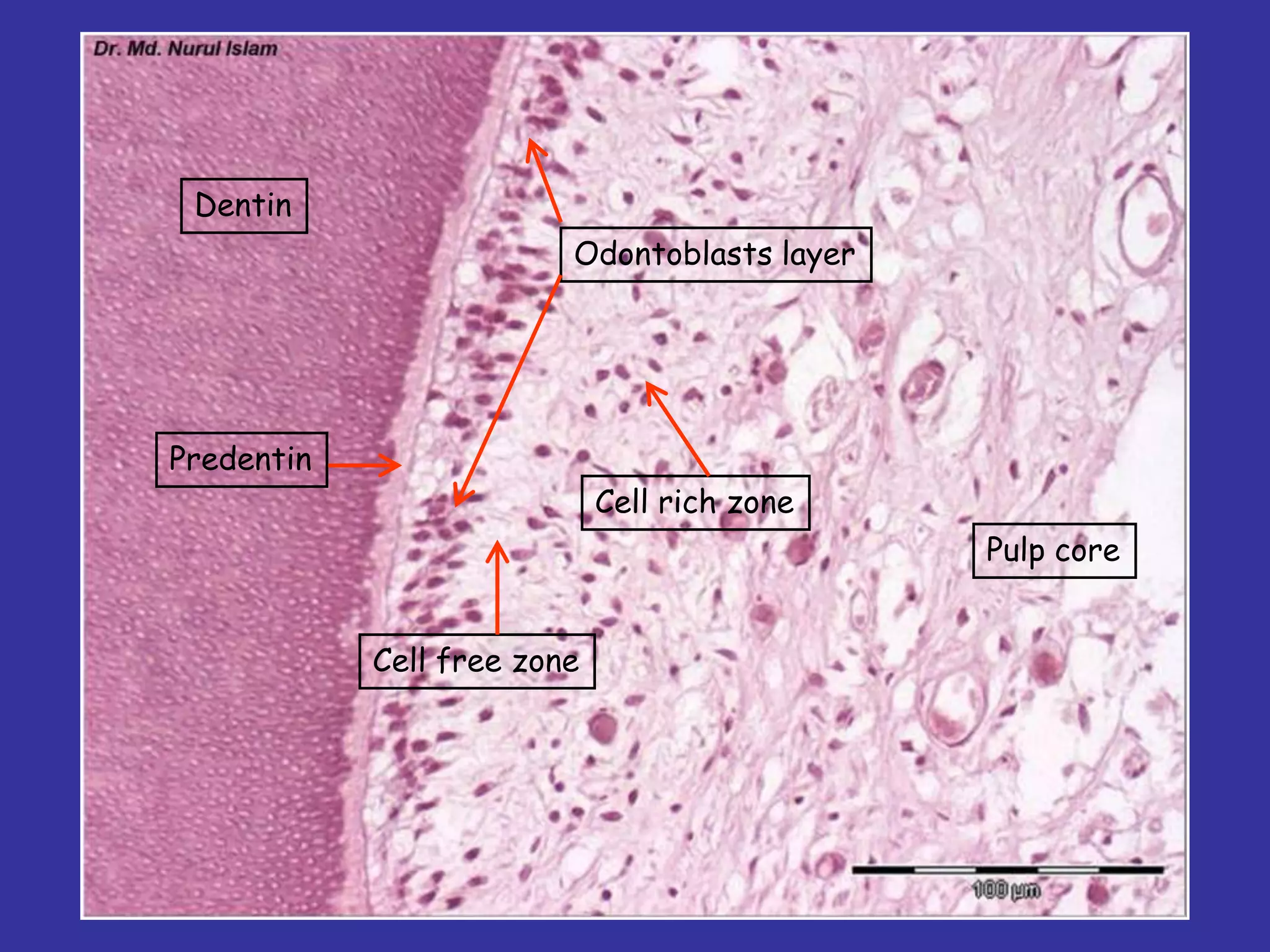
Dentin
                         Odontoblasts layer


Predentin
                             Cell rich zone
                                              Pulp core


            Cell free zone
Contents of the Pulp

 Cells: Odontoblast, Fibroblast, white-blood cells,
  Undifferentiated mesenchymal cells, Macrophages and
  Lymphocytes. No fat cell.


 Fibrous Matrix: Mostly reticular fibres and collagen fibres
  (Type I and Type III).


 Ground substance: Act as a medium to transport nutrients
  to cells and metabolites of the cell to the blood vessels.
Vascularity and Nerves of the Pulp
 The pulp organ is extensively vascular with vessels arising from the
   external carotids to the superior or inferior alveolar arteries. It
   drain by the same vein.


 Blood flow is more rapid in the pulp than in most area of the body,
   and the blood pressure is quite high.


 The walls of the pulpal vessels become very thin as their enter the
   pulp.


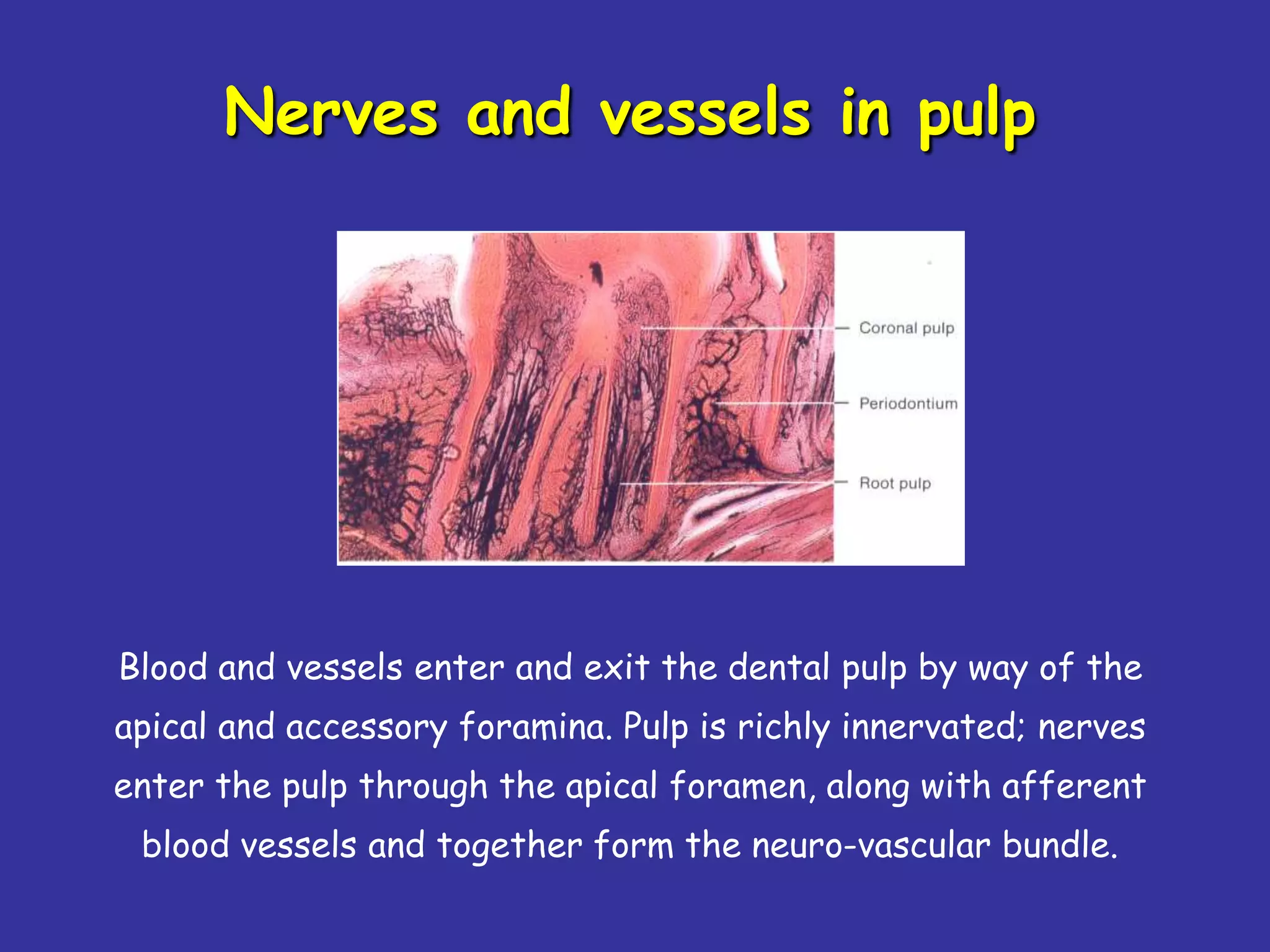
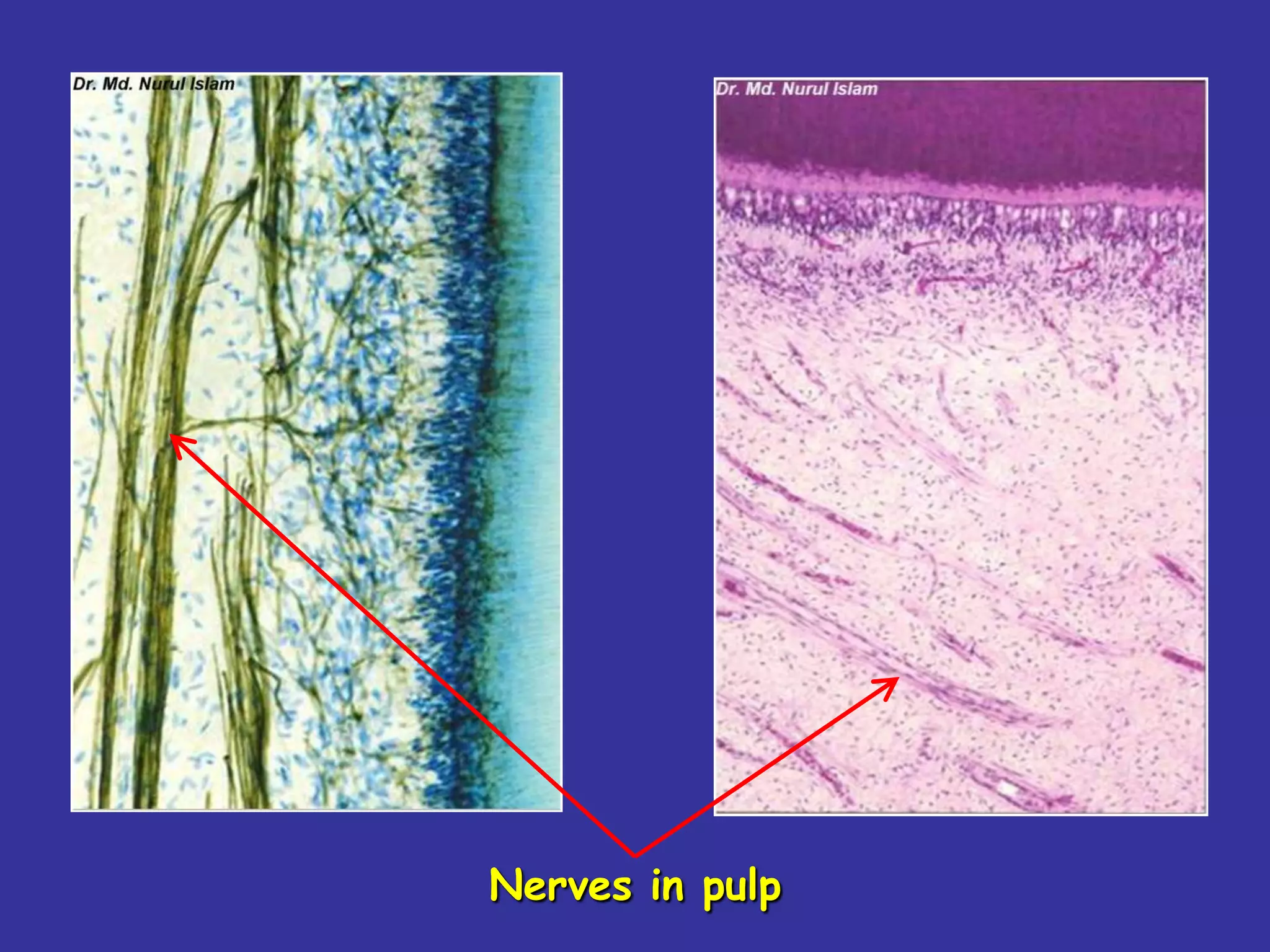
 Nerves : Several large nerves enter the apical canal of each Molar
   and Premolar and single ones enter the anterior teeth. This trunks
   transverse the radicular pulp, proceed to the coronal area and
   branch peripherally.
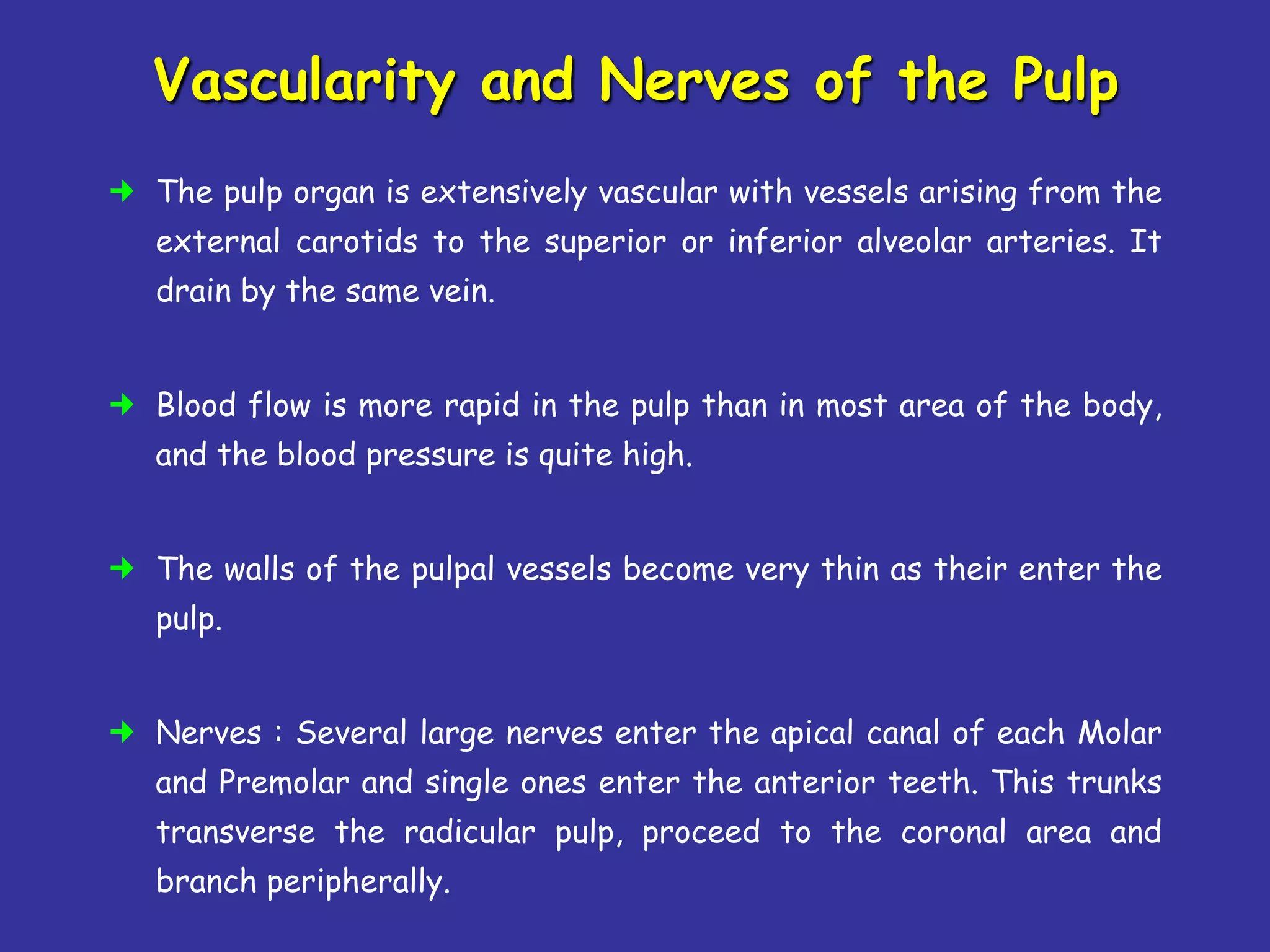
Nerves and vessels in pulp


Blood and vessels enter and exit the dental pulp by way of the
apical and accessory foramina. Pulp is richly innervated; nerves
enter the pulp through the apical foramen, along with afferent
 blood vessels and together form the neuro-vascular bundle.
Nerves in pulp
Dental Pulp


Nerve                 Blood vessel
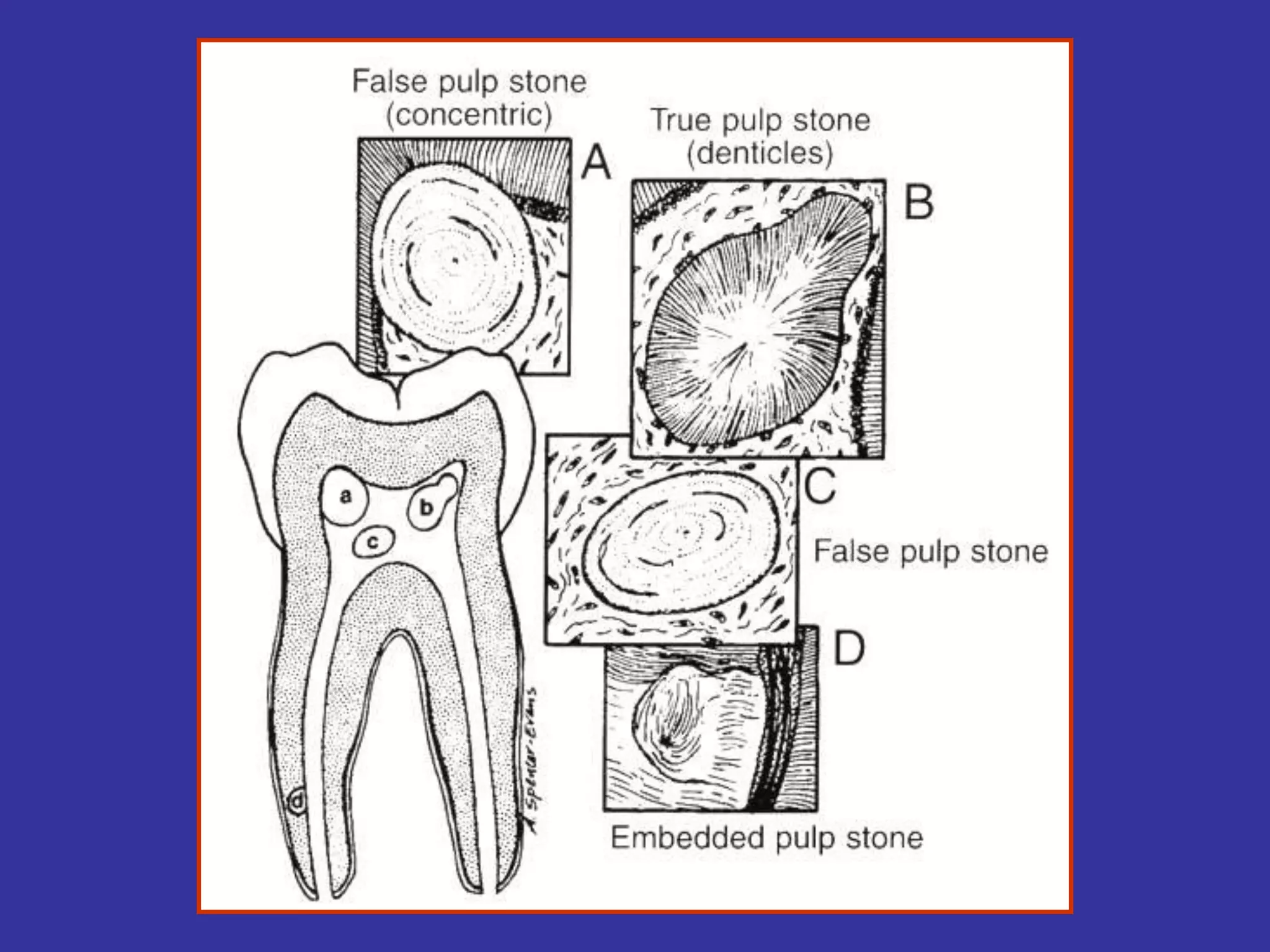
Clinically Importance features of the Dental Pulp

 With age the pulp becomes less cellular. The number of cells
  in the dental pulp decreases as cell death occurs with age.


 The volume of the pulp chamber with continued deposition of
  dentine. In older teeth, the pulp chamber decreases in size;
  in some cases the pulp chamber can be obliterated. An
  increase in calcification in the pulp occurs with age.


 An increase in calcification in the pulp occurs with age.
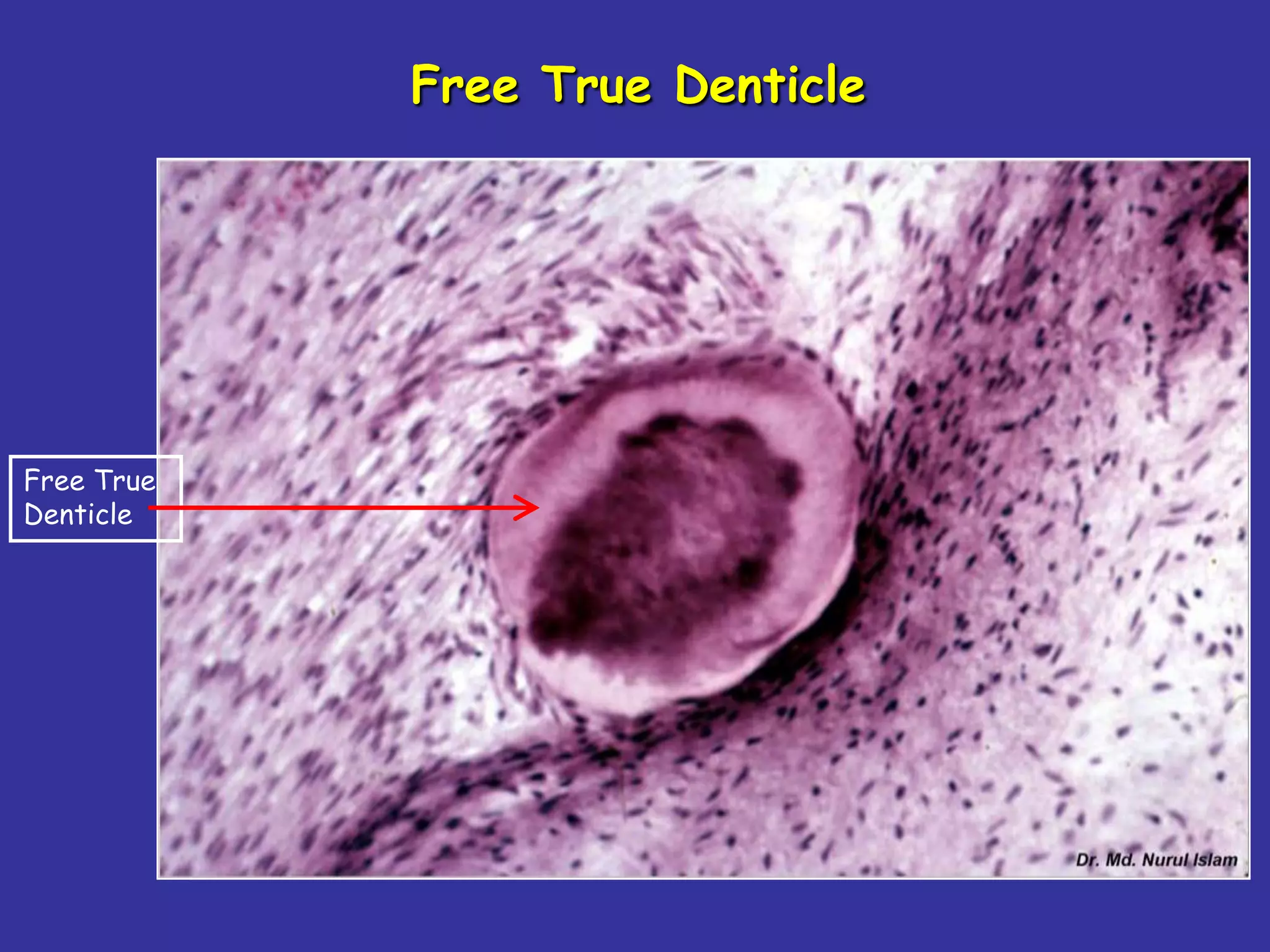
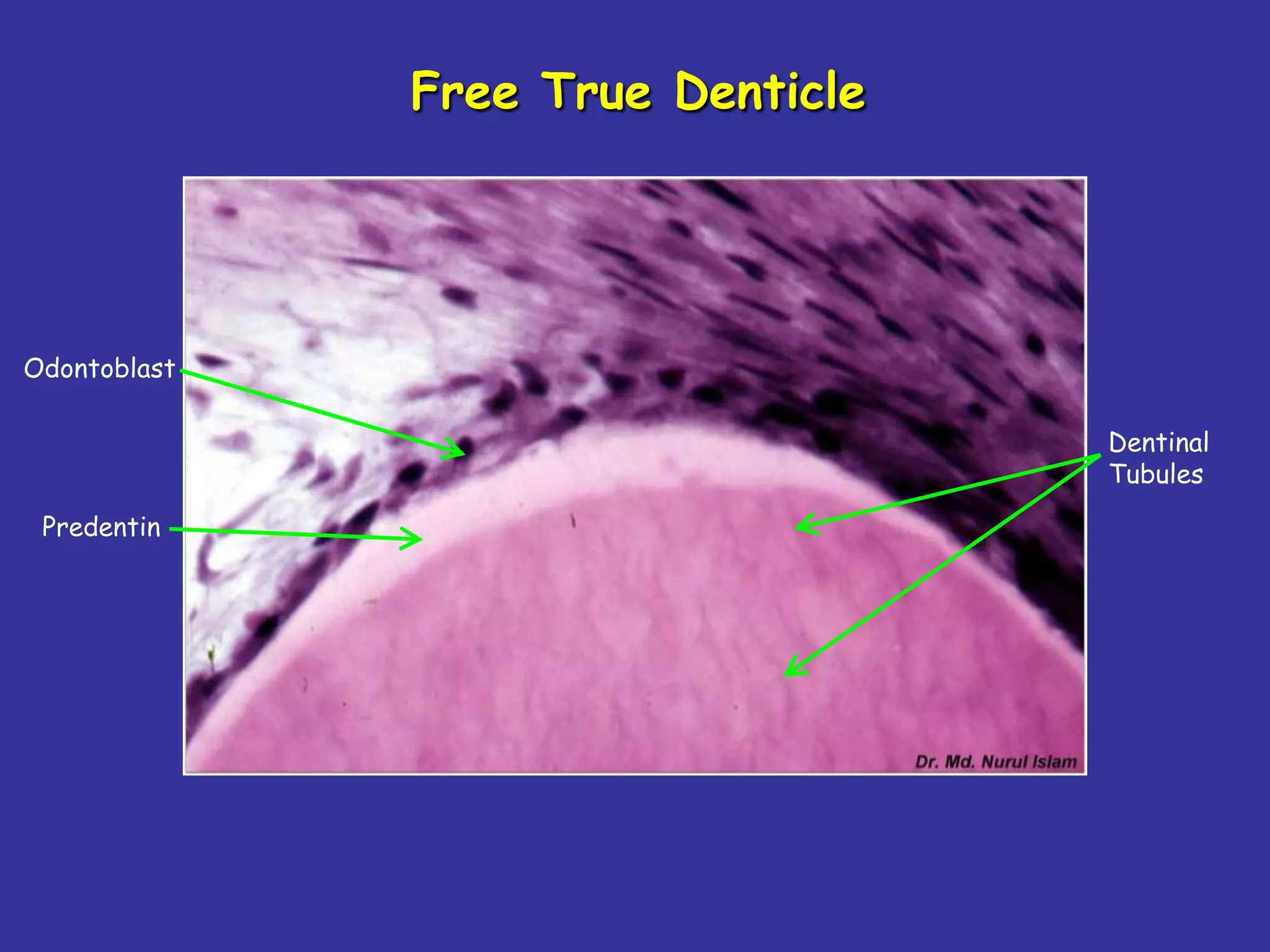
Free True Denticle


Free True
Denticle
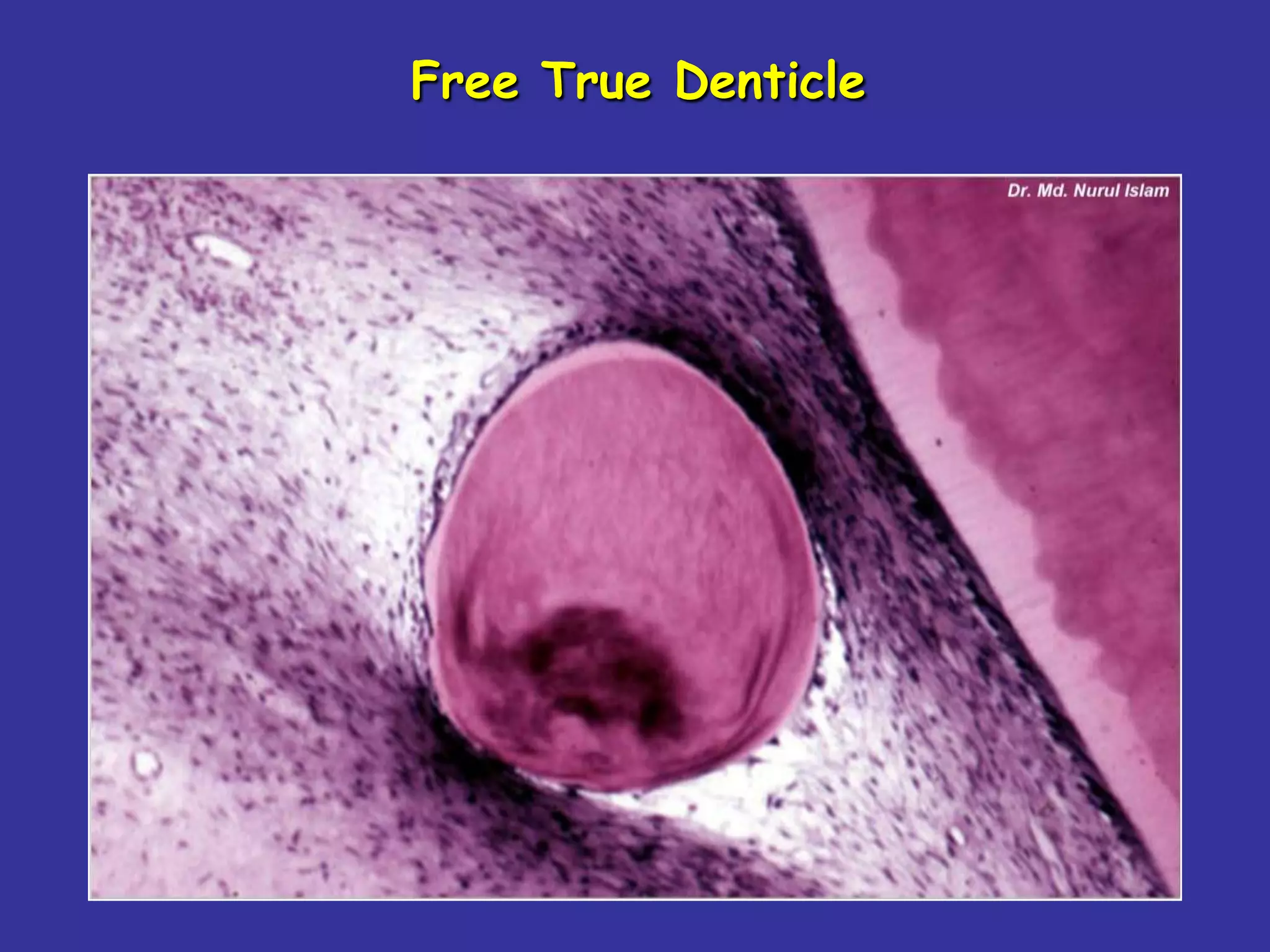
Free True Denticle
Free True Denticle


Odontoblast

                                   Dentinal
                                   Tubules

 Predentin
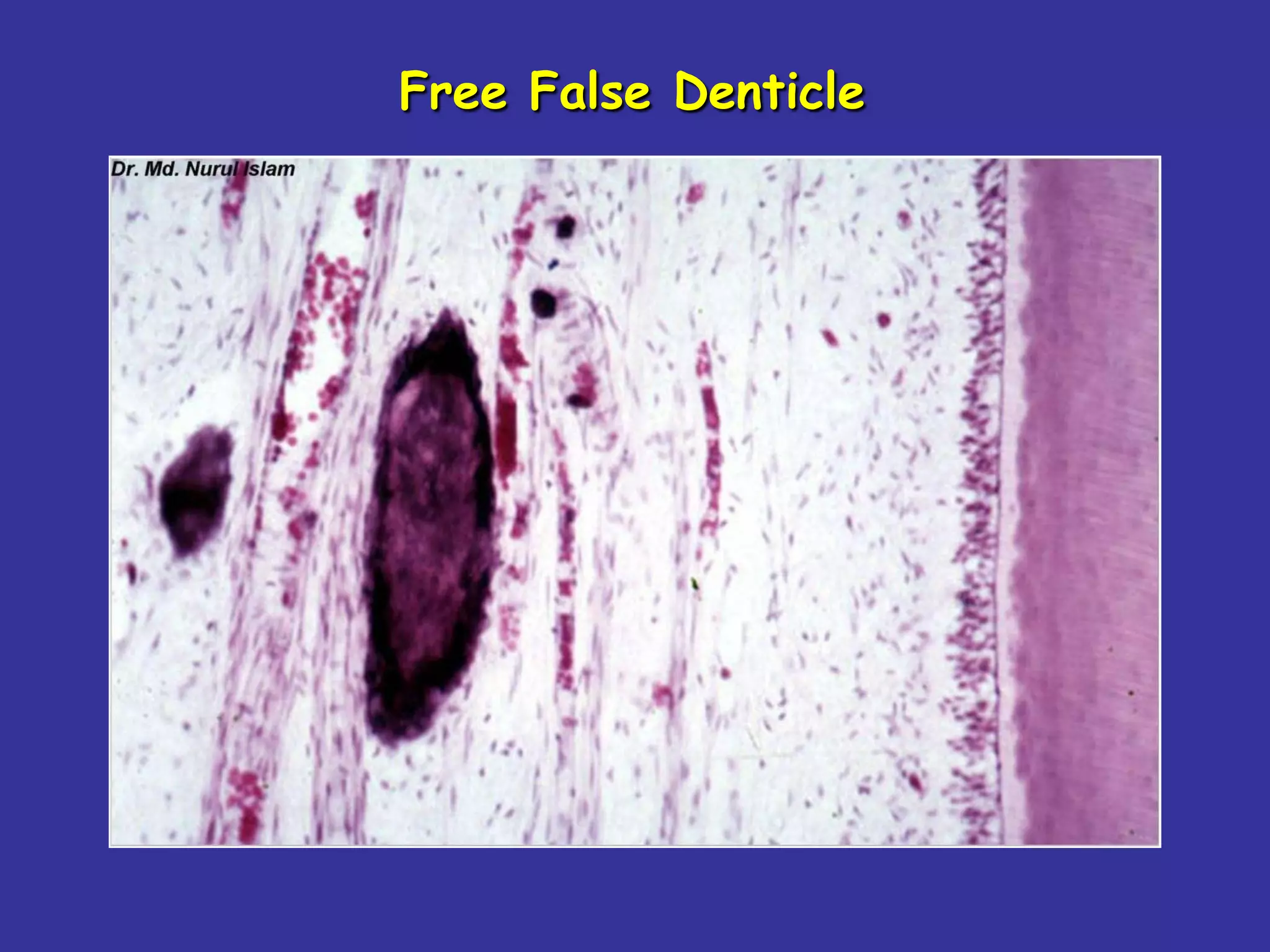
Free False Denticle
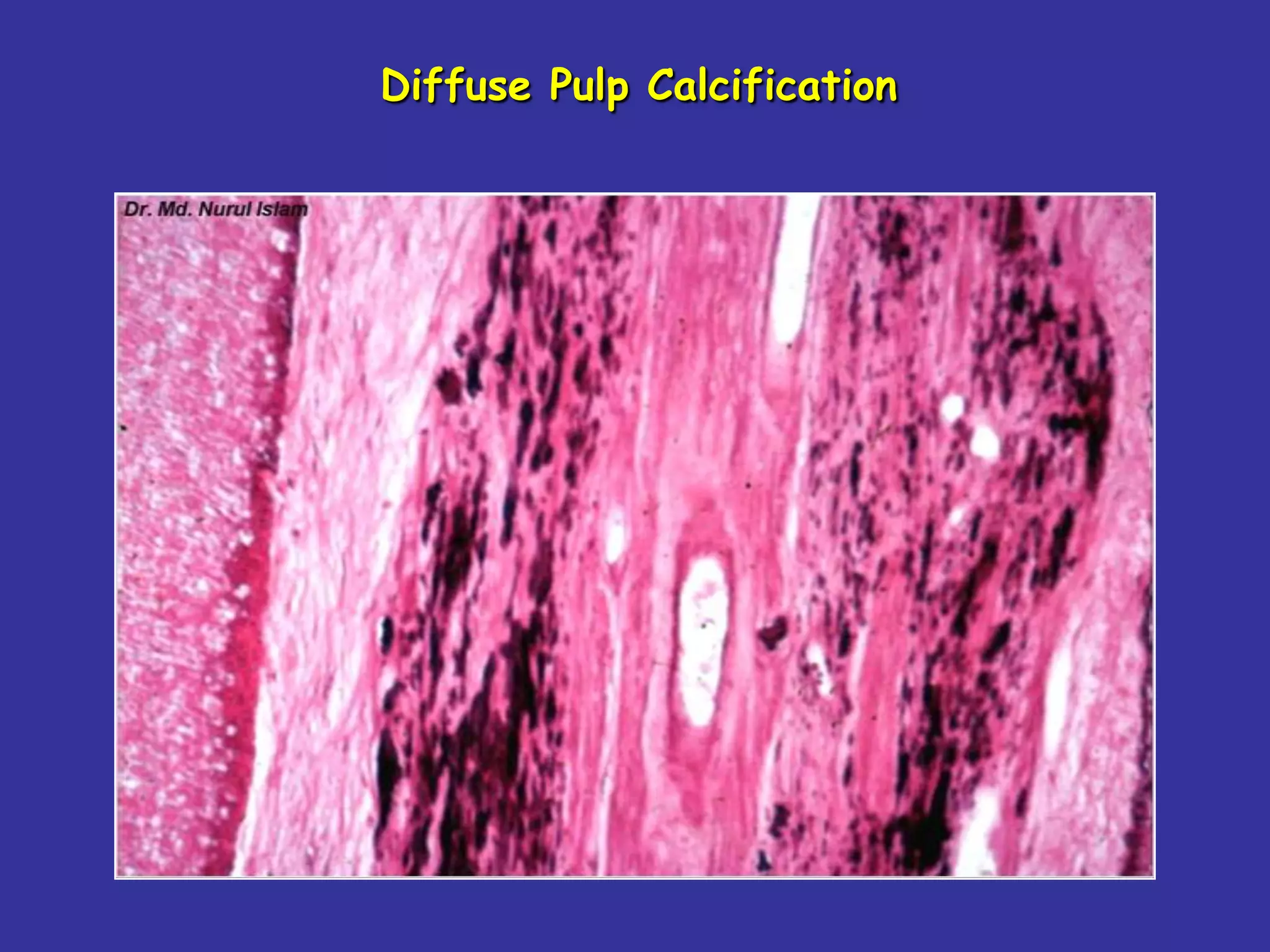
Diffuse Pulp Calcification
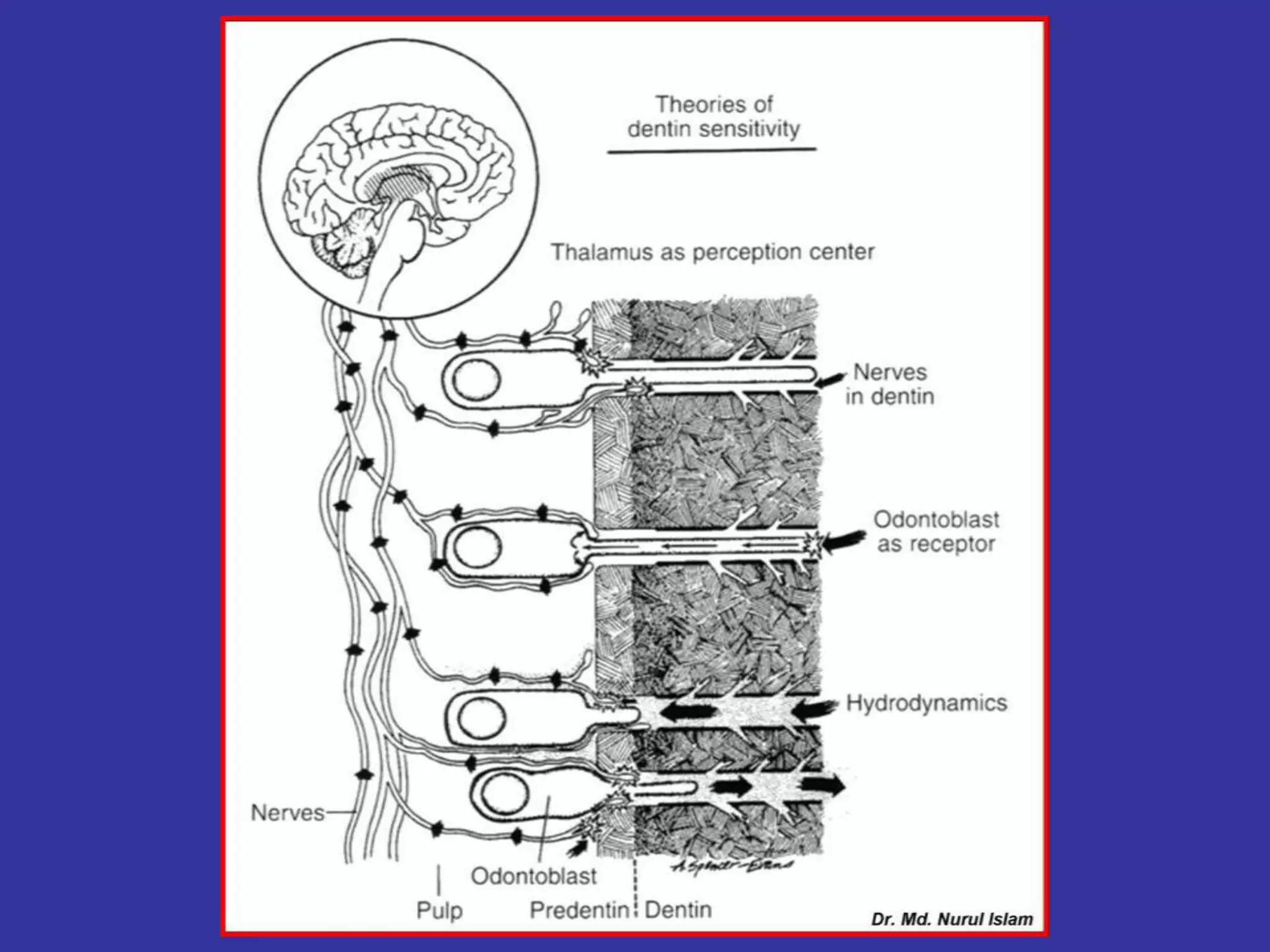
Dentin Sensitivity: three theories

 Nerve   in dentin – the dentin contains nerve endings that respond when it
   is stimulated .


Odontoblastic process – the odontoblasts serve as receptors and are
   coupled to nerves in the pulp.


Fluid   movements in the dentinal tubules – the tubular nature of dentin
   permits fluid movement to occur within the tubule when a stimulus is applied –
   a movement registered by pulpal free nerve endings close to the dentin.
Thank you for listning!!!

Dentin pulp complex

  • 1.
  • 2.
    Dentin and pulpare embryologically, histologically, and functionally the same tissue and therefore are considered as a complex
  • 3.
    Tooth Tooth Crown Dentin Pulp Tooth Root
  • 4.
     Both dentinand pulp have a common origin from the dental papilla.
  • 5.
    Pulp Dentin
  • 6.
    Pulp Dentin Odontoblast cell layer
  • 7.
  • 8.
    Types of Dentin Dentin Primary physiologic Secondary physiologic Tertiary dentin or dentin dentin reparative dentin or reactionary dentin or irregular secondary dentin Mantle Circumpulpal Peritubular Intertubular dentin dentin dentin dentin
  • 10.
    Types of Dentin Primarydentin: is the dentin formed in a tooth before the completion of the apical foramen of the root. Primary dentin is noted for its regular pattern of tubules. Secondary dentin: is the dentin that is formed after the completion of the apical foramen and continues to form throughout the life of the tooth. Peritubular (intratubular) dentin: dentin that creates the wall of the dentinal tubule. Intertubular dentin: dentin found between the tubules. Mantle dentin: the first predentin that forms and matures within the tooth. Circumpulpal dentin: the layer of dentin around the outer pulpal wall.
  • 11.
    Odontoblasts and process Dentin Pulp Odontoblast process Odontoblast cells
  • 12.
    Dentinal Matrix Dentinal matrix Hole for dentinal tubules
  • 13.
  • 14.
  • 15.
  • 16.
  • 17.
  • 18.
    Odontoblast layer Predentin Dentinal tubules
  • 20.
    Dentinal Tubules Coronal dentin Root dentin
  • 21.
  • 22.
    Dentinal tubules Intraubular or peritubular dentin Intertubular dentin
  • 23.
    Interglobuler Dentin Dentino Enamel Junction Inter- globuler dentin Dentinal Tubules
  • 24.
  • 25.
  • 26.
    Primary physiological dentin Secondary physiological dentin
  • 27.
    Secondary physiological dentin Primary Tertiary physiological dentin dentin
  • 28.
    Sclerotic dentin Deantal caries
  • 29.
  • 30.
  • 31.
    Enamel Dentin Lines of Lines of Retzius Owen Dentino-enamel Junction
  • 32.
  • 33.
    Functions of theDental Pulp  Nutrition: blood supply for pulp and dentin.  Sensory: changes in temp., vibration and chemical that affect the dentin and pulp.  Formative: the pulp involve in the support, maintenance and continued formation of dentin.  Defensive: triggering of inflammatory and immune response.  Protective: Development and formation of secondary and tertiary dentin which increase the coverage of the pulp.
  • 34.
    Anatomy of Pulp Pulphorns or cornua Pulp Chamber or coronal pulp, located in the crown of the tooth. Root canal or radicular pulp, is the portion of the pulp located in the root area. The apical foramen is the opening from the pulp at the apex of the tooth. Accessory canals or lateral canal, extra canal located on the lateral portions of the root.
  • 35.
  • 36.
  • 37.
    Odontoblastic Predentin process Cell bodies Odontoblasts Cell-free zone Cell-rich zone
  • 38.
    Microscopic Zones inPulp Zones-from outer to inner zone Description Odontoblastic layer Lines the outer pulpal wall and consists of the cell bodies of odontoblast. Secondary dentin may form in this area from the apposition of odontoblast. Cell-free zone Fewer cells than odontoblastic layer. Nerve and capillary plexus located here Cell-rich zone Increased density of cells as compared to cell-free zone and also a more extensive vascular system Pulpal-core Located in the center of the pulp chamber, which has many cells and an extensice vascular supply, similar to cell-rich zone
  • 39.
    Dentin Odontoblasts layer Predentin Cell rich zone Pulp core Cell free zone
  • 40.
    Contents of thePulp  Cells: Odontoblast, Fibroblast, white-blood cells, Undifferentiated mesenchymal cells, Macrophages and Lymphocytes. No fat cell.  Fibrous Matrix: Mostly reticular fibres and collagen fibres (Type I and Type III).  Ground substance: Act as a medium to transport nutrients to cells and metabolites of the cell to the blood vessels.
  • 41.
    Vascularity and Nervesof the Pulp  The pulp organ is extensively vascular with vessels arising from the external carotids to the superior or inferior alveolar arteries. It drain by the same vein.  Blood flow is more rapid in the pulp than in most area of the body, and the blood pressure is quite high.  The walls of the pulpal vessels become very thin as their enter the pulp.  Nerves : Several large nerves enter the apical canal of each Molar and Premolar and single ones enter the anterior teeth. This trunks transverse the radicular pulp, proceed to the coronal area and branch peripherally.
  • 42.
    Nerves and vesselsin pulp Blood and vessels enter and exit the dental pulp by way of the apical and accessory foramina. Pulp is richly innervated; nerves enter the pulp through the apical foramen, along with afferent blood vessels and together form the neuro-vascular bundle.
  • 43.
  • 44.
    Dental Pulp Nerve Blood vessel
  • 45.
    Clinically Importance featuresof the Dental Pulp  With age the pulp becomes less cellular. The number of cells in the dental pulp decreases as cell death occurs with age.  The volume of the pulp chamber with continued deposition of dentine. In older teeth, the pulp chamber decreases in size; in some cases the pulp chamber can be obliterated. An increase in calcification in the pulp occurs with age.  An increase in calcification in the pulp occurs with age.
  • 47.
  • 48.
  • 49.
    Free True Denticle Odontoblast Dentinal Tubules Predentin
  • 50.
  • 51.
  • 52.
    Dentin Sensitivity: threetheories  Nerve in dentin – the dentin contains nerve endings that respond when it is stimulated . Odontoblastic process – the odontoblasts serve as receptors and are coupled to nerves in the pulp. Fluid movements in the dentinal tubules – the tubular nature of dentin permits fluid movement to occur within the tubule when a stimulus is applied – a movement registered by pulpal free nerve endings close to the dentin.
  • 54.
    Thank you forlistning!!!