

Delivering Learning to a Dispersed
and Virtual Workforce
4,000+ Courses. 25 Topic Areas. Unlimited Access.
WHAT WE’LL COVER:
1. Core training challenges.
2. Business challenges and how they relate to training
challenges.
3. Evolving training strategies to overcome challenges and
flip them into advantages.

BIZLIBRARY.COM
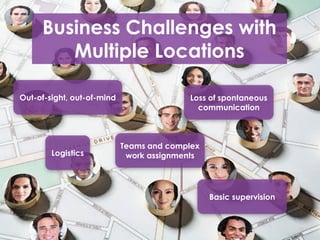
Business Challenges with
Multiple Locations
Out-of-sight, out-of-mind

Logistics

Loss of spontaneous
communication

Teams and complex
work assignments

Basic supervision
Training Fundamentals
Employee training should deliver business results.
Training programs must actually improve employee
performance.
All of the critical stakeholders must be engaged – fully
involved and supportive, this includes the C-suite, front-line
supervisors and managers.
Employees must clearly see the connection between
training and their jobs.
The program must be appropriate for the culture and
learning culture of the organization.
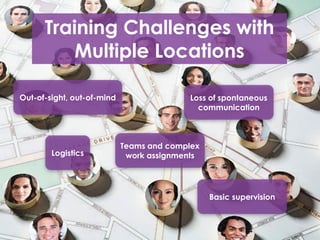
Training Challenges with
Multiple Locations
Out-of-sight, out-of-mind

Logistics

Loss of spontaneous
communication

Teams and complex
work assignments

Basic supervision
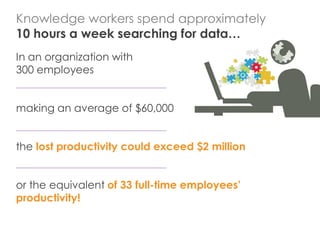
Knowledge workers spend approximately
10 hours a week searching for data…
In an organization with
300 employees
making an average of $60,000
the lost productivity could exceed $2 million

or the equivalent of 33 full-time employees’
productivity!
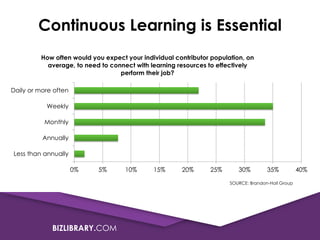
Continuous Learning is Essential
How often would you expect your individual contributor population, on
average, to need to connect with learning resources to effectively
perform their job?

Daily or more often
Weekly
Monthly
Annually
Less than annually

0%

5%

10%

15%

20%

25%

30%

35%

SOURCE: Brandon-Hall Group

BIZLIBRARY.COM

40%
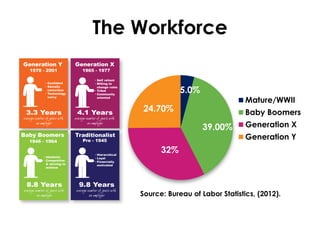
The Workforce
5.0%

Mature/WWII

24.70%

Baby Boomers

39.00%

Generation X

Generation Y

32%

Source: Bureau of Labor Statistics, (2012).
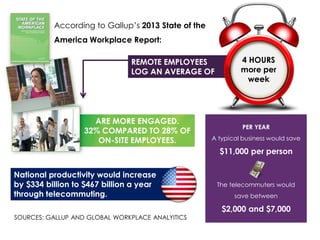
According to Gallup’s 2013 State of the
America Workplace Report:
REMOTE EMPLOYEES
LOG AN AVERAGE OF

ARE MORE ENGAGED.
32% COMPARED TO 28% OF
ON-SITE EMPLOYEES.

4 HOURS
more per
week

PER YEAR
A typical business would save

$11,000 per person
National productivity would increase
by $334 billion to $467 billion a year
through telecommuting.
SOURCES: GALLUP AND GLOBAL WORKPLACE ANALYTICS

The telecommuters would
save between

$2,000 and $7,000
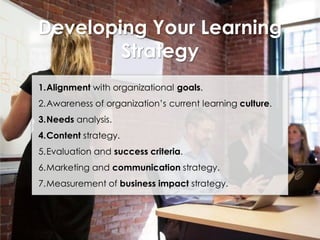
Developing Your Learning
Strategy
1.Alignment with organizational goals.

2.Awareness of organization’s current learning culture.
3.Needs analysis.

4.Content strategy.
5.Evaluation and success criteria.

6.Marketing and communication strategy.
7.Measurement of business impact strategy.
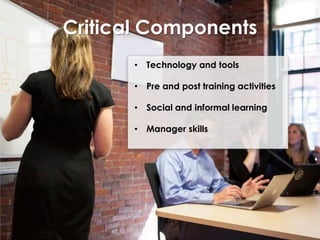
Critical Components
•

Technology and tools

•

Pre and post training activities

• Social and informal learning
•

Manager skills
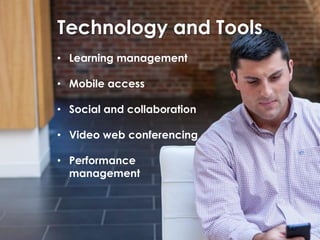
Technology and Tools
• Learning management
• Mobile access

• Social and collaboration
• Video web conferencing
• Performance
management
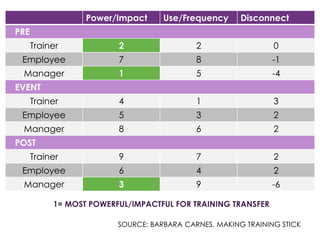
Power/Impact

Use/Frequency

Disconnect

PRE

Trainer

2

2

0

Employee

7

8

-1

Manager

1

5

-4

Trainer

4

1

3

Employee

5

3

2

Manager

8

6

2

Trainer

9

7

2

Employee

6

4

2

Manager

3

9

-6

EVENT

POST

1= MOST POWERFUL/IMPACTFUL FOR TRAINING TRANSFER
SOURCE: BARBARA CARNES, MAKING TRAINING STICK
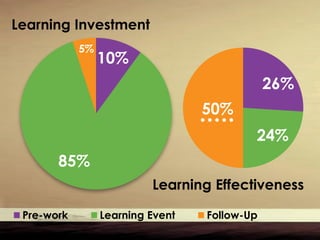
Learning Investment
5%

10%
26%

50%
24%
85%
Learning Effectiveness
Pre-work

Learning Event

Follow-Up
Pre and Post Training Activities
•

Post pre-work, videos and eLearning courses before a
virtual discussion session.

•

Invite members of a training class to a Community
before the event.

•

Post questions and discuss application after the
training.

•

Upload PowerPoint and recorded sessions.

•

Do spot checks and share in real-time during
webinars.

•

Use as an ice breaker…What do you already know
about….?
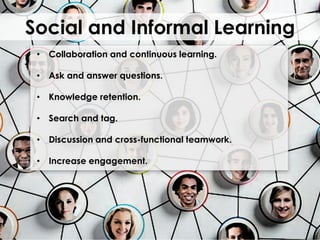
Social and Informal Learning
•

Collaboration and continuous learning.

• Ask and answer questions.
•

Knowledge retention.

•

Search and tag.

• Discussion and cross-functional teamwork.
•

Increase engagement.
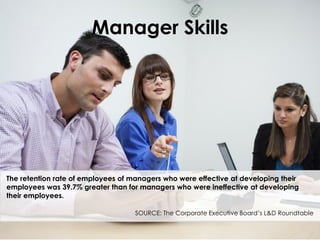
Manager Skills

The retention rate of employees of managers who were effective at developing their
employees was 39.7% greater than for managers who were ineffective at developing
their employees.
SOURCE: The Corporate Executive Board’s L&D Roundtable
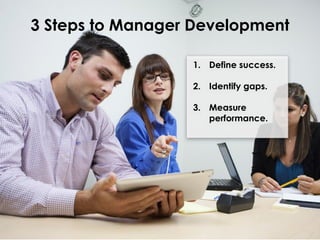
3 Steps to Manager Development
1. Define success.
2. Identify gaps.

3. Measure
performance.
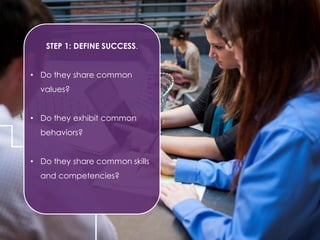
STEP 1: DEFINE SUCCESS.

• Do they share common
values?
• Do they exhibit common

behaviors?
• Do they share common skills
and competencies?
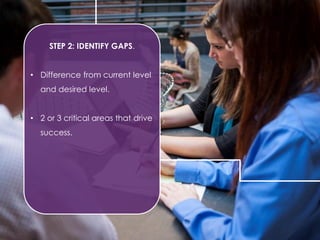
STEP 2: IDENTIFY GAPS.

• Difference from current level
and desired level.
• 2 or 3 critical areas that drive

success.
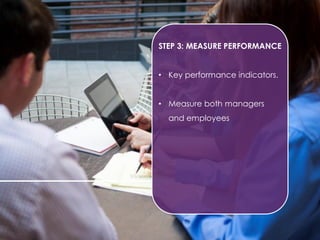
STEP 3: MEASURE PERFORMANCE

• Key performance indicators.
• Measure both managers
and employees
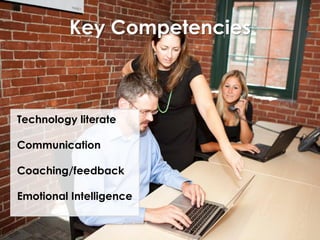
Key Competencies

Technology literate
Communication

Coaching/feedback
Emotional Intelligence
Content Strategy
LEARNING MUST BE JUST IN TIME AND
JUST FOR ME.

Michael Rochelle,
Chief Strategy Officer, Brandon Hall Group
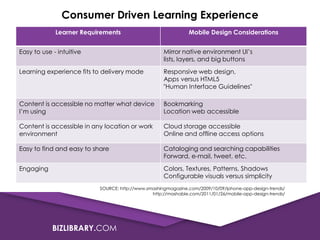
Consumer Driven Learning Experience
Learner Requirements

Mobile Design Considerations

Easy to use - intuitive

Mirror native environment UI’s
lists, layers, and big buttons

Learning experience fits to delivery mode

Responsive web design,
Apps versus HTML5
"Human Interface Guidelines"

Content is accessible no matter what device
I’m using

Bookmarking
Location web accessible

Content is accessible in any location or work
environment

Cloud storage accessible
Online and offline access options

Easy to find and easy to share

Cataloging and searching capabilities
Forward, e-mail, tweet, etc.

Engaging

Colors, Textures, Patterns, Shadows
Configurable visuals versus simplicity
SOURCE: http://www.smashingmagazine.com/2009/10/09/iphone-app-design-trends/
http://mashable.com/2011/01/26/mobile-app-design-trends/

BIZLIBRARY.COM
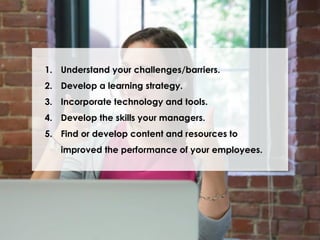
1. Understand your challenges/barriers.
2. Develop a learning strategy.
3. Incorporate technology and tools.
4. Develop the skills your managers.
5. Find or develop content and resources to
improved the performance of your employees.
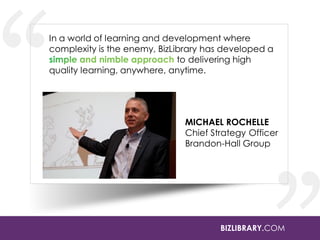
In a world of learning and development where
complexity is the enemy, BizLibrary has developed a
to delivering high
quality learning, anywhere, anytime.

MICHAEL ROCHELLE
Chief Strategy Officer
Brandon-Hall Group

BIZLIBRARY.COM
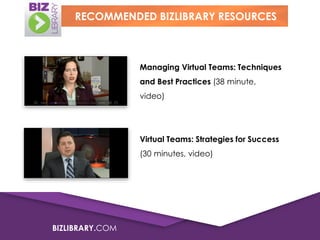
RECOMMENDED BIZLIBRARY RESOURCES

Managing Virtual Teams: Techniques
and Best Practices (38 minute,
video)

Virtual Teams: Strategies for Success
(30 minutes, video)

BIZLIBRARY.COM
Free trial of the BizLibrary Collection or Demo

4,000+ Courses. 25 Topic Areas. Unlimited Access.

BIZLIBRARY.COM
Chris Osborn
Vice President of Marketing
cosborn@bizlibrary.com
@chrisosbornstl

Jessica Batz
Marketing Specialist
jbatz@bizlibrary.com
@jessbatz
@BizLibrary

BIZLIBRARY.COM

Delivering Learning to a Disperse and Virtual Workforce - Webinar 11-21-13

  • 1.
    Delivering Learning toa Dispersed and Virtual Workforce
  • 2.
    4,000+ Courses. 25Topic Areas. Unlimited Access.
  • 3.
    WHAT WE’LL COVER: 1.Core training challenges. 2. Business challenges and how they relate to training challenges. 3. Evolving training strategies to overcome challenges and flip them into advantages. BIZLIBRARY.COM
  • 4.
    Business Challenges with MultipleLocations Out-of-sight, out-of-mind Logistics Loss of spontaneous communication Teams and complex work assignments Basic supervision
  • 5.
    Training Fundamentals Employee trainingshould deliver business results. Training programs must actually improve employee performance. All of the critical stakeholders must be engaged – fully involved and supportive, this includes the C-suite, front-line supervisors and managers. Employees must clearly see the connection between training and their jobs. The program must be appropriate for the culture and learning culture of the organization.
  • 6.
    Training Challenges with MultipleLocations Out-of-sight, out-of-mind Logistics Loss of spontaneous communication Teams and complex work assignments Basic supervision
  • 7.
    Knowledge workers spendapproximately 10 hours a week searching for data… In an organization with 300 employees making an average of $60,000 the lost productivity could exceed $2 million or the equivalent of 33 full-time employees’ productivity!
  • 8.
    Continuous Learning isEssential How often would you expect your individual contributor population, on average, to need to connect with learning resources to effectively perform their job? Daily or more often Weekly Monthly Annually Less than annually 0% 5% 10% 15% 20% 25% 30% 35% SOURCE: Brandon-Hall Group BIZLIBRARY.COM 40%
  • 9.
    The Workforce 5.0% Mature/WWII 24.70% Baby Boomers 39.00% GenerationX Generation Y 32% Source: Bureau of Labor Statistics, (2012).
  • 10.
    According to Gallup’s2013 State of the America Workplace Report: REMOTE EMPLOYEES LOG AN AVERAGE OF ARE MORE ENGAGED. 32% COMPARED TO 28% OF ON-SITE EMPLOYEES. 4 HOURS more per week PER YEAR A typical business would save $11,000 per person National productivity would increase by $334 billion to $467 billion a year through telecommuting. SOURCES: GALLUP AND GLOBAL WORKPLACE ANALYTICS The telecommuters would save between $2,000 and $7,000
  • 11.
    Developing Your Learning Strategy 1.Alignmentwith organizational goals. 2.Awareness of organization’s current learning culture. 3.Needs analysis. 4.Content strategy. 5.Evaluation and success criteria. 6.Marketing and communication strategy. 7.Measurement of business impact strategy.
  • 12.
    Critical Components • Technology andtools • Pre and post training activities • Social and informal learning • Manager skills
  • 13.
    Technology and Tools •Learning management • Mobile access • Social and collaboration • Video web conferencing • Performance management
  • 14.
  • 15.
  • 16.
    Pre and PostTraining Activities • Post pre-work, videos and eLearning courses before a virtual discussion session. • Invite members of a training class to a Community before the event. • Post questions and discuss application after the training. • Upload PowerPoint and recorded sessions. • Do spot checks and share in real-time during webinars. • Use as an ice breaker…What do you already know about….?
  • 17.
    Social and InformalLearning • Collaboration and continuous learning. • Ask and answer questions. • Knowledge retention. • Search and tag. • Discussion and cross-functional teamwork. • Increase engagement.
  • 18.
    Manager Skills The retentionrate of employees of managers who were effective at developing their employees was 39.7% greater than for managers who were ineffective at developing their employees. SOURCE: The Corporate Executive Board’s L&D Roundtable
  • 19.
    3 Steps toManager Development 1. Define success. 2. Identify gaps. 3. Measure performance.
  • 20.
    STEP 1: DEFINESUCCESS. • Do they share common values? • Do they exhibit common behaviors? • Do they share common skills and competencies?
  • 21.
    STEP 2: IDENTIFYGAPS. • Difference from current level and desired level. • 2 or 3 critical areas that drive success.
  • 22.
    STEP 3: MEASUREPERFORMANCE • Key performance indicators. • Measure both managers and employees
  • 23.
  • 24.
  • 25.
    LEARNING MUST BEJUST IN TIME AND JUST FOR ME. Michael Rochelle, Chief Strategy Officer, Brandon Hall Group
  • 26.
    Consumer Driven LearningExperience Learner Requirements Mobile Design Considerations Easy to use - intuitive Mirror native environment UI’s lists, layers, and big buttons Learning experience fits to delivery mode Responsive web design, Apps versus HTML5 "Human Interface Guidelines" Content is accessible no matter what device I’m using Bookmarking Location web accessible Content is accessible in any location or work environment Cloud storage accessible Online and offline access options Easy to find and easy to share Cataloging and searching capabilities Forward, e-mail, tweet, etc. Engaging Colors, Textures, Patterns, Shadows Configurable visuals versus simplicity SOURCE: http://www.smashingmagazine.com/2009/10/09/iphone-app-design-trends/ http://mashable.com/2011/01/26/mobile-app-design-trends/ BIZLIBRARY.COM
  • 27.
    1. Understand yourchallenges/barriers. 2. Develop a learning strategy. 3. Incorporate technology and tools. 4. Develop the skills your managers. 5. Find or develop content and resources to improved the performance of your employees.
  • 28.
    In a worldof learning and development where complexity is the enemy, BizLibrary has developed a to delivering high quality learning, anywhere, anytime. MICHAEL ROCHELLE Chief Strategy Officer Brandon-Hall Group BIZLIBRARY.COM
  • 29.
    RECOMMENDED BIZLIBRARY RESOURCES ManagingVirtual Teams: Techniques and Best Practices (38 minute, video) Virtual Teams: Strategies for Success (30 minutes, video) BIZLIBRARY.COM
  • 30.
    Free trial ofthe BizLibrary Collection or Demo 4,000+ Courses. 25 Topic Areas. Unlimited Access. BIZLIBRARY.COM
  • 31.
    Chris Osborn Vice Presidentof Marketing cosborn@bizlibrary.com @chrisosbornstl Jessica Batz Marketing Specialist jbatz@bizlibrary.com @jessbatz @BizLibrary BIZLIBRARY.COM