DEEP LEARNING FOR
SMART MANUFACTURING
METHODS AND APPLICATIONS
UNDER THE GUIDANCE OF:
Mr. H. S Dash
(ASSISTANT PROF. PRODUCTION
ENGG. DEPT)
PREPARED BY :
Sunil Kumar Pradhan
E-mail- pradhansunilkumar163@gmail.com
OVERVIEW
• Introduction
• Evolution
• Architecture of neural network
• Artificial neural network
• Application in smart manufacturing
• Advantages
• Disadvantages
• Conclusion
What is smart manufacturing?
• Smart manufacturing is a subset that employs
computer control and high levels of
adaptability while manufacturing is a multi-
phase process of creating a product out of raw
materials.
What is deep learning?
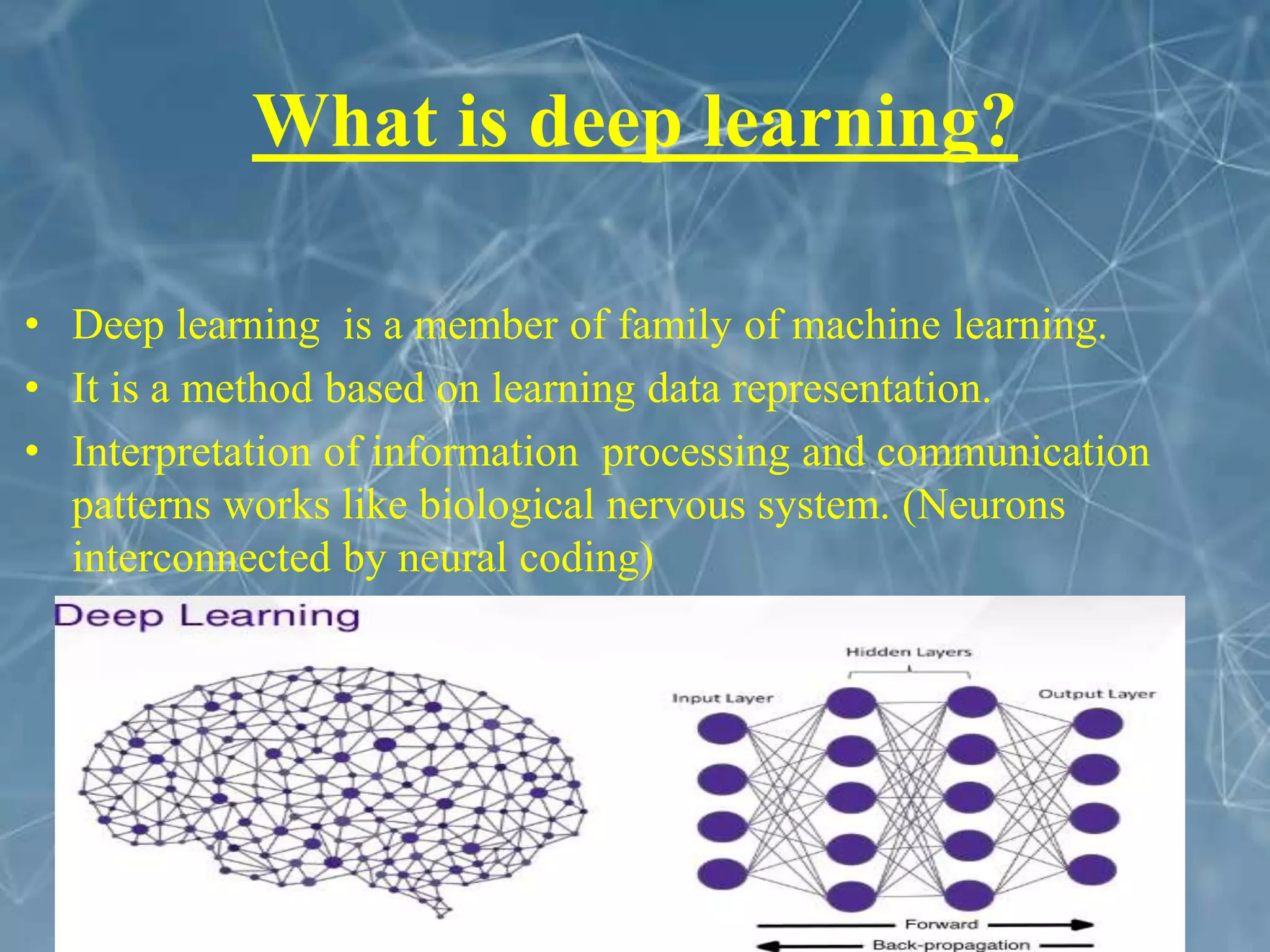
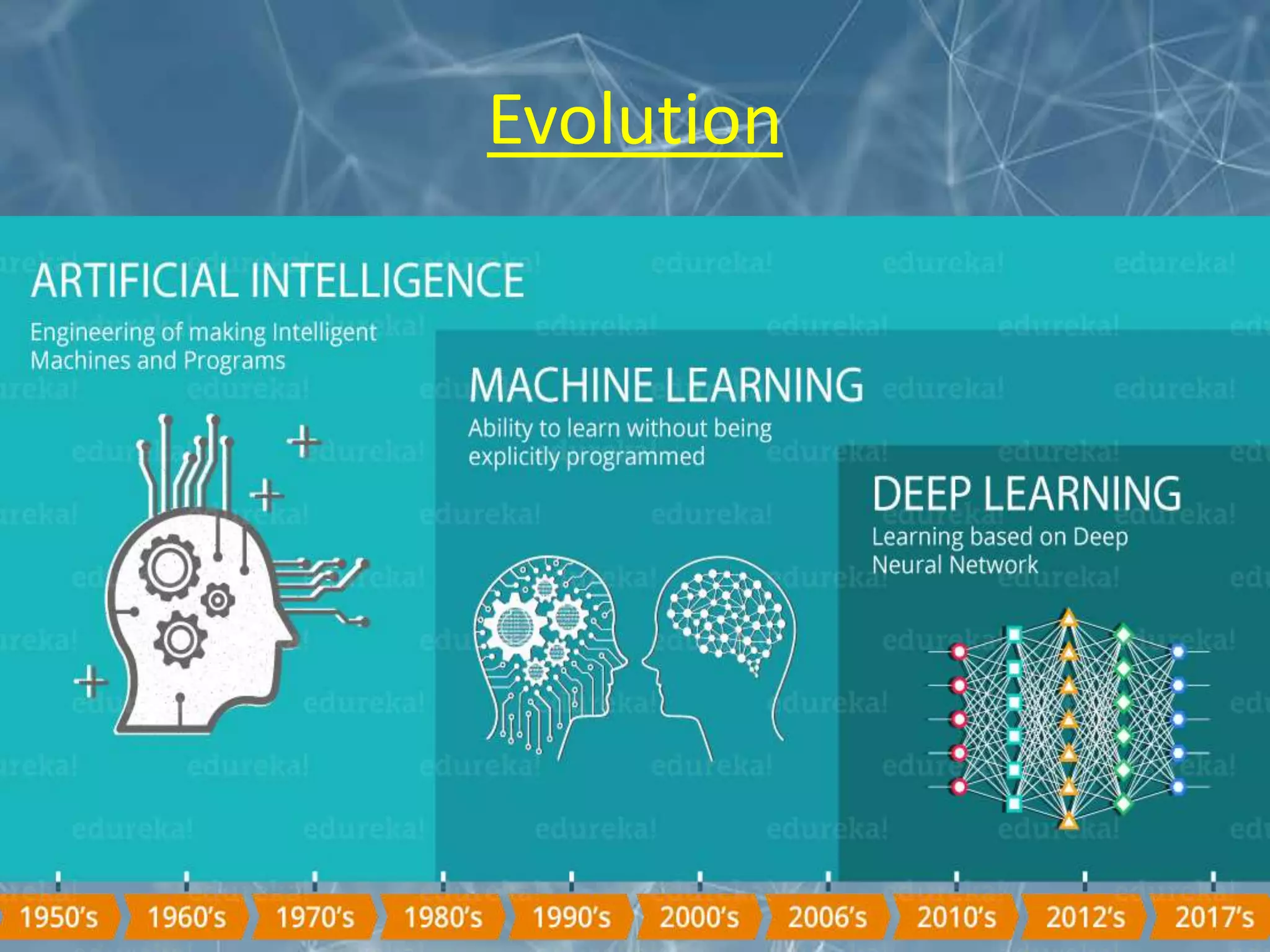
• Deep learning is a member of family of machine learning.
• It is a method based on learning data representation.
• Interpretation of information processing and communication
patterns works like biological nervous system. (Neurons
interconnected by neural coding)
Evolution
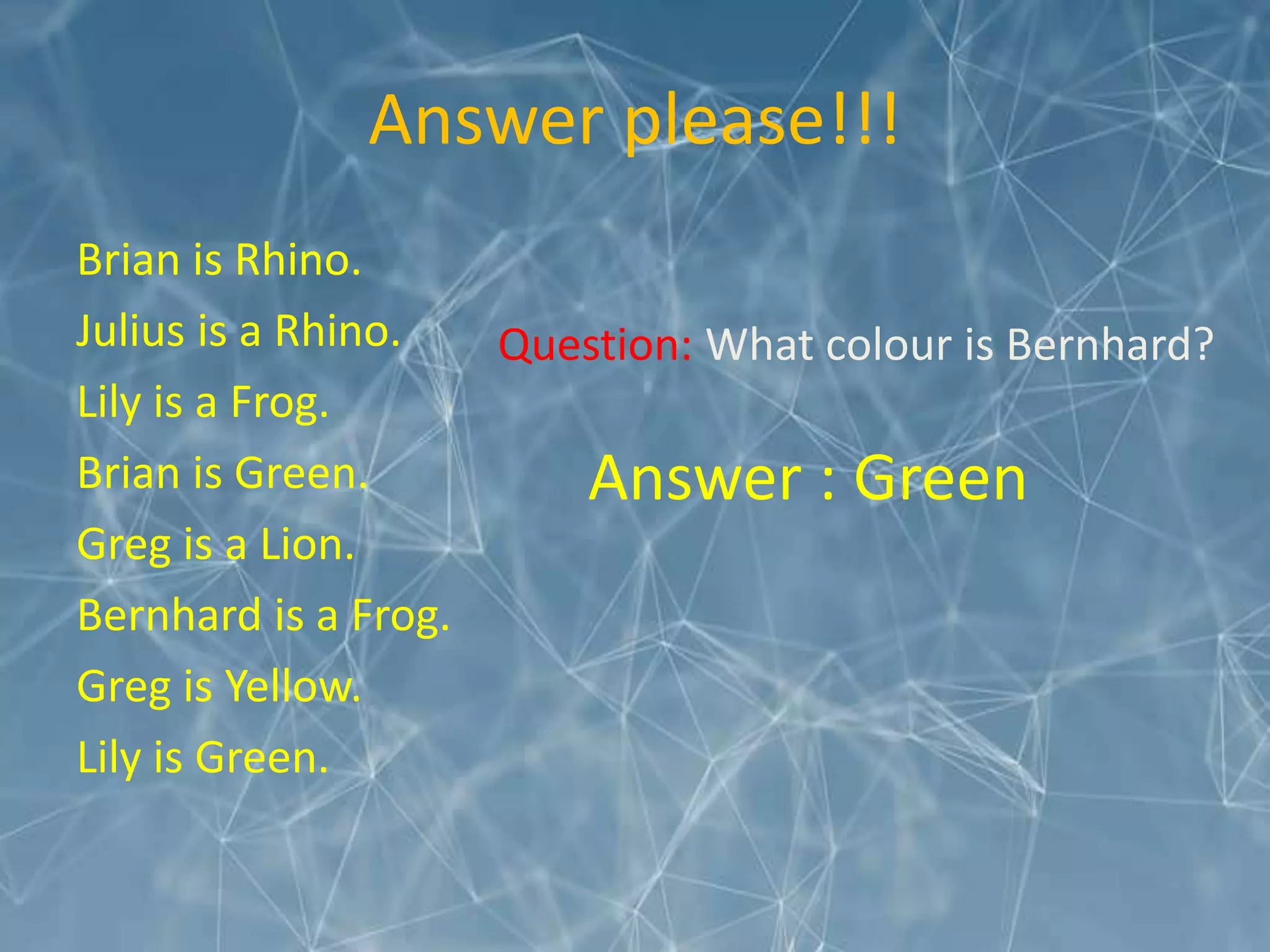
Answer please!!!
Brian is Rhino.
Julius is a Rhino.
Lily is a Frog.
Brian is Green.
Greg is a Lion.
Bernhard is a Frog.
Greg is Yellow.
Lily is Green.
Question: What colour is Bernhard?
Answer : Green
Architecture of neural network for smart
manufacturing
Achieved by constructing Artificial Neural Networks(ANN)
Artificial Neural Networks(ANN)
• An ANN is based on a collection of connected
units called artificial neurons.
• Each connection (synapse) between neurons can
transmit a signal to another neuron
• Neurons are organized in layers. Different layers
may perform different kinds of transformations
on their inputs. Signals travel from the first
(input), to the last (output) layer, possibly after
traversing the layers multiple times.
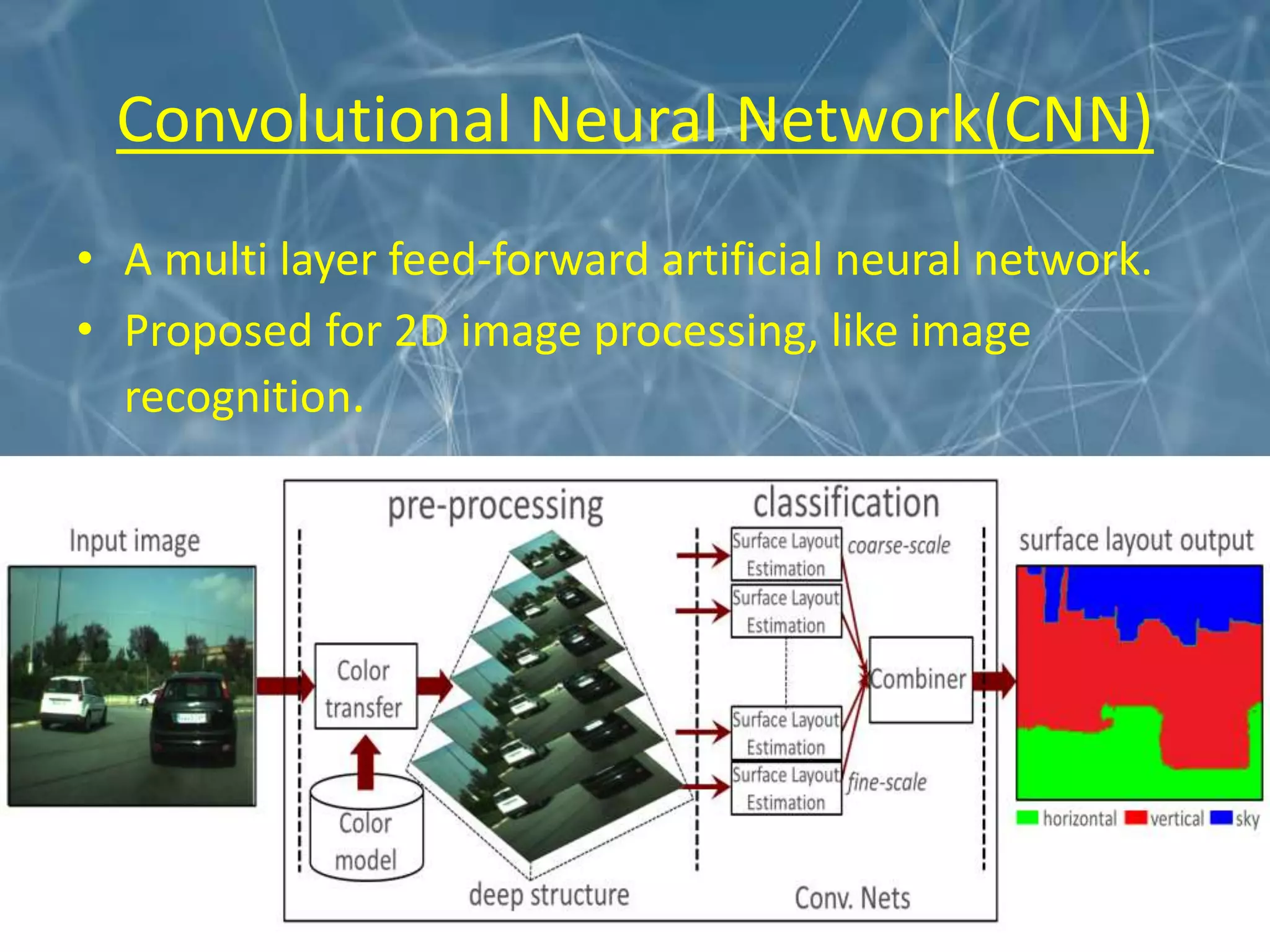
Convolutional Neural Network(CNN)
• A multi layer feed-forward artificial neural network.
• Proposed for 2D image processing, like image
recognition.
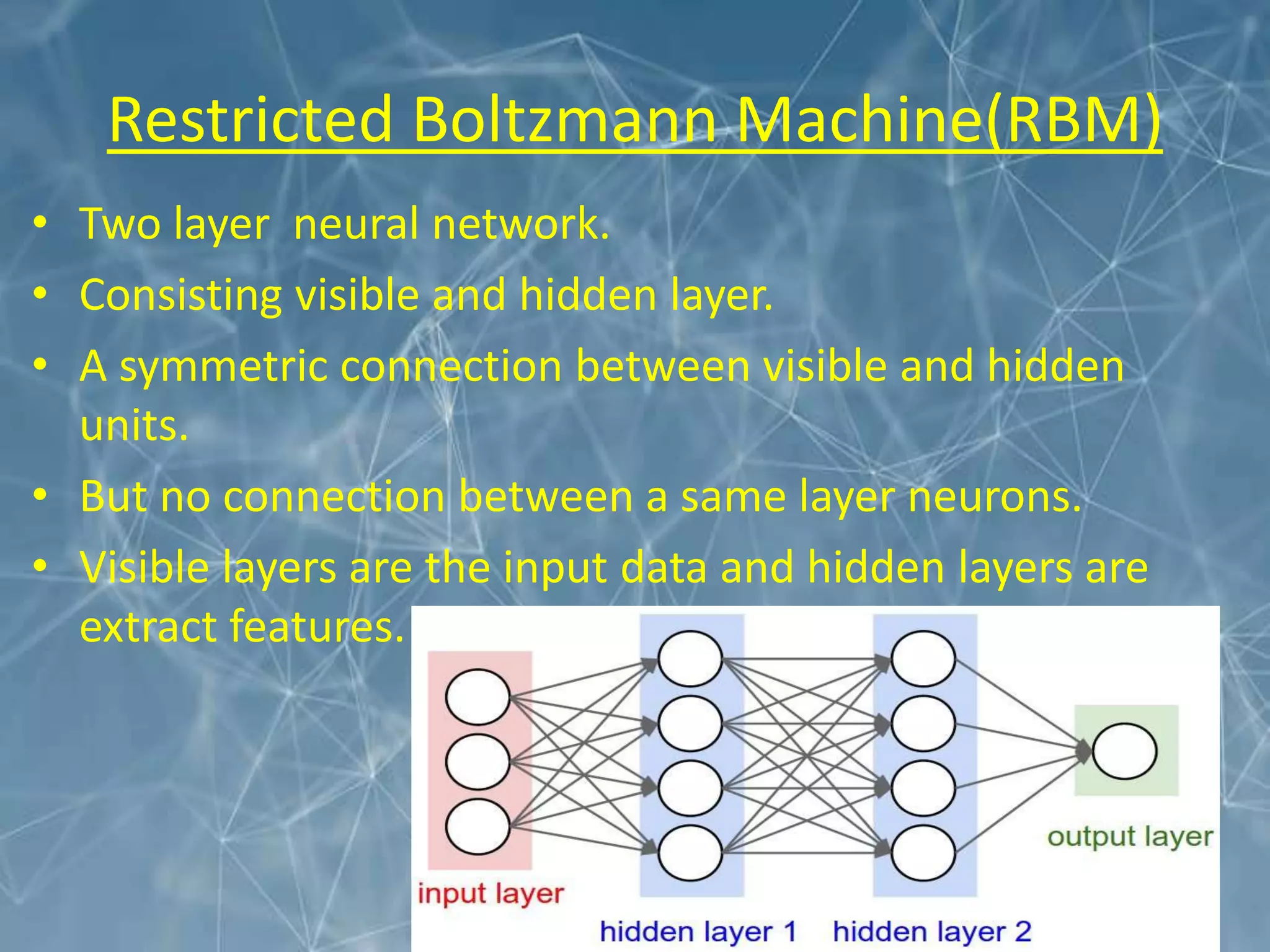
Restricted Boltzmann Machine(RBM)
• Two layer neural network.
• Consisting visible and hidden layer.
• A symmetric connection between visible and hidden
units.
• But no connection between a same layer neurons.
• Visible layers are the input data and hidden layers are
extract features.
Recurrent Neural Network(RNN)
• Tropology connection between neurons.
• Suitable for feature learning from sequence
data.
• Exhibit dynamic temporal behaviour.
• Used for handwriting and speech recognition.
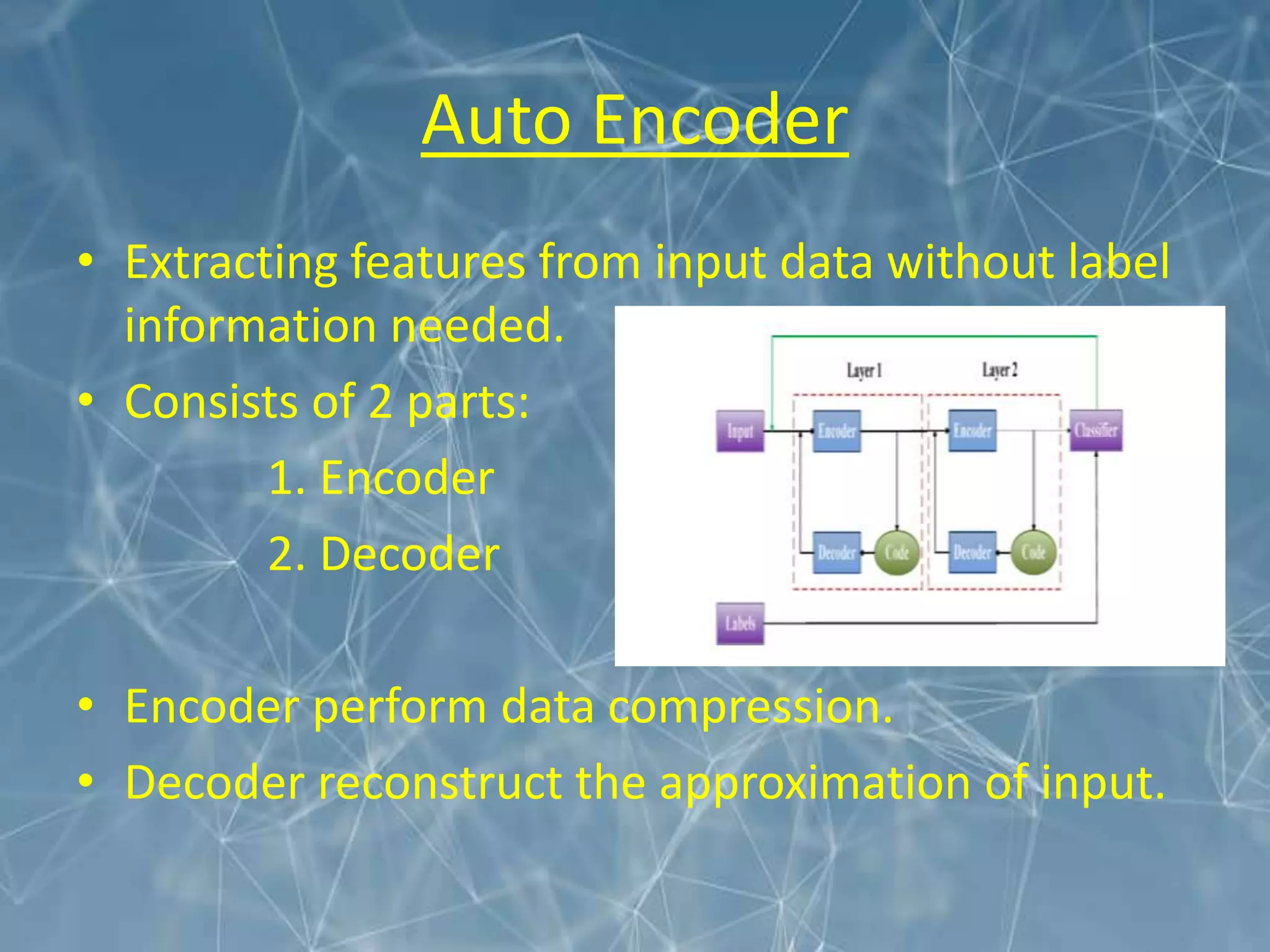
Auto Encoder
• Extracting features from input data without label
information needed.
• Consists of 2 parts:
1. Encoder
2. Decoder
• Encoder perform data compression.
• Decoder reconstruct the approximation of input.
Application
• It can be very useful in the area of:
1. Product Quality Inspection
2. Fault Diagnosis
3. Design & Performance
4. Material Handling
5. Forecasting
and so on…
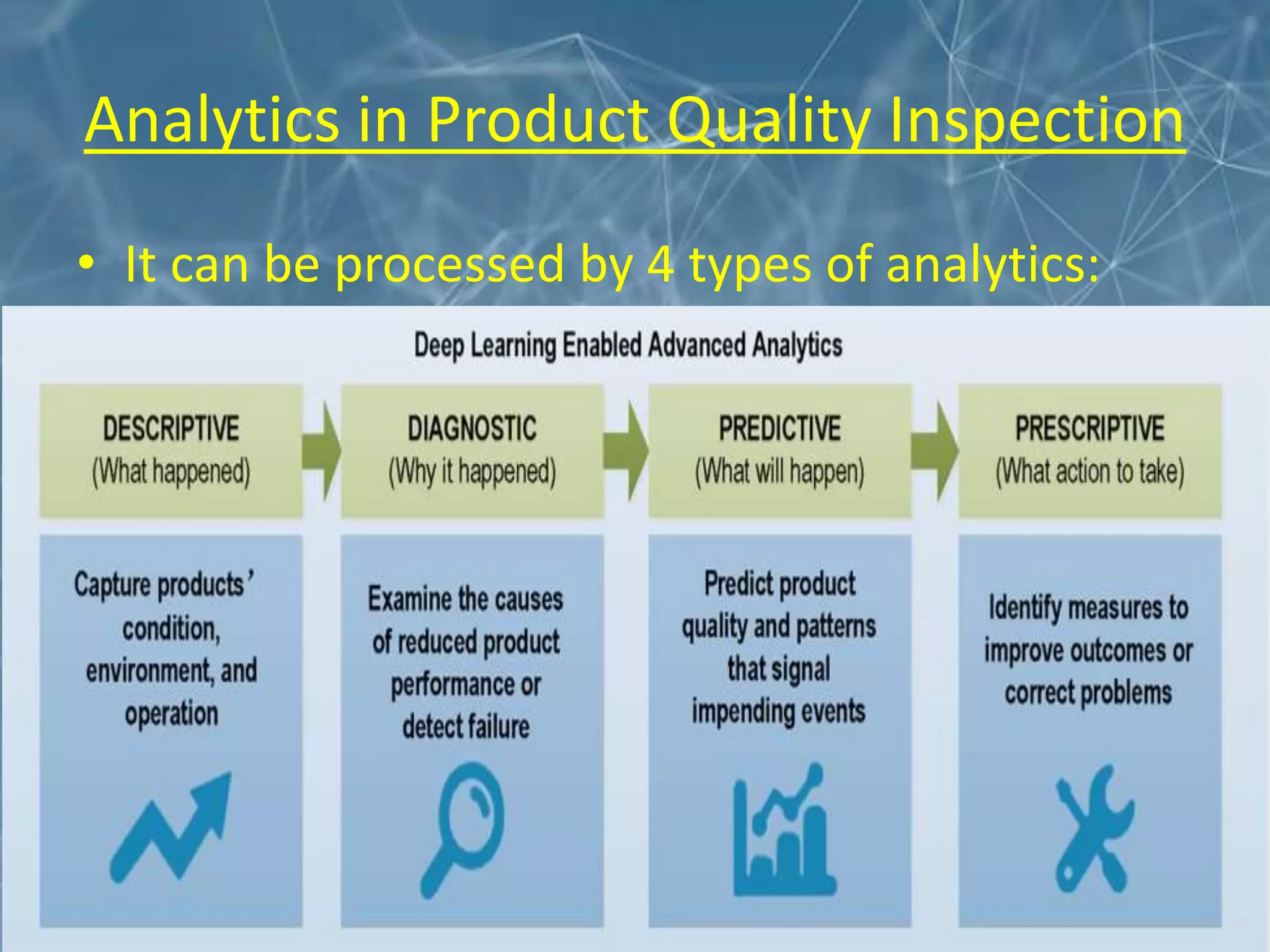
Analytics in Product Quality Inspection
• It can be processed by 4 types of analytics:
Descriptive Analytics
• Useful for complex product inspection.
• Employment of High Definition Camera.
• Analysis descriptively by measuring point to
point distance and counting number of axis.
using Convolutional Neural Network(CNN).
Diagnostic analysis for fault
assessment
• Common causes of failure: Operating
condition, excessive load, over heating,
fracture, corrosion and wear.
• Can be solved by Convolutional neural
network(CNN) and Auto Encoder(AE).
Predictive analysis for defect prognosis
• Predict the machine condition.
• Historical data is works as reference data.
• Employment of Recurrent Neural
Network(RNN).
Advantages
• Time optimization
• Cost optimization
• Higher productivity
• Higher quality
• Integrated environment
Disadvantages
• Initial investment is higher.
• Training of traditional workers.
• Reduce human involvement (form Society
Point of view)
• Active engineers will required for avoid
sudden failure of networks.
Conclusion
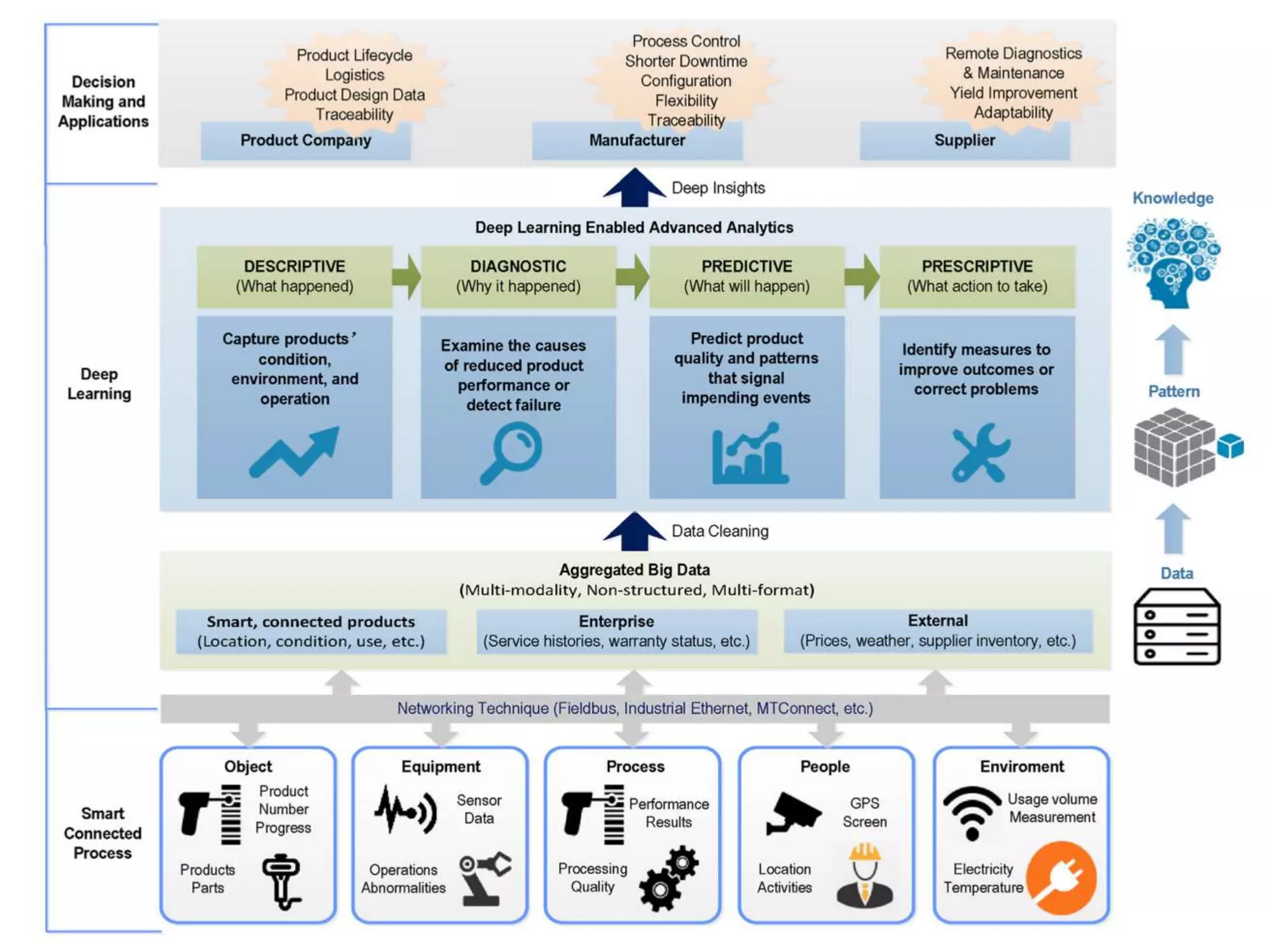
• Deep learning provides advanced analytics
and offers great potential to smart
manufacturing in the age of big data.
• Also having decision making capabilities as
well as real time performance, takes the
manufacturing sector into a new era.
References
[1] Deep learning for smart manufacturing: Methods and
applications Jinjiang Wanga,Yulin Maa, Laibin Zhanga, Robert X.
Gao b, Dazhong Wu.
[2] Hu T, Li P, Zhang C, Liu R. Design and application of a real-time
industrial Ethernet protocol under Linux using RTAI. Int J Comput
Integr Manuf 2013;26(5):429–39.
[3] Ye Y, Hu T, Zhang C, Luo W. Design and development of a CNC
machining process knowledge base using cloud technology.
Int J Adv Manuf Technol 2016:1–13.
To Listening My Presentation
Question Please !!!

Deep learning for smart manufacturing

  • 1.
    DEEP LEARNING FOR SMARTMANUFACTURING METHODS AND APPLICATIONS UNDER THE GUIDANCE OF: Mr. H. S Dash (ASSISTANT PROF. PRODUCTION ENGG. DEPT) PREPARED BY : Sunil Kumar Pradhan E-mail- pradhansunilkumar163@gmail.com
  • 2.
    OVERVIEW • Introduction • Evolution •Architecture of neural network • Artificial neural network • Application in smart manufacturing • Advantages • Disadvantages • Conclusion
  • 3.
    What is smartmanufacturing? • Smart manufacturing is a subset that employs computer control and high levels of adaptability while manufacturing is a multi- phase process of creating a product out of raw materials.
  • 4.
    What is deeplearning? • Deep learning is a member of family of machine learning. • It is a method based on learning data representation. • Interpretation of information processing and communication patterns works like biological nervous system. (Neurons interconnected by neural coding)
  • 5.
  • 6.
    Answer please!!! Brian isRhino. Julius is a Rhino. Lily is a Frog. Brian is Green. Greg is a Lion. Bernhard is a Frog. Greg is Yellow. Lily is Green. Question: What colour is Bernhard? Answer : Green
  • 7.
    Architecture of neuralnetwork for smart manufacturing Achieved by constructing Artificial Neural Networks(ANN)
  • 8.
    Artificial Neural Networks(ANN) •An ANN is based on a collection of connected units called artificial neurons. • Each connection (synapse) between neurons can transmit a signal to another neuron • Neurons are organized in layers. Different layers may perform different kinds of transformations on their inputs. Signals travel from the first (input), to the last (output) layer, possibly after traversing the layers multiple times.
  • 9.
    Convolutional Neural Network(CNN) •A multi layer feed-forward artificial neural network. • Proposed for 2D image processing, like image recognition.
  • 10.
    Restricted Boltzmann Machine(RBM) •Two layer neural network. • Consisting visible and hidden layer. • A symmetric connection between visible and hidden units. • But no connection between a same layer neurons. • Visible layers are the input data and hidden layers are extract features.
  • 11.
    Recurrent Neural Network(RNN) •Tropology connection between neurons. • Suitable for feature learning from sequence data. • Exhibit dynamic temporal behaviour. • Used for handwriting and speech recognition.
  • 12.
    Auto Encoder • Extractingfeatures from input data without label information needed. • Consists of 2 parts: 1. Encoder 2. Decoder • Encoder perform data compression. • Decoder reconstruct the approximation of input.
  • 13.
    Application • It canbe very useful in the area of: 1. Product Quality Inspection 2. Fault Diagnosis 3. Design & Performance 4. Material Handling 5. Forecasting and so on…
  • 14.
    Analytics in ProductQuality Inspection • It can be processed by 4 types of analytics:
  • 15.
    Descriptive Analytics • Usefulfor complex product inspection. • Employment of High Definition Camera. • Analysis descriptively by measuring point to point distance and counting number of axis. using Convolutional Neural Network(CNN).
  • 16.
    Diagnostic analysis forfault assessment • Common causes of failure: Operating condition, excessive load, over heating, fracture, corrosion and wear. • Can be solved by Convolutional neural network(CNN) and Auto Encoder(AE).
  • 17.
    Predictive analysis fordefect prognosis • Predict the machine condition. • Historical data is works as reference data. • Employment of Recurrent Neural Network(RNN).
  • 19.
    Advantages • Time optimization •Cost optimization • Higher productivity • Higher quality • Integrated environment
  • 20.
    Disadvantages • Initial investmentis higher. • Training of traditional workers. • Reduce human involvement (form Society Point of view) • Active engineers will required for avoid sudden failure of networks.
  • 21.
    Conclusion • Deep learningprovides advanced analytics and offers great potential to smart manufacturing in the age of big data. • Also having decision making capabilities as well as real time performance, takes the manufacturing sector into a new era.
  • 22.
    References [1] Deep learningfor smart manufacturing: Methods and applications Jinjiang Wanga,Yulin Maa, Laibin Zhanga, Robert X. Gao b, Dazhong Wu. [2] Hu T, Li P, Zhang C, Liu R. Design and application of a real-time industrial Ethernet protocol under Linux using RTAI. Int J Comput Integr Manuf 2013;26(5):429–39. [3] Ye Y, Hu T, Zhang C, Luo W. Design and development of a CNC machining process knowledge base using cloud technology. Int J Adv Manuf Technol 2016:1–13.
  • 23.
    To Listening MyPresentation
  • 24.