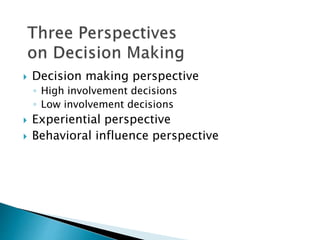
 Decision making perspective 
◦ High involvement decisions 
◦ Low involvement decisions 
 Experiential perspective 
 Behavioral influence perspective
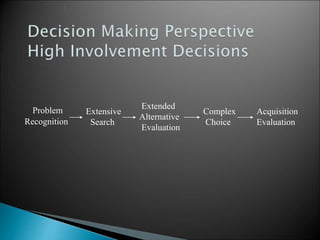
Problem 
Recognition 
Extensive 
Search 
Extended 
Alternative 
Evaluation 
Complex 
Choice 
Acquisition 
Evaluation
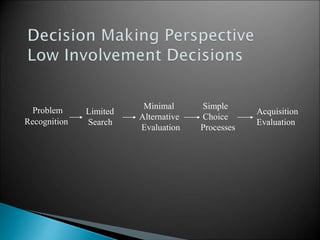
Problem 
Recognition 
Limited 
Search 
Minimal 
Alternative 
Evaluation 
Simple 
Choice 
Processes 
Acquisition 
Evaluation
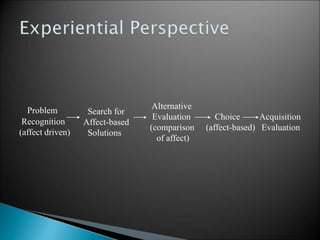
Problem 
Recognition 
(affect driven) 
Search for 
Affect-based 
Solutions 
Alternative 
Evaluation 
(comparison 
of affect) 
Choice 
(affect-based) 
Acquisition 
Evaluation
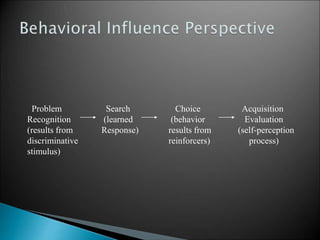
Search 
(learned 
Response) 
Choice 
(behavior 
results from 
reinforcers) 
Acquisition 
Evaluation 
(self-perception 
process) 
Problem 
Recognition 
(results from 
discriminative 
stimulus)
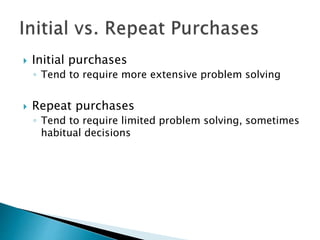
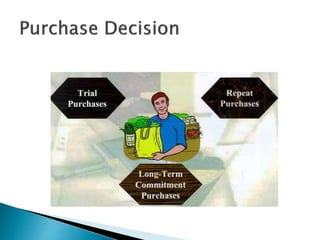
 Initial purchases 
◦ Tend to require more extensive problem solving 
 Repeat purchases 
◦ Tend to require limited problem solving, sometimes 
habitual decisions
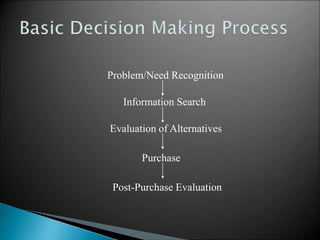
Problem/Need Recognition 
Information Search 
Evaluation of Alternatives 
Purchase 
Post-Purchase Evaluation
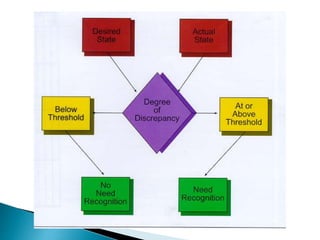
 Consumer recognizes a gap or discrepancy 
between his/her current state and his/her 
desired state.
 Deliberate attempt to gain knowledge 
about a purchase decision; goal is to 
reduce uncertainty. 
 Internal search 
◦ Retrieve information from long term memory 
 External search 
◦ Gather information from external sources, e.g., 
ads, media, friends, stores
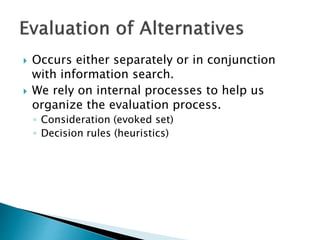
 Occurs either separately or in conjunction 
with information search. 
 We rely on internal processes to help us 
organize the evaluation process. 
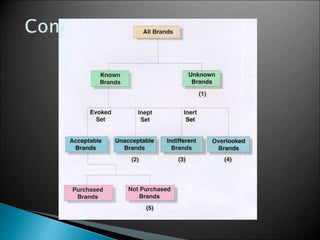
◦ Consideration (evoked set) 
◦ Decision rules (heuristics)
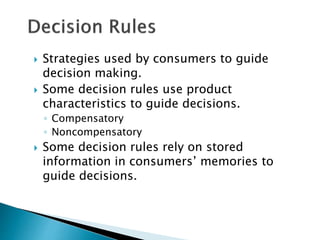
 Strategies used by consumers to guide 
decision making. 
 Some decision rules use product 
characteristics to guide decisions. 
◦ Compensatory 
◦ Noncompensatory 
 Some decision rules rely on stored 
information in consumers’ memories to 
guide decisions.
 Select the best overall brand 
◦ Consumer evaluates brand options in 
terms of each relevant attribute and 
computes a weighted or summated score 
for each brand. The consumer chooses the 
brand with the highest score. 
 A compensatory model because a positive 
score on one attribute can outweigh a 
negative score on another attribute.
 Conjunctive Decision Rule 
◦ Consumer sets a minimum standard for 
each attribute and if a brand fails to pass 
any standard, it is dropped from 
consideration. 
 Reduces a large consideration set to a 
manageable size. 
 Often used in conjunction with another 
decision rule.
 Disjunctive Decision Rule 
◦ Consumer sets a minimum acceptable 
standard as the cutoff point for each 
attribute--any brand that exceeds the 
cutoff point is accepted. 
 Reduces large consideration set to a more 
manageable number of alternatives. 
 Consumer may settle for the first 
satisfactory brand as final choice or may 
use another decision rule.
 Lexicographic Decision Rule 
◦ The consumer ranks the attributes 
according to importance and then selects 
the brand that is superior on the most 
important attribute. 
 If one brand ranks sufficiently high on just 
one attribute, it will be selected regardless of 
how it scores on other attributes.
 Synthesized decision rule 
◦ Consumers maintain overall evaluations of 
brands in their long term memories. 
Brands on not evaluated on individual 
attributes but on the highest perceived 
overall rating.
 Another way in which consumers evaluate 
information is the frame of reference from 
which s/he subjectively evaluates messages 
related to a decision problem. 
◦ “Percent lean” vs. “Percent fat” 
◦ “Sale” vs. “Clearance”
 Consumers evaluate purchases during 
consumption process. 
 Three possible outcomes. 
 Postpurchase cognitive dissonance. 
 Complaining behavior.
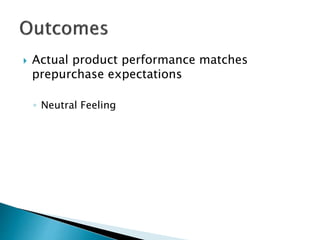
 Actual product performance matches 
prepurchase expectations 
◦ Neutral Feeling
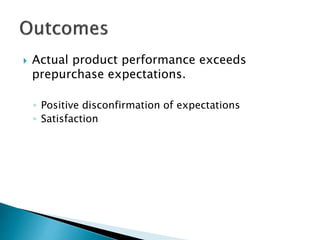
 Actual product performance exceeds 
prepurchase expectations. 
◦ Positive disconfirmation of expectations 
◦ Satisfaction
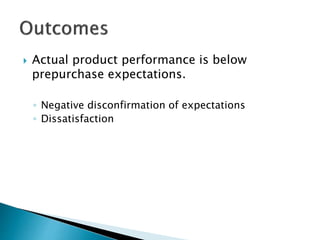
 Actual product performance is below 
prepurchase expectations. 
◦ Negative disconfirmation of expectations 
◦ Dissatisfaction
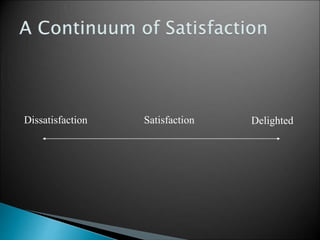
Dissatisfaction Satisfaction Delighted
 Alternative actions 
◦ Do nothing 
◦ Avoid seller/brand in the future 
◦ Negative WOM to friends 
◦ Seek redress of problem from seller 
◦ Complain to outside agency
 Is based on: 
◦ Level of dissatisfaction 
◦ Importance of decision/purchase 
◦ Costs/benefits of actions 
◦ Personal characteristics 
◦ Attribution of blame
 Understanding decision making process 
enables marketers to assist consumers along 
decision pathway. 
◦ Offer products that meet needs/wants 
◦ Advertising 
◦ Making information available 
◦ Making product available 
◦ Follow-up sales calls, good service
Decision process

Decision process

  • 2.
     Decision makingperspective ◦ High involvement decisions ◦ Low involvement decisions  Experiential perspective  Behavioral influence perspective
  • 3.
    Problem Recognition Extensive Search Extended Alternative Evaluation Complex Choice Acquisition Evaluation
  • 4.
    Problem Recognition Limited Search Minimal Alternative Evaluation Simple Choice Processes Acquisition Evaluation
  • 5.
    Problem Recognition (affectdriven) Search for Affect-based Solutions Alternative Evaluation (comparison of affect) Choice (affect-based) Acquisition Evaluation
  • 6.
    Search (learned Response) Choice (behavior results from reinforcers) Acquisition Evaluation (self-perception process) Problem Recognition (results from discriminative stimulus)
  • 7.
     Initial purchases ◦ Tend to require more extensive problem solving  Repeat purchases ◦ Tend to require limited problem solving, sometimes habitual decisions
  • 8.
    Problem/Need Recognition InformationSearch Evaluation of Alternatives Purchase Post-Purchase Evaluation
  • 9.
     Consumer recognizesa gap or discrepancy between his/her current state and his/her desired state.
  • 12.
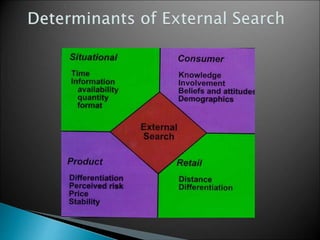
     Deliberate attemptto gain knowledge about a purchase decision; goal is to reduce uncertainty.  Internal search ◦ Retrieve information from long term memory  External search ◦ Gather information from external sources, e.g., ads, media, friends, stores
  • 14.
     Occurs eitherseparately or in conjunction with information search.  We rely on internal processes to help us organize the evaluation process. ◦ Consideration (evoked set) ◦ Decision rules (heuristics)
  • 16.
     Strategies usedby consumers to guide decision making.  Some decision rules use product characteristics to guide decisions. ◦ Compensatory ◦ Noncompensatory  Some decision rules rely on stored information in consumers’ memories to guide decisions.
  • 17.
     Select thebest overall brand ◦ Consumer evaluates brand options in terms of each relevant attribute and computes a weighted or summated score for each brand. The consumer chooses the brand with the highest score.  A compensatory model because a positive score on one attribute can outweigh a negative score on another attribute.
  • 18.
     Conjunctive DecisionRule ◦ Consumer sets a minimum standard for each attribute and if a brand fails to pass any standard, it is dropped from consideration.  Reduces a large consideration set to a manageable size.  Often used in conjunction with another decision rule.
  • 19.
     Disjunctive DecisionRule ◦ Consumer sets a minimum acceptable standard as the cutoff point for each attribute--any brand that exceeds the cutoff point is accepted.  Reduces large consideration set to a more manageable number of alternatives.  Consumer may settle for the first satisfactory brand as final choice or may use another decision rule.
  • 20.
     Lexicographic DecisionRule ◦ The consumer ranks the attributes according to importance and then selects the brand that is superior on the most important attribute.  If one brand ranks sufficiently high on just one attribute, it will be selected regardless of how it scores on other attributes.
  • 21.
     Synthesized decisionrule ◦ Consumers maintain overall evaluations of brands in their long term memories. Brands on not evaluated on individual attributes but on the highest perceived overall rating.
  • 22.
     Another wayin which consumers evaluate information is the frame of reference from which s/he subjectively evaluates messages related to a decision problem. ◦ “Percent lean” vs. “Percent fat” ◦ “Sale” vs. “Clearance”
  • 24.
     Consumers evaluatepurchases during consumption process.  Three possible outcomes.  Postpurchase cognitive dissonance.  Complaining behavior.
  • 25.
     Actual productperformance matches prepurchase expectations ◦ Neutral Feeling
  • 26.
     Actual productperformance exceeds prepurchase expectations. ◦ Positive disconfirmation of expectations ◦ Satisfaction
  • 27.
     Actual productperformance is below prepurchase expectations. ◦ Negative disconfirmation of expectations ◦ Dissatisfaction
  • 28.
  • 29.
     Alternative actions ◦ Do nothing ◦ Avoid seller/brand in the future ◦ Negative WOM to friends ◦ Seek redress of problem from seller ◦ Complain to outside agency
  • 30.
     Is basedon: ◦ Level of dissatisfaction ◦ Importance of decision/purchase ◦ Costs/benefits of actions ◦ Personal characteristics ◦ Attribution of blame
  • 31.
     Understanding decisionmaking process enables marketers to assist consumers along decision pathway. ◦ Offer products that meet needs/wants ◦ Advertising ◦ Making information available ◦ Making product available ◦ Follow-up sales calls, good service