Consumer Decision Making
Process
16-1
Factors influencing the customer’s
decision making process

16-2
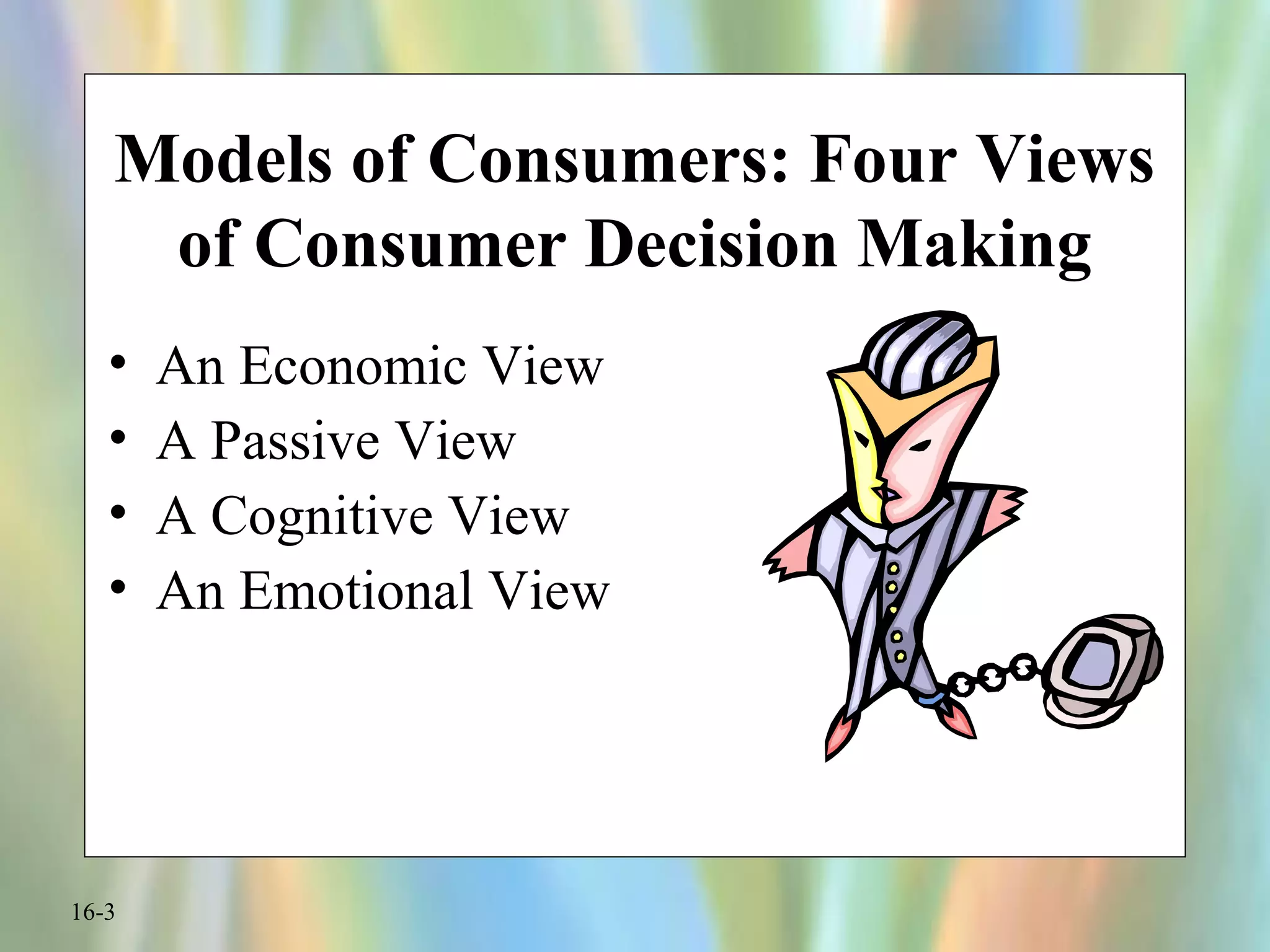
Models of Consumers: Four Views
of Consumer Decision Making
•
•
•
•

16-3

An Economic View
A Passive View
A Cognitive View
An Emotional View
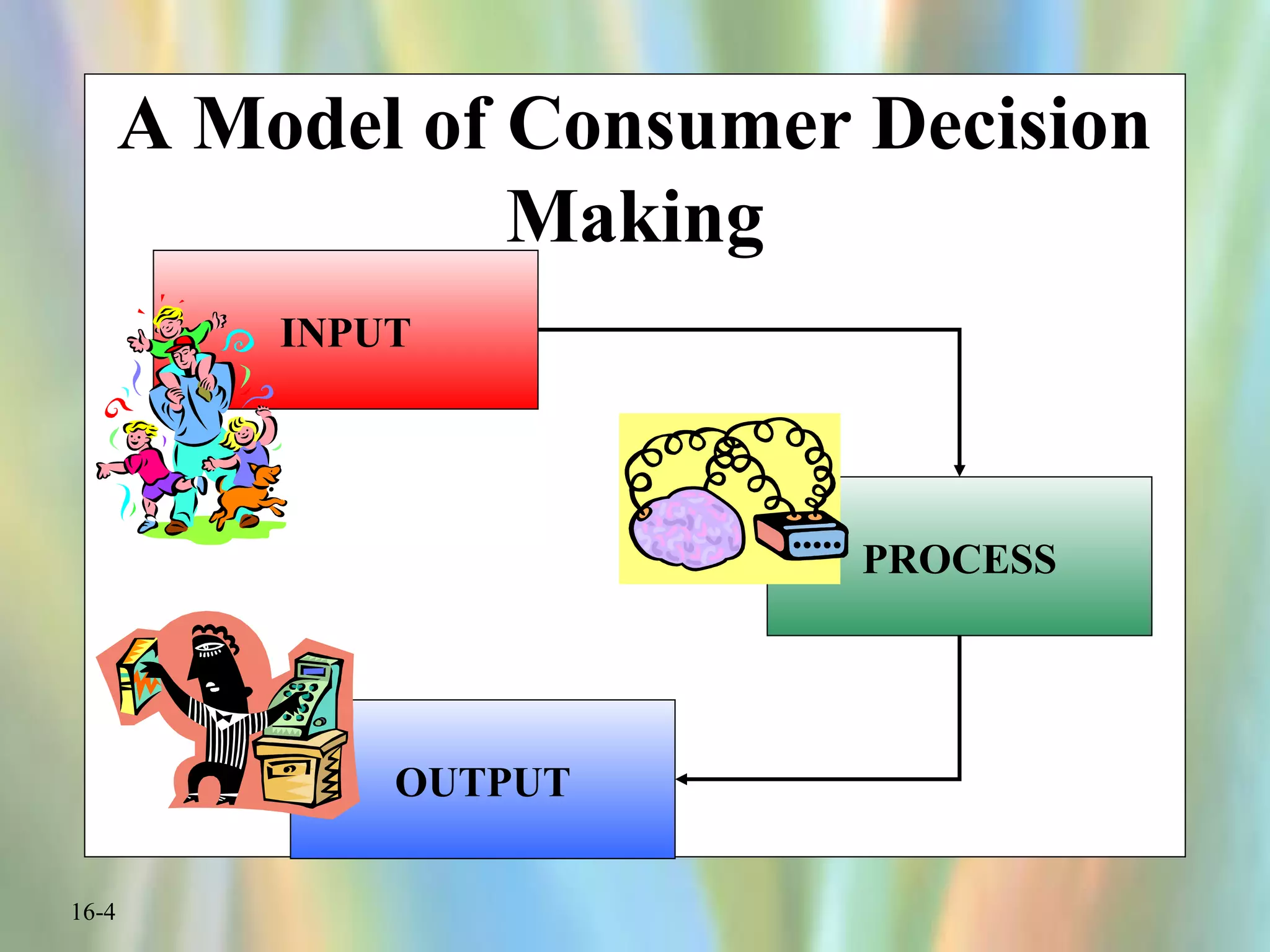
A Model of Consumer Decision
Making
INPUT

PROCESS

OUTPUT
16-4
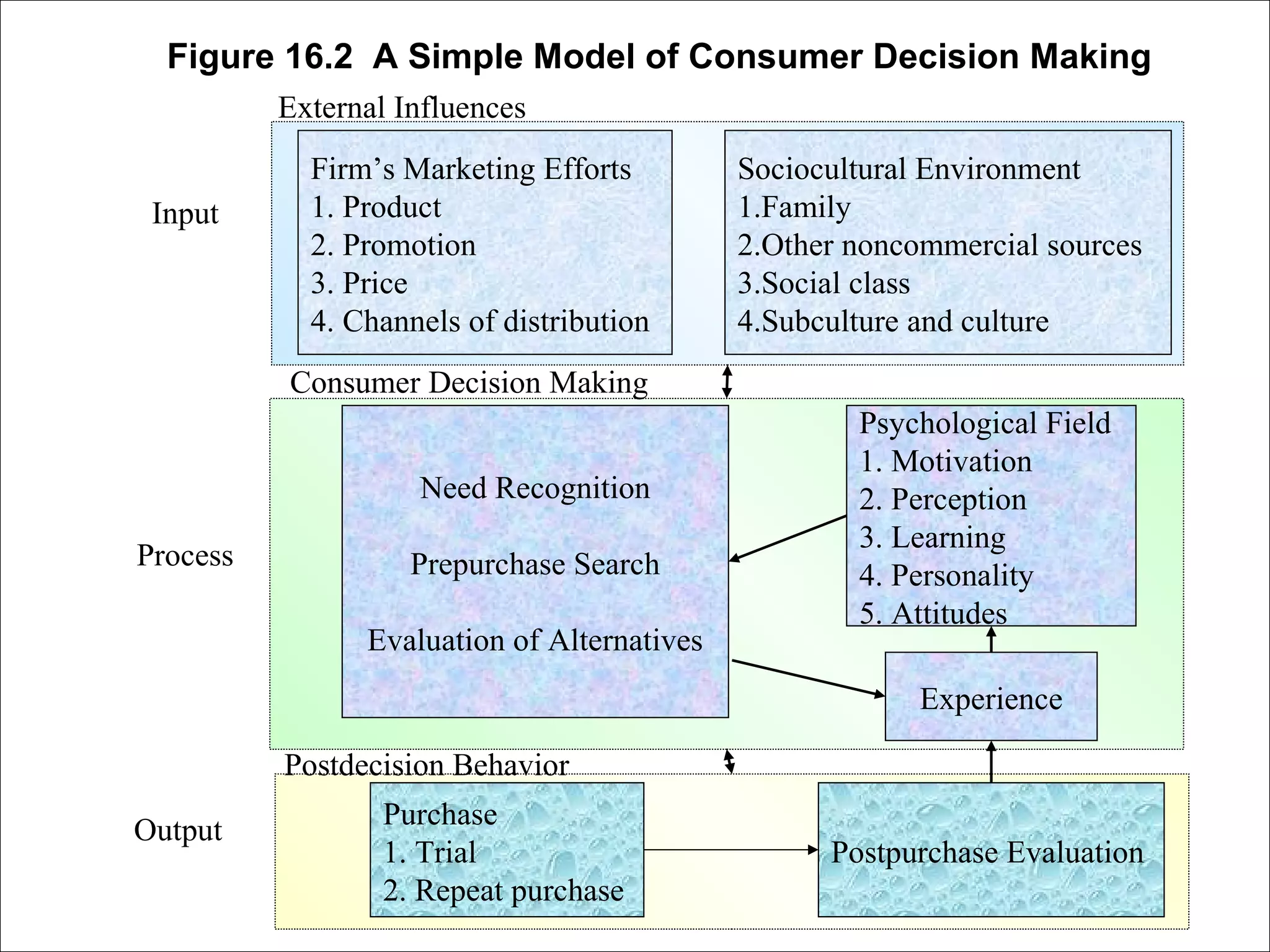
Figure 16.2 A Simple Model of Consumer Decision Making
External Influences
Input

Firm’s Marketing Efforts
1. Product
2. Promotion
3. Price
4. Channels of distribution

Sociocultural Environment
1.Family
2.Other noncommercial sources
3.Social class
4.Subculture and culture

Consumer Decision Making
Need Recognition
Process

Prepurchase Search
Evaluation of Alternatives

Psychological Field
1. Motivation
2. Perception
3. Learning
4. Personality
5. Attitudes
Experience

Postdecision Behavior
Output
16-5

Purchase
1. Trial
2. Repeat purchase

Postpurchase Evaluation
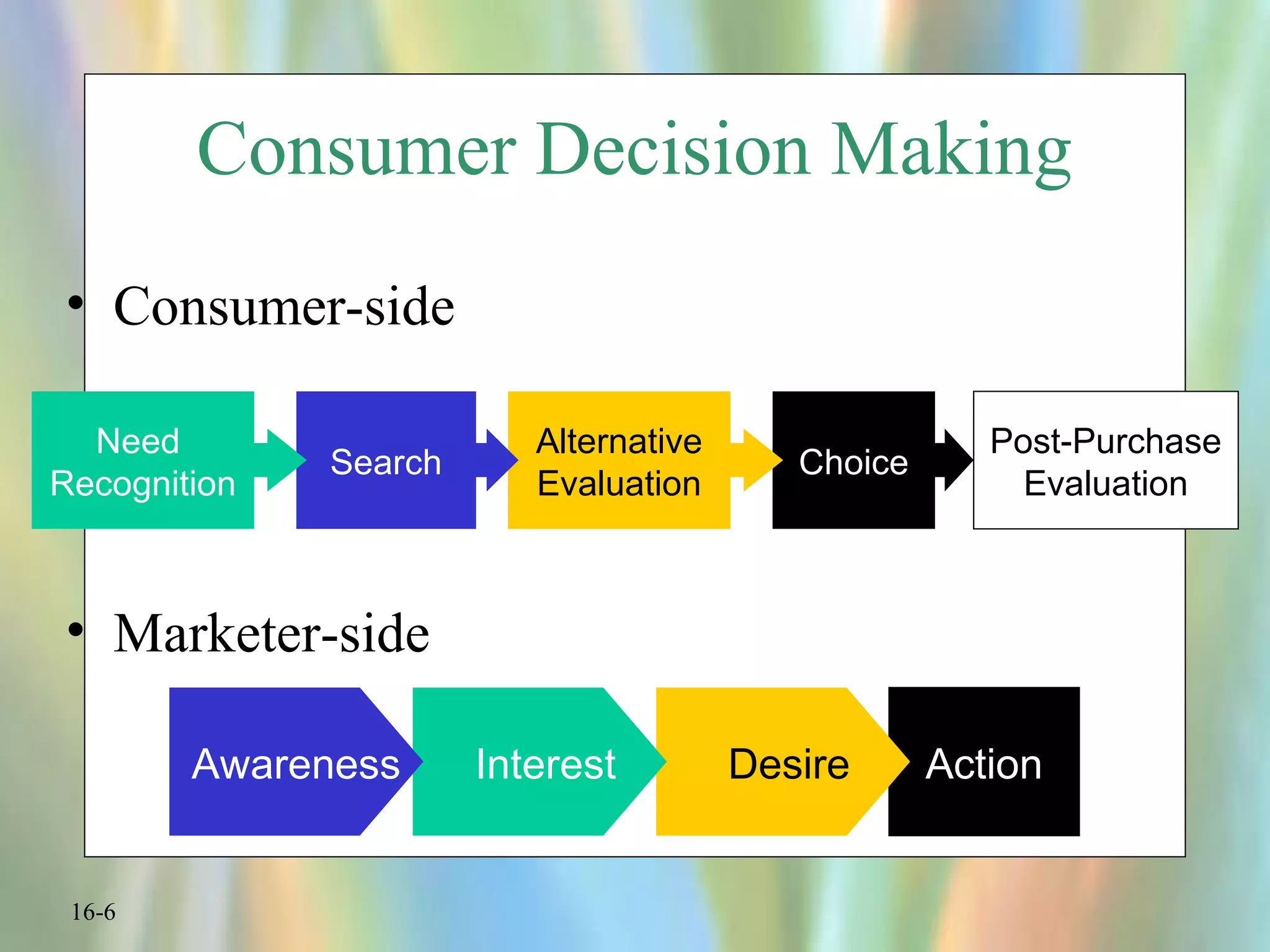
Consumer Decision Making
• Consumer-side
Need
Recognition

Search

Alternative
Evaluation

Choice

Post-Purchase
Evaluation

• Marketer-side
Awareness

16-6

Interest

Desire

Action
Need
Recognition

16-7

The realization by the
consumer that there is a
difference between “what is”
and “what should be.”
Prepurchase
Search

16-8

A stage in the consumer
decision-making process in
which the consumer
perceives a need and
actively seeks out
information concerning
products that will help
satisfy that need.
Pre-purchase
search

16-9
Evaluating Alternatives
Determine criteria to be used for
evaluation of products
Assess the relative importance of the
each criteria
Evaluate each alternative based on the
identified criteria
16-10
Evaluating Alternatives
• Criteria for the purchase of a car:
–
–
–
–
–
–
16-11

Space
Reliability
Safety
Longevity
Handling
Styling
Evaluating Alternatives
• Assessing Importance: ei
–
–
–
–
–
–

Space
Reliability
Safety
Longevity
Handling
Styling

5
4
4
3
3
2

* Importance: 5=Most Important, 1=Least Important
16-12
Evaluating Alternatives
• Beliefs Regarding Product Performance:
bi’s

Importance

ei

Subaru
Outback

Volvo
Cross Country

Space

5

4

2

4

Reliability

4

3

4

3

Safety

4

3

3

4

Longevity

3

2

4

4

Handling

3

1

4

2

Styling
16-13

Toyota
Sienna

2

2

4

3

Product Evaluation: 4=Excellent, 3=Very Good, 2=Good, 1=Fair
Cont…
• Product choice.
• Decision to buy the product/purchase
decision.
• Post-purchase Evaluation

16-14
Outcomes of Postpurchase
Evaluation
• Actual Performance Matches Expectations
• Actual Performance Exceeds Expectations
– Positive Disconfirmation of Expectations

• Performance is Below Expectations
– Negative Disconfirmation of Expectations

16-15
Types of Purchases
Trial
Purchases

Repeat
Purchases

Long-Term
Commitment
Purchases

16-16
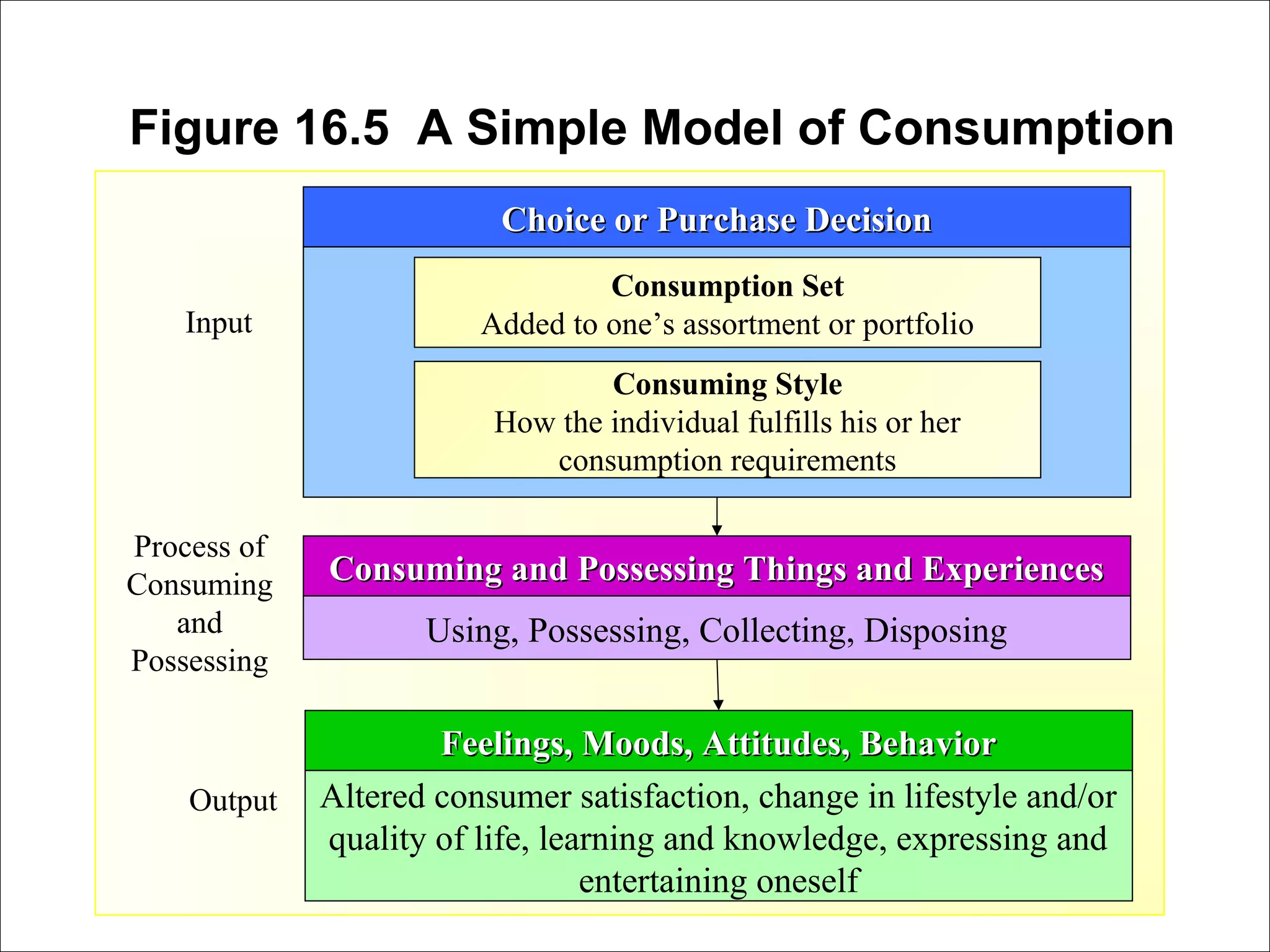
Figure 16.5 A Simple Model of Consumption
Choice or Purchase Decision
Input

Consumption Set
Added to one’s assortment or portfolio
Consuming Style
How the individual fulfills his or her
consumption requirements

Process of
Consuming
and
Possessing

Output

16-17

Consuming and Possessing Things and Experiences
Using, Possessing, Collecting, Disposing
Feelings, Moods, Attitudes, Behavior
Altered consumer satisfaction, change in lifestyle and/or
quality of life, learning and knowledge, expressing and
entertaining oneself

Consumer decision making process.

  • 1.
  • 2.
    Factors influencing thecustomer’s decision making process 16-2
  • 3.
    Models of Consumers:Four Views of Consumer Decision Making • • • • 16-3 An Economic View A Passive View A Cognitive View An Emotional View
  • 4.
    A Model ofConsumer Decision Making INPUT PROCESS OUTPUT 16-4
  • 5.
    Figure 16.2 ASimple Model of Consumer Decision Making External Influences Input Firm’s Marketing Efforts 1. Product 2. Promotion 3. Price 4. Channels of distribution Sociocultural Environment 1.Family 2.Other noncommercial sources 3.Social class 4.Subculture and culture Consumer Decision Making Need Recognition Process Prepurchase Search Evaluation of Alternatives Psychological Field 1. Motivation 2. Perception 3. Learning 4. Personality 5. Attitudes Experience Postdecision Behavior Output 16-5 Purchase 1. Trial 2. Repeat purchase Postpurchase Evaluation
  • 6.
    Consumer Decision Making •Consumer-side Need Recognition Search Alternative Evaluation Choice Post-Purchase Evaluation • Marketer-side Awareness 16-6 Interest Desire Action
  • 7.
    Need Recognition 16-7 The realization bythe consumer that there is a difference between “what is” and “what should be.”
  • 8.
    Prepurchase Search 16-8 A stage inthe consumer decision-making process in which the consumer perceives a need and actively seeks out information concerning products that will help satisfy that need.
  • 9.
  • 10.
    Evaluating Alternatives Determine criteriato be used for evaluation of products Assess the relative importance of the each criteria Evaluate each alternative based on the identified criteria 16-10
  • 11.
    Evaluating Alternatives • Criteriafor the purchase of a car: – – – – – – 16-11 Space Reliability Safety Longevity Handling Styling
  • 12.
    Evaluating Alternatives • AssessingImportance: ei – – – – – – Space Reliability Safety Longevity Handling Styling 5 4 4 3 3 2 * Importance: 5=Most Important, 1=Least Important 16-12
  • 13.
    Evaluating Alternatives • BeliefsRegarding Product Performance: bi’s Importance ei Subaru Outback Volvo Cross Country Space 5 4 2 4 Reliability 4 3 4 3 Safety 4 3 3 4 Longevity 3 2 4 4 Handling 3 1 4 2 Styling 16-13 Toyota Sienna 2 2 4 3 Product Evaluation: 4=Excellent, 3=Very Good, 2=Good, 1=Fair
  • 14.
    Cont… • Product choice. •Decision to buy the product/purchase decision. • Post-purchase Evaluation 16-14
  • 15.
    Outcomes of Postpurchase Evaluation •Actual Performance Matches Expectations • Actual Performance Exceeds Expectations – Positive Disconfirmation of Expectations • Performance is Below Expectations – Negative Disconfirmation of Expectations 16-15
  • 16.
  • 17.
    Figure 16.5 ASimple Model of Consumption Choice or Purchase Decision Input Consumption Set Added to one’s assortment or portfolio Consuming Style How the individual fulfills his or her consumption requirements Process of Consuming and Possessing Output 16-17 Consuming and Possessing Things and Experiences Using, Possessing, Collecting, Disposing Feelings, Moods, Attitudes, Behavior Altered consumer satisfaction, change in lifestyle and/or quality of life, learning and knowledge, expressing and entertaining oneself

Editor's Notes

  • #7 Insights – Subaru should have responded to my husband’s email and let him know they were developing a seven passenger car. The Toyota dealership should have let us test drive the car on our own. The Volvo dealership should have been more careful with how they handled the trade-in issue.