Decision making
and consumer behavior
by: Eyad Alghanem
INTRODUCTION
 The purchase is only the visible part of a
more complex decision process created by
the consumer for each buying decision he
makes.
 But what happens before and after this
purchase?
 What are the factors influencing the choice
of product purchased by the consumer?
 Let’s focus on the Consumer Buying Decision
Process and the stages that lead to
purchase a new product.
Five Factors
influencing
Decisions
 1. Level of consumer involvement
 2. Length of time to make decision
 3. Cost of good or service
 4. Degree of information search
 5. Number of alternatives considered
Consumer
involvement
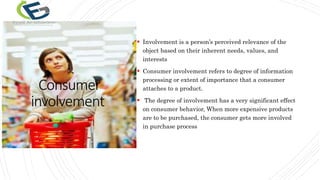
 Involvement is a person’s perceived relevance of the
object based on their inherent needs, values, and
interests
 Consumer involvement refers to degree of information
processing or extent of importance that a consumer
attaches to a product.
 The degree of involvement has a very significant effect
on consumer behavior, When more expensive products
are to be purchased, the consumer gets more involved
in purchase process
Types of involvement :
•
product involvement
•
Message involvement
•
Situational involvement
Decision making
The thought process of selecting a logical choice
from the available options When trying to make a
good decision, a person must weight the positives
and negatives of each option, and consider all the
alternatives. For effective decision making, a
person must be able to forecast the outcome of
each option as well, and based on all these items,
determine which option is the best for that
particular situation.
Categories of consumer
decision making:
• Cognitive
• Habitual
• Affective
Cognitive
decision
making
 A cognitive purchase decision is the
outcome of a series of stages that
results in the selection of one product
over competing options.
Stages in consumer
decision making
Problem recognition
Information search
Evaluation of alternatives
Product choice
Outcomes
• 1-Problem recognition:
Consumer sees the difference between his or her current state and ideal state
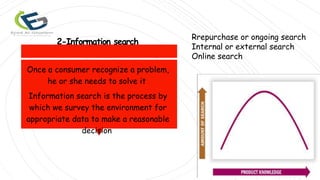
2-Information search
Once a consumer recognize a problem,
he or she needs to solve it
Information search is the process by
which we survey the environment for
appropriate data to make a reasonable
decision
Rrepurchase or ongoing search
Internal or external search
Online search
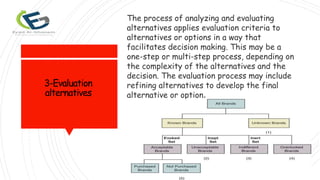
3-Evaluation
alternatives
The process of analyzing and evaluating
alternatives applies evaluation criteria to
alternatives or options in a way that
facilitates decision making. This may be a
one-step or multi-step process, depending on
the complexity of the alternatives and the
decision. The evaluation process may include
refining alternatives to develop the final
alternative or option.
Evaluation
alternatives
 Evaluative criteria :
Dimensions used to judge merits of competing
options
 determinant attributes :
Features we use to differentiate among our
choices
Strategic
implications of
product
categorization
 The way we categorize products has a lot of
strategic implications that’s because this process
affects which products consumers will compare
to our product and also the criteria they will use
to decide if they like us or other guys.
• Position a product
• Identify competitors
• Create an exemplar product
• Locate products in a store
Extensive
problem
solving
 With complex decision making
 We use noncompensatory decision rules
Elimination by aspects rule
Lexicographic rule
Conjunctive rule
4. Product
Choice
 Once we assemble and evaluate relevant options from
a category, we must choose among them Decision rules
can be very simple or very complicated Prior
experience with (similar) product Present information
at time of purchase Beliefs about brands (from
advertising)
5-Postpurchase
evaluation
 It occurs when we experience the product or service we
selected and decide whether it meets our expectations.
 Our overall reactions to a product after we have bought it
(consumer satisfaction/dissatisfaction).
 Consumer satisfaction can be defined as how well the
products actual performance met the perceived expectations.
A satisfied consumer is likely to become a regular and help in
creating a positive word of mouth reputation for the product.
Three possible outcomes are possible with regard to
satisfaction.
 – Disappointed : when product fails to match the expectations
 – Satisfied : performance meets the expected level
 – Delighted : performance is beyond the expected level
 The actual performance level has to be communicated
accurately to avoid misleading and ultimately dissatisfying
consumers.
Habitual decision
making
 Describes the choice we make with little or no
conscious effort, many purchase decisions are so
routine we may not realize we have made them until we
look in our shopping carts
Examples of routine purchases are the daily newspaper,
regular coffee order:
• Decision is make quickly
• Level of involvement in the selection process is
minimum
• Product is evaluated after the purchase
• Low cost goods
• High frequency of buying
• Consumer is likely to stay with one brand
Priming and
nudging
 Priming refers to environmental cues that influence us.
 A nudge is a subtle change that influences behavior.
 The default bias refers to a tendency for people to
comply with a requirement rather than to make the
effort not to comply.
Decision making
biases and
shortcuts
 Mental accounting helps to explain the way we post a
problem (called framing) and whether it is phrased in terms
of gains or losses influences our decision. The sunk-cost
fallacy says that having paid for something makes us
reluctant to waste it.
Heuristics
 1. Covariation means that we tend to assume certain attributes , we
may believe that a clean car is in good mechanical condition.
 2. Country of origin is a determinant attribute in the decision-
making process.
 a. Consumers strongly associate certain items with specific
countries and products from those countries benefit from these
linkages.
 b. The tendency to prefer products or people of one’s own culture
over those from another country is called ethnocentrism
 3. Familiar brand names is a short cut.
 4. Higher prices may indicate higher quality.
Effective
decision making
 We make some decision on the basis of an emotional
reaction rather than as the outcome of a rational
thought process.
Affective decision making occurs when our emotional
reactions determine how we react to a product,
marketers often try to elicit a positive emotional
response via advertising or other communication
channels so that consumers from a bond with their
offering.

Consumer behavior

  • 1.
    Decision making and consumerbehavior by: Eyad Alghanem
  • 2.
    INTRODUCTION  The purchaseis only the visible part of a more complex decision process created by the consumer for each buying decision he makes.  But what happens before and after this purchase?  What are the factors influencing the choice of product purchased by the consumer?  Let’s focus on the Consumer Buying Decision Process and the stages that lead to purchase a new product.
  • 3.
    Five Factors influencing Decisions  1.Level of consumer involvement  2. Length of time to make decision  3. Cost of good or service  4. Degree of information search  5. Number of alternatives considered
  • 4.
    Consumer involvement  Involvement isa person’s perceived relevance of the object based on their inherent needs, values, and interests  Consumer involvement refers to degree of information processing or extent of importance that a consumer attaches to a product.  The degree of involvement has a very significant effect on consumer behavior, When more expensive products are to be purchased, the consumer gets more involved in purchase process
  • 6.
    Types of involvement: • product involvement • Message involvement • Situational involvement
  • 8.
    Decision making The thoughtprocess of selecting a logical choice from the available options When trying to make a good decision, a person must weight the positives and negatives of each option, and consider all the alternatives. For effective decision making, a person must be able to forecast the outcome of each option as well, and based on all these items, determine which option is the best for that particular situation.
  • 9.
    Categories of consumer decisionmaking: • Cognitive • Habitual • Affective
  • 10.
    Cognitive decision making  A cognitivepurchase decision is the outcome of a series of stages that results in the selection of one product over competing options.
  • 11.
    Stages in consumer decisionmaking Problem recognition Information search Evaluation of alternatives Product choice Outcomes
  • 12.
    • 1-Problem recognition: Consumersees the difference between his or her current state and ideal state
  • 13.
    2-Information search Once aconsumer recognize a problem, he or she needs to solve it Information search is the process by which we survey the environment for appropriate data to make a reasonable decision Rrepurchase or ongoing search Internal or external search Online search
  • 14.
    3-Evaluation alternatives The process ofanalyzing and evaluating alternatives applies evaluation criteria to alternatives or options in a way that facilitates decision making. This may be a one-step or multi-step process, depending on the complexity of the alternatives and the decision. The evaluation process may include refining alternatives to develop the final alternative or option.
  • 15.
    Evaluation alternatives  Evaluative criteria: Dimensions used to judge merits of competing options  determinant attributes : Features we use to differentiate among our choices
  • 17.
    Strategic implications of product categorization  Theway we categorize products has a lot of strategic implications that’s because this process affects which products consumers will compare to our product and also the criteria they will use to decide if they like us or other guys. • Position a product • Identify competitors • Create an exemplar product • Locate products in a store
  • 18.
    Extensive problem solving  With complexdecision making  We use noncompensatory decision rules Elimination by aspects rule Lexicographic rule Conjunctive rule
  • 19.
    4. Product Choice  Oncewe assemble and evaluate relevant options from a category, we must choose among them Decision rules can be very simple or very complicated Prior experience with (similar) product Present information at time of purchase Beliefs about brands (from advertising)
  • 20.
    5-Postpurchase evaluation  It occurswhen we experience the product or service we selected and decide whether it meets our expectations.  Our overall reactions to a product after we have bought it (consumer satisfaction/dissatisfaction).  Consumer satisfaction can be defined as how well the products actual performance met the perceived expectations. A satisfied consumer is likely to become a regular and help in creating a positive word of mouth reputation for the product. Three possible outcomes are possible with regard to satisfaction.  – Disappointed : when product fails to match the expectations  – Satisfied : performance meets the expected level  – Delighted : performance is beyond the expected level  The actual performance level has to be communicated accurately to avoid misleading and ultimately dissatisfying consumers.
  • 21.
    Habitual decision making  Describesthe choice we make with little or no conscious effort, many purchase decisions are so routine we may not realize we have made them until we look in our shopping carts Examples of routine purchases are the daily newspaper, regular coffee order: • Decision is make quickly • Level of involvement in the selection process is minimum • Product is evaluated after the purchase • Low cost goods • High frequency of buying • Consumer is likely to stay with one brand
  • 22.
    Priming and nudging  Primingrefers to environmental cues that influence us.  A nudge is a subtle change that influences behavior.  The default bias refers to a tendency for people to comply with a requirement rather than to make the effort not to comply.
  • 23.
    Decision making biases and shortcuts Mental accounting helps to explain the way we post a problem (called framing) and whether it is phrased in terms of gains or losses influences our decision. The sunk-cost fallacy says that having paid for something makes us reluctant to waste it.
  • 24.
    Heuristics  1. Covariationmeans that we tend to assume certain attributes , we may believe that a clean car is in good mechanical condition.  2. Country of origin is a determinant attribute in the decision- making process.  a. Consumers strongly associate certain items with specific countries and products from those countries benefit from these linkages.  b. The tendency to prefer products or people of one’s own culture over those from another country is called ethnocentrism  3. Familiar brand names is a short cut.  4. Higher prices may indicate higher quality.
  • 25.
    Effective decision making  Wemake some decision on the basis of an emotional reaction rather than as the outcome of a rational thought process. Affective decision making occurs when our emotional reactions determine how we react to a product, marketers often try to elicit a positive emotional response via advertising or other communication channels so that consumers from a bond with their offering.