

Group no. 9 Schumpeter Hall Purchase Decision & Postpurchase Decision
AGENDA Purchase Decision Consumer Choice Intervening Factors Risk Involved Postpurchase Decision Behavior Action Use and disposal 12/20/2009 Group 9 PROTON business school
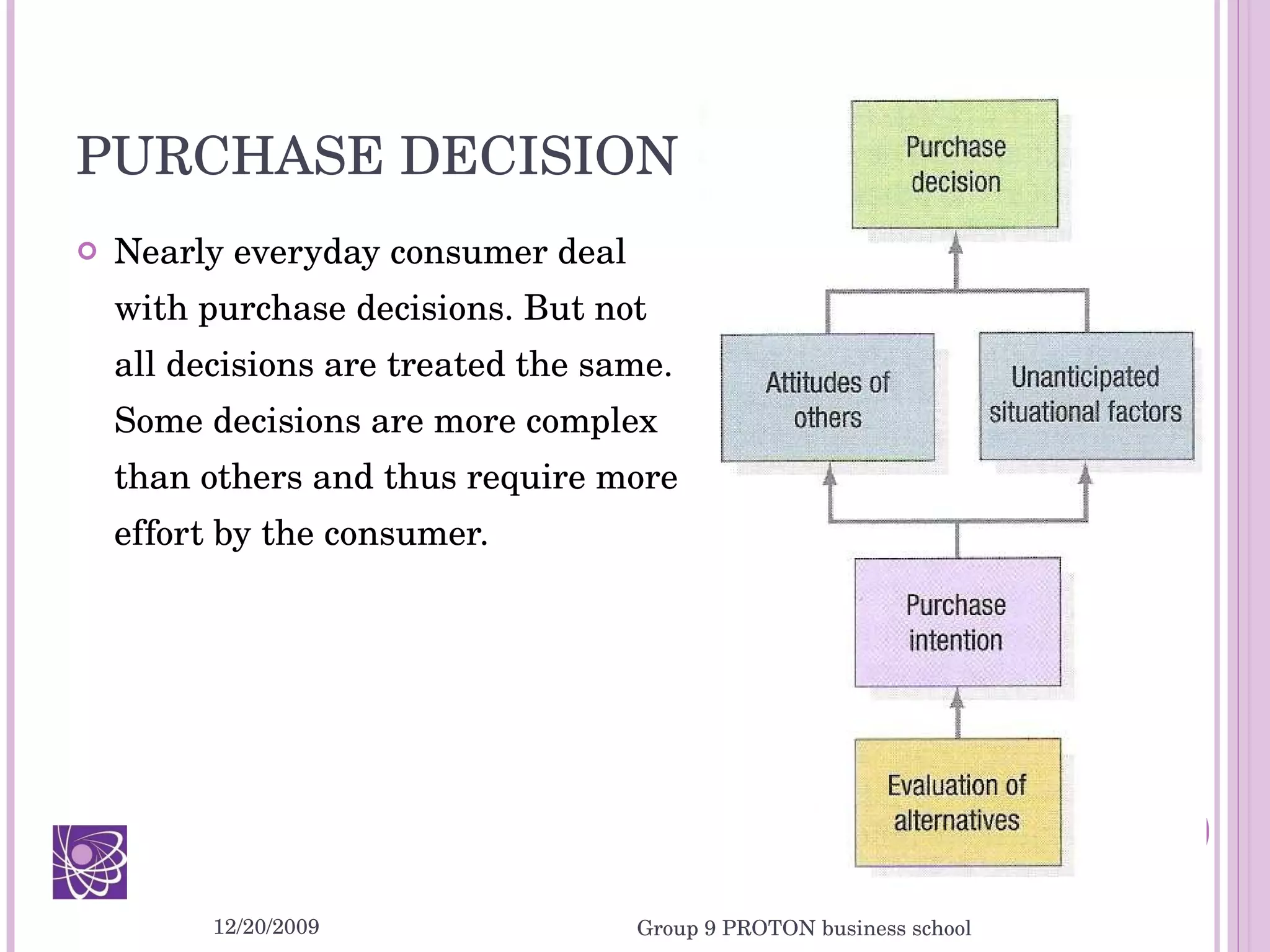
PURCHASE DECISION Nearly everyday consumer deal  with purchase decisions. But not  all decisions are treated the same.  Some decisions are more complex  than others and thus require more  effort by the consumer. 12/20/2009 Group 9 PROTON business school
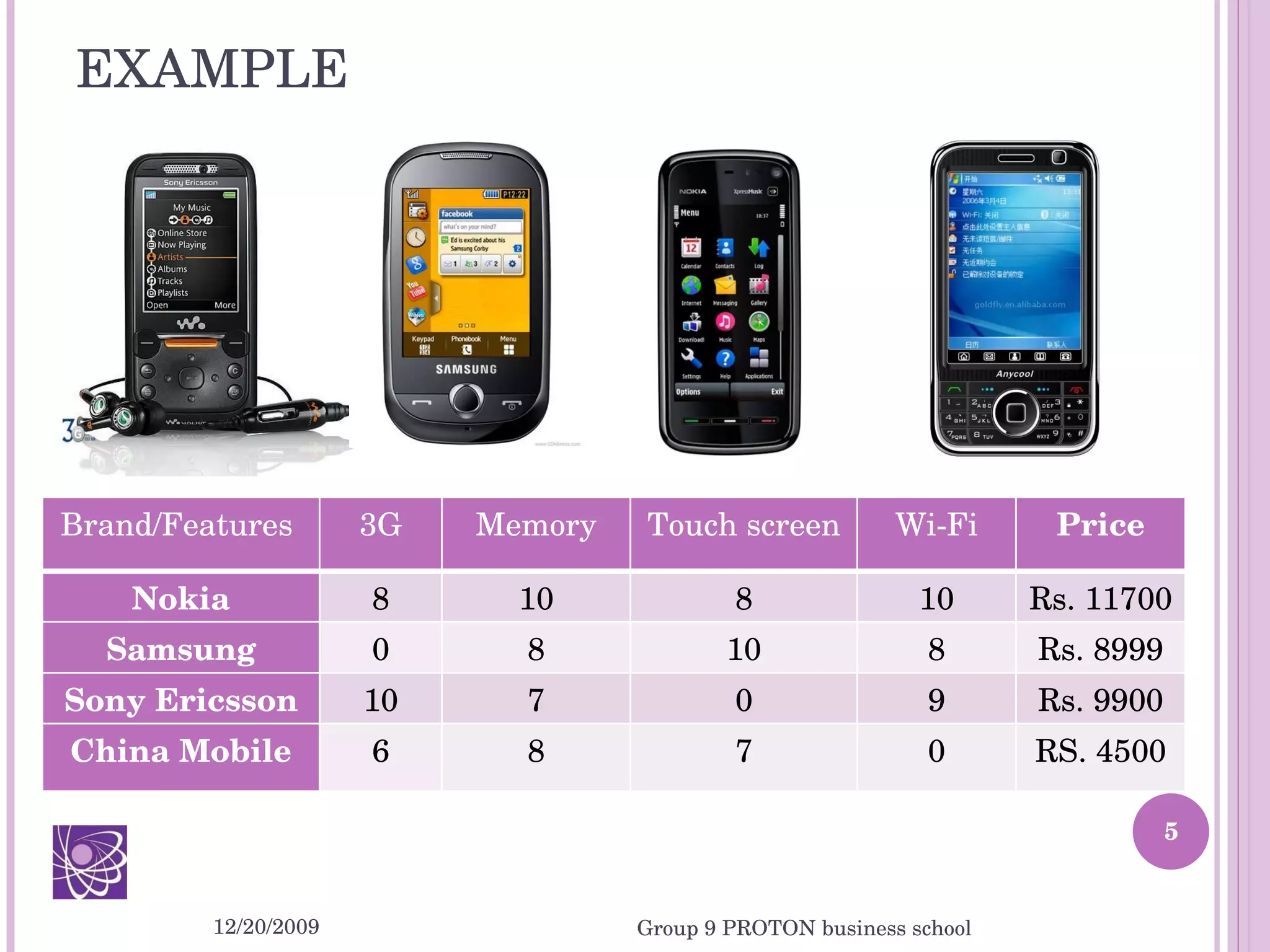
CONSUMER CHOICE Heuristics enables consumer to discover or learn something for themselves.  These are rules of thumb or “mental shortcuts” in the decision process. Conjunctive heuristic  Here consumer sets a minimum acceptable cutoff level for each attribute and chooses the best among them. Lexicographic heuristic  Consumer choose the best brand on the basis of the perceived most important attribute Elimination-by-aspects heuristic Consumer compares brands on an attribute selected probabilistically 12/20/2009 Group 9 PROTON business school
EXAMPLE 12/20/2009 Group 9 PROTON business school Brand/Features  3G Memory Touch screen Wi-Fi Price Nokia 8 10 8 10 Rs. 11700 Samsung 0 8 10 8 Rs. 8999 Sony Ericsson 10 7 0 9 Rs. 9900 China Mobile 6 8 7 0 RS. 4500
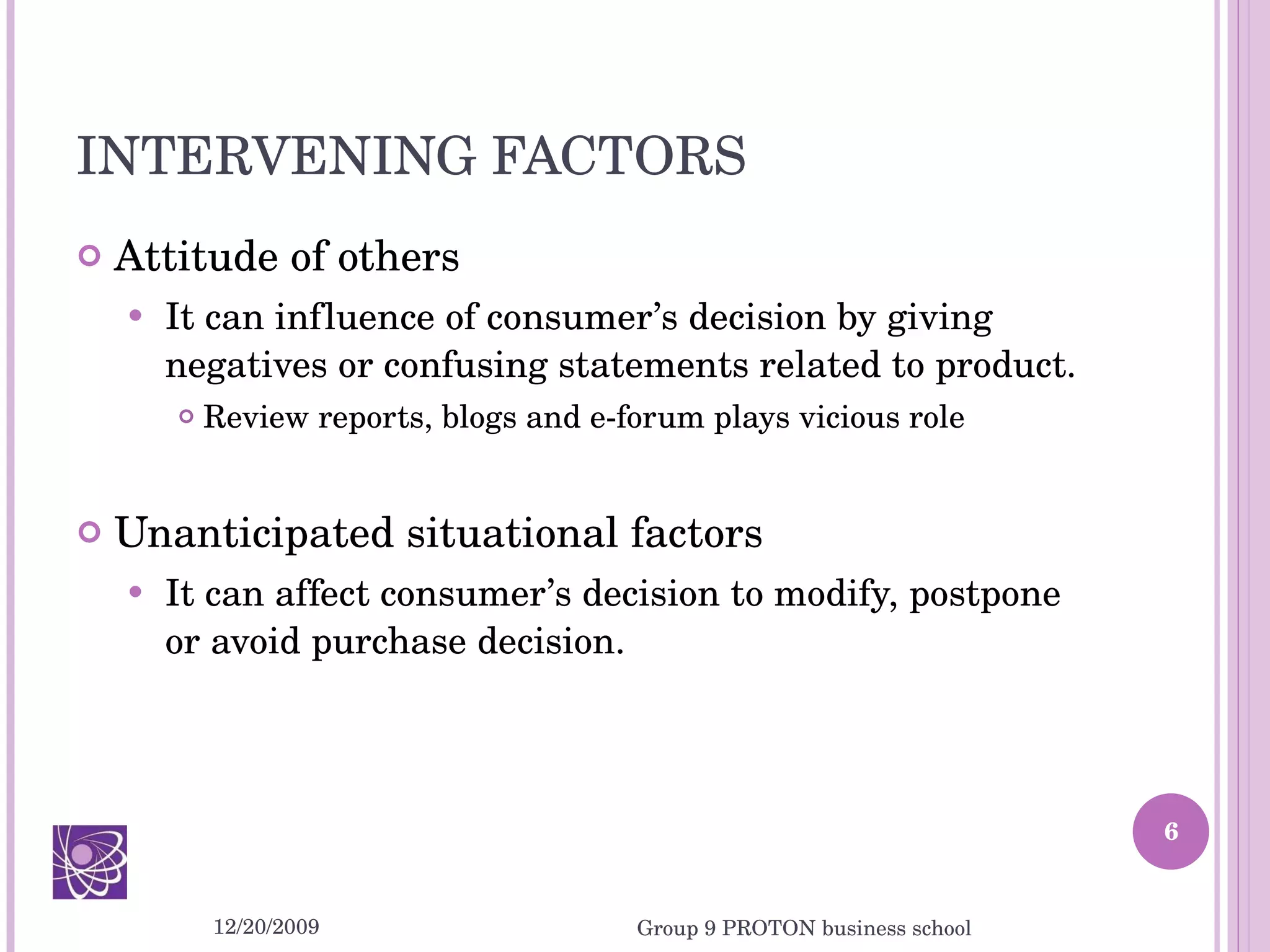
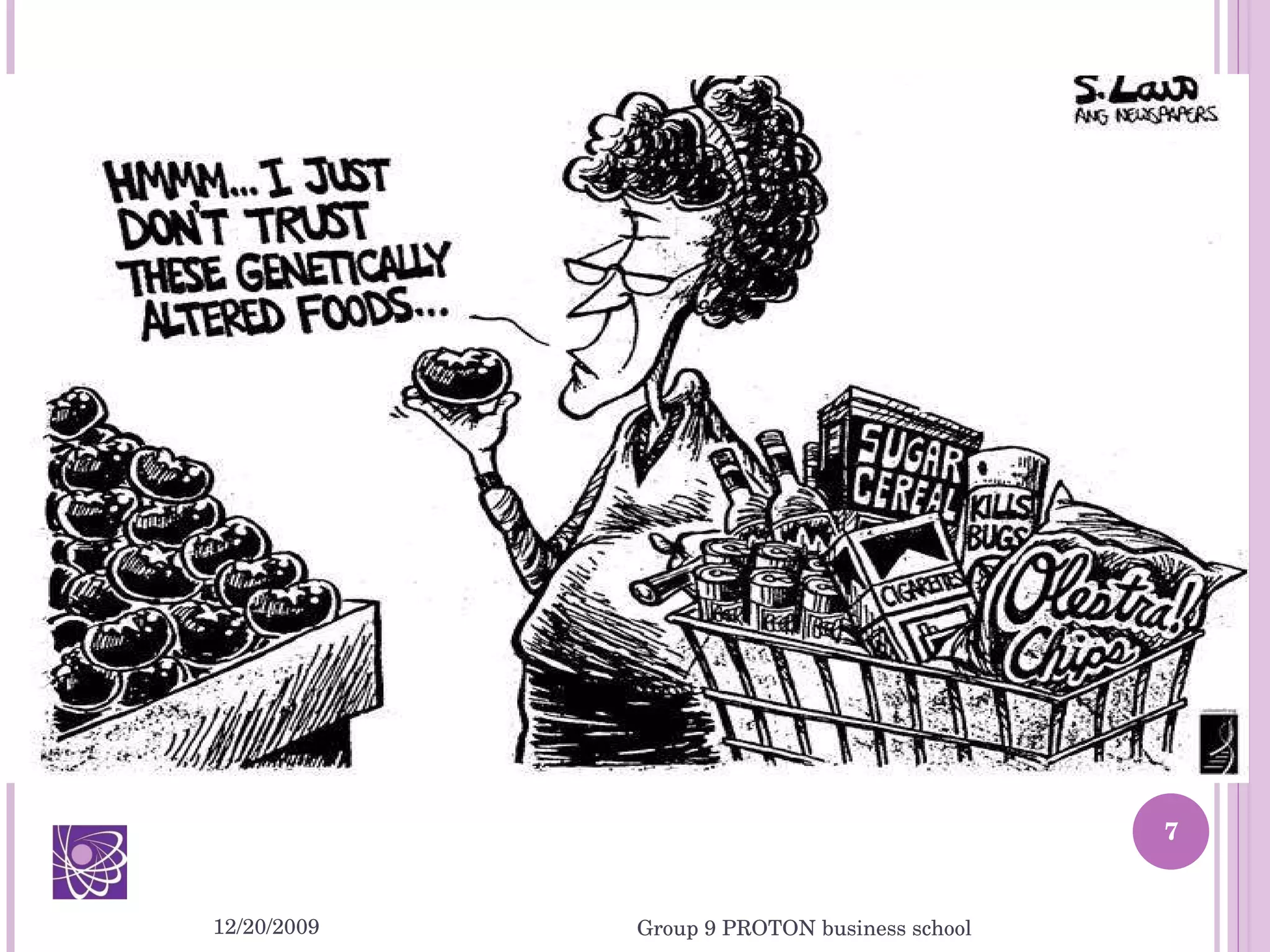
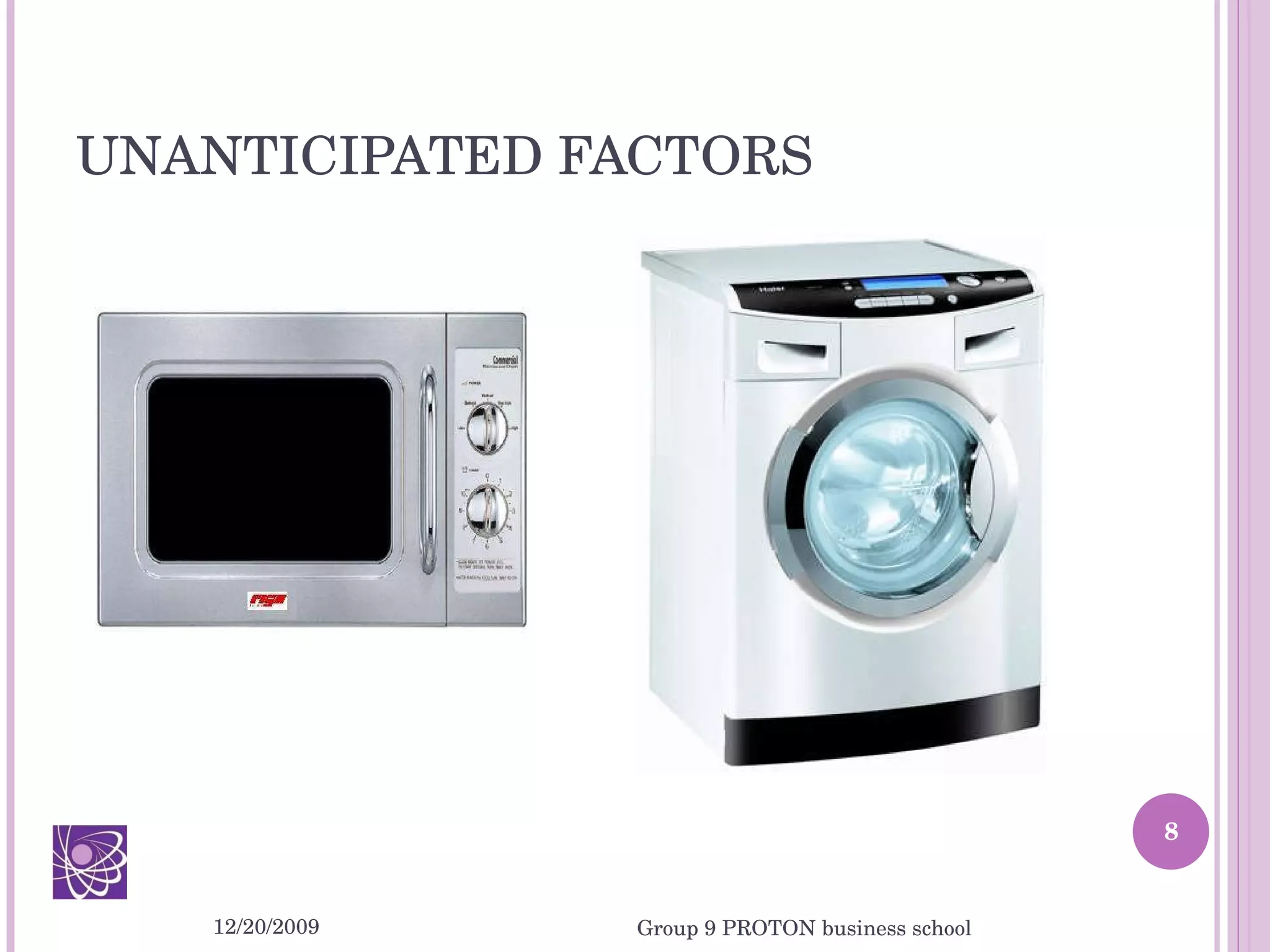
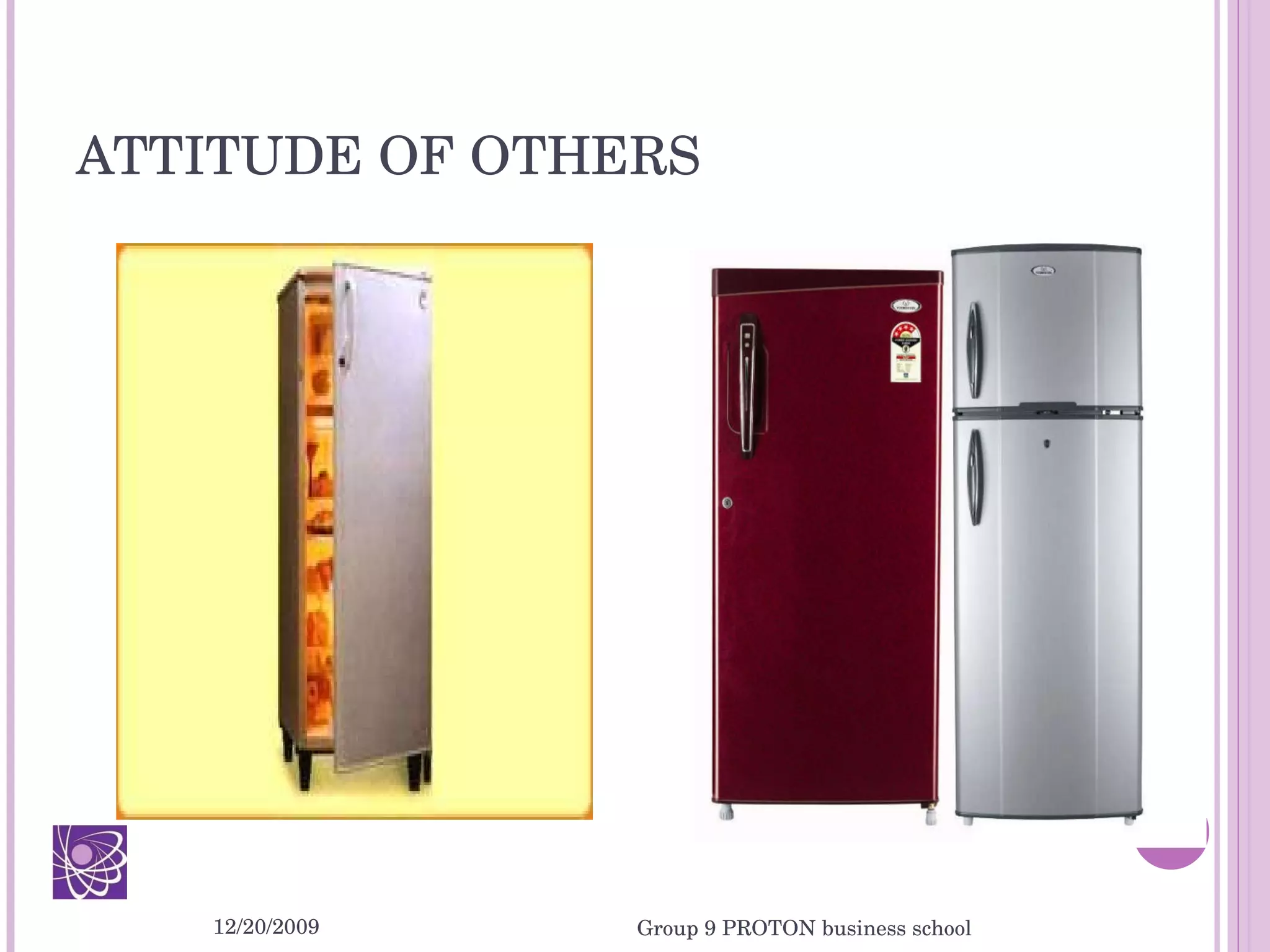
INTERVENING FACTORS Attitude of others It can influence of consumer’s decision by giving negatives or confusing statements related to product. Review reports, blogs and e-forum plays vicious role Unanticipated situational factors It can affect consumer’s decision to modify, postpone or avoid purchase decision. 12/20/2009 Group 9 PROTON business school
12/20/2009 Group 9 PROTON business school
UNANTICIPATED FACTORS 12/20/2009 Group 9 PROTON business school
ATTITUDE OF OTHERS 12/20/2009 Group 9 PROTON business school
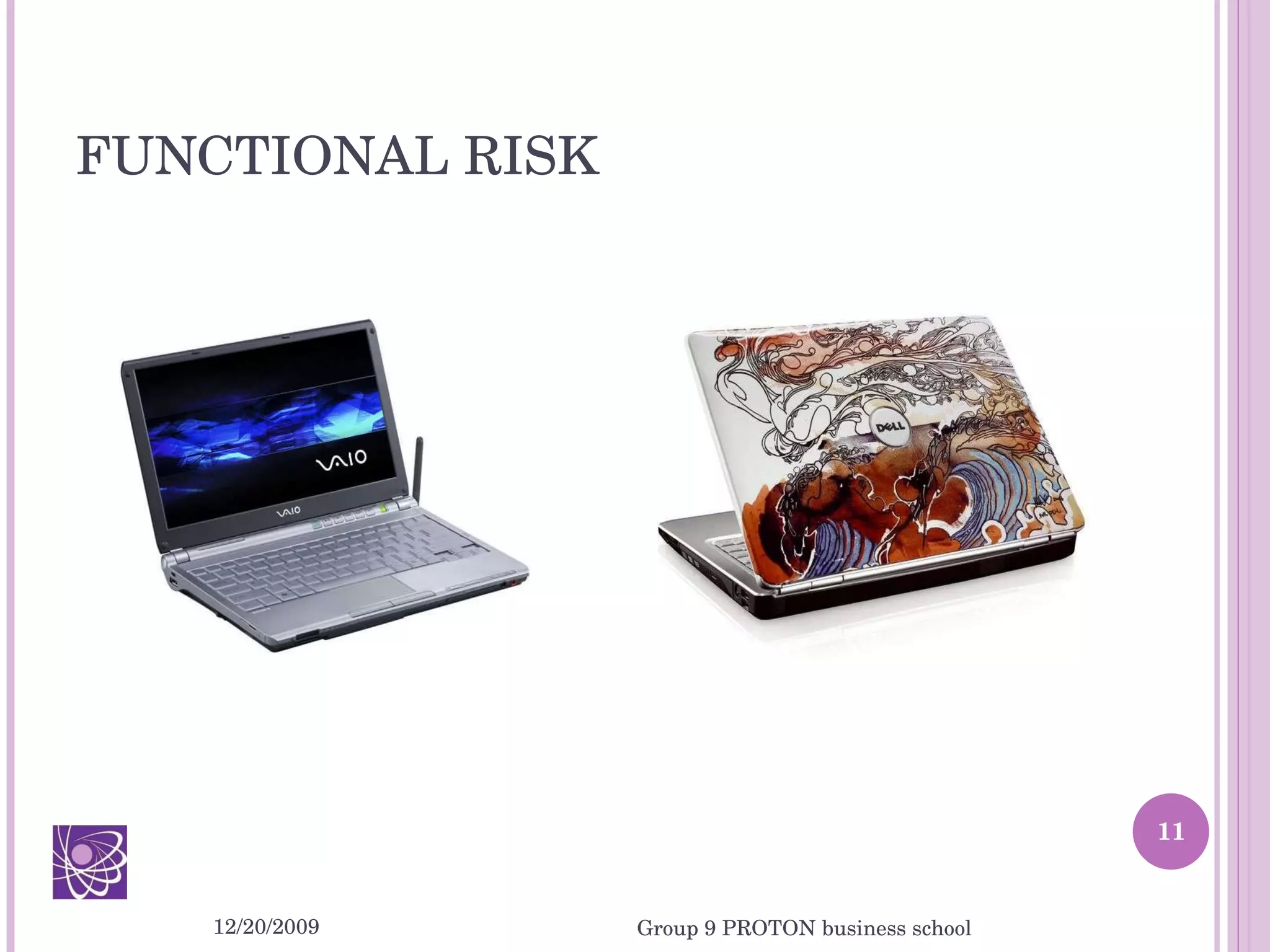
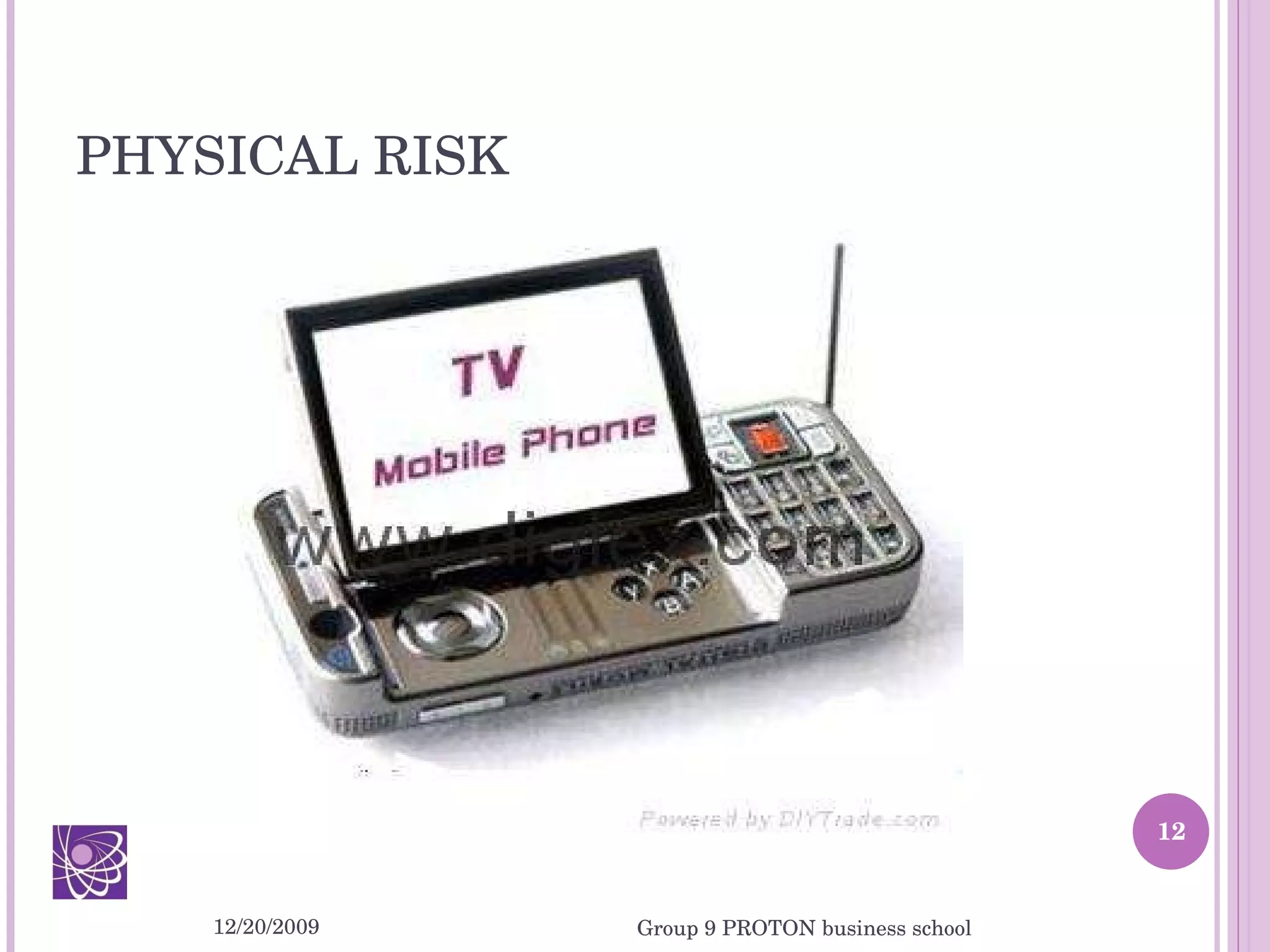
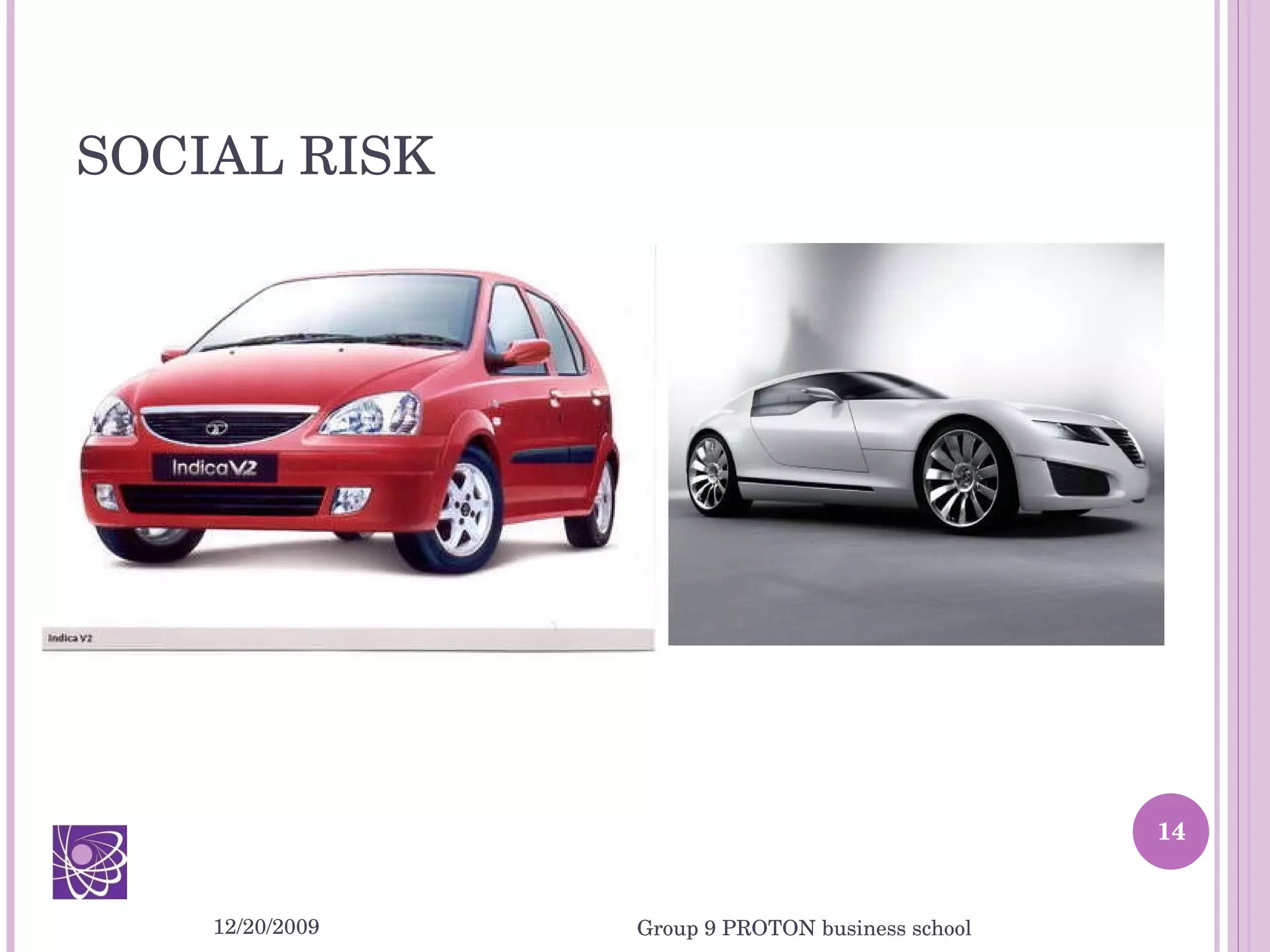
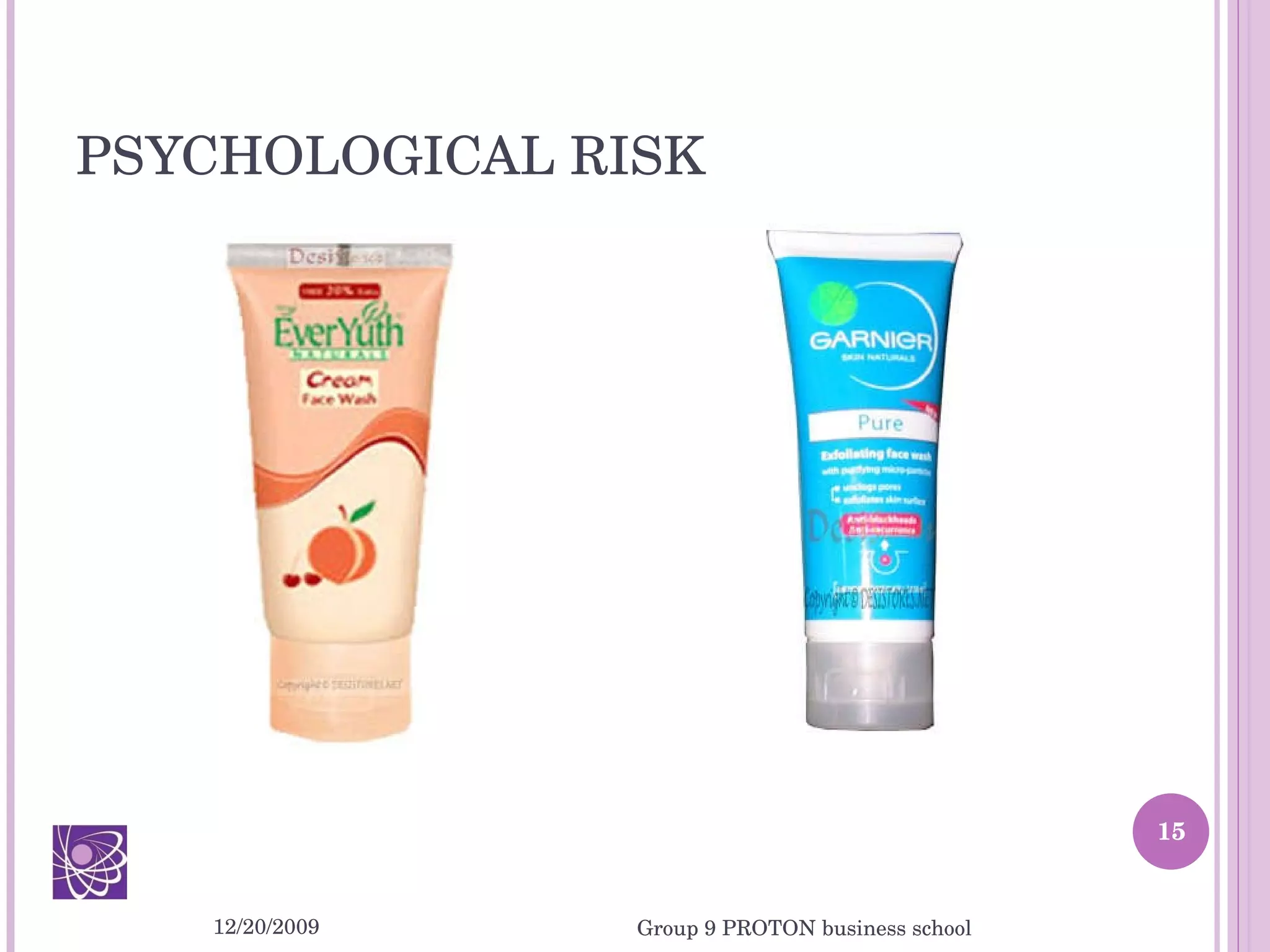
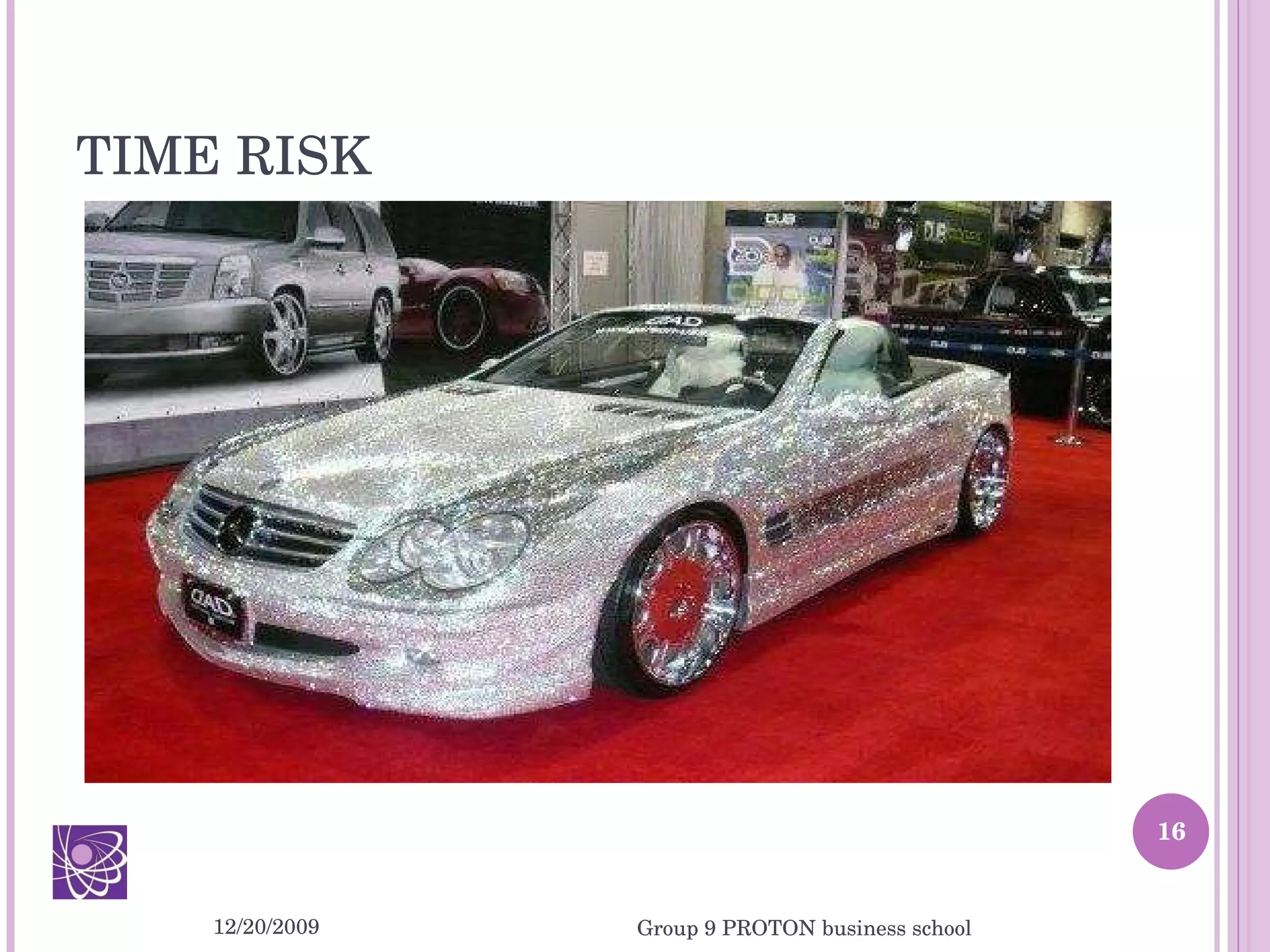
RISK INVOLVED A consumer’s decision to modify, postpone or avoid is heavily influenced by perceived risk. Functional Product does not perform up to expectations. Physical Product poses a threat to the physical well-being or health of the users or others. Financial Product is not worth the price paid  Social Product results in embarrassment from others Psychological Product affects the mental well being of the user Time Failure of the product results in an opportunity cost of finding another satisfactory products 12/20/2009 Group 9 PROTON business school
FUNCTIONAL RISK 12/20/2009 Group 9 PROTON business school
PHYSICAL RISK 12/20/2009 Group 9 PROTON business school
FINANCIAL RISK 12/20/2009 Group 9 PROTON business school
SOCIAL RISK 12/20/2009 Group 9 PROTON business school
PSYCHOLOGICAL RISK 12/20/2009 Group 9 PROTON business school
TIME RISK 12/20/2009 Group 9 PROTON business school
12/20/2009 Group 9 PROTON business school
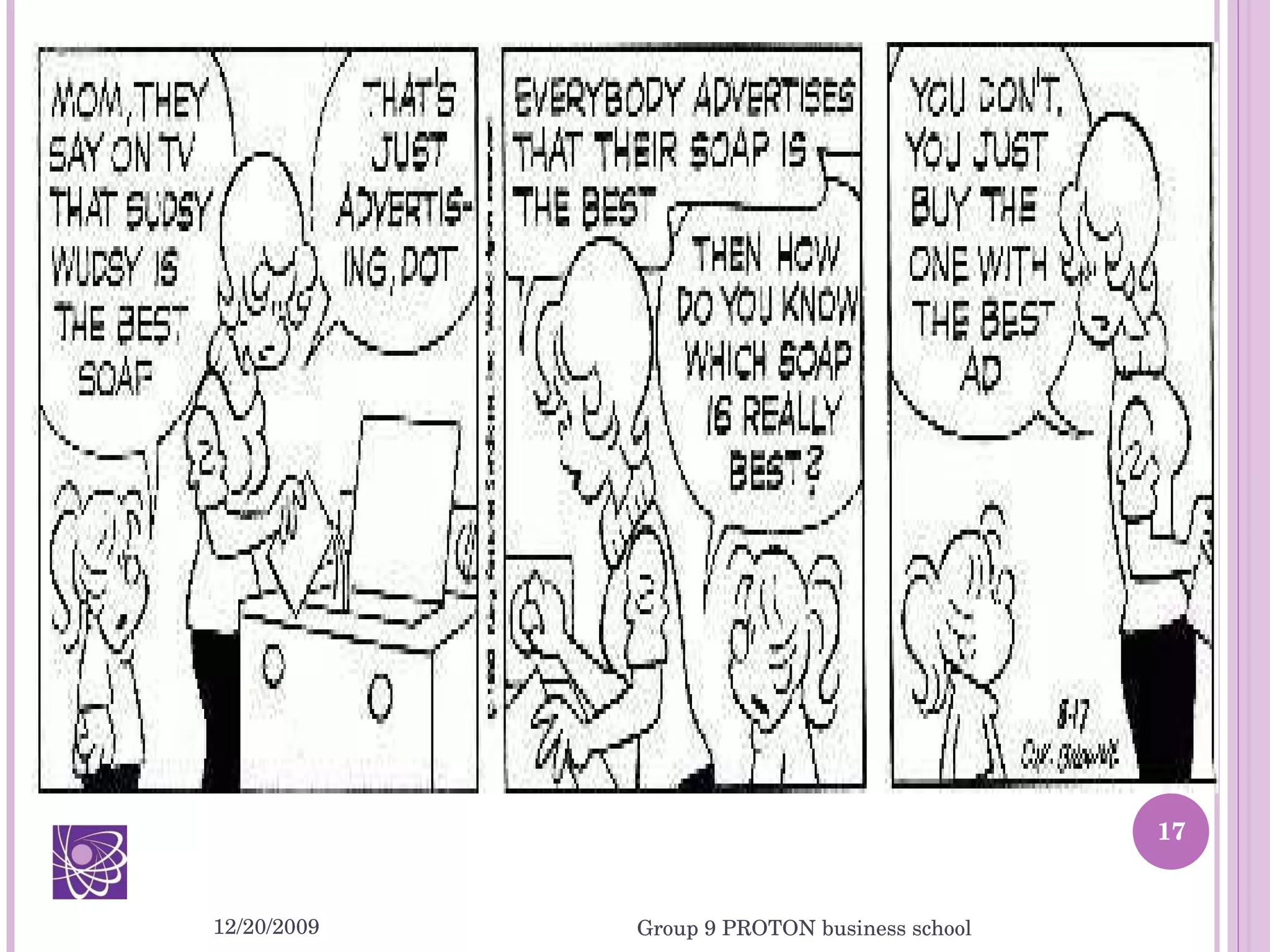
POSTPURCHASE BEHAVIOR After purchase the consumer might experience dissonance in his mind. Reasons Favorable things about other brands Rumors Marketer’s job therefore doesn’t end with the purchase. They must monitor : Satisfaction Actions Product usage 12/20/2009 Group 9 PROTON business school
12/20/2009 Group 9 PROTON business school
POSTPURCHASE SATISFACTION These feelings make a difference in whether customer buys the product again and talks favorably about it.  If performance falls short of expectations consumer gets disappointed. If it meets expectations, consumer gets satisfied. If it exceeds expectations, consumer is delighted. 12/20/2009 Group 9 PROTON business school
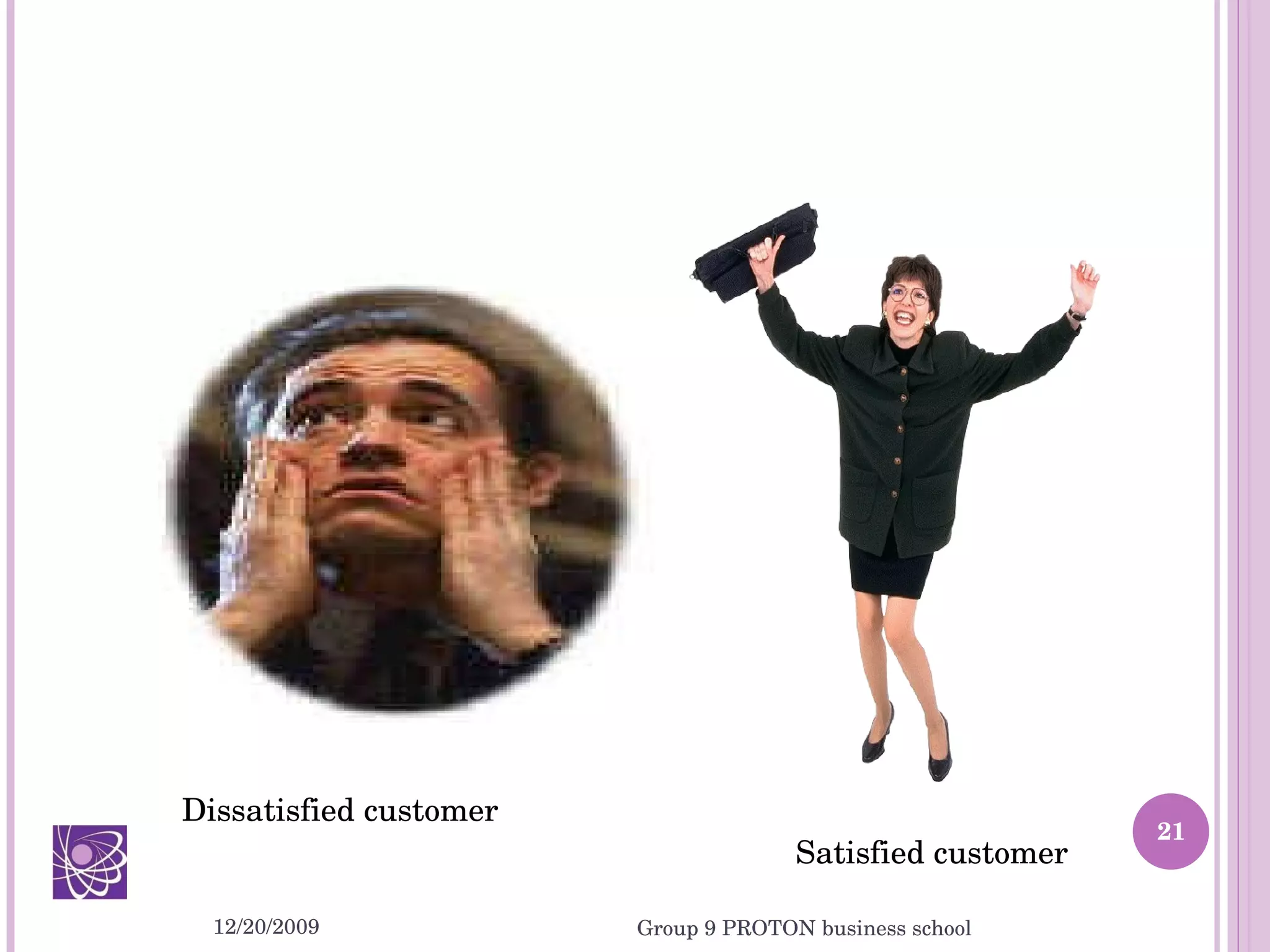
12/20/2009 Group 9 PROTON business school Dissatisfied customer Satisfied customer
POSTPURCHASE ACTIONS Strong consumer relationship should be maintained by : Keep in touch with consumers and give them information about upgradation or arrival of new products By accepting negative as well as positive feedbacks 12/20/2009 Group 9 PROTON business school
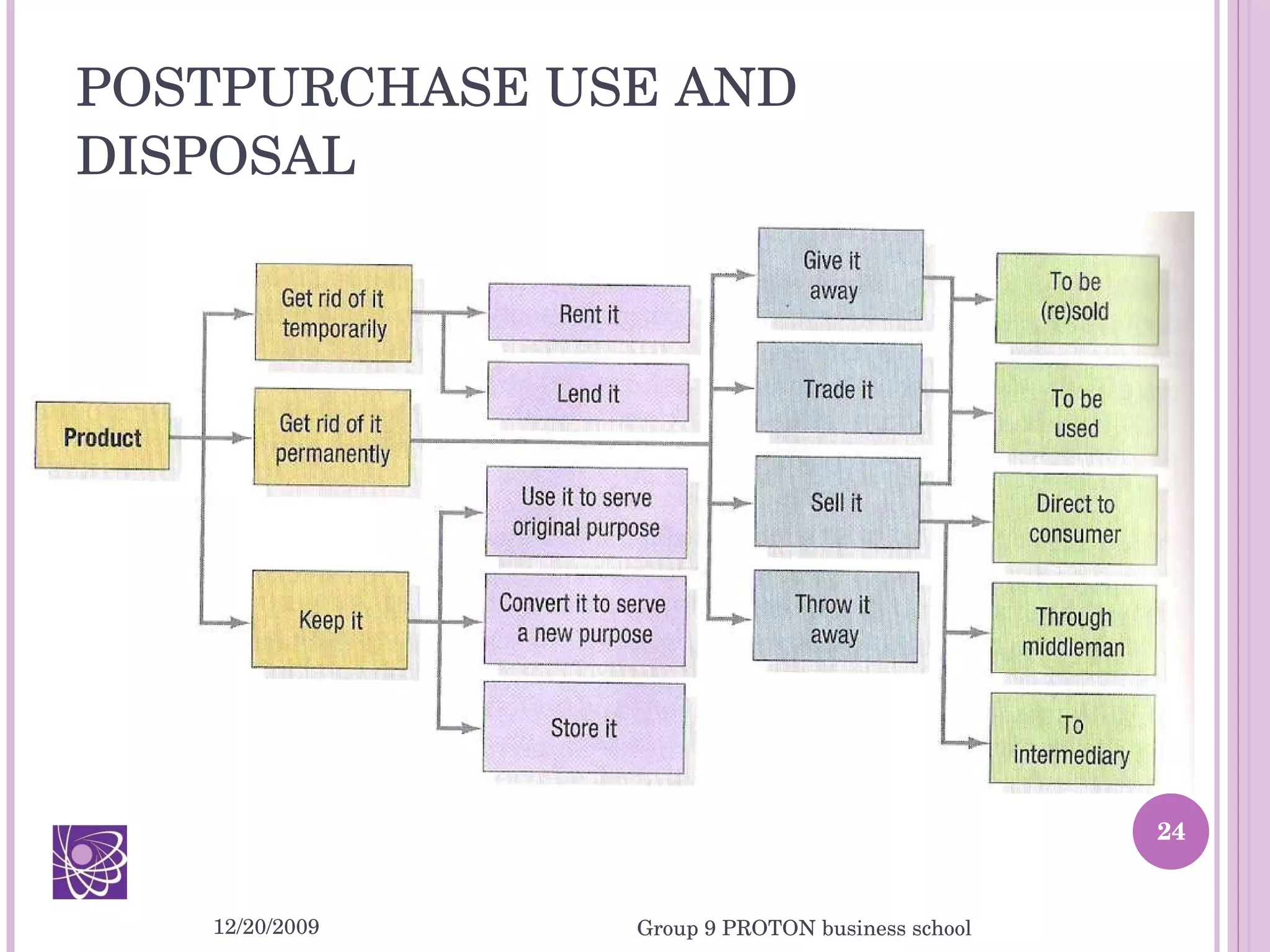
POSTPURCHASE USE AND DISPOSAL Here the marketers must monitor how consumer is using the product and what is the life cycle of the product. They should monitor : When consumer first use the product or need to replace it. Its current level of performance 12/20/2009 Group 9 PROTON business school
POSTPURCHASE USE AND DISPOSAL 12/20/2009 Group 9 PROTON business school
THANK YOU Group 9 Schumpeter Hall 12/20/2009 Group 9 PROTON business school

Purchase Decision (Marketing)

  • 1.
    Group no. 9Schumpeter Hall Purchase Decision & Postpurchase Decision
  • 2.
    AGENDA Purchase DecisionConsumer Choice Intervening Factors Risk Involved Postpurchase Decision Behavior Action Use and disposal 12/20/2009 Group 9 PROTON business school
  • 3.
    PURCHASE DECISION Nearlyeveryday consumer deal with purchase decisions. But not all decisions are treated the same. Some decisions are more complex than others and thus require more effort by the consumer. 12/20/2009 Group 9 PROTON business school
  • 4.
    CONSUMER CHOICE Heuristicsenables consumer to discover or learn something for themselves. These are rules of thumb or “mental shortcuts” in the decision process. Conjunctive heuristic Here consumer sets a minimum acceptable cutoff level for each attribute and chooses the best among them. Lexicographic heuristic Consumer choose the best brand on the basis of the perceived most important attribute Elimination-by-aspects heuristic Consumer compares brands on an attribute selected probabilistically 12/20/2009 Group 9 PROTON business school
  • 5.
    EXAMPLE 12/20/2009 Group9 PROTON business school Brand/Features 3G Memory Touch screen Wi-Fi Price Nokia 8 10 8 10 Rs. 11700 Samsung 0 8 10 8 Rs. 8999 Sony Ericsson 10 7 0 9 Rs. 9900 China Mobile 6 8 7 0 RS. 4500
  • 6.
    INTERVENING FACTORS Attitudeof others It can influence of consumer’s decision by giving negatives or confusing statements related to product. Review reports, blogs and e-forum plays vicious role Unanticipated situational factors It can affect consumer’s decision to modify, postpone or avoid purchase decision. 12/20/2009 Group 9 PROTON business school
  • 7.
    12/20/2009 Group 9PROTON business school
  • 8.
    UNANTICIPATED FACTORS 12/20/2009Group 9 PROTON business school
  • 9.
    ATTITUDE OF OTHERS12/20/2009 Group 9 PROTON business school
  • 10.
    RISK INVOLVED Aconsumer’s decision to modify, postpone or avoid is heavily influenced by perceived risk. Functional Product does not perform up to expectations. Physical Product poses a threat to the physical well-being or health of the users or others. Financial Product is not worth the price paid Social Product results in embarrassment from others Psychological Product affects the mental well being of the user Time Failure of the product results in an opportunity cost of finding another satisfactory products 12/20/2009 Group 9 PROTON business school
  • 11.
    FUNCTIONAL RISK 12/20/2009Group 9 PROTON business school
  • 12.
    PHYSICAL RISK 12/20/2009Group 9 PROTON business school
  • 13.
    FINANCIAL RISK 12/20/2009Group 9 PROTON business school
  • 14.
    SOCIAL RISK 12/20/2009Group 9 PROTON business school
  • 15.
    PSYCHOLOGICAL RISK 12/20/2009Group 9 PROTON business school
  • 16.
    TIME RISK 12/20/2009Group 9 PROTON business school
  • 17.
    12/20/2009 Group 9PROTON business school
  • 18.
    POSTPURCHASE BEHAVIOR Afterpurchase the consumer might experience dissonance in his mind. Reasons Favorable things about other brands Rumors Marketer’s job therefore doesn’t end with the purchase. They must monitor : Satisfaction Actions Product usage 12/20/2009 Group 9 PROTON business school
  • 19.
    12/20/2009 Group 9PROTON business school
  • 20.
    POSTPURCHASE SATISFACTION Thesefeelings make a difference in whether customer buys the product again and talks favorably about it. If performance falls short of expectations consumer gets disappointed. If it meets expectations, consumer gets satisfied. If it exceeds expectations, consumer is delighted. 12/20/2009 Group 9 PROTON business school
  • 21.
    12/20/2009 Group 9PROTON business school Dissatisfied customer Satisfied customer
  • 22.
    POSTPURCHASE ACTIONS Strongconsumer relationship should be maintained by : Keep in touch with consumers and give them information about upgradation or arrival of new products By accepting negative as well as positive feedbacks 12/20/2009 Group 9 PROTON business school
  • 23.
    POSTPURCHASE USE ANDDISPOSAL Here the marketers must monitor how consumer is using the product and what is the life cycle of the product. They should monitor : When consumer first use the product or need to replace it. Its current level of performance 12/20/2009 Group 9 PROTON business school
  • 24.
    POSTPURCHASE USE ANDDISPOSAL 12/20/2009 Group 9 PROTON business school
  • 25.
    THANK YOU Group9 Schumpeter Hall 12/20/2009 Group 9 PROTON business school