VMV COMMERCE, JMT ARTS & JJP SCIENCE
COLLEGE
(Institute of Computer Studies and Research)
Wardhaman Nagar, Nagpur-08

Created By:Harshad D. Umredkar
MCA-II (Sem-II)
2013-14
1
Introduction
DCS

Models
Conclusion

2




Processors->Communication Network->Local
memory/Peripherals

Resources: Local
 Remote

3






Minicomputer Model
Workstation Model
Workstation Server Model
Processor Pool Model
Hybrid Model

4




Extension of the centralized time sharing
system.
few minicomputers



Remote access to other minicomputers.



resource sharing with remote users is desired.

5
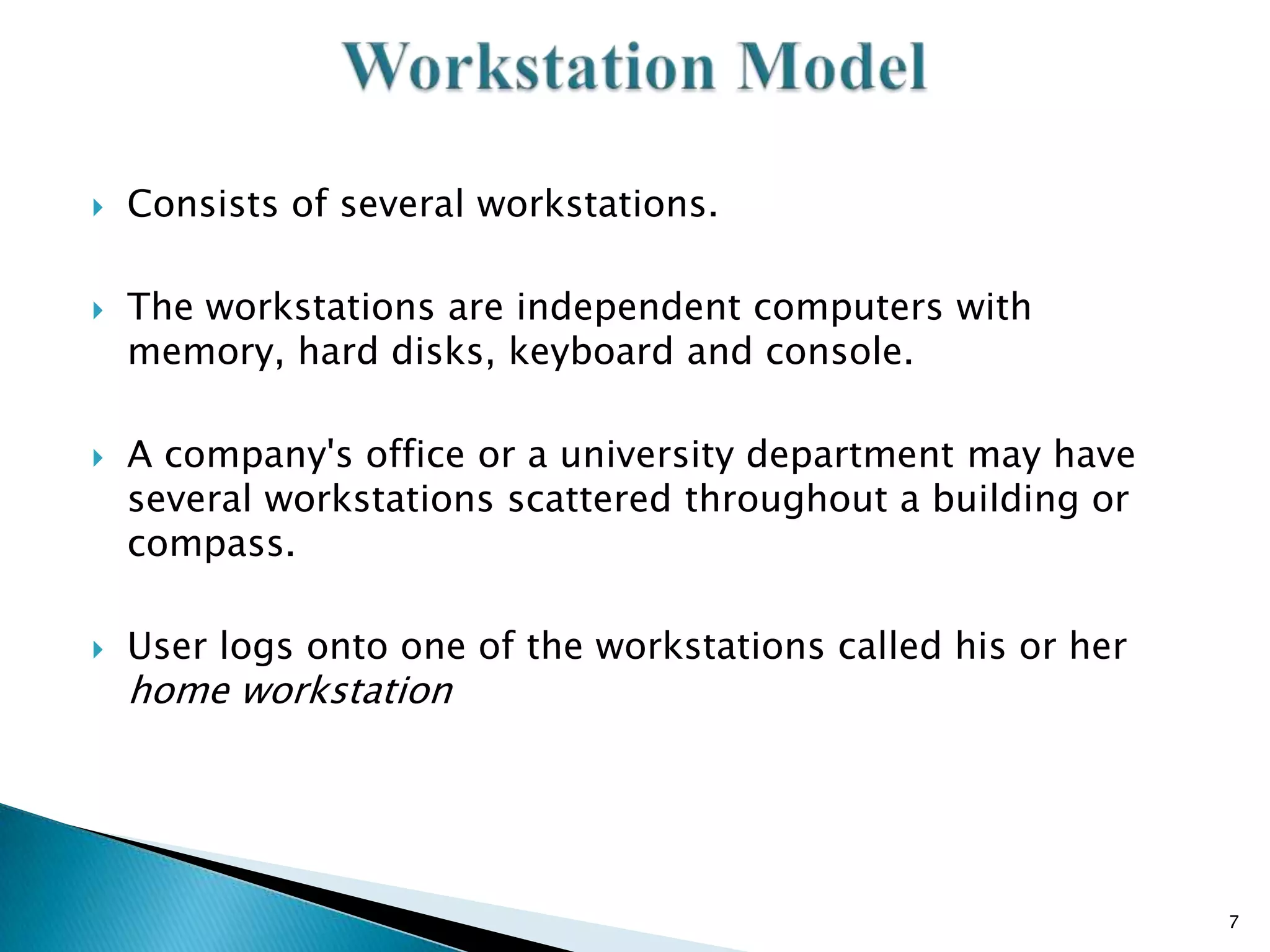
The distributed system based on minicomputer model

6








Consists of several workstations.
The workstations are independent computers with
memory, hard disks, keyboard and console.
A company's office or a university department may have
several workstations scattered throughout a building or
compass.
User logs onto one of the workstations called his or her

home workstation

7
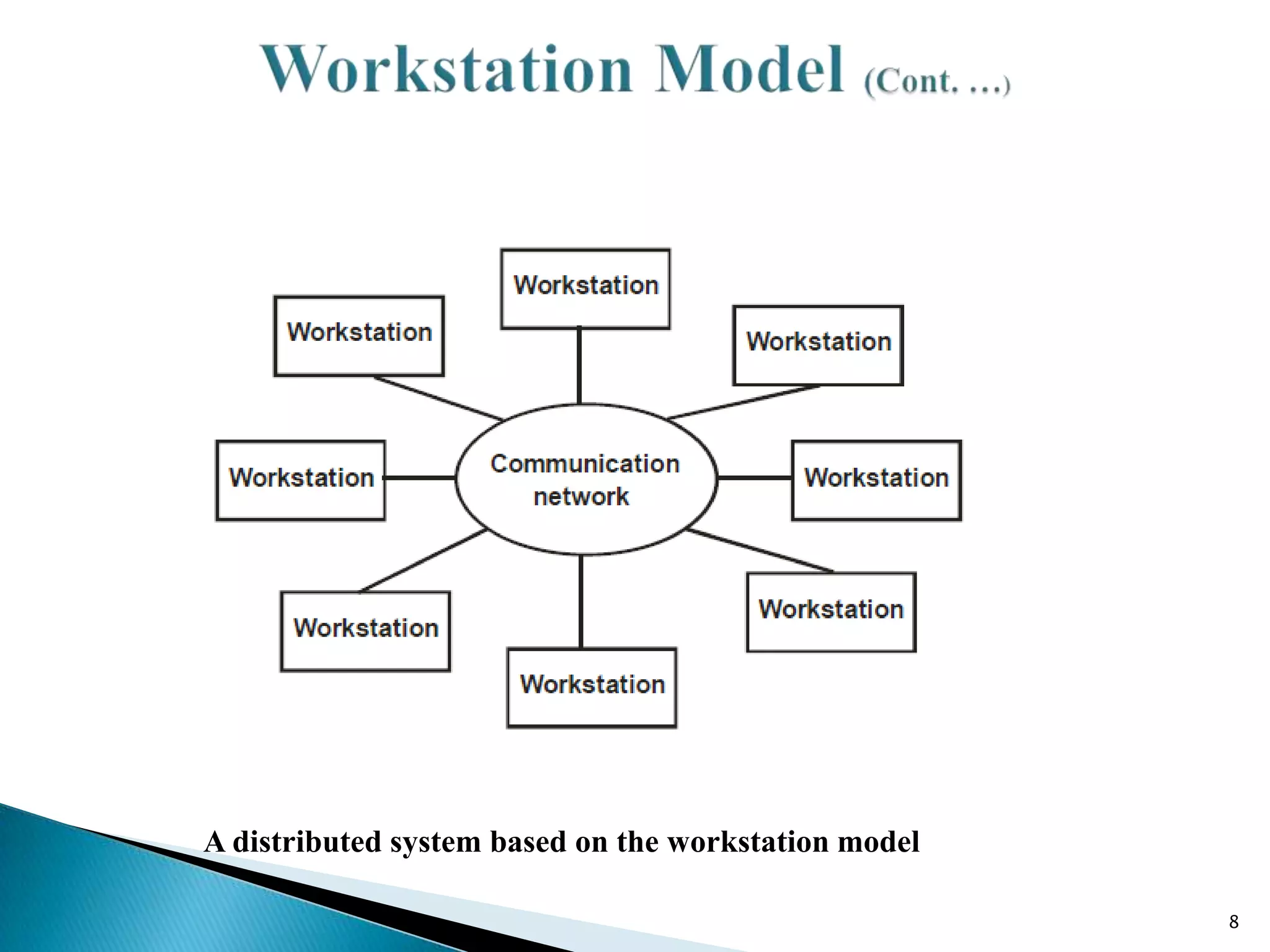
A distributed system based on the workstation model
8
This model is not so simple to implement because
several issues must be resolved. These issues are
as follows:
Idle workstation
How is a process transferred from one workstation to
get it executed on another workstation
a workstation that was idle until now and was being
used

9


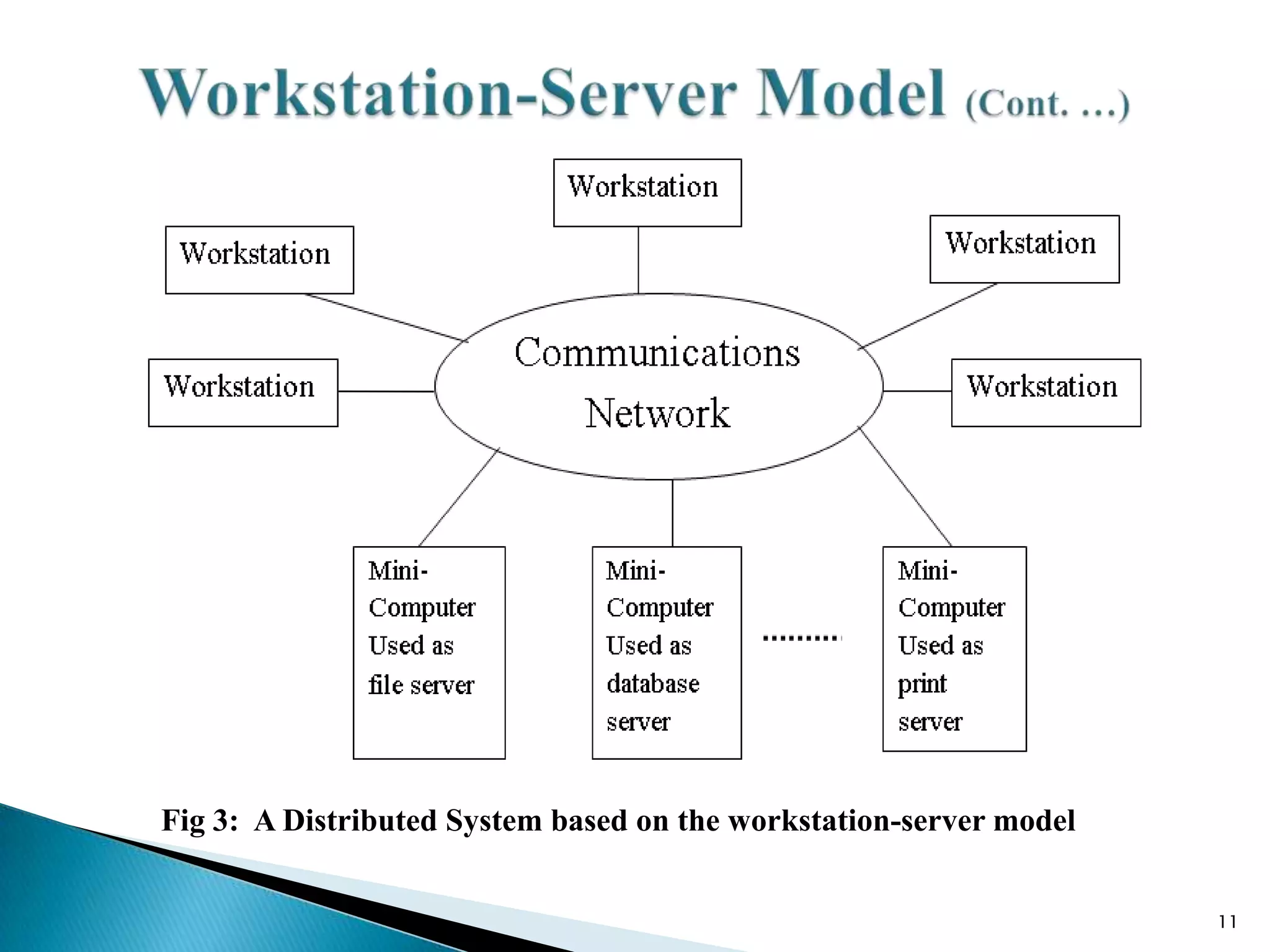
few minicomputers and several workstations
interconnected
◦ Diskfull Workstation
◦ Diskless Workstation



types of services, such as database service and print service

10
Fig 3: A Distributed System based on the workstation-server model
11






Cheaper
Diskless workstations are also preferred to dishful
workstations from a system maintenance point of view.
Users have the flexibility to use any workstation



The request-response protocol



Guaranteed response time .
12








large number of microcomputer and minicomputers

based on the observation that most of the time a user does
not need any computing power
A user submits a Job for computations are temporarily assigned
to the job by the run server

the entire processing power is available for use by the
currently logged-users

13
Figure 4: A distributed computing system based on processor-poor model
14


Based on the workstation-server model but with the
addition of a pool of processors.



Requires several computers concurrently for efficient
execution.



Gives guaranteed response to interactive jobs by
allowing them to be processed on local workstations
of the users.



Process allocated dynamically for the computations.



More expensive.

15






The concept of distributed computing is the most
efficient way to achieve the optimization.
It deals with systems(hardware and software) , that
contain more than one processing / storage and
run in concurrently.
Main motivation factor is resource sharing.

16
17

distributed Computing system model

  • 1.
    VMV COMMERCE, JMTARTS & JJP SCIENCE COLLEGE (Institute of Computer Studies and Research) Wardhaman Nagar, Nagpur-08 Created By:Harshad D. Umredkar MCA-II (Sem-II) 2013-14 1
  • 2.
  • 3.
  • 4.
         Minicomputer Model Workstation Model WorkstationServer Model Processor Pool Model Hybrid Model 4
  • 5.
      Extension of thecentralized time sharing system. few minicomputers  Remote access to other minicomputers.  resource sharing with remote users is desired. 5
  • 6.
    The distributed systembased on minicomputer model 6
  • 7.
        Consists of severalworkstations. The workstations are independent computers with memory, hard disks, keyboard and console. A company's office or a university department may have several workstations scattered throughout a building or compass. User logs onto one of the workstations called his or her home workstation 7
  • 8.
    A distributed systembased on the workstation model 8
  • 9.
    This model isnot so simple to implement because several issues must be resolved. These issues are as follows: Idle workstation How is a process transferred from one workstation to get it executed on another workstation a workstation that was idle until now and was being used 9
  • 10.
     few minicomputers andseveral workstations interconnected ◦ Diskfull Workstation ◦ Diskless Workstation  types of services, such as database service and print service 10
  • 11.
    Fig 3: ADistributed System based on the workstation-server model 11
  • 12.
       Cheaper Diskless workstations arealso preferred to dishful workstations from a system maintenance point of view. Users have the flexibility to use any workstation  The request-response protocol  Guaranteed response time . 12
  • 13.
        large number ofmicrocomputer and minicomputers based on the observation that most of the time a user does not need any computing power A user submits a Job for computations are temporarily assigned to the job by the run server the entire processing power is available for use by the currently logged-users 13
  • 14.
    Figure 4: Adistributed computing system based on processor-poor model 14
  • 15.
     Based on theworkstation-server model but with the addition of a pool of processors.  Requires several computers concurrently for efficient execution.  Gives guaranteed response to interactive jobs by allowing them to be processed on local workstations of the users.  Process allocated dynamically for the computations.  More expensive. 15
  • 16.
       The concept ofdistributed computing is the most efficient way to achieve the optimization. It deals with systems(hardware and software) , that contain more than one processing / storage and run in concurrently. Main motivation factor is resource sharing. 16
  • 17.