+
Dr Ramadan Babers
Faculty of Science - Helwan University
Fall 2018
D B
LEC-05
1- Data Model
2
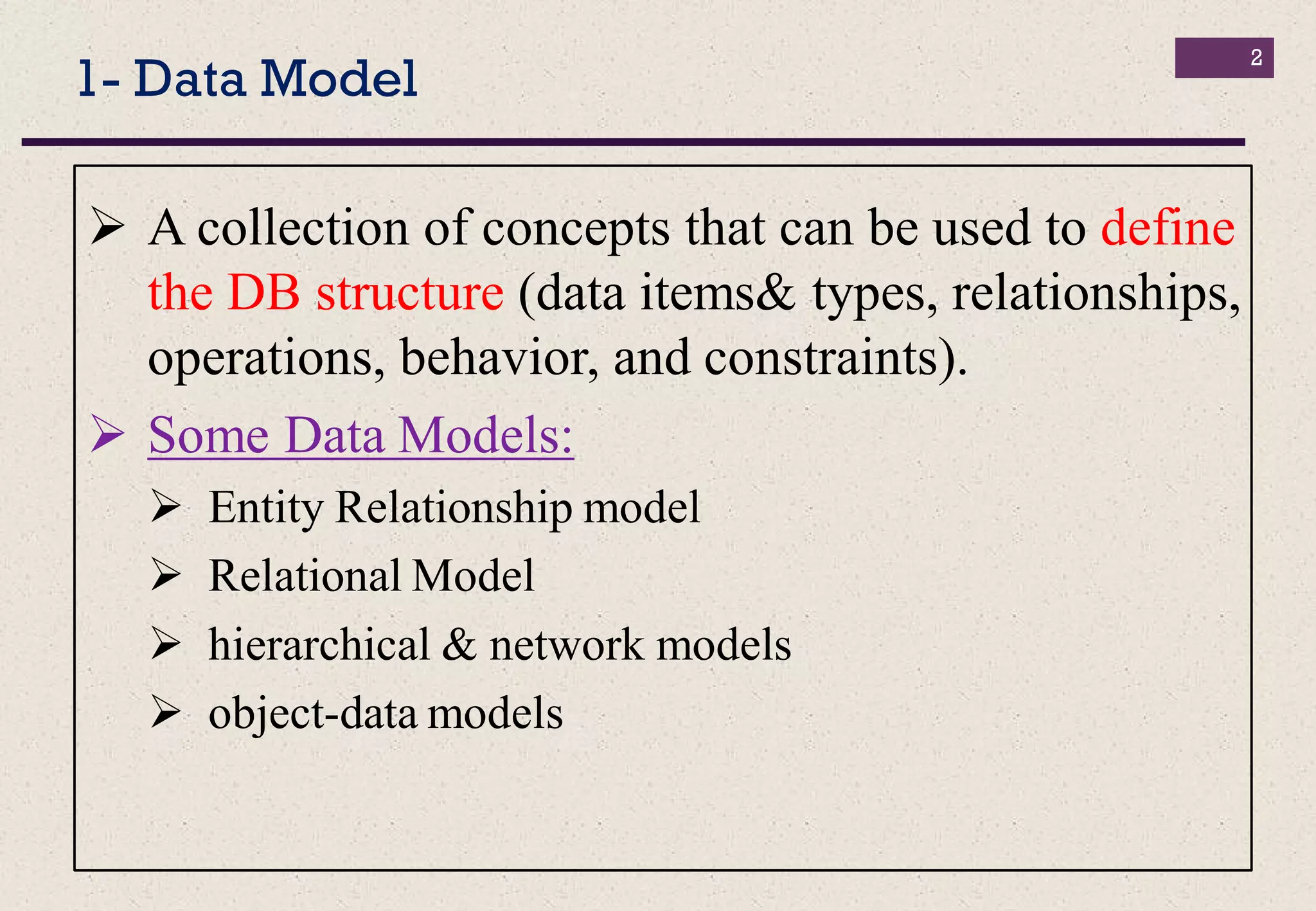
 A collection of concepts that can be used to define
the DB structure (data items& types, relationships,
operations, behavior, and constraints).
 Some Data Models:
 Entity Relationship model
 Relational Model
 hierarchical & network models
 object-data models
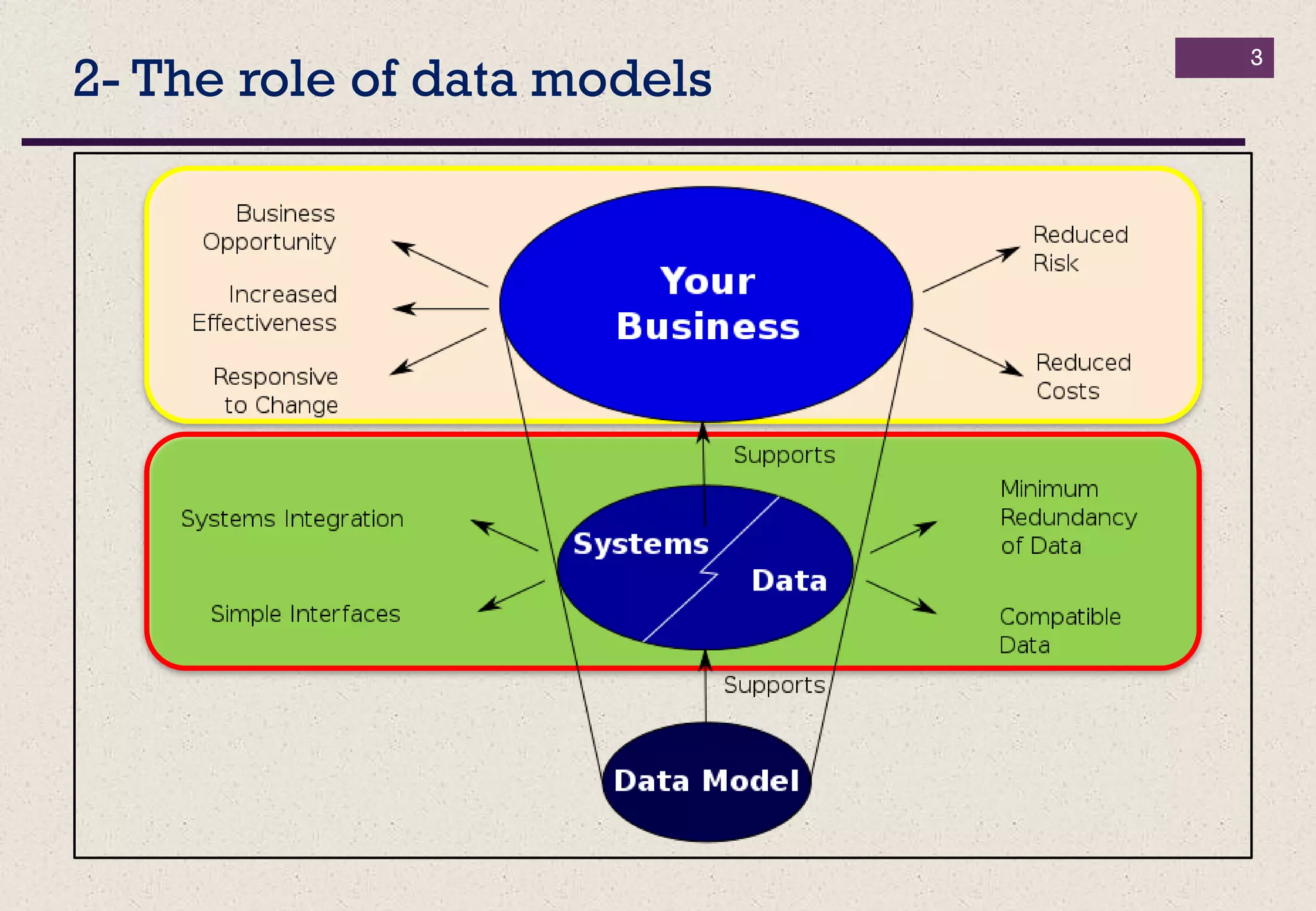
2- The role of data models
3
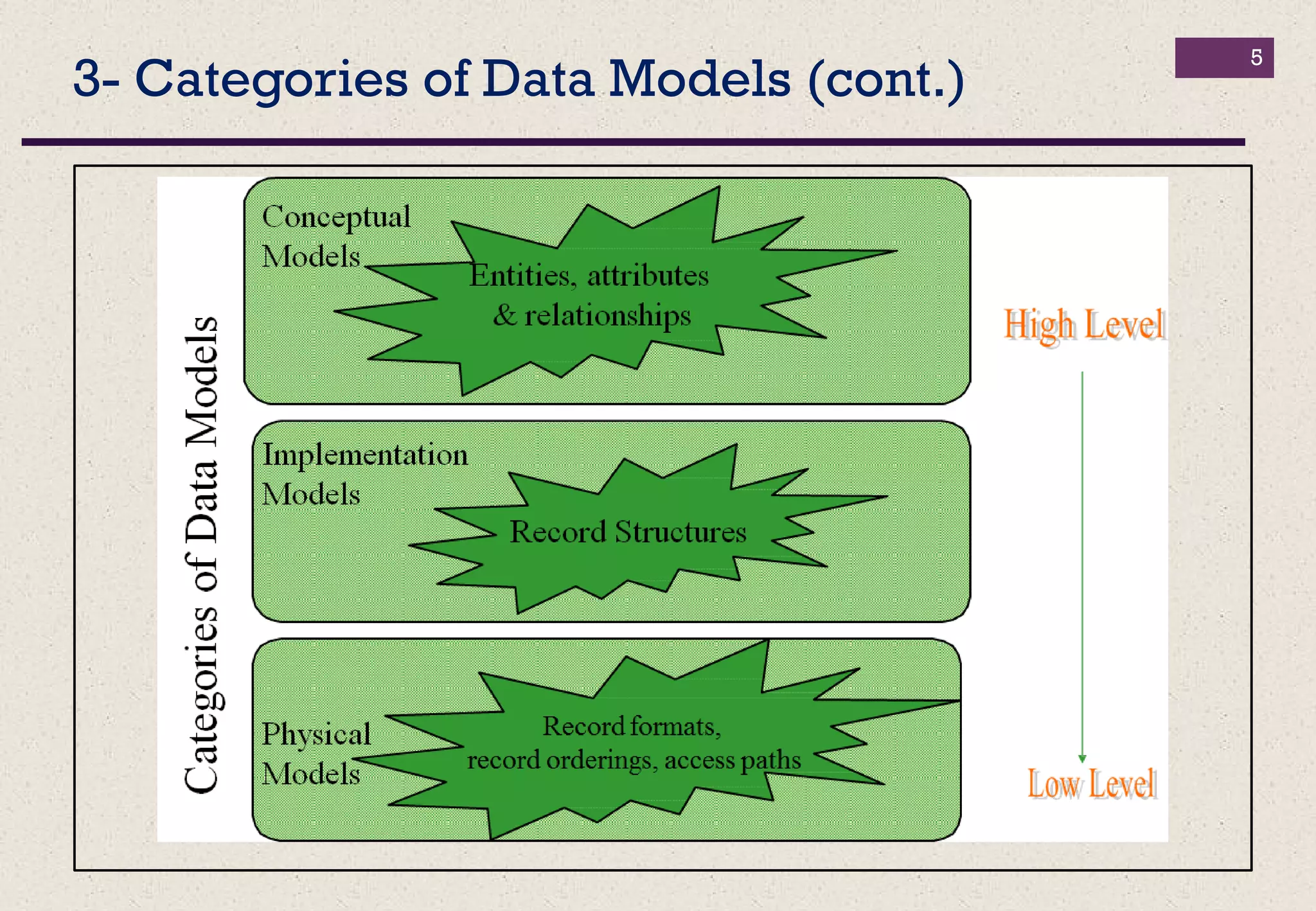
3- Categories of Data Models
4
 Conceptual (high-level, semantic) data models:
 Provide concepts that are close to the way many users
perceive data.
 (Also called entity-based or object-based data
models.)
 Implementation (representational) data models:
 Provide concepts that fall between the above and below,
used by many commercial DBMS implementations (e.g.
relational data models used in many commercial
systems).
 Physical (low-level, internal) data models:
 Provide concepts that describe details of how data is
stored in the computer. These are usually specified in an
ad-hoc manner through DBMS design and
administration manuals
3- Categories of Data Models (cont.)
5
4- Classification of DBMSs
6
 Data Model Classification
 relational,
 network,
 hierarchical,
 object-oriented
 Number of users
 single user or multi-user
 Number of Sites
 centralized vs distributed
 Cost of the DBMS
Data Model
Number of
users
Number of
sites
Cost of the
DBMS
5- System Catalog
7
 Repository of information (metadata) describing
the data in the database.
 One of the fundamental components of DBMS.
 Typically stores:
 names, types, and sizes of data items;
 constraints on the data;
 names of authorized users;
 data items accessible by a user and the type of access;
 usage statistics.
6- Multi-User DBMS Architectures
8
1- Teleprocessing
2- File-server
3- Client-server
A- Two-Tier
B- Three-Tier
6-1 Teleprocessing
9
 Traditional architecture.
 Single mainframe with a
number of terminals
attached.
Mainframe
Terminals
6-2 File-Server
10
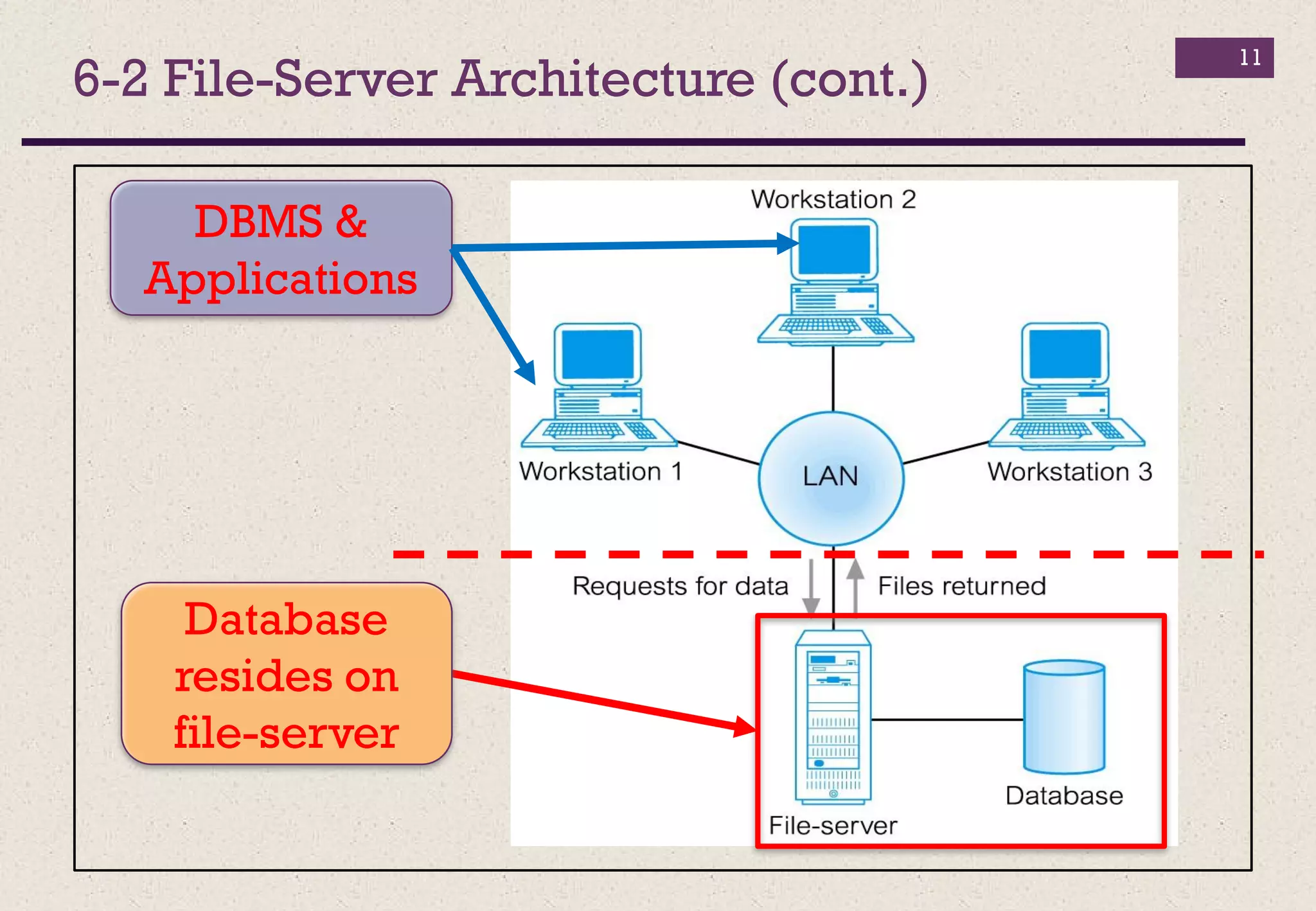
 File-server is connected to several
workstations across a network.
 Database resides on file-server.
 DBMS and applications run on each workstation.
 Disadvantages include:
 Significant network traffic.
 Copy of DBMS on each workstation.
 Concurrency, recovery and integrity control more complex.
6-2 File-Server Architecture (cont.)
11
DBMS &
Applications
Database
resides on
file-server
6-3 Client-Server
12
A- Traditional Two-Tier
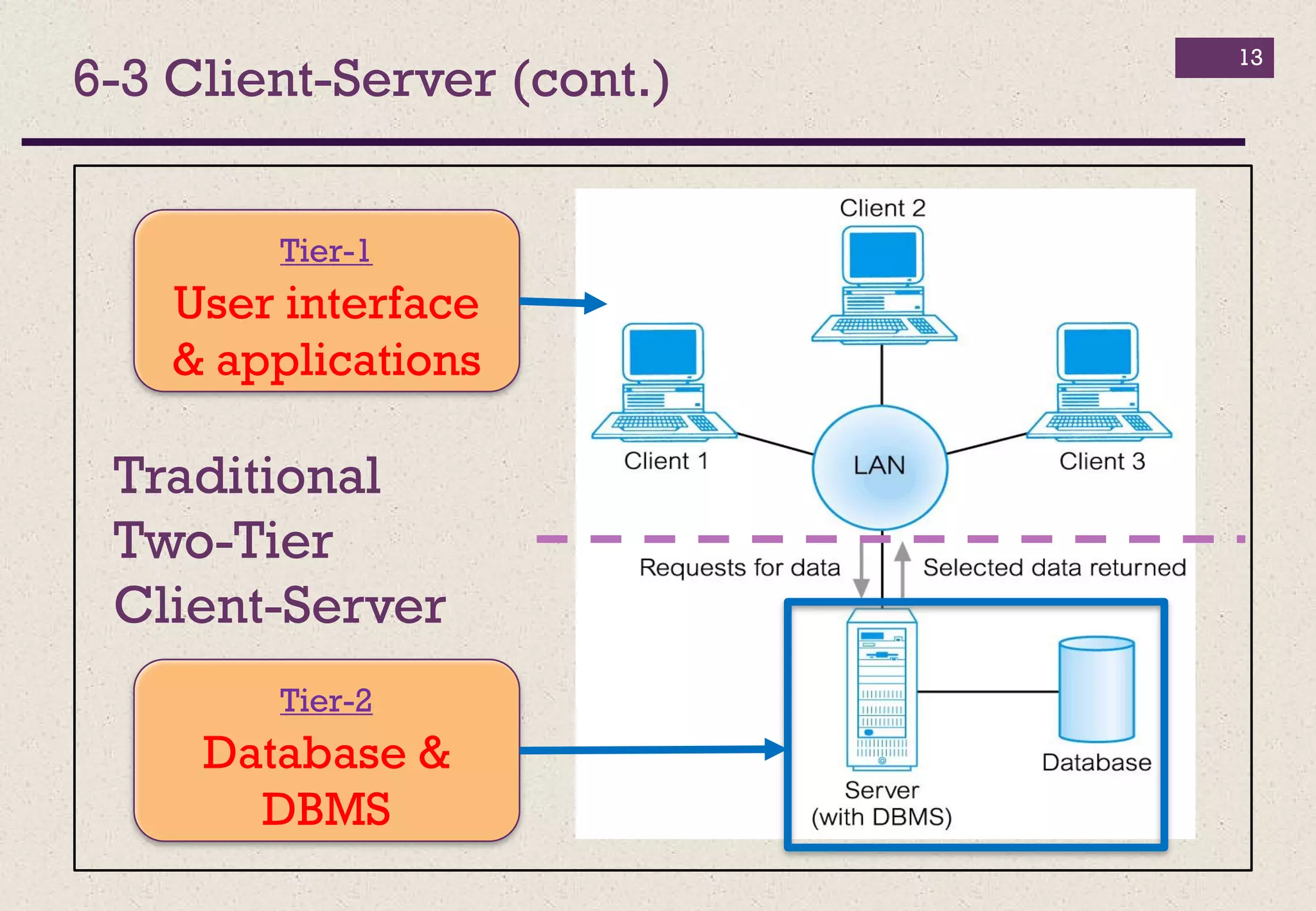
 Client (tier 1) manages user interface and runs
applications.
 Server (tier 2) holds database and DBMS.
 Advantages include:
 wider access to existing databases;
 increased performance;
 possible reduction in hardware costs;
 reduction in communication costs;
 increased consistency.
13
Traditional
Two-Tier
Client-Server
6-3 Client-Server (cont.)
Tier-2
Database &
DBMS
Tier-1
User interface
& applications
14
6-3 Client-Server (cont.)
15
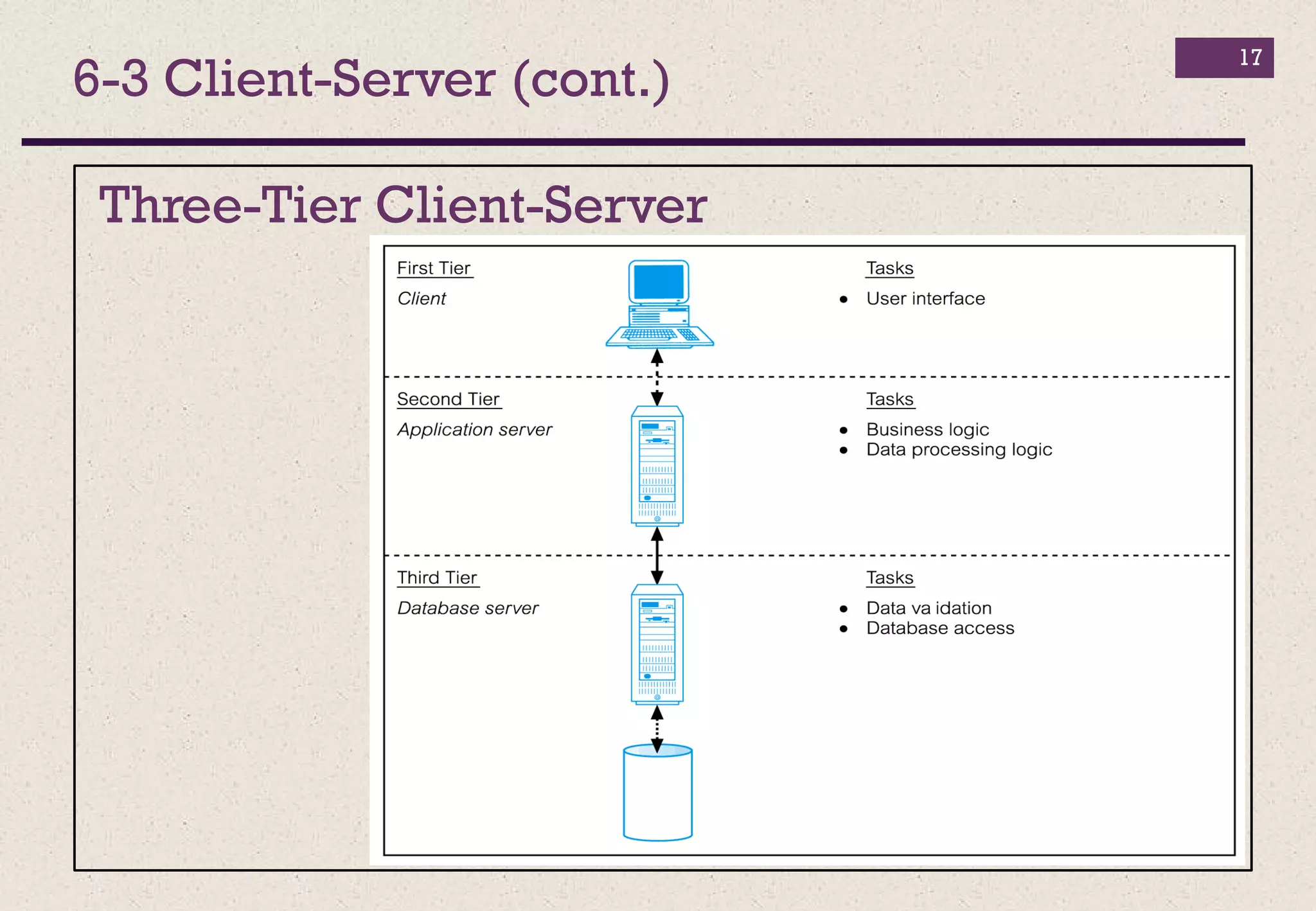
B- Three-Tier
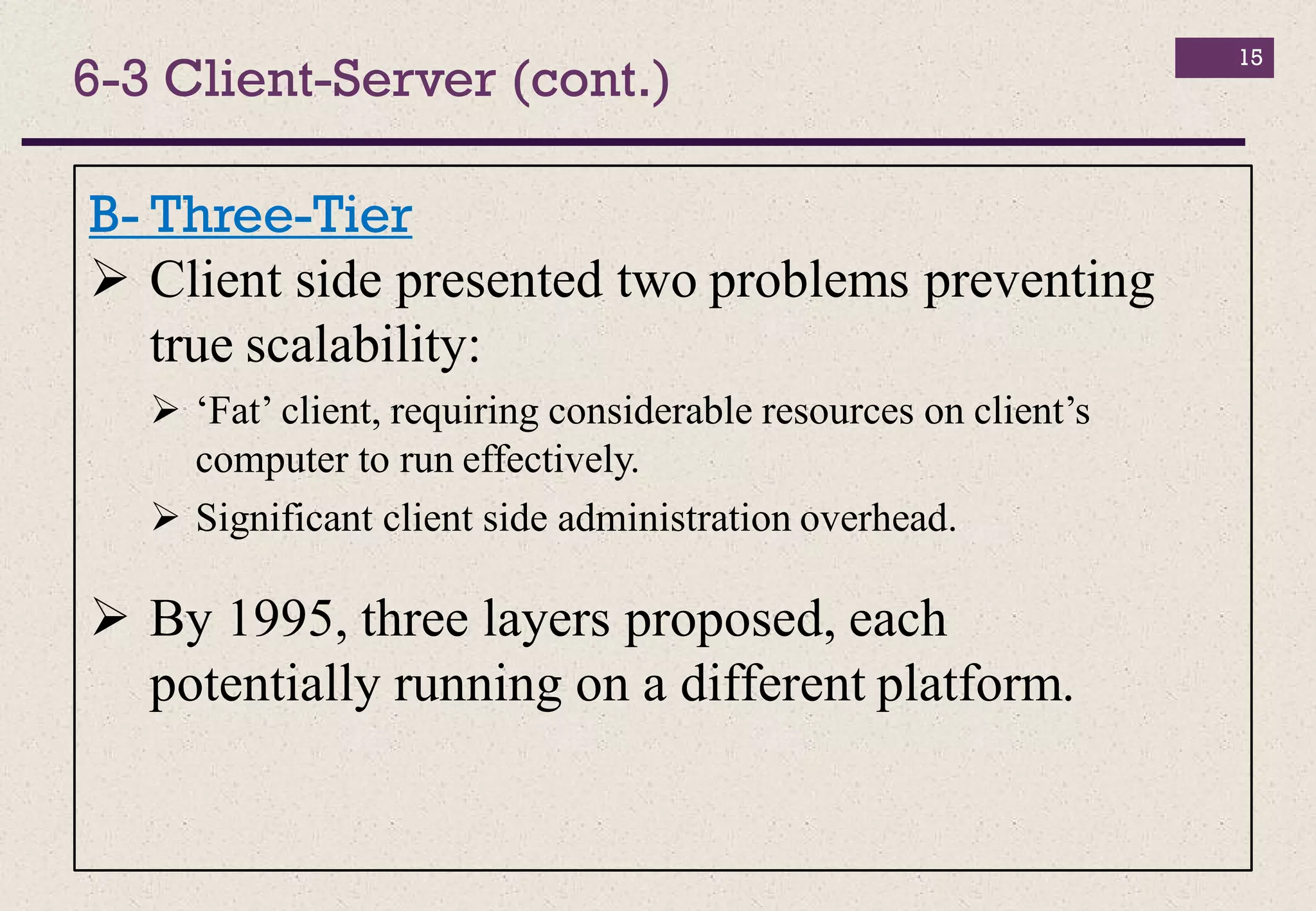
 Client side presented two problems preventing
true scalability:
 ‘Fat’ client, requiring considerable resources on client’s
computer to run effectively.
 Significant client side administration overhead.
 By 1995, three layers proposed, each
potentially running on a different platform.
6-3 Client-Server (cont.)
16
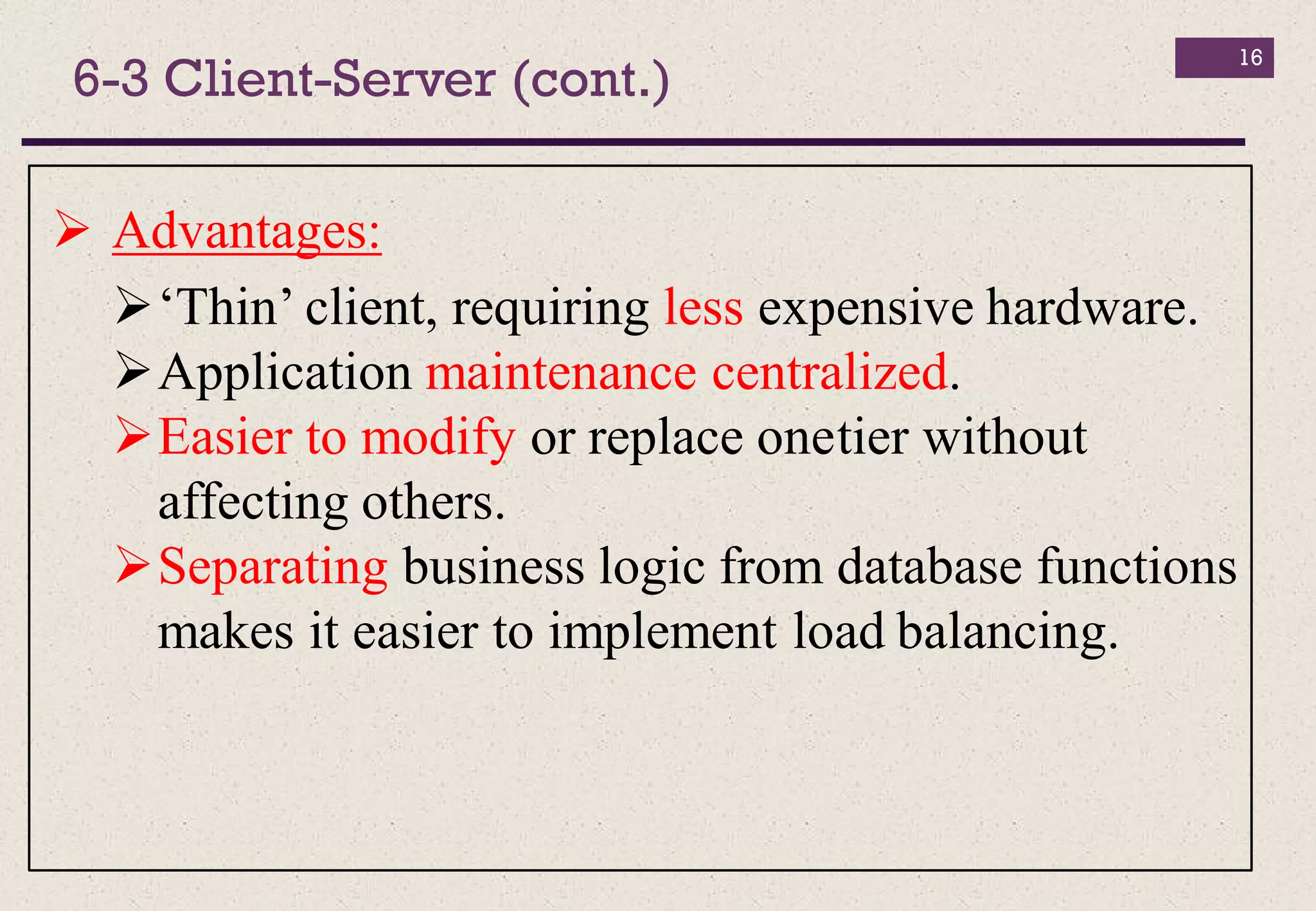
 Advantages:
‘Thin’ client, requiring less expensive hardware.
Application maintenance centralized.
Easier to modify or replace onetier without
affecting others.
Separating business logic from database functions
makes it easier to implement load balancing.
6-3 Client-Server (cont.)
Three-Tier Client-Server
17
6-3 Client-Server (cont.)
7- Transaction Processing Monitors
18
 Program that controls data transfer
between clients and servers in order to
provide a consistent environment,
particularly for Online Transaction
Processing (OLTP).
 Online Analytical Processing (OLAP).
TPM as middle tier of 3-tier client-server
19

Db lec 05_new

  • 1.
    + Dr Ramadan Babers Facultyof Science - Helwan University Fall 2018 D B LEC-05
  • 2.
    1- Data Model 2 A collection of concepts that can be used to define the DB structure (data items& types, relationships, operations, behavior, and constraints).  Some Data Models:  Entity Relationship model  Relational Model  hierarchical & network models  object-data models
  • 3.
    2- The roleof data models 3
  • 4.
    3- Categories ofData Models 4  Conceptual (high-level, semantic) data models:  Provide concepts that are close to the way many users perceive data.  (Also called entity-based or object-based data models.)  Implementation (representational) data models:  Provide concepts that fall between the above and below, used by many commercial DBMS implementations (e.g. relational data models used in many commercial systems).  Physical (low-level, internal) data models:  Provide concepts that describe details of how data is stored in the computer. These are usually specified in an ad-hoc manner through DBMS design and administration manuals
  • 5.
    3- Categories ofData Models (cont.) 5
  • 6.
    4- Classification ofDBMSs 6  Data Model Classification  relational,  network,  hierarchical,  object-oriented  Number of users  single user or multi-user  Number of Sites  centralized vs distributed  Cost of the DBMS Data Model Number of users Number of sites Cost of the DBMS
  • 7.
    5- System Catalog 7 Repository of information (metadata) describing the data in the database.  One of the fundamental components of DBMS.  Typically stores:  names, types, and sizes of data items;  constraints on the data;  names of authorized users;  data items accessible by a user and the type of access;  usage statistics.
  • 8.
    6- Multi-User DBMSArchitectures 8 1- Teleprocessing 2- File-server 3- Client-server A- Two-Tier B- Three-Tier
  • 9.
    6-1 Teleprocessing 9  Traditionalarchitecture.  Single mainframe with a number of terminals attached. Mainframe Terminals
  • 10.
    6-2 File-Server 10  File-serveris connected to several workstations across a network.  Database resides on file-server.  DBMS and applications run on each workstation.  Disadvantages include:  Significant network traffic.  Copy of DBMS on each workstation.  Concurrency, recovery and integrity control more complex.
  • 11.
    6-2 File-Server Architecture(cont.) 11 DBMS & Applications Database resides on file-server
  • 12.
    6-3 Client-Server 12 A- TraditionalTwo-Tier  Client (tier 1) manages user interface and runs applications.  Server (tier 2) holds database and DBMS.  Advantages include:  wider access to existing databases;  increased performance;  possible reduction in hardware costs;  reduction in communication costs;  increased consistency.
  • 13.
  • 14.
  • 15.
    15 B- Three-Tier  Clientside presented two problems preventing true scalability:  ‘Fat’ client, requiring considerable resources on client’s computer to run effectively.  Significant client side administration overhead.  By 1995, three layers proposed, each potentially running on a different platform. 6-3 Client-Server (cont.)
  • 16.
    16  Advantages: ‘Thin’ client,requiring less expensive hardware. Application maintenance centralized. Easier to modify or replace onetier without affecting others. Separating business logic from database functions makes it easier to implement load balancing. 6-3 Client-Server (cont.)
  • 17.
  • 18.
    7- Transaction ProcessingMonitors 18  Program that controls data transfer between clients and servers in order to provide a consistent environment, particularly for Online Transaction Processing (OLTP).  Online Analytical Processing (OLAP).
  • 19.
    TPM as middletier of 3-tier client-server 19