Data Warehouse 18
Logical Dimensional Model
Prof Neeraj Bhargava
Vaibhav Khanna
Department of Computer Science
School of Engineering and Systems Sciences
Maharshi Dayanand Saraswati University Ajmer
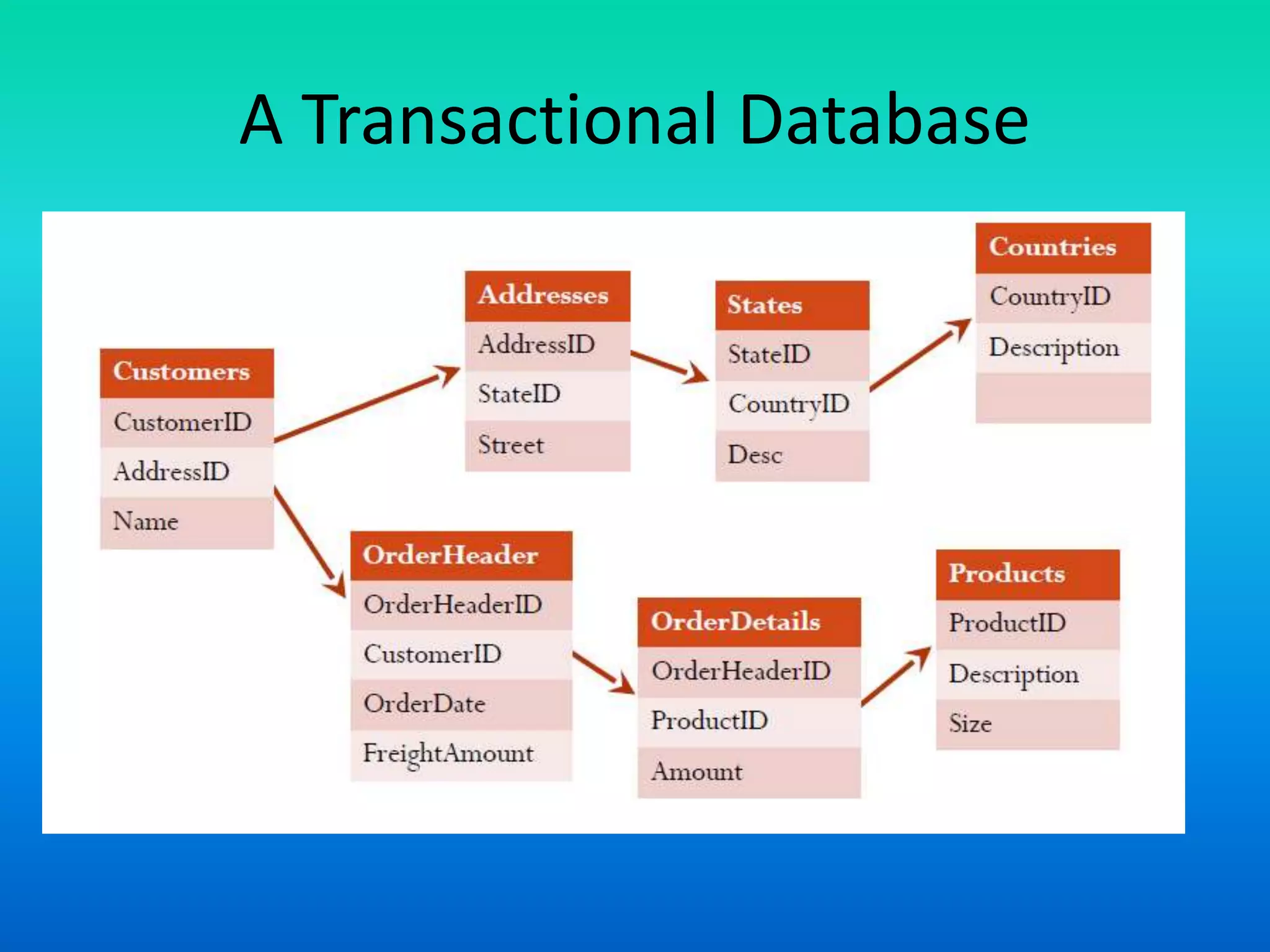
A Transactional Database
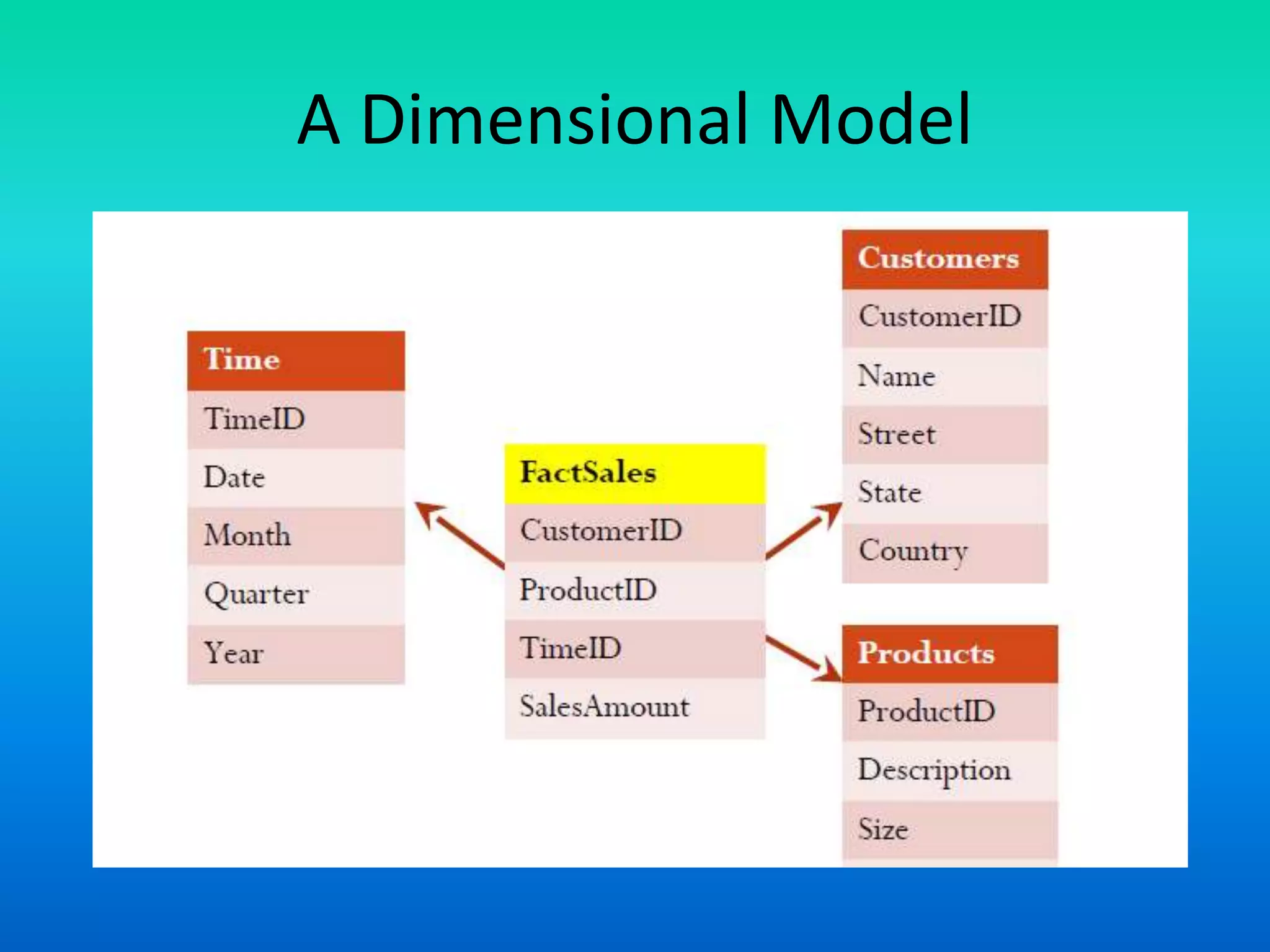
A Dimensional Model
Fact Tables
• A fact table stores quantitative information for
analysis and is often de normalized.
• Contains two or more foreign keys.
• Tend to have huge numbers of records.
• Useful facts tend to be numeric and additive.
• A fact table holds the data to be analyzed, and
a dimension table stores data about the ways
in which the data in the fact table can be
analyzed.
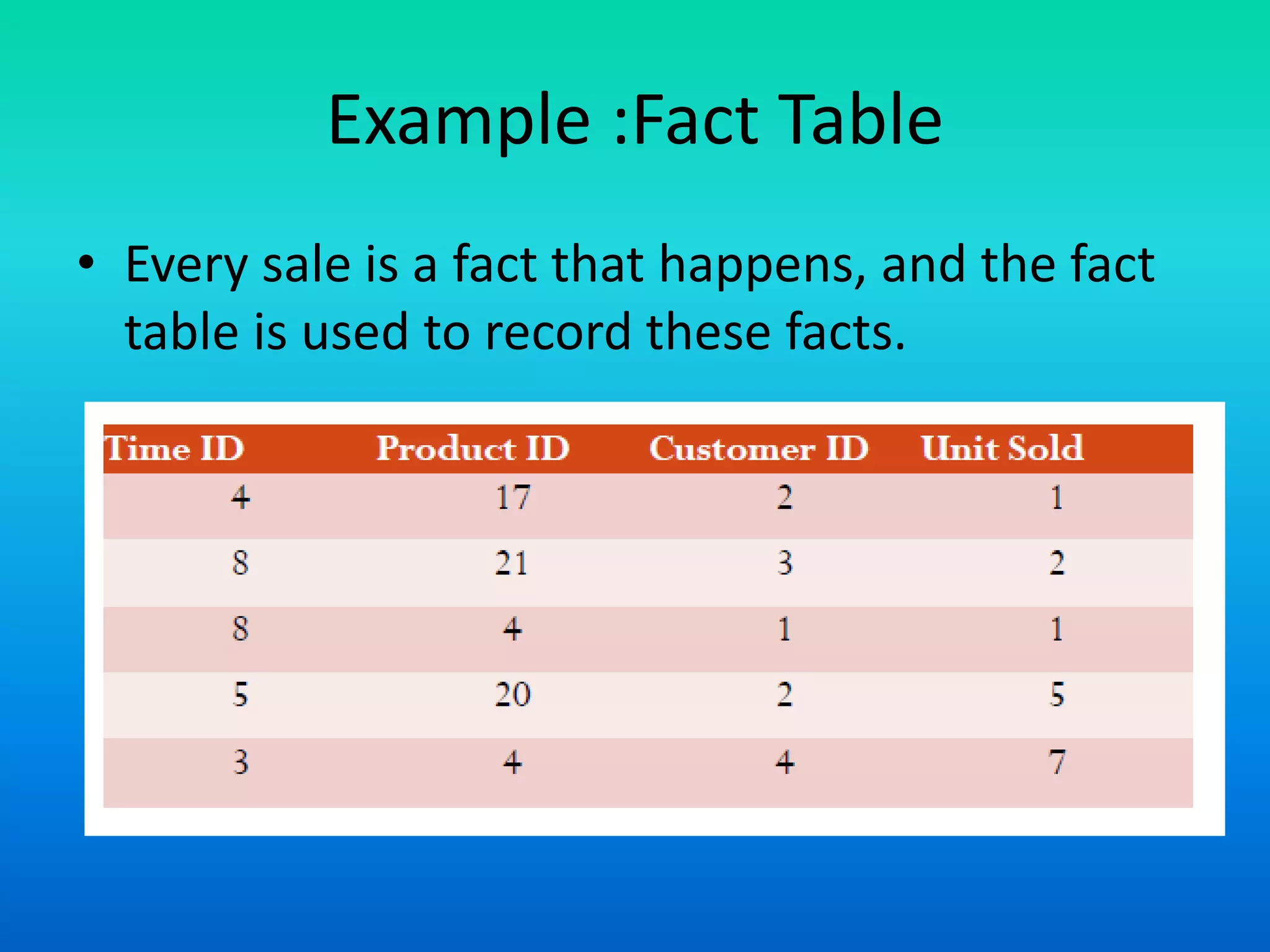
Example :Fact Table
• Every sale is a fact that happens, and the fact
table is used to record these facts.
Dimension Table
• A dimension table stores attributes, or
dimensions, that describe the objects in a fact
table.
• A data warehouse organizes descriptive attributes
as columns in dimension tables.
• For Example: A customer dimension’s attributes
could include first and last name, birth date,
gender, etc.,
• A dimension table has a primary key column that
uniquely identifies each dimension record (row).
Surrogate Key
• The dimension table is associated with a fact
table using this PRIMARY key.
• Dimension tables are referenced by fact tables
using keys.
• When creating a dimension table in a data
warehouse, a system-generated key is used to
uniquely identify a row in the dimension.
• This key is also known as a surrogate key.
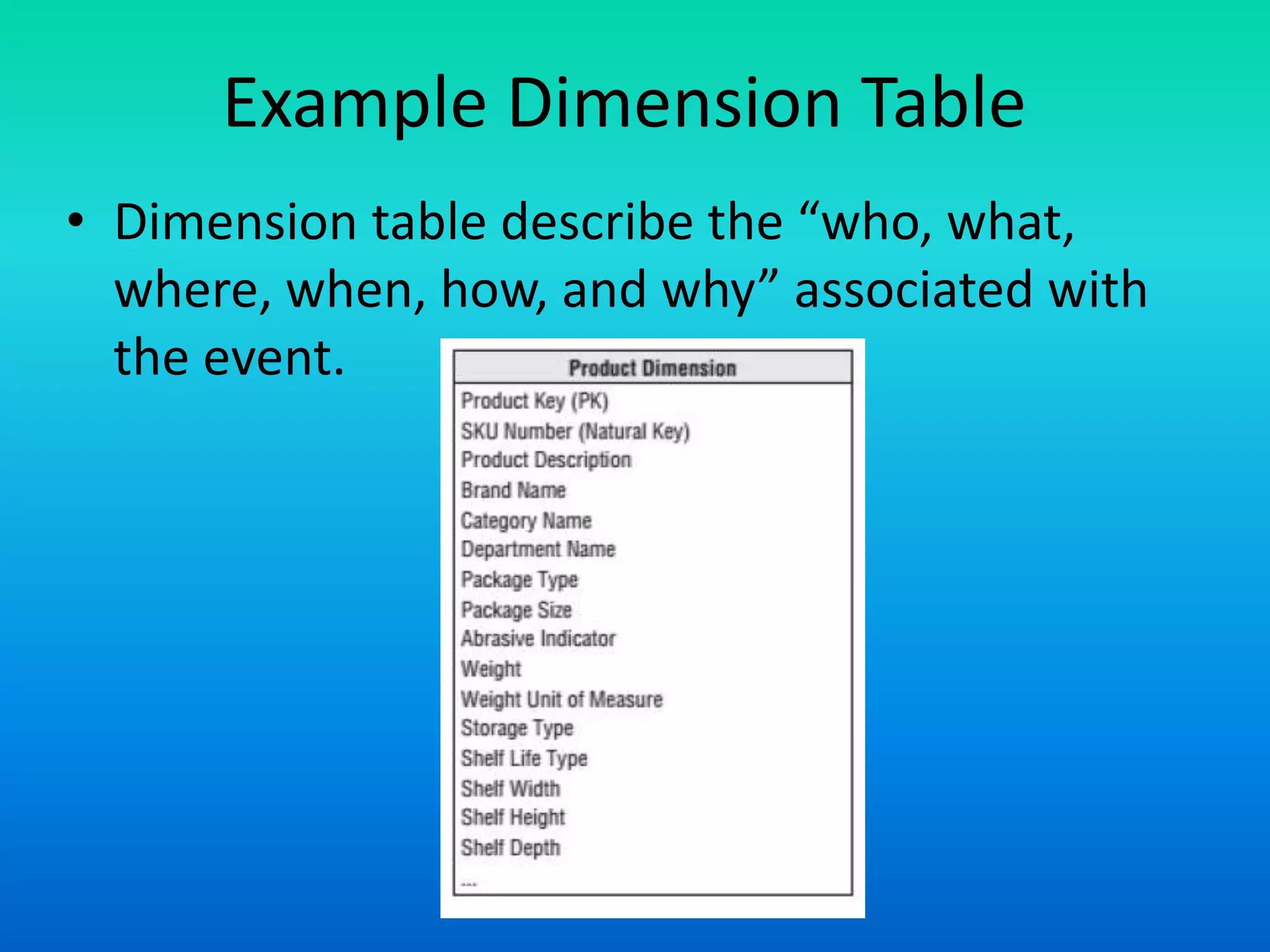
Example Dimension Table
• Dimension table describe the “who, what,
where, when, how, and why” associated with
the event.
Strengths of the Dimensional
Model
• Predictable, standard framework
• Respond well to changes in user reporting
needs
• Relatively easy to add data without reloading
tables
• Standard design approaches have been
developed
• There exist a number of products supporting
the dimensional model
Assignment
• Explain the usage of Dimension tables and
Fact tables in Dimensional Data Modeling.

Data warehouse 18 logical dimensional model for data warehouse

  • 1.
    Data Warehouse 18 LogicalDimensional Model Prof Neeraj Bhargava Vaibhav Khanna Department of Computer Science School of Engineering and Systems Sciences Maharshi Dayanand Saraswati University Ajmer
  • 2.
  • 3.
  • 4.
    Fact Tables • Afact table stores quantitative information for analysis and is often de normalized. • Contains two or more foreign keys. • Tend to have huge numbers of records. • Useful facts tend to be numeric and additive. • A fact table holds the data to be analyzed, and a dimension table stores data about the ways in which the data in the fact table can be analyzed.
  • 5.
    Example :Fact Table •Every sale is a fact that happens, and the fact table is used to record these facts.
  • 6.
    Dimension Table • Adimension table stores attributes, or dimensions, that describe the objects in a fact table. • A data warehouse organizes descriptive attributes as columns in dimension tables. • For Example: A customer dimension’s attributes could include first and last name, birth date, gender, etc., • A dimension table has a primary key column that uniquely identifies each dimension record (row).
  • 7.
    Surrogate Key • Thedimension table is associated with a fact table using this PRIMARY key. • Dimension tables are referenced by fact tables using keys. • When creating a dimension table in a data warehouse, a system-generated key is used to uniquely identify a row in the dimension. • This key is also known as a surrogate key.
  • 8.
    Example Dimension Table •Dimension table describe the “who, what, where, when, how, and why” associated with the event.
  • 9.
    Strengths of theDimensional Model • Predictable, standard framework • Respond well to changes in user reporting needs • Relatively easy to add data without reloading tables • Standard design approaches have been developed • There exist a number of products supporting the dimensional model
  • 10.
    Assignment • Explain theusage of Dimension tables and Fact tables in Dimensional Data Modeling.