PRESENTED BY:
1. Abu Bakar Siddik ID: 141-19-1536
2. Al-Amin Prince ID: 141-19-1539
3. Mst. Tamanna Yeasmin ID: 141-19-1548
Department of ETE
Daffodil International University
TOPIC: OSI Model
OSI Model
 Introduction
 The Open Systems Interconnection (OSI) model
is a reference tool for understanding data
communications between any two networked
systems.
 There are also some benefits of OSI Model.
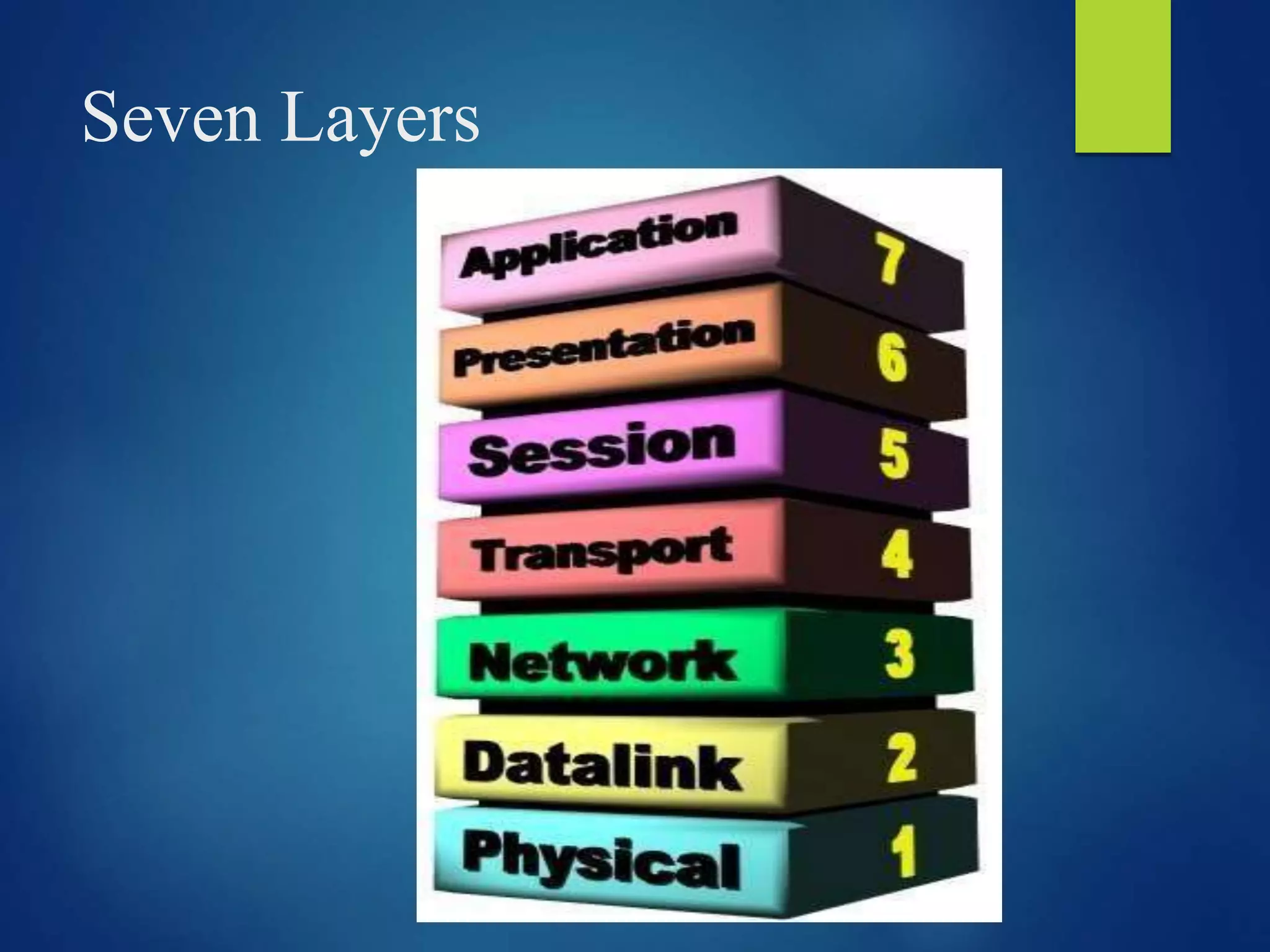
Seven Layers
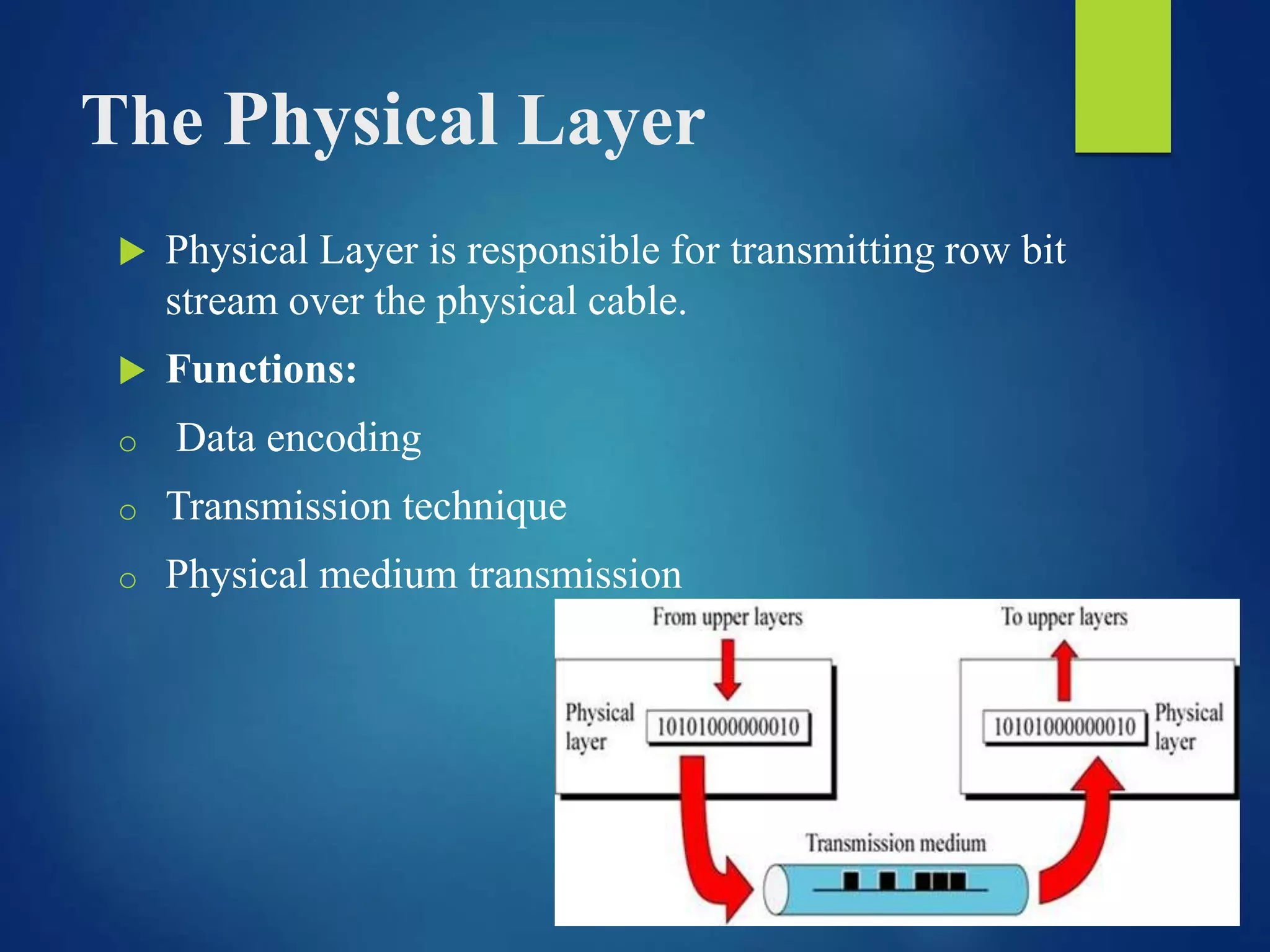
The Physical Layer
 Physical Layer is responsible for transmitting row bit
stream over the physical cable.
 Functions:
o Data encoding
o Transmission technique
o Physical medium transmission
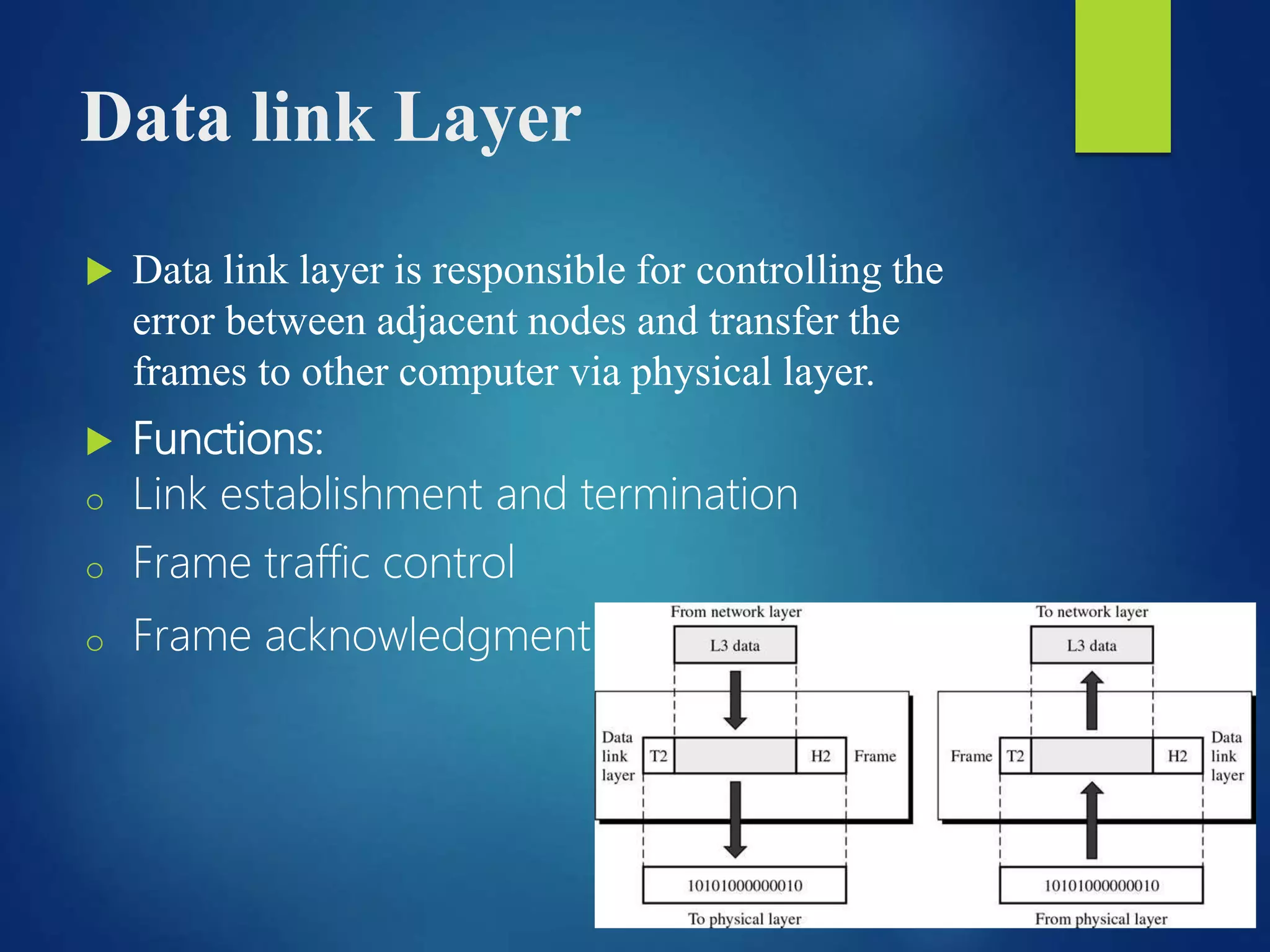
Data link Layer
 Data link layer is responsible for controlling the
error between adjacent nodes and transfer the
frames to other computer via physical layer.
 Functions:
o Link establishment and termination
o Frame traffic control
o Frame acknowledgment
The Network Layer
 This layer is responsible for translating the logical
network address and names into their physical
address.
 Functions :
o Subnet traffic control
o Logical-physical address mapping
o Frame fragmentation
The Transport Layer
 This layer is responsible for end-to-end delivers of
messages between the networked hosts
 Functions:
o Message segmentation
o Message acknowledgment
o Session multiplexing
The Session Layer
 This layer is responsible for establishing the
process-to-process communication between the
hosts in the network.
 Functions:
o Session establishment, maintenance and
termination
o Session support
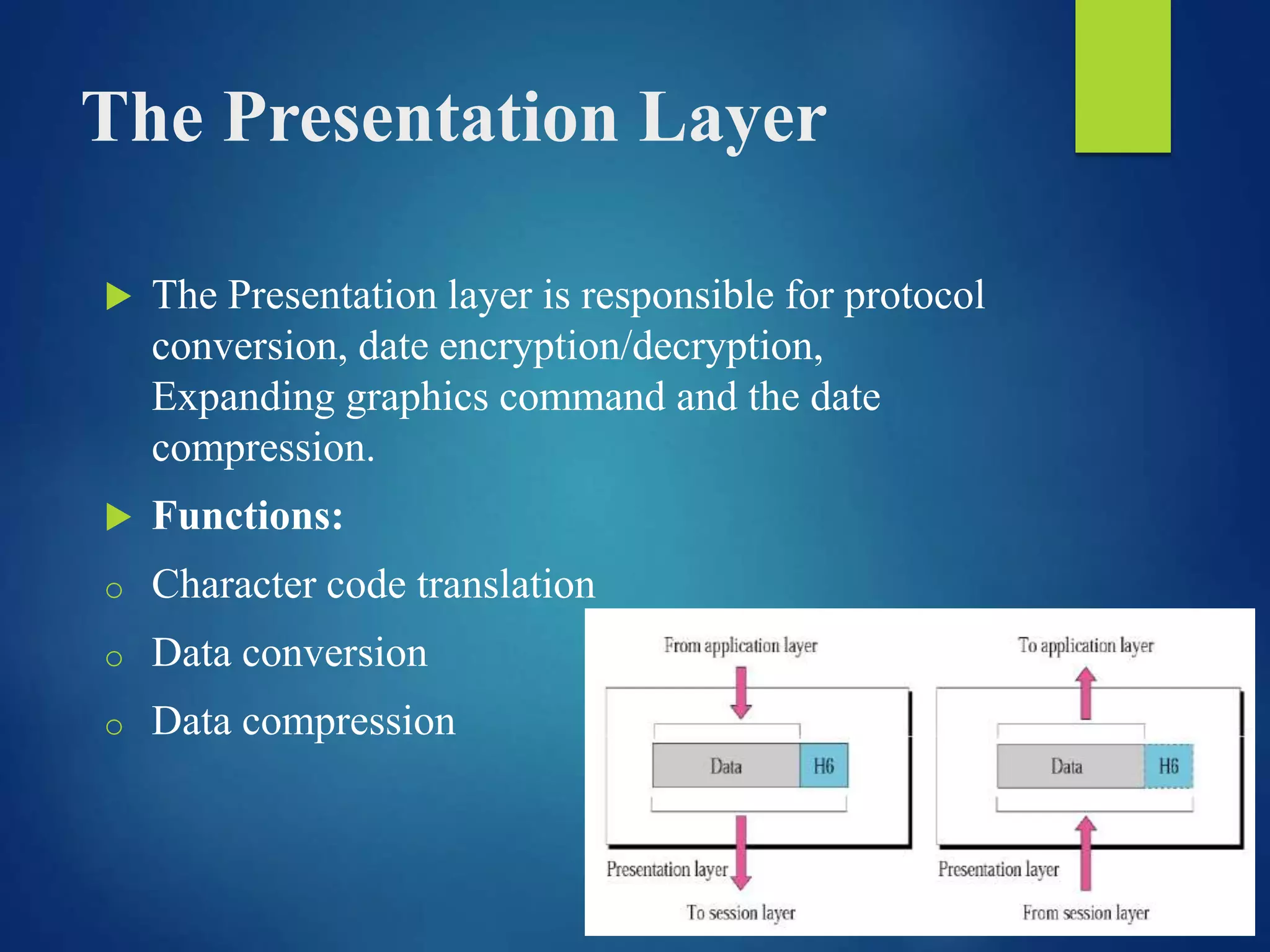
The Presentation Layer
 The Presentation layer is responsible for protocol
conversion, date encryption/decryption,
Expanding graphics command and the date
compression.
 Functions:
o Character code translation
o Data conversion
o Data compression
The Application Layer
 The application layer provider different services to
the application.
 Functions:
o Remote file access
o Electronic messaging
o Directory services
o Network management
Thank
you

OSI Model

  • 1.
    PRESENTED BY: 1. AbuBakar Siddik ID: 141-19-1536 2. Al-Amin Prince ID: 141-19-1539 3. Mst. Tamanna Yeasmin ID: 141-19-1548 Department of ETE Daffodil International University TOPIC: OSI Model
  • 2.
    OSI Model  Introduction The Open Systems Interconnection (OSI) model is a reference tool for understanding data communications between any two networked systems.  There are also some benefits of OSI Model.
  • 3.
  • 4.
    The Physical Layer Physical Layer is responsible for transmitting row bit stream over the physical cable.  Functions: o Data encoding o Transmission technique o Physical medium transmission
  • 5.
    Data link Layer Data link layer is responsible for controlling the error between adjacent nodes and transfer the frames to other computer via physical layer.  Functions: o Link establishment and termination o Frame traffic control o Frame acknowledgment
  • 6.
    The Network Layer This layer is responsible for translating the logical network address and names into their physical address.  Functions : o Subnet traffic control o Logical-physical address mapping o Frame fragmentation
  • 7.
    The Transport Layer This layer is responsible for end-to-end delivers of messages between the networked hosts  Functions: o Message segmentation o Message acknowledgment o Session multiplexing
  • 8.
    The Session Layer This layer is responsible for establishing the process-to-process communication between the hosts in the network.  Functions: o Session establishment, maintenance and termination o Session support
  • 9.
    The Presentation Layer The Presentation layer is responsible for protocol conversion, date encryption/decryption, Expanding graphics command and the date compression.  Functions: o Character code translation o Data conversion o Data compression
  • 10.
    The Application Layer The application layer provider different services to the application.  Functions: o Remote file access o Electronic messaging o Directory services o Network management
  • 11.