OSI & TCP/IP MODEL
Nafizul Islam
nafizulislam2@gmail.com
Abstract
Details about OSI model and TCP. Layers of OSI and TCP/IP model.
OSI Model
 OSI stands for Open System Interconnection is a reference
model that describes how information from a software application in
one computer moves through a physical medium to the software
application in another computer.
 OSI consists of seven layers, and each layer performs a particular
network function.
 OSI model was developed by the International Organization for
Standardization (ISO) in 1984, and it is now considered as an
architectural model for the inter-computer communications.
 OSI model divides the whole task into seven smaller and
manageable tasks. Each layer is assigned a particular task.
 Each layer is self-contained, so that task assigned to each layer can
be performed independently.
Seven layers of OSI model
1. Physical Layer
2. Data-Link Layer
3. Network Layer
4. Transport Layer
5. Session Layer
6. Presentation Layer
7. Application Layer
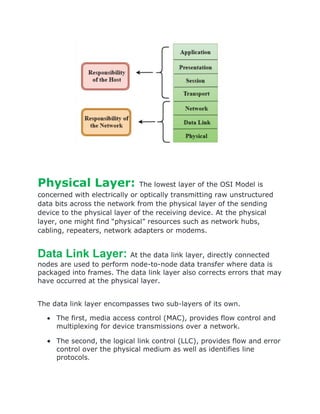
Physical Layer: The lowest layer of the OSI Model is
concerned with electrically or optically transmitting raw unstructured
data bits across the network from the physical layer of the sending
device to the physical layer of the receiving device. At the physical
layer, one might find “physical” resources such as network hubs,
cabling, repeaters, network adapters or modems.
Data Link Layer: At the data link layer, directly connected
nodes are used to perform node-to-node data transfer where data is
packaged into frames. The data link layer also corrects errors that may
have occurred at the physical layer.
The data link layer encompasses two sub-layers of its own.
 The first, media access control (MAC), provides flow control and
multiplexing for device transmissions over a network.
 The second, the logical link control (LLC), provides flow and error
control over the physical medium as well as identifies line
protocols.
Network Layer: The network layer is responsible for
receiving frames from the data link layer, and delivering them to their
intended destinations among based on the addresses contained inside
the frame. The network layer finds the destination by using logical
addresses, such as IP (internet protocol).
Transport Layer: The transport layer manages the
delivery and error checking of data packets. It regulates the size,
sequencing, and ultimately the transfer of data between systems and
hosts. One of the most common examples of the transport layer is TCP
or the Transmission Control Protocol.
Session Layer: The session layer controls the
conversations between different computers. A session or connection
between machines is set up, managed, and termined at layer 5.
Session layer services also include authentication and reconnections.
Presentation Layer: The presentation layer formats
or translates data for the application layer based on the syntax or
semantics that the application accepts. Because of this, it at times also
called the syntax layer. This layer can also handle the encryption and
decryption required by the application layer.
Application Layer: At this layer, both the end user and
the application layer interact directly with the software application.
This layer sees network services provided to end-user applications. The
application layer identifies communication partners, resource
availability, and synchronizes communication.
TCP/IP Model: TCP/IP Model helps you to determine how a
specific computer should be connected to the internet and how data
should be transmitted between them. It helps you to create a virtual
network when multiple computer networks are connected together.
The purpose of TCP/IP model is to allow communication over large
distances.
Four Layers of TCP/IP model
 Application Layer
 Transport Layer
 Internet Layer
 Network Interface
Application Layer: Application layer interacts with an
application program, which is the highest level of OSI model. The
application layer is the OSI layer, which is closest to the end-user.
It means the OSI application layer allows users to interact with
other software application. Application layer interacts with software
applications to implement a communicating component.
Transport Layer: Transport layer builds on the network
layer in order to provide data transport from a process on a source
system machine to a process on a destination system. It is hosted
using single or multiple networks, and also maintains the quality of
service functions.Transport layer helps you to control the reliability of
a link through flow control, error control, and segmentation or de-
segmentation.
Internet Layer: An internet layer is TCP/IP layer of the TCP/IP
model. It is also known as a network layer. The main work of this layer is to
send the packets from any network, and any computer still they reach the
destination irrespective of the route they take.
The Network Interface Layer: Network Interface
Layer is this layer of the four-layer TCP/IP model. This layer is also
called a network access layer. It helps you to defines details of how
data should be sent using the network. It also includes how bits should
optically be signaled by hardware devices which directly interfaces with
a network medium, like coaxial, optical, coaxial, fiber, or twisted-pair
cables. This layer defines how the data should be sent physically
through the network. This layer is responsible for the transmission of
the data between two devices on the same network.

OSI & TCP model

  • 1.
    OSI & TCP/IPMODEL Nafizul Islam nafizulislam2@gmail.com Abstract Details about OSI model and TCP. Layers of OSI and TCP/IP model.
  • 2.
    OSI Model  OSIstands for Open System Interconnection is a reference model that describes how information from a software application in one computer moves through a physical medium to the software application in another computer.  OSI consists of seven layers, and each layer performs a particular network function.  OSI model was developed by the International Organization for Standardization (ISO) in 1984, and it is now considered as an architectural model for the inter-computer communications.  OSI model divides the whole task into seven smaller and manageable tasks. Each layer is assigned a particular task.  Each layer is self-contained, so that task assigned to each layer can be performed independently. Seven layers of OSI model 1. Physical Layer 2. Data-Link Layer 3. Network Layer 4. Transport Layer 5. Session Layer 6. Presentation Layer 7. Application Layer
  • 3.
    Physical Layer: Thelowest layer of the OSI Model is concerned with electrically or optically transmitting raw unstructured data bits across the network from the physical layer of the sending device to the physical layer of the receiving device. At the physical layer, one might find “physical” resources such as network hubs, cabling, repeaters, network adapters or modems. Data Link Layer: At the data link layer, directly connected nodes are used to perform node-to-node data transfer where data is packaged into frames. The data link layer also corrects errors that may have occurred at the physical layer. The data link layer encompasses two sub-layers of its own.  The first, media access control (MAC), provides flow control and multiplexing for device transmissions over a network.  The second, the logical link control (LLC), provides flow and error control over the physical medium as well as identifies line protocols.
  • 4.
    Network Layer: Thenetwork layer is responsible for receiving frames from the data link layer, and delivering them to their intended destinations among based on the addresses contained inside the frame. The network layer finds the destination by using logical addresses, such as IP (internet protocol). Transport Layer: The transport layer manages the delivery and error checking of data packets. It regulates the size, sequencing, and ultimately the transfer of data between systems and hosts. One of the most common examples of the transport layer is TCP or the Transmission Control Protocol. Session Layer: The session layer controls the conversations between different computers. A session or connection between machines is set up, managed, and termined at layer 5. Session layer services also include authentication and reconnections. Presentation Layer: The presentation layer formats or translates data for the application layer based on the syntax or semantics that the application accepts. Because of this, it at times also called the syntax layer. This layer can also handle the encryption and decryption required by the application layer. Application Layer: At this layer, both the end user and the application layer interact directly with the software application. This layer sees network services provided to end-user applications. The application layer identifies communication partners, resource availability, and synchronizes communication.
  • 5.
    TCP/IP Model: TCP/IPModel helps you to determine how a specific computer should be connected to the internet and how data should be transmitted between them. It helps you to create a virtual network when multiple computer networks are connected together. The purpose of TCP/IP model is to allow communication over large distances. Four Layers of TCP/IP model  Application Layer  Transport Layer  Internet Layer  Network Interface Application Layer: Application layer interacts with an application program, which is the highest level of OSI model. The application layer is the OSI layer, which is closest to the end-user. It means the OSI application layer allows users to interact with other software application. Application layer interacts with software applications to implement a communicating component. Transport Layer: Transport layer builds on the network layer in order to provide data transport from a process on a source system machine to a process on a destination system. It is hosted using single or multiple networks, and also maintains the quality of service functions.Transport layer helps you to control the reliability of a link through flow control, error control, and segmentation or de- segmentation. Internet Layer: An internet layer is TCP/IP layer of the TCP/IP model. It is also known as a network layer. The main work of this layer is to send the packets from any network, and any computer still they reach the destination irrespective of the route they take.
  • 6.
    The Network InterfaceLayer: Network Interface Layer is this layer of the four-layer TCP/IP model. This layer is also called a network access layer. It helps you to defines details of how data should be sent using the network. It also includes how bits should optically be signaled by hardware devices which directly interfaces with a network medium, like coaxial, optical, coaxial, fiber, or twisted-pair cables. This layer defines how the data should be sent physically through the network. This layer is responsible for the transmission of the data between two devices on the same network.