Metallic Bonding
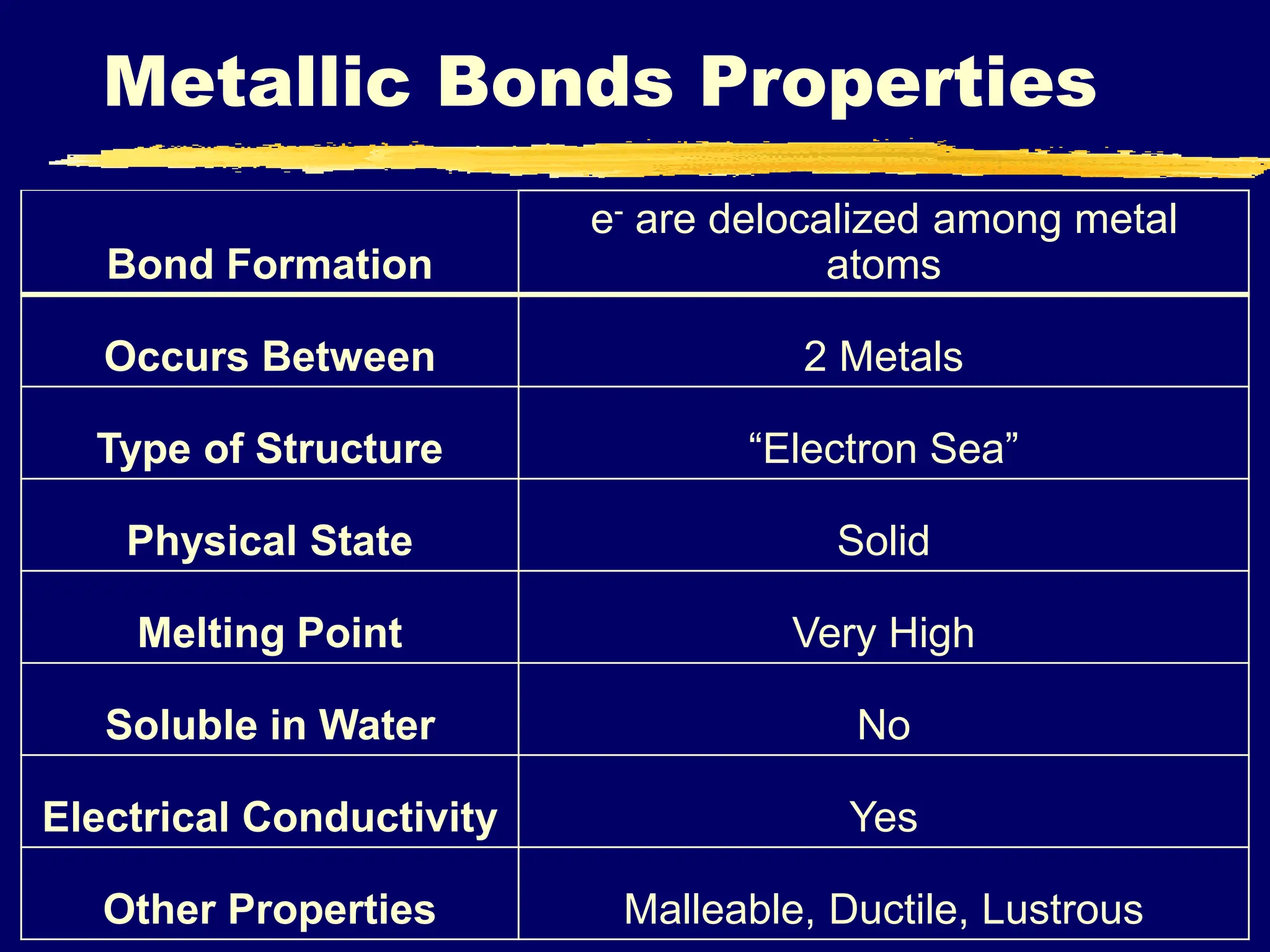
Metallic Bonds Properties
Bond Formation
e- are delocalized among metal
atoms
Occurs Between 2 Metals
Type of Structure “Electron Sea”
Physical State Solid
Melting Point Very High
Soluble in Water No
Electrical Conductivity Yes
Other Properties Malleable, Ductile, Lustrous
“Electron Sea”
Type of Structure
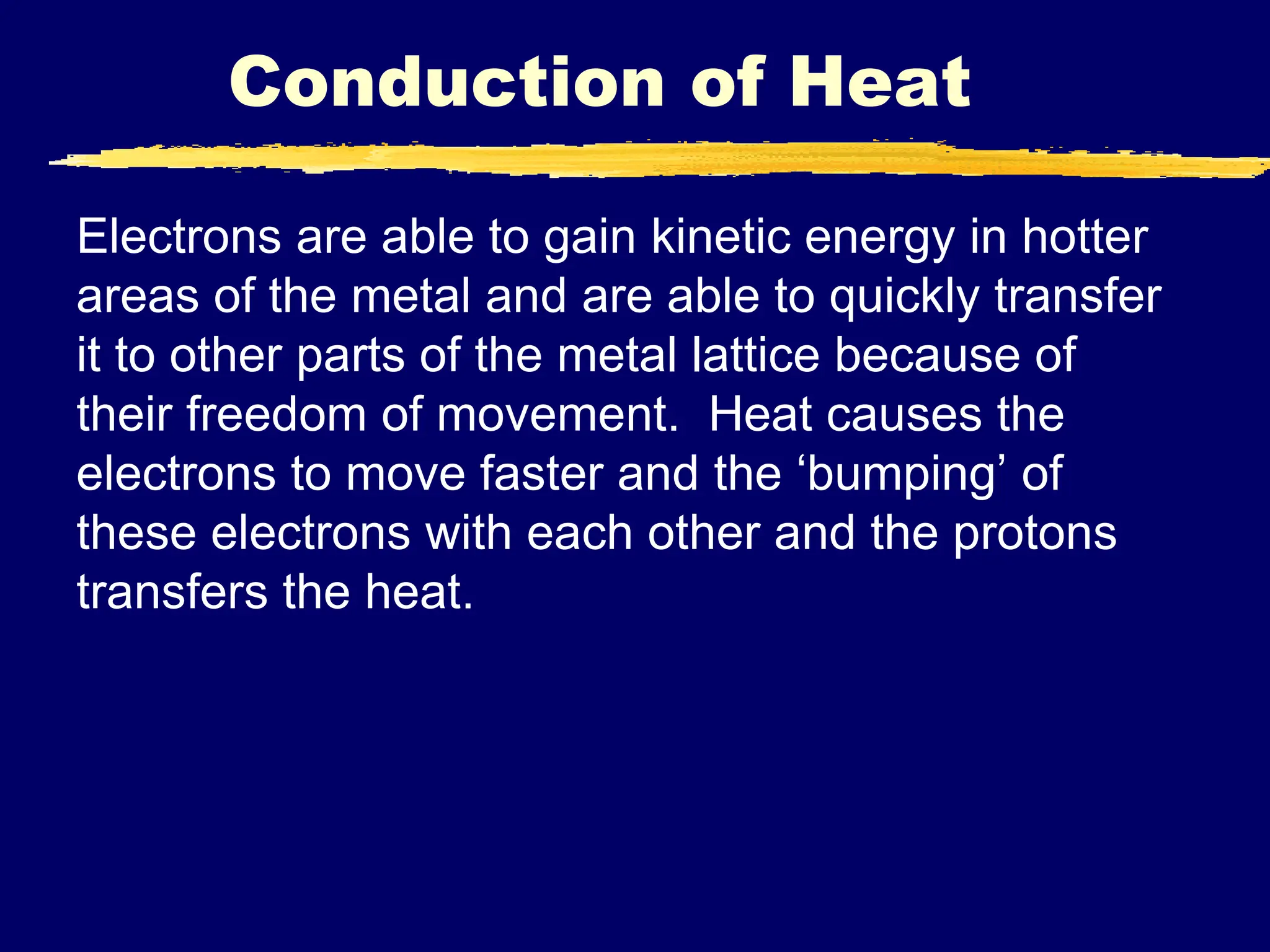
Conduction of Heat
Electrons are able to gain kinetic energy in hotter
areas of the metal and are able to quickly transfer
it to other parts of the metal lattice because of
their freedom of movement. Heat causes the
electrons to move faster and the ‘bumping’ of
these electrons with each other and the protons
transfers the heat.
Conducts Electricity
When an electric field is applied to a metal, one
end of the metal becomes positive and the other
becomes negative. Since the electrons are free to
move, all the electrons experience a force toward
the positive end. The movement of electrons is an
electric current.
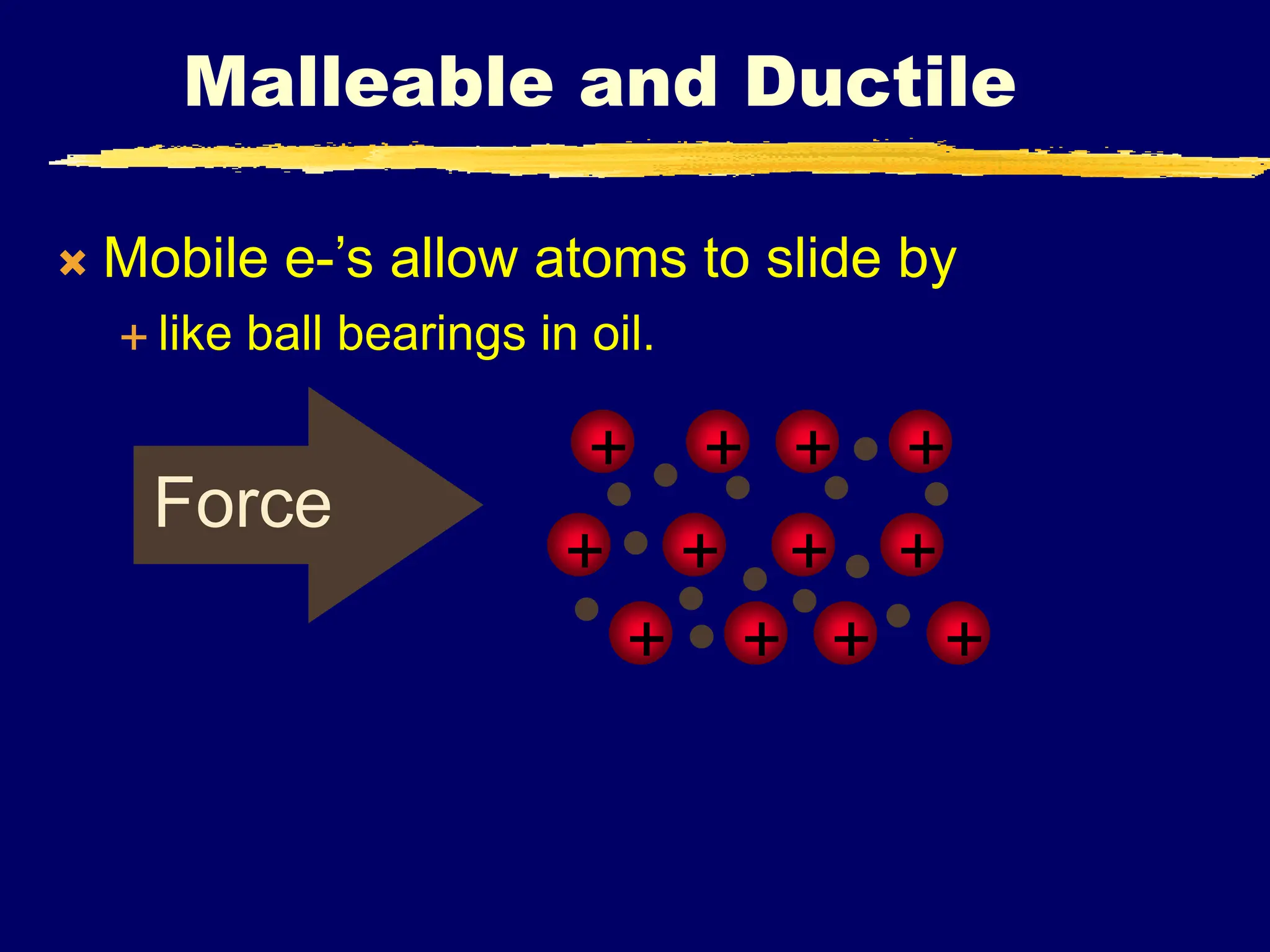
Malleable and Ductile
Metals are malleable and ductile, rather than
brittle, as a result of the non-directional nature of
metallic bonds. The attractive forces exerted by
the positive metal ions for the mobile electrons
occur in all directions. This means that layers of
atoms can move past one another without
disrupting the force between the positive ions and
the negative sea of electrons.
Malleable and Ductile
+ + + +
+ + + +
+ + + +
Force
Malleable and Ductile
 Mobile e-’s allow atoms to slide by
 like ball bearings in oil.
+ + + +
+ + + +
+ + + +
Force
High Melting Point
The generally high melting points indicate that
metallic bonding is quite strong.
Melting points increase with an increase in the
number of valence electrons to the sea, since
there is a greater attractive force between the
cations and the electrons.
High Density
Most metals have relatively high densities
because metallic lattices are close-packed.
Structure of Metals
• Electrostatic forces of attraction between the
positively charged cations and the negatively
charged electrons hold the lattice together.
• A metal is therefore a seen as a rigid
framework of cations immersed in a ‘sea’ of
electrons that serve as the cement holding the
three-dimensional cationic network together –
Metallic bonding.

Metallic Bonding grade 9 chemistry 2nd quarter

  • 1.
  • 2.
    Metallic Bonds Properties BondFormation e- are delocalized among metal atoms Occurs Between 2 Metals Type of Structure “Electron Sea” Physical State Solid Melting Point Very High Soluble in Water No Electrical Conductivity Yes Other Properties Malleable, Ductile, Lustrous
  • 3.
  • 4.
    Conduction of Heat Electronsare able to gain kinetic energy in hotter areas of the metal and are able to quickly transfer it to other parts of the metal lattice because of their freedom of movement. Heat causes the electrons to move faster and the ‘bumping’ of these electrons with each other and the protons transfers the heat.
  • 5.
    Conducts Electricity When anelectric field is applied to a metal, one end of the metal becomes positive and the other becomes negative. Since the electrons are free to move, all the electrons experience a force toward the positive end. The movement of electrons is an electric current.
  • 6.
  • 7.
    Malleable and Ductile Metalsare malleable and ductile, rather than brittle, as a result of the non-directional nature of metallic bonds. The attractive forces exerted by the positive metal ions for the mobile electrons occur in all directions. This means that layers of atoms can move past one another without disrupting the force between the positive ions and the negative sea of electrons.
  • 8.
    Malleable and Ductile ++ + + + + + + + + + + Force
  • 9.
    Malleable and Ductile Mobile e-’s allow atoms to slide by  like ball bearings in oil. + + + + + + + + + + + + Force
  • 10.
    High Melting Point Thegenerally high melting points indicate that metallic bonding is quite strong. Melting points increase with an increase in the number of valence electrons to the sea, since there is a greater attractive force between the cations and the electrons.
  • 11.
    High Density Most metalshave relatively high densities because metallic lattices are close-packed.
  • 12.
    Structure of Metals •Electrostatic forces of attraction between the positively charged cations and the negatively charged electrons hold the lattice together. • A metal is therefore a seen as a rigid framework of cations immersed in a ‘sea’ of electrons that serve as the cement holding the three-dimensional cationic network together – Metallic bonding.