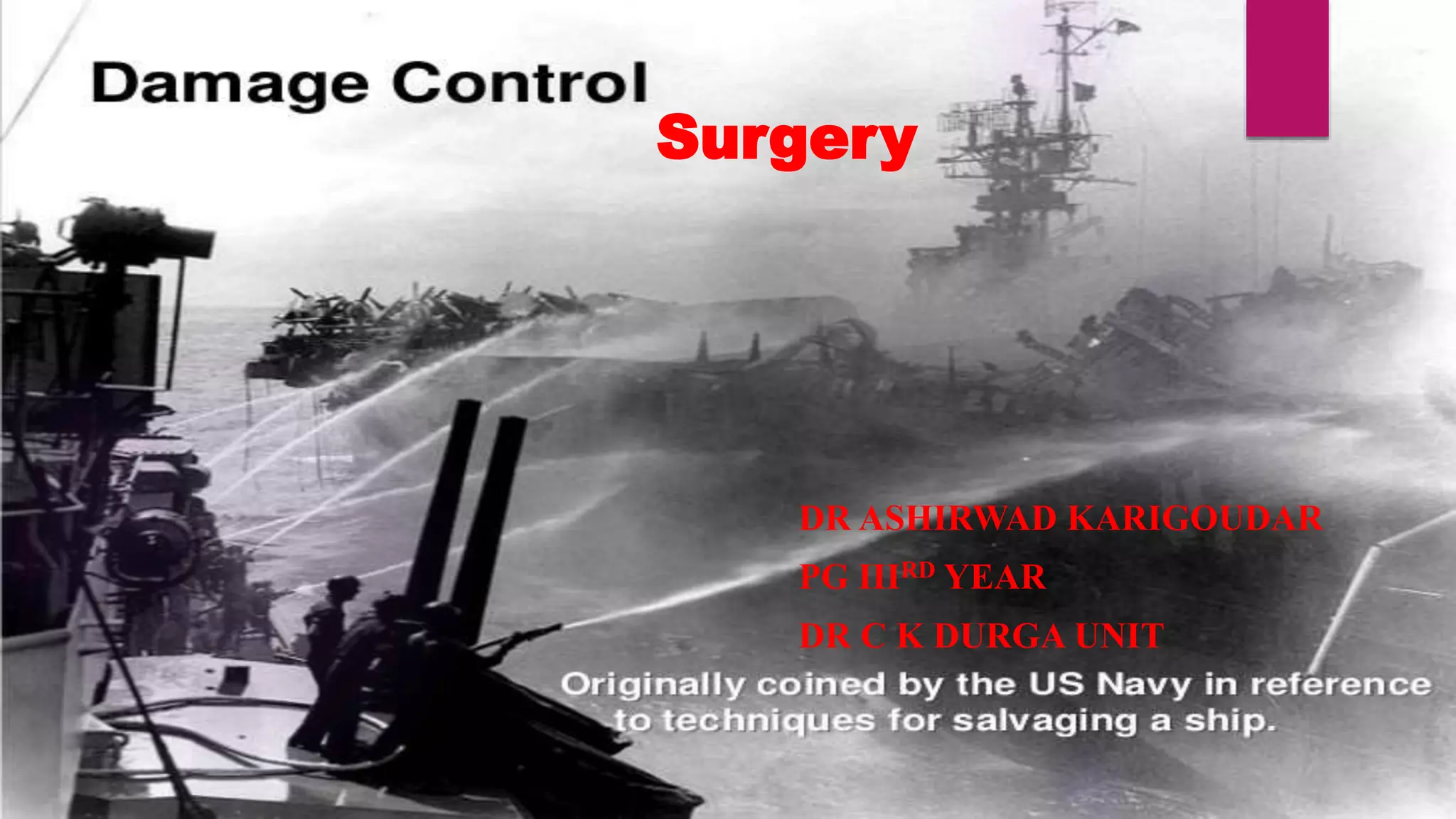
Surgery
DR ASHIRWAD KARIGOUDAR
PG IIIRD YEAR
DR C K DURGA UNIT
 Definition.
 Etymology.
 Indications.
 Damage control protocols.
 Conclusion.
Definition
 Damage control surgery(DCS) is a concept of abbreviated laparotomy,
designed to prioritize short-term physiological recovery over anatomical
reconstruction in the seriously injured and compromised patient.
 Damage control resuscitation (DCR) : A systematic approach to major
trauma combining the ABC paradigm with a series of clinical techniques
from point of wounding to definitive treatment in order to minimize blood
loss, maximize tissue oxygenation, and optimize outcome.
Etymology
 Stone and colleagues: Technique of ‘truncated laparotomy’ in
1983.
 Rotondo and colleagues: DCS as a 3 phase technique in 1993.
 Johnson and schwab: 4 phase technique ( pre-theatre phase).
Indications for DCS:
 Physiological Factors
1. Hypotension<90mmHg systolic pressure.
2. Hypothermia (temperature < 35° C).
3. Acidosis (pH < 7.2 or base deficit > 8).
4. Coagulopathy (increase in PT and/or PTT, thrombocytopenia,
hypo-fibrinogenemia).
5. Prohibitive operative time needed for definitive repair (> 90
minutes).
6. Massive blood requires > 10 units PRBC or body volume
replacement.
Injury severity
1. Inability to establish haemostasis.
2. High energy blunt abdominal/chest trauma.
3. Multiple penetrating abdominal/chest injuries.
4. Combined visceral injury with major vascular trauma.
5. Major intra-abdominal vascular injury.
6. Pelvic fracture with associated abdominal/vascular life-threatening
injury.
7. Massive abdominal contamination.
8. Life-threatening extra-abdominal injuries.
9. Abdominal wall reconstruction failure (IAH, ACS).
 Complications of DCS : intra- abdominal infection, fistula formation,
abdominal wall hernias.
Phases
PART I ( DC 0)
PART II ( DC 1)
PART III ( DC 2)
PART IV ( DC 3)
Phase 0
 Pre – hospital setting and in emergency room.
 Scoop and run, rather than stay and play.
 DCR includes:
-ABC resuscitation
-Permissive hypotension
-Limitation of crystalloid with early use of blood and blood products
-Early use of TXA
-DCS (DC I)
 Massive transfusion protocols:
DO NOT WAIT for results to before transfusing ,use ROTEM results as a guide if
available .Send repeat samples & check ABG, K+, Ca++
Patient still bleeding? Send for Pack 3 .
Collect haemorrhage Pack 3 and transfuse accordingly.
Patient still bleeding? Discuss with consultant haematologist Further component
require authorization from consultant to haematologist
Transfusion targets Hb 70–90 g litre–1 Platelets >75×109 litre–1 PT/PTT
<1.5×normal Fibrinogen >1.5–2.0 g litre–1
 Imaging studies :
- USG FAST
- X- rays
- CT scans.
Phase I
 Primary objectives include:
-Haemorrhage control.
-Limit contamination.
-Temporary abdominal closure.
 Aims to restore physiology at the expense of anatomical
reconstruction.
 On- going DCR.
Phase I addresses the following things expeditiously :
 Preparation.
 Incision.
 Haemorrhage control.
 Contamination limitation.
 Abdominal closure.
 Interventional radiology (???).
 Monitoring & transfer of patient to ICU.
Phase II
 The first several hours in the ICU are extremely labour intensive
 Require collaborative efforts of multiple critical care physicians,
nurses, and ancillary staff.
 The goal of DC II is to reverse the sequelae of hypotension related
metabolic failure.
 Physiological and biochemical restoration.
Phase II consists of:
 Adequate oxygen delivery to body tissues
 Intensive monitoring
 Immediate and aggressive core rewarming
 Aggressive approach to correction of coagulopathy
 Complete physical examination or ‘tertiary survey’.
 This may only require 12 h while many more will require 24–36 h
Phase II unplanned re-exploration:
 These include:
-Patients who have ongoing transfusion requirements or persistent
acidosis despite normalized clotting and core temperature.
-The second group requiring unplanned return to the operating
theatre have developed ACS.
Phase III
 Timing is critical.
 Ensure that adequate resuscitation and physiological optimization
has been achieved.
 With focused, critical care management and resuscitation one may
obtain this physiological state within 24–36 hours.
 Addresses the definitive repair and tension free abdominal closure.
TAKE HOME MESSAGE !!!
 DCS and resuscitation have been associated with improvements in
survival .
 Reduced incidence of complications in major trauma patients.
 DCR - may reduce the requirement of DCS.
THANK YOU

Damage control surgery

  • 1.
    Surgery DR ASHIRWAD KARIGOUDAR PGIIIRD YEAR DR C K DURGA UNIT
  • 2.
     Definition.  Etymology. Indications.  Damage control protocols.  Conclusion.
  • 3.
    Definition  Damage controlsurgery(DCS) is a concept of abbreviated laparotomy, designed to prioritize short-term physiological recovery over anatomical reconstruction in the seriously injured and compromised patient.  Damage control resuscitation (DCR) : A systematic approach to major trauma combining the ABC paradigm with a series of clinical techniques from point of wounding to definitive treatment in order to minimize blood loss, maximize tissue oxygenation, and optimize outcome.
  • 4.
    Etymology  Stone andcolleagues: Technique of ‘truncated laparotomy’ in 1983.  Rotondo and colleagues: DCS as a 3 phase technique in 1993.  Johnson and schwab: 4 phase technique ( pre-theatre phase).
  • 5.
    Indications for DCS: Physiological Factors 1. Hypotension<90mmHg systolic pressure. 2. Hypothermia (temperature < 35° C). 3. Acidosis (pH < 7.2 or base deficit > 8). 4. Coagulopathy (increase in PT and/or PTT, thrombocytopenia, hypo-fibrinogenemia). 5. Prohibitive operative time needed for definitive repair (> 90 minutes). 6. Massive blood requires > 10 units PRBC or body volume replacement.
  • 6.
    Injury severity 1. Inabilityto establish haemostasis. 2. High energy blunt abdominal/chest trauma. 3. Multiple penetrating abdominal/chest injuries. 4. Combined visceral injury with major vascular trauma. 5. Major intra-abdominal vascular injury. 6. Pelvic fracture with associated abdominal/vascular life-threatening injury.
  • 7.
    7. Massive abdominalcontamination. 8. Life-threatening extra-abdominal injuries. 9. Abdominal wall reconstruction failure (IAH, ACS).  Complications of DCS : intra- abdominal infection, fistula formation, abdominal wall hernias.
  • 8.
    Phases PART I (DC 0) PART II ( DC 1) PART III ( DC 2) PART IV ( DC 3)
  • 9.
    Phase 0  Pre– hospital setting and in emergency room.  Scoop and run, rather than stay and play.  DCR includes: -ABC resuscitation -Permissive hypotension -Limitation of crystalloid with early use of blood and blood products -Early use of TXA -DCS (DC I)
  • 10.
  • 11.
    DO NOT WAITfor results to before transfusing ,use ROTEM results as a guide if available .Send repeat samples & check ABG, K+, Ca++ Patient still bleeding? Send for Pack 3 . Collect haemorrhage Pack 3 and transfuse accordingly. Patient still bleeding? Discuss with consultant haematologist Further component require authorization from consultant to haematologist Transfusion targets Hb 70–90 g litre–1 Platelets >75×109 litre–1 PT/PTT <1.5×normal Fibrinogen >1.5–2.0 g litre–1
  • 12.
     Imaging studies: - USG FAST - X- rays - CT scans.
  • 13.
    Phase I  Primaryobjectives include: -Haemorrhage control. -Limit contamination. -Temporary abdominal closure.  Aims to restore physiology at the expense of anatomical reconstruction.  On- going DCR.
  • 14.
    Phase I addressesthe following things expeditiously :  Preparation.  Incision.  Haemorrhage control.  Contamination limitation.  Abdominal closure.  Interventional radiology (???).  Monitoring & transfer of patient to ICU.
  • 15.
    Phase II  Thefirst several hours in the ICU are extremely labour intensive  Require collaborative efforts of multiple critical care physicians, nurses, and ancillary staff.  The goal of DC II is to reverse the sequelae of hypotension related metabolic failure.  Physiological and biochemical restoration.
  • 16.
    Phase II consistsof:  Adequate oxygen delivery to body tissues  Intensive monitoring  Immediate and aggressive core rewarming  Aggressive approach to correction of coagulopathy  Complete physical examination or ‘tertiary survey’.  This may only require 12 h while many more will require 24–36 h
  • 17.
    Phase II unplannedre-exploration:  These include: -Patients who have ongoing transfusion requirements or persistent acidosis despite normalized clotting and core temperature. -The second group requiring unplanned return to the operating theatre have developed ACS.
  • 18.
    Phase III  Timingis critical.  Ensure that adequate resuscitation and physiological optimization has been achieved.  With focused, critical care management and resuscitation one may obtain this physiological state within 24–36 hours.  Addresses the definitive repair and tension free abdominal closure.
  • 19.
    TAKE HOME MESSAGE!!!  DCS and resuscitation have been associated with improvements in survival .  Reduced incidence of complications in major trauma patients.  DCR - may reduce the requirement of DCS.
  • 20.