Blood Conservation Overview
Dafydd Thomas
Consultant in ICM
Welsh Blood Service
Chair NATA
Chair SHOT Steering Group
Past President BBTS
Declaration of Interests
•No conflicts
•No conflict of interest with ICS
manufacturers
•Past President BBTS
•Chair of NATA
•Chair of SHOT Steering Committee
•Seconded to Welsh Blood Service/National
Wales Informatics Service
•No current research funding/commercial
interests to declare
Transfusion Alternatives

• Future blood supply
– New pathogen risks
– Plentiful supply
– Ageing demographics

• Benefits of transfusion
• Adverse effects of transfusion
– TRIM, TACO, ATR etc
– Outcome better or worse
– Cost to Health Service?
Transfusion alternatives

Even if you wish to continue
using allogeneic blood
someone needs to cut their
use so you can continue if
supply demand is an issue
Transfusion alternatives?
• Other ways of treating anaemia
• Transfusion needs to become last
resort
• Integrate alternatives in main
stream practice
• Integrate in blood services
planning
Reducing risks of allogeneic transfusion
Donor selection
Testing

Transfusion
Transmitted
Infection

Better process

ABO
Incompatibility
Transfusion
Related ALI
TRALI
Leucodepletion

Male only plasma
Transfusion
Related
Immunomodulation
TRIM

Transfusion
Associated
Circulatory
Overload
TACO

6th Seminar of the Hellenic Blood Transfusion Society-March 13-14, 2009, Athens-Greece
Attendance of WBS donors in response to
calling letters: 1990/01 – 2005/06
Donors Called

Donors Attending

6th Seminar of the Hellenic Blood Transfusion Society-March 13-14, 2009, Athens-Greece
P2Y12
6th Seminar of the Hellenic Blood
Transfusion Society-March 13-14, 2009,
Athens-Greece
6th Seminar of the Hellenic Blood
Transfusion Society-March 13-14, 2009,
Athens-Greece
6th Seminar of the Hellenic Blood
Transfusion Society-March 13-14, 2009,
Athens-Greece
The Journal of Thoracic and
Cardiovascular Surgery Volume 142,
Number 2 249.e1
The Journal of Thoracic and
Cardiovascular Surgery Volume 142,
Number 2 249.e1
The Journal of Thoracic and
Cardiovascular Surgery Volume 142,
Number 2 249.e1
Transfusion effect ? How can we separate from surgical effect ?

Variance


Massive Haemorrhage
Complicated or Unexpected
Difficult surgery


Withhold transfusion
Minimal Haemorrhage
Complicated surgery
Straightforward Surgery

Moderate or
controlled haemorrhage

Mortality

Transfusion
Inter-Hospital Variability of Transfusion Rates
in Matched THR Patients
1st and 2nd Austrian Benchmark Study (n=2,570)

Transfusion rate

90%

68%

27.7% reduction in txn rate
44.1% reduction in units txed per patient
0.00% mortality

45%

23%

0%
15

Study I
Study II

12

13

16

9

3

1

7

2

11

4

6

5

8

10

Center

Gombotz H, Rehak P, Hofmann A. Blood use in elective surgery: Comparison - Austrian benchmark study I and II. Unpublished Data, 2011
Acknowledgements to Axel Hofmann & Shannon Farmer
The Red Cell Storage Lesion:
Structural Changes.

6th Seminar of the Hellenic Blood
Transfusion Society-March 13-14, 2009,
Athens-Greece
6th Seminar of the Hellenic Blood
Transfusion Society-March 13-14, 2009,
Athens-Greece
Better planning

Pre-operative preparation
Assessing reserve
Stopping drugs
Warfarin
Aspirin
Clopidogrel

Pre-operative Association
Better planning

Pre-operative preparation
Assessing reserve
Stopping drugs
Warfarin
Aspirin
Clopidogrel
Starting drugs
Iron
Folate
EPO
Aprotonin
Group and Save

Pre-operative Association
What is Patient Blood Management ?
In MJA 1988 Professor Isbister proposed the need
for a paradigm shift in the care of patients who
are being considered for transfusion of fresh blood
products.

Originator of the term PBM

Clinical Professor James Isbister BSc(Med), MB BS, FRACP, FRCPA.
Emeritus Consultant, Haematology & Transfusion Medicine, Royal North Shore
Hospital, Sydney, Australia.
Clinical Professor of Medicine, University of Sydney, Sydney, Australia;
Adjunct Professor, University of Technology, Sydney, Sydney, Australia;
Adjunct Professor, Monash University, Melbourne, Australia;
How to best manage the patients own
oxygen carrying capacity…..
….to minimise dependence on the blood
bank
Author of ‘Peri-operative Blood Transfusion’
PBM = good clinical medicine
An approach to safe, quality patient care….

Defined as –
“the timely application of evidence-based
medical and surgical concepts designed to
maintain haemoglobin concentration,
optimise haemostasis and minimise blood loss
in an effort to improve patient outcome”,
patient blood management is expected to
reshape the future of transfusion medicine
and the way blood components are used in
clinical practice.
PBM = good clinical medicine
An approach to safe, quality patient care….
• Aim is to optimise, conserve and manage the
patient’s own blood to minimise or avoid
exposure to allogeneic blood


• Changing the transfusion paradigm from a
product focus to a patient focus


• Patient-specific team approach


• And results in improved patient outcomes
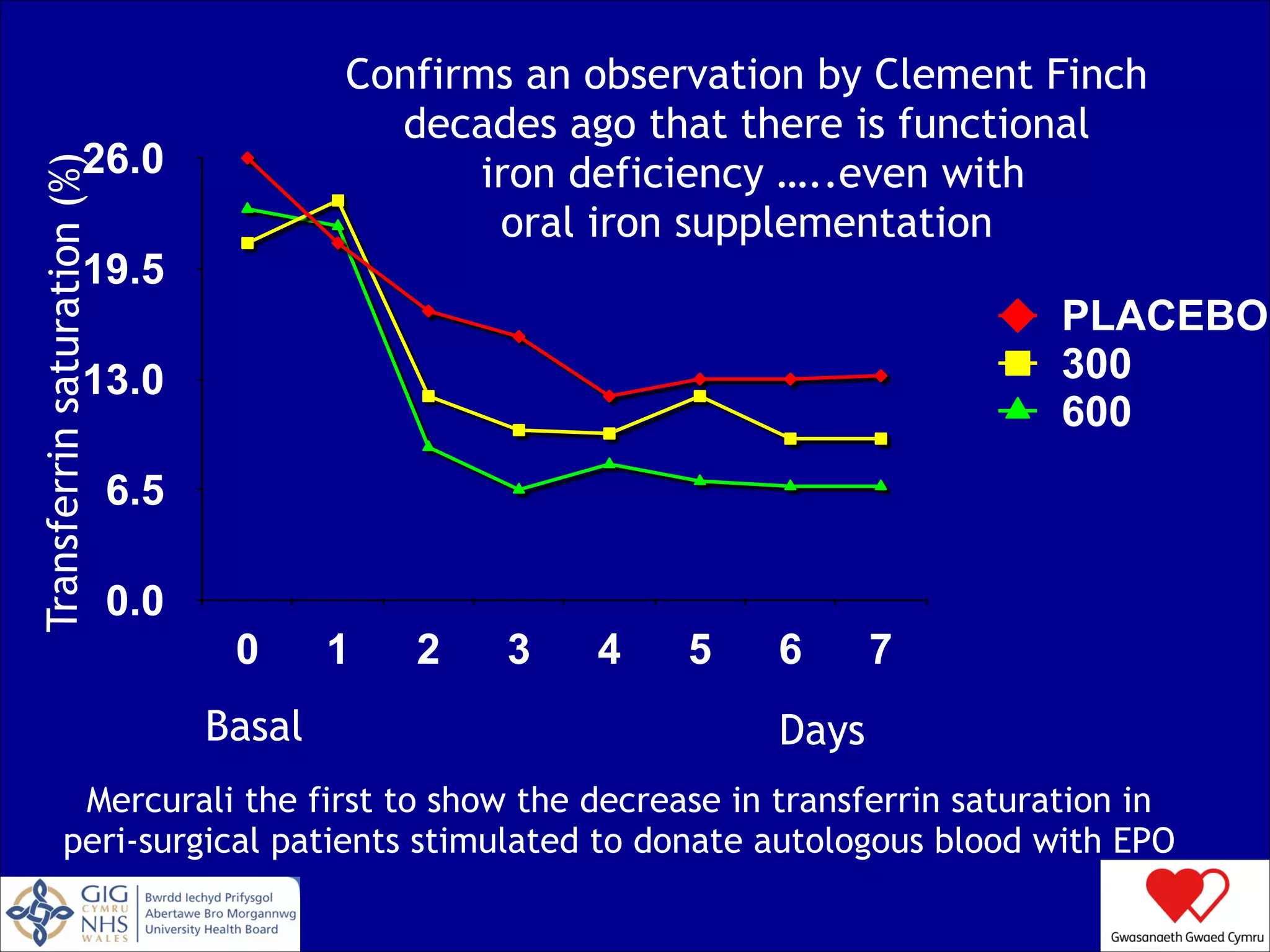
Confirms an observation by Clement Finch
decades ago that there is functional
iron deficiency …..even with
oral iron supplementation

Transferrin saturation (%)

26.0
19.5

PLACEBO
300
600

13.0
6.5
0.0
0
Basal

1

2

3

4

5

6

7

Days

Mercurali the first to show the decrease in transferrin saturation in
peri-surgical patients stimulated to donate autologous blood with EPO
Intravenous versus oral iron supplementation for
preoperative stimulation of hemoglobin synthesis using
recombinant human erythropoietin

Neither group required allogeneic transfusion
112 versus 110g.L-1
Blood loss 1583 ± 685 versus 1325 ± 767mls

Rohling RG, Zimmermann AP, Breymann C Journal of
Hematotherapy & Stem Cell Research. 2000;9:497-500
Intravenous iron and recombinant erythropoietin
for the treatment of postoperative anemia
IV iron plus EPO on day 1 and 3

IS +EPO IS

0

IS +EPO

1

5

2

3

4

6

Increase in Hb

7

Post Operative Days
Karkouti K et al Can J Anaesth 2006 Jan;53(1):11-19
Intravenous iron and recombinant erythropoietin for
the treatment of postoperative anemia

At six weeks increases were
37+/- 14g.L-1 40+/-7g.L-1 and 45+/- 12g.L -1

0

1

2

3

4

5

6

7

Post Operative Weeks
Karkouti K et al Can J Anaesth 2006 Jan;53(1):11-19
Update on adverse drug events
associated with parenteral iron
Iron sucrose
Sodium ferric gluconate
LMW iron dextran
HMW iron dextran

0.6 per million
0.9.per million
3.3 per million
11.3 per million

Chertow GM et al Nephrology Dialysis Transplantation. 2006 21(2):
378-382
British Journal of O&G
Online early Sept 2006
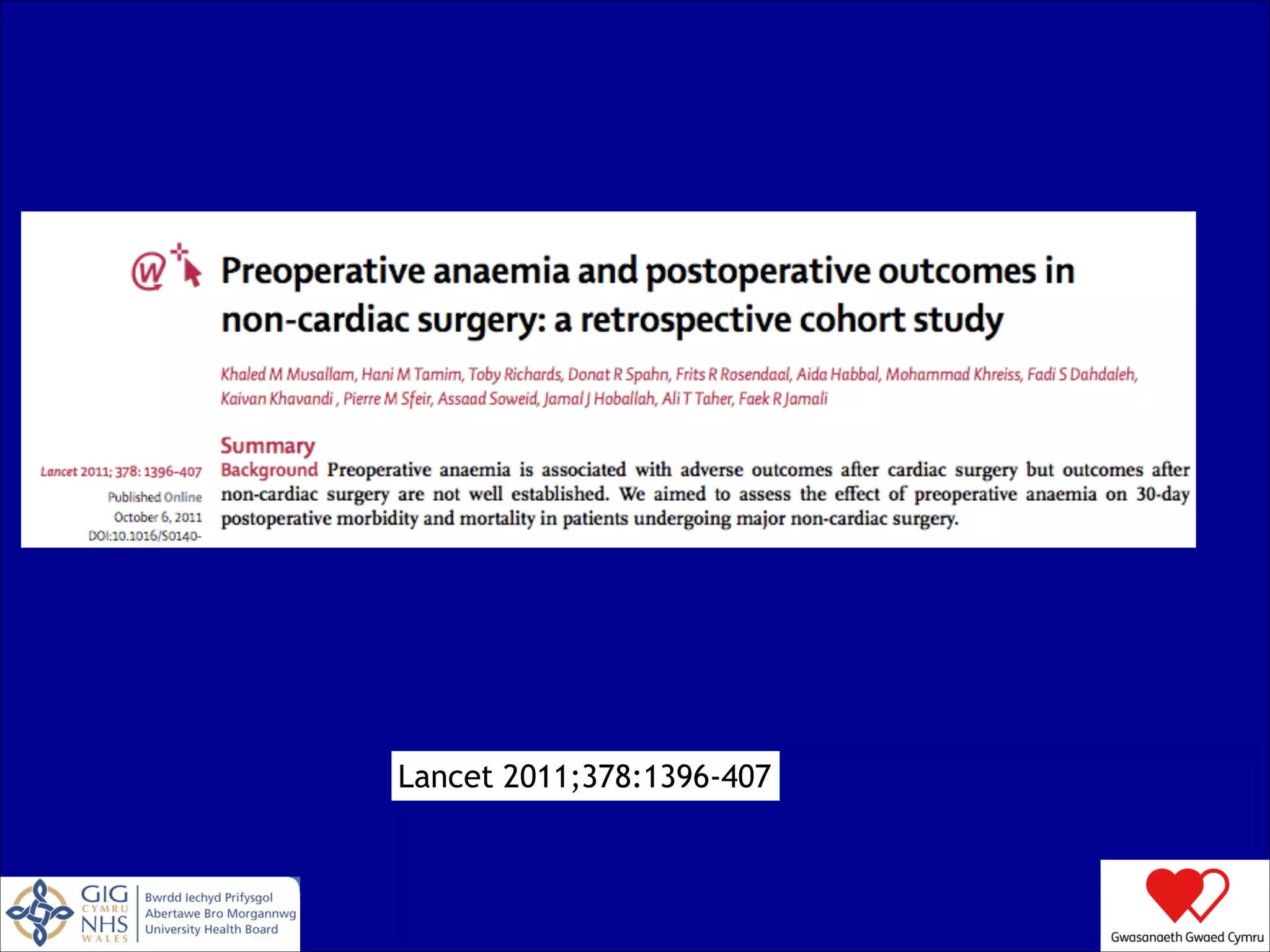
Lancet 2011;378:1396-407
Preoperative haemoglobin assessment and optimisation template
This template1 is for patients undergoing procedures in which substantial blood loss is anticipated such as cardiac surgery, major orthopaedic, vascular and
general surgery. Specific details, including reference ranges and therapies, may need adaptation for local needs, expertise or patient groups.

Preoperative tests
• Full blood count
• Iron studies2 including ferritin
• CRP and renal function

Is the patient anaemic?
Hb <130 g/L (male) or
Hb <120 g/L (female)

NO

YES
Ferritin <30 mcg/L2,3

Ferritin 30–100 mcg/L2,3

Ferritin >100 mcg/L

CRP4
Raised

No anaemia: ferritin 

<100 mcg/L
•Consider iron therapy# if
anticipated postoperative Hb
decrease is ≥30 g/L
•Determine cause and need for GI
investigations if ferritin is
suggestive of iron deficiency <30
mcg/L2,3

Iron deficiency anaemia
• Evaluate possible causes based
on clinical findings
• Discuss with gastroenterologist
regarding GI investigations and
their timing in relation to
surgery3
• Commence iron therapy#

Normal

Possible iron deficiency
• Consider clinical context
• Consider haematology advice or,
in the presence of chronic
kidney disease, renal advice
• Discuss with gastroenterologist
regarding GI investigations and
their timing in relation to
surgery3
• Commence iron therapy#

Possible anaemia of chronic
disease or inflammation, or other
cause5
• Consider clinical context
• Review renal function, MCV/MCH
and blood film
• Check B12/folate levels and
reticulocyte count
• Check liver and thyroid function
• Seek haematology advice or, in
the presence of chronic kidney
disease, renal advice
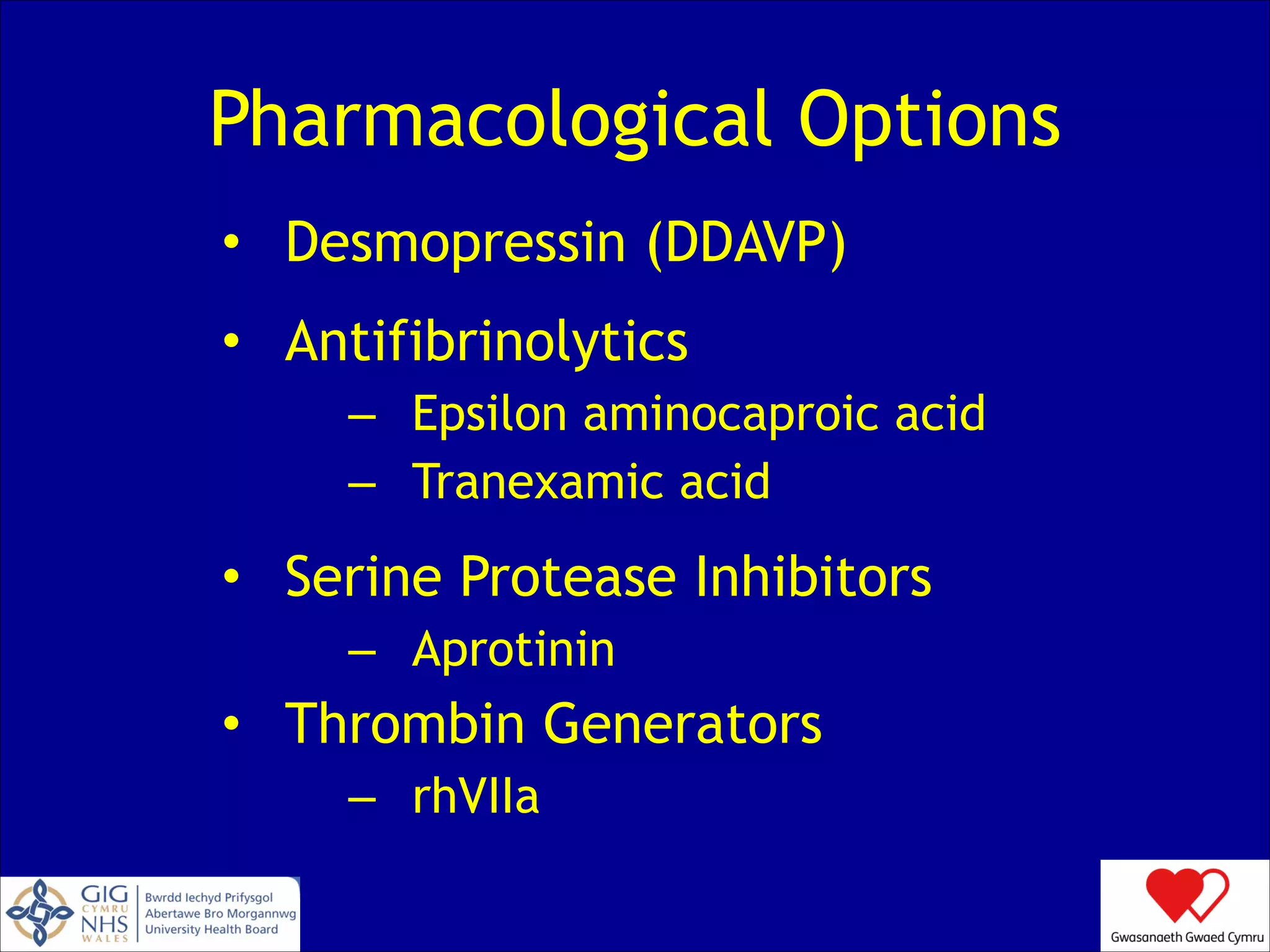
Pharmacological Options
• Desmopressin (DDAVP)
• Antifibrinolytics
– Epsilon aminocaproic acid
– Tranexamic acid

• Serine Protease Inhibitors
– Aprotinin

• Thrombin Generators
– rhVIIa
Meta-analysis of Lysine Analogues

in Heart Surgery

Control
Aspirin
1o vs Repeat

Laupacis et al Anesth Analg 1997;85:1258-1267
Tranexamic Acid in Knee (TKR) and
Hip (THR) Surgery
Benoni 1996
Hiippalla 1997
Jansen 1999
Hiippalla 1995
Ellis 2001
Engel 2001
Veien 2002
All TKR
Benoni 2001
Ekback 2000
Harley 2002
All THR

0.01

0.1

1

Relative Risk of Transfusion

10
Sunny Dzik SHOT 2011
Better planning

Pre-operative preparation
Assessing reserve
Stopping drugs
Starting drugs


Operative haemostasis

Intra-operative cell salvage

Post-operative cell salvage
Surgical Control of Bleeding


• Digital pressure
• Sutures and clips
• Thermal coagulation
• Topical hemostatic agents
• Organ wrapping- mesh net
Methods of achieving hemostasis
• Mechanical methods and devices
– Digital pressure, suture, packing, tourniquet
– Band ligation - elastic ligatures for endoscopic
ligation of esophageal varices or other blood vessels
– Hemoclips – endoscopic and laparoscopic ligation of
blood vessels
– Detachable loops – endoscopic loops / nylon, teflon/
– Intraluminal grafts and stents for aneurism repair
• Thermal agents – electrocautery, produce hemostasis
by heating and denaturing proteins, resulting in
coagulation
• Pharmacologic agents :

– vasoconstriction -Vasopressin, Somatostatin, epsilon-aminocaproic
acid

– Matrix for attracting blood elements
– Agents enhancing clotting factor activity –Desmopressin,
r-FVIIa .
Topical hemostatic agents should have several properties:
1) rapid hemostasis, 2) easily applied 3) hold sutures
4) little tissue reaction, 5) low infectious risk, 6) absorbable,
7) easily removed
Fibrinogen-based products


•

Liquid Fibrin Sealant -Tisseel® fibrinogen, factor

•

TachoComb / TachoSil®

•
•
•
•

Fibrin foam
Autologous fibrin glue
Topical thrombin
Hemostatic dressings -with Ca alginate

XII and thrombin +antifibrinolytic (aprotinin) . Sealing of bleeding
tissue starts with fibrin formation, the end stages of natural
blood coagulation. Fibrinogen is converted to fibrin strands that
join into net-like matrices
and aprotonin on collagen mesh

- dry fibrinogen, thrombin
Collagen-based products


• Avitene®

(Alcon,Inc.)

• Floseal®

(Baxter)

Microfibrillar collagen hemostat Effective
in controlling arterial bleeding. Can be used on irregular surfaces.
Easy removal with irrigation and suction reduces rebleeding and the
need for multiple applications.
Gelatin matrix of collagen and topical
human thrombin. Works on wet, actively bleeding tissue, can be
applied focally or extruded and spread to cover a large area of
diffuse bleeding
Oxidized Regenerated Cellulose

•
For control of capillary, venous and arterial bleeding in
cases when conventional methods for hemostasis are
ineffective.

SURGICEL®
•
•
•
•
•


Fast resorption (1-2 weeks)
Minimal tissue reaction
No allergenic reaction
Easy to apply
Antibacterial properties!


ARISTA ® (Ethicon,Inc.)
absorbable hemostat, based on microporous
polysaccharide hemospheres. Used in the
control of profuse bleeding. The particles act
as a molecular filter producing “instant gelling”,
followed by the formation of a fibrin mesh
Nonsurgical Interventions

to Achieve Hemostasis


• Pneumatic antishock garment

• patients with pelvic and lower extremity
fractures
• hypovolemic shock

• Angiographic embolization
• Temporary balloon occlusion
External pelvic
fixator –
fractures associated
with a diastasis of the
pubic symphysis (“openbook” pelvic fractures)
Some things don’t change
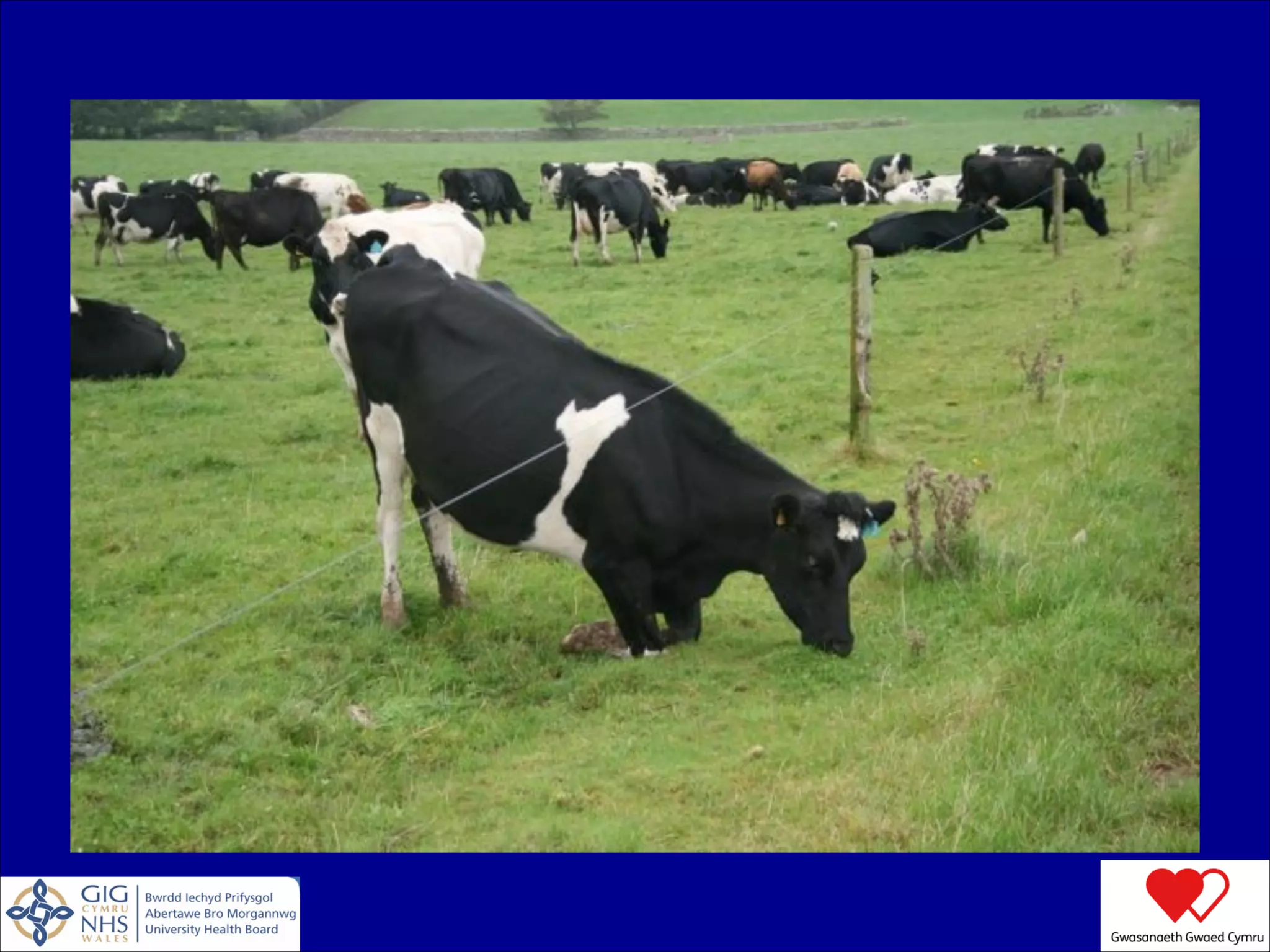
• It still rains in Wales
• There are still instances when blood
components are given without good reason
or are wasted
• More instances of wastage than of failure to
provide
• Big difference between withholding a
transfusion on clinical grounds and not
transfusing when indicated.
12 November 2012
26 November 2012
Cell salvage in emergency bleeding
•
•
•
•

Life saving provision of autologous blood
May be the only available blood
Warm, active O2 carriage High 2,3 DPG
Decreases demand on allogeneic supplies

6th Seminar of the Hellenic Blood
Transfusion Society-March 13-14, 2009,
Athens-Greece
Grade IV Liver trauma

6th Seminar of the Hellenic Blood
Transfusion Society-March 13-14, 2009,
Athens-Greece
Intra-operative Blood
Requirements
60

Units

45
Allogeneic
Autologous Blood

30
15
0
16F

31M

23M

19M

6th Seminar of the Hellenic Blood
Transfusion Society-March 13-14, 2009,
Athens-Greece
6th Seminar of the Hellenic Blood
Transfusion Society-March 13-14, 2009,
Athens-Greece
MSBOS & Cell Saved Units
Operation 1993
THR
2-3
Rev THR
4-6
TKR
2-3
AAA
6-8
Fem-Popliteal 2
Aorto-Bifem 4
Cystectomy 6
Nephrectomy 4

Mean
<1
2-3
1.5
3
<1
<1
2-3
2

6th Seminar of the Hellenic Blood
Transfusion Society-March 13-14, 2009,
Athens-Greece

2001
G+S
2
G+S
3
G+S
G+S
2(^3)
2
Early coagulopathy in multiple injury: an analysis from
the German Trauma Registry on 8724 patients
90
68

ISS 1-15
ISS 16-24
ISS 25-49
ISS 50-75

45
23
0
<1000

1000+

2000+

3000+

4000+

0C
3
2.5
2
1.5
1
0.5

pH

0

Relative Rate of FVIIa Generation

Meng ZH et al J Trauma 2003;55:886-891

6.2 6.6 7

7.4 7.8 8.2 8.6 9

Inhibition of 70% at pH 7.0 as compared to 7.4
Wolberg et al J Trauma 2004;56(6):1221-1228
• Bleeding observed at mildly reduced
temperatures (330C-370C) results primarily
from a platelet adhesion defect and not
reduced enzyme activity or platelet activation


• At temperatures below 330C both reduced
platelet function and enzyme activity likely to
contribute to the coagulopathy
Tissue Oxygen partial pressure, mmHg

Organ Specific PO2 During a Wide Range of Hcts
70
60
50
40
30
20
10
0

Cardiac output, %

180
150
120
100
0

42

30

25

19

Arterial hematocrit, %
Skeletal muscle

Liver

Pancreas

Small instestine

Kidney

Messmer K, et al. Res Exp Med (Berl) 1973;159:152-166
O2 – consumption (VO2)
!T
iss
ue
Hy
po
xia
!

Limit of Hemodilution

„critical“ DO2

O2 – delivery (DO2)
Transfusion requirements in critical care
(TRICC): a multicentre, randomised, controlled
clinical study

• 30 day mortality similar in both groups
Apache <20 23% P=0.11)16.1% P0.03)
(8.7% v
(18.7% v’s
< 50yrs 5.7%(8.7% v’s 16.1% P0.03)
• Apache <20 v 13% P 0.02%)
• < 50yrs 5.7% v’s 13% P 0.02%)
• Significant cardiac disease 20.5% v’s
22.9%
Paul C Hébert et al NEJM 1999 No6 Vol 340 p409-17
Transfusion triggers: have we gone too low?

Transfusion Requirements

in Orthopedic Surgery (TRIOS)
Élise Vuille-Lessard, B.Sc.
Monique Ruel, R.N.
Jean-François Hardy, M.D.
Department of Anesthesiology
CHUM Notre-Dame
Montreal, Canada

NATA Annual Symposium
Dublin, 7-8 April 2011
Newest –Great Data from Virginia

Study is being widely heralded!
Tx Reduction Improved Outcomes!

This program saved the state of Virginia $49,000,000.00
Diolch

Dafydd Thomas on Blood Conservation

  • 1.
    Blood Conservation Overview DafyddThomas Consultant in ICM Welsh Blood Service Chair NATA Chair SHOT Steering Group Past President BBTS
  • 2.
    Declaration of Interests •Noconflicts •No conflict of interest with ICS manufacturers •Past President BBTS •Chair of NATA •Chair of SHOT Steering Committee •Seconded to Welsh Blood Service/National Wales Informatics Service •No current research funding/commercial interests to declare
  • 3.
    Transfusion Alternatives • Futureblood supply – New pathogen risks – Plentiful supply – Ageing demographics • Benefits of transfusion • Adverse effects of transfusion – TRIM, TACO, ATR etc – Outcome better or worse – Cost to Health Service?
  • 4.
    Transfusion alternatives Even ifyou wish to continue using allogeneic blood someone needs to cut their use so you can continue if supply demand is an issue
  • 5.
    Transfusion alternatives? • Otherways of treating anaemia • Transfusion needs to become last resort • Integrate alternatives in main stream practice • Integrate in blood services planning
  • 7.
    Reducing risks ofallogeneic transfusion Donor selection Testing Transfusion Transmitted Infection Better process ABO Incompatibility Transfusion Related ALI TRALI Leucodepletion Male only plasma Transfusion Related Immunomodulation TRIM Transfusion Associated Circulatory Overload TACO 6th Seminar of the Hellenic Blood Transfusion Society-March 13-14, 2009, Athens-Greece
  • 9.
    Attendance of WBSdonors in response to calling letters: 1990/01 – 2005/06 Donors Called Donors Attending 6th Seminar of the Hellenic Blood Transfusion Society-March 13-14, 2009, Athens-Greece
  • 11.
  • 12.
    6th Seminar ofthe Hellenic Blood Transfusion Society-March 13-14, 2009, Athens-Greece
  • 13.
    6th Seminar ofthe Hellenic Blood Transfusion Society-March 13-14, 2009, Athens-Greece
  • 14.
    6th Seminar ofthe Hellenic Blood Transfusion Society-March 13-14, 2009, Athens-Greece
  • 15.
    The Journal ofThoracic and Cardiovascular Surgery Volume 142, Number 2 249.e1
  • 16.
    The Journal ofThoracic and Cardiovascular Surgery Volume 142, Number 2 249.e1
  • 17.
    The Journal ofThoracic and Cardiovascular Surgery Volume 142, Number 2 249.e1
  • 18.
    Transfusion effect ?How can we separate from surgical effect ? Variance Massive Haemorrhage Complicated or Unexpected Difficult surgery Withhold transfusion Minimal Haemorrhage Complicated surgery Straightforward Surgery Moderate or controlled haemorrhage Mortality Transfusion
  • 21.
    Inter-Hospital Variability ofTransfusion Rates in Matched THR Patients 1st and 2nd Austrian Benchmark Study (n=2,570) Transfusion rate 90% 68% 27.7% reduction in txn rate 44.1% reduction in units txed per patient 0.00% mortality 45% 23% 0% 15 Study I Study II 12 13 16 9 3 1 7 2 11 4 6 5 8 10 Center Gombotz H, Rehak P, Hofmann A. Blood use in elective surgery: Comparison - Austrian benchmark study I and II. Unpublished Data, 2011 Acknowledgements to Axel Hofmann & Shannon Farmer
  • 22.
    The Red CellStorage Lesion: Structural Changes. 6th Seminar of the Hellenic Blood Transfusion Society-March 13-14, 2009, Athens-Greece
  • 23.
    6th Seminar ofthe Hellenic Blood Transfusion Society-March 13-14, 2009, Athens-Greece
  • 24.
    Better planning Pre-operative preparation Assessingreserve Stopping drugs Warfarin Aspirin Clopidogrel Pre-operative Association
  • 25.
    Better planning Pre-operative preparation Assessingreserve Stopping drugs Warfarin Aspirin Clopidogrel Starting drugs Iron Folate EPO Aprotonin Group and Save Pre-operative Association
  • 26.
    What is PatientBlood Management ? In MJA 1988 Professor Isbister proposed the need for a paradigm shift in the care of patients who are being considered for transfusion of fresh blood products. Originator of the term PBM Clinical Professor James Isbister BSc(Med), MB BS, FRACP, FRCPA. Emeritus Consultant, Haematology & Transfusion Medicine, Royal North Shore Hospital, Sydney, Australia. Clinical Professor of Medicine, University of Sydney, Sydney, Australia; Adjunct Professor, University of Technology, Sydney, Sydney, Australia; Adjunct Professor, Monash University, Melbourne, Australia;
  • 27.
    How to bestmanage the patients own oxygen carrying capacity….. ….to minimise dependence on the blood bank Author of ‘Peri-operative Blood Transfusion’
  • 28.
    PBM = goodclinical medicine An approach to safe, quality patient care…. Defined as – “the timely application of evidence-based medical and surgical concepts designed to maintain haemoglobin concentration, optimise haemostasis and minimise blood loss in an effort to improve patient outcome”, patient blood management is expected to reshape the future of transfusion medicine and the way blood components are used in clinical practice.
  • 29.
    PBM = goodclinical medicine An approach to safe, quality patient care…. • Aim is to optimise, conserve and manage the patient’s own blood to minimise or avoid exposure to allogeneic blood • Changing the transfusion paradigm from a product focus to a patient focus • Patient-specific team approach • And results in improved patient outcomes
  • 32.
    Confirms an observationby Clement Finch decades ago that there is functional iron deficiency …..even with oral iron supplementation Transferrin saturation (%) 26.0 19.5 PLACEBO 300 600 13.0 6.5 0.0 0 Basal 1 2 3 4 5 6 7 Days Mercurali the first to show the decrease in transferrin saturation in peri-surgical patients stimulated to donate autologous blood with EPO
  • 33.
    Intravenous versus oraliron supplementation for preoperative stimulation of hemoglobin synthesis using recombinant human erythropoietin Neither group required allogeneic transfusion 112 versus 110g.L-1 Blood loss 1583 ± 685 versus 1325 ± 767mls Rohling RG, Zimmermann AP, Breymann C Journal of Hematotherapy & Stem Cell Research. 2000;9:497-500
  • 34.
    Intravenous iron andrecombinant erythropoietin for the treatment of postoperative anemia IV iron plus EPO on day 1 and 3 IS +EPO IS 0 IS +EPO 1 5 2 3 4 6 Increase in Hb 7 Post Operative Days Karkouti K et al Can J Anaesth 2006 Jan;53(1):11-19
  • 35.
    Intravenous iron andrecombinant erythropoietin for the treatment of postoperative anemia At six weeks increases were 37+/- 14g.L-1 40+/-7g.L-1 and 45+/- 12g.L -1 0 1 2 3 4 5 6 7 Post Operative Weeks Karkouti K et al Can J Anaesth 2006 Jan;53(1):11-19
  • 36.
    Update on adversedrug events associated with parenteral iron Iron sucrose Sodium ferric gluconate LMW iron dextran HMW iron dextran 0.6 per million 0.9.per million 3.3 per million 11.3 per million Chertow GM et al Nephrology Dialysis Transplantation. 2006 21(2): 378-382
  • 37.
    British Journal ofO&G Online early Sept 2006
  • 38.
  • 39.
  • 41.
    Preoperative haemoglobin assessmentand optimisation template This template1 is for patients undergoing procedures in which substantial blood loss is anticipated such as cardiac surgery, major orthopaedic, vascular and general surgery. Specific details, including reference ranges and therapies, may need adaptation for local needs, expertise or patient groups. Preoperative tests • Full blood count • Iron studies2 including ferritin • CRP and renal function Is the patient anaemic? Hb <130 g/L (male) or Hb <120 g/L (female) NO YES Ferritin <30 mcg/L2,3 Ferritin 30–100 mcg/L2,3 Ferritin >100 mcg/L CRP4 Raised No anaemia: ferritin 
 <100 mcg/L •Consider iron therapy# if anticipated postoperative Hb decrease is ≥30 g/L •Determine cause and need for GI investigations if ferritin is suggestive of iron deficiency <30 mcg/L2,3 Iron deficiency anaemia • Evaluate possible causes based on clinical findings • Discuss with gastroenterologist regarding GI investigations and their timing in relation to surgery3 • Commence iron therapy# Normal Possible iron deficiency • Consider clinical context • Consider haematology advice or, in the presence of chronic kidney disease, renal advice • Discuss with gastroenterologist regarding GI investigations and their timing in relation to surgery3 • Commence iron therapy# Possible anaemia of chronic disease or inflammation, or other cause5 • Consider clinical context • Review renal function, MCV/MCH and blood film • Check B12/folate levels and reticulocyte count • Check liver and thyroid function • Seek haematology advice or, in the presence of chronic kidney disease, renal advice
  • 42.
    Pharmacological Options • Desmopressin(DDAVP) • Antifibrinolytics – Epsilon aminocaproic acid – Tranexamic acid • Serine Protease Inhibitors – Aprotinin • Thrombin Generators – rhVIIa
  • 43.
    Meta-analysis of LysineAnalogues
 in Heart Surgery Control Aspirin 1o vs Repeat Laupacis et al Anesth Analg 1997;85:1258-1267
  • 45.
    Tranexamic Acid inKnee (TKR) and Hip (THR) Surgery Benoni 1996 Hiippalla 1997 Jansen 1999 Hiippalla 1995 Ellis 2001 Engel 2001 Veien 2002 All TKR Benoni 2001 Ekback 2000 Harley 2002 All THR 0.01 0.1 1 Relative Risk of Transfusion 10
  • 46.
  • 47.
  • 48.
    Better planning Pre-operative preparation Assessingreserve Stopping drugs Starting drugs Operative haemostasis Intra-operative cell salvage Post-operative cell salvage
  • 50.
    Surgical Control ofBleeding • Digital pressure • Sutures and clips • Thermal coagulation • Topical hemostatic agents • Organ wrapping- mesh net
  • 51.
    Methods of achievinghemostasis • Mechanical methods and devices – Digital pressure, suture, packing, tourniquet – Band ligation - elastic ligatures for endoscopic ligation of esophageal varices or other blood vessels – Hemoclips – endoscopic and laparoscopic ligation of blood vessels – Detachable loops – endoscopic loops / nylon, teflon/ – Intraluminal grafts and stents for aneurism repair
  • 52.
    • Thermal agents– electrocautery, produce hemostasis by heating and denaturing proteins, resulting in coagulation • Pharmacologic agents : – vasoconstriction -Vasopressin, Somatostatin, epsilon-aminocaproic acid – Matrix for attracting blood elements – Agents enhancing clotting factor activity –Desmopressin, r-FVIIa . Topical hemostatic agents should have several properties: 1) rapid hemostasis, 2) easily applied 3) hold sutures 4) little tissue reaction, 5) low infectious risk, 6) absorbable, 7) easily removed
  • 53.
    Fibrinogen-based products • Liquid FibrinSealant -Tisseel® fibrinogen, factor • TachoComb / TachoSil® • • • • Fibrin foam Autologous fibrin glue Topical thrombin Hemostatic dressings -with Ca alginate XII and thrombin +antifibrinolytic (aprotinin) . Sealing of bleeding tissue starts with fibrin formation, the end stages of natural blood coagulation. Fibrinogen is converted to fibrin strands that join into net-like matrices and aprotonin on collagen mesh - dry fibrinogen, thrombin
  • 54.
    Collagen-based products • Avitene® (Alcon,Inc.) •Floseal® (Baxter) Microfibrillar collagen hemostat Effective in controlling arterial bleeding. Can be used on irregular surfaces. Easy removal with irrigation and suction reduces rebleeding and the need for multiple applications. Gelatin matrix of collagen and topical human thrombin. Works on wet, actively bleeding tissue, can be applied focally or extruded and spread to cover a large area of diffuse bleeding
  • 55.
    Oxidized Regenerated Cellulose • Forcontrol of capillary, venous and arterial bleeding in cases when conventional methods for hemostasis are ineffective. SURGICEL® • • • • • Fast resorption (1-2 weeks) Minimal tissue reaction No allergenic reaction Easy to apply Antibacterial properties! ARISTA ® (Ethicon,Inc.) absorbable hemostat, based on microporous polysaccharide hemospheres. Used in the control of profuse bleeding. The particles act as a molecular filter producing “instant gelling”, followed by the formation of a fibrin mesh
  • 56.
    Nonsurgical Interventions
 to AchieveHemostasis • Pneumatic antishock garment • patients with pelvic and lower extremity fractures • hypovolemic shock • Angiographic embolization • Temporary balloon occlusion
  • 57.
    External pelvic fixator – fracturesassociated with a diastasis of the pubic symphysis (“openbook” pelvic fractures)
  • 58.
    Some things don’tchange • It still rains in Wales • There are still instances when blood components are given without good reason or are wasted • More instances of wastage than of failure to provide • Big difference between withholding a transfusion on clinical grounds and not transfusing when indicated.
  • 59.
  • 60.
  • 61.
    Cell salvage inemergency bleeding • • • • Life saving provision of autologous blood May be the only available blood Warm, active O2 carriage High 2,3 DPG Decreases demand on allogeneic supplies 6th Seminar of the Hellenic Blood Transfusion Society-March 13-14, 2009, Athens-Greece
  • 62.
    Grade IV Livertrauma 6th Seminar of the Hellenic Blood Transfusion Society-March 13-14, 2009, Athens-Greece
  • 63.
    Intra-operative Blood Requirements 60 Units 45 Allogeneic Autologous Blood 30 15 0 16F 31M 23M 19M 6thSeminar of the Hellenic Blood Transfusion Society-March 13-14, 2009, Athens-Greece
  • 64.
    6th Seminar ofthe Hellenic Blood Transfusion Society-March 13-14, 2009, Athens-Greece
  • 65.
    MSBOS & CellSaved Units Operation 1993 THR 2-3 Rev THR 4-6 TKR 2-3 AAA 6-8 Fem-Popliteal 2 Aorto-Bifem 4 Cystectomy 6 Nephrectomy 4 Mean <1 2-3 1.5 3 <1 <1 2-3 2 6th Seminar of the Hellenic Blood Transfusion Society-March 13-14, 2009, Athens-Greece 2001 G+S 2 G+S 3 G+S G+S 2(^3) 2
  • 66.
    Early coagulopathy inmultiple injury: an analysis from the German Trauma Registry on 8724 patients 90 68 ISS 1-15 ISS 16-24 ISS 25-49 ISS 50-75 45 23 0 <1000 1000+ 2000+ 3000+ 4000+ 0C
  • 67.
    3 2.5 2 1.5 1 0.5 pH 0 Relative Rate ofFVIIa Generation Meng ZH et al J Trauma 2003;55:886-891 6.2 6.6 7 7.4 7.8 8.2 8.6 9 Inhibition of 70% at pH 7.0 as compared to 7.4
  • 68.
    Wolberg et alJ Trauma 2004;56(6):1221-1228 • Bleeding observed at mildly reduced temperatures (330C-370C) results primarily from a platelet adhesion defect and not reduced enzyme activity or platelet activation • At temperatures below 330C both reduced platelet function and enzyme activity likely to contribute to the coagulopathy
  • 71.
    Tissue Oxygen partialpressure, mmHg Organ Specific PO2 During a Wide Range of Hcts 70 60 50 40 30 20 10 0 Cardiac output, % 180 150 120 100 0 42 30 25 19 Arterial hematocrit, % Skeletal muscle Liver Pancreas Small instestine Kidney Messmer K, et al. Res Exp Med (Berl) 1973;159:152-166
  • 73.
    O2 – consumption(VO2) !T iss ue Hy po xia ! Limit of Hemodilution „critical“ DO2 O2 – delivery (DO2)
  • 75.
    Transfusion requirements incritical care (TRICC): a multicentre, randomised, controlled clinical study • 30 day mortality similar in both groups Apache <20 23% P=0.11)16.1% P0.03) (8.7% v (18.7% v’s < 50yrs 5.7%(8.7% v’s 16.1% P0.03) • Apache <20 v 13% P 0.02%) • < 50yrs 5.7% v’s 13% P 0.02%) • Significant cardiac disease 20.5% v’s 22.9% Paul C Hébert et al NEJM 1999 No6 Vol 340 p409-17
  • 76.
    Transfusion triggers: havewe gone too low? Transfusion Requirements
 in Orthopedic Surgery (TRIOS) Élise Vuille-Lessard, B.Sc. Monique Ruel, R.N. Jean-François Hardy, M.D. Department of Anesthesiology CHUM Notre-Dame Montreal, Canada NATA Annual Symposium Dublin, 7-8 April 2011
  • 83.
    Newest –Great Datafrom Virginia Study is being widely heralded!
  • 84.
    Tx Reduction ImprovedOutcomes! This program saved the state of Virginia $49,000,000.00
  • 88.