Alternatives to
blood transfusion
Dr. Ashish Chauhan
Dr. Sangeeta Parmar
INTRODUCTION
Patient Blood Management
■ Patient Blood Management (PBM) is a multimodal, multidisciplinary
approach adopted to limit the use & need for allogeneic blood transfusion
in all at- risk patients with the aim of improving their clinical outcome
■ The term PBM was 1st used in 2005 by Prof James Isbister , an Australian
haematologist , who realised that the focus of transfusion medicine should
be changed from blood products to the patients
Reasons to reduce blood exposure:
Limited
resources
- Increasing
demands
New donor
selection
criteria:
donor panels
Rare blood
group
Multiple red
cell
antibodies
To reduce risks
Transfusion-
transmitted
infections (TTIs)
Immunological
complications
Limitations Of
Conventional Blood
Transfusions
Why Haematological Patients Require Transfusion
■ Bone marrow failure
– Disease or treatment
■ Peripheral cytopenias
– Reduce production or increase destruction of peripheral blood cells
Indication for RBC transfusion
■ Attention : Each participant had to tick one indication therefore it is possible that were patients
that had more than one reason to be transfused. i. e a patient in a chronic transfusion
programme that also had symptoms
Need For Alternatives To Blood Transfusion??
■ A recent meta-analysis of 19 prospective, randomised trials
supports adherence to restrictive blood transfusion
Increased mortality,
Increased length of hospital stay- related to infections and sepsis,
Multi-organ system dysfunction.
Blood
transfusions
Hospital mortality and post operative infections
More than 6000
patients
Restrictive Vs Liberal transfusions
■ One in 455 had Adverse reaction
■ Risk of serious reactions (1 in 6224)
■ Transfusion-transmitted infections (1 in 225,440) was lower
18,308
transfusion-related adverse reactions
201 facilities
There are multiple therapeutic resources to reduce or avoid allogenic blood
transfusion
These options involve clinic strategies with medicine and/or specific
equipment to treat the patient with anemia and/or blood coagulation disorder
(for instance, low platelet).
On the other hand, there are also surgical strategies with evidences to reduce
blood loss by the patient during surgery.
Patient Blood Management
BLOODLESS MEDICINE
•Make sure patient loses as little
blood as possible
•Help patient body make best use of
o2 in blood stream
•Screen patient for anaemia & treat
it before going any further
Main Options And/Or Alternatives With Impact To Reduce
Blood Transfusion Are:
■ Tolerate anemia
■ Medications to treat anemia.
■ Medications of systemic usage (intravenous) to stop bleeding and avoid blood
transfusion
■ Medications of topic usage to stop bleeding and avoid blood transfusions
■ Equipment/machines which avoid blood transfusion
■ Acute normovolemic hemodilution
■ Surgical techniques
■ Avoid excessive blood collections
■ Using small tubes to collect blood
■ Early oxygen therapy/ Additional oxygen.
Medications To Treat Anemia..
■ Ferrous Sulphate, Folic Acid, B12 Vitamin, Erythropoietin, Darbepoietin and
CERA (continuous erythropoietin activator) are the main ones.
■ There are others in final phase of worldwide liberation which play the role
of the blood when transporting oxygen: Hemopure, Hemolink, Oxygent.
Medications Of Systemic Usage (Intravenous) To Stop Bleeding And
Avoid Blood Transfusion::
■ Tranexamic acid
■ Aminocaproic epsilon acid
■ Vasopressin
■ Combined estrogens
■ Octreotide
■ Somatostatin
■ Desmopressin acetate (DDAVP)
■ K vitamin (phytomenadione)
■ Activated recombined factor VII
■ Factor VIII coagulation concentrate
■ Prothrombin complex concentrate
■ Human fibrinogen concentrate
■ Human recombined factor XIII.
Medications of topic usage to stop bleeding and avoid blood
transfusions:
■ Oxidized cellulose haemostatic for wound compression
■ Fabric adhesive/fibrin glue/sealers
■ Fibrin or platelets gel
■ Haemostatic collagen
■ Jelly foam/sponge
■ Topic buffering of thrombin or soaked with thrombin
H
E
M
O
G
L
O
B
I
N
=
BEFORE SURGERY
Medications
Nutritional
supplements
Lancet 2013; 381: 1855–65
Erythropoiesis-stimulating Agents
Risk of higher rates of thrombosis (assessed with
Doppler evaluation) than patients on placebo
(4.1% vs. 2.1%)1
Management of anaemia with erythropoiesis-stimulating agents
or iron in patients under going
• Orthopaedic 2
• Cardiac surgery 3
Blood-conservation Strategy
Are erythropoiesis-stimulating agents Safe???
1. Stowell, Christopher P. MD, PhD*; et al,. Spine 34(23):p 2479-2485, November 1, 2009. 2. British Journal of Anaesthesia 106 (1): 13–22 (2011) 3. Young-Chul Yoo, Anesthesiology 2011; 115:929–937
Erythropoiesis-stimulating Agents: No Differences In Mortality,
Thrombotic Events, Or Serious Adverse Events
Risk of exposure to allogenic blood transfusion
(P = .007)
A substantial reduction in blood transfusions was evident.
Weltert L, D’Alessandro S, Nardella S, et al. J Thorac Cardiovasc Surg 2010; 139: 621–26.
Off -Label Use Of Erythropoiesis stimulating Agents In Patients
Undergoing Cardiac Or Vascular Surgery lacks evidence
Restrict the use of erythropoiesis stimulating agents for
elective surgical setting to non-vascular, non-cardiac
patients undergoing major elective surgery.
Goodnough LT, Shander A, Spence R. Bloodless medicine: clinical care without allogeneic blood transfusion. Transfusion 2003; 43: 668–76
Off- label indication
Erythropoiesis-stimulating agents was associated with increased morbidity (thrombosis or cardiovascular
events) and mortality
Indication: Erythropoiesis-stimulating agents
○ Haemoglobin concentration < 100 g/L
○ Patients with symptomatic anaemia.
Death and
thromboembolic
events
Reduced blood
transfusions
with long-term
treatment
Take into account each patient’s
clinical circumstances and
preferences.99
R
I
S
K
B
E
N
E
F
I
T
Lancet 2013; 381: 1855–65
Pharmacological Alternatives
To Blood Components
Antifibrinolytic Agents
Despite a modest reduction in the risk of massive bleeding, the
strong and consistent negative mortality trend associated
with aprotinin VS lysine analogues, precludes its use in high-risk
cardiac surgery
N Engl J Med 2008;358:2319-31
Tranexamic Acid Should Be Considered For Use In Bleeding Trauma Patients. Lancet 2010; 376: 23–32
■ Rapid thrombelastography
Prothrombin
complex
Off –Label Use
• Trauma
• Surgical settings associated with coagulopathy
Targeted treatment with pro thrombin complex concentrates with rotation
thrombelastometry based algorithms has shown significant reductions in
transfused blood components
Lancet 2013; 381: 1855–65
• Special anesthesia
• Harmonic scalpel
• Cell salvage machine
• Hemoglobin monitor
DURING SURGERY
Equipment/Machines Which Avoid Blood Transfusion
■ It is a machine capable of recovering the patient’s blood that would be lost during surgery.
■ What is interesting is that this recovered blood has DNA from the patient themselves. It can be
reused and is not a homotoxin (“foreign body”). When not recovered, unfortunately, it goes to
the trash can together with gauze and compresses. It is a real blood recycling.
This is the best blood a patient could receive in a transfusion: their OWN BLOOD.
■ Intraoperative self-transfusion is an excellent alternative to allogenic blood, mainly due to the
benefits, like: fresh blood immediate disposal, postoperative complications diminish, reduction of
days of staying and associated infections, reduction of death, as well as diminishing the need of
homologous blood (bags).
■ The cost of this procedure is almost the same as the price of one or two blood bags, when taking
into account all the activities involved in blood transfusion.
Cell salvage in orthopedic
surgery decreases the need for
allogeneic blood transfusion
perioperatively, but
postoperative cell salvage is
only marginally effective in
cardiac surgery.
(Anesth Analg 1999;89:861–9)
Preoperative Autologous Donation- Rise and fall of
interest in PABD
■ Due to
• Increased cost - additional cost of $758 per patient.
• Reduced risk of infection associated with allogeneic blood transfusions,
• Advanced surgical techniques to reduce blood loss
Appropriate for substantial procedures
(eg, total hip revision or scoliosis repair) and
for patients with serologic alloantibodies to
blood.
Poorly cost effective.
Management of blood loss anaemia
Perioperative autologous blood procurement
Acute normovolaemic haemodilution
■ Blood collected by acute normovolaemic haemodilution is stored at
room temperature in the operating room and is returned to the
patient within 8 h of collection, platelets and coagulation factors
remain functional.
■ Cheaper
■ Selected clinical settings (eg, patients with a high preoperative Hb
concentration undergoing a surgical procedure with a high expected
blood loss such as a revision hip replacement), for reduction of
allogeneic blood transfusions.1
■ Low volume acute normovolaemic haemodilution did not reduce
allogeneic blood for patients undergoing cardiac value
replacement surgery.2
1. N Engl J Med 1999; 340: 525–33.
2. Ann Card Anaesth 2010; 13: 34–38
Early Oxygen Therapy/ Additional Oxygen
■ Tolerance to anemia can be increased by ventilating the patient with a high inspired
fraction of oxygen (FiO2).
■ While maintaining normovolemia , hyperoxid ventilation (offer 100% oxygen) can be
considered a salvation therapy when facing an important bleeding associated with
severe acute anemia with risk of Ventilating with 100% oxygen results in fast increase
in the continent of arterial oxygen, assuring oxygenation of tissues even with very
low hemoglobin (severe anemia) and shows an important strategy to reduce
allogenic transfusion
Blood Substitutes
Ideal
Properties Of
Blood
Substitute
Lack
antigenicity
Oxygen
delivery
Store at
room
temperature
Long half-
life
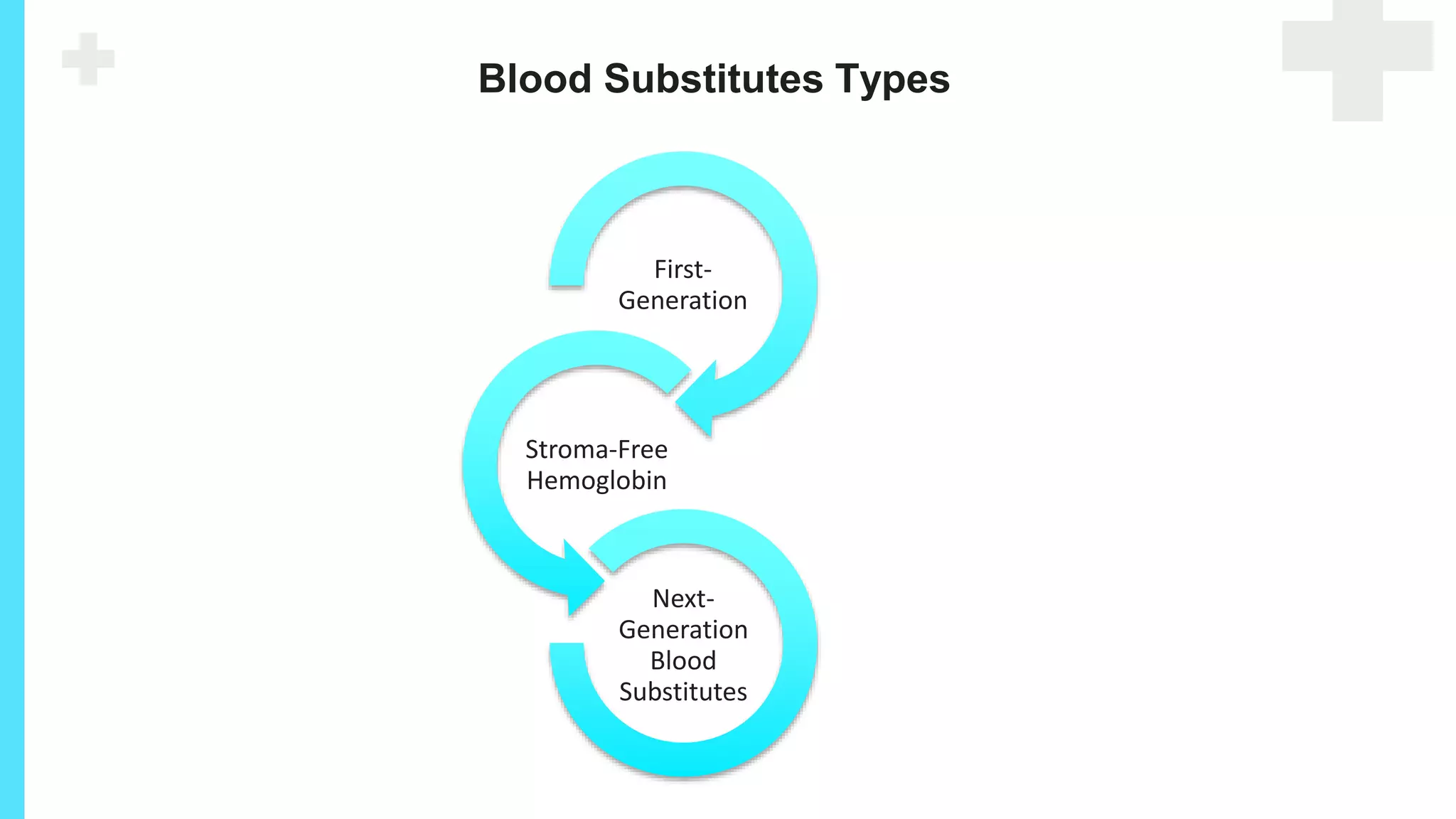
Blood Substitutes Types
First-
Generation
Stroma-Free
Hemoglobin
Next-
Generation
Blood
Substitutes
First-Generation
Perfluorocarbon emulsions
Fluosol-DA
Oxygent
Oxycyte
- FDA approved for percutaneous
transluminal coronary angioplasty.
- Withdrawn from the market:
 A short effective half-life
 Low oxygen-carrying capacity
 Acute complement activation
Phase III trials -
increased incidence
of stroke and trials
have been halted.[6]
Entering phase II trials
Stroma-Free Hemoglobin
■ Ability to withstand sterilization and a shelf life of approximately 2 years at room temperature for some
products.
ADR: Hypertension
 Diaspirin cross-linked hemoglobin (DCLHb)
 Recombinant hemoglobin product, rHb 1.1
 rHb 2.0
 PolyHeme
N= 720, phase III trial in trauma patients I
The difference in mortality between the 2 groups at 30 days was not significant.
Next-Generation Blood Substitutes
MP4OX, is a PEG-conjugated human hemoglobin
Hemospan
•Phase II study- At relatively low concentrations, is capable of transporting large
amounts of oxygen.
Percentage of hypotensive episodes in the Hemospan (MP4OX) group was about
45% lesser when compared to 87% among controls.
Cross-linked
Polyhemoglobin
•Cross-linked with catalase and superoxide dismutase to form a compound that, in
animal models can not only carry oxygen but also remove oxygen radicals that are
responsible for ischemia reperfusion injuries.
Cross-linked with tyrosinase to form a soluble complex that can carry oxygen and
decrease the systemic levels of tyrosine. This agent has been shown to delay
tumor growth without having significant adverse effects in a melanoma model
Hemoglobin-based oxygen carriers (HBOCs)
Recombinant Hemoglobin Production
■ Escherichia coli was the first choice as production workhorse.
■ The alterations were identified to be caused by reduced Bohr effect and 2,3-BPG effects of the
produced recombinant hemoglobin compared to normal human hemoglobin (Hoffman et al.,
1990)
Production model shifted yeast Saccharomyces cerevisiae.
New production hosts are designed with an increased and
more efficient production capacity
Key Issues- HBOC
Sustained
Hemoglobin Supply
Safety Concerns Cost Effectiveness
Hemoglobin extravasation
across the blood vessel wall
Scavenging of
endothelial nitric
oxide
Oversupply of
oxygen
Oxidative side
reactions (Alayash,
2014).
As a result, the regulatory agencies in the United States and the European Union have not yet approved any
HBOCs (Meng et al., 2018)
-$11/g
- With operating cost included =
≥$200/g
High cost
The Design-Build-
Test-Learn cycle
(DBTL-cycle)
Recombinant HBOC
Artificial Blood VS Blood Substitutes
Singh, IRJP 2012
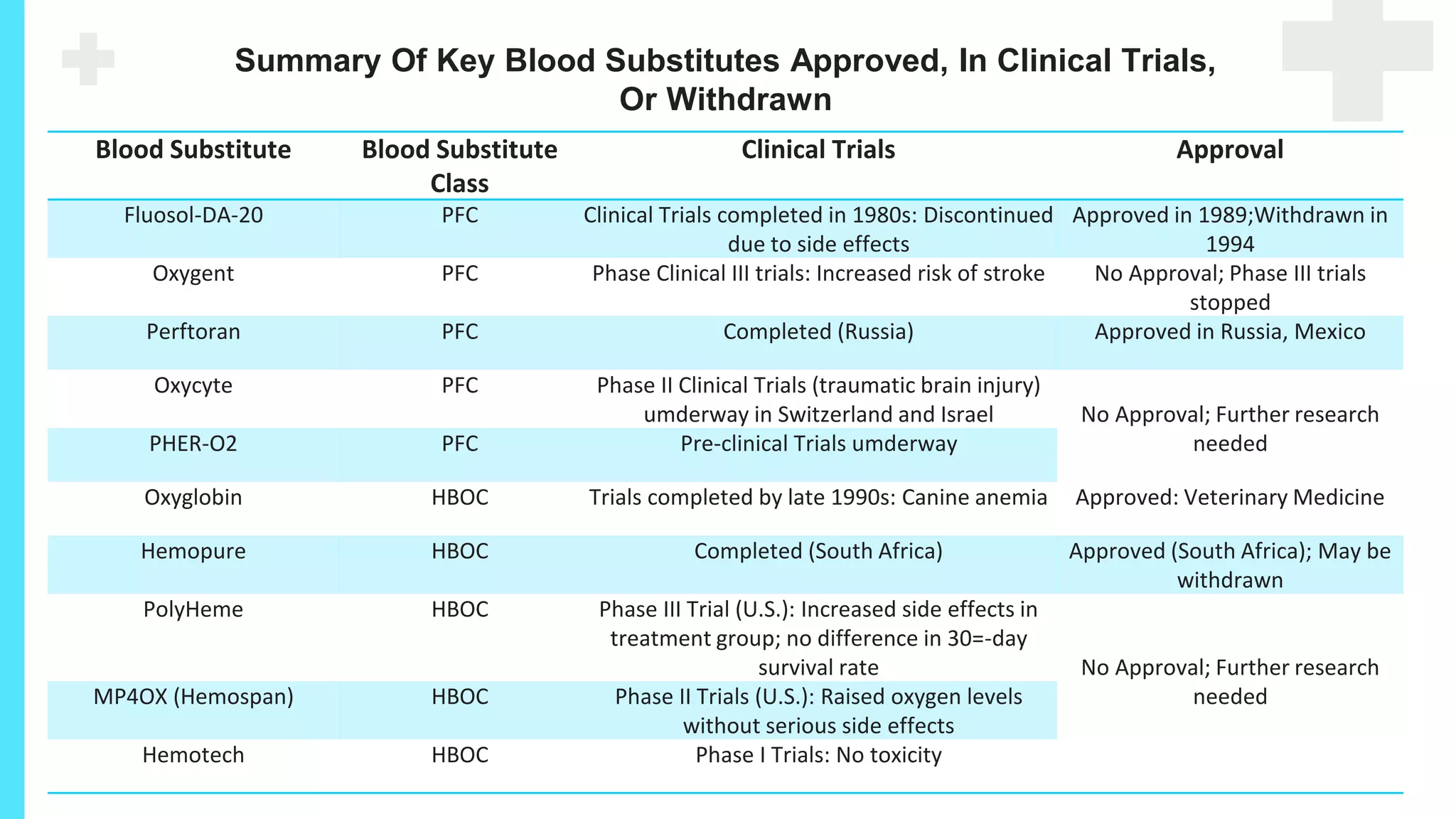
Summary Of Key Blood Substitutes Approved, In Clinical Trials,
Or Withdrawn
Blood Substitute Blood Substitute
Class
Clinical Trials Approval
Fluosol-DA-20 PFC Clinical Trials completed in 1980s: Discontinued
due to side effects
Approved in 1989;Withdrawn in
1994
Oxygent PFC Phase Clinical III trials: Increased risk of stroke No Approval; Phase III trials
stopped
Perftoran PFC Completed (Russia) Approved in Russia, Mexico
Oxycyte PFC Phase II Clinical Trials (traumatic brain injury)
umderway in Switzerland and Israel No Approval; Further research
needed
PHER-O2 PFC Pre-clinical Trials umderway
Oxyglobin HBOC Trials completed by late 1990s: Canine anemia Approved: Veterinary Medicine
Hemopure HBOC Completed (South Africa) Approved (South Africa); May be
withdrawn
PolyHeme HBOC Phase III Trial (U.S.): Increased side effects in
treatment group; no difference in 30=-day
survival rate No Approval; Further research
needed
MP4OX (Hemospan) HBOC Phase II Trials (U.S.): Raised oxygen levels
without serious side effects
Hemotech HBOC Phase I Trials: No toxicity
Americans Are More Likely To Be Worried Than Enthusiastic About Synthetic Blood
A Minority Of Americans Wants Synthetic Blood For Improved Physical Abilities
https://www.pewresearch.org/science/2016/07/26/the-publics-views-on-the-future-use-of-synthetic-blood-substitutes/
US Survey , 2016
■ Results :- Treating anemia and thrombocytopenia, suspending anticoagulants and
antiplatelet agents, reducing routine phlebotomies, utilizing less traumatic surgical
techniques with moderate hypothermia and hypotension, meticulous hemostasis, use of
topical and systemic hemostatic agents, acute normovolemic hemodilution, cell salvage,
anemia tolerance (supplementary oxygen and normothermia), as well as various other
therapeutic options have proved to be effective strategies for reducing allogeneic blood
transfusions.
Take Home Message
■ There is an urgent need to spread awareness & implement patient blood management program
globally ( “ Our own blood is still the best thing to have in our vein “)
■ Blood substitutes (“artificial blood”), better termed as oxygen therapeutic agents (OTAs), have
been in development for many decades
■ The development of OTAs has taken two main approaches: 1. perfluorocarbon-based substitutes
and 2. hemoglobin-based oxygen carriers
■ Currently, there are no Food and Drug Administration (FDA)-approved OTAs given the toxicities
of these agents, though some OTAs are used clinically outside of the United States
■ Therefore, continued work on HBOCs is warranted and, despite multiple setbacks with trials and
products, it makes sense that further work be funded and continued, on the most promising
products
Thank You !

ALTERNATIVES TO BLOOD TRANSFUSION.pptx

  • 1.
    Alternatives to blood transfusion Dr.Ashish Chauhan Dr. Sangeeta Parmar
  • 2.
    INTRODUCTION Patient Blood Management ■Patient Blood Management (PBM) is a multimodal, multidisciplinary approach adopted to limit the use & need for allogeneic blood transfusion in all at- risk patients with the aim of improving their clinical outcome ■ The term PBM was 1st used in 2005 by Prof James Isbister , an Australian haematologist , who realised that the focus of transfusion medicine should be changed from blood products to the patients
  • 3.
    Reasons to reduceblood exposure: Limited resources - Increasing demands New donor selection criteria: donor panels Rare blood group Multiple red cell antibodies To reduce risks Transfusion- transmitted infections (TTIs) Immunological complications
  • 4.
  • 5.
    Why Haematological PatientsRequire Transfusion ■ Bone marrow failure – Disease or treatment ■ Peripheral cytopenias – Reduce production or increase destruction of peripheral blood cells
  • 6.
    Indication for RBCtransfusion ■ Attention : Each participant had to tick one indication therefore it is possible that were patients that had more than one reason to be transfused. i. e a patient in a chronic transfusion programme that also had symptoms
  • 7.
    Need For AlternativesTo Blood Transfusion?? ■ A recent meta-analysis of 19 prospective, randomised trials supports adherence to restrictive blood transfusion Increased mortality, Increased length of hospital stay- related to infections and sepsis, Multi-organ system dysfunction. Blood transfusions Hospital mortality and post operative infections More than 6000 patients Restrictive Vs Liberal transfusions
  • 8.
    ■ One in455 had Adverse reaction ■ Risk of serious reactions (1 in 6224) ■ Transfusion-transmitted infections (1 in 225,440) was lower 18,308 transfusion-related adverse reactions 201 facilities
  • 9.
    There are multipletherapeutic resources to reduce or avoid allogenic blood transfusion These options involve clinic strategies with medicine and/or specific equipment to treat the patient with anemia and/or blood coagulation disorder (for instance, low platelet). On the other hand, there are also surgical strategies with evidences to reduce blood loss by the patient during surgery.
  • 10.
  • 12.
    BLOODLESS MEDICINE •Make surepatient loses as little blood as possible •Help patient body make best use of o2 in blood stream •Screen patient for anaemia & treat it before going any further
  • 13.
    Main Options And/OrAlternatives With Impact To Reduce Blood Transfusion Are: ■ Tolerate anemia ■ Medications to treat anemia. ■ Medications of systemic usage (intravenous) to stop bleeding and avoid blood transfusion ■ Medications of topic usage to stop bleeding and avoid blood transfusions ■ Equipment/machines which avoid blood transfusion ■ Acute normovolemic hemodilution ■ Surgical techniques ■ Avoid excessive blood collections ■ Using small tubes to collect blood ■ Early oxygen therapy/ Additional oxygen.
  • 14.
    Medications To TreatAnemia.. ■ Ferrous Sulphate, Folic Acid, B12 Vitamin, Erythropoietin, Darbepoietin and CERA (continuous erythropoietin activator) are the main ones. ■ There are others in final phase of worldwide liberation which play the role of the blood when transporting oxygen: Hemopure, Hemolink, Oxygent.
  • 15.
    Medications Of SystemicUsage (Intravenous) To Stop Bleeding And Avoid Blood Transfusion:: ■ Tranexamic acid ■ Aminocaproic epsilon acid ■ Vasopressin ■ Combined estrogens ■ Octreotide ■ Somatostatin ■ Desmopressin acetate (DDAVP) ■ K vitamin (phytomenadione) ■ Activated recombined factor VII ■ Factor VIII coagulation concentrate ■ Prothrombin complex concentrate ■ Human fibrinogen concentrate ■ Human recombined factor XIII.
  • 16.
    Medications of topicusage to stop bleeding and avoid blood transfusions: ■ Oxidized cellulose haemostatic for wound compression ■ Fabric adhesive/fibrin glue/sealers ■ Fibrin or platelets gel ■ Haemostatic collagen ■ Jelly foam/sponge ■ Topic buffering of thrombin or soaked with thrombin
  • 17.
  • 18.
  • 19.
    Erythropoiesis-stimulating Agents Risk ofhigher rates of thrombosis (assessed with Doppler evaluation) than patients on placebo (4.1% vs. 2.1%)1 Management of anaemia with erythropoiesis-stimulating agents or iron in patients under going • Orthopaedic 2 • Cardiac surgery 3 Blood-conservation Strategy Are erythropoiesis-stimulating agents Safe??? 1. Stowell, Christopher P. MD, PhD*; et al,. Spine 34(23):p 2479-2485, November 1, 2009. 2. British Journal of Anaesthesia 106 (1): 13–22 (2011) 3. Young-Chul Yoo, Anesthesiology 2011; 115:929–937
  • 20.
    Erythropoiesis-stimulating Agents: NoDifferences In Mortality, Thrombotic Events, Or Serious Adverse Events Risk of exposure to allogenic blood transfusion (P = .007) A substantial reduction in blood transfusions was evident. Weltert L, D’Alessandro S, Nardella S, et al. J Thorac Cardiovasc Surg 2010; 139: 621–26.
  • 21.
    Off -Label UseOf Erythropoiesis stimulating Agents In Patients Undergoing Cardiac Or Vascular Surgery lacks evidence Restrict the use of erythropoiesis stimulating agents for elective surgical setting to non-vascular, non-cardiac patients undergoing major elective surgery. Goodnough LT, Shander A, Spence R. Bloodless medicine: clinical care without allogeneic blood transfusion. Transfusion 2003; 43: 668–76 Off- label indication
  • 22.
    Erythropoiesis-stimulating agents wasassociated with increased morbidity (thrombosis or cardiovascular events) and mortality
  • 23.
    Indication: Erythropoiesis-stimulating agents ○Haemoglobin concentration < 100 g/L ○ Patients with symptomatic anaemia. Death and thromboembolic events Reduced blood transfusions with long-term treatment Take into account each patient’s clinical circumstances and preferences.99 R I S K B E N E F I T Lancet 2013; 381: 1855–65
  • 24.
  • 25.
    Antifibrinolytic Agents Despite amodest reduction in the risk of massive bleeding, the strong and consistent negative mortality trend associated with aprotinin VS lysine analogues, precludes its use in high-risk cardiac surgery N Engl J Med 2008;358:2319-31
  • 26.
    Tranexamic Acid ShouldBe Considered For Use In Bleeding Trauma Patients. Lancet 2010; 376: 23–32
  • 27.
    ■ Rapid thrombelastography Prothrombin complex Off–Label Use • Trauma • Surgical settings associated with coagulopathy Targeted treatment with pro thrombin complex concentrates with rotation thrombelastometry based algorithms has shown significant reductions in transfused blood components Lancet 2013; 381: 1855–65
  • 28.
    • Special anesthesia •Harmonic scalpel • Cell salvage machine • Hemoglobin monitor DURING SURGERY
  • 29.
    Equipment/Machines Which AvoidBlood Transfusion ■ It is a machine capable of recovering the patient’s blood that would be lost during surgery. ■ What is interesting is that this recovered blood has DNA from the patient themselves. It can be reused and is not a homotoxin (“foreign body”). When not recovered, unfortunately, it goes to the trash can together with gauze and compresses. It is a real blood recycling. This is the best blood a patient could receive in a transfusion: their OWN BLOOD. ■ Intraoperative self-transfusion is an excellent alternative to allogenic blood, mainly due to the benefits, like: fresh blood immediate disposal, postoperative complications diminish, reduction of days of staying and associated infections, reduction of death, as well as diminishing the need of homologous blood (bags). ■ The cost of this procedure is almost the same as the price of one or two blood bags, when taking into account all the activities involved in blood transfusion.
  • 30.
    Cell salvage inorthopedic surgery decreases the need for allogeneic blood transfusion perioperatively, but postoperative cell salvage is only marginally effective in cardiac surgery. (Anesth Analg 1999;89:861–9)
  • 31.
    Preoperative Autologous Donation-Rise and fall of interest in PABD ■ Due to • Increased cost - additional cost of $758 per patient. • Reduced risk of infection associated with allogeneic blood transfusions, • Advanced surgical techniques to reduce blood loss Appropriate for substantial procedures (eg, total hip revision or scoliosis repair) and for patients with serologic alloantibodies to blood. Poorly cost effective.
  • 32.
    Management of bloodloss anaemia Perioperative autologous blood procurement Acute normovolaemic haemodilution ■ Blood collected by acute normovolaemic haemodilution is stored at room temperature in the operating room and is returned to the patient within 8 h of collection, platelets and coagulation factors remain functional. ■ Cheaper ■ Selected clinical settings (eg, patients with a high preoperative Hb concentration undergoing a surgical procedure with a high expected blood loss such as a revision hip replacement), for reduction of allogeneic blood transfusions.1 ■ Low volume acute normovolaemic haemodilution did not reduce allogeneic blood for patients undergoing cardiac value replacement surgery.2 1. N Engl J Med 1999; 340: 525–33. 2. Ann Card Anaesth 2010; 13: 34–38
  • 33.
    Early Oxygen Therapy/Additional Oxygen ■ Tolerance to anemia can be increased by ventilating the patient with a high inspired fraction of oxygen (FiO2). ■ While maintaining normovolemia , hyperoxid ventilation (offer 100% oxygen) can be considered a salvation therapy when facing an important bleeding associated with severe acute anemia with risk of Ventilating with 100% oxygen results in fast increase in the continent of arterial oxygen, assuring oxygenation of tissues even with very low hemoglobin (severe anemia) and shows an important strategy to reduce allogenic transfusion
  • 34.
  • 35.
  • 36.
    First-Generation Perfluorocarbon emulsions Fluosol-DA Oxygent Oxycyte - FDAapproved for percutaneous transluminal coronary angioplasty. - Withdrawn from the market:  A short effective half-life  Low oxygen-carrying capacity  Acute complement activation Phase III trials - increased incidence of stroke and trials have been halted.[6] Entering phase II trials
  • 37.
    Stroma-Free Hemoglobin ■ Abilityto withstand sterilization and a shelf life of approximately 2 years at room temperature for some products. ADR: Hypertension  Diaspirin cross-linked hemoglobin (DCLHb)  Recombinant hemoglobin product, rHb 1.1  rHb 2.0  PolyHeme N= 720, phase III trial in trauma patients I The difference in mortality between the 2 groups at 30 days was not significant.
  • 38.
    Next-Generation Blood Substitutes MP4OX,is a PEG-conjugated human hemoglobin Hemospan •Phase II study- At relatively low concentrations, is capable of transporting large amounts of oxygen. Percentage of hypotensive episodes in the Hemospan (MP4OX) group was about 45% lesser when compared to 87% among controls. Cross-linked Polyhemoglobin •Cross-linked with catalase and superoxide dismutase to form a compound that, in animal models can not only carry oxygen but also remove oxygen radicals that are responsible for ischemia reperfusion injuries. Cross-linked with tyrosinase to form a soluble complex that can carry oxygen and decrease the systemic levels of tyrosine. This agent has been shown to delay tumor growth without having significant adverse effects in a melanoma model
  • 39.
    Hemoglobin-based oxygen carriers(HBOCs) Recombinant Hemoglobin Production ■ Escherichia coli was the first choice as production workhorse. ■ The alterations were identified to be caused by reduced Bohr effect and 2,3-BPG effects of the produced recombinant hemoglobin compared to normal human hemoglobin (Hoffman et al., 1990) Production model shifted yeast Saccharomyces cerevisiae. New production hosts are designed with an increased and more efficient production capacity
  • 40.
    Key Issues- HBOC Sustained HemoglobinSupply Safety Concerns Cost Effectiveness Hemoglobin extravasation across the blood vessel wall Scavenging of endothelial nitric oxide Oversupply of oxygen Oxidative side reactions (Alayash, 2014). As a result, the regulatory agencies in the United States and the European Union have not yet approved any HBOCs (Meng et al., 2018) -$11/g - With operating cost included = ≥$200/g High cost
  • 41.
  • 42.
    Artificial Blood VSBlood Substitutes Singh, IRJP 2012
  • 43.
    Summary Of KeyBlood Substitutes Approved, In Clinical Trials, Or Withdrawn Blood Substitute Blood Substitute Class Clinical Trials Approval Fluosol-DA-20 PFC Clinical Trials completed in 1980s: Discontinued due to side effects Approved in 1989;Withdrawn in 1994 Oxygent PFC Phase Clinical III trials: Increased risk of stroke No Approval; Phase III trials stopped Perftoran PFC Completed (Russia) Approved in Russia, Mexico Oxycyte PFC Phase II Clinical Trials (traumatic brain injury) umderway in Switzerland and Israel No Approval; Further research needed PHER-O2 PFC Pre-clinical Trials umderway Oxyglobin HBOC Trials completed by late 1990s: Canine anemia Approved: Veterinary Medicine Hemopure HBOC Completed (South Africa) Approved (South Africa); May be withdrawn PolyHeme HBOC Phase III Trial (U.S.): Increased side effects in treatment group; no difference in 30=-day survival rate No Approval; Further research needed MP4OX (Hemospan) HBOC Phase II Trials (U.S.): Raised oxygen levels without serious side effects Hemotech HBOC Phase I Trials: No toxicity
  • 44.
    Americans Are MoreLikely To Be Worried Than Enthusiastic About Synthetic Blood A Minority Of Americans Wants Synthetic Blood For Improved Physical Abilities https://www.pewresearch.org/science/2016/07/26/the-publics-views-on-the-future-use-of-synthetic-blood-substitutes/ US Survey , 2016
  • 45.
    ■ Results :-Treating anemia and thrombocytopenia, suspending anticoagulants and antiplatelet agents, reducing routine phlebotomies, utilizing less traumatic surgical techniques with moderate hypothermia and hypotension, meticulous hemostasis, use of topical and systemic hemostatic agents, acute normovolemic hemodilution, cell salvage, anemia tolerance (supplementary oxygen and normothermia), as well as various other therapeutic options have proved to be effective strategies for reducing allogeneic blood transfusions.
  • 47.
    Take Home Message ■There is an urgent need to spread awareness & implement patient blood management program globally ( “ Our own blood is still the best thing to have in our vein “) ■ Blood substitutes (“artificial blood”), better termed as oxygen therapeutic agents (OTAs), have been in development for many decades ■ The development of OTAs has taken two main approaches: 1. perfluorocarbon-based substitutes and 2. hemoglobin-based oxygen carriers ■ Currently, there are no Food and Drug Administration (FDA)-approved OTAs given the toxicities of these agents, though some OTAs are used clinically outside of the United States ■ Therefore, continued work on HBOCs is warranted and, despite multiple setbacks with trials and products, it makes sense that further work be funded and continued, on the most promising products
  • 48.

Editor's Notes

  • #5 The limitations are divided into three distinct groups; (a) limitations in storage and shelf life, (b) limitations due to donor dependency, blood-borne diseases, and incompatibility of blood types, and (c) limitations due to religious beliefs.
  • #8 Erythrocyte damage related to duration of blood storage7 might partly account for these observed adverse patient outcomes.
  • #11 These recommendations apply in the perisurgical period enable treating physicians to have the time and methods to provide patient-centred and evidence-based patient blood management to minimise allogeneic blood transfusions.
  • #21 Subjects received epoetin alfa 600 U/kg subcutaneously once weekly starting 3 weeks before spinal surgery plus standard of care for blood conservation, or standard of care alone. - Results: Of the 680 subjects analyzed (340 in each treatment group), 16 (4.7%) in the epoetin alfa group and 7 (2.1%) in the standard of care group had a diagnosis of deep vein thrombosis either by Doppler or by adverse event report with normal Doppler. The between-group difference was 2.6% (97.5% upper confidence limit, 5.4%). Deep vein thrombosis confirmed by Doppler (4.1% vs. 2.1%), other clinically relevant thrombovascular events (1.5% vs. 0.9%), and all adverse events combined (76.5% vs. 73.2%) occurred with similar frequency in the 2 treatment groups
  • #22 Two European trials with 76 and 320 patients showed between patients given erythropoiesis-stimulating agents and patients given placebo; a substantial reduction in blood transfusions was evident.
  • #23 However, the U S Food and Drug Administration to Erythro poiesis-stimulating agents restrict the use of erythropoiesis stimulating agents in the USA in the elective surgical setting to non-vascular, non-cardiac patients undergoing major elective surgery. It remain a valuable means for patients with special requirements, such as Jehovah’s Witness patients, for whom blood transfusion is not an option. However, until additional safety data are available, the Off -Label Use Of Erythropoiesis stimulating Agents In Patients Undergoing Cardiac Or Vascular Surgery lacks evidence
  • #26 preadmission testing should take place as far in advance as possible (eg, 30 days) of elective surgery to allow time for adequate identification, assess ment, and management of anaemia.10,20
  • #27 In this multicenter, blinded trial, we randomly assigned 2331 high-risk cardiac surgical patients to one of three groups: 781 received aprotinin, 770 received tranexamic acid, and 780 received aminocaproic acid. The primary outcome was massive postoperative bleeding. Secondary outcomes included death from any cause at 30 days
  • #29 Prothrombin complex concentrates that contain all four (II, IX, X, and VII) of the vitamin K-dependent clotting factors are approved internationally, including the USA.
  • #34 removal of whole blood from a patient while the circulating blood volume is restored with an acellular fluid shortly before substantial surgical blood loss. It consists in taking off one, two, three or more blood bags from the patient in the beginning of the surgery, being replaced by crystalloids and/or colloids solutions as plasma volume expanders, to keep the normovolemia
  • #38 A short effective half-life, low oxygen-carrying capacity, and adverse effects such as acute complement activation this product has since been withdrawn from the market.
  • #39 PolyHeme is a first-generation pyridoxylated polymerized hemoglobin made from outdated human blood
  • #42 In comparison, human hemoglobin can be derived from alternative sources for roughly $2/g to $4/g (excl. post-related costs) based on fixed reimbursement prices of whole blood packs (Varnado et al., 2013).
  • #43 The “Design”-phase includes setting goals, choosing a host organism, using models and simulations, and planning the design of the organism. In the “Build”-phase the organism is constructed based on the planned design. The “Test”-phase covers the in-depth testing of the organism. The final phase is the “Learn”-phase where the results are analyzed and compared to the predetermined specifications.