What are CXL, PCI SIG, DMTF, OFA,
OCP & SNIA
doing to make CXL fabric,
memory & device management
interoperable?
CXL Fabric Management Standards
Jeff Hilland, Distinguished Technologist HPE, President DMTF
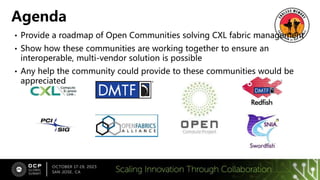
• Provide a roadmap of Open Communities solving CXL fabric management
• Show how these communities are working together to ensure an
interoperable, multi-vendor solution is possible
• Any help the community could provide to these communities would be
appreciated
Agenda
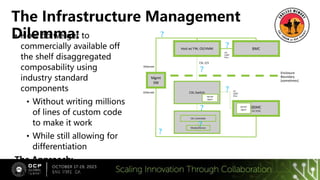
• How do we get to
commercially available off
the shelf disaggregated
composability using
industry standard
components
• Without writing millions
of lines of custom code
to make it work
• While still allowing for
differentiation
The Approach:
• A multitude of open
The Infrastructure Management
Dilemma:
BMC
Host w/ FW, OS/VMM
Mgmt
SW
CXL Switch
CXL Controller
Media/Device
CXL 2/3
FM API
Agent
I2C
UART
PCIe
(B)MC
(DC-SCM)
Ethernet
FM API
Agent
Enclosure
Boundary
(sometimes)
I2C
UART
PCIe
Ethernet
?
?
?
?
?
?
?
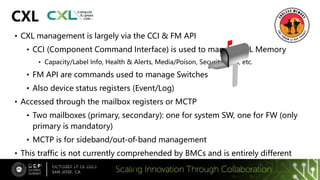
• CXL management is largely via the CCI & FM API
• CCI (Component Command Interface) is used to manage CXL Memory
• Capacity/Label Info, Health & Alerts, Media/Poison, Security, QoS, etc.
• FM API are commands used to manage Switches
• Also device status registers (Event/Log)
• Accessed through the mailbox registers or MCTP
• Two mailboxes (primary, secondary): one for system SW, one for FW (only
primary is mandatory)
• MCTP is for sideband/out-of-band management
• This traffic is not currently comprehended by BMCs and is entirely different
than the rest of platform management
CXL
• PCI cards typically have both PCI VDM for management traffic
• This is what MCTP uses for In-Band management
• Flit mode requires changes (Non-flit mode is specified in PCI Spec)
• PCI signaling still has the I2C/I3C, USB pins for side band signaling
• This is used for out-of-band management using MCTP
• PCI devices already support not only MCTP but many support most of the
other PMCI payloads (next slide)
• Since cxl.io is basically cxl encapsulated pci, cxl.io devices can be
managed with PCI VDM traffic over CXL
PCI SIG
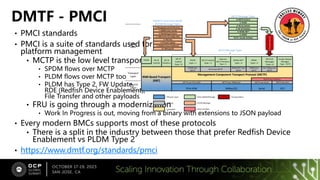
• PMCI standards
• PMCI is a suite of standards used for
platform management
• MCTP is the low level transport
• SPDM flows over MCTP
• PLDM flows over MCTP too
• PLDM has Type 2, FW Update,
RDE (Redfish Device Enablement),
File Transfer and other payloads
• FRU is going through a modernization
• Work In Progress is out, moving from a binary with extensions to JSON payload
• Every modern BMCs supports most of these protocols
• There is a split in the industry between those that prefer Redfish Device
Enablement vs PLDM Type 2
• https://www.dmtf.org/standards/pmci
DMTF - PMCI
KCS
PCIe VDM
Physical
Layer
Management Component Transport Protocol (MCTP)
Transport
Layer
MCTPover KCS
MCTPHost Interface
SMBus/I2C Serial
RMII Based Transport
(RBT) MCTPover Serial
PLDM over
MCTP
MCTPover PCIe VDM
SPDM over
MCTP
NC-SI over MCTP
NVMe-MI over
MCTP
MCTP
Control
Type = 0
PLDM
Type = 1
NC-SI Control
Type = 2
Ethernet
(NC-SI Passthru)
Type = 3
NVMe-MI
Type = 4
SPDM
Type = 5
MCTPover SMBus/I2C
NC-SI
Passthru
0: Messaging Control & Discovery
1: SMBIOS DataTransfer
2: Monitoring & Control
4: FRU Data
5: Firmware Update
6: Redfish DeviceEnablement
3: BIOS Control & Configuration
Upper
Layer
PLDM
Platform Level Data Model
(PLDM) Message Types
MCTP Message Types
= Physical Layer
= Binding
= Transport
= Data Model/Message
= PLDM Message
= Host Interface
Secured
Messages
Type = 6
Sec d Msgs over
MCTP
Vendor Defined
Messages
Type = 7E/7F
0: MCTP Control
1: PLDM
2: NC-SI Control
4: NVMe-MI
5: SPDM
7E/7F: Vendor Defined
3: NC-SI Passthru
MCTP Message Types
Encapsulation
= Encapsulation
NC-SI
Control
3F: OEM Specific
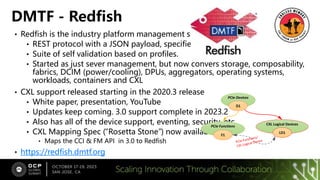
• Redfish is the industry platform management standard
• REST protocol with a JSON payload, specified by schemas
• Suite of self validation based on profiles.
• Started as just sever management, but now convers storage, composability,
fabrics, DCIM (power/cooling), DPUs, aggregators, operating systems,
workloads, containers and CXL
• CXL support released starting in the 2020.3 release
• White paper, presentation, YouTube
• Updates keep coming. 3.0 support complete in 2023.2
• Also has all of the device support, eventing, security, etc.
• CXL Mapping Spec (“Rosetta Stone”) now available
• Maps the CCI & FM API in 3.0 to Redfish
• https://redfish.dmtf.org
DMTF - Redfish
PCIe Devices
D1
PCIe Functions
F1
CXL Logical Devices
LD1
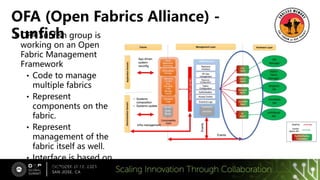
• OFA Sunfish group is
working on an Open
Fabric Management
Framework
• Code to manage
multiple fabrics
• Represent
components on the
fabric.
• Represent
management of the
fabric itself as well.
• Interface is based on
Redfish/Swordfish
OFA (Open Fabrics Alliance) -
Sunfish
• OCP Hardware Management
• Working in multiple areas on platform management
proscriptive standards
• Profiles – Redfish System & Component Profiles to
validate conformance for
Systems, Devices, Memory and Fabrics (et al)
• Combined with the Redfish validation tools, the profiles can be
used to programmatically validate implementations
• SMC – Satellite Management Controller Specification
• Requirements for fabric attached devices
(MCTP, PLDM, FW Update and RDE requirements)
• OCP CMS – Composable Memory Systems
• Meeting to solve data plane & solutions issues
• Deep Dive on CXL Redfish model in the archives
OCP Efforts
HW MGMT
• SNIA – Swordfish
• Extension of Redfish, leveraging
the core of Redfish storage &
memory
• Has advanced memory pooling,
grouping & service models that
align memory as storage with
other traditional storage media
• Has advanced NVMe, block, file
& object support
• https://www.snia.org/swordfish
SNIA
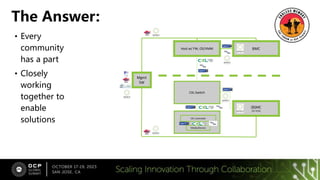
• Every
community
has a part
• Closely
working
together to
enable
solutions
The Answer:
BMC
Host w/ FW, OS/VMM
Mgmt
SW
CXL Switch
CXL Controller
Media/Device
(B)MC
(DC-SCM)
• Get involved in OCP: HW Mgmt, Profile sub-project & CMS
• Get involved in any of the Open Communities
• Contribute code to, for example, Sunfish
• Never too late to help.
Call to Action
Thank you!

CXL Fabric Management Standards

  • 1.
    What are CXL,PCI SIG, DMTF, OFA, OCP & SNIA doing to make CXL fabric, memory & device management interoperable? CXL Fabric Management Standards
  • 2.
    CXL Fabric ManagementStandards Jeff Hilland, Distinguished Technologist HPE, President DMTF
  • 3.
    • Provide aroadmap of Open Communities solving CXL fabric management • Show how these communities are working together to ensure an interoperable, multi-vendor solution is possible • Any help the community could provide to these communities would be appreciated Agenda
  • 4.
    • How dowe get to commercially available off the shelf disaggregated composability using industry standard components • Without writing millions of lines of custom code to make it work • While still allowing for differentiation The Approach: • A multitude of open The Infrastructure Management Dilemma: BMC Host w/ FW, OS/VMM Mgmt SW CXL Switch CXL Controller Media/Device CXL 2/3 FM API Agent I2C UART PCIe (B)MC (DC-SCM) Ethernet FM API Agent Enclosure Boundary (sometimes) I2C UART PCIe Ethernet ? ? ? ? ? ? ?
  • 5.
    • CXL managementis largely via the CCI & FM API • CCI (Component Command Interface) is used to manage CXL Memory • Capacity/Label Info, Health & Alerts, Media/Poison, Security, QoS, etc. • FM API are commands used to manage Switches • Also device status registers (Event/Log) • Accessed through the mailbox registers or MCTP • Two mailboxes (primary, secondary): one for system SW, one for FW (only primary is mandatory) • MCTP is for sideband/out-of-band management • This traffic is not currently comprehended by BMCs and is entirely different than the rest of platform management CXL
  • 6.
    • PCI cardstypically have both PCI VDM for management traffic • This is what MCTP uses for In-Band management • Flit mode requires changes (Non-flit mode is specified in PCI Spec) • PCI signaling still has the I2C/I3C, USB pins for side band signaling • This is used for out-of-band management using MCTP • PCI devices already support not only MCTP but many support most of the other PMCI payloads (next slide) • Since cxl.io is basically cxl encapsulated pci, cxl.io devices can be managed with PCI VDM traffic over CXL PCI SIG
  • 7.
    • PMCI standards •PMCI is a suite of standards used for platform management • MCTP is the low level transport • SPDM flows over MCTP • PLDM flows over MCTP too • PLDM has Type 2, FW Update, RDE (Redfish Device Enablement), File Transfer and other payloads • FRU is going through a modernization • Work In Progress is out, moving from a binary with extensions to JSON payload • Every modern BMCs supports most of these protocols • There is a split in the industry between those that prefer Redfish Device Enablement vs PLDM Type 2 • https://www.dmtf.org/standards/pmci DMTF - PMCI KCS PCIe VDM Physical Layer Management Component Transport Protocol (MCTP) Transport Layer MCTPover KCS MCTPHost Interface SMBus/I2C Serial RMII Based Transport (RBT) MCTPover Serial PLDM over MCTP MCTPover PCIe VDM SPDM over MCTP NC-SI over MCTP NVMe-MI over MCTP MCTP Control Type = 0 PLDM Type = 1 NC-SI Control Type = 2 Ethernet (NC-SI Passthru) Type = 3 NVMe-MI Type = 4 SPDM Type = 5 MCTPover SMBus/I2C NC-SI Passthru 0: Messaging Control & Discovery 1: SMBIOS DataTransfer 2: Monitoring & Control 4: FRU Data 5: Firmware Update 6: Redfish DeviceEnablement 3: BIOS Control & Configuration Upper Layer PLDM Platform Level Data Model (PLDM) Message Types MCTP Message Types = Physical Layer = Binding = Transport = Data Model/Message = PLDM Message = Host Interface Secured Messages Type = 6 Sec d Msgs over MCTP Vendor Defined Messages Type = 7E/7F 0: MCTP Control 1: PLDM 2: NC-SI Control 4: NVMe-MI 5: SPDM 7E/7F: Vendor Defined 3: NC-SI Passthru MCTP Message Types Encapsulation = Encapsulation NC-SI Control 3F: OEM Specific
  • 8.
    • Redfish isthe industry platform management standard • REST protocol with a JSON payload, specified by schemas • Suite of self validation based on profiles. • Started as just sever management, but now convers storage, composability, fabrics, DCIM (power/cooling), DPUs, aggregators, operating systems, workloads, containers and CXL • CXL support released starting in the 2020.3 release • White paper, presentation, YouTube • Updates keep coming. 3.0 support complete in 2023.2 • Also has all of the device support, eventing, security, etc. • CXL Mapping Spec (“Rosetta Stone”) now available • Maps the CCI & FM API in 3.0 to Redfish • https://redfish.dmtf.org DMTF - Redfish PCIe Devices D1 PCIe Functions F1 CXL Logical Devices LD1
  • 9.
    • OFA Sunfishgroup is working on an Open Fabric Management Framework • Code to manage multiple fabrics • Represent components on the fabric. • Represent management of the fabric itself as well. • Interface is based on Redfish/Swordfish OFA (Open Fabrics Alliance) - Sunfish
  • 10.
    • OCP HardwareManagement • Working in multiple areas on platform management proscriptive standards • Profiles – Redfish System & Component Profiles to validate conformance for Systems, Devices, Memory and Fabrics (et al) • Combined with the Redfish validation tools, the profiles can be used to programmatically validate implementations • SMC – Satellite Management Controller Specification • Requirements for fabric attached devices (MCTP, PLDM, FW Update and RDE requirements) • OCP CMS – Composable Memory Systems • Meeting to solve data plane & solutions issues • Deep Dive on CXL Redfish model in the archives OCP Efforts HW MGMT
  • 11.
    • SNIA –Swordfish • Extension of Redfish, leveraging the core of Redfish storage & memory • Has advanced memory pooling, grouping & service models that align memory as storage with other traditional storage media • Has advanced NVMe, block, file & object support • https://www.snia.org/swordfish SNIA
  • 12.
    • Every community has apart • Closely working together to enable solutions The Answer: BMC Host w/ FW, OS/VMM Mgmt SW CXL Switch CXL Controller Media/Device (B)MC (DC-SCM)
  • 13.
    • Get involvedin OCP: HW Mgmt, Profile sub-project & CMS • Get involved in any of the Open Communities • Contribute code to, for example, Sunfish • Never too late to help. Call to Action
  • 14.