Cardiovascular Control
During Exercise
Structure & Function of CV
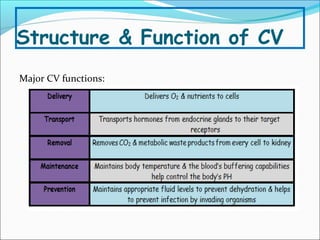
Major CV functions:
Structure & Function of CV
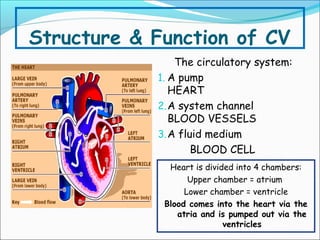
The circulatory system:
1. A pump
HEART
2. A system channel
BLOOD VESSELS
3. A fluid medium
BLOOD CELL
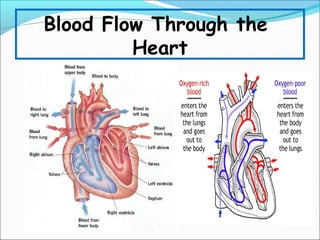
Heart is divided into 4 chambers:
Upper chamber = atrium
Lower chamber = ventricle
Blood comes into the heart via the
atria and is pumped out via the
ventricles
Blood Flow Through the
Heart
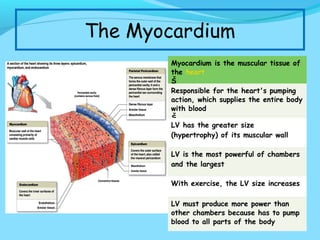
The Myocardium
Myocardium is the muscular tissue of
the heart
Š
Responsible for the heart's pumping
action, which supplies the entire body
with blood
Š
LV has the greater size
(hypertrophy) of its muscular wall
LV is the most powerful of chambers
and the largest
With exercise, the LV size increases
LV must produce more power than
other chambers because has to pump
blood to all parts of the body
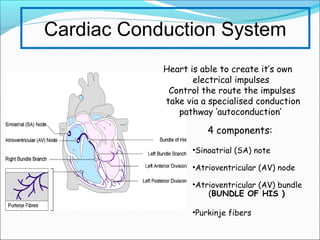
Cardiac Conduction System
Heart is able to create it’s own
electrical impulses
Control the route the impulses
take via a specialised conduction
pathway ‘autoconduction’

4 components:
•Sinoatrial (SA) note
•Atrioventricular (AV) node
•Atrioventricular (AV) bundle
(BUNDLE OF HIS )
•Purkinje fibers
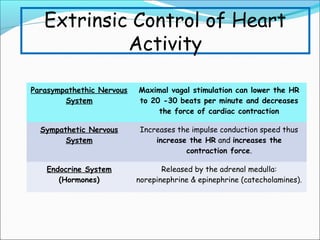
Extrinsic Control of Heart
Activity
Parasympathethic Nervous
System

Maximal vagal stimulation can lower the HR
to 20 -30 beats per minute and decreases
the force of cardiac contraction

Sympathetic Nervous
System

Increases the impulse conduction speed thus
increase the HR and increases the
contraction force.

Endocrine System
(Hormones)

Released by the adrenal medulla:
norepinephrine & epinephrine (catecholamines).
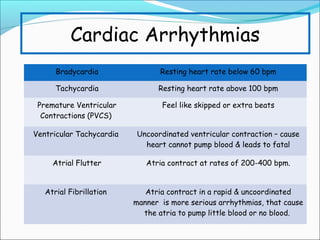
Cardiac Arrhythmias
Bradycardia

Resting heart rate below 60 bpm

Tachycardia

Resting heart rate above 100 bpm

Premature Ventricular
Contractions (PVCS)

Feel like skipped or extra beats

Ventricular Tachycardia

Uncoordinated ventricular contraction – cause
heart cannot pump blood & leads to fatal

Atrial Flutter

Atria contract at rates of 200-400 bpm.

Atrial Fibrillation

Atria contract in a rapid & uncoordinated
manner is more serious arrhythmias, that cause
the atria to pump little blood or no blood.
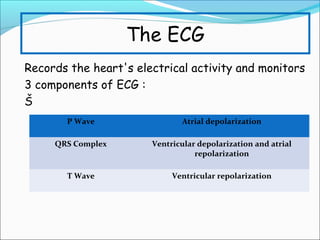
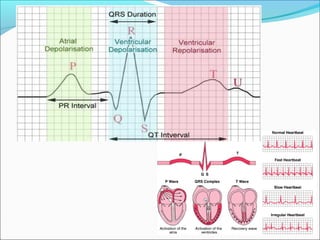
The ECG
Records the heart's electrical activity and monitors
3 components of ECG :
Š
P Wave

Atrial depolarization

QRS Complex

Ventricular depolarization and atrial
repolarization

T Wave

Ventricular repolarization
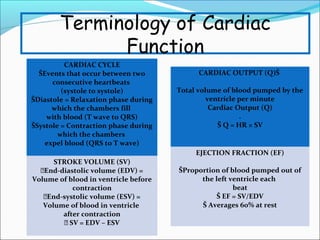
Terminology of Cardiac
Function
CARDIAC CYCLE
ŠEvents that occur between two
consecutive heartbeats
(systole to systole)
ŠDiastole = Relaxation phase during
which the chambers fill
with blood (T wave to QRS)
ŠSystole = Contraction phase during
which the chambers
expel blood (QRS to T wave)

CARDIAC OUTPUT (Q)Š
Total volume of blood pumped by the
ventricle per minute
Cardiac Output (Q)
.
Š Q = HR × SV

EJECTION FRACTION (EF)
STROKE VOLUME (SV)
ŠEnd-diastolic volume (EDV) =
Volume of blood in ventricle before
contraction
ŠEnd-systolic volume (ESV) =
Volume of blood in ventricle
after contraction
Š SV = EDV – ESV

ŠProportion of blood pumped out of
the left ventricle each
beat
Š EF = SV/EDV
Š Averages 60% at rest
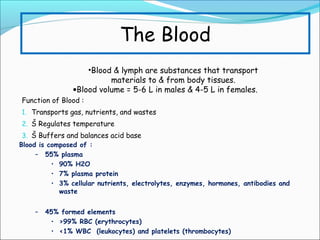
The Blood
•Blood & lymph are substances that transport
materials to & from body tissues.
•Blood volume = 5-6 L in males & 4-5 L in females.
Function of Blood :
1. Transports gas, nutrients, and wastes
2. Š Regulates temperature
3. Š Buffers and balances acid base
Blood is composed of :
– 55% plasma
• 90% H2O
• 7% plasma protein
• 3% cellular nutrients, electrolytes, enzymes, hormones, antibodies and
waste
–

45% formed elements
• >99% RBC (erythrocytes)
• <1% WBC (leukocytes) and platelets (thrombocytes)
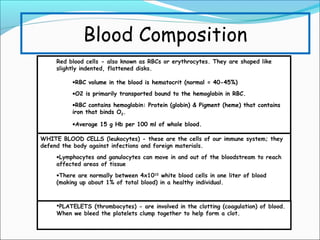
Blood Composition
Red blood cells - also known as RBCs or erythrocytes. They are shaped like
slightly indented, flattened disks.
•RBC volume in the blood is hematocrit (normal = 40-45%)
•O2 is primarily transported bound to the hemoglobin in RBC.
•RBC contains hemoglobin: Protein (globin) & Pigment (heme) that contains
iron that binds O2.
•Average 15 g Hb per 100 ml of whole blood.
WHITE BLOOD CELLS (leukocytes) - these are the cells of our immune system; they
defend the body against infections and foreign materials.
•Lymphocytes and ganulocytes can move in and out of the bloodstream to reach
affected areas of tissue
•There are normally between 4x10¹⁰ white blood cells in one liter of blood
(making up about 1% of total blood) in a healthy individual.

PLATELETS (thrombocytes) - are involved in the clotting (coagulation) of blood.
When we bleed the platelets clump together to help form a clot.
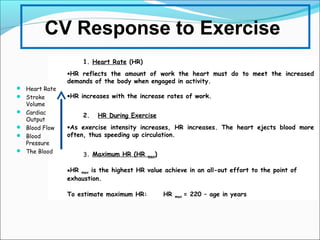
CV Response to Exercise
1. Heart Rate (HR)

 Heart Rate
 Stroke
Volume
 Cardiac
Output
 Blood Flow
 Blood
Pressure
 The Blood

•HR reflects the amount of work the heart must do to meet the increased
demands of the body when engaged in activity.
•HR increases with the increase rates of work.
2.

HR During Exercise

•As exercise intensity increases, HR increases. The heart ejects blood more
often, thus speeding up circulation.
3. Maximum HR (HR

max

)

•HR max is the highest HR value achieve in an all-out effort to the point of
exhaustion.
To estimate maximum HR:

HR

max

= 220 – age in years
4. Cardiac Output (Q)
•Q increases with the increase rates of work
•Exercise increases Q to match the need for O2 supply to the working
muscles.
5. Blood Flow
Resting Q – 15-20% goes to the muscle (BF to the kidney, liver, stomach
and intestines)
During exercise, muscle received 80-85% of Q
As body start to overheat, more blood is directed to the skin to conduct
heat away
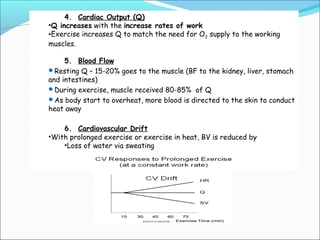
6. Cardiovascular Drift
•With prolonged exercise or exercise in heat, BV is reduced by
•Loss of water via sweating
Q&A

CV CONTROL DURING EXERCISE

  • 1.
  • 2.
    Structure & Functionof CV Major CV functions:
  • 3.
    Structure & Functionof CV The circulatory system: 1. A pump HEART 2. A system channel BLOOD VESSELS 3. A fluid medium BLOOD CELL Heart is divided into 4 chambers: Upper chamber = atrium Lower chamber = ventricle Blood comes into the heart via the atria and is pumped out via the ventricles
  • 4.
  • 5.
    The Myocardium Myocardium is themuscular tissue of the heart Š Responsible for the heart's pumping action, which supplies the entire body with blood Š LV has the greater size (hypertrophy) of its muscular wall LV is the most powerful of chambers and the largest With exercise, the LV size increases LV must produce more power than other chambers because has to pump blood to all parts of the body
  • 6.
    Cardiac Conduction System Heartis able to create it’s own electrical impulses Control the route the impulses take via a specialised conduction pathway ‘autoconduction’ 4 components: •Sinoatrial (SA) note •Atrioventricular (AV) node •Atrioventricular (AV) bundle (BUNDLE OF HIS ) •Purkinje fibers
  • 7.
    Extrinsic Control ofHeart Activity Parasympathethic Nervous System Maximal vagal stimulation can lower the HR to 20 -30 beats per minute and decreases the force of cardiac contraction Sympathetic Nervous System Increases the impulse conduction speed thus increase the HR and increases the contraction force. Endocrine System (Hormones) Released by the adrenal medulla: norepinephrine & epinephrine (catecholamines).
  • 8.
    Cardiac Arrhythmias Bradycardia Resting heartrate below 60 bpm Tachycardia Resting heart rate above 100 bpm Premature Ventricular Contractions (PVCS) Feel like skipped or extra beats Ventricular Tachycardia Uncoordinated ventricular contraction – cause heart cannot pump blood & leads to fatal Atrial Flutter Atria contract at rates of 200-400 bpm. Atrial Fibrillation Atria contract in a rapid & uncoordinated manner is more serious arrhythmias, that cause the atria to pump little blood or no blood.
  • 9.
    The ECG Records theheart's electrical activity and monitors 3 components of ECG : Š P Wave Atrial depolarization QRS Complex Ventricular depolarization and atrial repolarization T Wave Ventricular repolarization
  • 11.
    Terminology of Cardiac Function CARDIACCYCLE ŠEvents that occur between two consecutive heartbeats (systole to systole) ŠDiastole = Relaxation phase during which the chambers fill with blood (T wave to QRS) ŠSystole = Contraction phase during which the chambers expel blood (QRS to T wave) CARDIAC OUTPUT (Q)Š Total volume of blood pumped by the ventricle per minute Cardiac Output (Q) . Š Q = HR × SV EJECTION FRACTION (EF) STROKE VOLUME (SV) ŠEnd-diastolic volume (EDV) = Volume of blood in ventricle before contraction ŠEnd-systolic volume (ESV) = Volume of blood in ventricle after contraction Š SV = EDV – ESV ŠProportion of blood pumped out of the left ventricle each beat Š EF = SV/EDV Š Averages 60% at rest
  • 12.
    The Blood •Blood &lymph are substances that transport materials to & from body tissues. •Blood volume = 5-6 L in males & 4-5 L in females. Function of Blood : 1. Transports gas, nutrients, and wastes 2. Š Regulates temperature 3. Š Buffers and balances acid base Blood is composed of : – 55% plasma • 90% H2O • 7% plasma protein • 3% cellular nutrients, electrolytes, enzymes, hormones, antibodies and waste – 45% formed elements • >99% RBC (erythrocytes) • <1% WBC (leukocytes) and platelets (thrombocytes)
  • 13.
    Blood Composition Red bloodcells - also known as RBCs or erythrocytes. They are shaped like slightly indented, flattened disks. •RBC volume in the blood is hematocrit (normal = 40-45%) •O2 is primarily transported bound to the hemoglobin in RBC. •RBC contains hemoglobin: Protein (globin) & Pigment (heme) that contains iron that binds O2. •Average 15 g Hb per 100 ml of whole blood. WHITE BLOOD CELLS (leukocytes) - these are the cells of our immune system; they defend the body against infections and foreign materials. •Lymphocytes and ganulocytes can move in and out of the bloodstream to reach affected areas of tissue •There are normally between 4x10¹⁰ white blood cells in one liter of blood (making up about 1% of total blood) in a healthy individual. PLATELETS (thrombocytes) - are involved in the clotting (coagulation) of blood. When we bleed the platelets clump together to help form a clot.
  • 14.
    CV Response toExercise 1. Heart Rate (HR)  Heart Rate  Stroke Volume  Cardiac Output  Blood Flow  Blood Pressure  The Blood •HR reflects the amount of work the heart must do to meet the increased demands of the body when engaged in activity. •HR increases with the increase rates of work. 2. HR During Exercise •As exercise intensity increases, HR increases. The heart ejects blood more often, thus speeding up circulation. 3. Maximum HR (HR max ) •HR max is the highest HR value achieve in an all-out effort to the point of exhaustion. To estimate maximum HR: HR max = 220 – age in years
  • 15.
    4. Cardiac Output(Q) •Q increases with the increase rates of work •Exercise increases Q to match the need for O2 supply to the working muscles. 5. Blood Flow Resting Q – 15-20% goes to the muscle (BF to the kidney, liver, stomach and intestines) During exercise, muscle received 80-85% of Q As body start to overheat, more blood is directed to the skin to conduct heat away 6. Cardiovascular Drift •With prolonged exercise or exercise in heat, BV is reduced by •Loss of water via sweating
  • 16.