UNIT 5: THE HUMAN BODY
“CARDIORESPIRATORY
SYSTEM”
PHYSICAL EDUCATION
DEPARTMENT
I.E.S. PEÑALBA
3rd ESO
INTRODUCTION
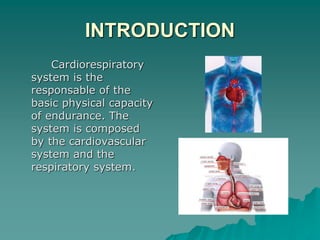
Cardiorespiratory
system is the
responsable of the
basic physical capacity
of endurance. The
system is composed
by the cardiovascular
system and the
respiratory system.
RESPIRATORY SYSTEM
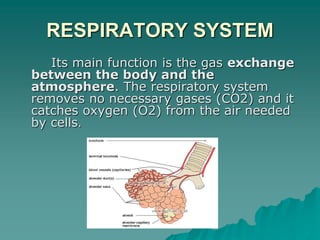
Its main function is the gas exchange
between the body and the
atmosphere. The respiratory system
removes no necessary gases (CO2) and it
catches oxygen (O2) from the air needed
by cells.
BREATHING
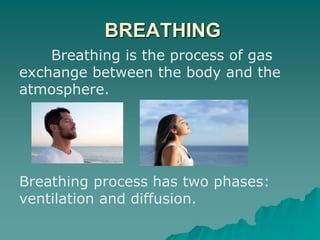
Breathing is the process of gas
exchange between the body and the
atmosphere.
Breathing process has two phases:
ventilation and diffusion.
VENTILATION
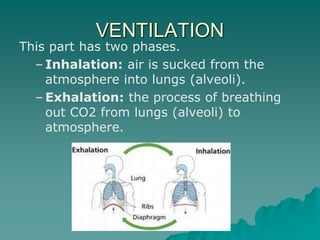
This part has two phases.
– Inhalation: air is sucked from the
atmosphere into lungs (alveoli).
– Exhalation: the process of breathing
out CO2 from lungs (alveoli) to
atmosphere.
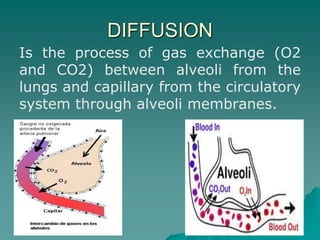
DIFFUSION
Is the process of gas exchange (O2
and CO2) between alveoli from the
lungs and capillary from the circulatory
system through alveoli membranes.
RESPIRATORY RESPONSE TO
EXERCISE
During the physical activity we
increase the number of breaths per
minute and how deep they are. The
volume of air that is inhalated and
exhalated increases.
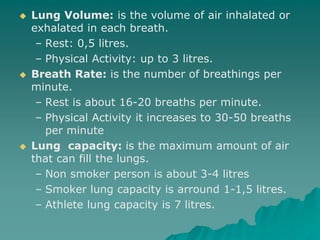
 Lung Volume: is the volume of air inhalated or
exhalated in each breath.
– Rest: 0,5 litres.
– Physical Activity: up to 3 litres.
 Breath Rate: is the number of breathings per
minute.
– Rest is about 16-20 breaths per minute.
– Physical Activity it increases to 30-50 breaths
per minute
 Lung capacity: is the maximum amount of air
that can fill the lungs.
– Non smoker person is about 3-4 litres
– Smoker lung capacity is arround 1-1,5 litres.
– Athlete lung capacity is 7 litres.
To breath correctly is
very important for
physical activity and to
delay fatigue. So that is
very important to inhalate
through the nose and
exhalate through the
mouth and to keep an
uniform respiratory rythm.
CARDIOVASCULAR SYSTEM
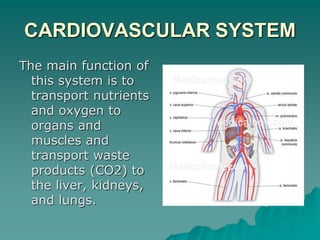
The main function of
this system is to
transport nutrients
and oxygen to
organs and
muscles and
transport waste
products (CO2) to
the liver, kidneys,
and lungs.
ANATOMY OF THE HEART
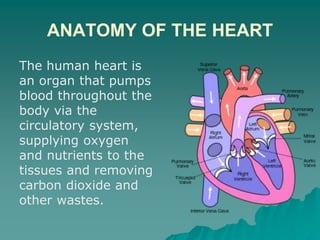
The human heart is
an organ that pumps
blood throughout the
body via the
circulatory system,
supplying oxygen
and nutrients to the
tissues and removing
carbon dioxide and
other wastes.
HEART MOVEMENTS
The Heart has two movements to
pump blood: systole (contaction) and
diastole (relax).
 Atrial Systole: atrium contacts to
push the blood into the ventricle
while ventricle diastole.
 Ventricles Systole: ventricles
contracts to push blood to every cells
of the body or lungs while atrium
diastole.
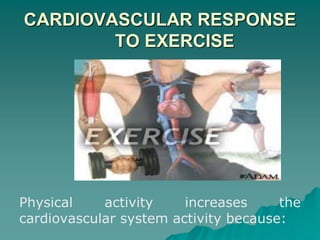
CARDIOVASCULAR RESPONSE
TO EXERCISE
Physical activity increases the
cardiovascular system activity because:
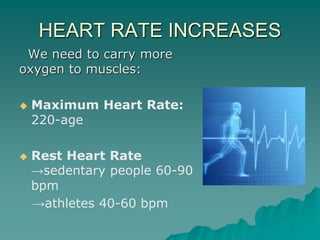
HEART RATE INCREASES
We need to carry more
oxygen to muscles:
 Maximum Heart Rate:
220-age
 Rest Heart Rate
→sedentary people 60-90
bpm
→athletes 40-60 bpm
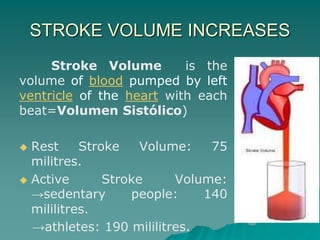
STROKE VOLUME INCREASES
Stroke Volume is the
volume of blood pumped by left
ventricle of the heart with each
beat=Volumen Sistólico)
 Rest Stroke Volume: 75
militres.
 Active Stroke Volume:
→sedentary people: 140
mililitres.
→athletes: 190 mililitres.
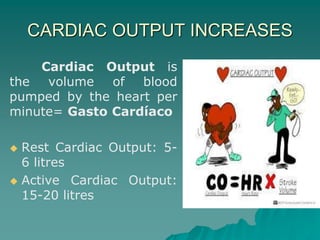
CARDIAC OUTPUT INCREASES
Cardiac Output is
the volume of blood
pumped by the heart per
minute= Gasto Cardíaco
 Rest Cardiac Output: 5-
6 litres
 Active Cardiac Output:
15-20 litres
ALSO INCREASES
 Coronary Flow : blood that flows to
the cardiac muscle, myocardium.
 The volume of blood that flow to
muscles.
 When we practice exercise the
distribution of blood flow in our body
change.
–Rest: 20% of blood flows to
muscles
–Physical activity: 80% of blood
flows to muscle.
The only organ that needs the
same quantity of oxygen is the
Brain
THE END
Cardiorespiratory system 3º

Cardiorespiratory system 3º

  • 1.
    UNIT 5: THEHUMAN BODY “CARDIORESPIRATORY SYSTEM” PHYSICAL EDUCATION DEPARTMENT I.E.S. PEÑALBA 3rd ESO
  • 2.
    INTRODUCTION Cardiorespiratory system is the responsableof the basic physical capacity of endurance. The system is composed by the cardiovascular system and the respiratory system.
  • 3.
    RESPIRATORY SYSTEM Its mainfunction is the gas exchange between the body and the atmosphere. The respiratory system removes no necessary gases (CO2) and it catches oxygen (O2) from the air needed by cells.
  • 4.
    BREATHING Breathing is theprocess of gas exchange between the body and the atmosphere. Breathing process has two phases: ventilation and diffusion.
  • 5.
    VENTILATION This part hastwo phases. – Inhalation: air is sucked from the atmosphere into lungs (alveoli). – Exhalation: the process of breathing out CO2 from lungs (alveoli) to atmosphere.
  • 6.
    DIFFUSION Is the processof gas exchange (O2 and CO2) between alveoli from the lungs and capillary from the circulatory system through alveoli membranes.
  • 7.
    RESPIRATORY RESPONSE TO EXERCISE Duringthe physical activity we increase the number of breaths per minute and how deep they are. The volume of air that is inhalated and exhalated increases.
  • 8.
     Lung Volume:is the volume of air inhalated or exhalated in each breath. – Rest: 0,5 litres. – Physical Activity: up to 3 litres.  Breath Rate: is the number of breathings per minute. – Rest is about 16-20 breaths per minute. – Physical Activity it increases to 30-50 breaths per minute  Lung capacity: is the maximum amount of air that can fill the lungs. – Non smoker person is about 3-4 litres – Smoker lung capacity is arround 1-1,5 litres. – Athlete lung capacity is 7 litres.
  • 9.
    To breath correctlyis very important for physical activity and to delay fatigue. So that is very important to inhalate through the nose and exhalate through the mouth and to keep an uniform respiratory rythm.
  • 10.
    CARDIOVASCULAR SYSTEM The mainfunction of this system is to transport nutrients and oxygen to organs and muscles and transport waste products (CO2) to the liver, kidneys, and lungs.
  • 11.
    ANATOMY OF THEHEART The human heart is an organ that pumps blood throughout the body via the circulatory system, supplying oxygen and nutrients to the tissues and removing carbon dioxide and other wastes.
  • 12.
    HEART MOVEMENTS The Hearthas two movements to pump blood: systole (contaction) and diastole (relax).  Atrial Systole: atrium contacts to push the blood into the ventricle while ventricle diastole.  Ventricles Systole: ventricles contracts to push blood to every cells of the body or lungs while atrium diastole.
  • 13.
    CARDIOVASCULAR RESPONSE TO EXERCISE Physicalactivity increases the cardiovascular system activity because:
  • 14.
    HEART RATE INCREASES Weneed to carry more oxygen to muscles:  Maximum Heart Rate: 220-age  Rest Heart Rate →sedentary people 60-90 bpm →athletes 40-60 bpm
  • 15.
    STROKE VOLUME INCREASES StrokeVolume is the volume of blood pumped by left ventricle of the heart with each beat=Volumen Sistólico)  Rest Stroke Volume: 75 militres.  Active Stroke Volume: →sedentary people: 140 mililitres. →athletes: 190 mililitres.
  • 16.
    CARDIAC OUTPUT INCREASES CardiacOutput is the volume of blood pumped by the heart per minute= Gasto Cardíaco  Rest Cardiac Output: 5- 6 litres  Active Cardiac Output: 15-20 litres
  • 17.
    ALSO INCREASES  CoronaryFlow : blood that flows to the cardiac muscle, myocardium.  The volume of blood that flow to muscles.
  • 18.
     When wepractice exercise the distribution of blood flow in our body change. –Rest: 20% of blood flows to muscles –Physical activity: 80% of blood flows to muscle. The only organ that needs the same quantity of oxygen is the Brain
  • 19.