Curriculum Integration : Overcoming Obstacles
Laura Fidler, NAF Instructional Manager
laura@naf.org
#nafnext
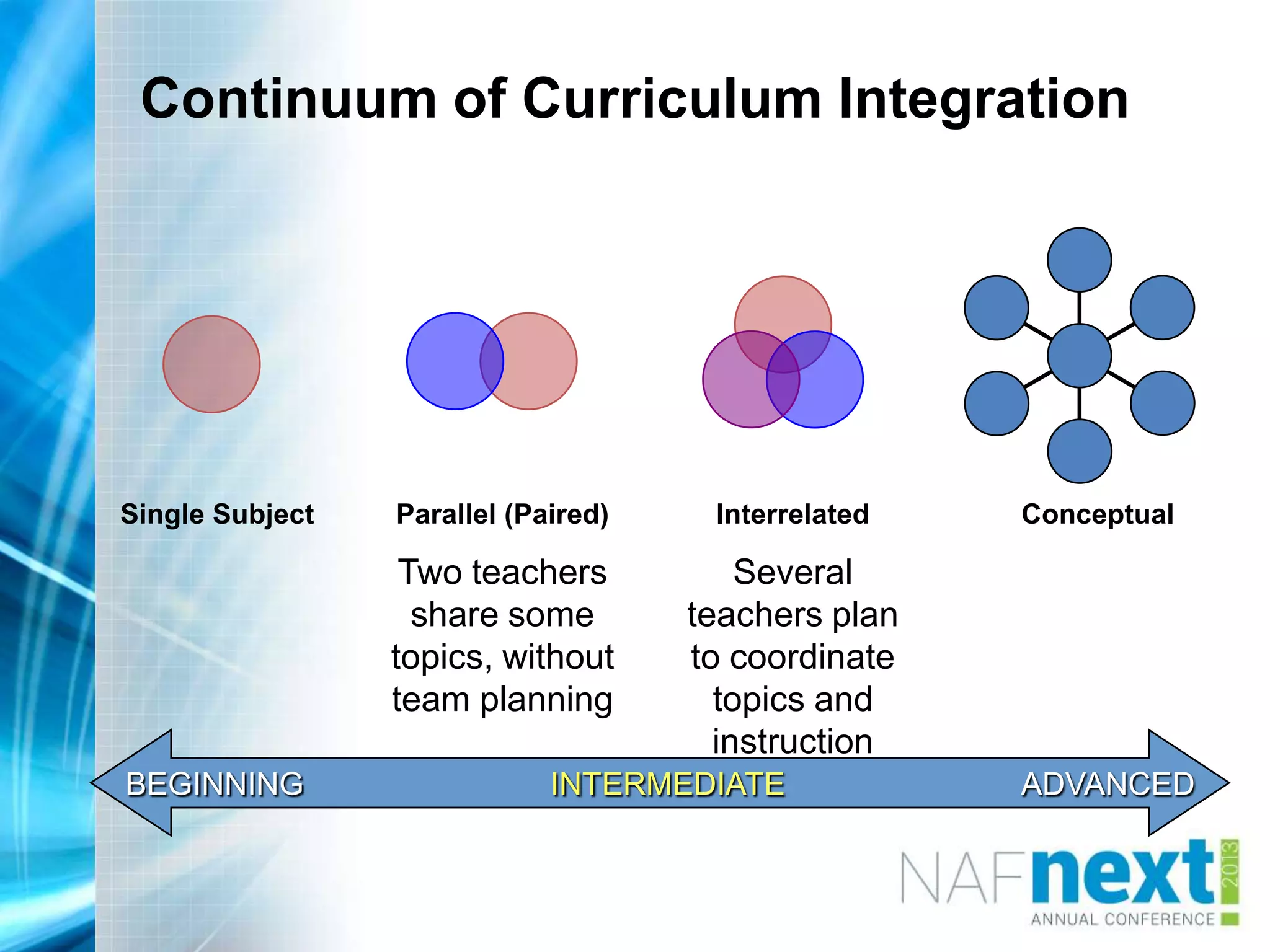
Continuum of Curriculum Integration
BEGINNING INTERMEDIATE ADVANCED
Single Subject Parallel (Paired) Interrelated Conceptual
Two teachers
share some
topics, without
team planning
Several
teachers plan
to coordinate
topics and
instruction
#nafnext
Forms of Curriculum
Integration
• Work-Based Learning
 Skill Integration
 Activity Integration
• Content Integration (natural
overlaps)
• Activity/lesson integration
• Culminating Project Integration
#nafnext
Which of these is my biggest
obstacle to achieving curriculum
integration?
• Teacher collaboration/buy-in?
• Common planning time?
– Curriculum content mapping with clear scopes & sequences?
• Cohort scheduling?
• Student engagement/cooperation?
#nafnext
Overcoming Obstacles
Teacher buy-in
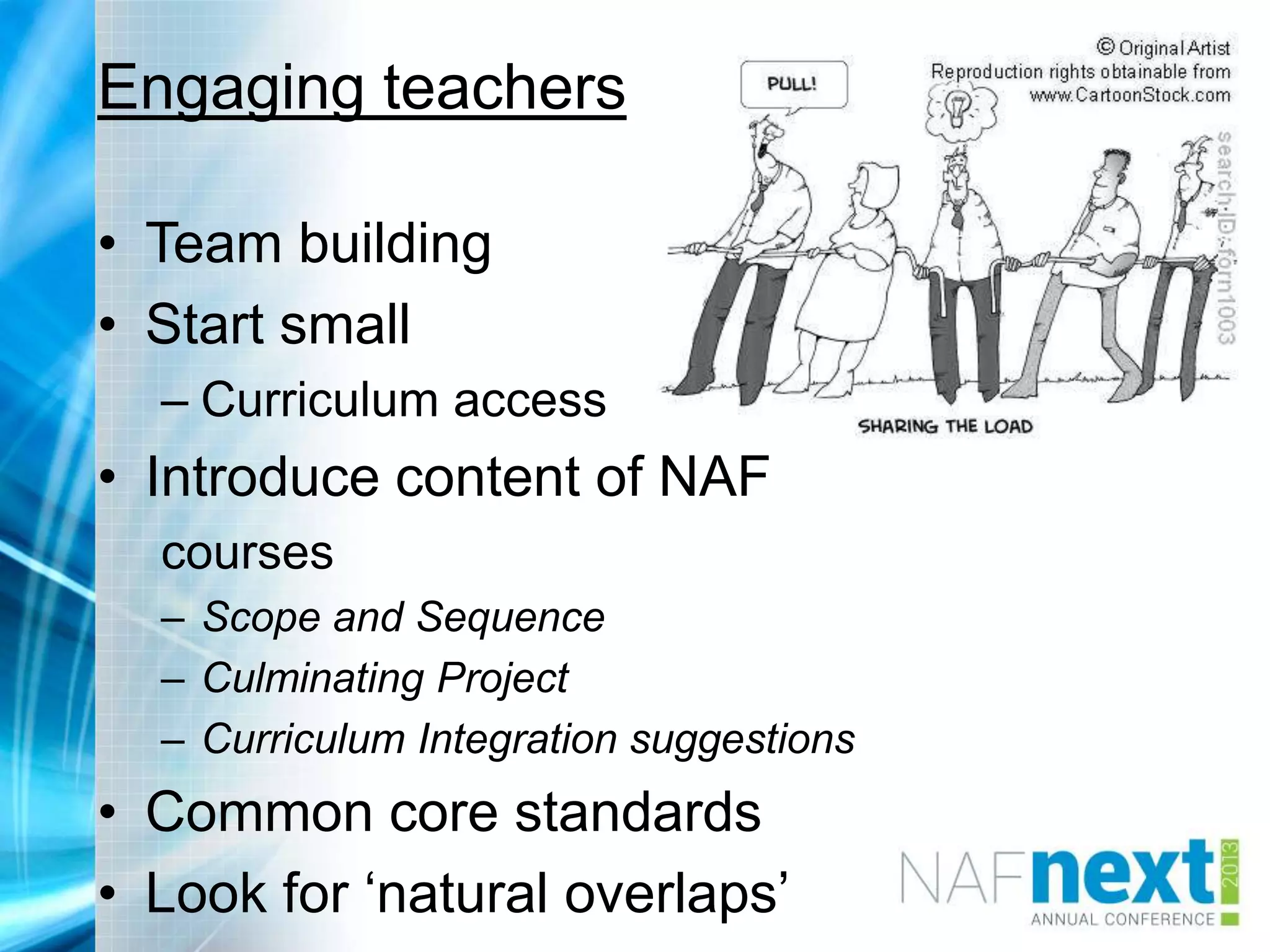
Engaging teachers
• Team building
• Start small
– Curriculum access
• Introduce content of NAF
courses
– Scope and Sequence
– Culminating Project
– Curriculum Integration suggestions
• Common core standards
• Look for „natural overlaps‟
#nafnext
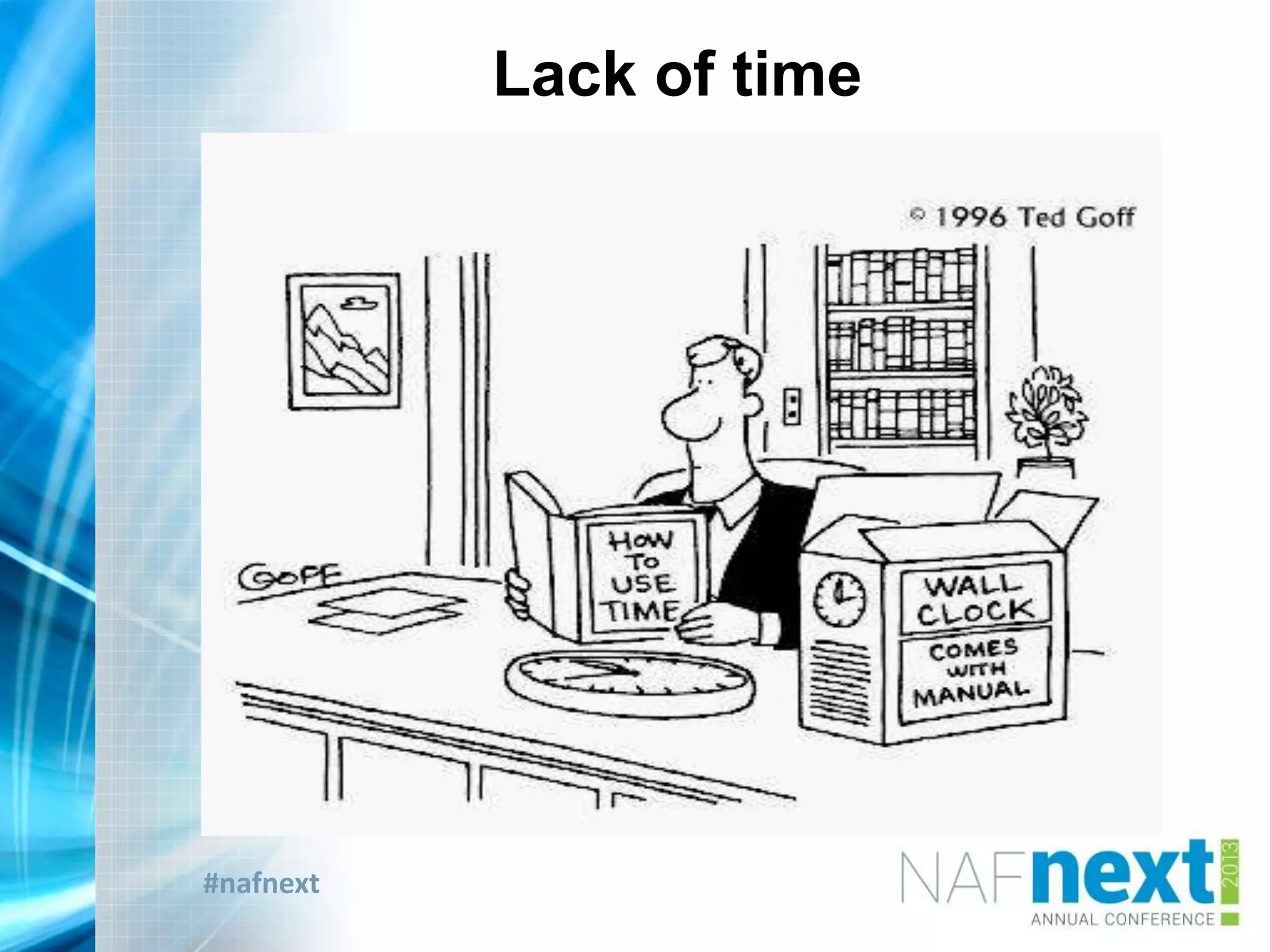
Lack of time
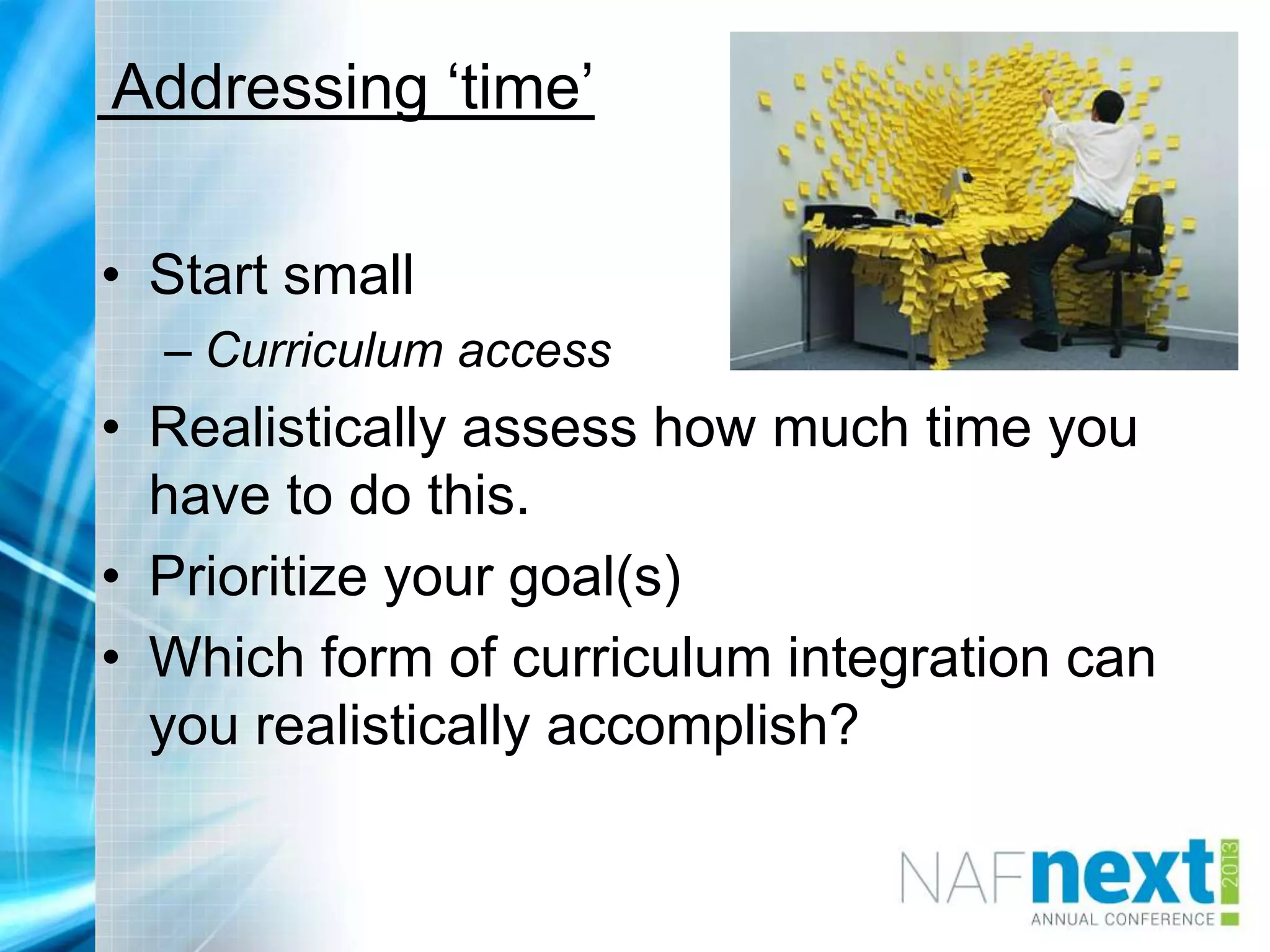
Addressing „time‟
• Start small
– Curriculum access
• Realistically assess how much time you
have to do this.
• Prioritize your goal(s)
• Which form of curriculum integration can
you realistically accomplish?
#nafnext
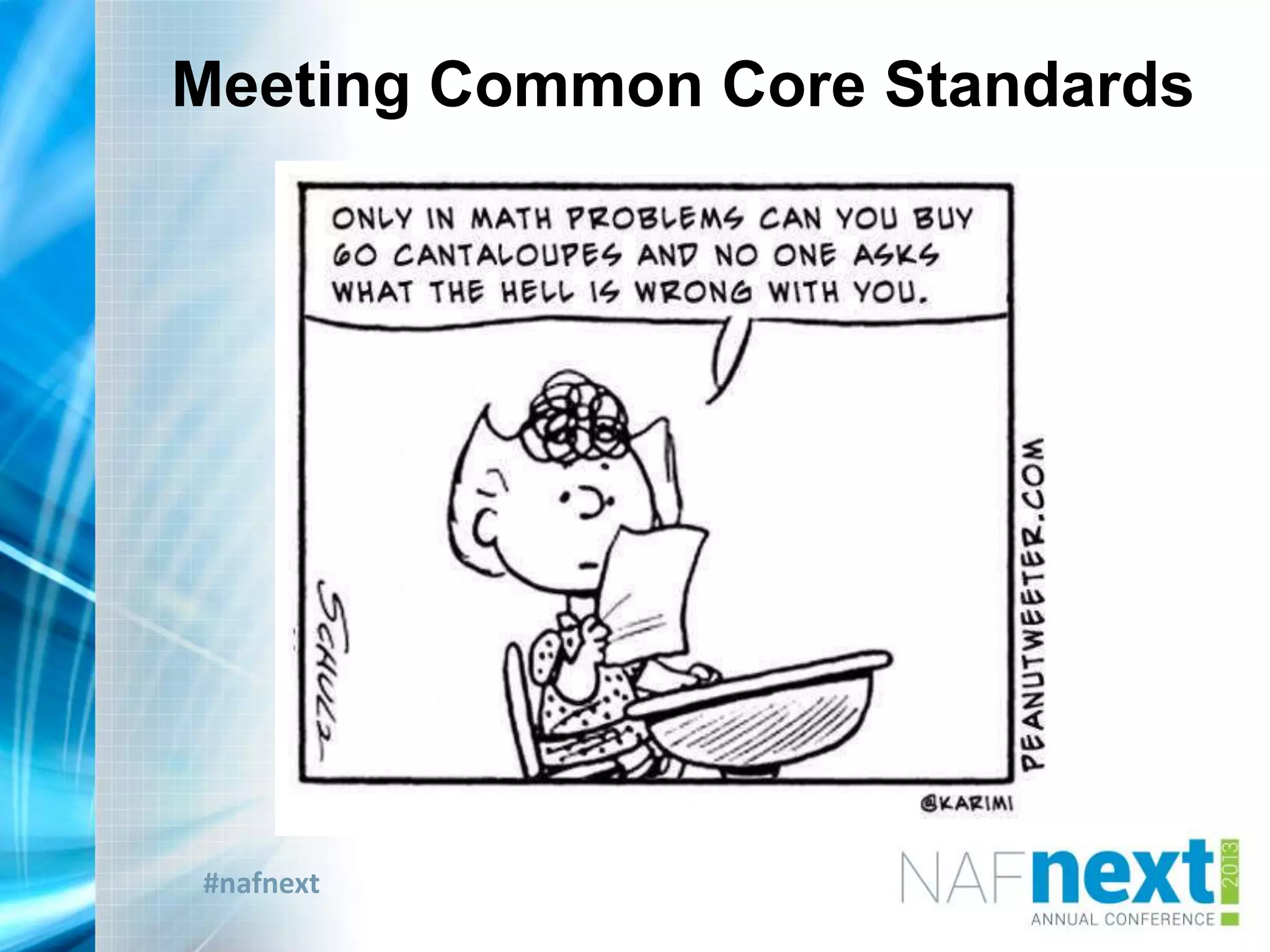
Meeting Common Core Standards
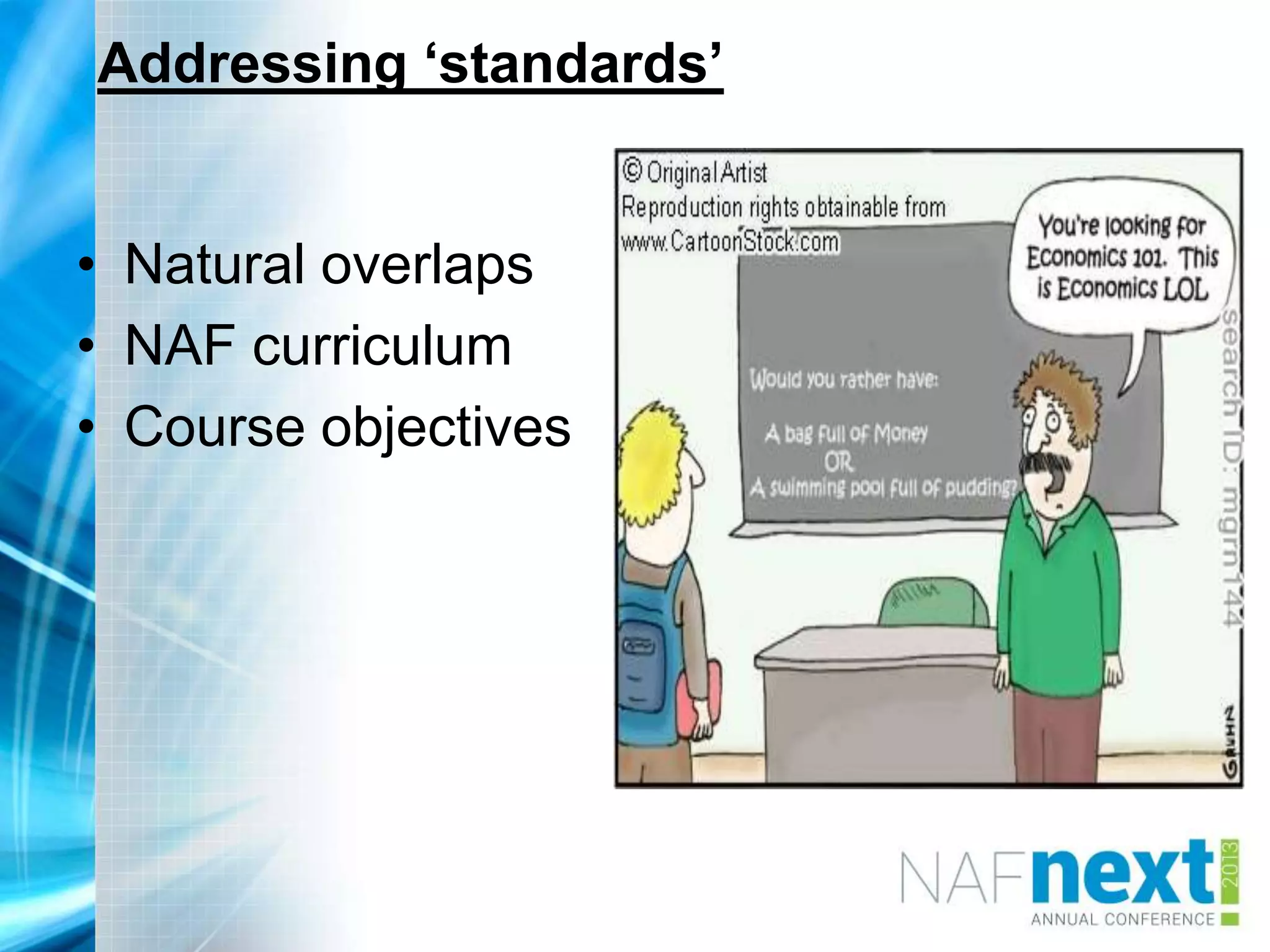
Addressing ‘standards’
• Natural overlaps
• NAF curriculum
• Course objectives
#nafnext
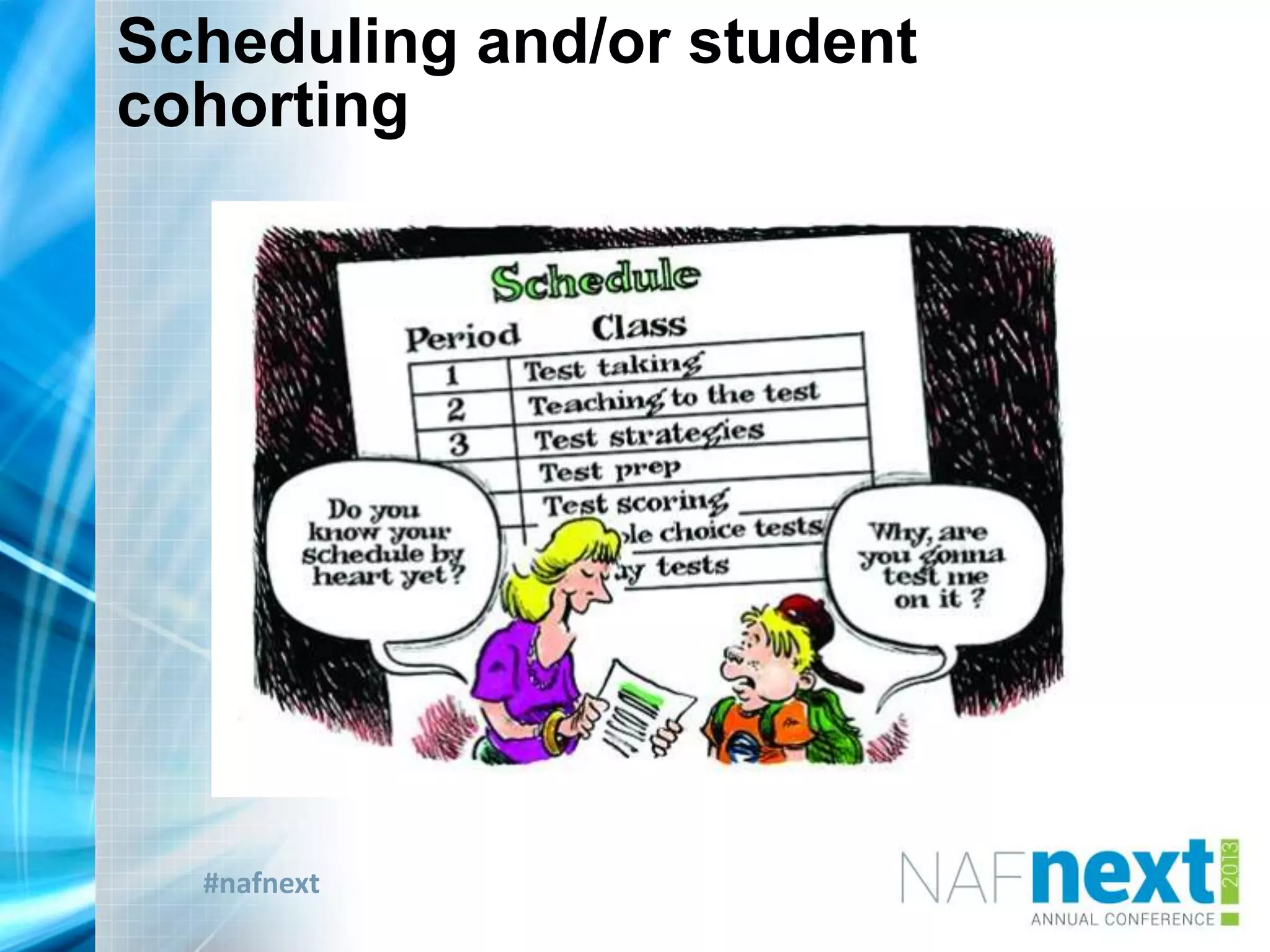
Scheduling and/or student
cohorting
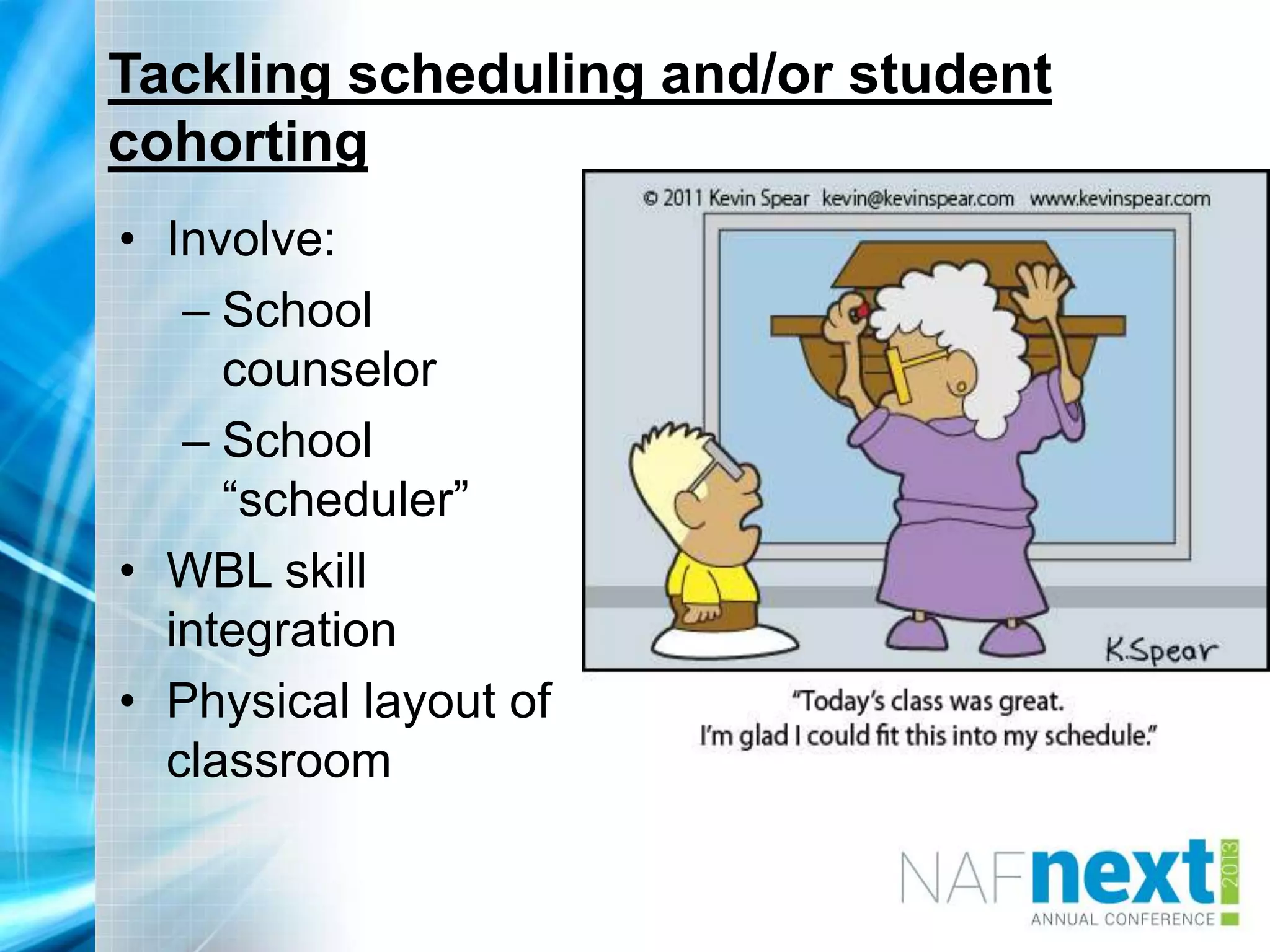
Tackling scheduling and/or student
cohorting
• Involve:
– School
counselor
– School
“scheduler”
• WBL skill
integration
• Physical layout of
classroom
#nafnext
Common Planning time
#nafnext
Overcoming lack of common planning time
• Start small
• Work with those who want to
• Agendas to utilize time
• Physical layout of classroom – academy culture
#nafnext
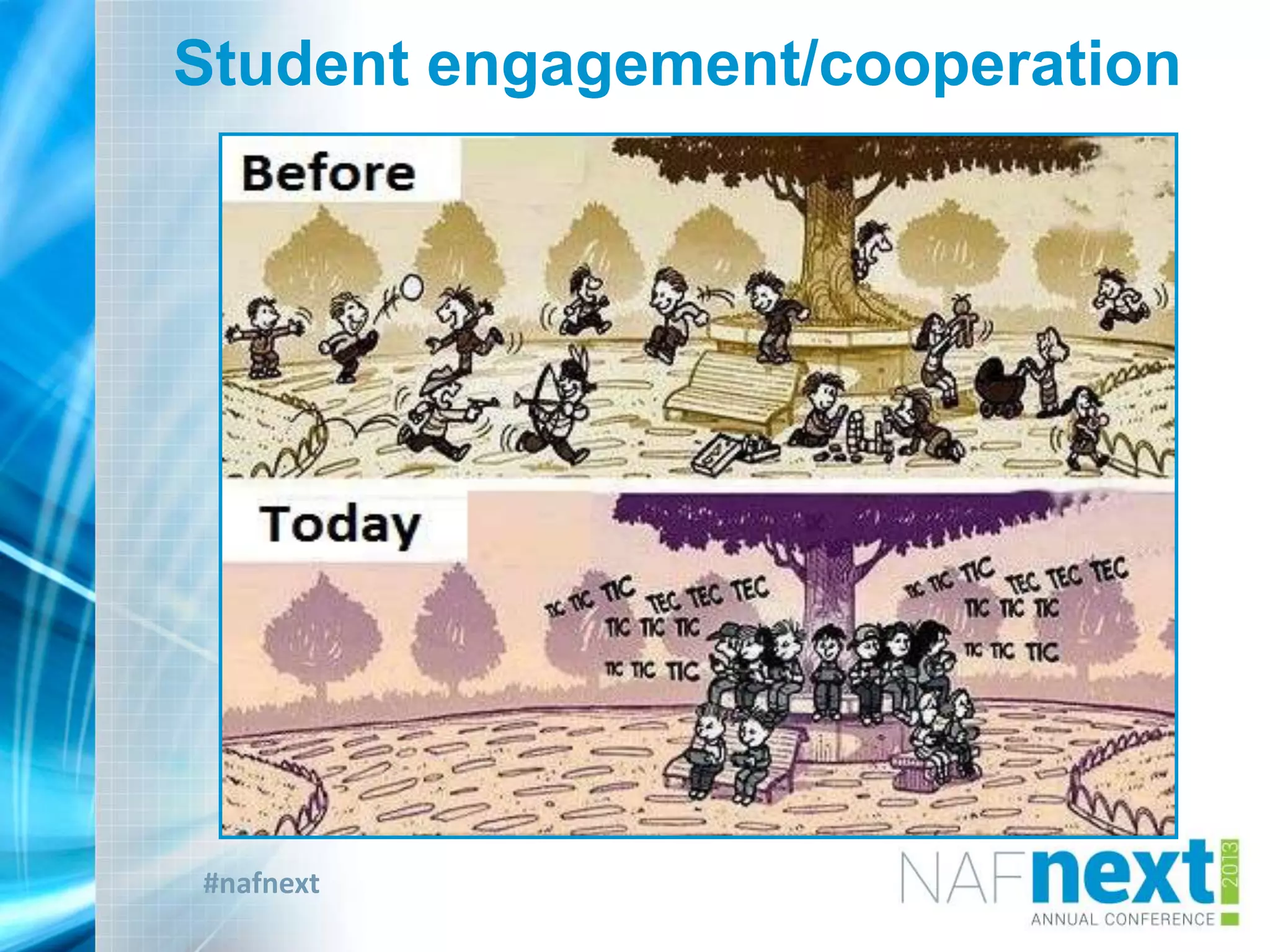
Student engagement/cooperation
#nafnext
Lack of student engagement/cooperation
• Things to consider why this is happening:
 Have you set clear guidelines for your assignment?
 How do you evaluate your students‟ work?
• Individual vs. group – are you grading the „end product‟
or the „process of getting there‟?
• Harmful consequences?
 In what way is your classroom culture playing a role in
this?
• Equitability - “Hogs vs. Logs”
• Are „norms‟ established and is there accountability?
 How do you group your students together?
• Do you allow for mixed ability when high scaffolding is
crucial?
• Do you allow for ability-alike grouping when there are
opportunities for growth and curricular extensions?
#nafnext
What is one big “take-away” from
today‟s session?
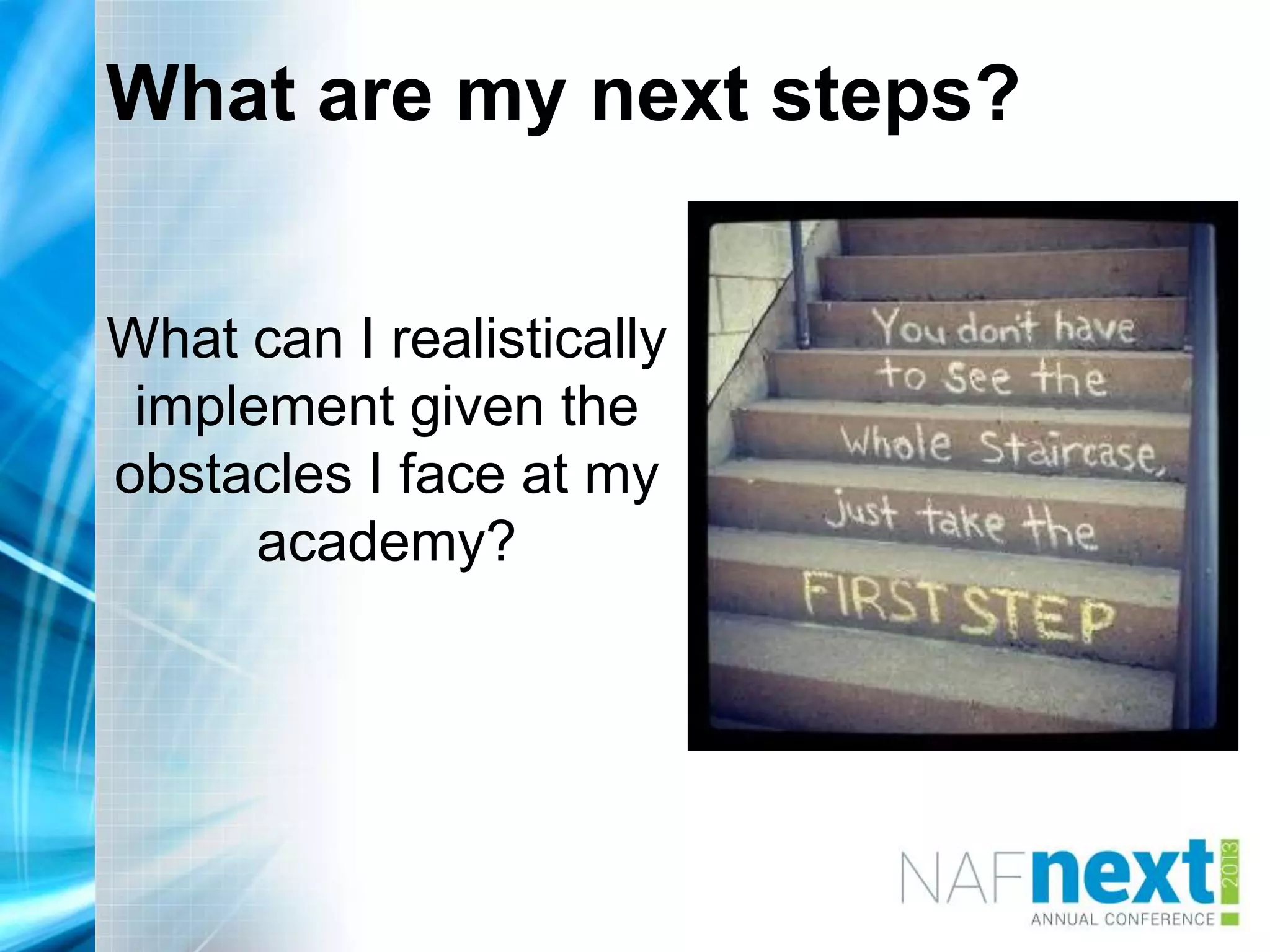
What are my next steps?
What can I realistically
implement given the
obstacles I face at my
academy?

Curriculum Integration: Overcoming the Obstacles

  • 2.
    Curriculum Integration :Overcoming Obstacles Laura Fidler, NAF Instructional Manager laura@naf.org
  • 3.
  • 4.
    Continuum of CurriculumIntegration BEGINNING INTERMEDIATE ADVANCED Single Subject Parallel (Paired) Interrelated Conceptual Two teachers share some topics, without team planning Several teachers plan to coordinate topics and instruction
  • 5.
    #nafnext Forms of Curriculum Integration •Work-Based Learning  Skill Integration  Activity Integration • Content Integration (natural overlaps) • Activity/lesson integration • Culminating Project Integration
  • 6.
    #nafnext Which of theseis my biggest obstacle to achieving curriculum integration? • Teacher collaboration/buy-in? • Common planning time? – Curriculum content mapping with clear scopes & sequences? • Cohort scheduling? • Student engagement/cooperation?
  • 7.
  • 8.
  • 9.
    Engaging teachers • Teambuilding • Start small – Curriculum access • Introduce content of NAF courses – Scope and Sequence – Culminating Project – Curriculum Integration suggestions • Common core standards • Look for „natural overlaps‟
  • 10.
  • 11.
    Addressing „time‟ • Startsmall – Curriculum access • Realistically assess how much time you have to do this. • Prioritize your goal(s) • Which form of curriculum integration can you realistically accomplish?
  • 12.
  • 13.
    Addressing ‘standards’ • Naturaloverlaps • NAF curriculum • Course objectives
  • 14.
  • 15.
    Tackling scheduling and/orstudent cohorting • Involve: – School counselor – School “scheduler” • WBL skill integration • Physical layout of classroom
  • 16.
  • 17.
    #nafnext Overcoming lack ofcommon planning time • Start small • Work with those who want to • Agendas to utilize time • Physical layout of classroom – academy culture
  • 18.
  • 19.
    #nafnext Lack of studentengagement/cooperation • Things to consider why this is happening:  Have you set clear guidelines for your assignment?  How do you evaluate your students‟ work? • Individual vs. group – are you grading the „end product‟ or the „process of getting there‟? • Harmful consequences?  In what way is your classroom culture playing a role in this? • Equitability - “Hogs vs. Logs” • Are „norms‟ established and is there accountability?  How do you group your students together? • Do you allow for mixed ability when high scaffolding is crucial? • Do you allow for ability-alike grouping when there are opportunities for growth and curricular extensions?
  • 20.
    #nafnext What is onebig “take-away” from today‟s session?
  • 21.
    What are mynext steps? What can I realistically implement given the obstacles I face at my academy?