

Teachers, Transition & Time: 
Learning for Educational 
Change 
Alan S. Mackenzie 
Academic Director
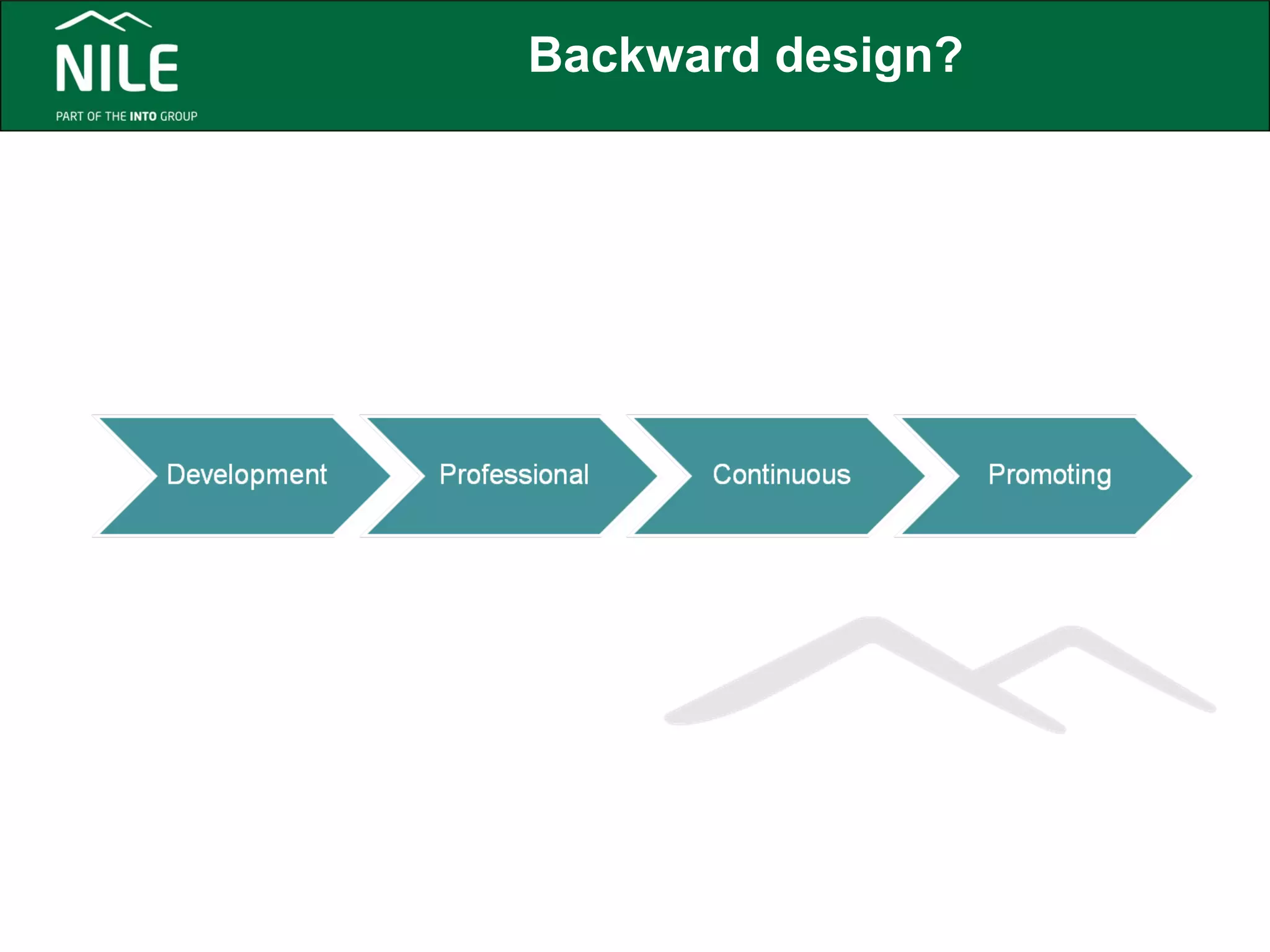
Backward design?
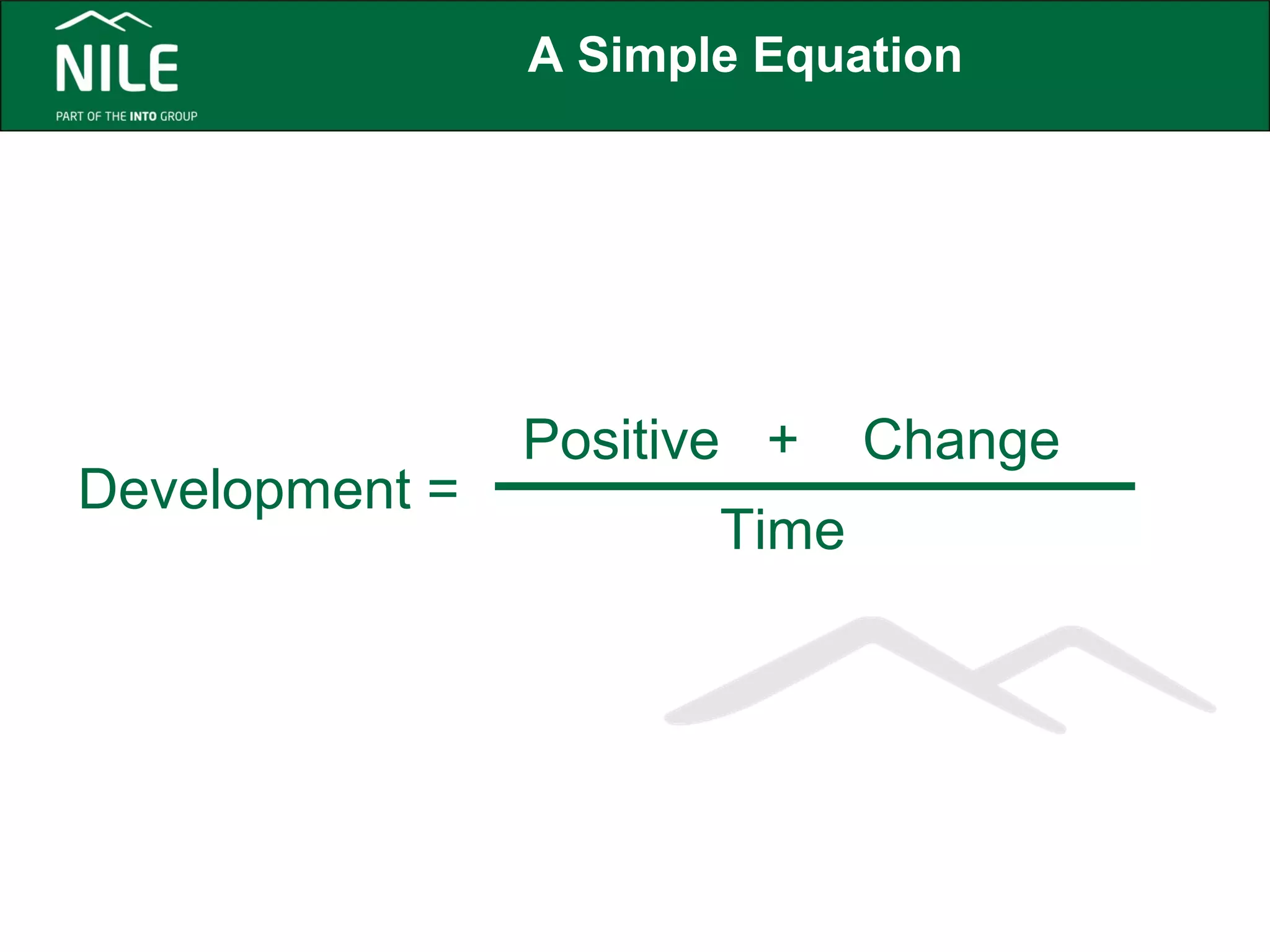
A Simple Equation 
Development = 
Positive 
+ Change 
Time
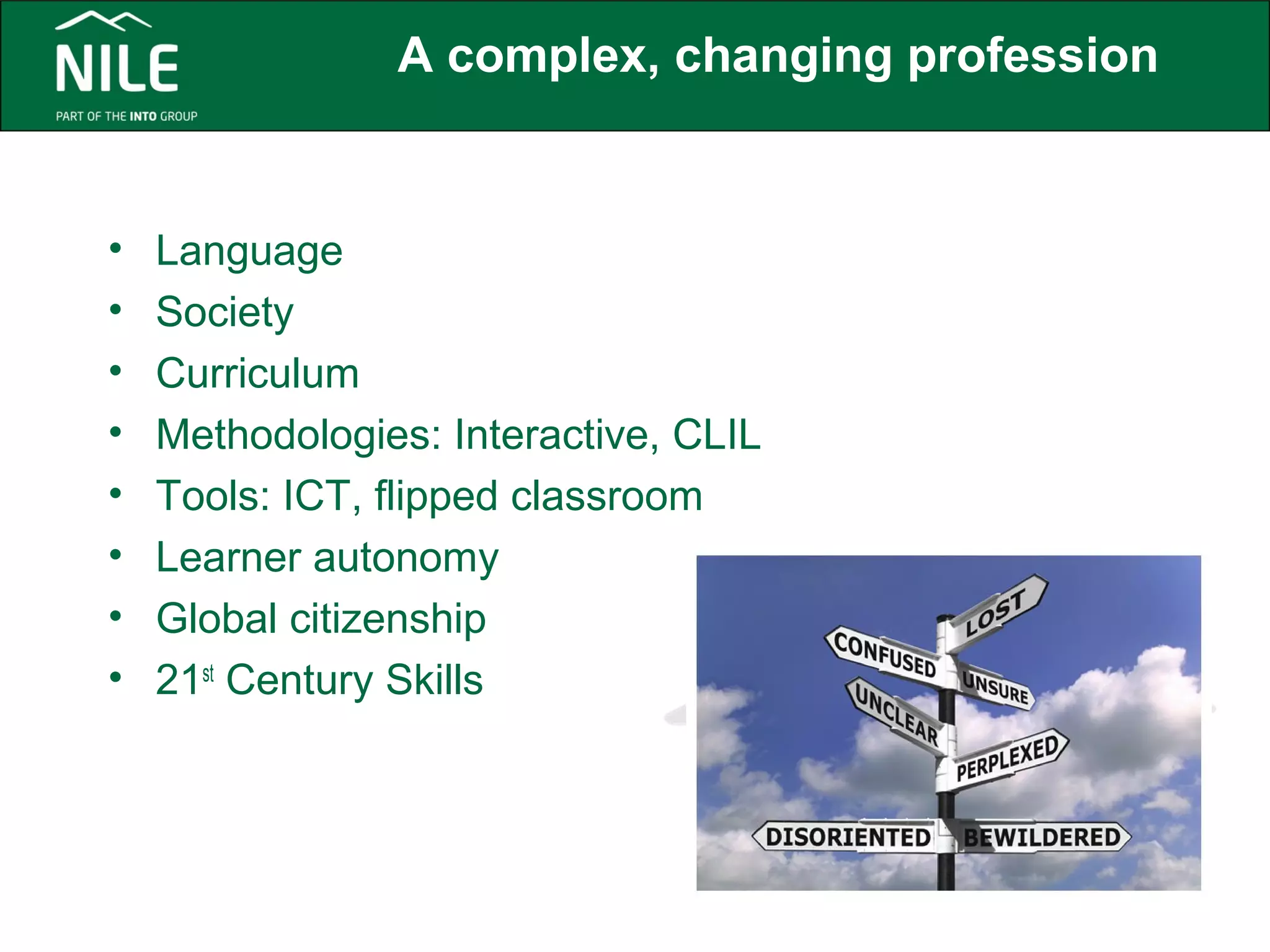
A complex, changing profession 
• Language 
• Society 
• Curriculum 
• Methodologies: Interactive, CLIL 
• Tools: ICT, flipped classroom 
• Learner autonomy 
• Global citizenship 
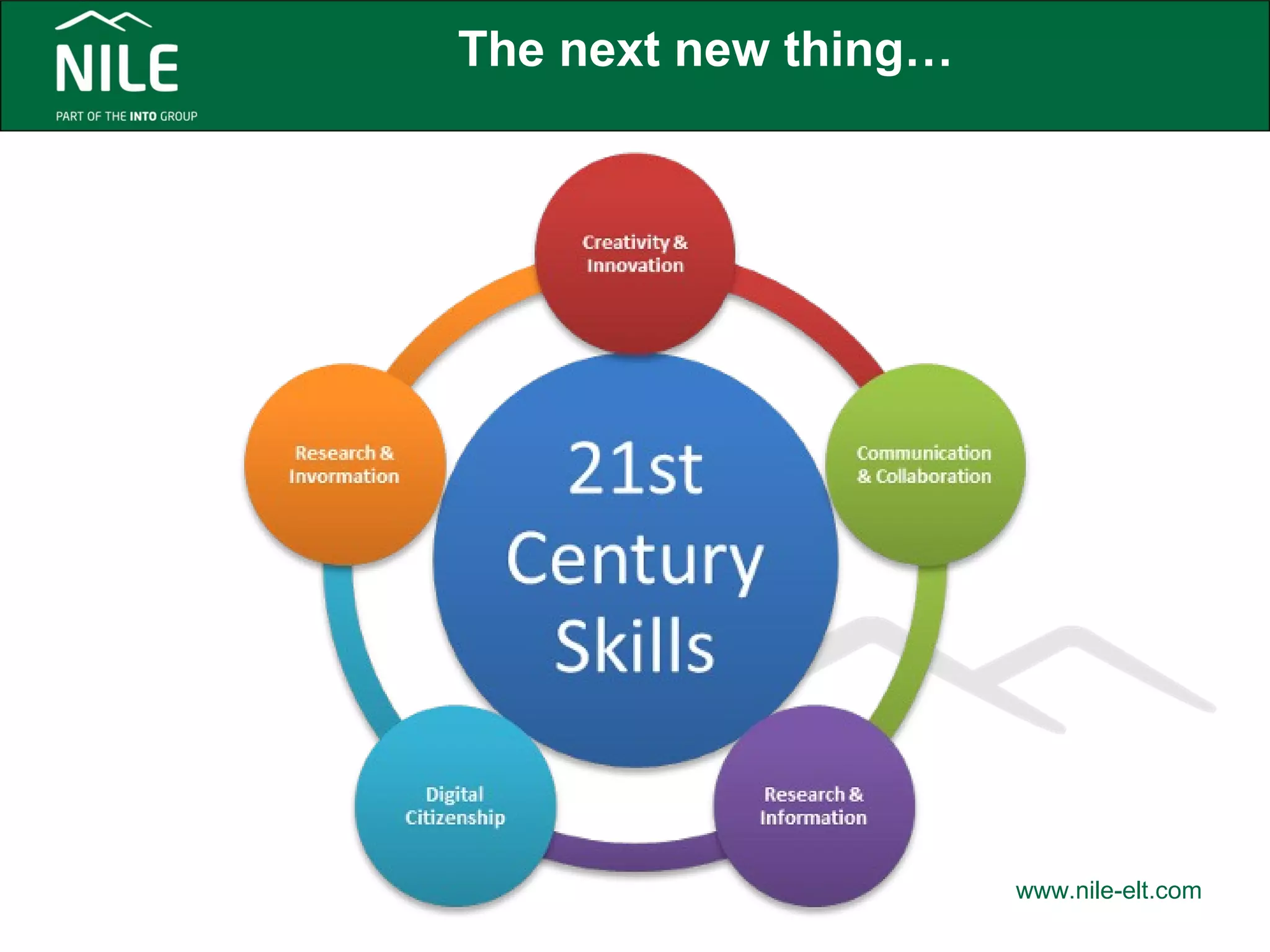
• 21st Century Skills
The next new thing… 
www.nile-elt.com
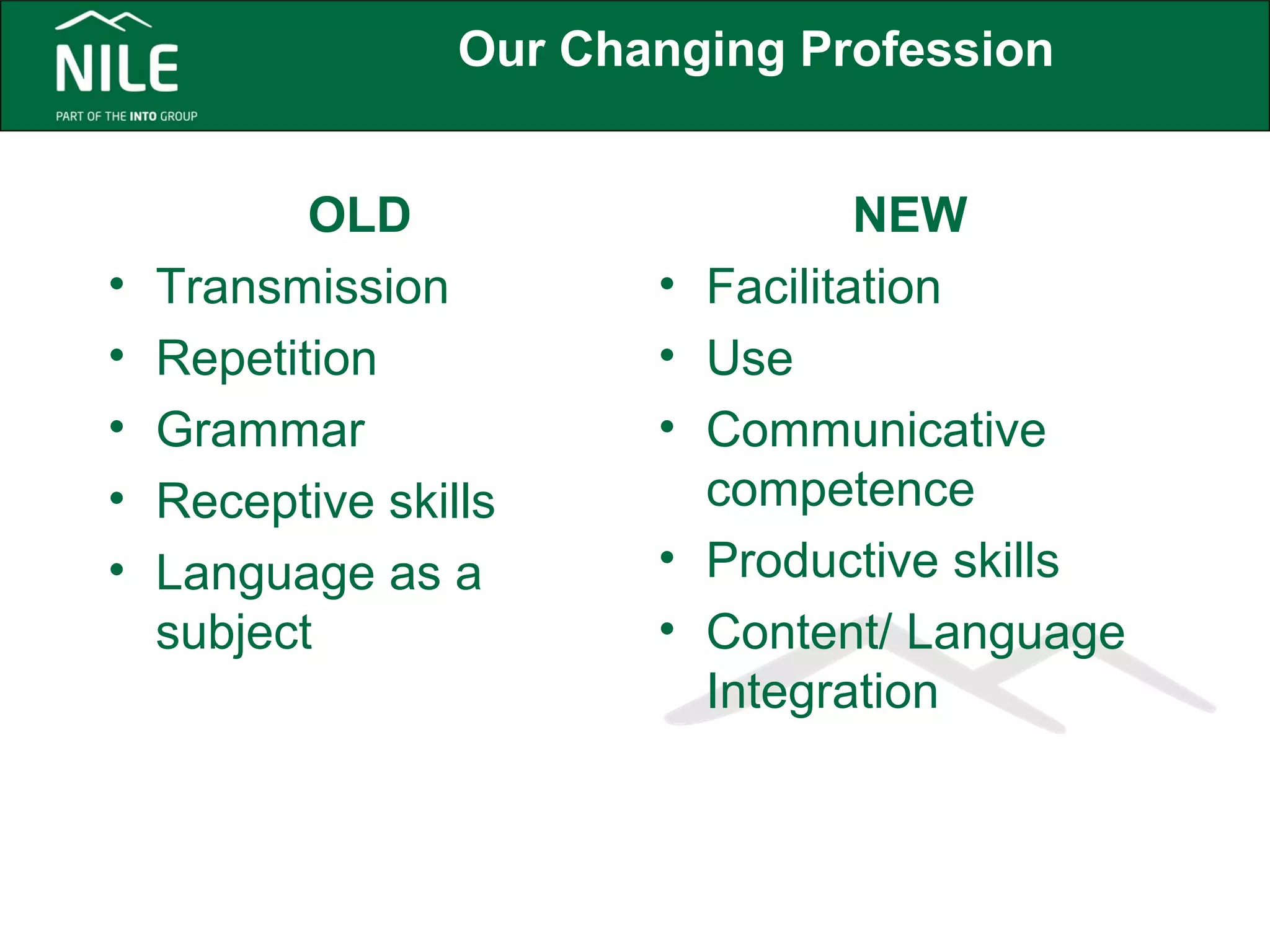
Our Changing Profession 
OLD 
• Transmission 
• Repetition 
• Grammar 
• Receptive skills 
• Language as a 
subject 
NEW 
• Facilitation 
• Use 
• Communicative 
competence 
• Productive skills 
• Content/ Language 
Integration
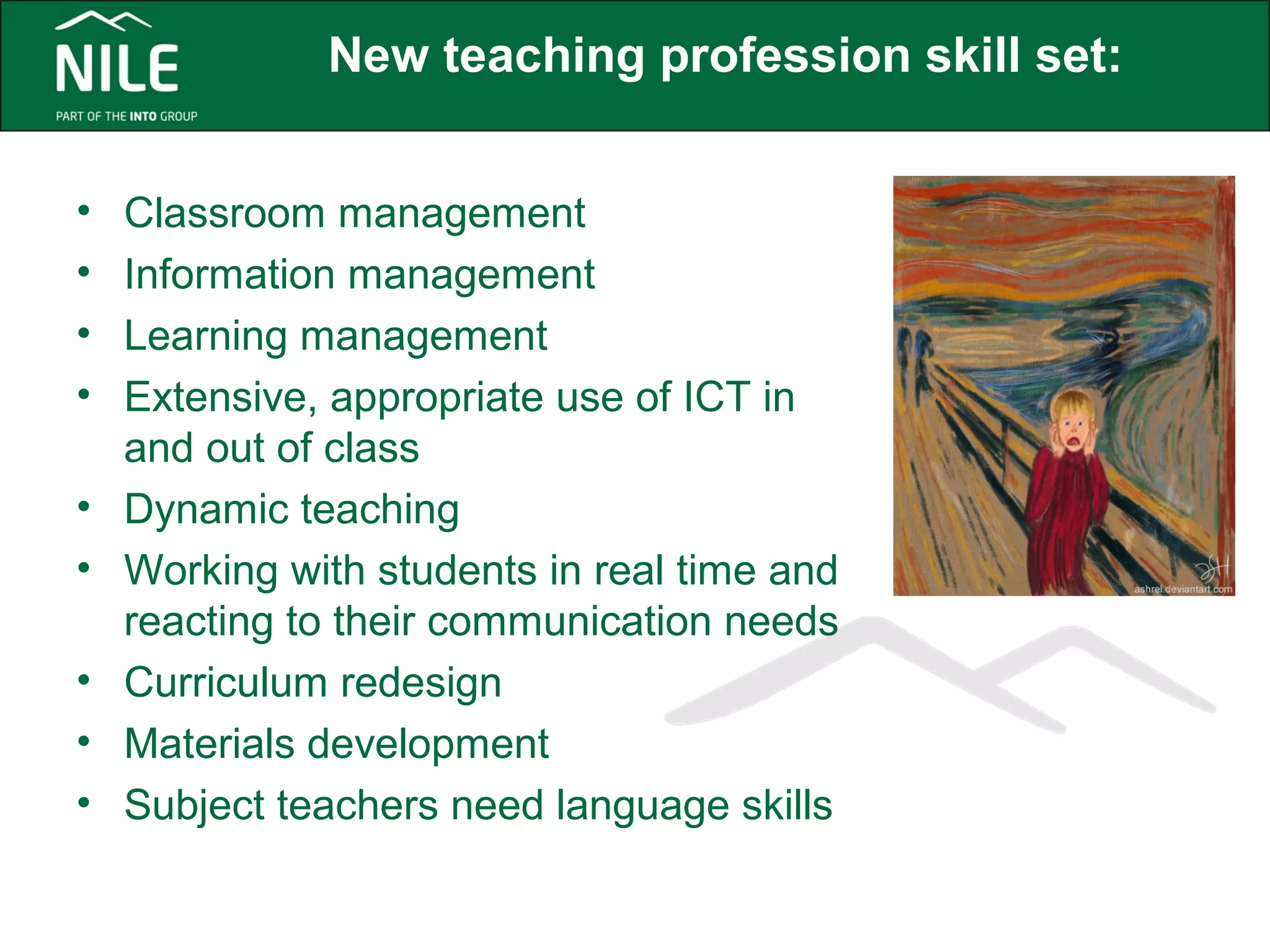
New teaching profession skill set: 
• Classroom management 
• Information management 
• Learning management 
• Extensive, appropriate use of ICT in 
and out of class 
• Dynamic teaching 
• Working with students in real time and 
reacting to their communication needs 
• Curriculum redesign 
• Materials development 
• Subject teachers need language skills
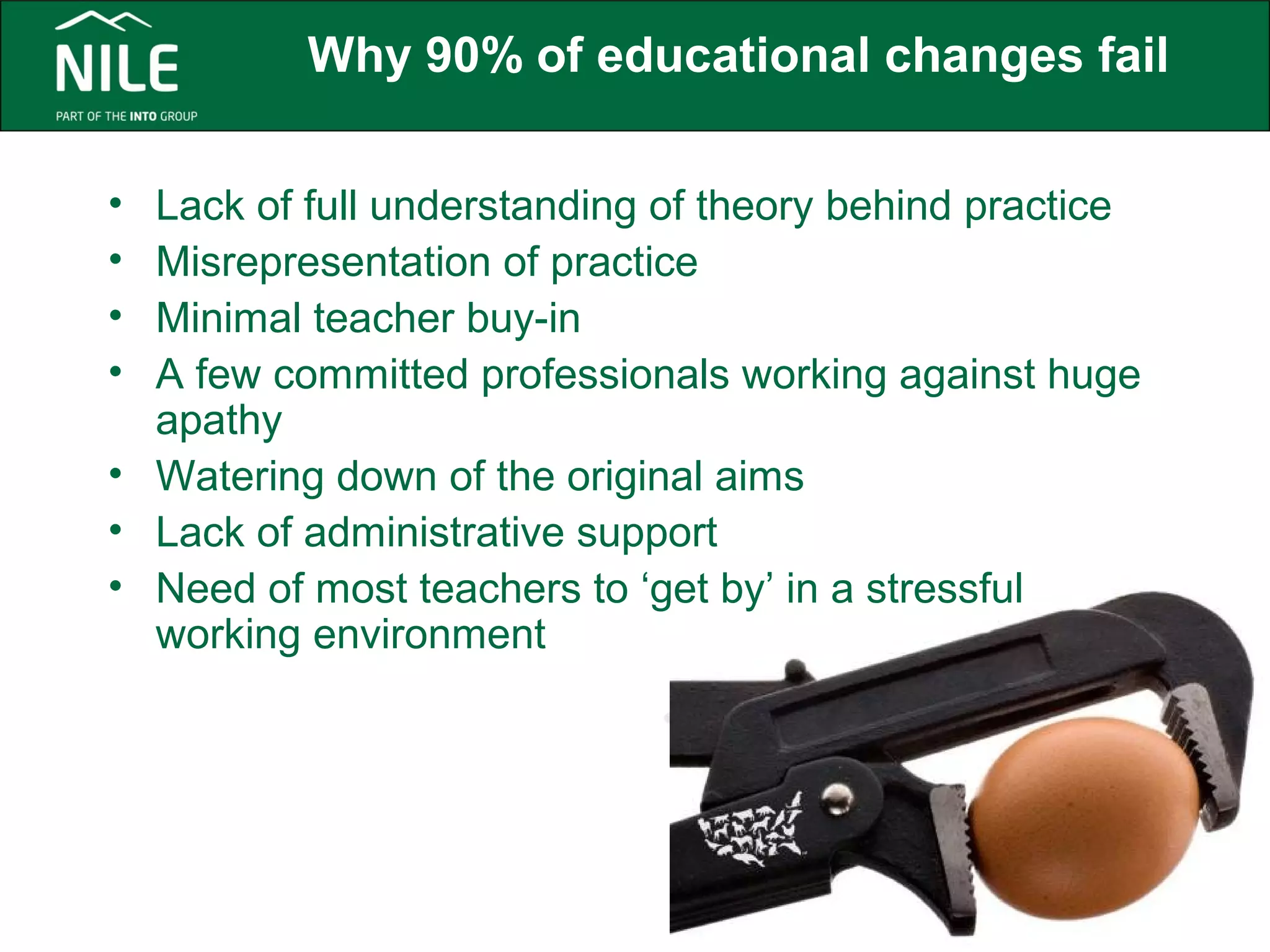
Why 90% of educational changes fail 
• Lack of full understanding of theory behind practice 
• Misrepresentation of practice 
• Minimal teacher buy-in 
• A few committed professionals working against huge 
apathy 
• Watering down of the original aims 
• Lack of administrative support 
• Need of most teachers to ‘get by’ in a stressful 
working environment
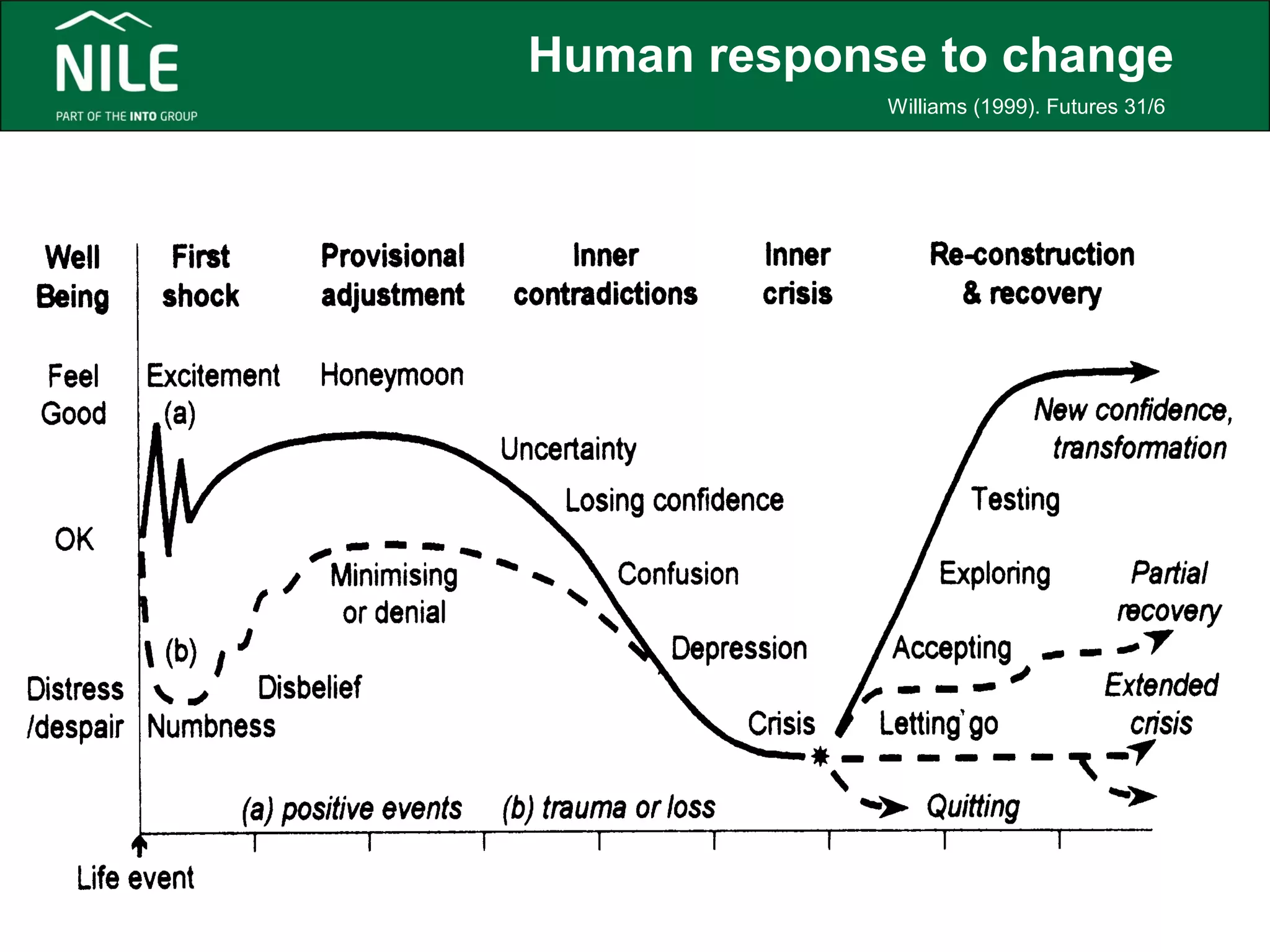
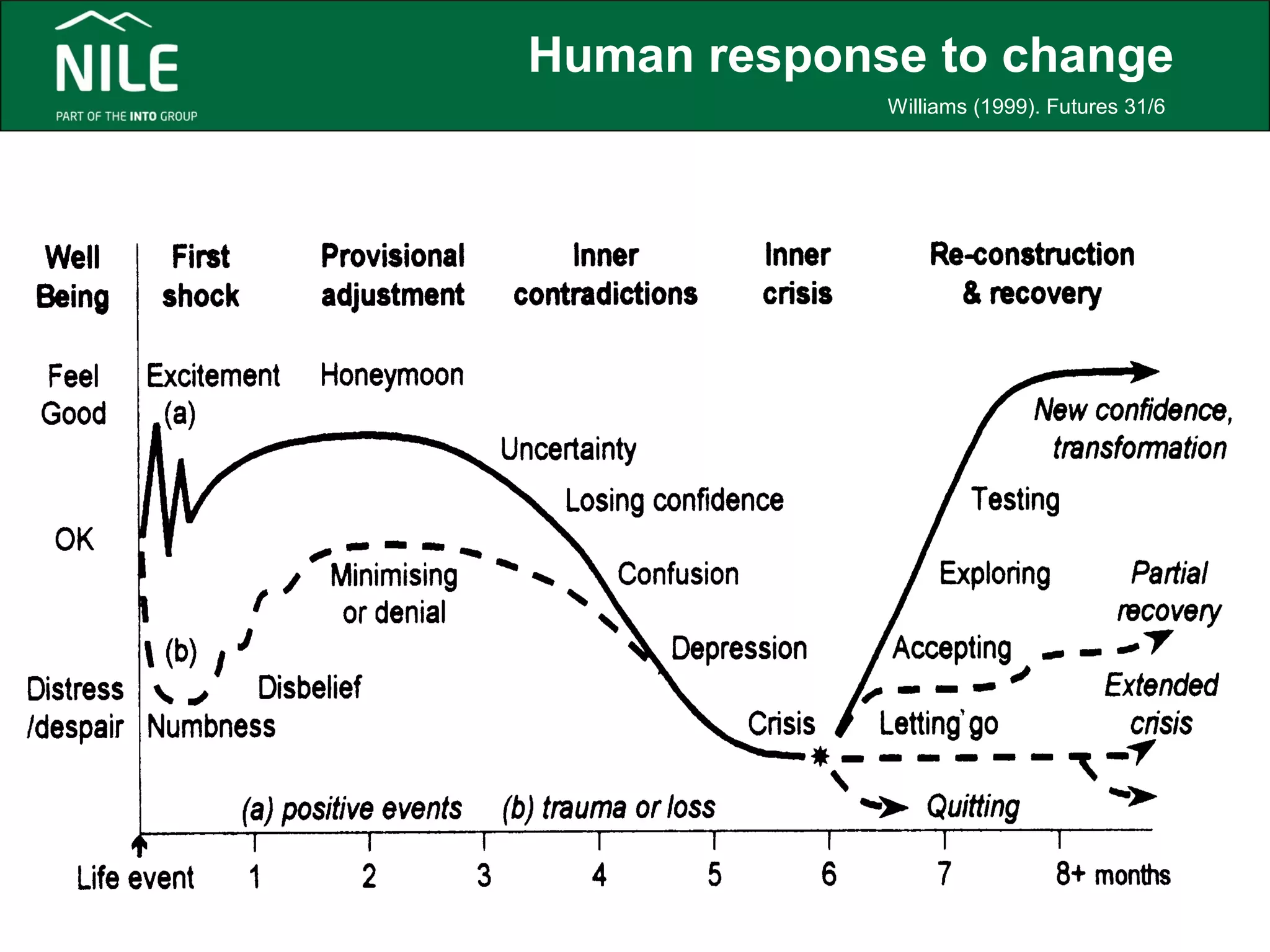
Human response to change 
Williams (1999). Futures 31/6
It All Takes Time 
• Understanding what changes are 
• Agreeing with them 
• Learning how to go about implementing them 
• Planning a course of action 
• Developing the skills to be able to put the action plan 
into practice 
• Experimenting with those skills (trial, error, success) 
• Implementing the action plan 
• Evaluating your success 
• Reformulating your action plan 
www.nile-elt.com
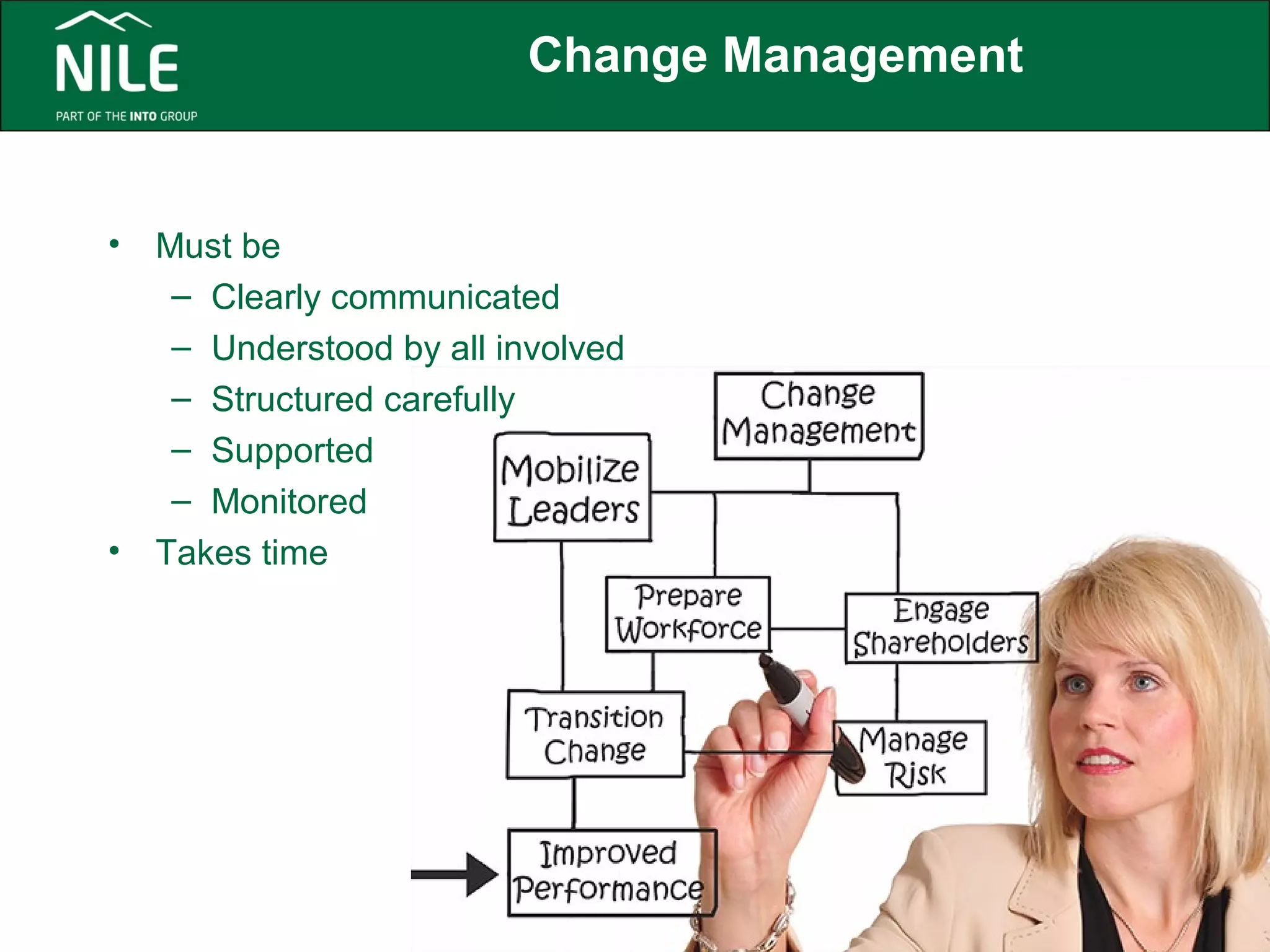
Change Management 
• Must be 
– Clearly communicated 
– Understood by all involved 
– Structured carefully 
– Supported 
– Monitored 
• Takes time
Transition: Key success factors 
• Explicitly define processes of learning, as well as 
teacher and learner roles and relationships within 
those processes 
• Provide reflection and learning opportunities for 
teachers as well as learners 
• Improve the materials used for teacher learning 
• Introduce monitoring tools, or adapt existing tools to 
scaffold teacher learning and make the transition 
process smoother
Why do people resist change? 
1. negative towards all that is new or different 
2. not interested in the idea because of other goals/ 
don’t see need 
3. don’t understand the message and/or the 
consequences of the change 
4. don’t trust the person who communicates the 
change 
5. Fear: more work, lack of skills, failure
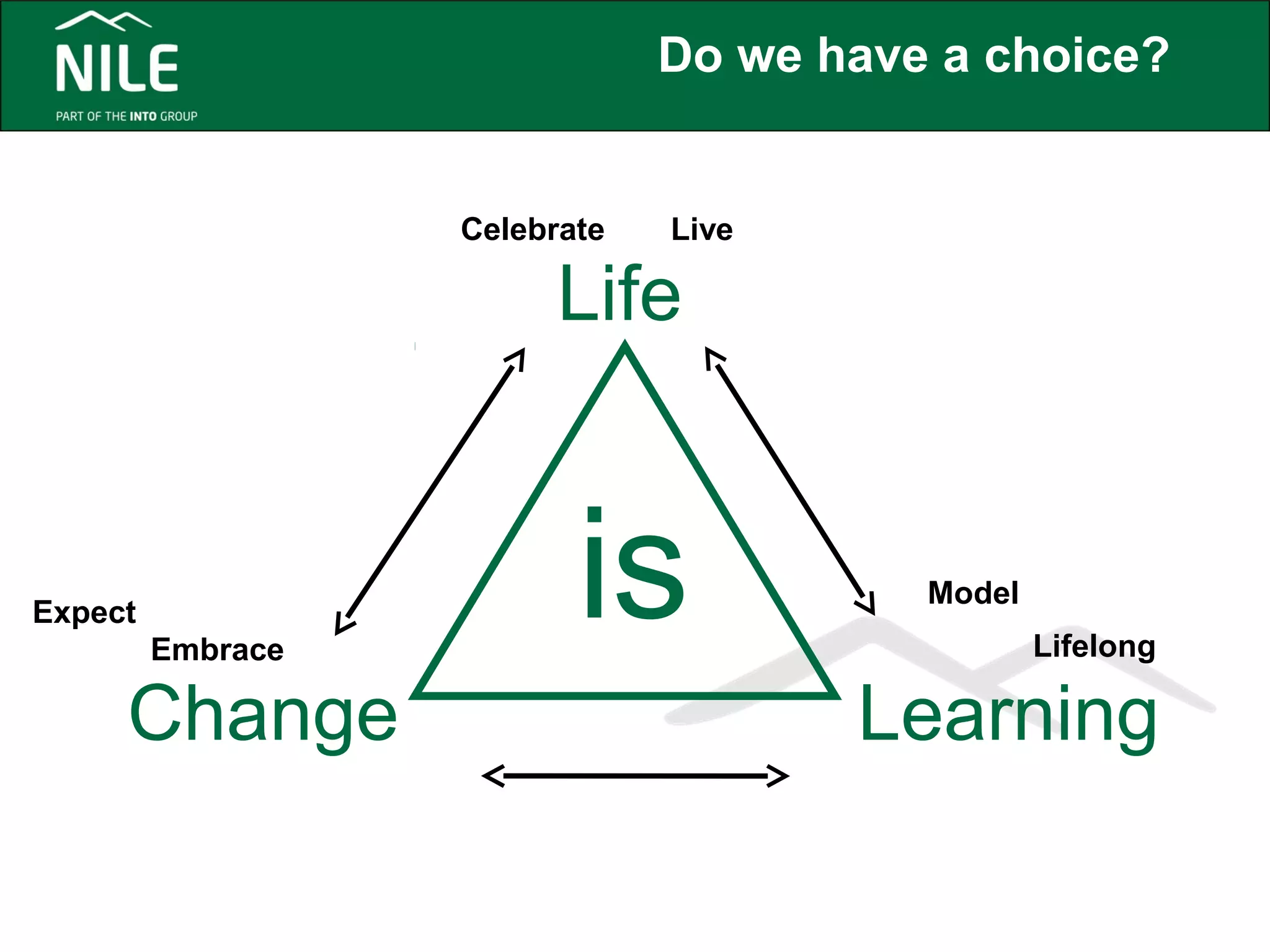
Do we have a choice? 
Celebrate Live 
Life 
is Embrace 
Expect 
Model 
Lifelong 
Change Learning
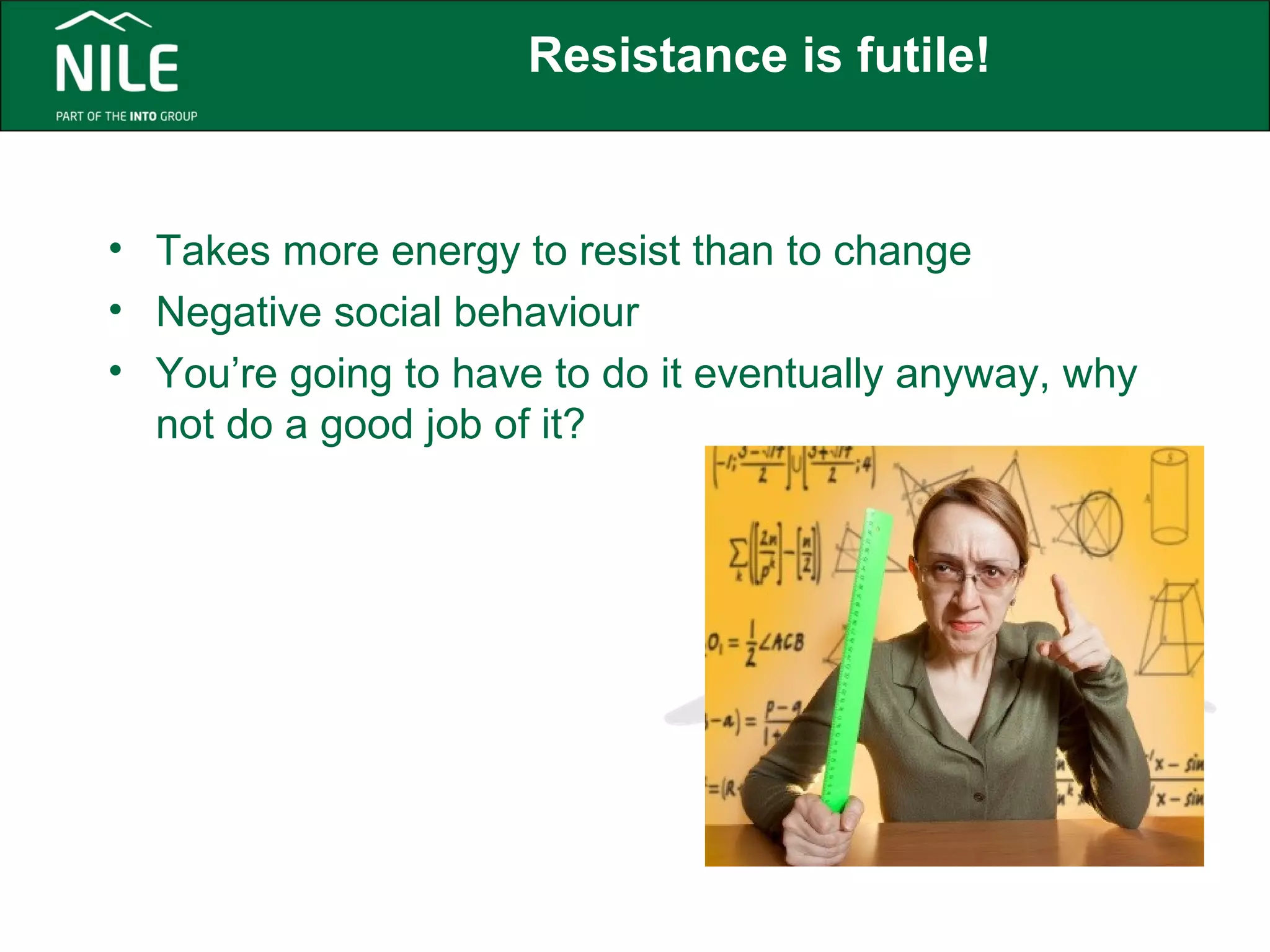
Resistance is futile! 
• Takes more energy to resist than to change 
• Negative social behaviour 
• You’re going to have to do it eventually anyway, why 
not do a good job of it?
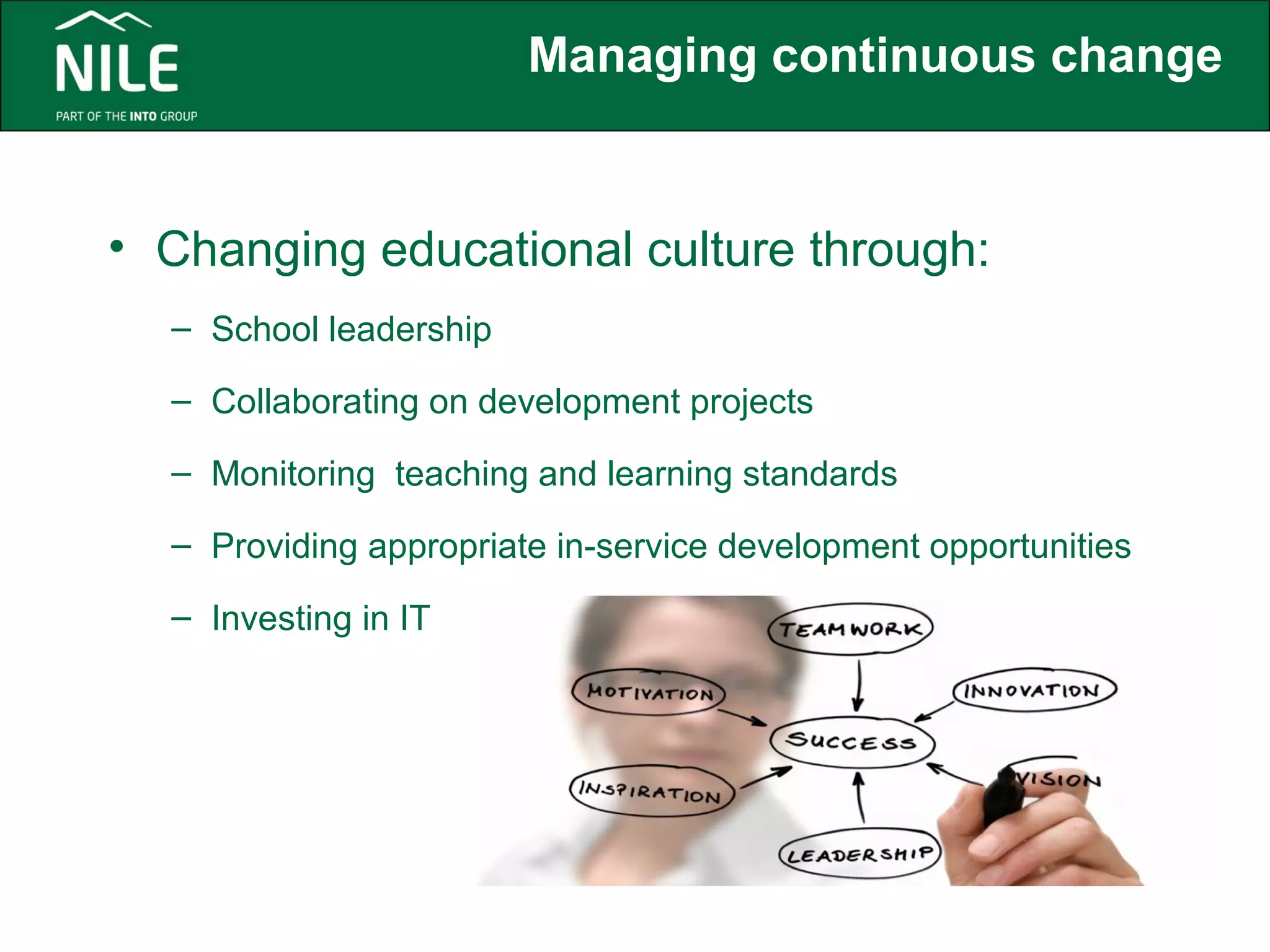
Managing continuous change 
• Changing educational culture through: 
– School leadership 
– Collaborating on development projects 
– Monitoring teaching and learning standards 
– Providing appropriate in-service development opportunities 
– Investing in IT
Promote continuous development 
– Teachers are learners too (or should be!) 
– Everyone can change what they do (BUT they 
need to be supported and it can take time) 
– Making small changes in teaching practise can 
have large effects on learning 
– Question assumptions about teaching practise and 
beliefs about learning
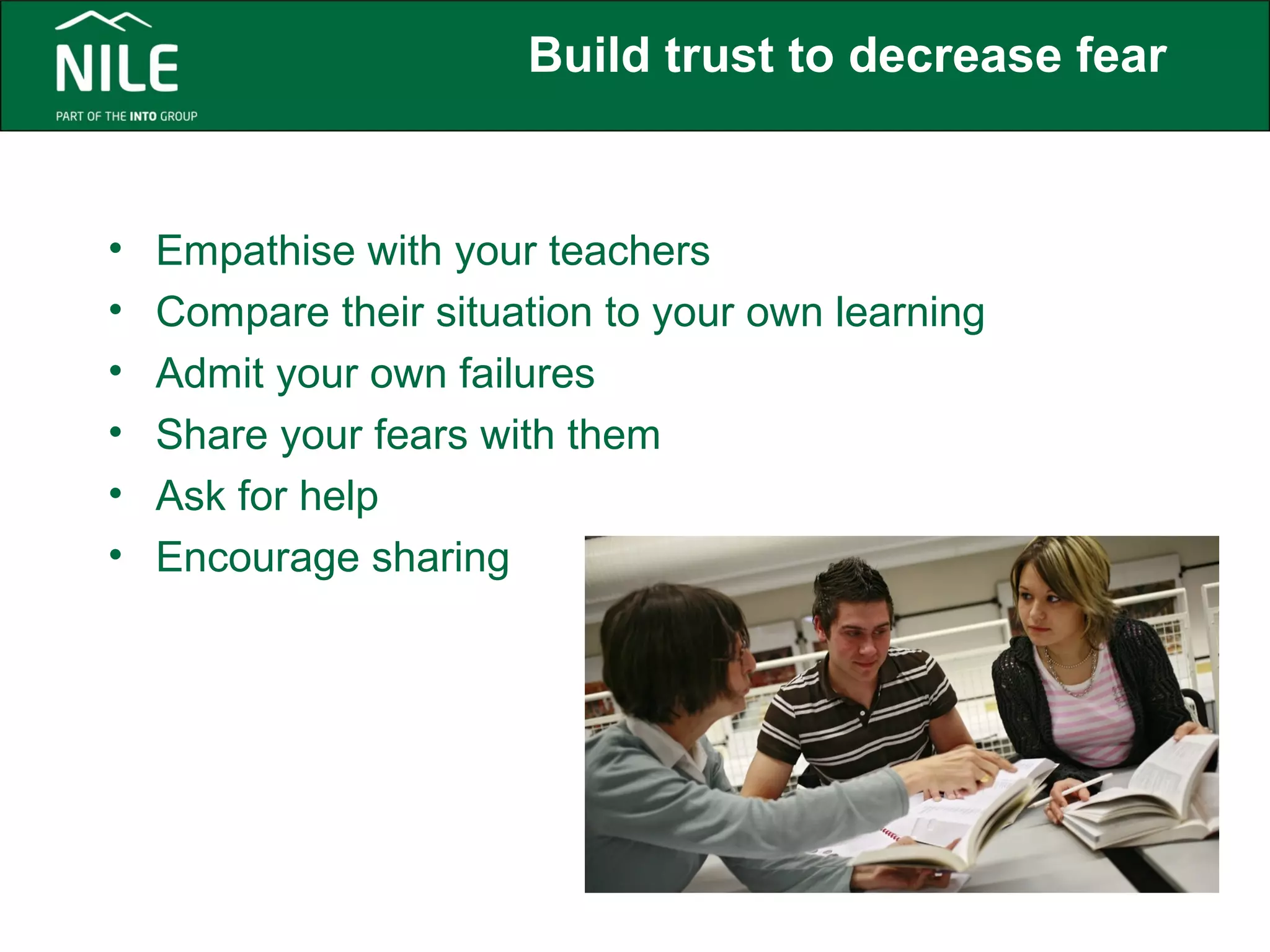
Build trust to decrease fear 
• Empathise with your teachers 
• Compare their situation to your own learning 
• Admit your own failures 
• Share your fears with them 
• Ask for help 
• Encourage sharing
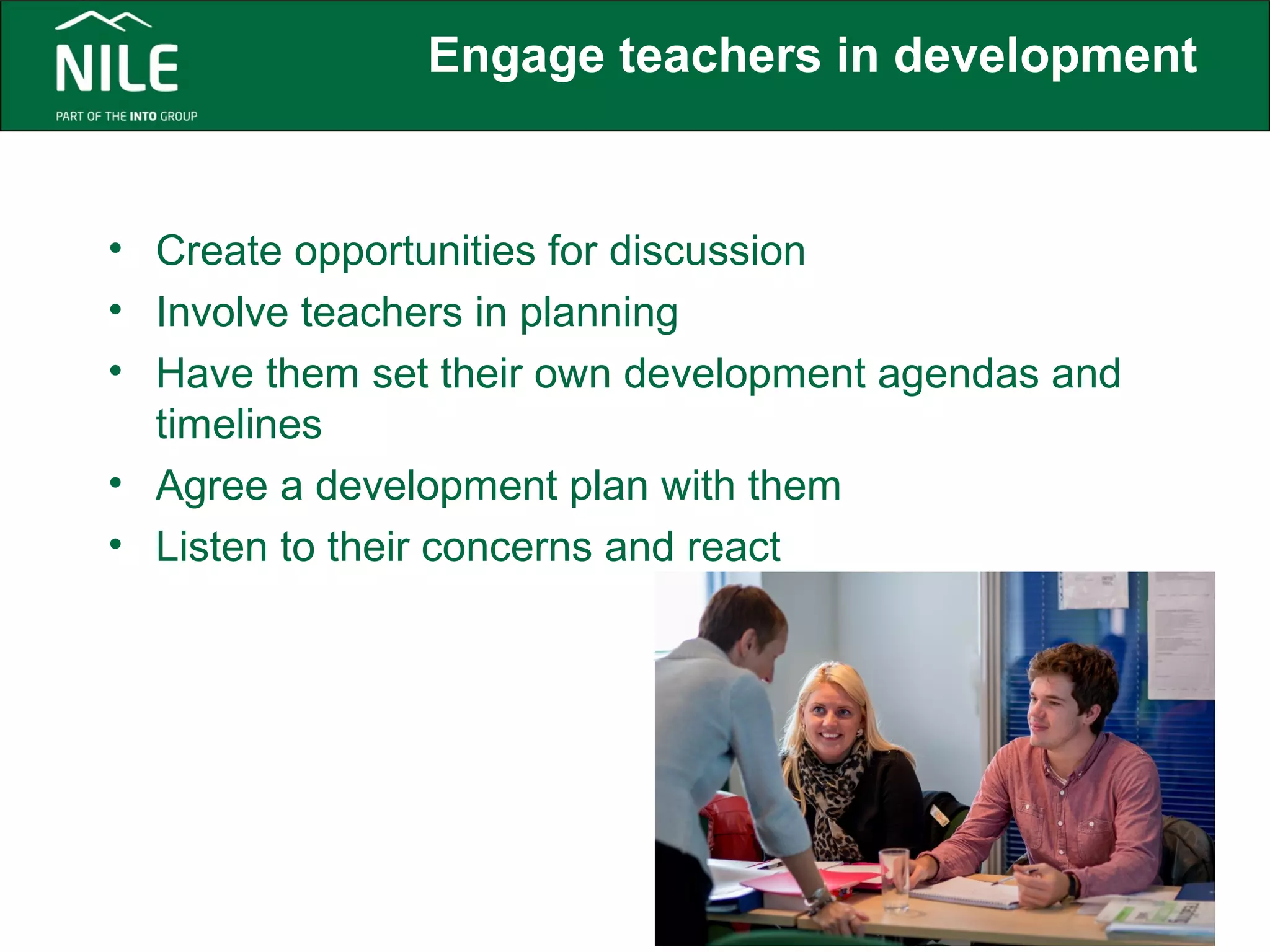
Engage teachers in development 
• Create opportunities for discussion 
• Involve teachers in planning 
• Have them set their own development agendas and 
timelines 
• Agree a development plan with them 
• Listen to their concerns and react
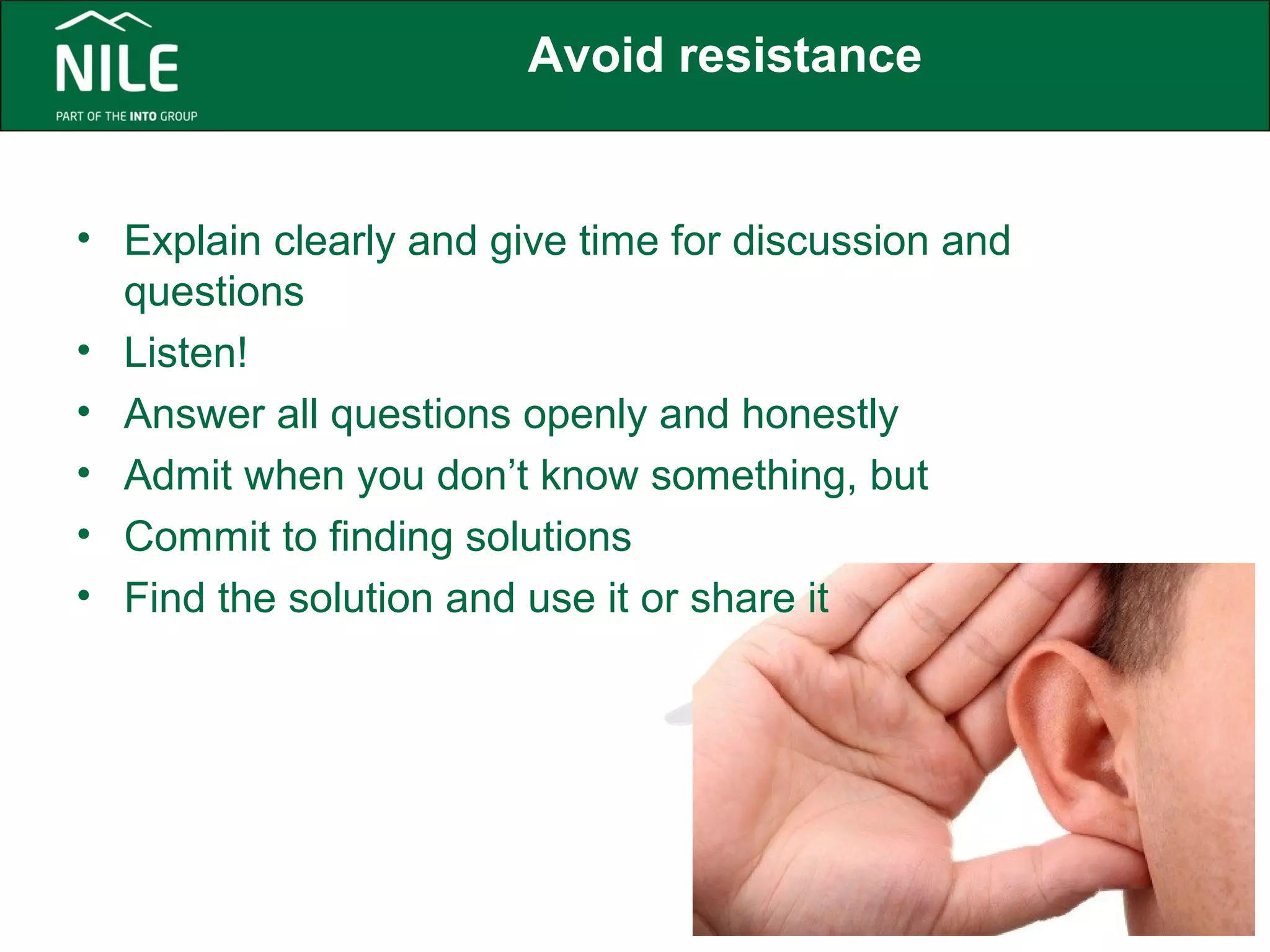
Avoid resistance 
• Explain clearly and give time for discussion and 
questions 
• Listen! 
• Answer all questions openly and honestly 
• Admit when you don’t know something, but 
• Commit to finding solutions 
• Find the solution and use it or share it
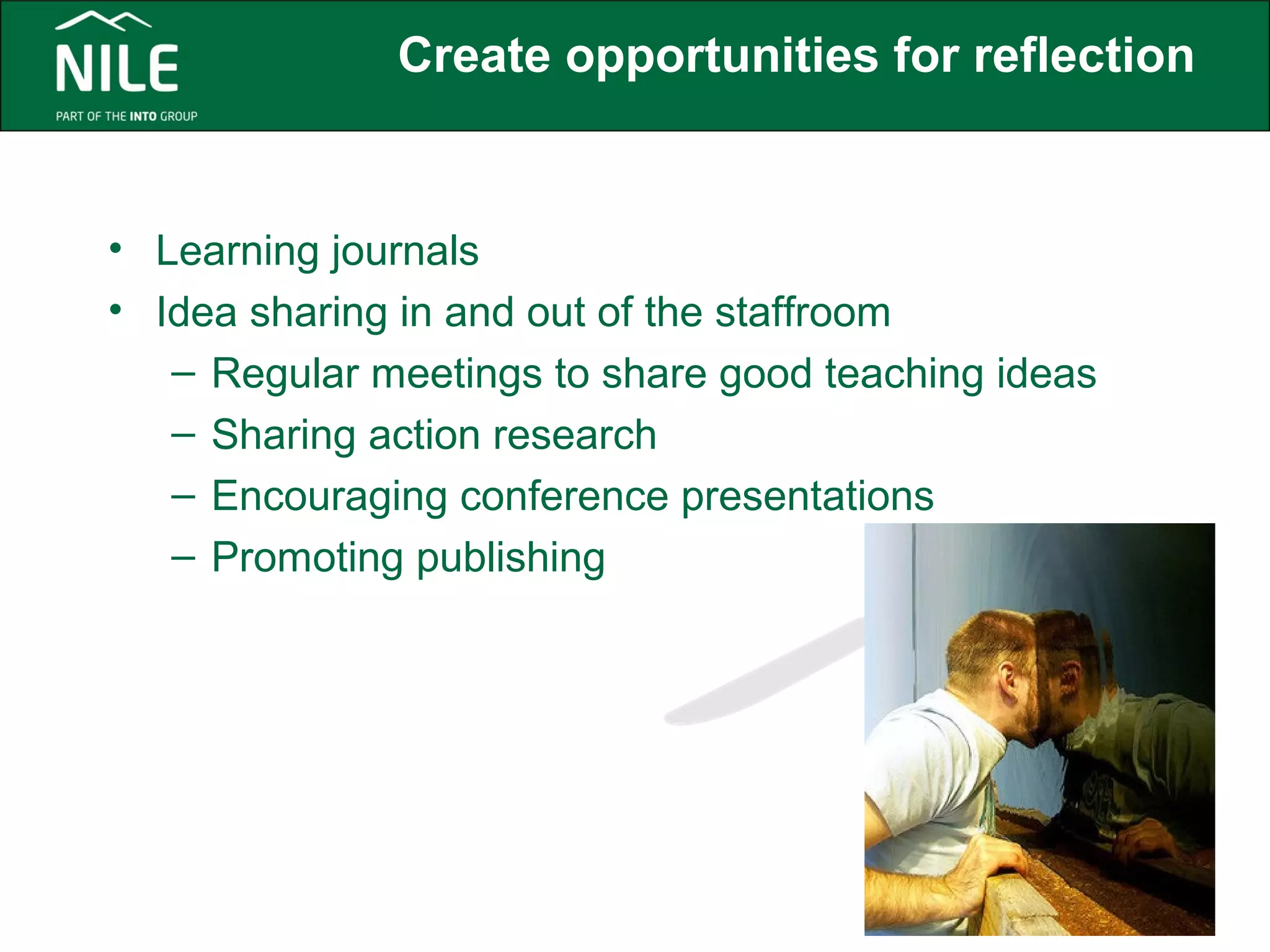
Create opportunities for reflection 
• Learning journals 
• Idea sharing in and out of the staffroom 
– Regular meetings to share good teaching ideas 
– Sharing action research 
– Encouraging conference presentations 
– Promoting publishing
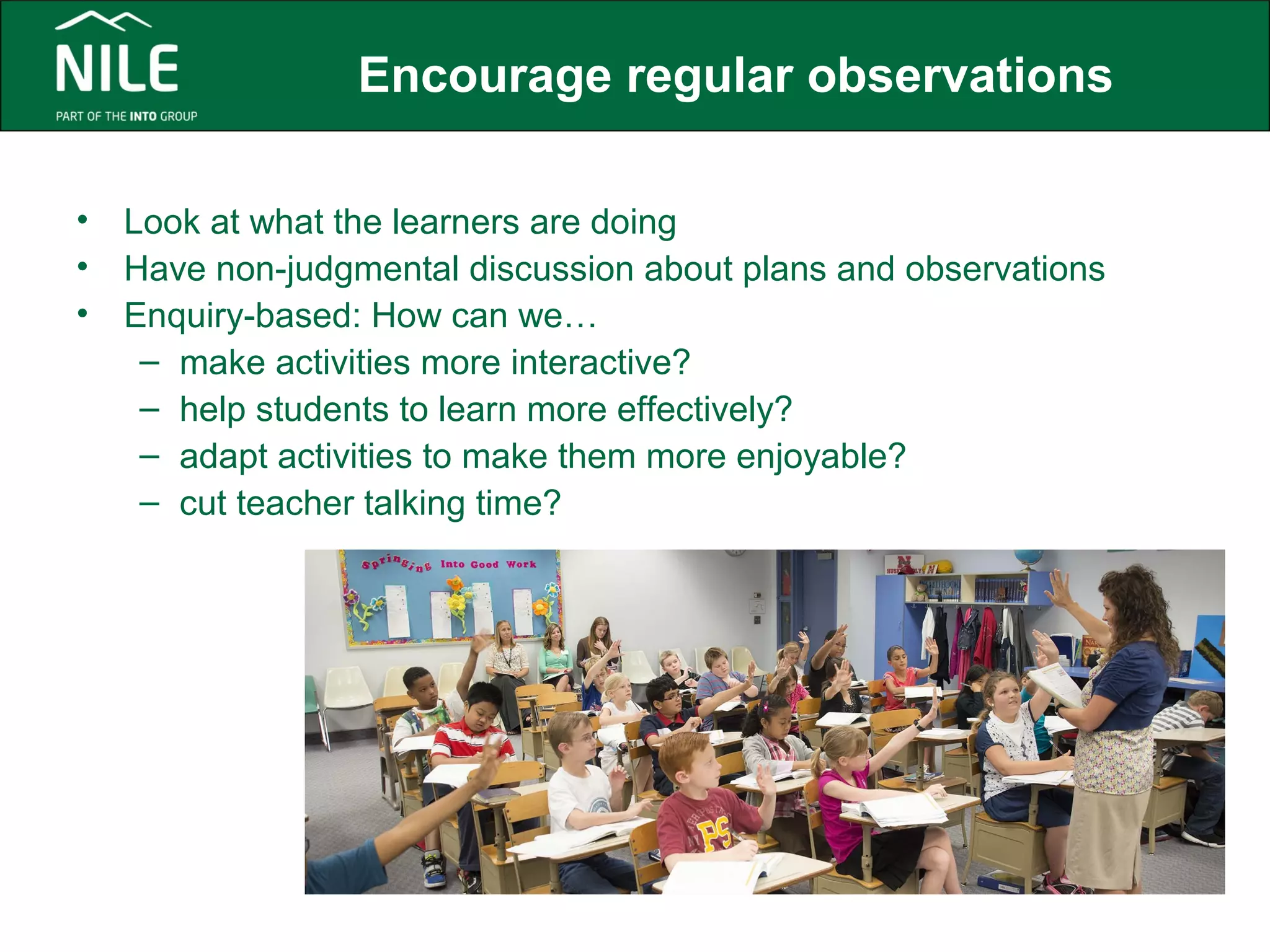
Encourage regular observations 
• Look at what the learners are doing 
• Have non-judgmental discussion about plans and observations 
• Enquiry-based: How can we… 
– make activities more interactive? 
– help students to learn more effectively? 
– adapt activities to make them more enjoyable? 
– cut teacher talking time?
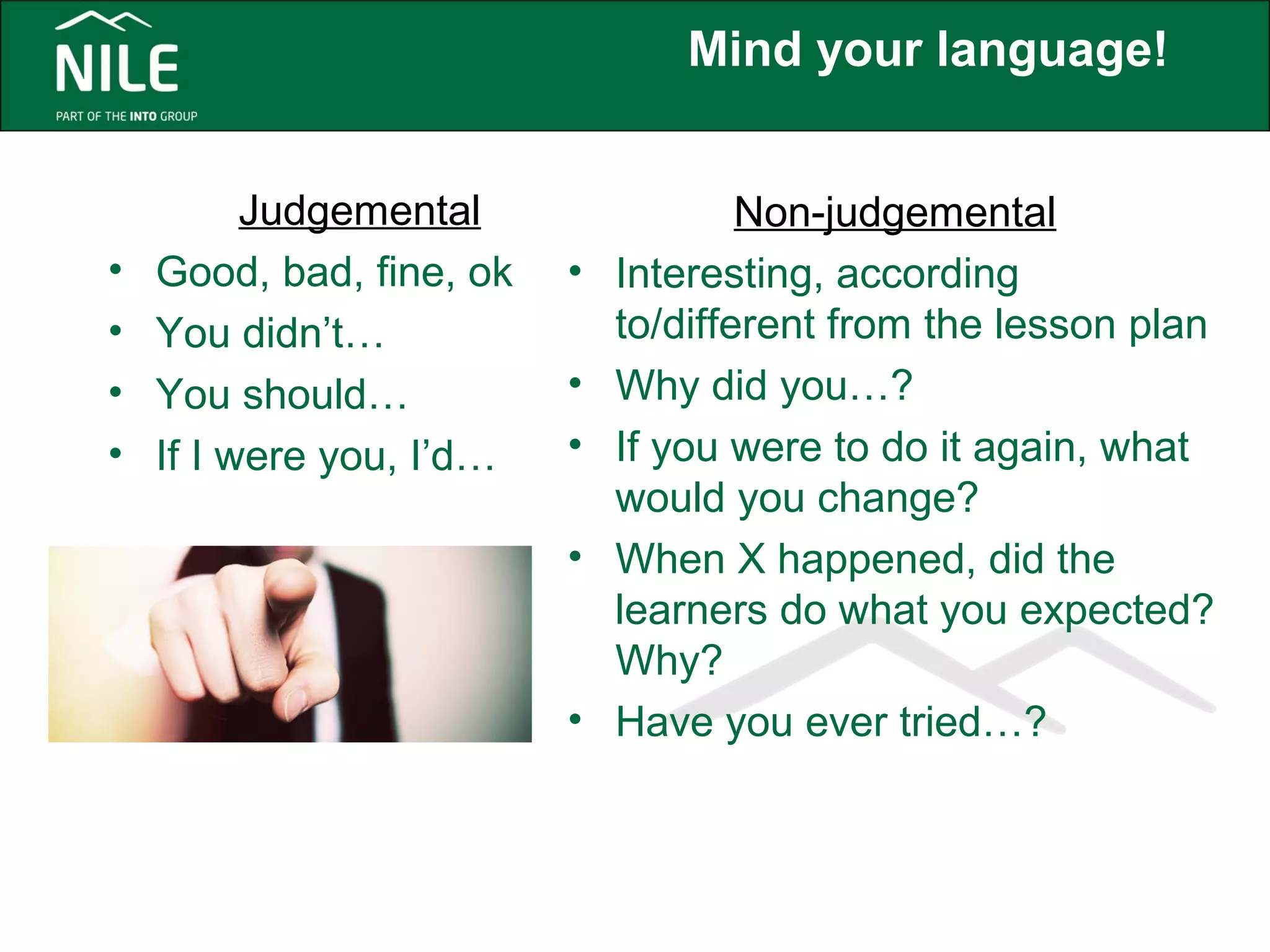
Mind your language! 
Judgemental 
• Good, bad, fine, ok 
• You didn’t… 
• You should… 
• If I were you, I’d… 
Non-judgemental 
• Interesting, according 
to/different from the lesson plan 
• Why did you…? 
• If you were to do it again, what 
would you change? 
• When X happened, did the 
learners do what you expected? 
Why? 
• Have you ever tried…?
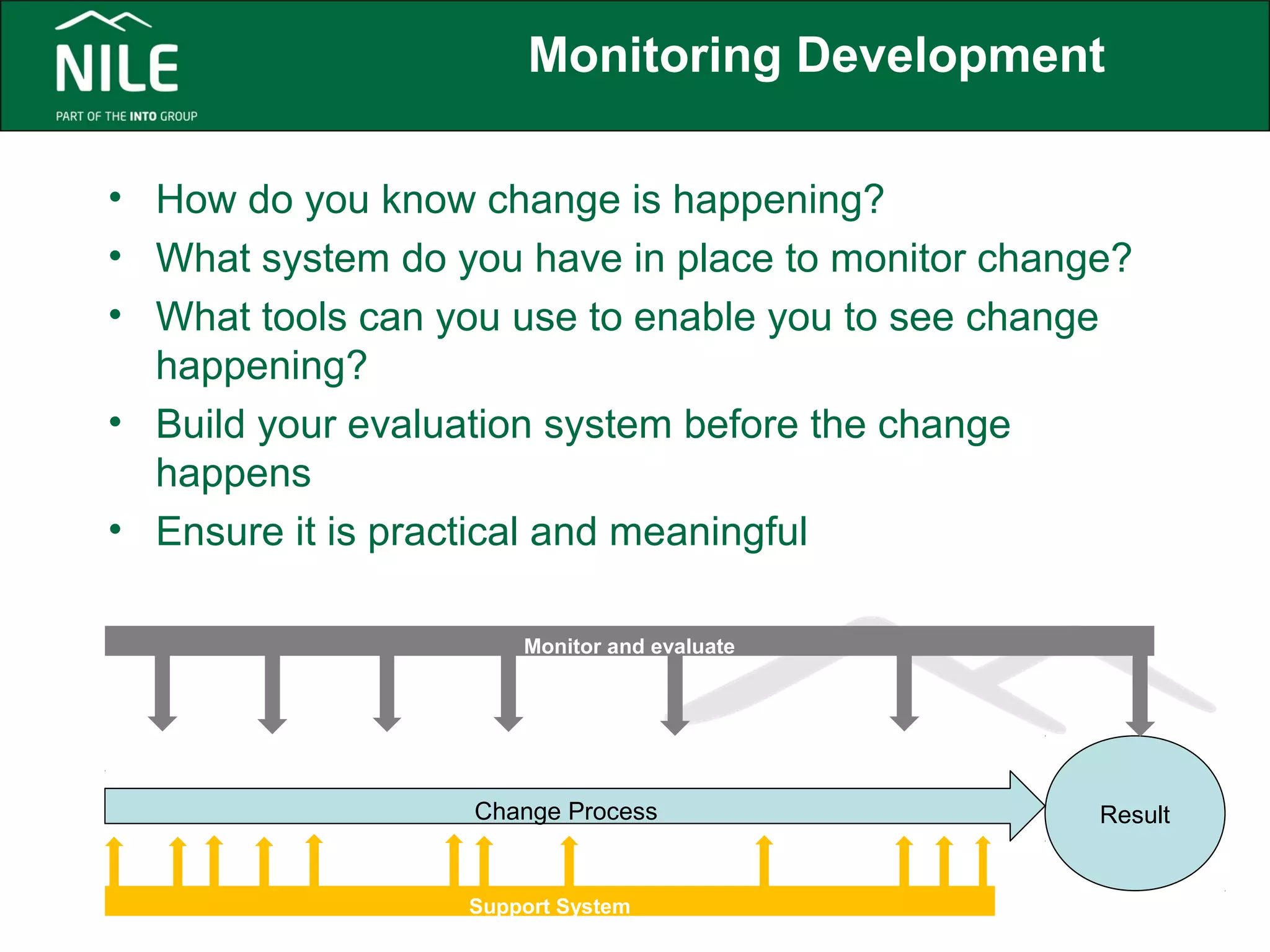
Monitoring Development 
• How do you know change is happening? 
• What system do you have in place to monitor change? 
• What tools can you use to enable you to see change 
happening? 
• Build your evaluation system before the change 
happens 
• Ensure it is practical and meaningful 
Monitor and evaluate 
Change Process Result 
Support System
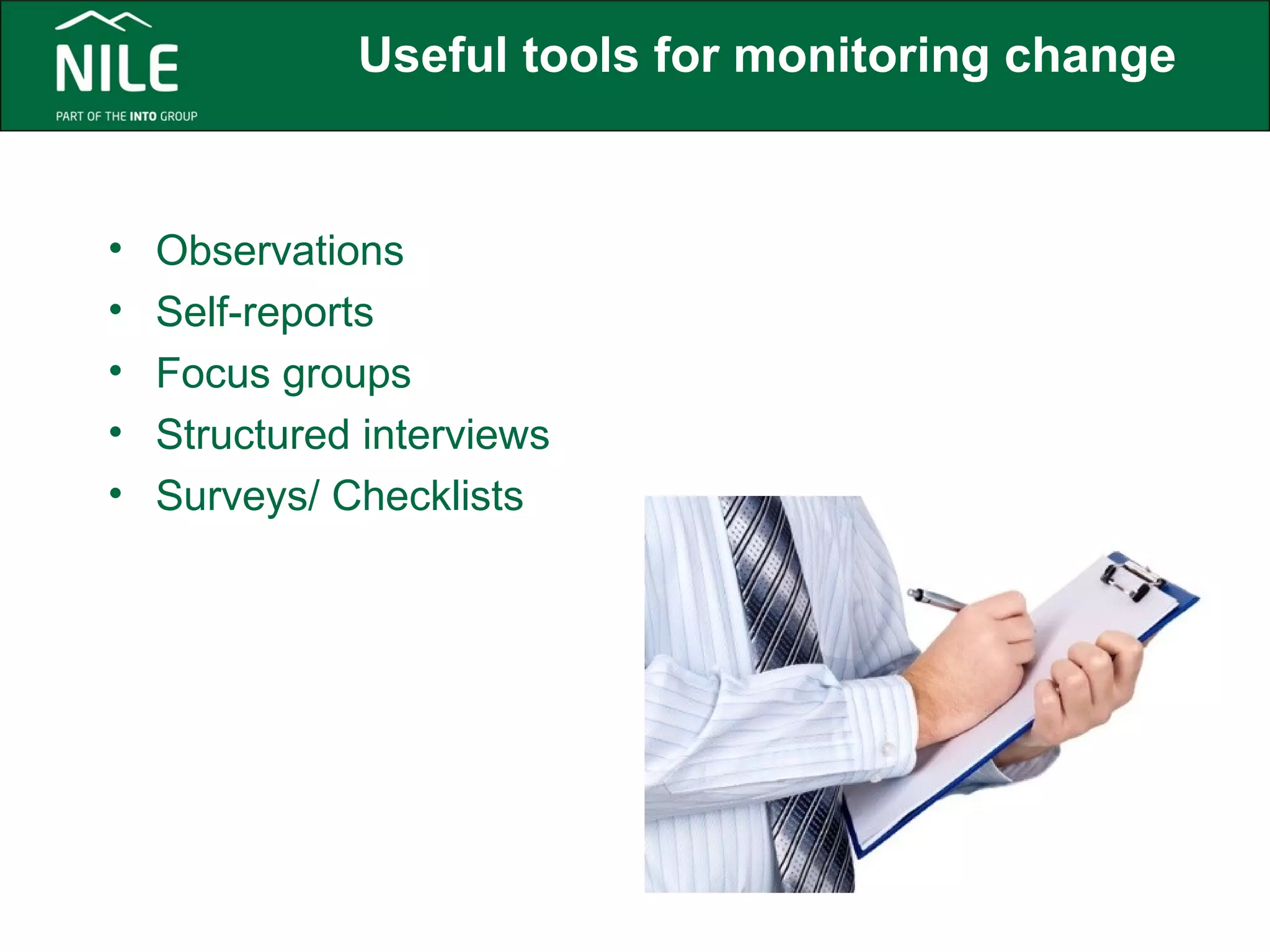
Useful tools for monitoring change 
• Observations 
• Self-reports 
• Focus groups 
• Structured interviews 
• Surveys/ Checklists
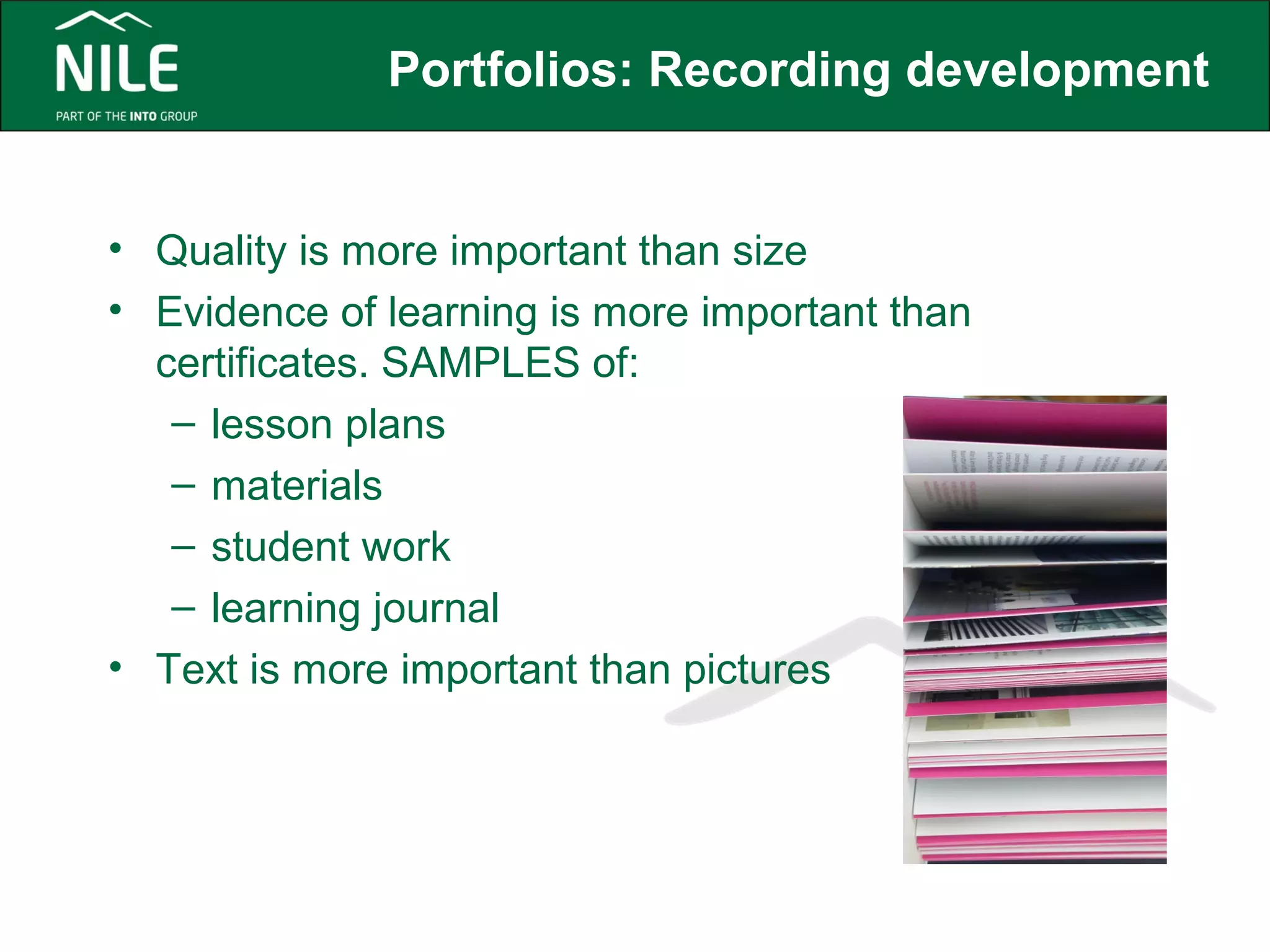
Portfolios: Recording development 
• Quality is more important than size 
• Evidence of learning is more important than 
certificates. SAMPLES of: 
– lesson plans 
– materials 
– student work 
– learning journal 
• Text is more important than pictures
Rewarding Development 
• Be positive and constructive in feedback 
• Share information about good ideas 
• Identify talent 
• Promote good teaching and teachers 
• Reward development with…more development
Human response to change 
Williams (1999). Futures 31/6
www.nile-elt.com

Teachers, Transition & Time: Learning for Educational Change

  • 1.
    Teachers, Transition &Time: Learning for Educational Change Alan S. Mackenzie Academic Director
  • 2.
  • 3.
    A Simple Equation Development = Positive + Change Time
  • 4.
    A complex, changingprofession • Language • Society • Curriculum • Methodologies: Interactive, CLIL • Tools: ICT, flipped classroom • Learner autonomy • Global citizenship • 21st Century Skills
  • 5.
    The next newthing… www.nile-elt.com
  • 6.
    Our Changing Profession OLD • Transmission • Repetition • Grammar • Receptive skills • Language as a subject NEW • Facilitation • Use • Communicative competence • Productive skills • Content/ Language Integration
  • 7.
    New teaching professionskill set: • Classroom management • Information management • Learning management • Extensive, appropriate use of ICT in and out of class • Dynamic teaching • Working with students in real time and reacting to their communication needs • Curriculum redesign • Materials development • Subject teachers need language skills
  • 8.
    Why 90% ofeducational changes fail • Lack of full understanding of theory behind practice • Misrepresentation of practice • Minimal teacher buy-in • A few committed professionals working against huge apathy • Watering down of the original aims • Lack of administrative support • Need of most teachers to ‘get by’ in a stressful working environment
  • 9.
    Human response tochange Williams (1999). Futures 31/6
  • 10.
    It All TakesTime • Understanding what changes are • Agreeing with them • Learning how to go about implementing them • Planning a course of action • Developing the skills to be able to put the action plan into practice • Experimenting with those skills (trial, error, success) • Implementing the action plan • Evaluating your success • Reformulating your action plan www.nile-elt.com
  • 11.
    Change Management •Must be – Clearly communicated – Understood by all involved – Structured carefully – Supported – Monitored • Takes time
  • 12.
    Transition: Key successfactors • Explicitly define processes of learning, as well as teacher and learner roles and relationships within those processes • Provide reflection and learning opportunities for teachers as well as learners • Improve the materials used for teacher learning • Introduce monitoring tools, or adapt existing tools to scaffold teacher learning and make the transition process smoother
  • 13.
    Why do peopleresist change? 1. negative towards all that is new or different 2. not interested in the idea because of other goals/ don’t see need 3. don’t understand the message and/or the consequences of the change 4. don’t trust the person who communicates the change 5. Fear: more work, lack of skills, failure
  • 14.
    Do we havea choice? Celebrate Live Life is Embrace Expect Model Lifelong Change Learning
  • 15.
    Resistance is futile! • Takes more energy to resist than to change • Negative social behaviour • You’re going to have to do it eventually anyway, why not do a good job of it?
  • 16.
    Managing continuous change • Changing educational culture through: – School leadership – Collaborating on development projects – Monitoring teaching and learning standards – Providing appropriate in-service development opportunities – Investing in IT
  • 17.
    Promote continuous development – Teachers are learners too (or should be!) – Everyone can change what they do (BUT they need to be supported and it can take time) – Making small changes in teaching practise can have large effects on learning – Question assumptions about teaching practise and beliefs about learning
  • 18.
    Build trust todecrease fear • Empathise with your teachers • Compare their situation to your own learning • Admit your own failures • Share your fears with them • Ask for help • Encourage sharing
  • 19.
    Engage teachers indevelopment • Create opportunities for discussion • Involve teachers in planning • Have them set their own development agendas and timelines • Agree a development plan with them • Listen to their concerns and react
  • 20.
    Avoid resistance •Explain clearly and give time for discussion and questions • Listen! • Answer all questions openly and honestly • Admit when you don’t know something, but • Commit to finding solutions • Find the solution and use it or share it
  • 21.
    Create opportunities forreflection • Learning journals • Idea sharing in and out of the staffroom – Regular meetings to share good teaching ideas – Sharing action research – Encouraging conference presentations – Promoting publishing
  • 22.
    Encourage regular observations • Look at what the learners are doing • Have non-judgmental discussion about plans and observations • Enquiry-based: How can we… – make activities more interactive? – help students to learn more effectively? – adapt activities to make them more enjoyable? – cut teacher talking time?
  • 23.
    Mind your language! Judgemental • Good, bad, fine, ok • You didn’t… • You should… • If I were you, I’d… Non-judgemental • Interesting, according to/different from the lesson plan • Why did you…? • If you were to do it again, what would you change? • When X happened, did the learners do what you expected? Why? • Have you ever tried…?
  • 24.
    Monitoring Development •How do you know change is happening? • What system do you have in place to monitor change? • What tools can you use to enable you to see change happening? • Build your evaluation system before the change happens • Ensure it is practical and meaningful Monitor and evaluate Change Process Result Support System
  • 25.
    Useful tools formonitoring change • Observations • Self-reports • Focus groups • Structured interviews • Surveys/ Checklists
  • 26.
    Portfolios: Recording development • Quality is more important than size • Evidence of learning is more important than certificates. SAMPLES of: – lesson plans – materials – student work – learning journal • Text is more important than pictures
  • 27.
    Rewarding Development •Be positive and constructive in feedback • Share information about good ideas • Identify talent • Promote good teaching and teachers • Reward development with…more development
  • 28.
    Human response tochange Williams (1999). Futures 31/6
  • 29.

Editor's Notes

  • #14 #1. The person is, in general, negative towards all that is new or different. We just don’t have time for that.  We don’t have enough resources to do that.  Do we really need it?  It’s much too risky.  We have already discussed something similar a long time ago. Forget it.  Talk to John about it. It’s not my area.  I am quite sure, it wouldn’t work.  The company is not ready for that at this point.  It sounds good theoretically, but it would never work in practice.  We are too big / too small.  It’s too early / too late for that. # 2 The person is not interested in the idea / the change. He/she has other goals, that he/she wants to pursue. # 3 The person does not understand the message and/or the consequences that the change will have on his/her work situation. # 4 The person does not trust the person who communicates the change initiative. # 5 Fear of losing money, Fear of losing for example reduction network and/or in salary and/or budget social traditions Fear Fear of losing Fear of losing power, control, status assignments Fear of not having competences to competences to unlearn old habits learn new things Fear of being involved in the involved in the change process change process