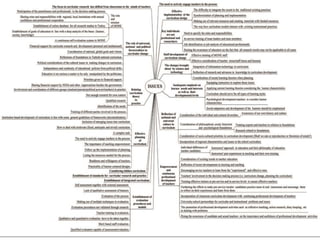
Curriculum Development; Issues
Dr G R Angadi
Issue: is associated with difficult decisions and disagreements. An
issue is something that causes debate and divides people.
Globalization is a constant:
In a world of ever-increasing complexity, what are our obligations
to teach “how the world works”?
How does faculty adapt or change educational paradigms to be
more responsive to an increasingly interconnected world and far-
reaching economic, social, political and technological changes
resulting from globalization?
Looking at demographic trends, how can you meet educational
needs, demands &expectations of its stakeholders?
Educational challenges: anticipating the knowledge, skills, critical
thinking abilities &wisdom needed for the globalized future
Goal today: to begin working on a curricular scaffold for faculty to
work collaboratively in shaping the future of education at your
institution.
1. Holistic curriculum conception (planning, implementation,
evaluation)
• How can we improve the evaluation of short-term field testing
and curriculum implementation?
• How can we involve the teachers in the curriculum planning
process and what types of competences should the members of the
curriculum planning teams possess?
• Why is curriculum planning not actualized fully and effectively
in the schools by teachers and professionals in a bottom to top
approach?
• Are teachers equipped with the necessary competencies to
implement learner-centered curricula?
• In what ways do the curriculum models interact with existing
instructional practices? Why should we consider the reflection of
curricular changes on the staff?
2. Continuous professional development of curriculum.
• How can we motivate individuals for self-improvement in
curriculum and instruction?
• To what extent does classroom based curriculum
development incorporate with continuing professional
development of teachers?
• How can we manage effective and continuing
professional development?
• Are university-school partnerships established?
• Is there a reward system established to increase the
motivational level of teachers who professionally develop
themselves on a regular basis?
3. Relating Curriculum Theory to Research and Practice.
• How can we establish standards for curricular research and
practice?
• How can we involve and coordinate different
groups(students, parents, teachers, political powers)?
• How can we improve the research base reflecting the
Turkish educational context?
• How can we train different parties involved in the process as
researchers and practitioners?
• How can we establish school/institution-based research for
curriculum development?
4. Consideration of Foundations/bases
• How can we reflect regional characteristics and issues in the
school curriculum?
• To what extent are the cultural characteristics of different
nations reflected in the curriculum?
• Can the students think critically about the global and
intercultural issues?
• Is there a balance in the reflection of national and global
needs in the curriculum?
• When planning and implementing the curriculum, to what
extent are learners’ developmental level, interests, and abilities
taken into consideration?
5. Issues related to newly emerging areas
• Are we aware of the nature and importance of hidden
curriculum?
• Is there a danger in hidden curriculum in relation to
imposing an external pressure on individuals for social
adaptation?
• How can we take individual differences into account in
hidden curriculum?
• How can we establish horizontal and vertical integration of
disciplines, contexts and individuals?
• How can we relate students’ different background
characteristics and past experiences to an integrated
curriculum?
Thank You

Curriculum development issues

  • 1.
  • 2.
    Issue: is associatedwith difficult decisions and disagreements. An issue is something that causes debate and divides people. Globalization is a constant: In a world of ever-increasing complexity, what are our obligations to teach “how the world works”? How does faculty adapt or change educational paradigms to be more responsive to an increasingly interconnected world and far- reaching economic, social, political and technological changes resulting from globalization? Looking at demographic trends, how can you meet educational needs, demands &expectations of its stakeholders? Educational challenges: anticipating the knowledge, skills, critical thinking abilities &wisdom needed for the globalized future Goal today: to begin working on a curricular scaffold for faculty to work collaboratively in shaping the future of education at your institution.
  • 3.
    1. Holistic curriculumconception (planning, implementation, evaluation) • How can we improve the evaluation of short-term field testing and curriculum implementation? • How can we involve the teachers in the curriculum planning process and what types of competences should the members of the curriculum planning teams possess? • Why is curriculum planning not actualized fully and effectively in the schools by teachers and professionals in a bottom to top approach? • Are teachers equipped with the necessary competencies to implement learner-centered curricula? • In what ways do the curriculum models interact with existing instructional practices? Why should we consider the reflection of curricular changes on the staff?
  • 4.
    2. Continuous professionaldevelopment of curriculum. • How can we motivate individuals for self-improvement in curriculum and instruction? • To what extent does classroom based curriculum development incorporate with continuing professional development of teachers? • How can we manage effective and continuing professional development? • Are university-school partnerships established? • Is there a reward system established to increase the motivational level of teachers who professionally develop themselves on a regular basis?
  • 5.
    3. Relating CurriculumTheory to Research and Practice. • How can we establish standards for curricular research and practice? • How can we involve and coordinate different groups(students, parents, teachers, political powers)? • How can we improve the research base reflecting the Turkish educational context? • How can we train different parties involved in the process as researchers and practitioners? • How can we establish school/institution-based research for curriculum development?
  • 6.
    4. Consideration ofFoundations/bases • How can we reflect regional characteristics and issues in the school curriculum? • To what extent are the cultural characteristics of different nations reflected in the curriculum? • Can the students think critically about the global and intercultural issues? • Is there a balance in the reflection of national and global needs in the curriculum? • When planning and implementing the curriculum, to what extent are learners’ developmental level, interests, and abilities taken into consideration?
  • 7.
    5. Issues relatedto newly emerging areas • Are we aware of the nature and importance of hidden curriculum? • Is there a danger in hidden curriculum in relation to imposing an external pressure on individuals for social adaptation? • How can we take individual differences into account in hidden curriculum? • How can we establish horizontal and vertical integration of disciplines, contexts and individuals? • How can we relate students’ different background characteristics and past experiences to an integrated curriculum?
  • 9.