Cubism Shu Wei 6 th  Hour
What is Cubism? 20th century avant-garde art movement Cubist works are broken up, analyzed, and re-assembled  instead of depicting objects from one viewpoint, the artist depicts the subject from a multitude of viewpoints
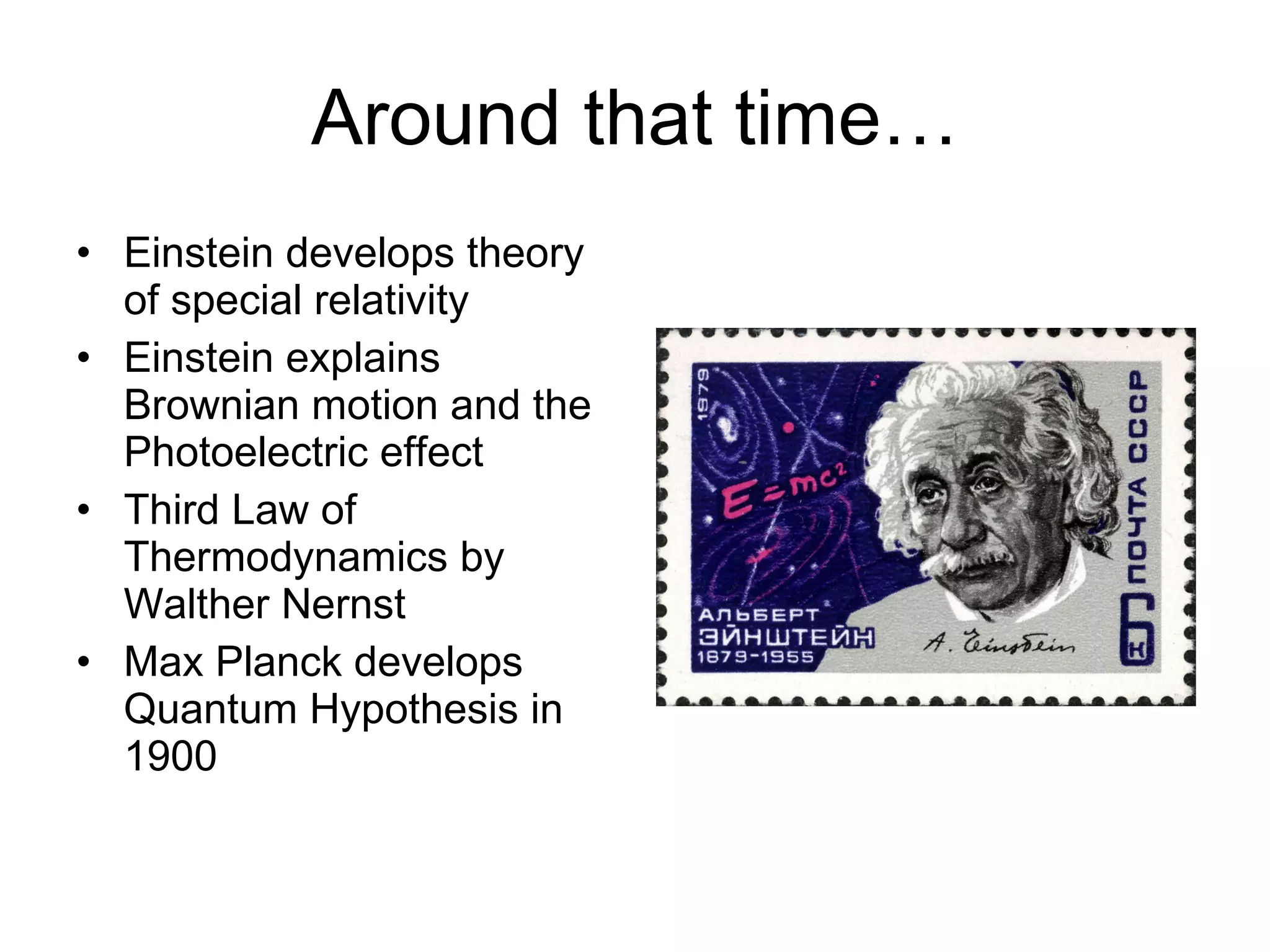
Around that time… Einstein develops theory of special relativity Einstein explains Brownian motion and the Photoelectric effect Third Law of Thermodynamics by Walther Nernst Max Planck develops Quantum Hypothesis in 1900
Influences on Cubism African Tribal art Cézanne Gauguin
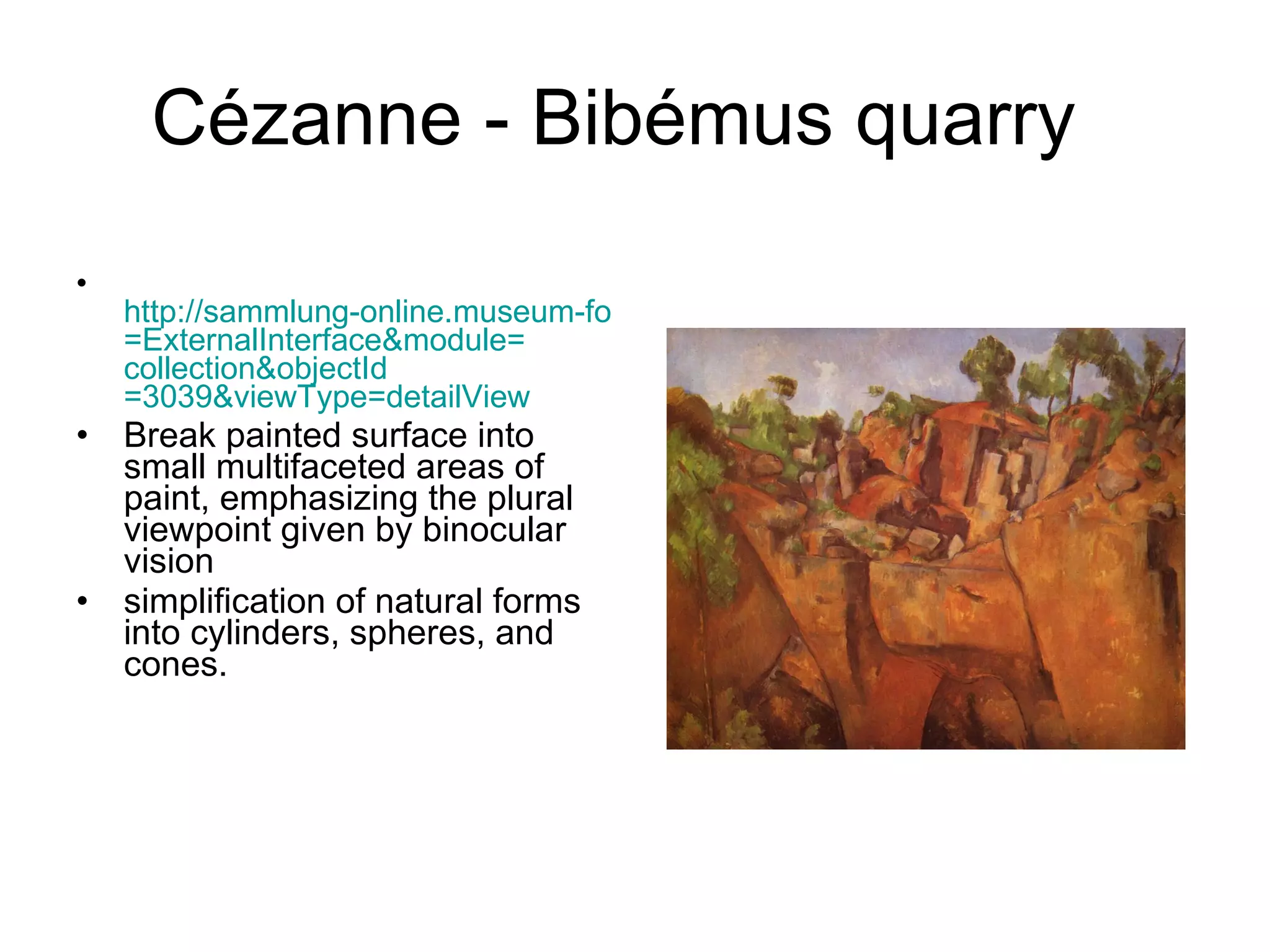
Cézanne - Bibémus quarry  http://sammlung-online.museum-folkwang.de/eMuseumPlus?service = ExternalInterface&module = collection&objectId =3039&viewType= detailView Break painted surface into small multifaceted areas of paint, emphasizing the plural viewpoint given by binocular vision simplification of natural forms into cylinders, spheres, and cones.
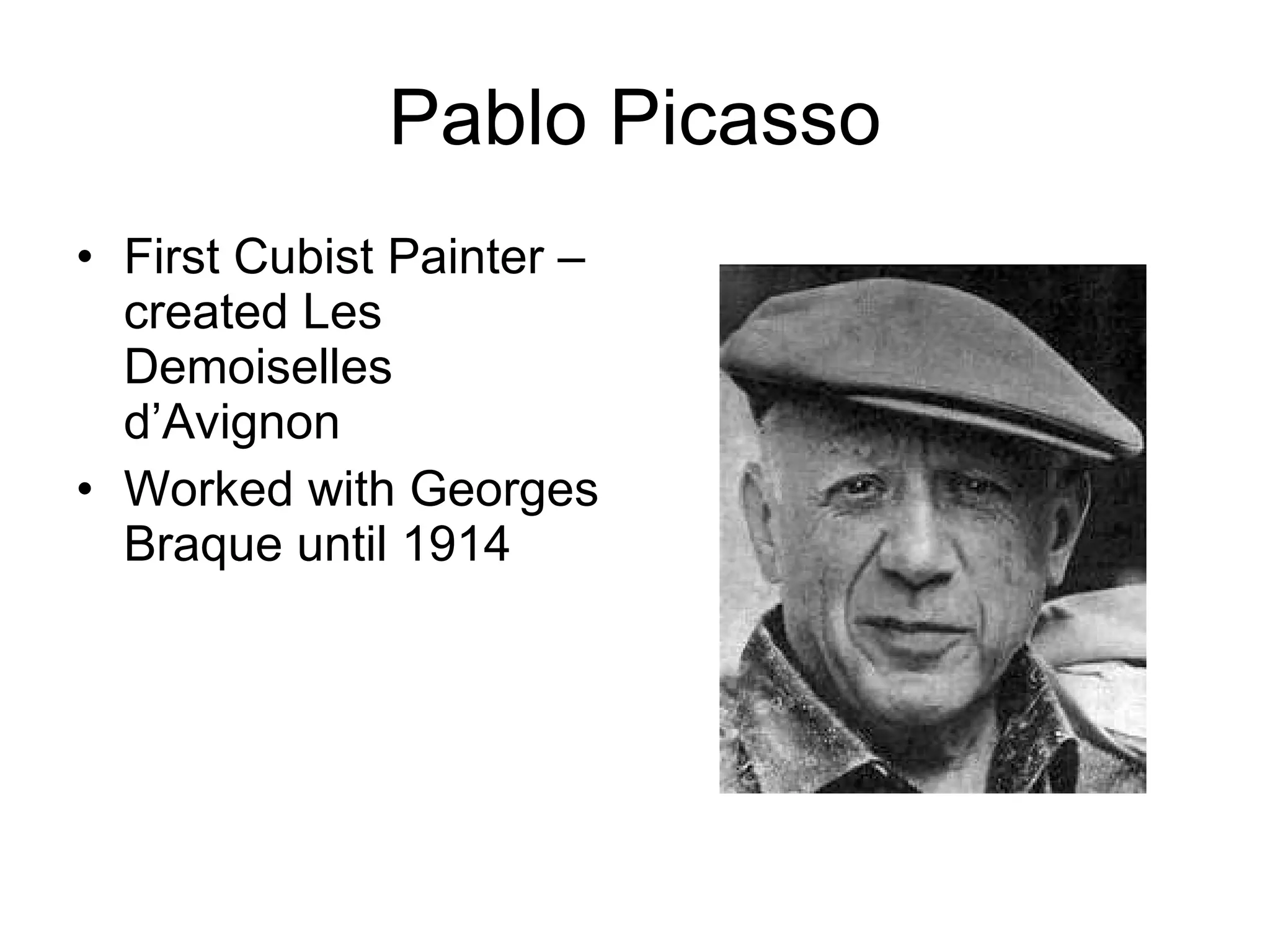
Pablo Picasso First Cubist Painter – created Les Demoiselles d’Avignon Worked with Georges Braque until 1914
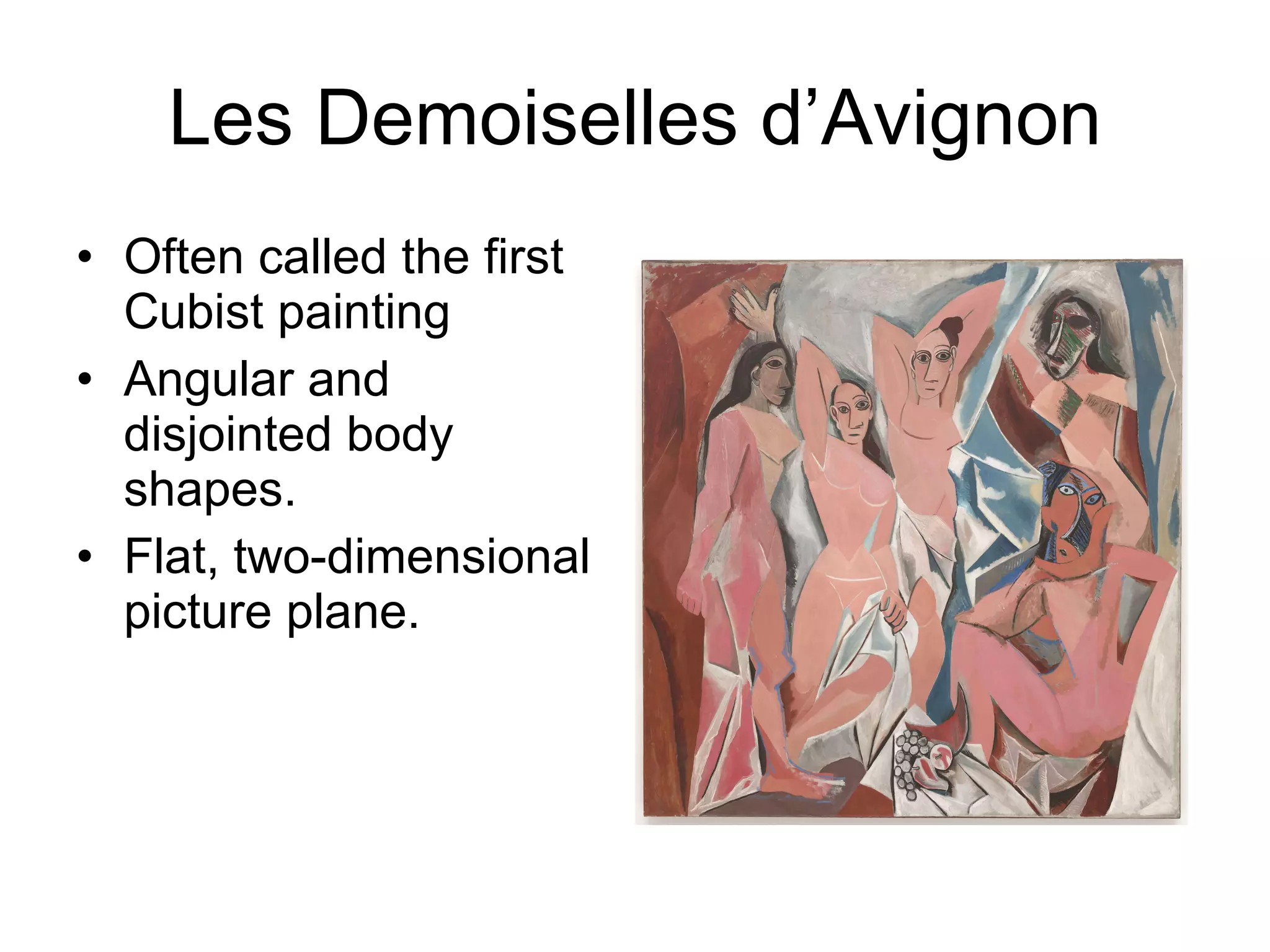
Les Demoiselles d’Avignon Often called the first Cubist painting Angular and disjointed body shapes. Flat, two-dimensional  picture plane.
Cubism is Born French Art Critic Louis Vauxcelles coined term “Cubism” – Bizarre Cubiques Ernst Gombrich - "the most radical attempt to stamp out ambiguity and to enforce one reading of the picture—that of a man-made construction, a coloured canvas."
Analytic Cubism First phase of Cubism 1909-1912 Monochrome brownish & neutral colors. Took apart objects and “analyzed” them.
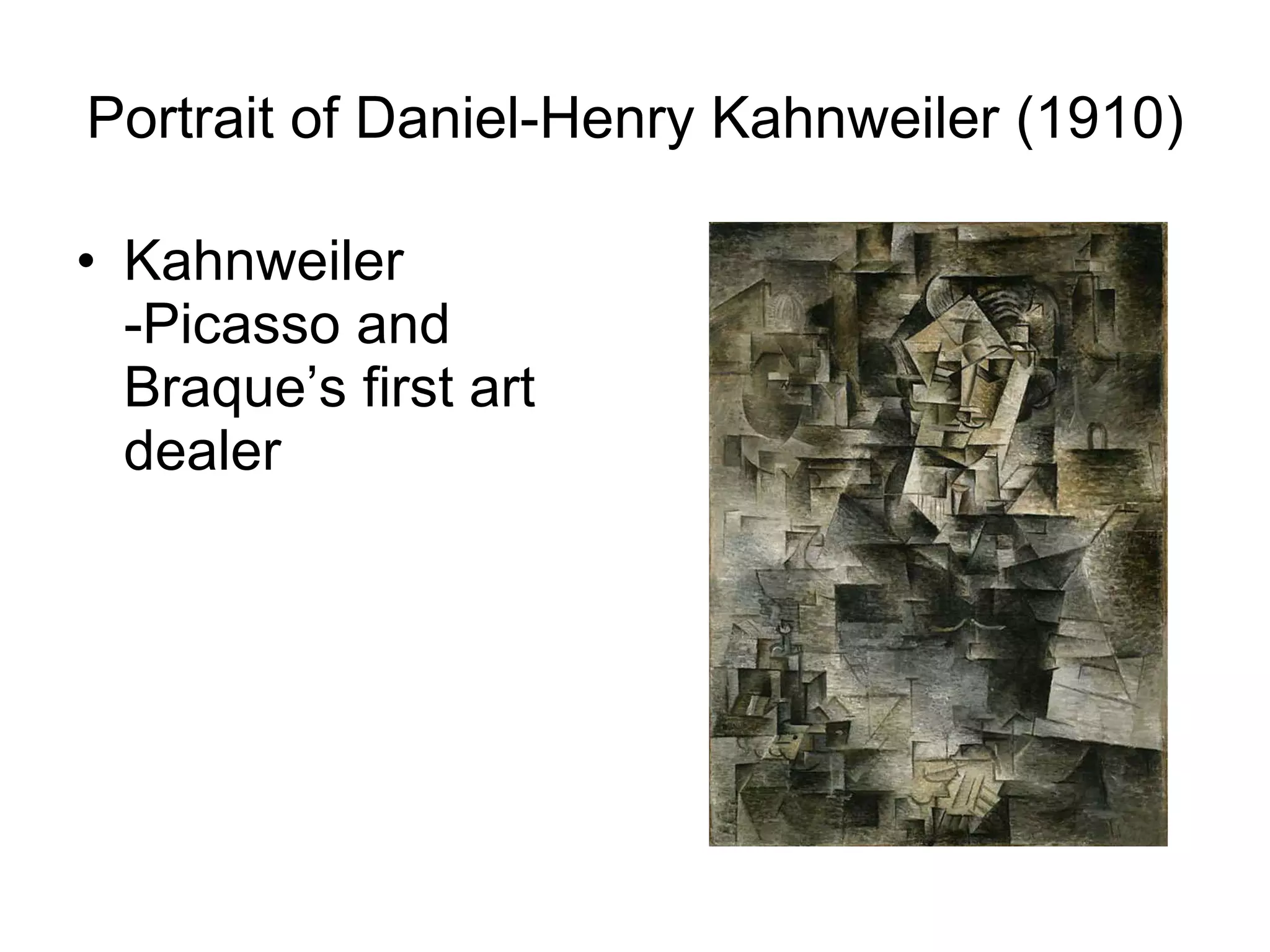
Portrait of Daniel-Henry Kahnweiler (1910) Kahnweiler -Picasso and Braque’s first art dealer
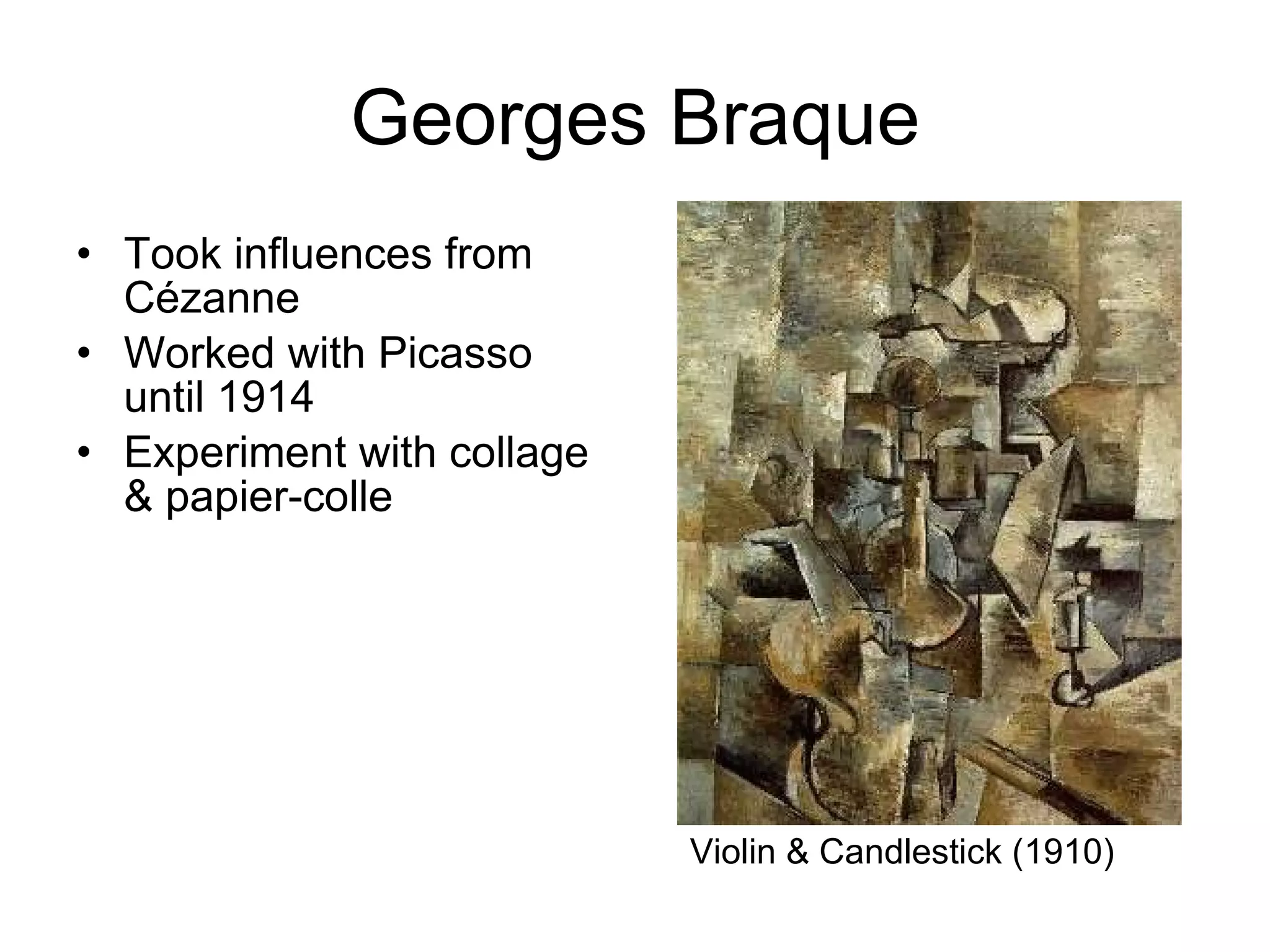
Georges Braque Took influences from Cézanne  Worked with Picasso until 1914 Experiment with collage & papier-colle Violin & Candlestick (1910)
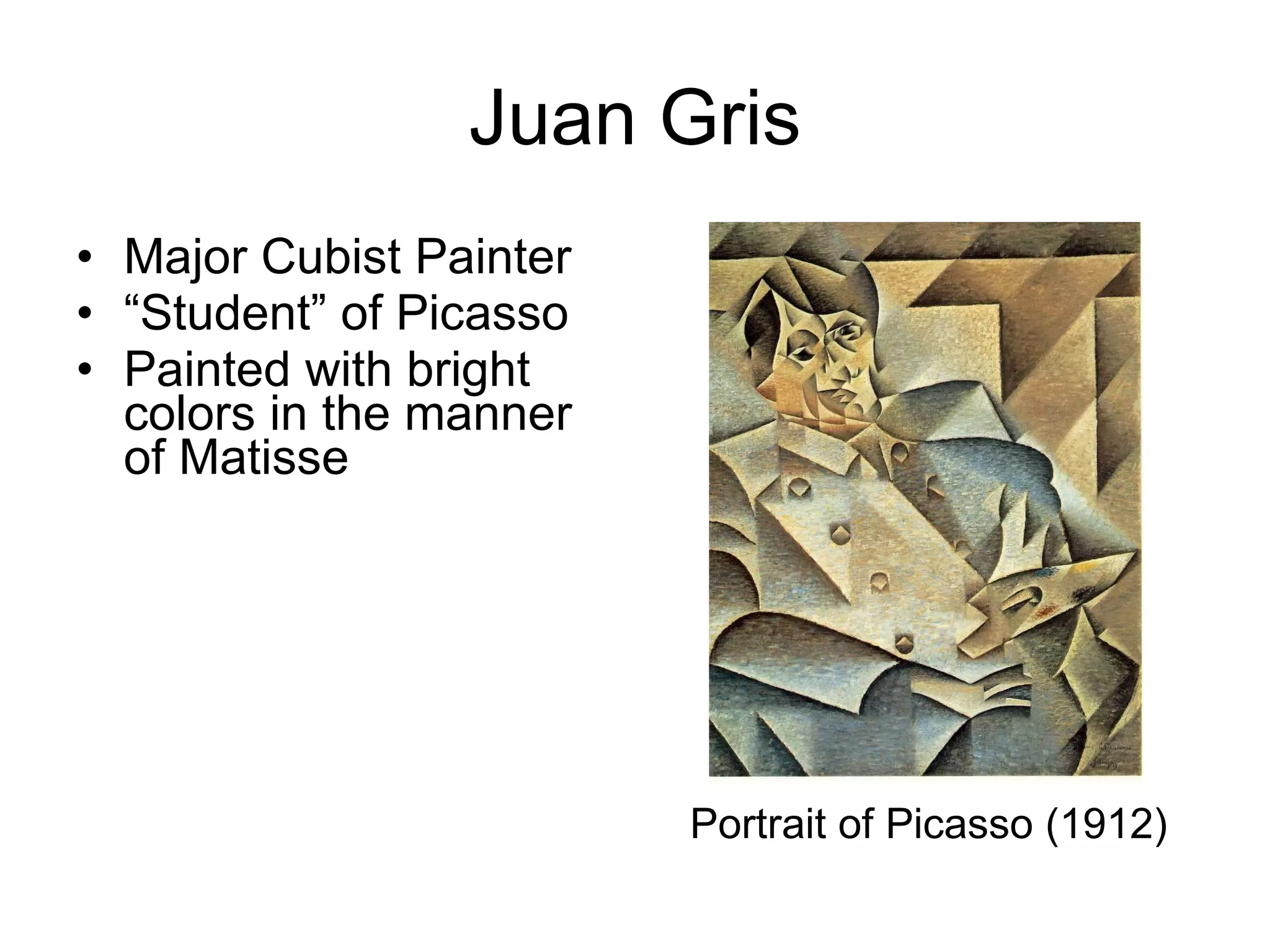
Juan Gris Major Cubist Painter “ Student” of Picasso Painted with bright colors in the manner of Matisse Portrait of Picasso (1912)
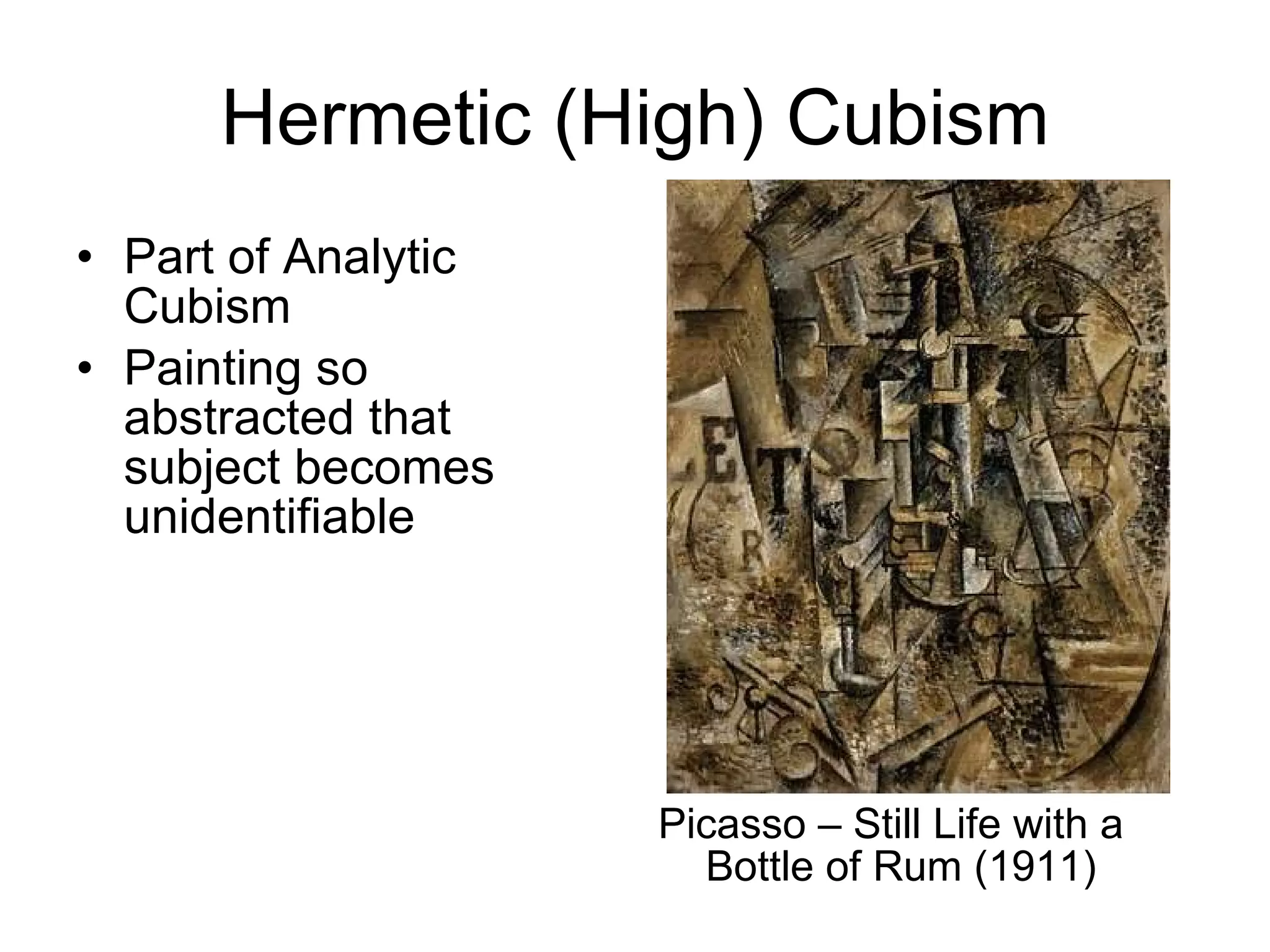
Hermetic (High) Cubism Part of Analytic Cubism Painting so abstracted that subject becomes unidentifiable Picasso – Still Life with a Bottle of Rum (1911)
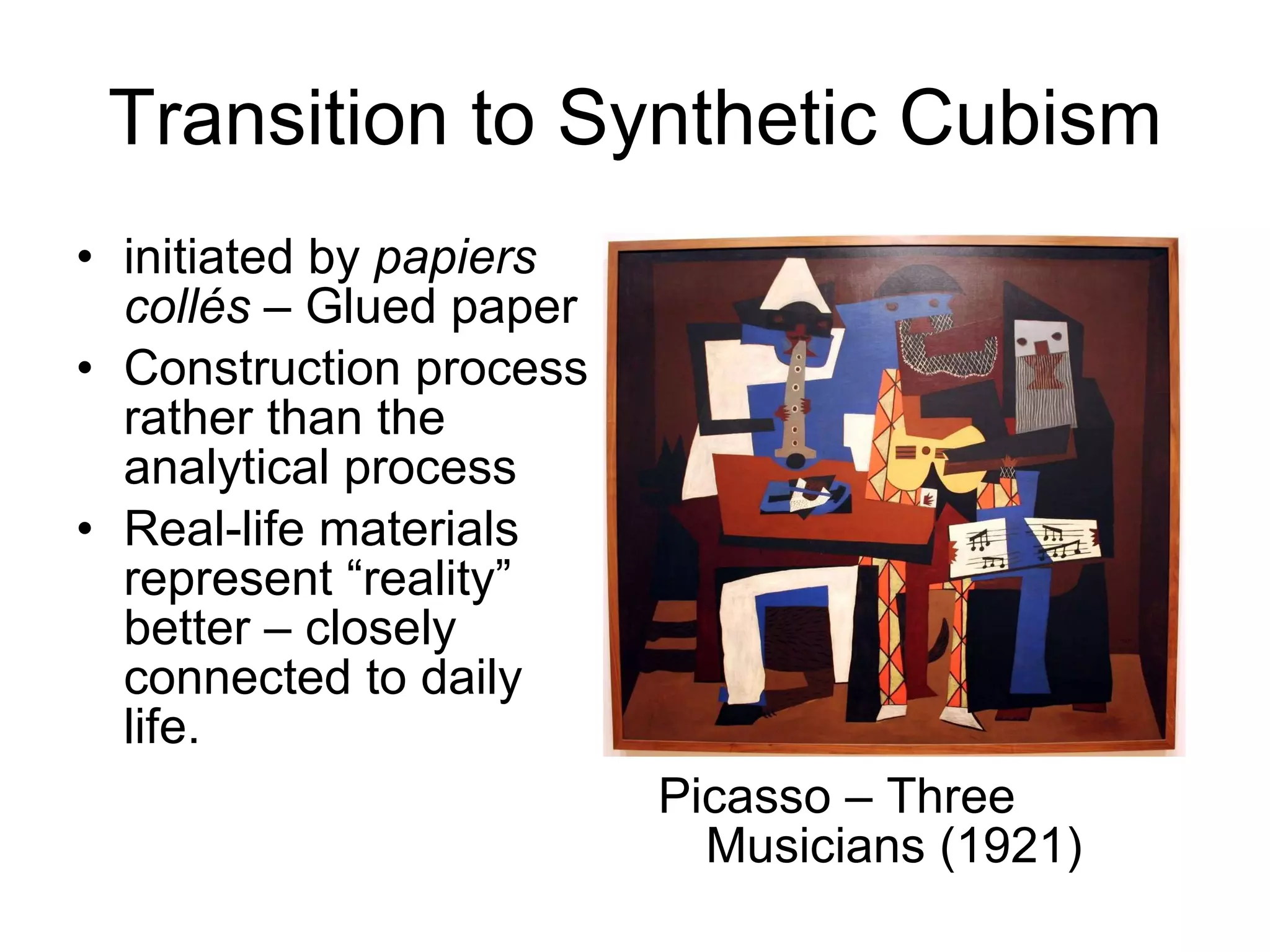
Transition to Synthetic Cubism initiated by  papiers collés –  Glued paper Construction process rather than the analytical process  Real-life materials represent “reality” better – closely connected to daily life. Picasso – Three Musicians (1921)
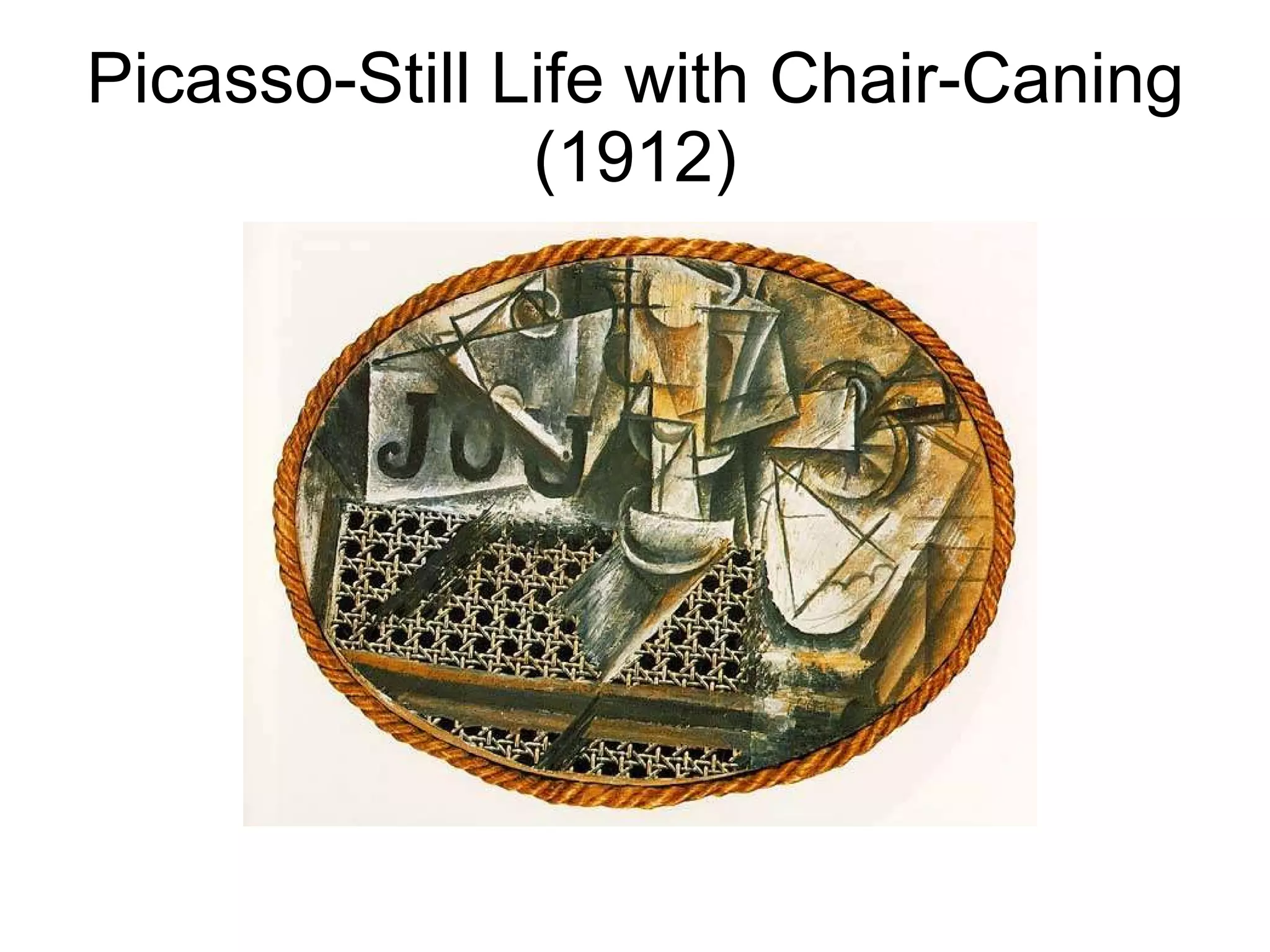
Picasso-Still Life with Chair-Caning (1912)
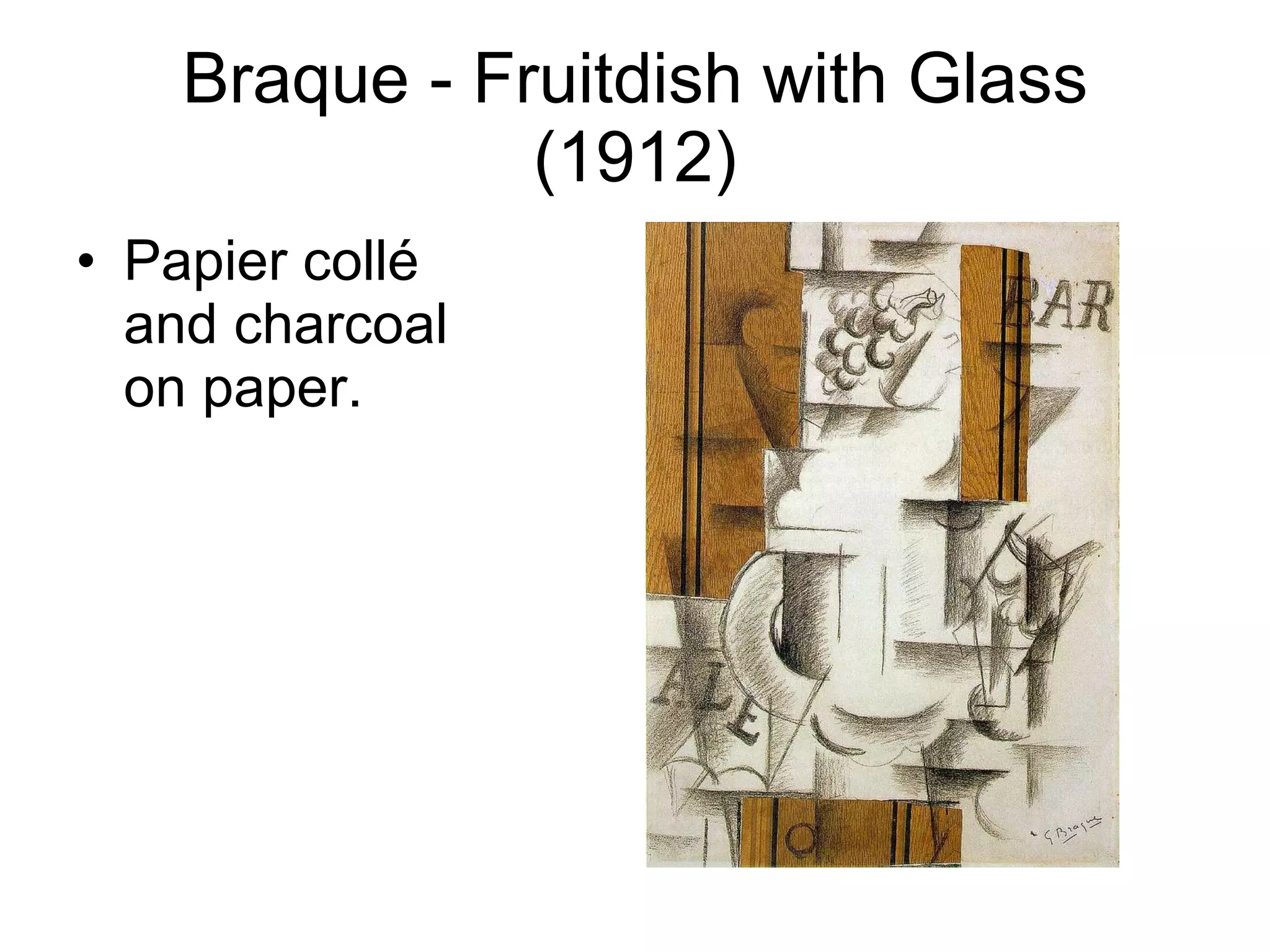
Braque - Fruitdish with Glass (1912) Papier collé and charcoal on paper.
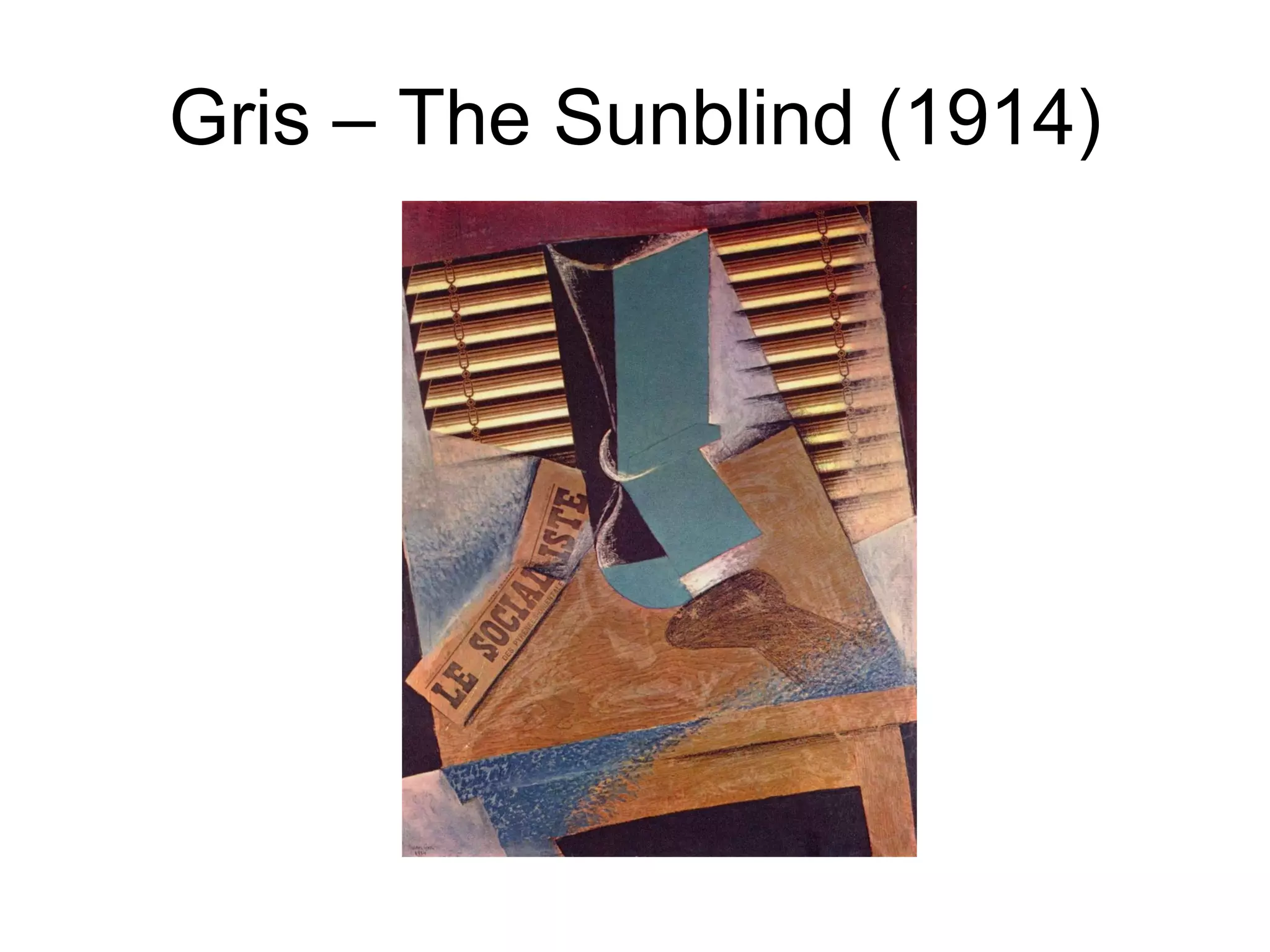
Gris – The Sunblind (1914)
Cubist Sculptures Developed in parallel with Cubist paintings. 1909-early 1920s Style rooted in Cézanne's reduction of objects into planes and geometric solids Major sculptors include Otto Gutfreund, Raymond Duchamp-Villon
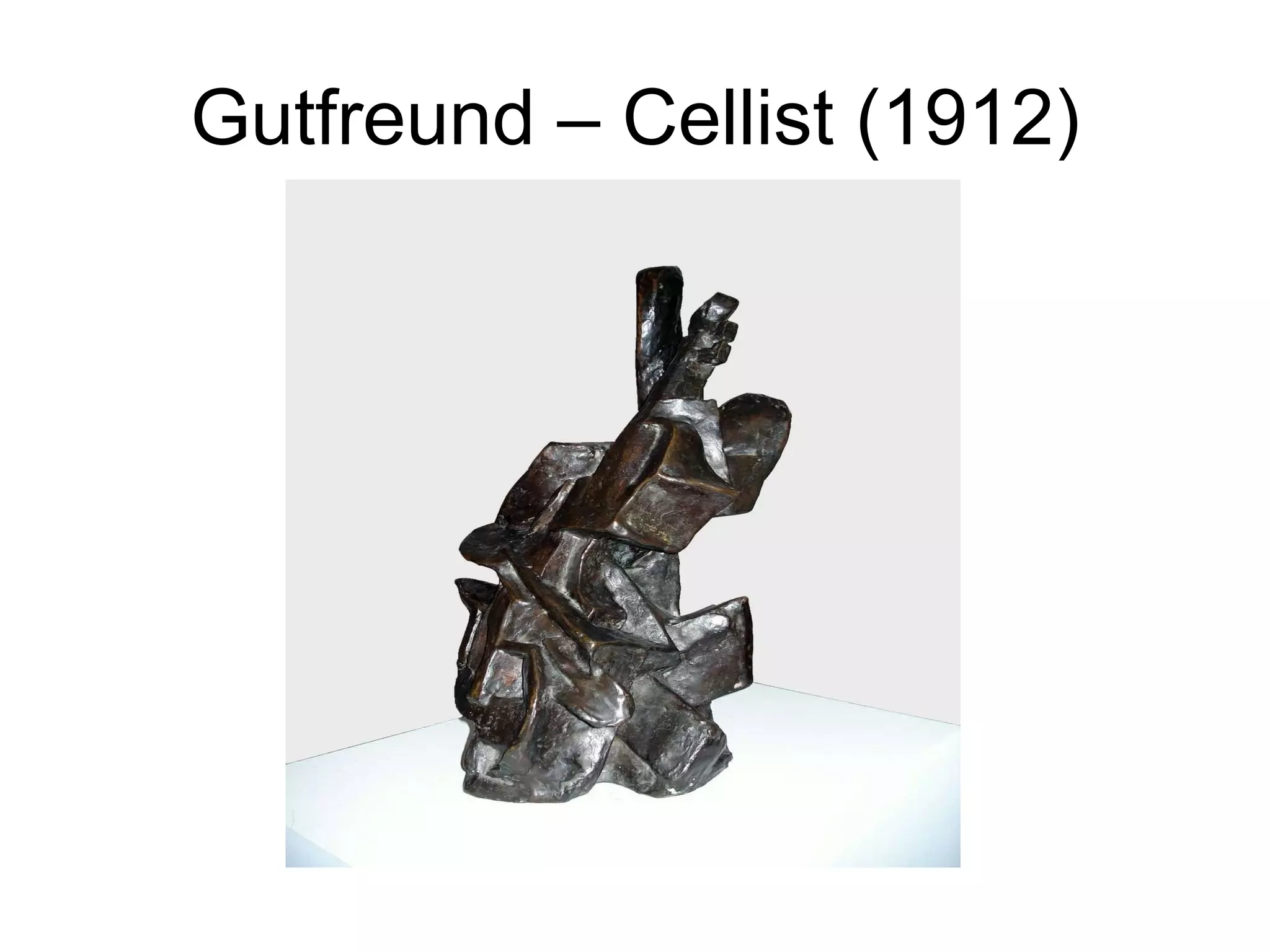
Gutfreund – Cellist (1912)
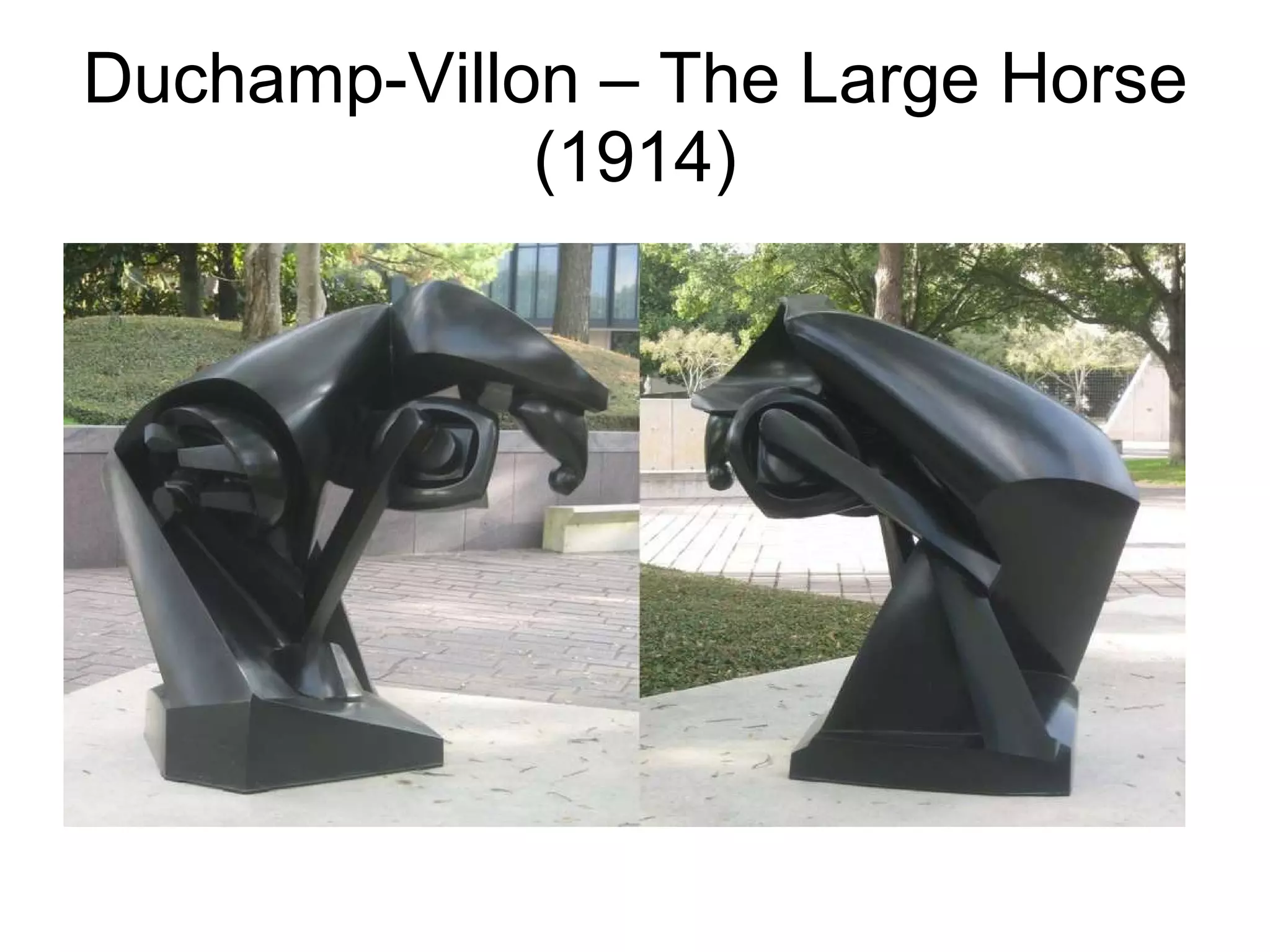
Duchamp-Villon – The Large Horse (1914)
Legacy of Cubism Liberating formal concepts started by Cubism consequently influenced Dada and Surrealism Influential to Artists pursuing abstraction in Europe, Russia, and America

Cubism3

  • 1.
    Cubism Shu Wei6 th Hour
  • 2.
    What is Cubism?20th century avant-garde art movement Cubist works are broken up, analyzed, and re-assembled instead of depicting objects from one viewpoint, the artist depicts the subject from a multitude of viewpoints
  • 3.
    Around that time…Einstein develops theory of special relativity Einstein explains Brownian motion and the Photoelectric effect Third Law of Thermodynamics by Walther Nernst Max Planck develops Quantum Hypothesis in 1900
  • 4.
    Influences on CubismAfrican Tribal art Cézanne Gauguin
  • 5.
    Cézanne - Bibémusquarry http://sammlung-online.museum-folkwang.de/eMuseumPlus?service = ExternalInterface&module = collection&objectId =3039&viewType= detailView Break painted surface into small multifaceted areas of paint, emphasizing the plural viewpoint given by binocular vision simplification of natural forms into cylinders, spheres, and cones.
  • 6.
    Pablo Picasso FirstCubist Painter – created Les Demoiselles d’Avignon Worked with Georges Braque until 1914
  • 7.
    Les Demoiselles d’AvignonOften called the first Cubist painting Angular and disjointed body shapes. Flat, two-dimensional picture plane.
  • 8.
    Cubism is BornFrench Art Critic Louis Vauxcelles coined term “Cubism” – Bizarre Cubiques Ernst Gombrich - "the most radical attempt to stamp out ambiguity and to enforce one reading of the picture—that of a man-made construction, a coloured canvas."
  • 9.
    Analytic Cubism Firstphase of Cubism 1909-1912 Monochrome brownish & neutral colors. Took apart objects and “analyzed” them.
  • 10.
    Portrait of Daniel-HenryKahnweiler (1910) Kahnweiler -Picasso and Braque’s first art dealer
  • 11.
    Georges Braque Tookinfluences from Cézanne Worked with Picasso until 1914 Experiment with collage & papier-colle Violin & Candlestick (1910)
  • 12.
    Juan Gris MajorCubist Painter “ Student” of Picasso Painted with bright colors in the manner of Matisse Portrait of Picasso (1912)
  • 13.
    Hermetic (High) CubismPart of Analytic Cubism Painting so abstracted that subject becomes unidentifiable Picasso – Still Life with a Bottle of Rum (1911)
  • 14.
    Transition to SyntheticCubism initiated by papiers collés – Glued paper Construction process rather than the analytical process Real-life materials represent “reality” better – closely connected to daily life. Picasso – Three Musicians (1921)
  • 15.
    Picasso-Still Life withChair-Caning (1912)
  • 16.
    Braque - Fruitdishwith Glass (1912) Papier collé and charcoal on paper.
  • 17.
    Gris – TheSunblind (1914)
  • 18.
    Cubist Sculptures Developedin parallel with Cubist paintings. 1909-early 1920s Style rooted in Cézanne's reduction of objects into planes and geometric solids Major sculptors include Otto Gutfreund, Raymond Duchamp-Villon
  • 19.
  • 20.
    Duchamp-Villon – TheLarge Horse (1914)
  • 21.
    Legacy of CubismLiberating formal concepts started by Cubism consequently influenced Dada and Surrealism Influential to Artists pursuing abstraction in Europe, Russia, and America